
Key Takeaways
- Applying acupressure post-surgery can aid recovery by alleviating pain, nausea, and digestion problems through specific pressure points.
- Research indicates that acupressure points such as ST36, PC6, and LI4 may improve bowel function and alleviate discomfort after surgery.
- Proper application of acupressure points can promote circulation of Qi and Blood, calm the mind, and facilitate restful sleep.
- Patients should adhere to instructions on when and how to apply acupressure, and they should consult their healthcare team beforehand.
- Seeking professional help is crucial if severe symptoms such as fever or worsening pain occur after surgery.

Even with a successful surgery, the recovery days can be challenging. You may experience pain around the incision site, slowed digestion due to anesthesia and pain medications, sleep issues, fatigue, nausea, and worries about healing. While your healthcare team manages the essentials, acupressure offers a gentle, drug-free way to support your healing. Studies have explored acupressure for common post-surgical issues, and the following points can be beneficial.
What the Research Shows
Researchers have explored acupressure’s role in post-surgery recovery, with multiple studies confirming its benefits. For instance, in one study involving 60 patients who underwent colorectal cancer surgery, those who received acupressure at ST36 three times daily for five days regained bowel function more quickly than those who did not. Another study on women after abdominal hysterectomy found that acupressure at points SP6, ST36, PC6, HT7, and LI4 helped decrease pain, improve digestion, and alleviate nausea and vomiting. Additional research using gentle electrical stimulation of acupoints after colon surgery demonstrated accelerated bowel recovery and a reduced hospital stay. These findings indicate that acupressure can be an effective component of postoperative recovery.
In Traditional Chinese Medicine, surgery is considered necessary yet disruptive. Incisions and tissue manipulation interrupt the flow of Qi and Blood, potentially causing pain and swelling. Anesthesia and painkillers can slow the digestive Qi, making bowel function harder to restore and leading to loss of appetite and nausea. Blood loss and surgical stress deplete Qi and Blood, resulting in fatigue and delayed healing. Additionally, this process can disturb the Shen, resulting in poor sleep and increased anxiety.
Here are nine acupressure points to restore Qi and Blood flow, support digestion, boost energy, and soothe the mind for recovery.
What Acupressure Points to Press and Why
1. Press on ST36 below the knee to wake up the bowels. ST36 sits four finger-widths below the lower edge of the kneecap and one finger-width to the outside of the shinbone, on the muscle that rises when you flex your foot. Press with steady, moderate pressure for about three minutes on each leg. ST36 is called “Zusanli,” the “Leg Three Miles.”
ST36 is the most studied acupressure point for post-surgery recovery. It aids digestion, stimulates bowel movements, and replenishes energy lost during surgery. This point is a key part of the routine, and research suggests that pressing it for three minutes, three times daily, during the first five days after surgery is effective.
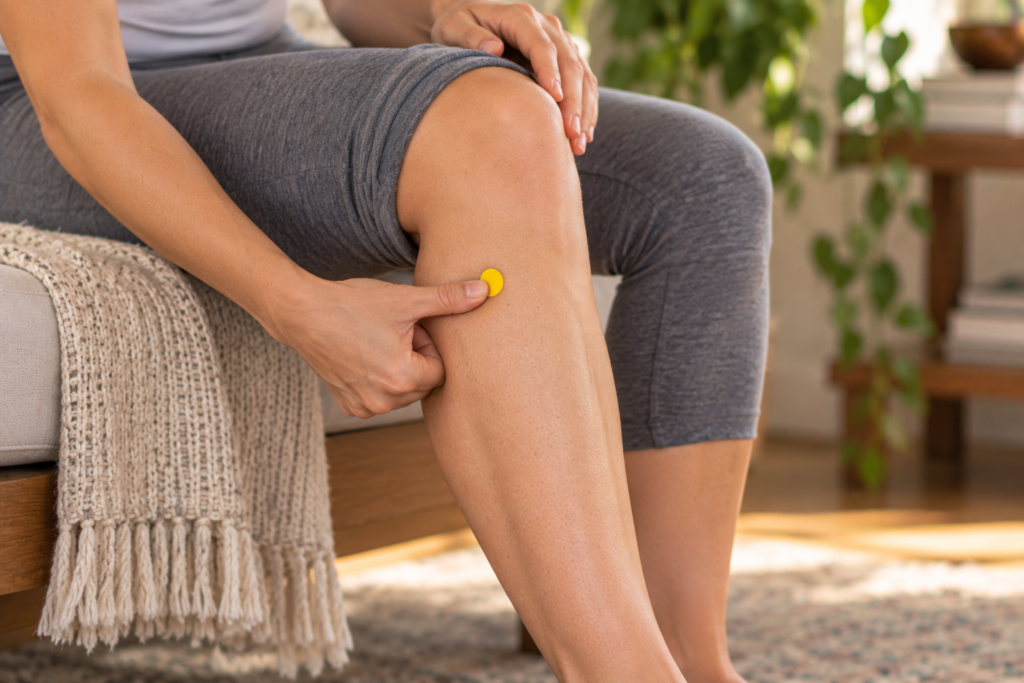
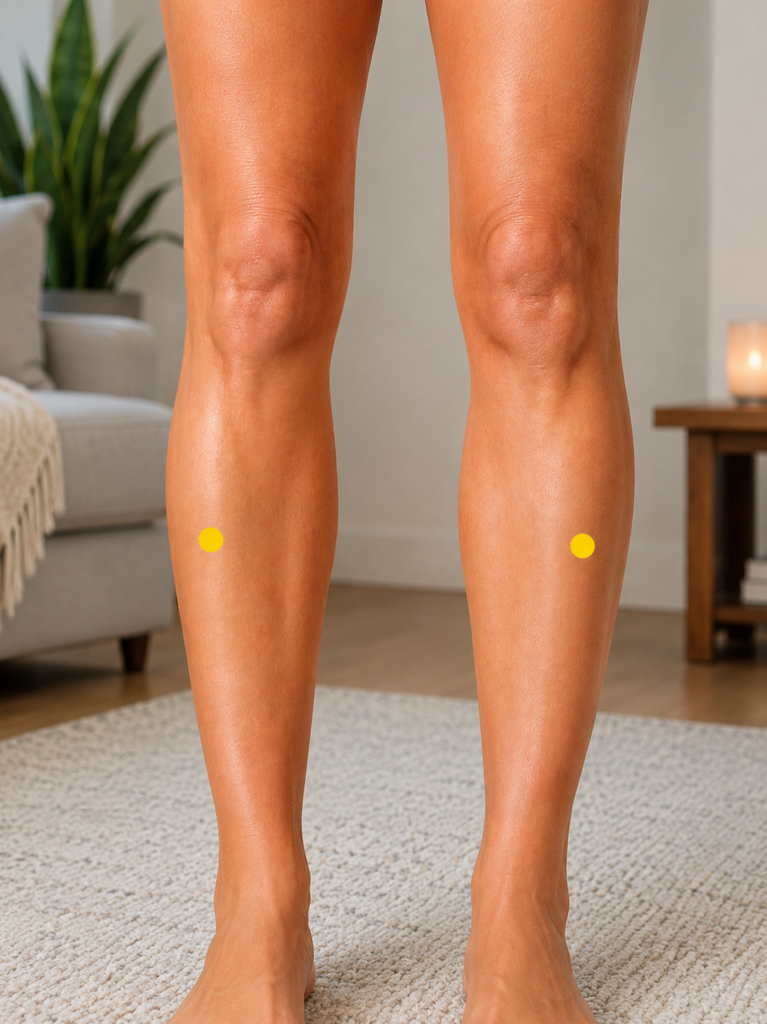
2. Press on ST37 lower on the shin to support the large intestine. ST37 sits on the outer lower leg, about four finger-widths below ST36, one finger-width outside the shinbone. Press with steady, moderate pressure for one to three minutes on each leg. ST37 is called “Shangjuxu,” the special point on the leg for the Large Intestine.
ST37 is frequently combined with ST36 to stimulate intestinal activity and is commonly referenced in research on post-surgical bowel recovery. Applying pressure to both points activates the digestive system, reduces bloating, and promotes the return of gas and normal bowel movements.
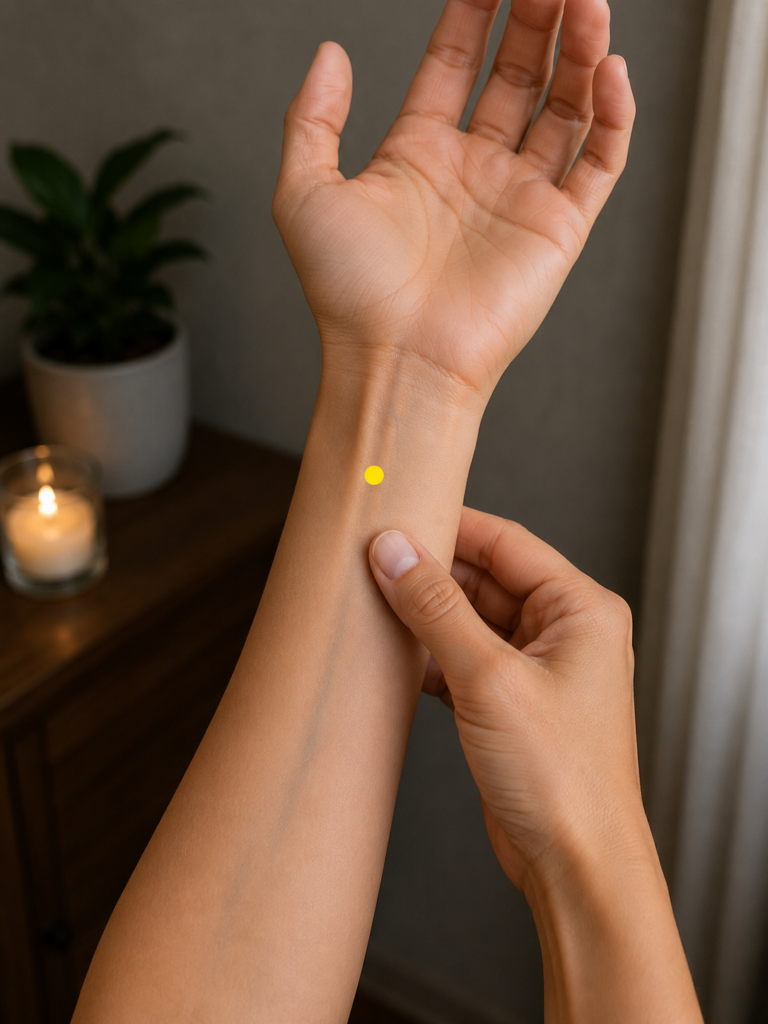
3. Press on PC6 on the inner forearm for nausea and calm. PC6 sits three finger-widths above the inner wrist crease, in the center of the forearm between the two tendons. Press firmly with your thumb for one to three minutes on each arm. PC6 is called “Neiguan,” the “Inner Pass.”
PC6 is the most researched point for treating nausea and vomiting post-surgery. It also helps soothe the mind and reduce chest tightness. Since nausea can hinder your ability to eat and drink after surgery, activating PC6 may support your overall recovery. Anti-nausea wristbands are made to continuously apply pressure to this point.
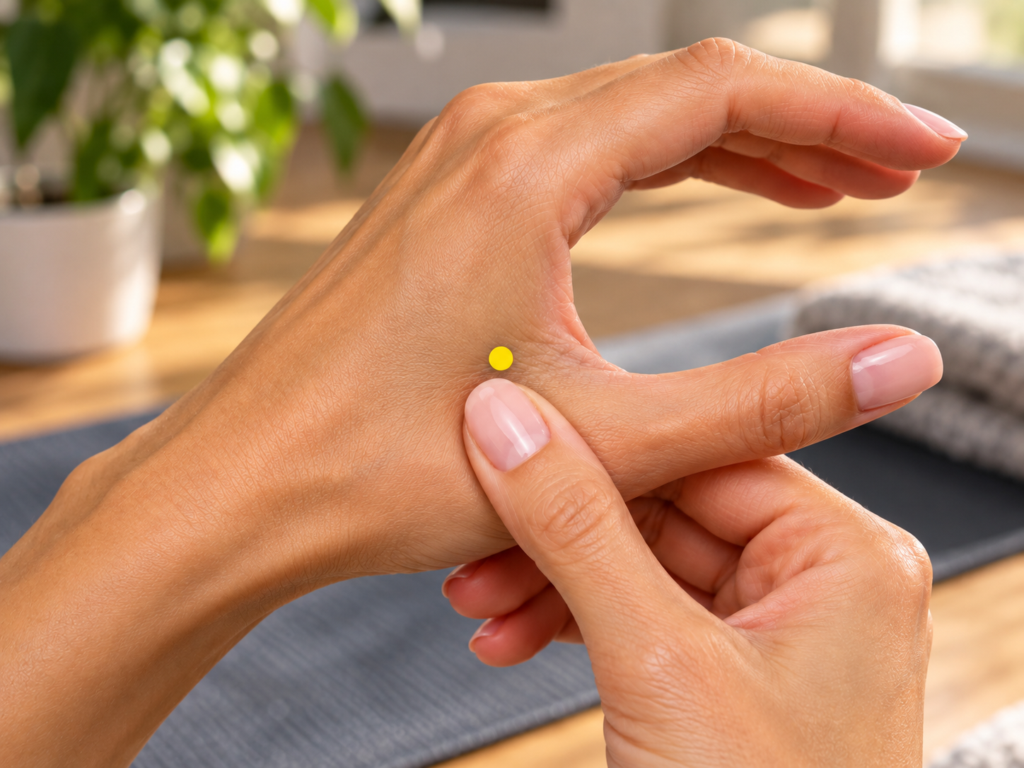
4. Press on LI4 in the hand to ease pain. LI4 sits in the webbing between the thumb and index finger, at the highest point of the muscle when you bring the thumb and index finger together. Press firmly with the thumb of your other hand for one to two minutes on each hand, using the hand without an IV. LI4 is called “Hegu.” The use of LI4 is contraindicated during pregnancy.
LI4 is a highly effective point for pain relief. It promotes the flow of Qi throughout the body and can ease discomfort even without direct contact with the incision area. This point was part of a combination that reduced pain after hysterectomy and is easy to press while lying in bed.
5. Press on HT7 at the wrist to calm the mind. HT7 sits on the inner wrist crease, on the pinky side, in the small hollow just inside the tendon. Press firmly with your thumb for one to two minutes on each wrist. HT7 is called “Shenmen,” the “Spirit Gate.”
HT7 helps settle the Heart and Shen, easing anxiety, restlessness, and sleep issues post-surgery. A relaxed mind can promote healing, lessen pain, and improve rest. HT7 sits next to PC6, making it easy to stimulate both points at once.
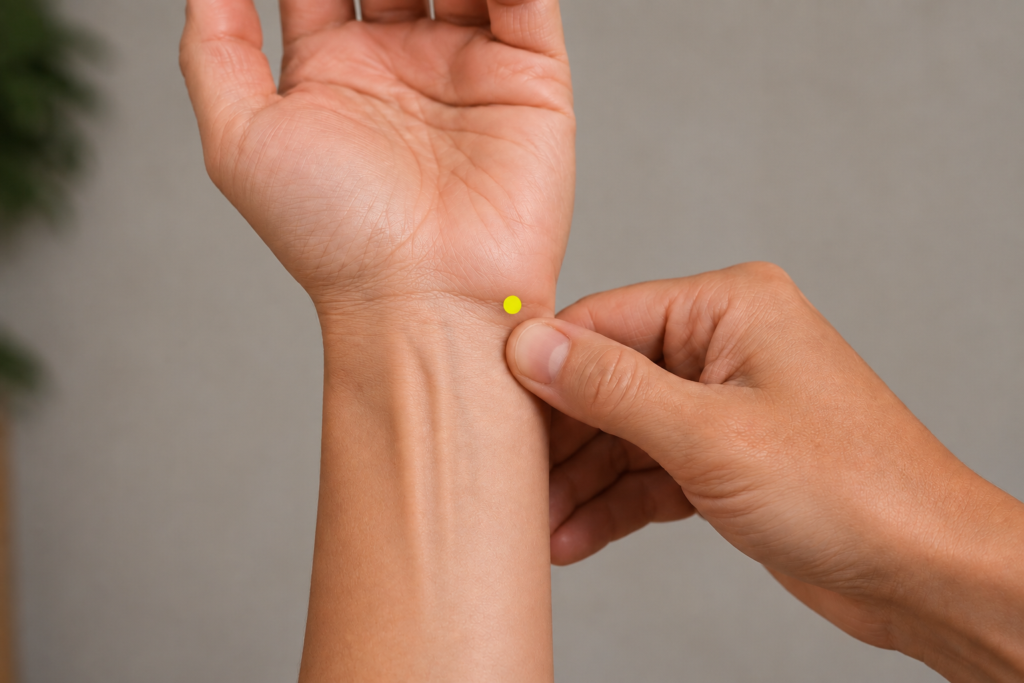
6. Press on SP6 above the inner ankle to nourish the Blood and support healing. SP6 sits four finger-widths up from the tip of the inner ankle bone, just behind the back edge of the shinbone. Press with moderate pressure for one to two minutes on each leg. SP6 is called “Sanyinjiao,” the “Three Yin Intersection.” SP6 is contraindicated during pregnancy.
Surgery can decrease Blood, and tissues need Blood to heal. SP6 helps nourish and move Blood, supports digestion, alleviates pain in the lower abdomen and pelvis, and can improve sleep. This is why it was part of the point combination used after a hysterectomy.
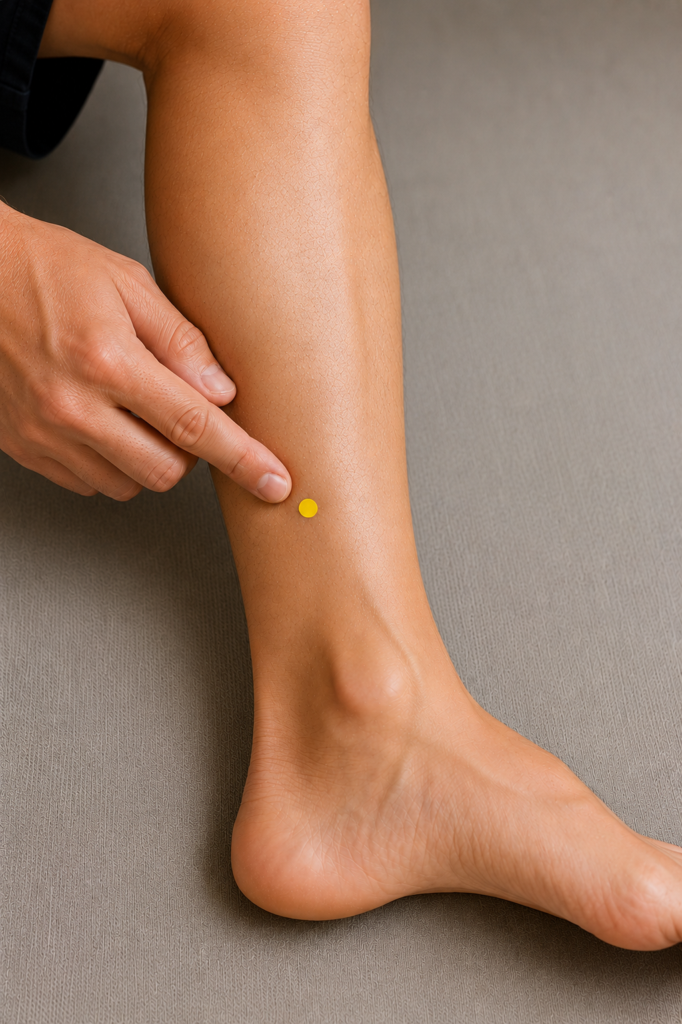
7. Press on LR3 on the top of the foot to keep the Qi moving. LR3 sits on the top of the foot, in the webbing between the big toe and second toe, about two finger-widths back where the bones meet in a small hollow. Press with moderate pressure for one to two minutes on each foot. LR3 is called “Taichong.”
After surgery, Qi may become stagnant, leading to tension, irritability, bloating, and slow digestion. LR3 helps promote Qi flow and relieve tension. When combined with LI4, they create the Four Gates, a famous duo for moving Qi and alleviating pain all over the body. A family member can press this point for you while you rest.
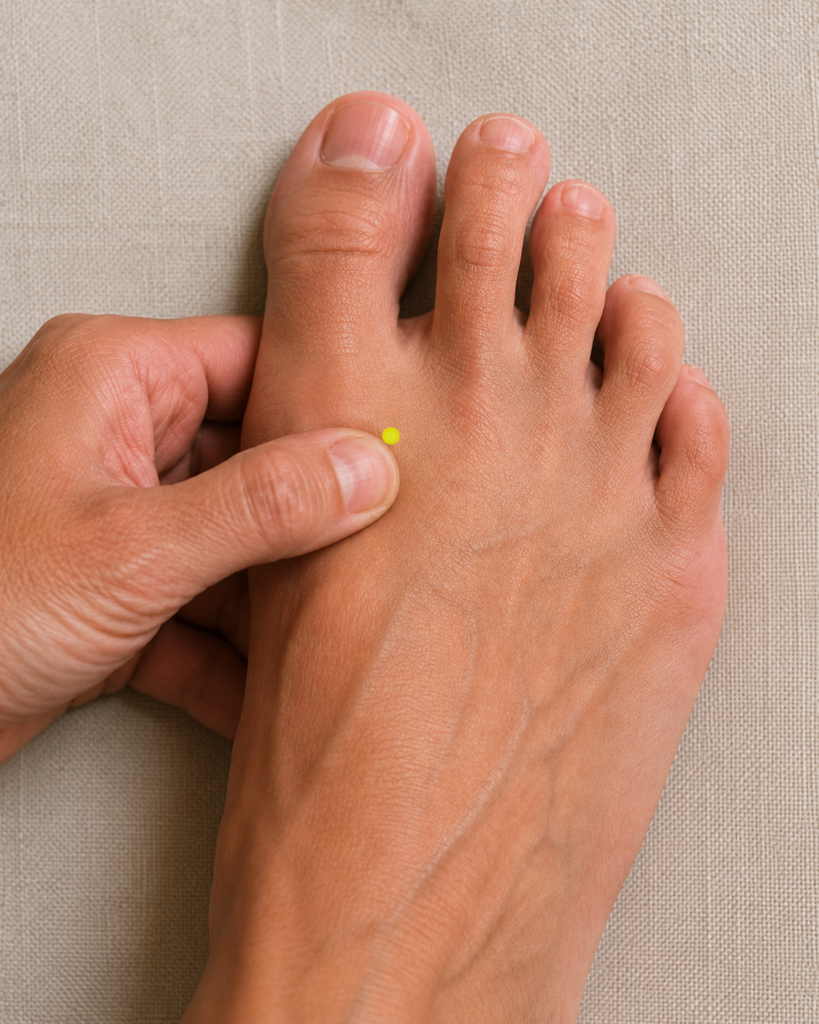
8. Press Ear Shenmen for pain and calm without moving. Ear Shenmen sits in the upper part of the ear, in the triangular hollow near the top, at its apex. Press gently with your fingertip for about a minute on each ear.
Ear Shenmen is a frequently used ear point for alleviating pain and calming the nervous system. It is particularly beneficial after surgery because you can press it easily while staying still, without moving your arms or stressing your incision.
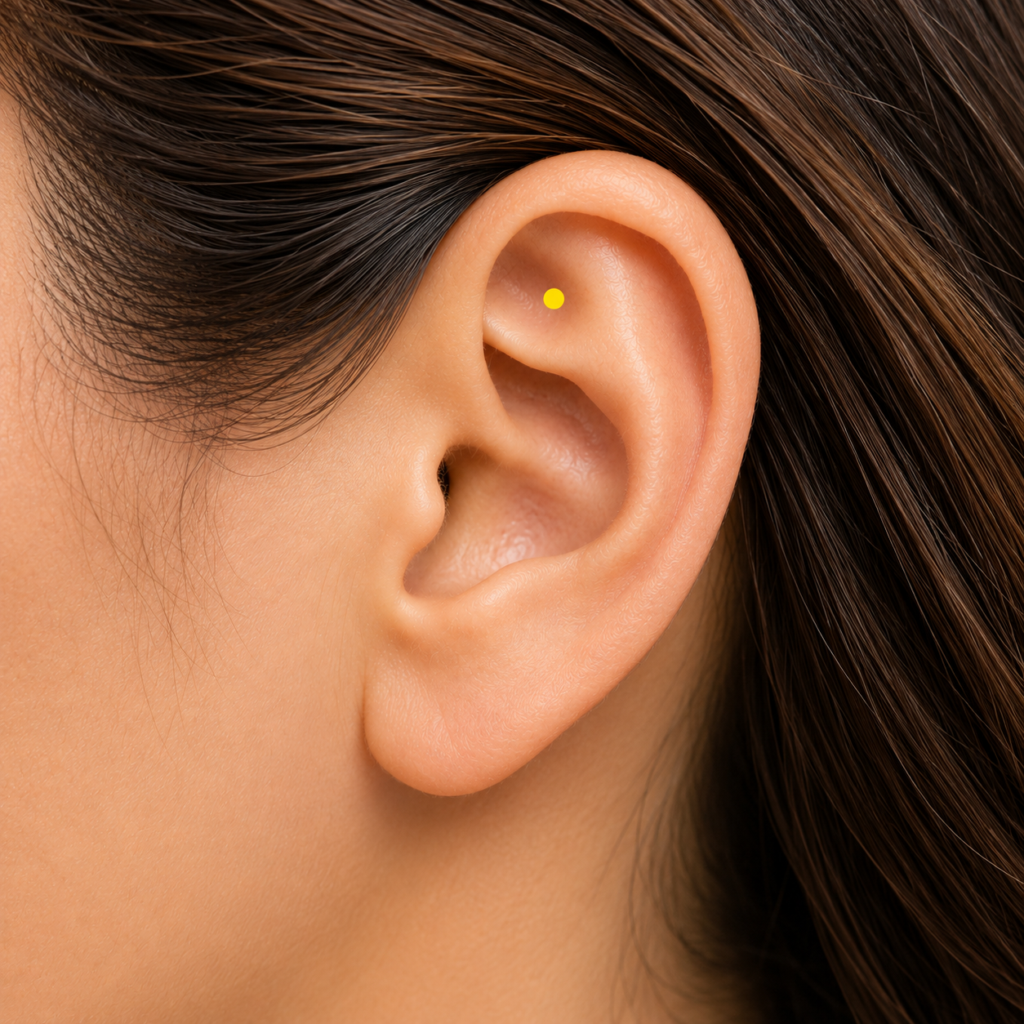
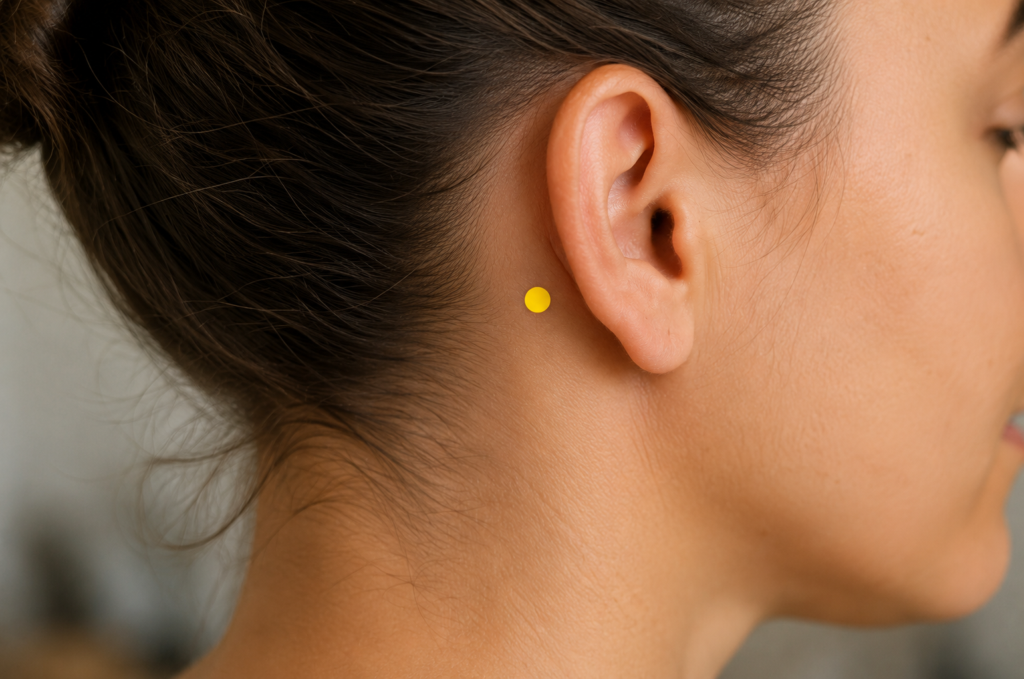
9. Press on Anmian behind the ear to help you sleep. Anmian sits behind the ear, in the hollow between the bony bump behind the earlobe and the base of the skull, a little above the jaw. Press gently with your fingertip for about a minute on each side. Anmian is an extra point whose name means “Peaceful Sleep.”
Your body does most of its healing during sleep, but surgery can disrupt rest. Anmian is an important point for insomnia, and applying pressure to it at bedtime, along with HT7 and Ear Shenmen, can promote more restful sleep.
Why These Acupressure Points Work
In Traditional Chinese Medicine, surgery interrupts the flow of Qi and Blood, slows digestion, drains the body’s energy, and unsettles the Shen. These nine acupressure points help address all of these issues.
- The digestive points (ST36, ST37, PC6) stimulate the bowels, reduce nausea, and support reinstating your appetite for eating and drinking.
- The pain points (LI4, LR3, Ear Shenmen) help relieve pain remotely, away from the incision.
- The restoring points (SP6, ST36) regenerate the Qi and Blood essential for healing.
- The calming points (HT7, Anmian, Ear Shenmen) help soothe the mind and promote sleep.
How to Properly Use These Acupressure Points
- Start once you are awake, settled, and cleared by your care team. Follow the research pattern for ST36: about three minutes, three times daily, for the first five days; then include ST37, PC6, and LI4.
- Before bedtime, apply HT7, Ear Shenmen, and Anmian to enhance sleep.
- Avoid applying pressure on or around your incision, drains, IV sites, or any areas that are bruised or swollen.
- Apply gentle, consistent pressure to the legs, and avoid deep kneading or massaging the calves, as the risk of blood clots increases after surgery.
- If you’re on blood thinners, apply gentle pressure to prevent bruising.
- If pregnant, do not stimulate LI4 and SP6.
- Have a family member or friend press on the leg and foot points while you relax, and continue taking your prescribed medications as instructed.
Acupressure works best when combined with the basics of recovery. Walk as soon and as often as your care team recommends, since movement helps restore bowel function and prevent blood clots. Drink fluids and start eating as your team recommends, beginning with small, easy-to-digest meals. Do your breathing exercises if you have them. Rest when you need to, protect your sleep, and follow your surgeon’s advice on lifting, bathing, and caring for your incision.
When to Get Professional Help
Contact your surgeon or seek medical attention immediately if you develop a fever, chills, or notice redness, warmth, swelling, pus drainage, or foul odor at your incision site. Visit the emergency room for chest pain, sudden shortness of breath, or coughing up blood, which may indicate a lung blood clot. Also, call if one calf is painful, swollen, warm, or red. Reach out to your care team if you experience severe or worsening pain, bleeding soaking your dressing, persistent vomiting preventing fluid intake, a swollen and hard abdomen with no gas or bowel movements for several days, difficulty urinating, or new confusion.
Acupressure is a gentle, evidence-based technique to support recovery; however, use it alongside your surgical team’s care.
Above and Beyond Acupuncture offers acupuncture, cupping, and lifestyle coaching at the North Frank Lloyd Wright Boulevard location in Scottsdale.
Schedule an appointment online to start your healing journey.
The points above are only as effective as the technique used to apply them. Where to press, how firmly, and for how long all affect the result. For a full breakdown of how to perform acupressure properly at home, read Performing Acupressure in 3 Easy Steps.

About the Publisher
Paul Kerzner, L.Ac., is a licensed acupuncturist and board-certified herbalist, as well as the founder of Above and Beyond Acupuncture in Scottsdale. His own journey from chronic patient to practicing acupuncturist shapes his commitment to providing honest, clinically grounded information about acupuncture and Traditional Chinese Medicine. Learn more about Paul and his clinical approach on the About Us page.