
Key Takeaways
- Postmastectomy pain syndrome causes persistent nerve pain after breast cancer surgery, often manifesting as burning, tightness, or numbness.
- Acupressure offers relief through gentle techniques at specific points without touching the surgical area, helping to calm nerve pain and support recovery.
- Nine key acupressure points target pain relief, emotional tension, and Qi and Blood stagnation associated with postmastectomy pain syndrome.
- Safety comes first: never press on or near an incision, scar, port, or radiated skin; use only light pressure on the affected arm; and check with your oncology team if needed.
- Professional help is important for ongoing pain; acupressure can complement medical treatment effectively.

Months after breast surgery, are you still experiencing burning, shooting, or tight pain across your chest, under your arm, or along the inside of your upper arm?
This may be postmastectomy pain syndrome, a type of nerve pain that persists after breast cancer surgery. Despite its name, it can occur after a lumpectomy as well as a mastectomy. It is especially common after lymph nodes are removed from the armpit, when the nerve that provides sensation to the armpit and inner arm is often stretched or injured. People describe burning, stabbing, or electric pain; tightness or a band-like feeling across the chest; numbness with unusual sensitivity; pain where the breast used to be; and discomfort that worsens with arm movement or the touch of clothing. Acupressure offers a gentle approach that works away from the surgical area to calm nerve pain, ease tension, and support recovery. The points below may help.
Several precautions apply throughout this routine. Never press on or near an incision, scar, port, drain site, or skin exposed to radiation. If you’ve had lymph nodes removed or have lymphedema, use only light pressure on that arm, or perform the corresponding points on the other arm. If your platelet count is low or you bruise easily, use only light pressure and consult your oncology team first. If your cancer has spread to your bones, avoid pressing on any painful bone. Acupressure is meant to supplement your treatment, so continue taking your prescribed medications.
Traditional Chinese Medicine views postmastectomy pain as Qi and Blood stagnation in the channels that run through the chest and armpit, persisting after surgery and sometimes radiation. The Liver and Gallbladder channels run along the ribs and sides of the chest; the Heart and Pericardium channels pass through the armpit and down the inner arm; and the Lung channel crosses the upper chest. Pain therefore follows these channel pathways. Cancer treatment can deplete Qi and Blood, while the strain of a cancer diagnosis can bind Liver Qi. Fear and grief may also unsettle the Shen, the mind and spirit, and increase pain.
Here are nine acupressure points to move stagnation, calm the nervous system, ease emotional tension, and replenish what treatment has depleted.
What Acupressure Points to Press and Why
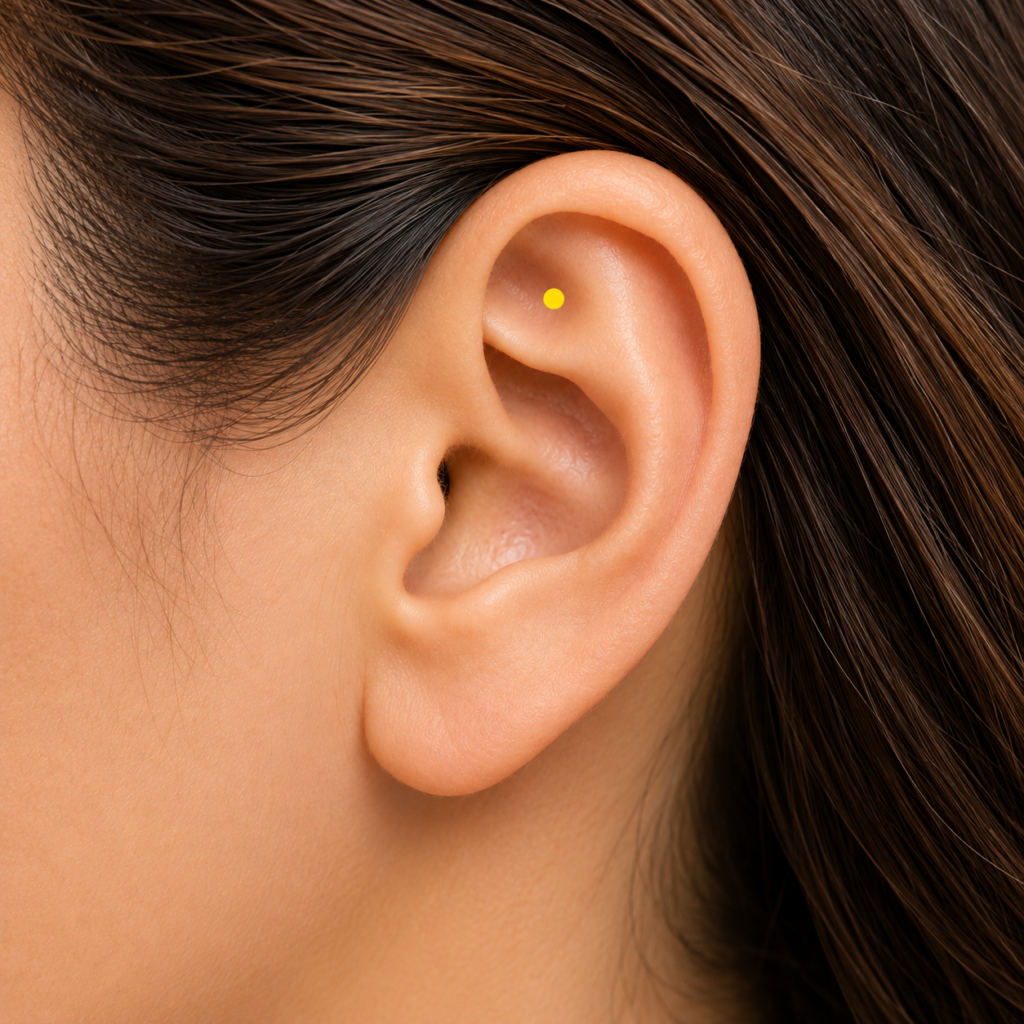
1. Press on Ear Shenmen to ease pain without touching the chest or arm. Ear Shenmen sits in the upper part of the ear, in the triangular hollow near the top, at the apex of that hollow. Press gently with your fingertip for one to two minutes on each ear.
Ear Shenmen is one of the most commonly used points for pain relief and calming the nervous system. Because it is on the ear, it avoids contact with the surgical area or the affected arm. It is the mildest point to start with and one to return to whenever the pain worsens.
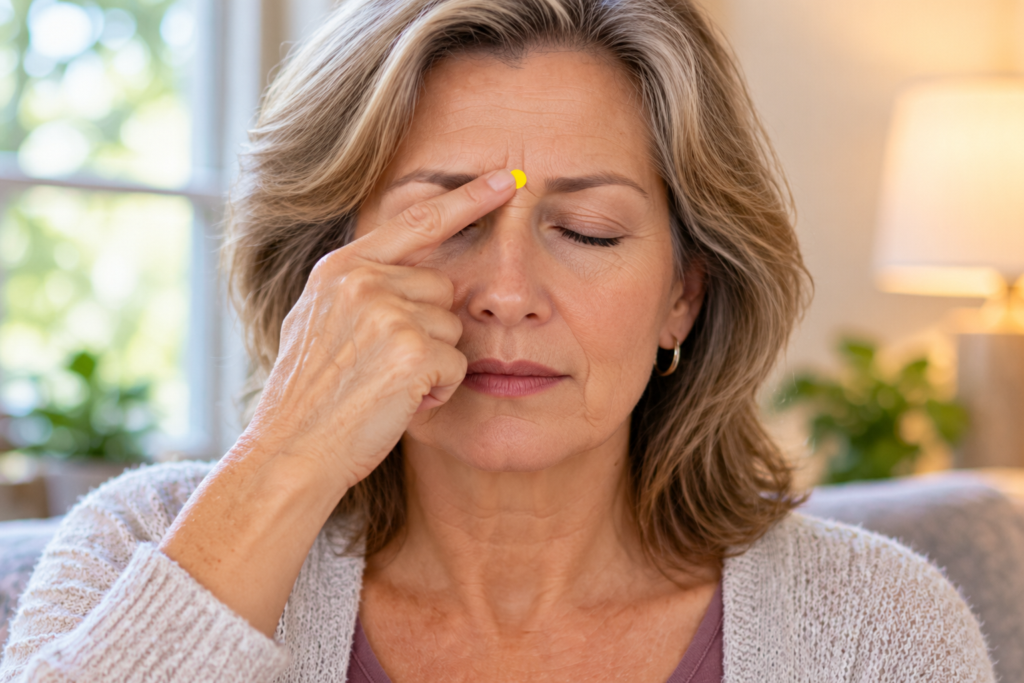
2. Press on Yintang between the eyebrows to calm a sensitized system. Yintang sits in the small hollow directly between the two eyebrows. Press gently and steadily, or make slow circles, for one to two minutes while breathing slowly. Yintang is an extra point.
Stress, worry, and poor sleep can increase nerve pain, and these are common after a cancer diagnosis and surgery. The Yintang point is thought to calm the mind and help the nervous system shift out of a heightened-alert state, which may reduce ongoing pain.
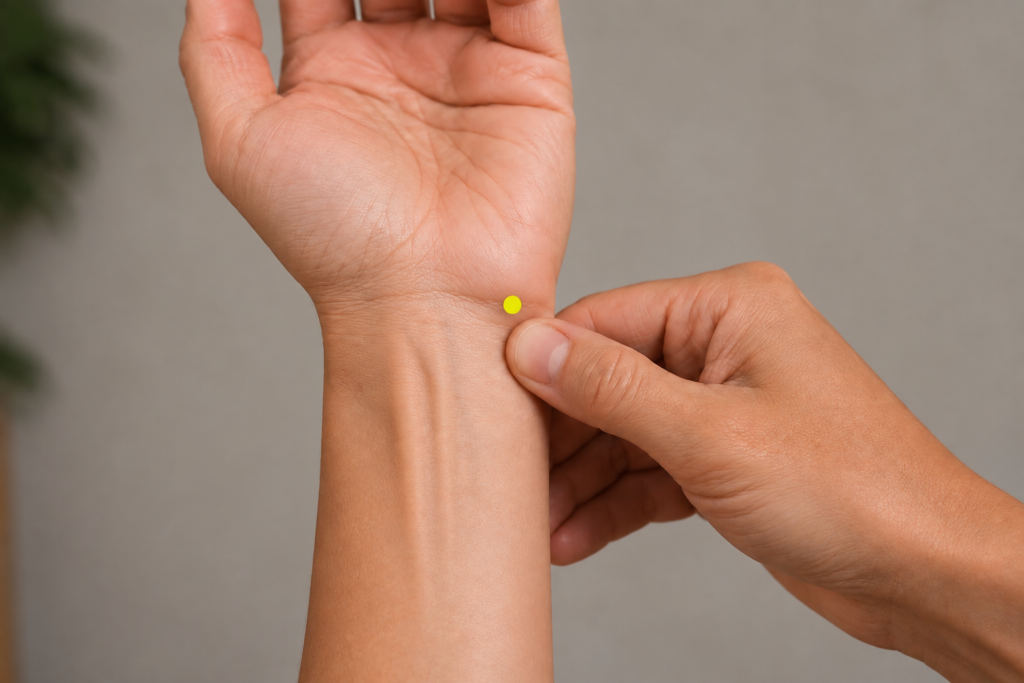
3. Press on HT7 at the wrist on your unaffected side to settle the Shen. HT7 sits on the inner wrist crease, on the pinky side, in the small hollow just inside the tendon. Press firmly with your thumb for one to two minutes on the wrist of your unaffected arm. HT7 is called “Shenmen,” the “Spirit Gate.”
The Heart channel runs from the armpit down the inner arm, where pain commonly occurs after mastectomy. HT7 is located on this channel at the wrist. It is said to calm the Heart and stabilise the Shen, helping ease the anxiety, grief, and insomnia that often accompany recovery. Applying pressure to HT7 on the opposite side avoids putting pressure on the arm at risk of lymphedema.
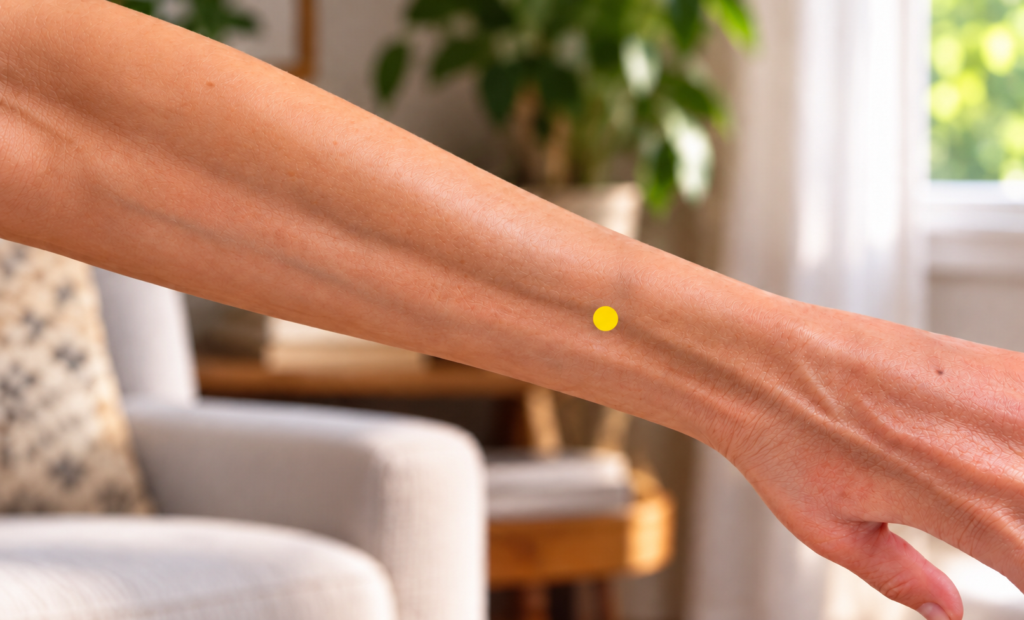
4. Press on SJ6 on the forearm of your unaffected arm for pain along the side of the chest. SJ6 sits on the back of the forearm, about four finger-widths above the wrist crease, in the hollow between the two forearm bones. Press firmly with your thumb for one to two minutes on your unaffected arm. SJ6 is called “Zhigou,” the “Branch Ditch.”
SJ6 is a classic acupoint for relieving rib and side-chest pain, the very area where pain often persists after mastectomy. It helps move stagnant Qi along the side of the body from a distance, and using the opposite arm makes it a safe option for people at risk of lymphedema.
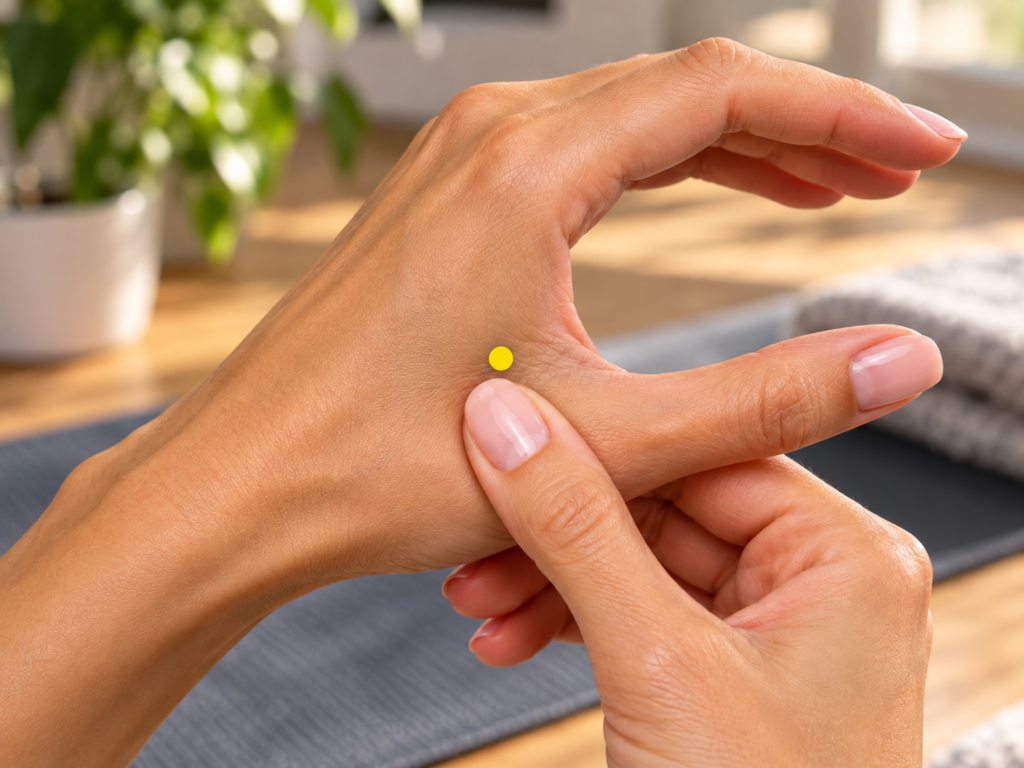
5. Press on LI4 in the unaffected hand to ease pain. LI4 sits in the webbing between the thumb and index finger, at the highest point of the muscle when the thumb and finger are brought together. Press firmly with the thumb of your other hand for one to two minutes, using your unaffected hand. LI4 is called “Hegu.” LI4 is avoided during pregnancy.
LI4 is one of the most effective points for relieving pain throughout the body, with effects that reach distant areas. Paired with LR3, it forms the Four Gates, a classic combination used to unblock Qi and relieve pain.
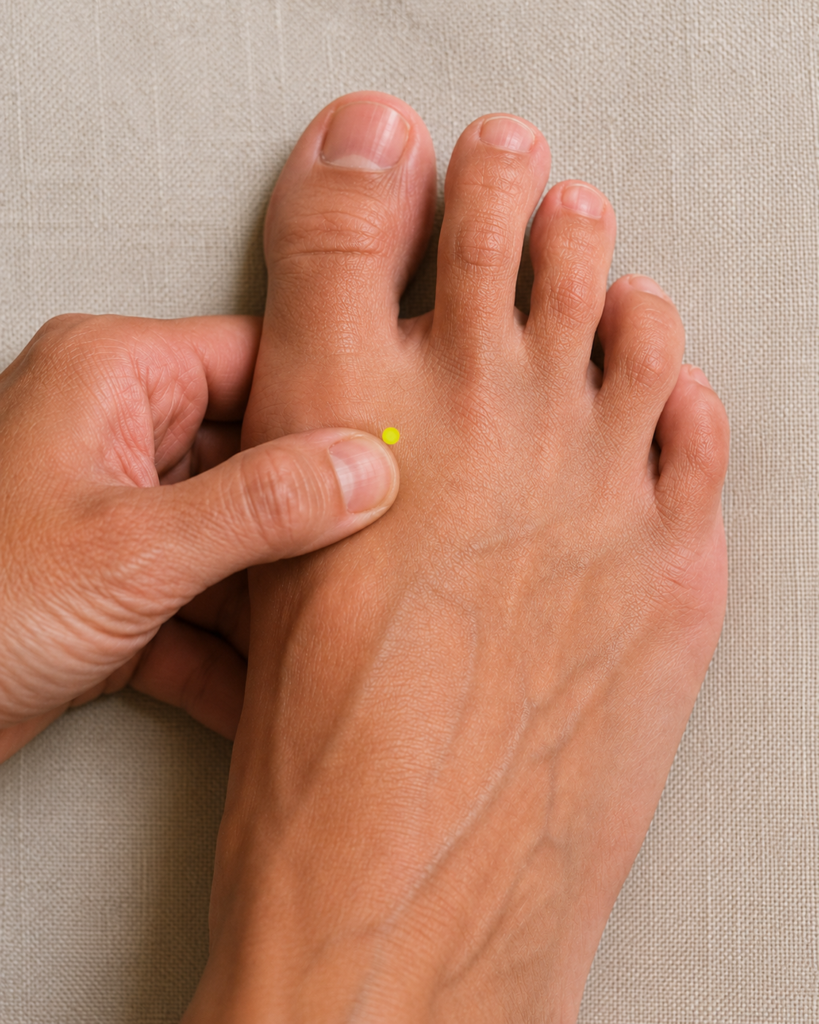
6. Press on LR3 on the top of the foot to release tension. LR3 sits on the top of the foot, in the webbing between the big toe and second toe, about two finger-widths back from the webbing, in the hollow just before the two bones meet. Press firmly with your thumb for one to two minutes on each foot. LR3 is called “Taichong.”
The Liver Meridian rises through the ribs and chest. LR3 helps move Qi from the foot, relieving chest tightness and the emotional tension that often accompanies a cancer diagnosis. LI4 completes the Four Gates.
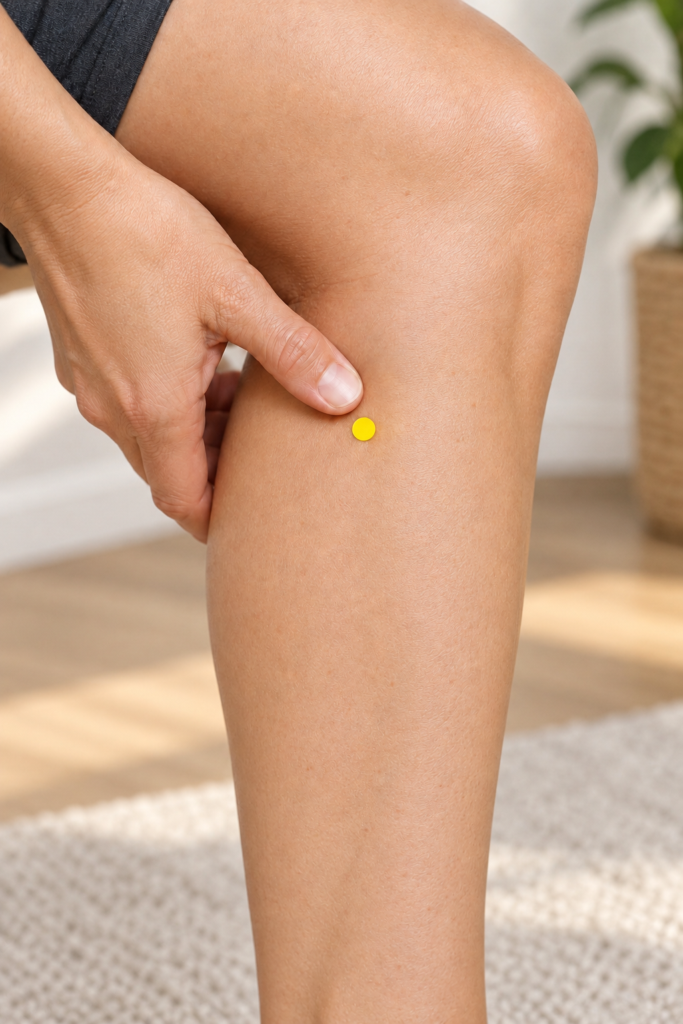
7. Press on GB34 below the outer knee to ease the sides of the chest. GB34 sits on the outer lower leg, in the hollow just below and in front of the head of the fibula, the bony knob below the outer side of the knee. Press firmly with your thumb for one to two minutes on each leg. GB34 is called “Yanglingquan.”
The Gallbladder meridian runs along the side of the chest and ribs, and GB34 is a key point for easing pain in this area. It can also loosen taut muscles and connective tissue, helping relieve the pulling, band-like tightness many people experience across the chest after surgery.
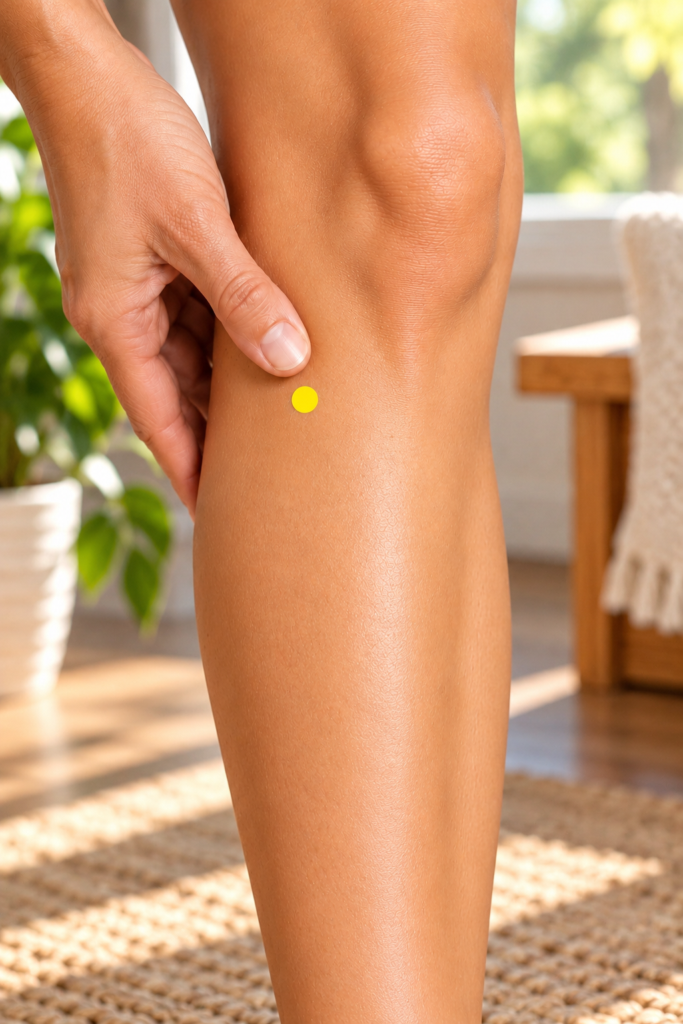
8. Press on ST36 below the knee to rebuild your strength. ST36 sits four finger-widths below the lower edge of the kneecap and one finger-width to the outside of the shinbone, on the muscle that rises when you flex your foot. Press firmly with your thumb for one to two minutes on each leg. ST36 is called “Zusanli,” the “Leg Three Miles.”
Surgery, chemotherapy, and radiation can drain the body’s reserves. When Qi and Blood are depleted, healing slows, and pain can be harder to bear. ST36 helps rebuild them at their source and supports energy, appetite, and stamina during recovery.
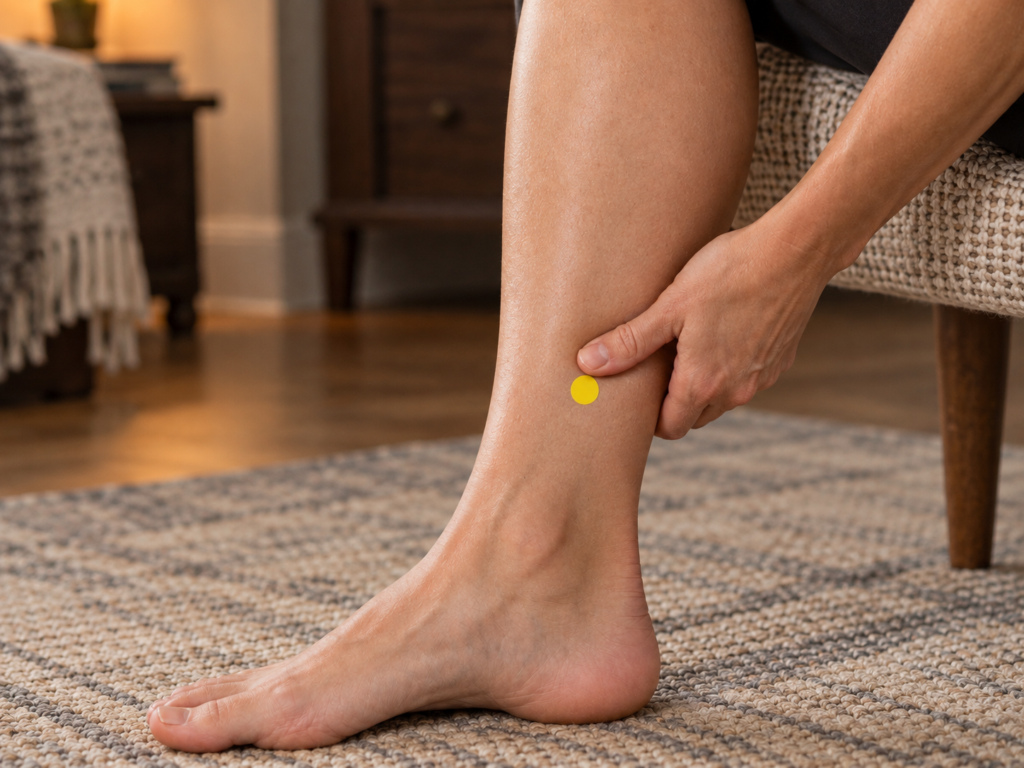
9. Press on SP6 above the inner ankle to nourish and move the Blood. SP6 sits four finger-widths up from the tip of the inner ankle bone, just behind the back edge of the shinbone. Press firmly for one to two minutes on each leg. SP6 is called “Sanyinjiao,” the “Three Yin Intersection.” SP6 is avoided during pregnancy.
SP6 nourishes and moves the Blood, addressing both the depletion and stagnation behind lingering pain. It also calms the mind and supports the sleep needed for recovery.
Why These Acupressure Points Work
In Traditional Chinese Medicine, post-mastectomy pain is considered to result from Qi and Blood stagnation in the chest and armpit meridians, along with depleted reserves and Shen restlessness. The nine points address these issues without reaching the surgical site.
- The calming points (Ear Shenmen, Yintang, HT7) settle the nervous system and the Shen.
- The chest and side points (SJ6, GB34, LR3) help move stagnation through the channels that run along the chest and ribs.
- The pain point (LI4) alleviates pain throughout the body and completes the Four Gates with LR3.
- The nourishing points (ST36, SP6) replenish the Qi and Blood depleted by treatment.
Research into acupuncture for pain after breast cancer treatment is growing, and integrative oncology guidelines support its use for some types of treatment-related pain. Studies focused specifically on postmastectomy pain are developing, and acupressure is best used alongside oncology and rehabilitation care.
How to Properly Use These Acupressure Points
- Never press on or near your incision, scar, port, drain site, or radiated skin.
- Work arm and hand points on your unaffected side. If you had lymph nodes removed or have lymphedema, use only light touch on the affected arm.
- Start with Ear Shenmen and Yintang, then HT7, SJ6, and LI4 on the unaffected arm, then LR3, GB34, ST36, and SP6 on the legs and feet.
- Avoid heat packs, hot tubs, and saunas on the affected side, which can aggravate lymphedema risk and irritate radiated skin.
- Use gentle to moderate pressure, holding each point for one to two minutes, and stop if any point increases pain.
- If your platelets are low or you bruise easily, keep the pressure light and check with your oncology team first.
- Keep taking your prescribed pain medications as directed.
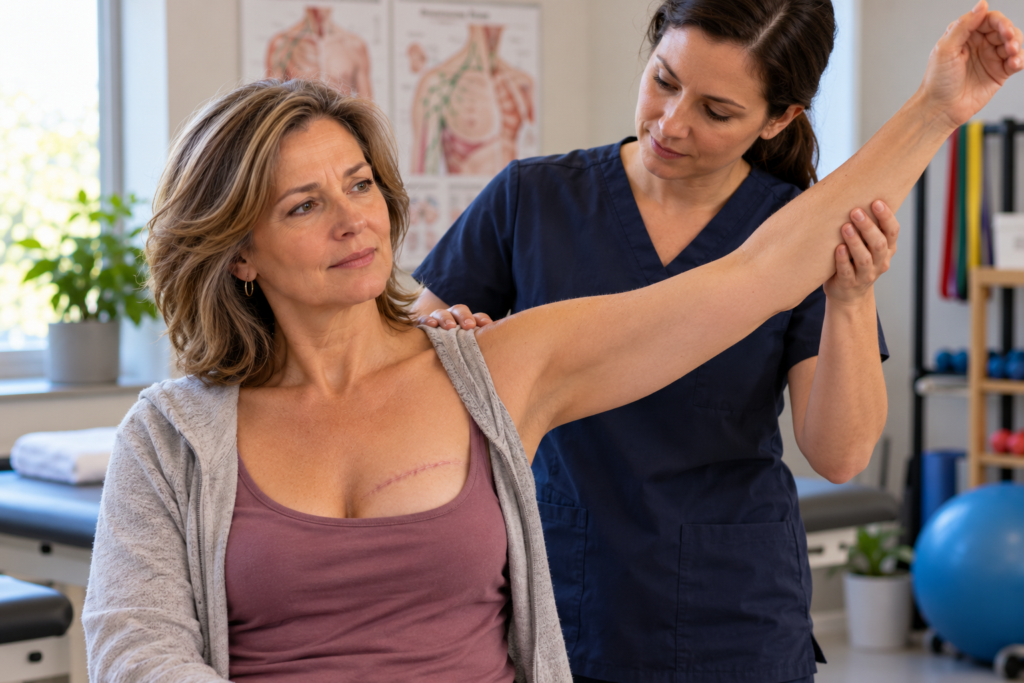
Rehabilitation plays a key role in easing postmastectomy pain. A physical therapist or certified lymphedema therapist can guide you through gentle shoulder and arm exercises to restore movement, ease tightness, and help prevent a frozen shoulder. They can also advise on scar care when your team says it is safe. Soft, well-fitting bras or camisoles with no seams over sensitive areas can reduce irritation. Good posture, regular gentle movement, and protecting your sleep can also help. Many people benefit from support groups or counseling, as the emotional weight of a cancer journey can increase pain.
When to Get Professional Help
Tell your oncology team about any pain that continues after breast surgery; several effective treatments are available for postmastectomy pain. Get prompt care for new or worsening swelling in your arm, hand, or chest, as this may signal lymphedema. Seek urgent care for redness, warmth, and swelling in your arm or chest accompanied by fever, as these may indicate an infection that needs immediate treatment. Contact your care team without delay about a new lump, new or worsening pain, new bone pain, a persistent cough, or unexplained weight loss so they can rule out recurrence. Call emergency services for chest pain or pressure accompanied by shortness of breath or sweating.
The mental toll of cancer is real, so tell your care team if you’re struggling. If you ever have thoughts of harming yourself, call or text the 988 Suicide and Crisis Lifeline.
Acupressure is a gentle, supportive practice for postmastectomy pain and can be used alongside care from your oncology and rehabilitation teams.
Above and Beyond Acupuncture offers acupuncture, cupping, and lifestyle coaching at the North Frank Lloyd Wright Boulevard location in Scottsdale.
Schedule an appointment online to start your healing journey.
For pain related to cancer, more specifically, acupressure for cancer pain is the companion post, and if exhaustion is also part of your recovery, acupressure for cancer-related fatigue offers a research-based protocol.
The points above are only as effective as the technique used to apply them. Where to press, how firmly, and for how long all affect the result. For a full breakdown of how to perform acupressure properly at home, read Performing Acupressure in 3 Easy Steps.
About the Publisher
Paul Kerzner, L.Ac., is a licensed acupuncturist and board-certified herbalist, as well as the founder of Above and Beyond Acupuncture in Scottsdale. His own journey from chronic patient to practicing acupuncturist shapes his commitment to providing honest, clinically grounded information about acupuncture and Traditional Chinese Medicine. Learn more about Paul and his clinical approach on the About Us page.