Key Takeaways
- Impostor syndrome causes feelings of self-doubt and fear of exposure after success, affecting many individuals, especially in high-pressure environments.
- Traditional Chinese Medicine associates specific acupressure points with alleviating impostor syndrome symptoms, such as fear, tension, and overthinking.
- Pressing acupressure points like GV24, LU2, and PC7 helps quiet the inner critic, accept praise, and steady the heart, respectively.
- Daily practice of these acupressure techniques can help manage impostor feelings, build confidence, and establish a sense of belonging.
- Seek professional help if impostor syndrome hinders opportunities or speaking up, or leads to anxiety and depression; acupressure serves as a supportive practice alongside professional care.

You earn a promotion, receive praise, or successfully complete a project, but instead of feeling proud, you feel a quiet fear. You worry that others will soon realize it was all a mistake. You may attribute your success to luck, timing, or help from others, while every small mistake feels like proof that you don’t belong.
Psychologists Pauline Clance and Suzanne Imes first described this pattern in 1978, calling it the impostor phenomenon. A feature in Nature explains that it affects both men and women and is especially common among students, people in demanding jobs, and those starting something new. Though it isn’t an official diagnosis, it often occurs alongside anxiety, perfectionism, and depression.
These feelings often follow a cycle. When you face a new task, you may worry, then overprepare or procrastinate. If things go well, you feel briefly relieved, but soon dismiss your success as the result of effort or luck rather than skill. The fear returns with the next challenge. You might notice a racing heart before presentations, tension in your neck and shoulders, trouble sleeping ahead of important days, or exhaustion from working harder than necessary to avoid being exposed.
In Traditional Chinese Medicine, the Kidney is associated with fear, including the fear of being exposed. The Heart houses the Shen, helping you feel settled within yourself. The Spleen is linked to thought; when overworked, it can lead to endless preparation and second-guessing. The Gallbladder is associated with courage and trusting your own judgment. When fear unsettles the Kidney and the Heart cannot rest, even well-earned success can feel undeserved.
The nine points below quiet your inner critic, ease the fear of being found out, settle the Heart, and help you regain confidence in your abilities.
What Acupressure Points to Press and Why
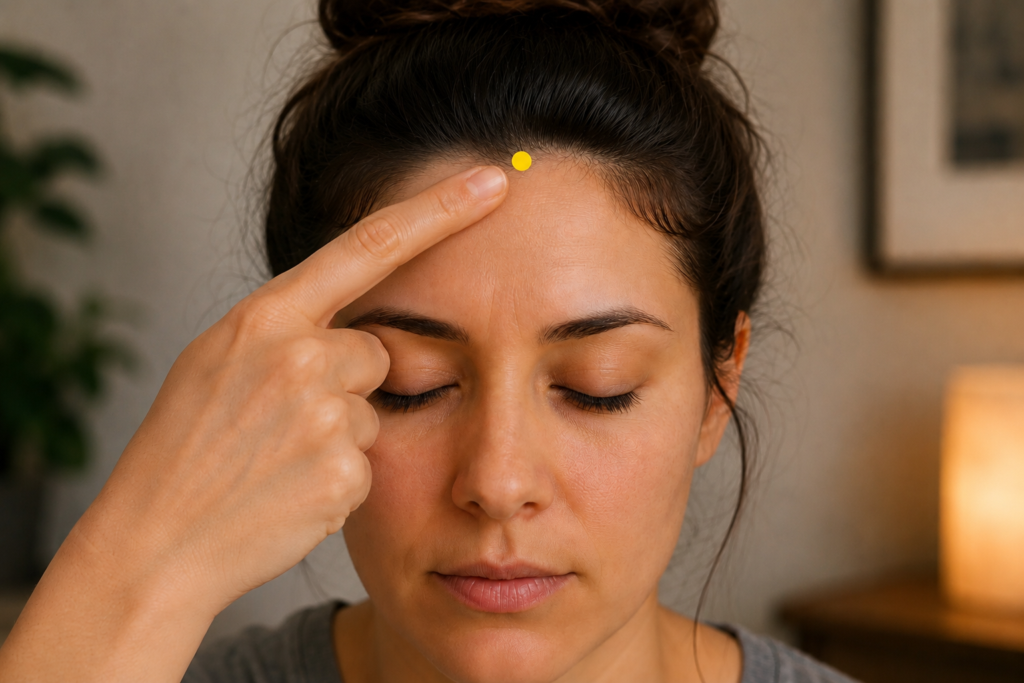
1. Press on GV24 at the front hairline to quiet the inner critic. GV24 sits on the midline of the head, about half a finger-width behind the front hairline. If the hairline has receded, it sits about four and a half finger-widths above the point between the eyebrows. Press gently with your middle fingertip, or make slow circles, for one to two minutes while breathing slowly. GV24 is called “Shenting,” the “Spirit Courtyard.”
GV24 is used to calm the Shen and clear the head. It eases the tension that builds in the forehead as the mind repeatedly dwells on everything that could go wrong and helps quiet the critical voice that dismisses every success.
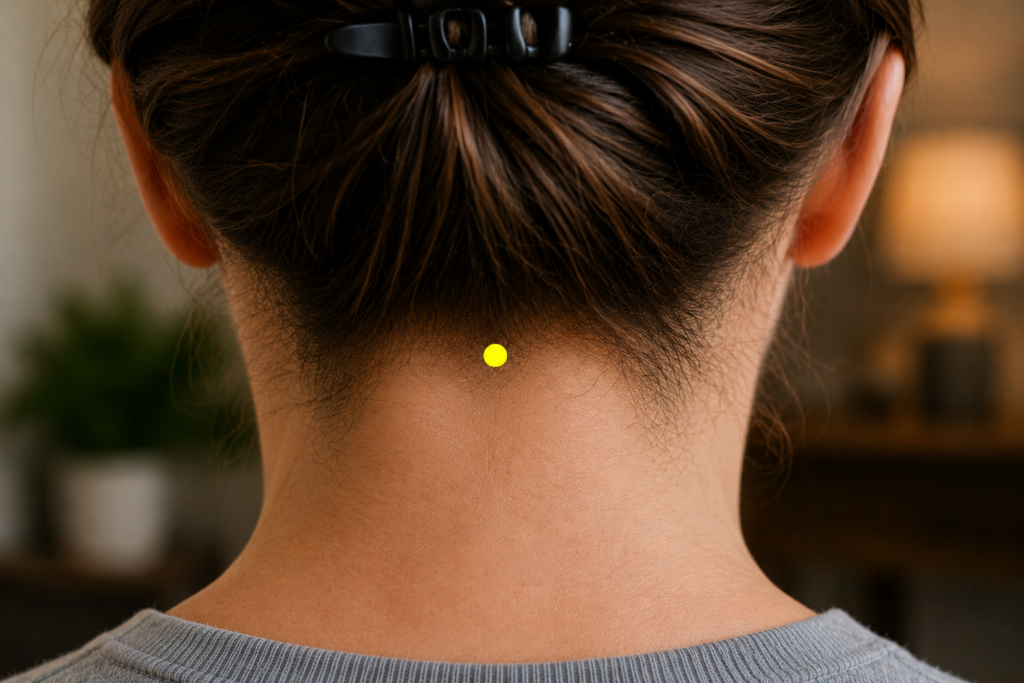
2. Press on GV16 at the base of the skull to calm fear. GV16 sits on the midline at the back of the head, in the hollow directly below the base of the skull. Press gently upward into the hollow with your fingertips for one to two minutes while letting your head rest back slightly. GV16 is called “Fengfu,” the “Palace of Wind.”
GV16 is traditionally used for fearfulness, agitation, and a racing heart. Many people carry the strain of feeling watched or judged at the base of the skull and the top of the neck. Gentle pressure here can release that tension and leave the head feeling much calmer and steadier.
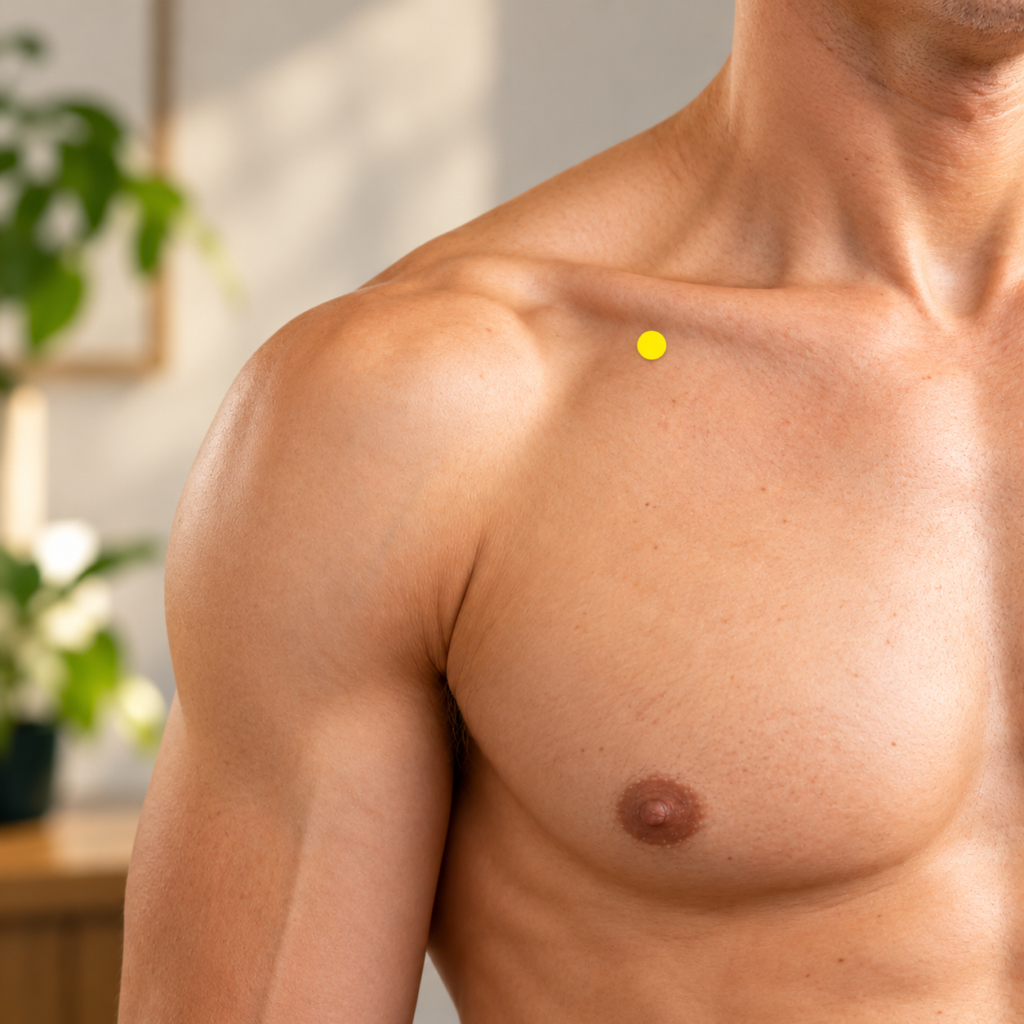
3. Press on LU2 below the collarbone to take in acknowledgment. LU2 sits on the front of the chest, in the hollow just below the outer end of the collarbone. Raise your arm slightly forward to feel the hollow deepen, then press gently with your fingertips for one to two minutes on each side. LU2 is called “Yunmen,” the “Cloud Gate.”
The Lung governs inhalation, the act of taking in what nourishes. People with the impostor phenomenon often struggle to accept praise and recognition they have earned. LU2 opens the chest, supports easier, deeper breathing, and helps people receive what is due to them.
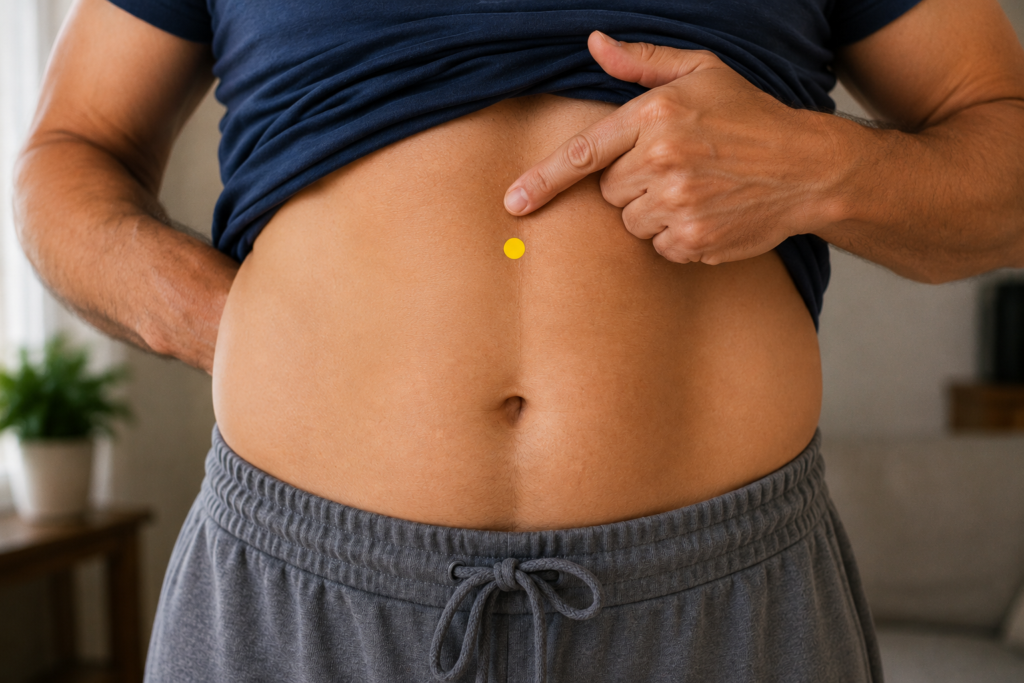
4. Press on CV12 on the upper abdomen to settle overthinking. CV12 sits on the midline of the upper abdomen, halfway between the bottom of the breastbone and the navel. Rest your fingertips or a warm palm on the point and press gently, or make slow clockwise circles, for one to two minutes. CV12 is called “Zhongwan,” the “Middle Cavity.”
CV12 is the Stomach’s front collecting point and tonifies the Spleen, which governs thought in Traditional Chinese Medicine. Before a major meeting or presentation, the stomach may knot up when worry and over-preparation have overworked the Spleen. CV12 steadies the center and helps stop the mind from going in circles.
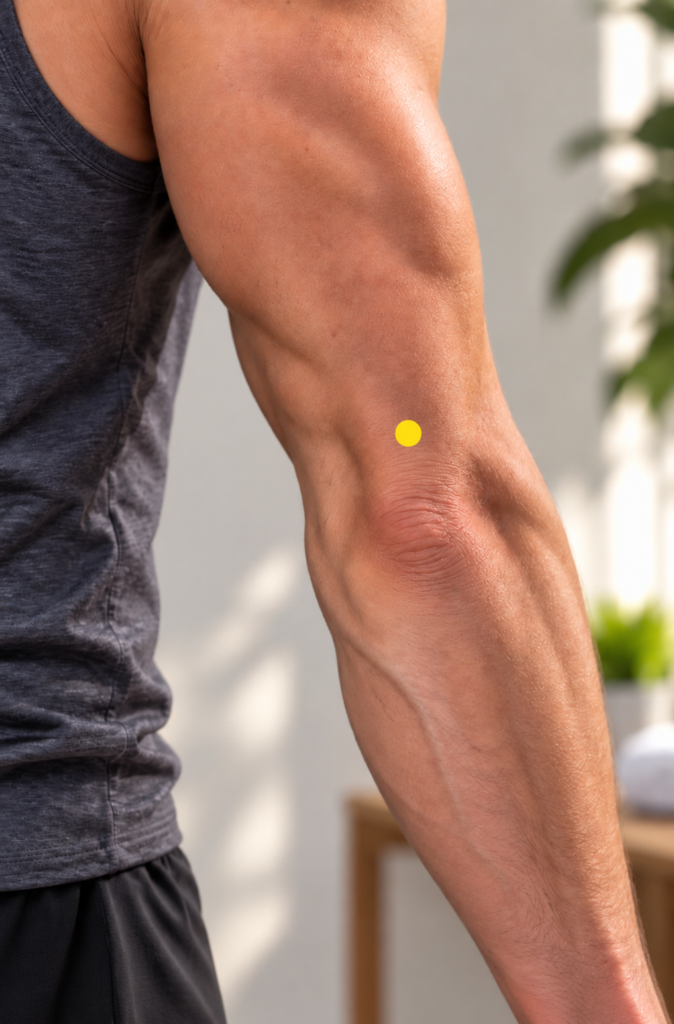
5. Press on TE10 above the elbow to release built-up tension. TE10 sits on the back of the upper arm. Bend the elbow, and the point sits in the hollow about one thumb-width above the elbow tip. Press firmly with the thumb of your other hand for one to two minutes on each arm. TE10 is called “Tianjing,” the “Heavenly Well.”
TE10 belongs to the Shaoyang channels, which include the Gallbladder channel. In Traditional Chinese Medicine, it’s used to calm the mind and relieve tension in the neck, shoulders, and arms. It can help when trying to appear competent leaves your upper body tense and braced.
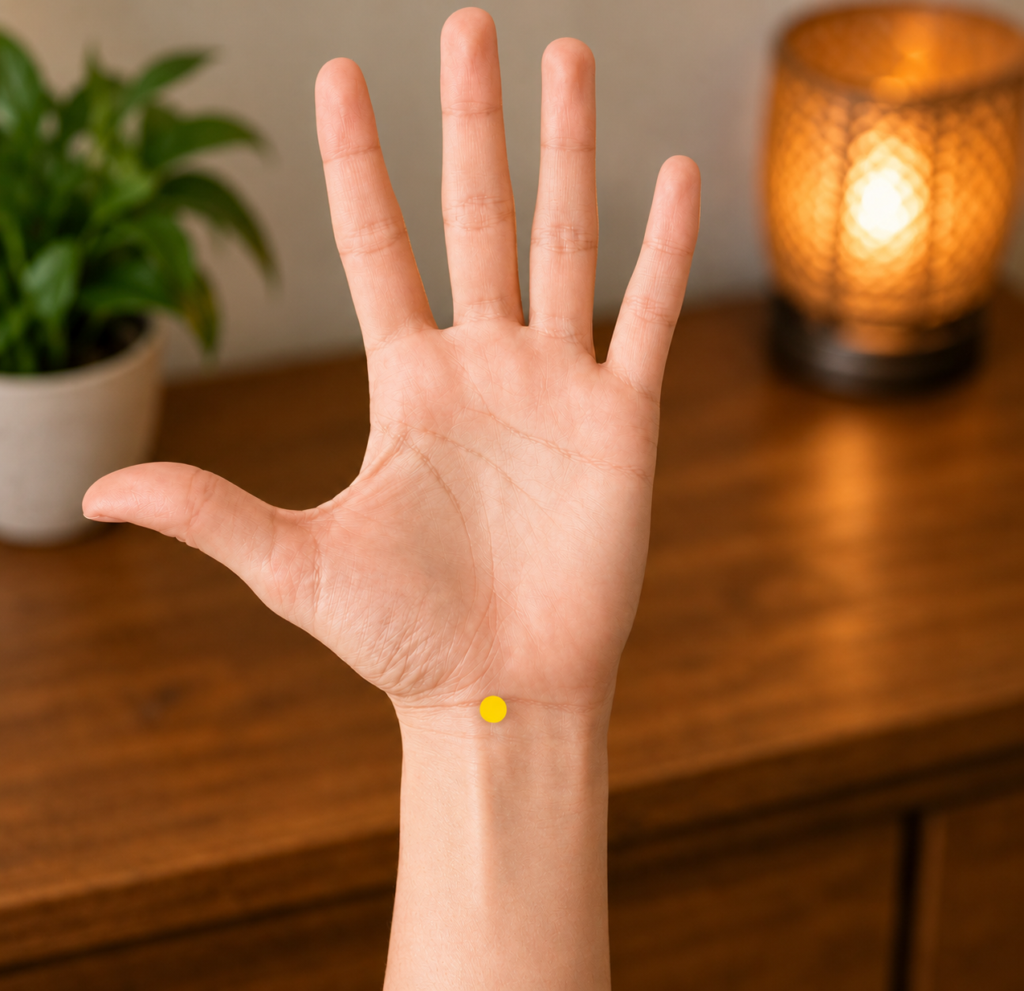
6. Press on PC7 at the center of the wrist to steady the Heart. PC7 sits at the center of the inner wrist crease, between the two tendons. Press firmly with the thumb of your other hand for one to two minutes on each wrist. PC7 is called “Daling,” the “Great Mound.”
PC7 is the source point of the Pericardium, the protector of the Heart. It calms the Shen, slows a racing heart, and eases the nervousness that can build before an assessment. It’s easy to press discreetly before a meeting, interview, or presentation.
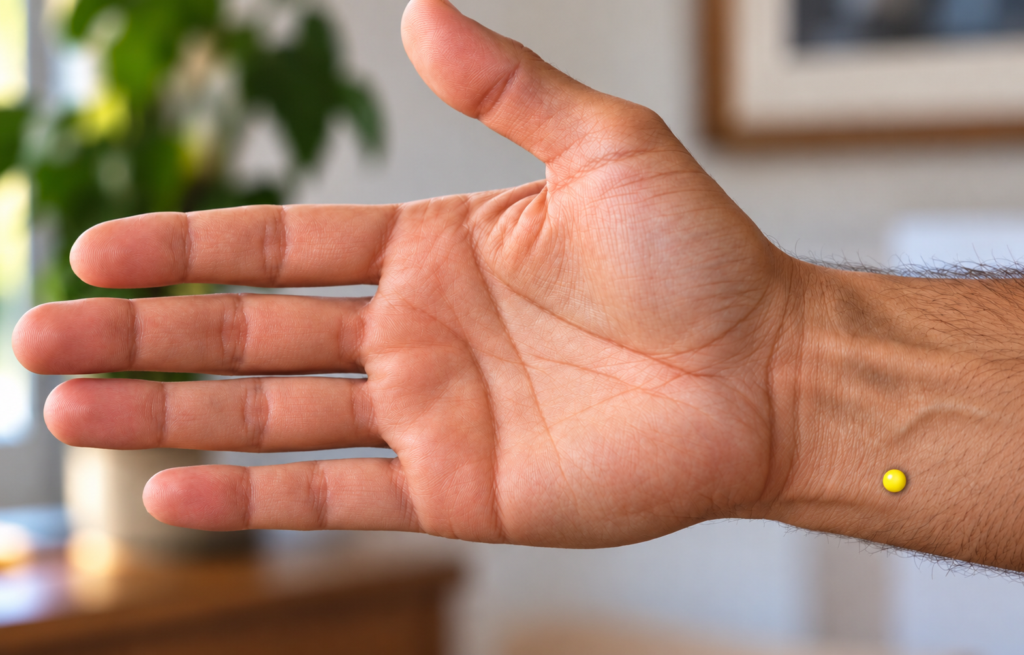
7. Press on HT5 on the wrist to find your voice. HT5 sits on the inner wrist, on the pinky side, just inside the tendon, about one thumb-width above the wrist crease. Press gently with the thumb of your other hand for one to two minutes on each wrist. HT5 is called “Tongli,” the “Connecting Interior.”
HT5 is the Heart’s point of connection and is traditionally indicated for sudden inability to speak. Many people with impostor syndrome stay quiet in meetings, holding back their ideas for fear of being found out. HT5 calms the Shen and supports the connection between the Heart and the voice, making it easier to speak up.
8. Press on KI8 on the inner lower leg to restore belief in yourself. KI8 sits on the inner side of the lower leg, about three finger-widths above the hollow behind the inner ankle bone, just behind the inner edge of the shinbone. Press firmly with your thumb for one to two minutes on each leg. KI8 is called “Jiaoxin,” the “Exchange Belief.”
The Kidney governs fear, and KI8 strengthens the Kidney when fear has taken hold. Its name evokes trust and belief, a timely reminder for anyone who struggles to believe in themselves. KI8 helps stabilize the body, giving confidence a firm foundation.
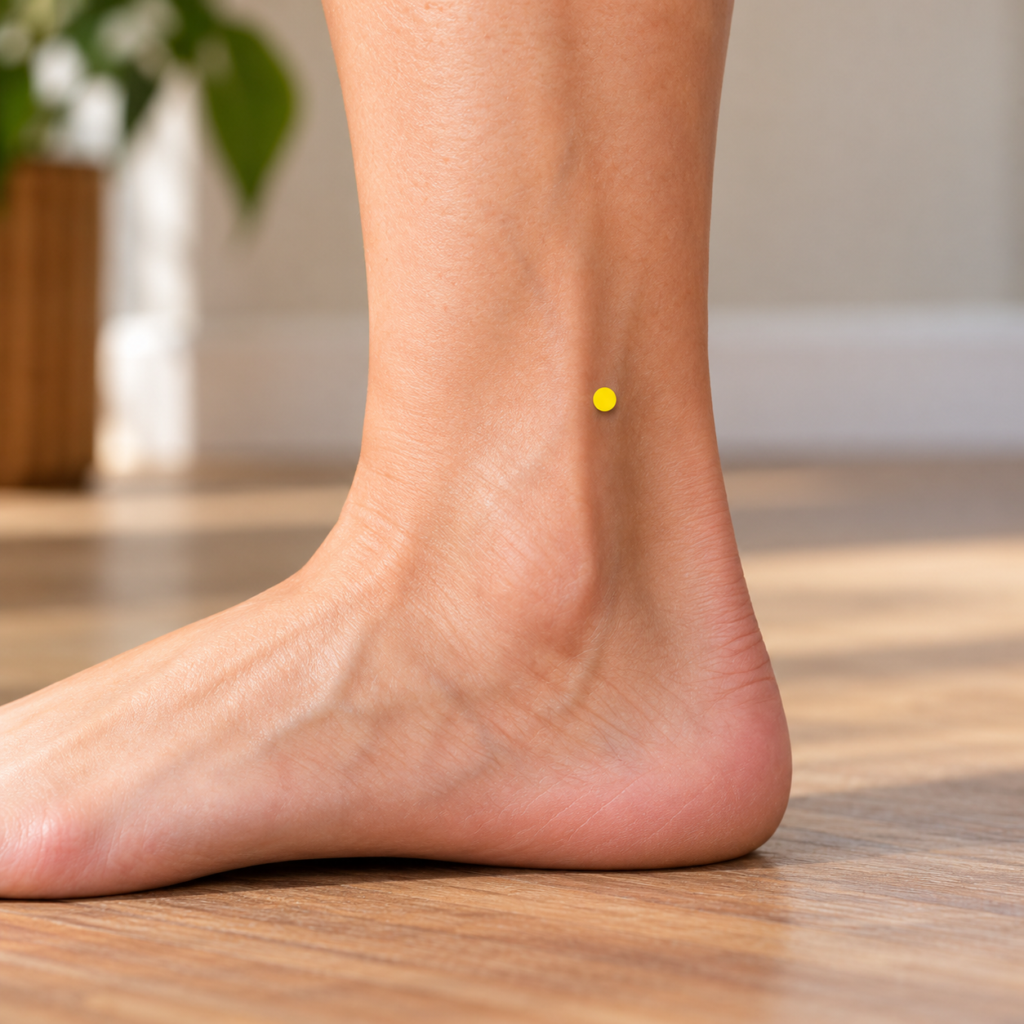
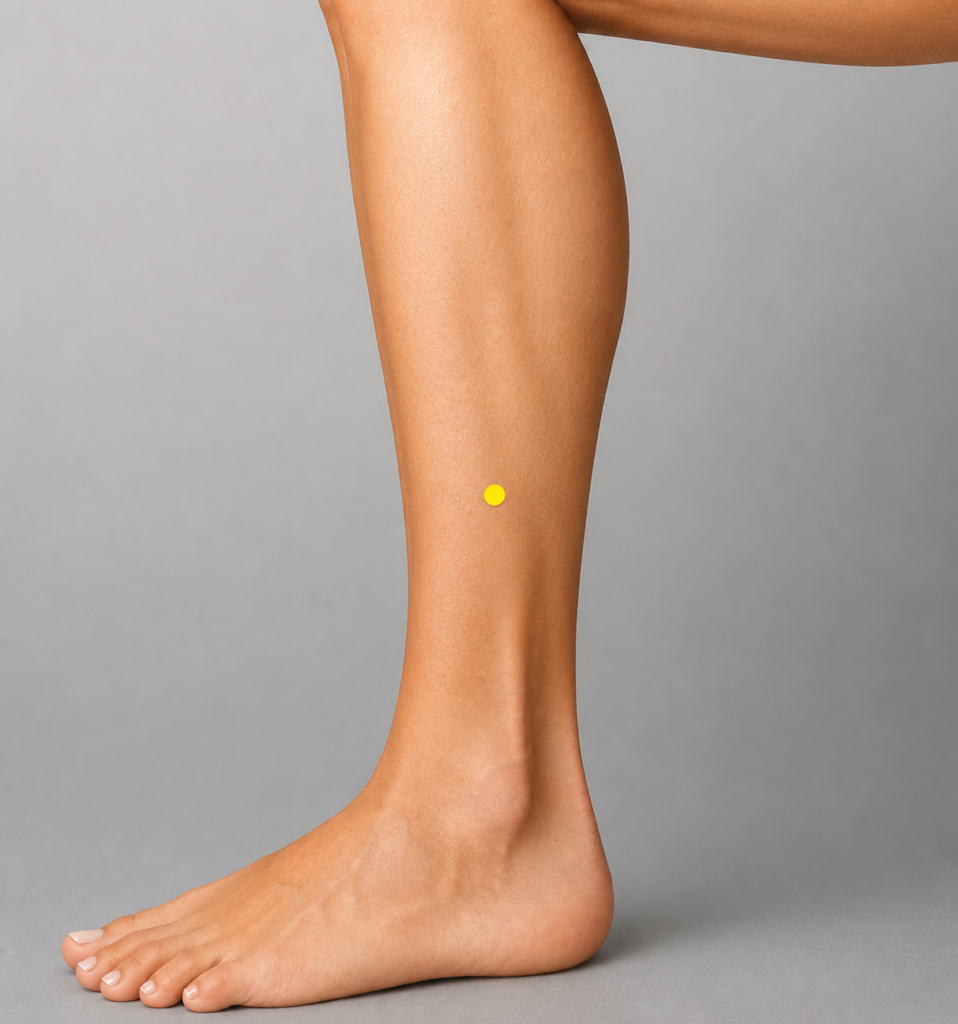
9. Press on GB37 on the outer lower leg to see yourself clearly. GB37 sits on the outer side of the lower leg, about seven finger-widths above the tip of the outer ankle bone, just in front of the fibula. Press firmly with your thumb for one to two minutes on each leg. GB37 is called “Guangming,” the “Bright Light.”
GB37 connects the Gallbladder and the Liver and is traditionally used to brighten the eyes. Its name, ‘Bright Light,” speaks to clear sight and seeing your own achievements as they truly are. It supports the Gallbladder’s courage and trust in its own judgment.
Why These Acupressure Points Work

In Traditional Chinese Medicine, a settled sense of self depends on the Kidney keeping fear in balance, the Heart knowing its own worth, the Spleen allowing thoughts to settle, and the Gallbladder trusting its own judgment. Impostor feelings arise when fear disrupts the balance between the Kidney and the Heart, overthinking takes over, and confidence erodes.
The nine points collectively help restore a sense of belonging.
- The head points (GV24, GV16) help to quiet the inner critic and calm the fear of being exposed.
- The Heart points (PC7, HT5) settle the Shen, steady a racing heart, and support the voice.
- The receiving and centering points (LU2, CV12) open the chest to take in acknowledgment and settle overthinking.
- The courage and belief points (TE10, KI8, GB37) release braced tension, ease fear, and restore trust in your own abilities.
How to Properly Use These Acupressure Points

Acupressure for impostor syndrome is most effective as a daily practice, with a few points reserved for moments before you’re seen or evaluated.
- Complete the full routine once daily, holding each position for one to two minutes, preferably in the evening or before a demanding day.
- Before a meeting, interview, or presentation, take five slow breaths as you press PC7 on both wrists, followed by HT5.
- Apply gentle pressure to the head, neck, chest, and abdomen, and firmer pressure to the arms and legs.
- Practice regularly for several weeks, as deeply held beliefs about not measuring up take time to change.
Daily habits can help loosen the grip of impostor feelings. Try keeping a list of your accomplishments, positive feedback, and problems you’ve solved, and read it before tough tasks. When someone praises you, practice saying thank you instead of brushing it off. Separate feelings from facts by asking what evidence really supports your fear. Talk openly with a mentor, colleague, or friend. Many people find that others they admire feel the same way. Aim for good work, not perfect work, and notice when extra preparation stops being helpful. Get enough sleep and limit caffeine before high-pressure days.
Learn more about building your confidence for the next chapter in your life.
When to Get Professional Help

Consider talking with a mental health professional if impostor feelings keep you from applying for opportunities, speaking up, or enjoying your achievements. Seek help as well if they’re accompanied by ongoing anxiety, panic attacks, depression, or perfectionism that leaves you exhausted. Support can also help if fear of being found out leads you to overwork until burnout, avoid challenges, or rely on alcohol or other substances to cope. Cognitive behavioral therapy and other approaches can help change the beliefs that keep this cycle going.
If you feel hopeless or have thoughts of harming yourself, call or text 988 to reach the Suicide and Crisis Lifeline right away.
Acupressure may serve as a gentle, supportive practice for managing impostor syndrome; however, it should complement, rather than replace, diagnosis and medical care.
For related emotional challenges, acupressure for self-esteem, acupressure for social anxiety, and acupressure for fear of public speaking are companion posts. If you are your own harshest critic, please read stop being so hard on yourself.
Above and Beyond Acupuncture offers acupuncture, cupping, and lifestyle coaching at the North Frank Lloyd Wright Boulevard location in Scottsdale.
Schedule an appointment online to start your healing journey.
The points above are only as effective as the technique used to apply them. Where to press, how firmly, and for how long all affect the result. For a full breakdown of how to perform acupressure properly at home, read Performing Acupressure in 3 Easy Steps.

About the Publisher
Paul Kerzner, L.Ac., is a licensed acupuncturist and board-certified herbalist, as well as the founder of Above and Beyond Acupuncture in Scottsdale. His own journey from chronic patient to practicing acupuncturist shapes his commitment to providing honest, clinically grounded information about acupuncture and Traditional Chinese Medicine. Learn more about Paul and his clinical approach on the About Us page.