Key Takeaways
- A runny nose is most often caused by a cold or allergies, but cold air, spicy food, and overusing decongestant sprays can also trigger it.
- In Traditional Chinese Medicine, a runny nose suggests that the Lung, which opens into the nose, is having trouble keeping out Wind, Cold, or Heat, or that weak defensive Qi is allowing fluids to leak.
- Nine acupressure points on the head, face, hands, and lower leg can help clear nasal congestion, dry up the drip, and strengthen the body’s defenses.
- Warm fluids, a humidifier, saline rinses, and avoiding known triggers can help these measures work.
- Discharge from only one side, especially if bloody or pus-filled, or facial pain and tenderness, requires medical attention.

Cold morning air hits your face, and within a block your nose is running. A bowl of hot salsa does the same halfway through dinner. When you have a cold, the tissues by the bed pile up overnight; in spring, the drip can last for weeks whenever the pollen count rises. All that wiping leaves the skin under your nose red and raw, and the drip seems to start again the moment you tuck the tissue back into your pocket.
According to the Merck Manual, viral colds and allergic reactions are the most common causes of nasal discharge. Less common causes include sinus infections, a small object lodged in the nose, overuse of decongestant nasal sprays, and vasomotor rhinitis, in which the nose runs in response to triggers such as cold air, strong smells, or spicy food. For congestion caused by a cold, the Merck Manual recommends using a humidifier and saline nasal spray. It also warns that decongestant sprays can cause rebound congestion that worsens over time.
Most runny noses clear up within a week or two after a cold passes. If one persists, it’s usually caused by a recurring trigger, such as pollen, dust, pet dander, dry indoor air, or cold weather.
Traditional Chinese Medicine teaches that the Lung opens into the nose. The Lung also disperses Wei Qi (the defensive Qi) across the skin and through the nose and throat, where it acts as a barrier against external pathogens. Wind and Cold that pass through this barrier may manifest as a runny nose with thin, clear, watery mucus, often accompanied by sneezing, chills, and a stiff neck. Wind and Heat may result in thick, yellow mucus and a sore throat. A runny nose that occurs every season or whenever the weather changes may indicate weak Lung Qi and defensive Qi, which are unable to contain fluids. A drip that persists for months, accompanied by thick white mucus, particularly after consuming rich, greasy, or dairy-laden foods, may indicate Dampness and Phlegm that a weak Spleen has been unable to clear.
The nine points below begin on the head and face, progress to the hands and wrists, and end on the lower leg.
What Acupressure Points to Press and Why
1. Press on GV23 on the top of the head to clear the nose. GV23 sits on the midline of the head, one thumb-width behind the front hairline. Press with your middle fingertip using moderate pressure for one to two minutes. GV23 is called “Shangxing,” the “Upper Star.”
GV23 is a classic point for a runny or blocked nose and a heavy forehead. In Traditional Chinese Medicine, it’s used for runny noses of all kinds, whether caused by a cold, allergies, or a persistent drip.

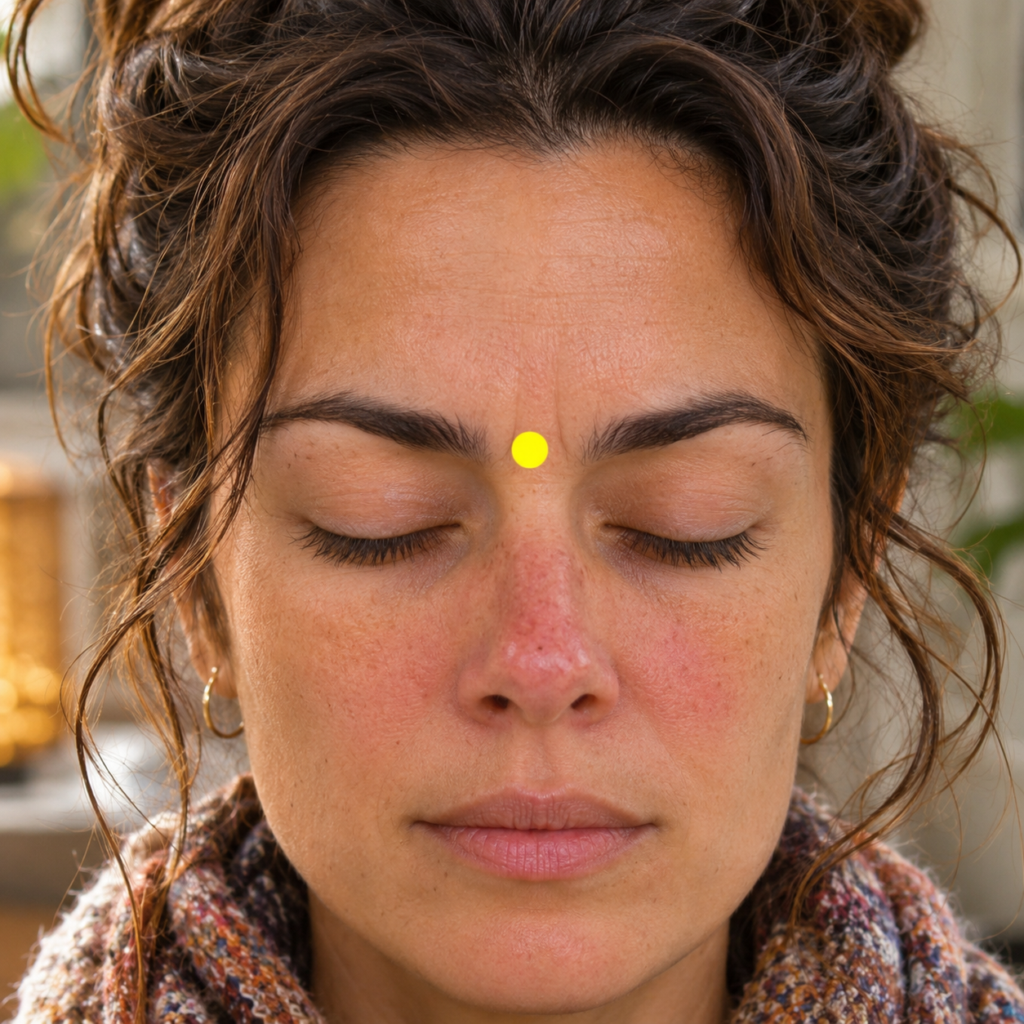
2. Press on Yintang between the eyebrows to calm the nose and forehead. Yintang sits on the midline, halfway between the inner ends of the eyebrows. Press gently with your middle fingertip, or make slow circles, for one to two minutes. Yintang is called the “Hall of Impression.”
Yintang is an extra point that can help with sneezing, a runny nose, and pressure above the bridge of the nose. It also calms the mind, which can be especially useful for the restless, unfocused state that a cold or allergy flare can bring on.
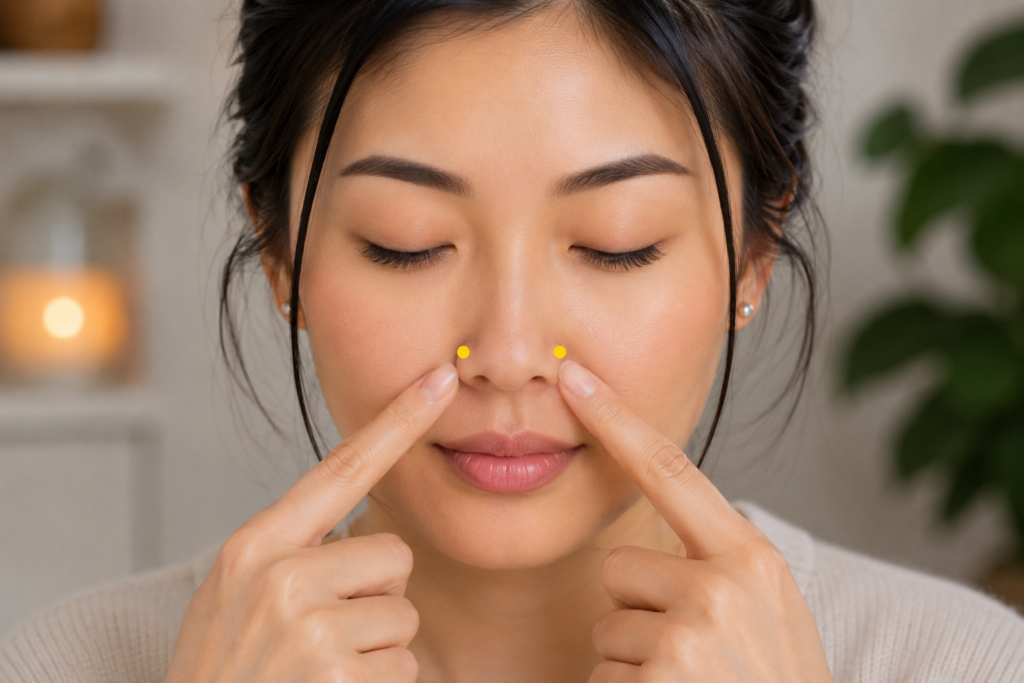
3. Press on Bitong on the sides of the nose to open the nasal passages. Bitong sits on each side of the nose, at the upper end of the groove beside the nostril, where the bony bridge of the nose meets the softer cartilage. Press both points at once with your index fingers for one to two minutes, using gentle pressure. Bitong means “Penetrating the Nose.”
Bitong is an extra point for nasal problems. It can stop a runny nose, clear a blocked one, and ease the dull ache along the sides of the nose caused by constant blowing.
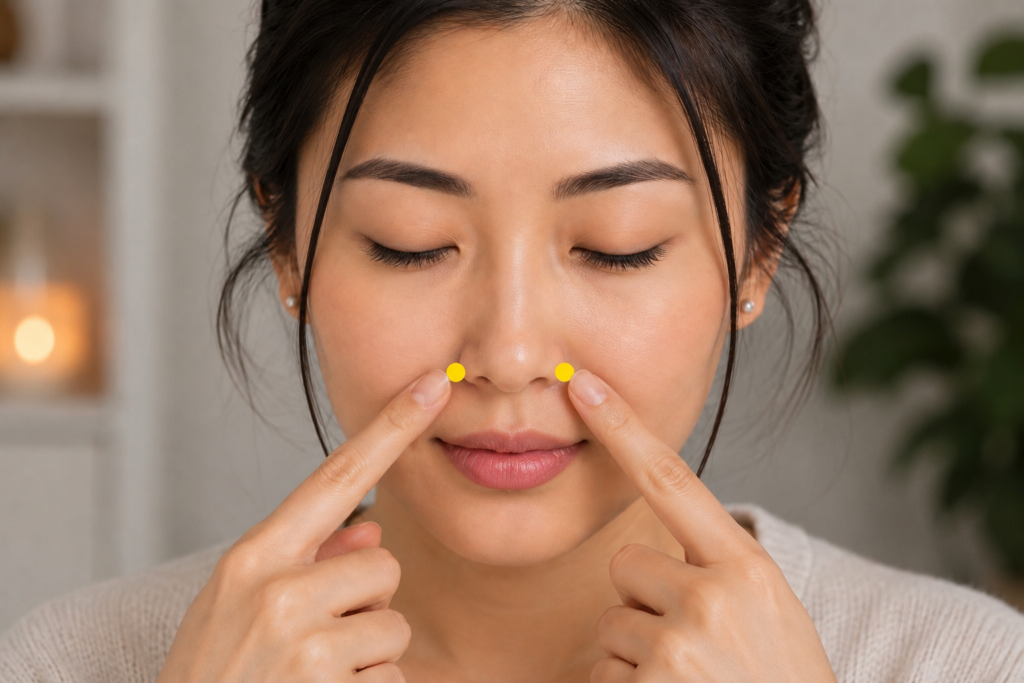
4. Press on LI20 beside the nostrils to stop the drip. LI20 sits in the groove beside the outer edge of each nostril, at the widest part of the nose. Press both points at once with your index fingers for one to two minutes, using gentle pressure. LI20 is called “Yingxiang,” the “Welcome Fragrance.”
LI20 is where the Large Intestine and Stomach channels meet, and it is the main local point for the nose. Its name reflects its role in restoring the sense of smell. It is pressed to relieve runny noses, sneezing, and nasal congestion of all kinds.
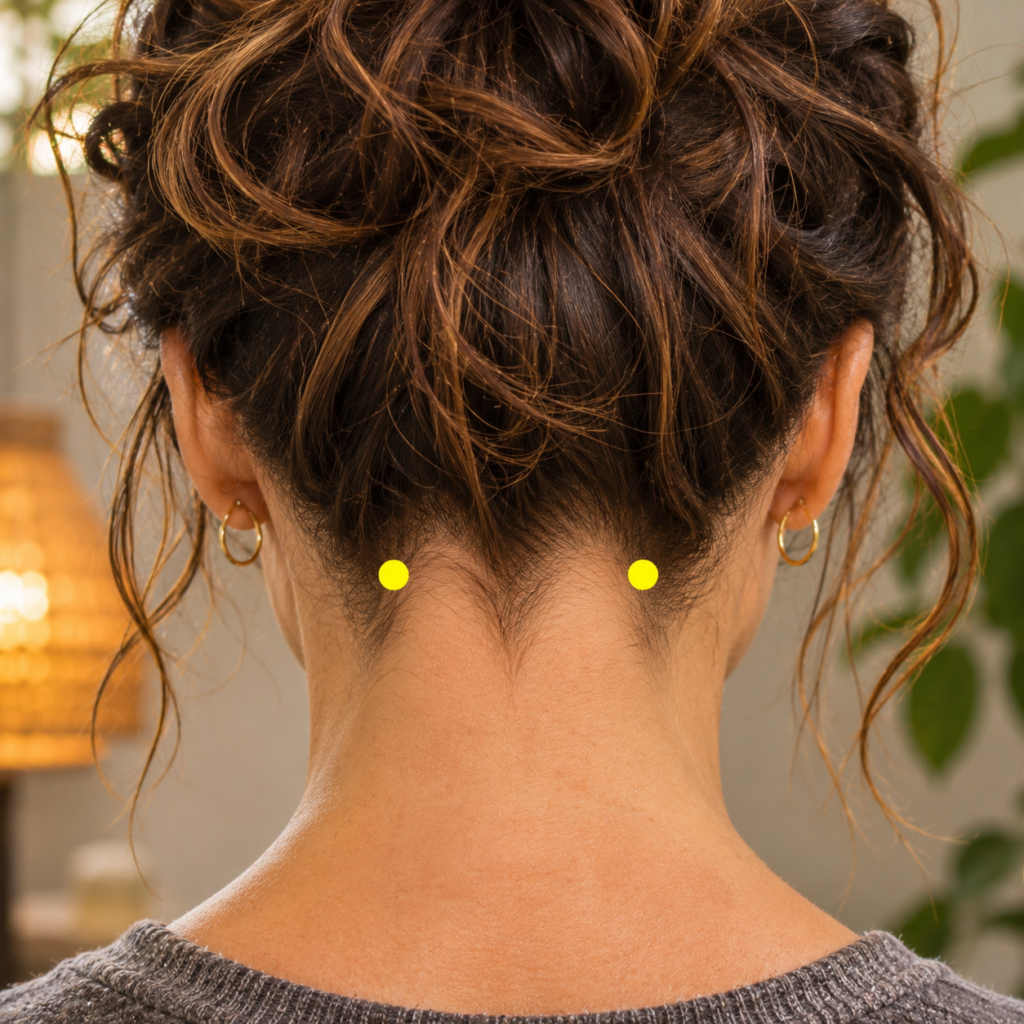
5. Press on GB20 at the base of the skull to release Wind. GB20 sits on the back of the head, in the hollows at the base of the skull on either side of the two thick muscles that run down the neck. Press upward into both points at once with your thumbs for one to two minutes while letting the head rest back into your hands. GB20 is called “Fengchi,” the “Wind Pool.”
GB20 expels Wind from the head and neck. It’s useful for a runny nose with a cold, along with symptoms such as a stiff neck, chills, and headache. It can also help with the heavy-headed feeling that often comes with allergy season.
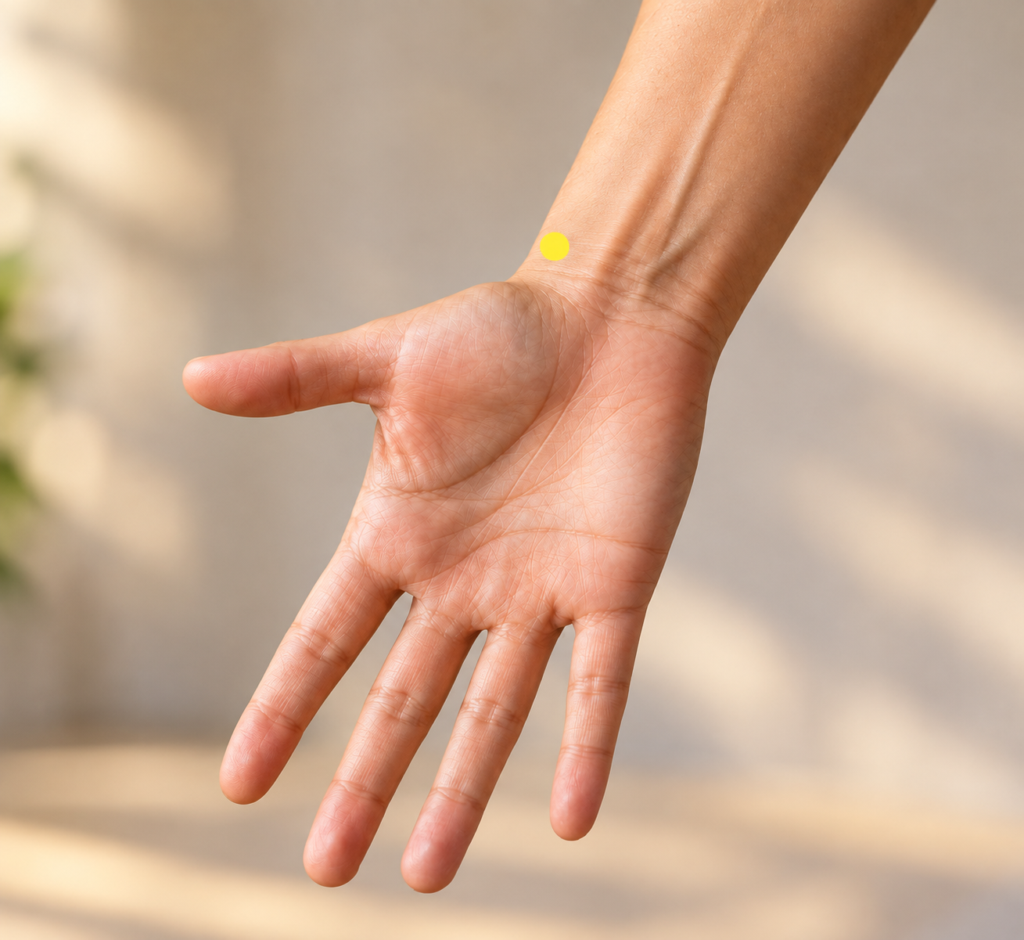
6. Press on LU7 above the wrist to help the Lung clear the nose. LU7 sits on the thumb side of the forearm, about two finger-widths above the wrist crease, in the small groove just above the bony bump at the wrist. Press with the tip of your index finger for one to two minutes on each arm. LU7 is called “Lieque,” the “Broken Sequence.”
LU7 is the Lung’s connecting point. It helps the Lung disperse Qi to the surface, pushing out Wind and Cold. It’s ideal for a clear, watery drip at the onset of a cold and can also help with the sneezing and stiff neck that often accompany it.
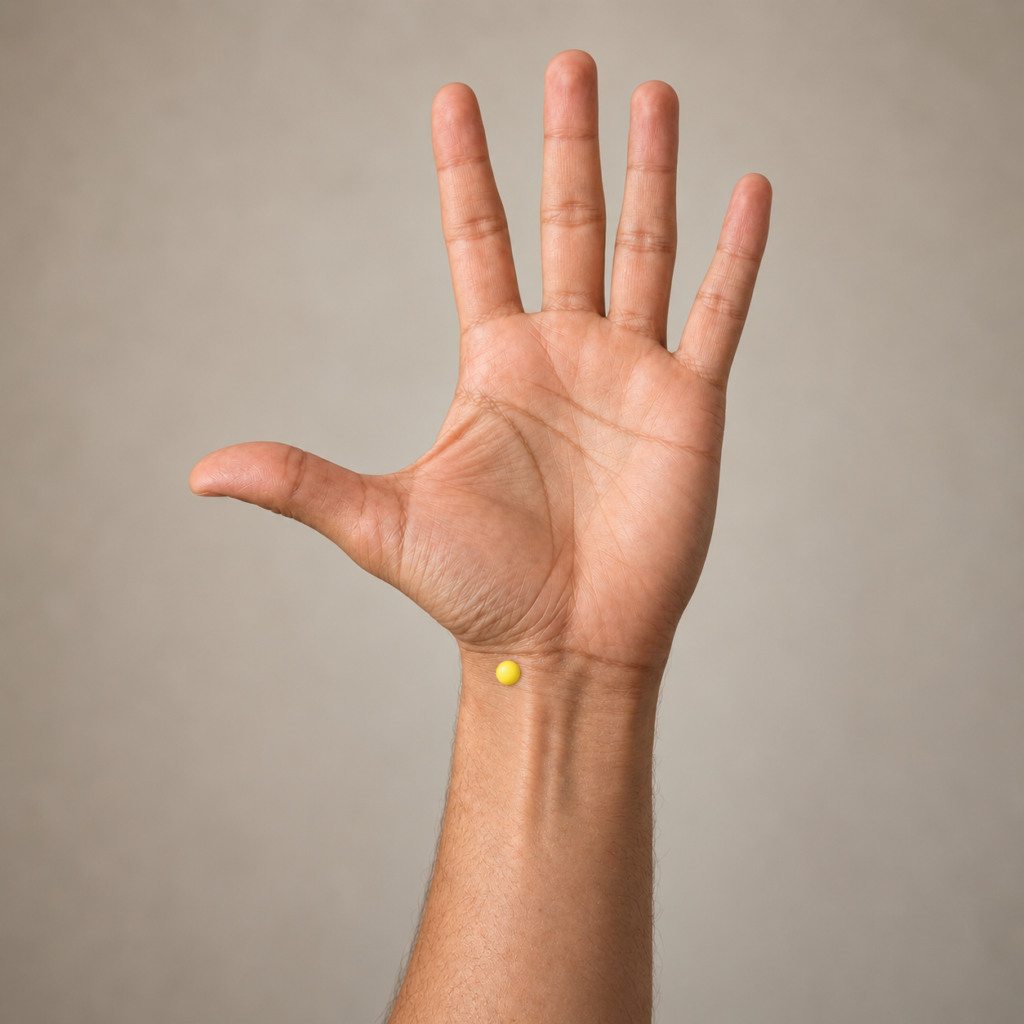
7. Press on LU9 at the wrist crease to strengthen the Lung. LU9 sits on the inner wrist crease on the thumb side, in the small hollow just beside the pulse. Press gently with the thumb of your other hand for one to two minutes on each wrist. LU9 is called “Taiyuan,” the “Great Abyss.”
LU9 is the source point of the Lung. It supports the generation of Lung Qi and defensive Qi and may therefore be useful for a persistent runny nose, whether caused by changing weather or seasonal allergies.
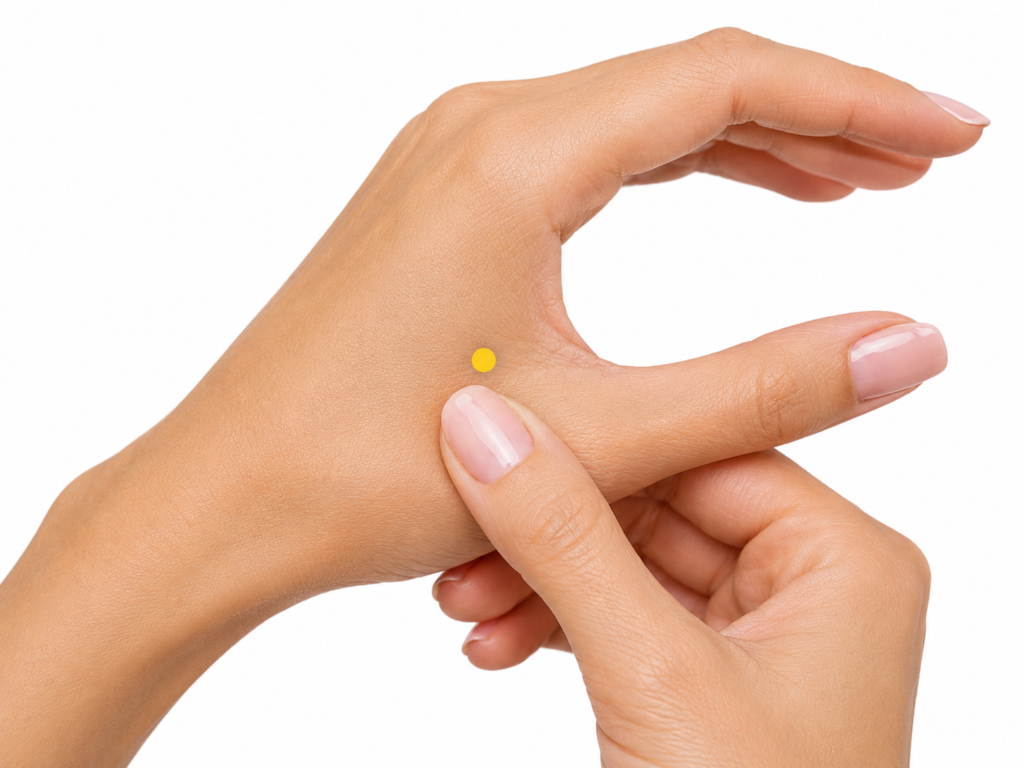
8. Press on LI4 on the back of the hand to release the face and nose. LI4 sits on the back of the hand, in the web between the thumb and index finger, on the highest point of the muscle when the thumb and index finger are pressed together. Press firmly with the thumb of your other hand for one to two minutes on each hand. LI4 is called “Hegu,” the “Joining Valley.” LI4 is avoided during pregnancy.
LI4 is the source point of the Large Intestine channel, which ends at LI20 beside the nose. In Traditional Chinese Medicine, it is one of the most important points for the face and is used to release Wind, clear the nose, and relieve facial pain caused by a cold.
9. Press on ST36 below the knee to strengthen the body’s defenses. ST36 sits on the front of the lower leg, four finger-widths below the bottom of the kneecap and one finger-width toward the outside of the shinbone. Press firmly with your thumb for one to two minutes on each leg. ST36 is called “Zusanli,” the “Leg Three Miles.”
ST36 is the sea point of the Stomach. It strengthens the Spleen and Stomach, the organs that produce the Qi that nourishes the Lung, and helps dry up the Dampness behind a thick, lingering drip. You can press this point every day. It is especially useful for people who catch every cold going around.

Why These Acupressure Points Work

From a Traditional Chinese Medicine perspective, a runny nose occurs when the Lung cannot hold its ground. Sometimes Wind, Cold, or Heat gets past the defensive Qi, and the nose tries to flush it out. Other times, weak Lung Qi or excess Dampness allows fluids to leak without any outside trigger. Relief comes from opening the nose locally, expelling any pathogen, and then strengthening the Lung, Spleen, and defensive Qi so the drip does not return with the next cold front.
The nine points work together to clear the nasal passages and support lung function:
- GV23, Yintang, Bitong, and LI20 open the nasal passages and stop the drip locally.
- GB20, LU7, and LI4 release Wind and help the body push out a cold.
- LU9 and ST36 strengthen the Lung Qi and defensive Qi and dry up Dampness.
How to Properly Use These Acupressure Points

You can use acupressure for a runny nose several times a day during a cold or allergy flare, or as a brief daily routine during seasons when your nose tends to act up.
- When nasal drainage begins, apply pressure to LI20, Bitong, and Yintang first, followed by LI4 and LU7. Repeat every few hours as needed.
- If the runny nose is accompanied by chills, a stiff neck, or a headache, include GV23 and GB20.
- For a runny nose that recurs every season or with every change in weather, press LU9 and ST36 once daily for several weeks.
- Apply gentle pressure to the face, head, and wrist, and firmer pressure to the hand and leg. Avoid applying pressure to LI4 during pregnancy.
A few simple habits can make a big difference when you have a runny nose. Use saline spray or rinse once or twice a day, and run a humidifier at night if the air is dry. Drink plenty of warm fluids (ginger tea, broth, warm water, etc.) to thin the mucus and soothe your throat. Blow your nose gently, one side at a time, and apply a little petroleum jelly or balm to any raw skin beneath your nose. Limit decongestant sprays to a few days, as they can cause rebound congestion. On high-pollen days, keep the windows closed and shower before bed. If dust or pet dander triggers your symptoms, wash your bedding weekly. Traditional Chinese Medicine recommends keeping the back of your neck covered in cold, windy weather and cutting down on dairy, sugar, and cold drinks (all of which add Dampness).
Read more about acupressure for allergies.
When to Get Professional Help

See a doctor if the discharge comes from only one side of the nose, especially if it contains pus or blood, or if a child may have put something in their nose. Facial pain or tenderness, swelling around the eyes, and a fever that lasts more than a few days can all be signs of a sinus infection. See a doctor if the runny nose persists for more than 10 days, progressively worsens over a week, or is accompanied by a severe headache, a stiff neck, or confusion. A clear, watery drip from one side of the nose after a head injury requires emergency care. Anyone with asthma whose breathing is affected by nasal symptoms should see a doctor. Anyone who has used a decongestant spray for more than a few days should stop and discuss alternatives with a doctor.
Acupressure is a gentle, supportive practice for a runny nose. It complements, and does not replace, diagnosis and medical care.
For related health concerns, acupressure to stop sneezing, acupressure for postnasal drip, and acupressure for the common cold are companion articles. If the nose feels blocked as well as runny, learn about acupressure for sinus congestion and pressure.
Above and Beyond Acupuncture offers acupuncture, cupping, and lifestyle coaching at the North Frank Lloyd Wright Boulevard location in Scottsdale.
Schedule an appointment online to start your healing journey.
The points above are only as effective as the technique used to apply them. Where to press, how firmly, and for how long all affect the result. For a full breakdown of how to perform acupressure properly at home, read Performing Acupressure in 3 Easy Steps.

About the Publisher
Paul Kerzner, L.Ac., is a licensed acupuncturist and board-certified herbalist, as well as the founder of Above and Beyond Acupuncture in Scottsdale. His own journey from chronic patient to practicing acupuncturist shapes his commitment to providing honest, clinically grounded information about acupuncture and Traditional Chinese Medicine. Learn more about Paul and his clinical approach on the About Us page.