Key Takeaways
- Gallbladder pain is typically located beneath the right ribs and often occurs in the evening or at night after a heavy meal. It may also radiate to the back or right shoulder blade.
- Gallstones are the most common cause. Pain that persists for several hours or is accompanied by fever, vomiting, or yellowing of the skin requires immediate medical attention.
- In Traditional Chinese Medicine, gallbladder pain is understood to reflect stagnation of Liver and Gallbladder Qi along the ribs, often accompanied by Damp-Heat associated with rich, greasy foods, alcohol, or prolonged stress.
- Nine acupressure points across the forearms, chest, back, legs, and feet can ease pain beneath the ribs, relieve nausea, and help Qi flow through the Liver and Gallbladder.
- Eating smaller, lighter meals, losing weight gradually rather than through crash diets, and staying active regularly can help reduce how often the pain returns.
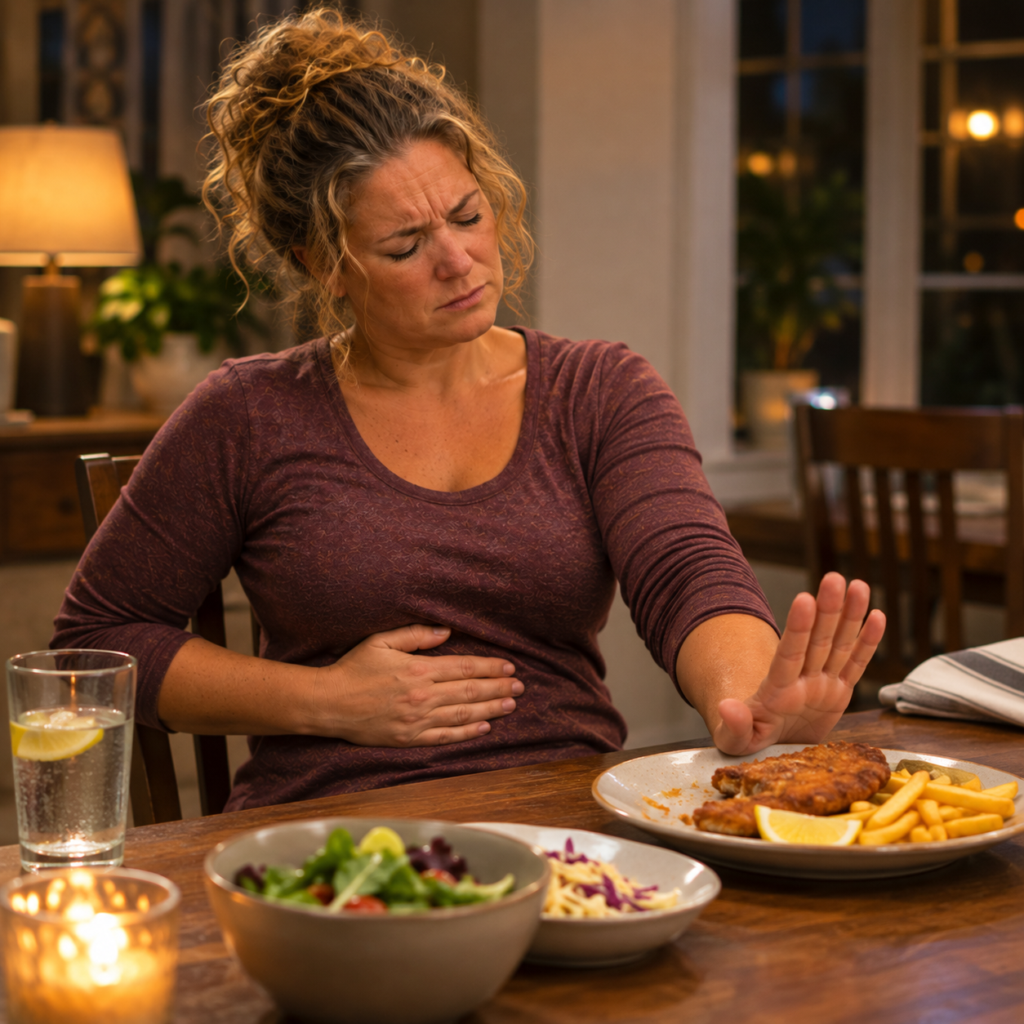
Gallbladder pain often starts a few hours after eating. It begins as a dull ache beneath the right ribs and can develop into a steady, gripping pain that doesn’t ease with movement. The pain may spread to the back or right shoulder blade, and nausea is common. A meal that started out enjoyable can leave you pacing the house late into the night, waiting for relief.
The National Institute of Diabetes and Digestive and Kidney Diseases, part of the National Institutes of Health, says gallbladder attacks usually cause pain in the upper right abdomen that can last for several hours. They often occur after heavy meals, typically in the evening or at night. After a first attack, more are likely. The pain stops when the gallstones move and no longer block the bile ducts. Most people with gallstones never develop symptoms. The NIDDK identifies obesity and certain types of dieting as risk factors and warns that a blockage that persists can cause a serious infection or inflammation of the gallbladder, liver, or pancreas.
The gallbladder stores bile produced by the liver to help digest fat. After a large or rich meal, it contracts to release bile. If a stone blocks the passage, the contraction can cause cramping. Even without stones, a sluggish gallbladder may lead to bloating, nausea, and a heavy feeling after eating fatty foods.
Traditional Chinese Medicine pairs the Gallbladder with the Liver, and their channels run along the sides of the ribs. The Liver keeps Qi flowing smoothly through the body, while the Gallbladder stores and releases bile. Ongoing stress, frustration, and irregular eating can cause Liver Qi to stagnate, leaving the ribs tight, full, and tender. A diet high in fried foods, rich meat, and alcohol creates Damp-Heat, which thickens the bile and can cause a bitter taste in the mouth, nausea, and heaviness. Over time, Traditional Chinese Medicine views stones as Damp-Heat that has condensed and settled in place.
The nine points below begin on the forearms, continue to the ribs and back, and end on the legs and feet.
What Acupressure Points to Press and Why
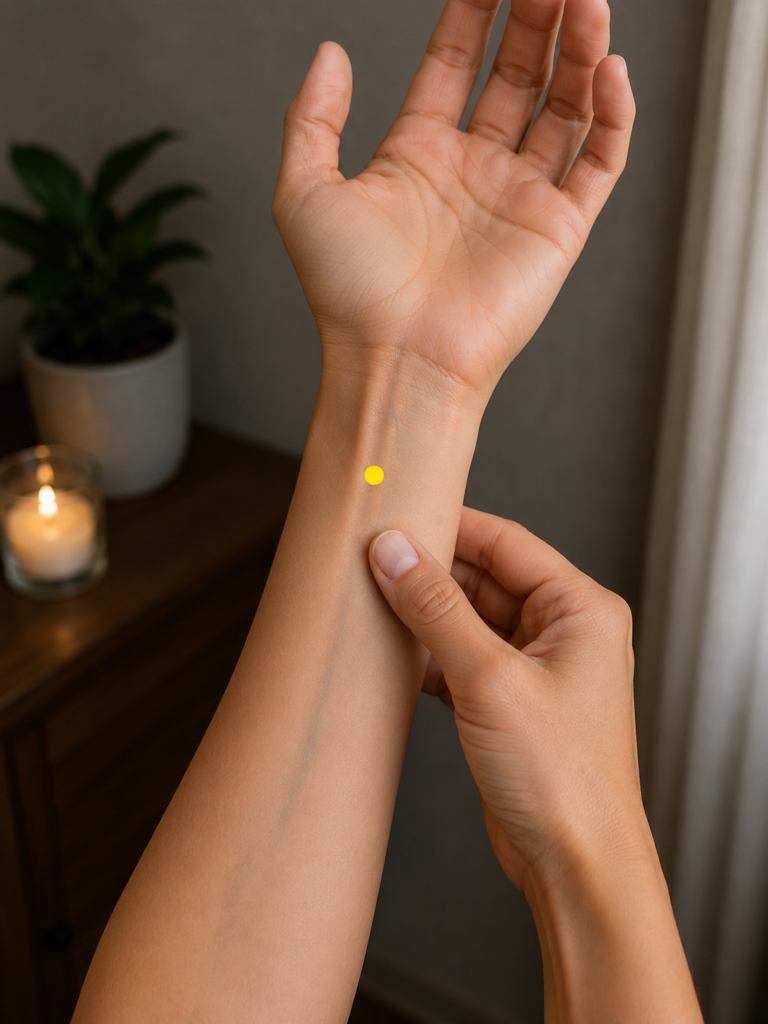
1. Press on PC6 on the inner forearm to settle nausea. PC6 sits on the inner forearm, three finger-widths above the wrist crease, between the two tendons. Press firmly with the thumb of your other hand for one to two minutes on each arm while breathing slowly. PC6 is called “Neiguan,” the “Inner Pass.”
PC6 is the Pericardium’s connecting point. It’s a classic point for nausea and vomiting, and it can ease the tight, full feeling in the chest and upper abdomen that often accompanies gallbladder pain.
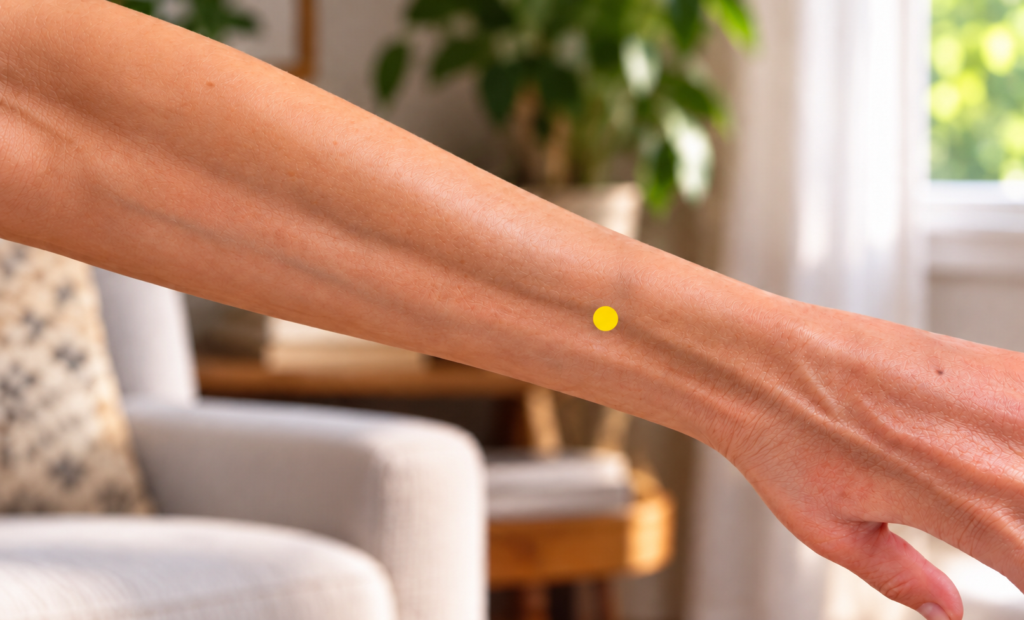
2. Press on TE6 on the back of the forearm to ease pain under the ribs. TE6 sits on the back of the forearm, four finger-widths above the wrist crease, between the two forearm bones. Press firmly with the thumb of your other hand for one to two minutes on each arm. TE6 is called “Zhigou,” the “Branch Ditch.”
TE6 is a classic point for pain along the sides of the ribs. It helps move Qi through the channels around the rib cage and ease the tight, aching band beneath the right ribs.
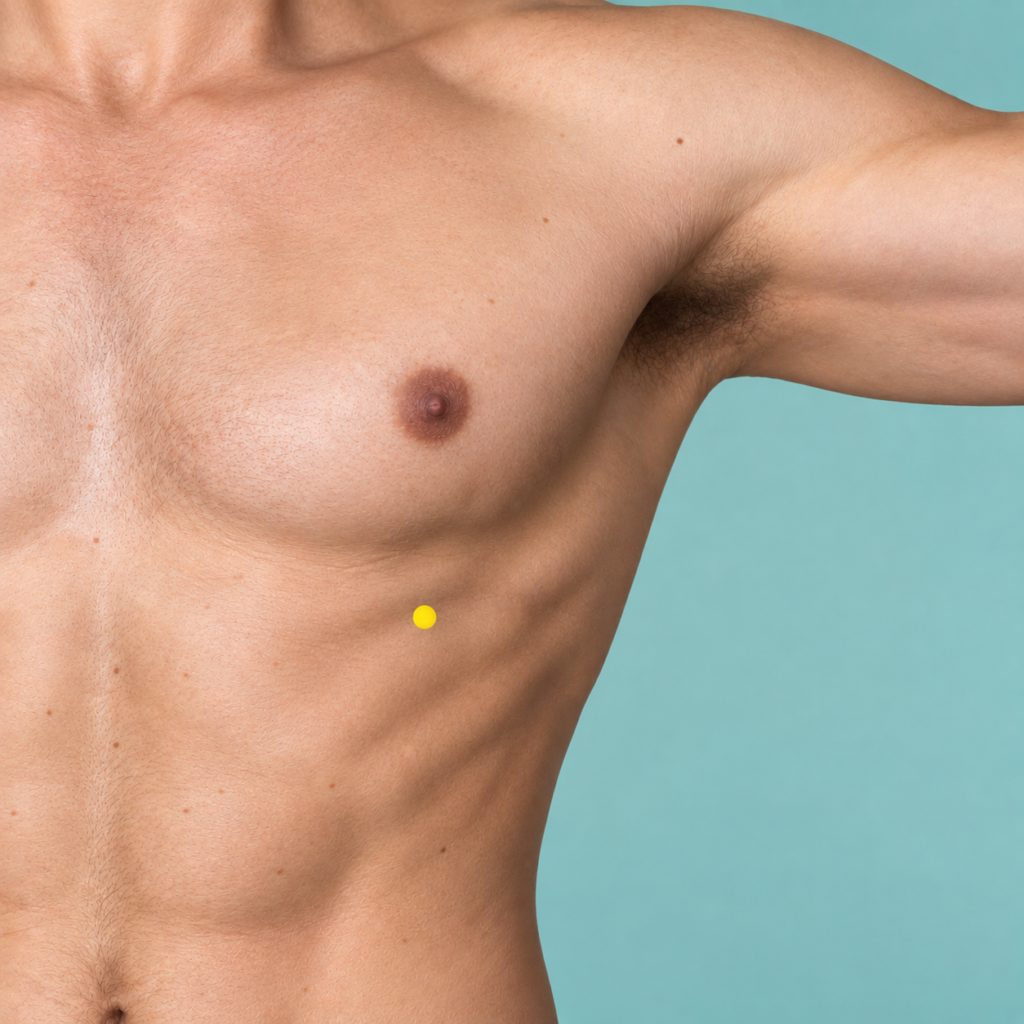
3. Hold LV14 below the nipple to relieve fullness along the ribs. LV14 sits on the front of the rib cage, directly below the nipple, two rib spaces down, in the space between the sixth and seventh ribs. Rest two fingertips on the point with light pressure for one to two minutes on each side, starting with the left side if the right side is tender. LV14 is called “Qimen,” the “Cycle Gate.”
LV14 is the Liver’s alarm point. It helps move stagnant Liver Qi and relieve the tightness, fullness, and tenderness along the ribs associated with stress and gallbladder trouble.
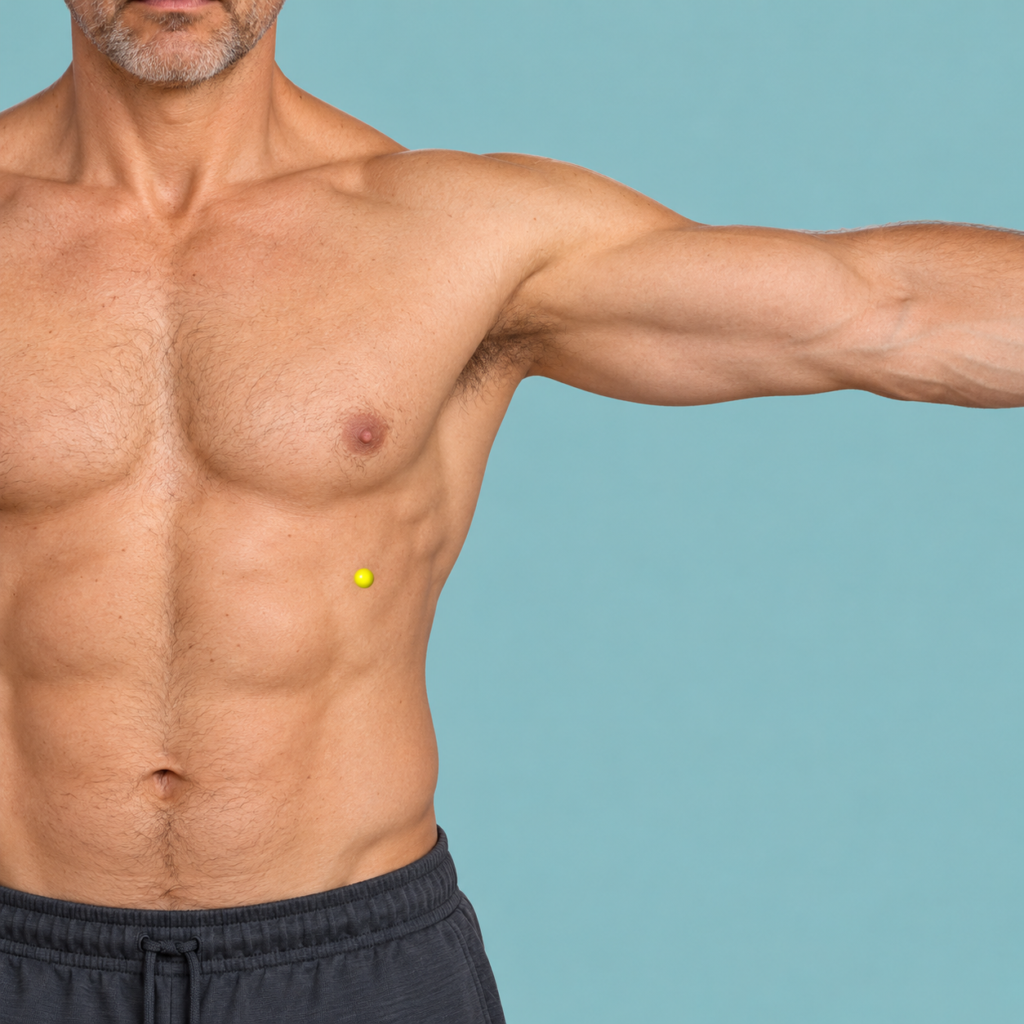
4. Hold GB24 on the lower rib cage to calm the Gallbladder. GB24 sits directly below LV14, one rib space lower, in the space between the seventh and eighth ribs, in line with the nipple. Rest two fingertips on the point with light pressure for one to two minutes on each side. GB24 is called “Riyue,” the “Sun and Moon.”
GB24 is the Gallbladder’s alarm point, where its Qi gathers at the front of the body. It is traditionally used for pain beneath the ribs, a bitter taste in the mouth, and nausea. During a gallbladder attack, never press firmly on a tender area.
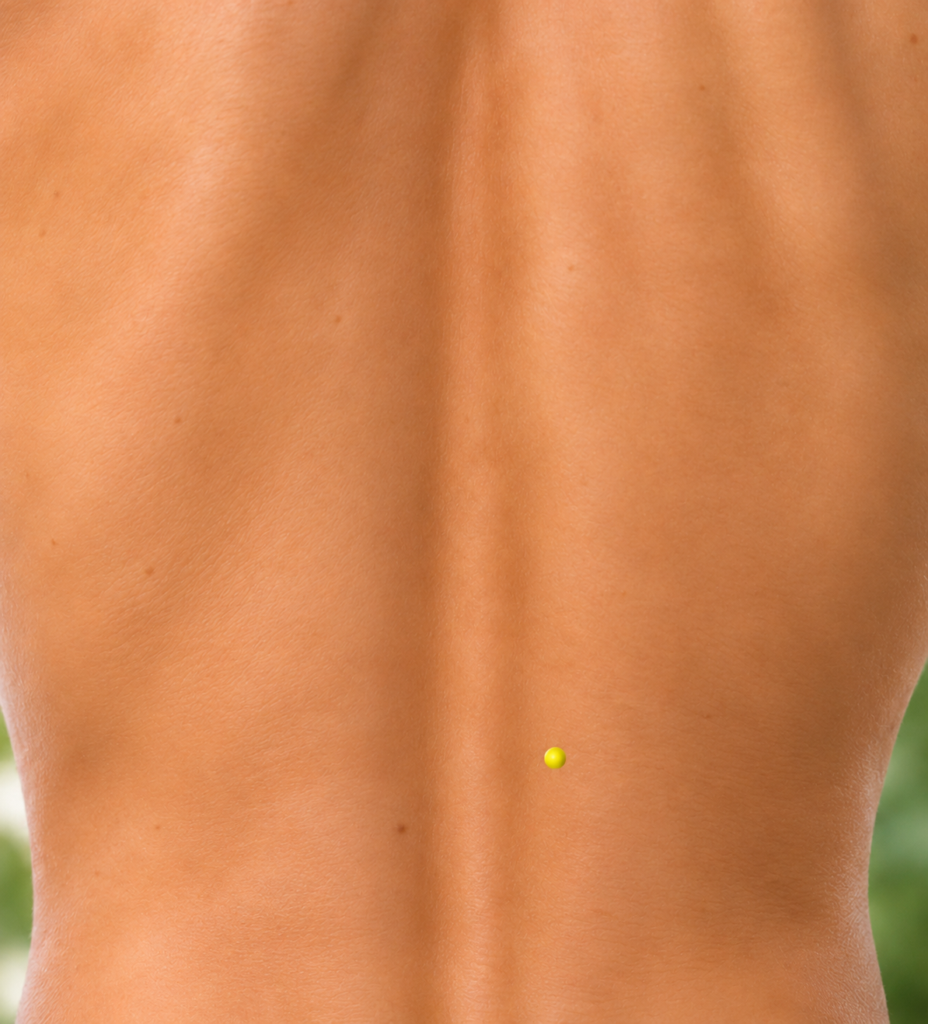
5. Press on BL19 on the middle back to support the Gallbladder from behind. BL19 sits on the back, two finger-widths out from the spine on each side, about three vertebrae below the level of the bottom tips of the shoulder blades. Lie on your back with a tennis ball under the point, or lean against a wall with the ball in place, and press into it for one to two minutes on each side. BL19 is called “Danshu,” the “Gallbladder Shu.”
BL19 is the Gallbladder’s back transport point. It eases pain that radiates to the back and may help when gallbladder pain is accompanied by tension between the shoulder blades.
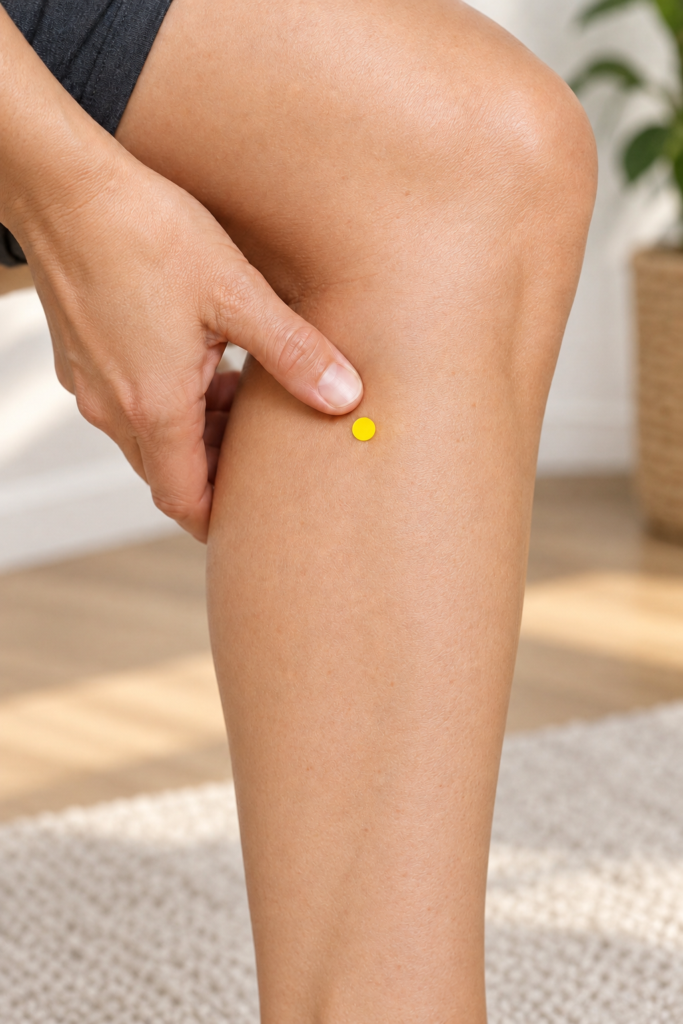
6. Press on GB34 below the outer knee to regulate the Gallbladder. GB34 sits on the outer side of the lower leg, in the hollow just in front of and below the small bony bump below the outside of the knee. Press firmly with your thumb for one to two minutes on each leg. GB34 is called “Yanglingquan,” the “Yang Mound Spring.”
GB34 is the Gallbladder’s lower sea point and one of the most important points in Traditional Chinese Medicine for gallbladder problems. It moves stagnant Gallbladder Qi, relieves pain along the ribs, and helps ease nausea and a bitter taste in the mouth.
7. Press on Dannangxue below GB34 to ease gallbladder discomfort. Dannangxue sits on the outer side of the lower leg, about one to two thumb-widths below GB34. Feel along this area with your thumb for the most tender spot, then press it firmly for one to two minutes on each leg, paying special attention to the right side. Dannangxue means the “Gallbladder Point.”
Dannangxue is an extra point associated with the gallbladder. In Traditional Chinese Medicine, it often becomes tender when the gallbladder is irritated, and pressing it is traditionally used to relieve pain beneath the right ribs.
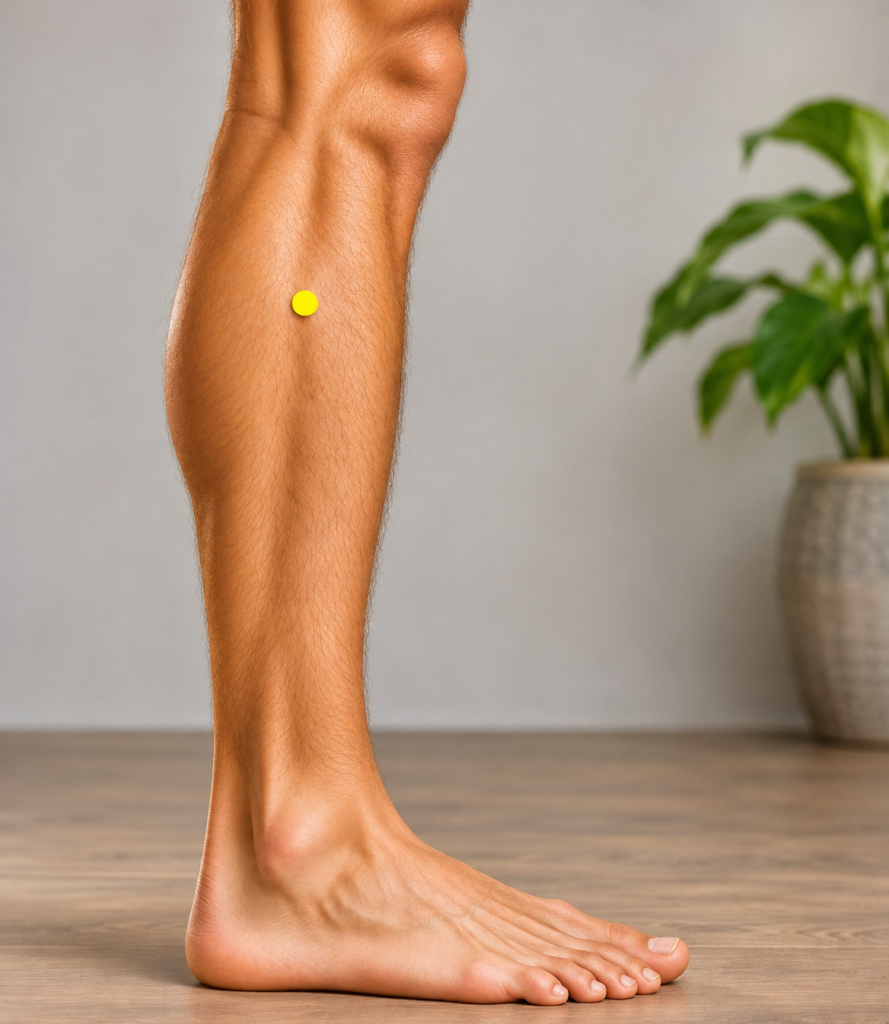
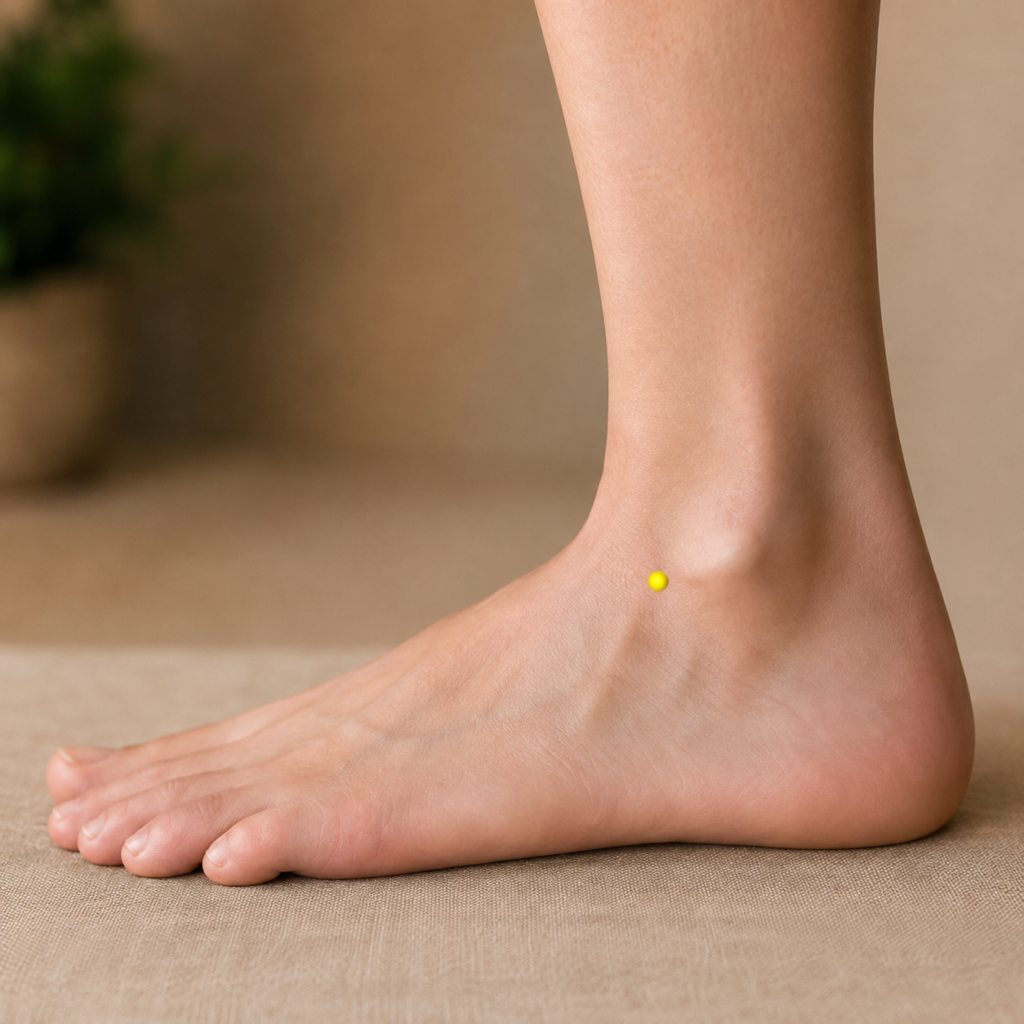
8. Press on GB40 in front of the outer ankle to keep Gallbladder Qi moving. GB40 sits in the hollow just in front of and below the outer ankle bone. Press with moderate pressure for one to two minutes on each foot. GB40 is called “Qiuxu,” the “Mound of Ruins.”
GB40 is the Gallbladder’s source point. It strengthens and regulates the Gallbladder and relieves pain along the sides of the body, particularly when the ribs feel tight and full.
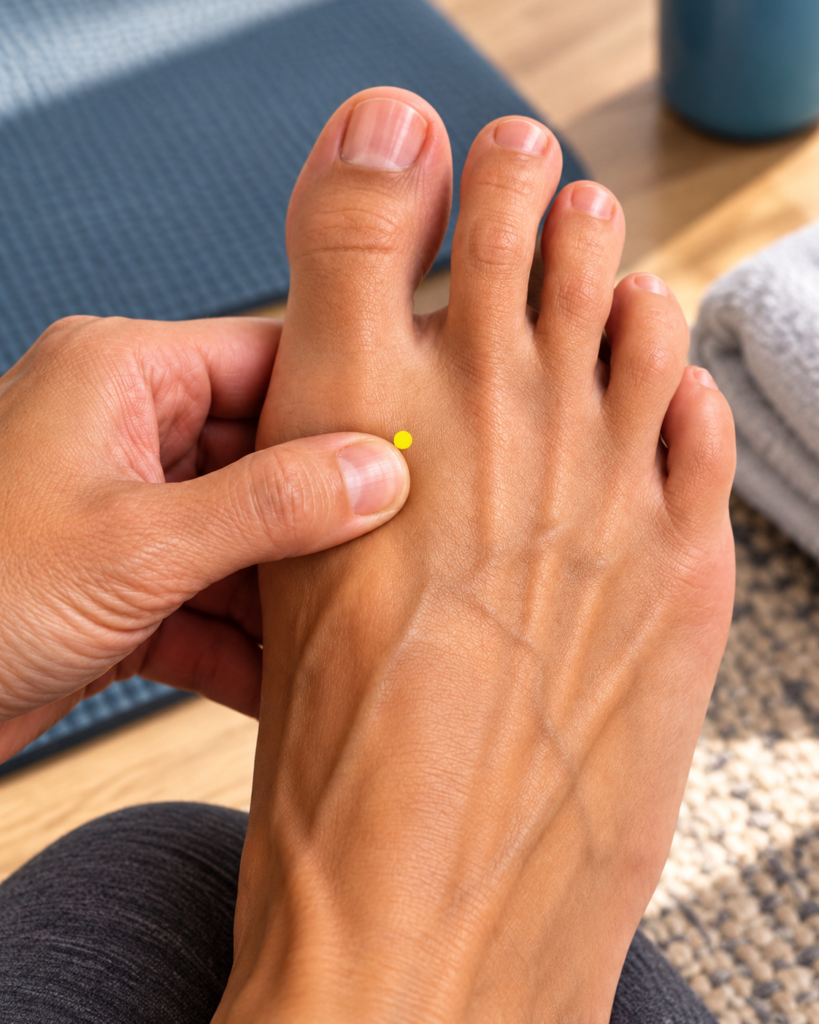
9. Press on LV3 on the top of the foot to release stress. LV3 sits on the top of the foot, in the hollow where the bones of the big toe and second toe meet, about two finger-widths back from the web between the toes. Press firmly with your thumb for one to two minutes on each foot. LV3 is called “Taichong,” the “Great Rushing.”
LV3 is the Liver’s source point. It moves stagnant Liver Qi, eases irritability and tension, and works with GB34 to support the smooth flow of Liver and Gallbladder Qi.
Why These Acupressure Points Work
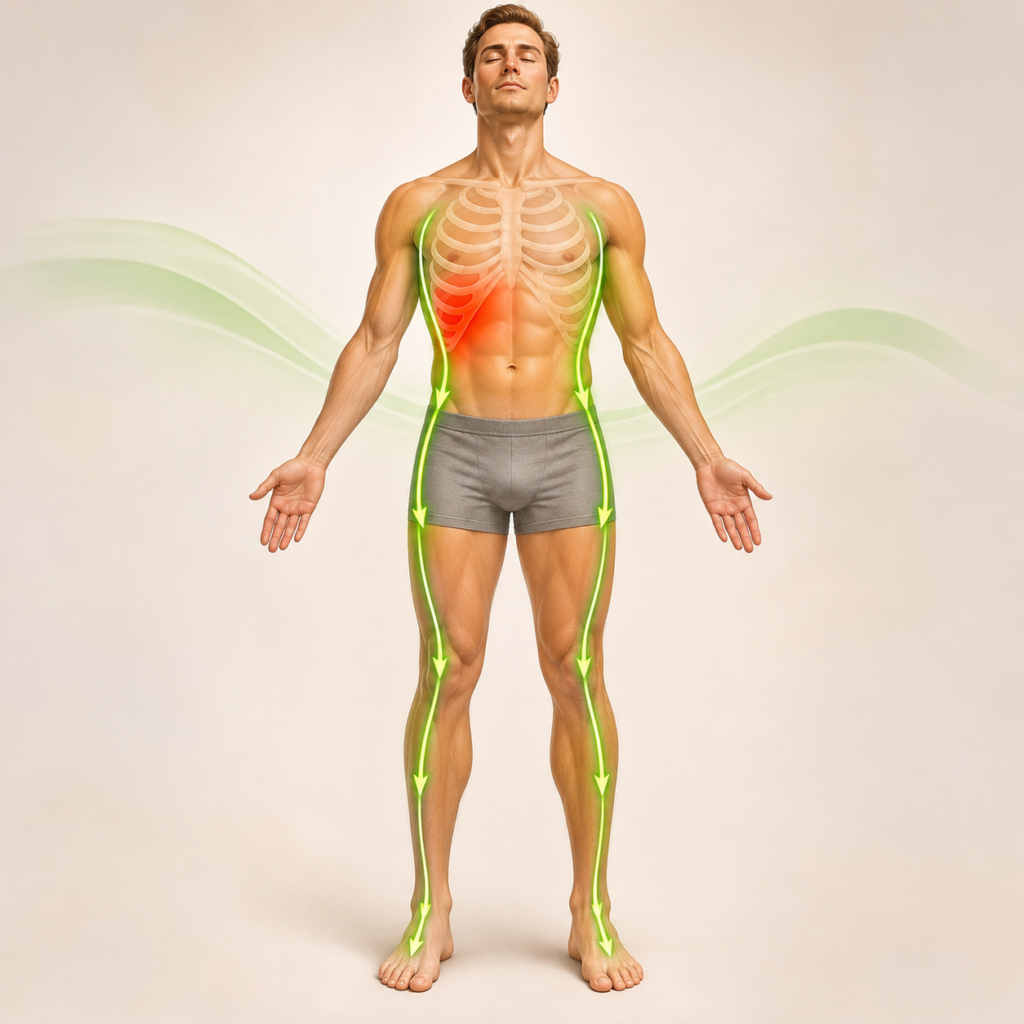
From a Traditional Chinese Medicine perspective, the Liver and Gallbladder function as a pair. Gallbladder pain suggests their Qi isn’t flowing smoothly along the ribs. Stress constrains Liver Qi, while rich food and alcohol contribute Damp-Heat, creating tightness, fullness, and pain beneath the right ribs, often accompanied by nausea. Points on the legs and feet regulate the Gallbladder and Liver from a distance; forearm points ease the ribs and settle the stomach; and alarm and back points act directly on the Gallbladder from the front and back.
The nine points work together to alleviate gallbladder pain:
- PC6 and TE6 settle nausea and ease pain along the ribs.
- LV14, GB24, and BL19 work on the Liver and Gallbladder from the front and back.
- GB34, Dannangxue, and GB40 regulate the Gallbladder and move its Qi.
- LV3 releases the stress that binds the Liver.
How to Properly Use These Acupressure Points

For mild, brief gallbladder discomfort that a doctor has already evaluated, acupressure may offer comfort. It works best as a daily routine between episodes.
- For mild discomfort beneath the ribs, begin by applying pressure to GB34, Dannangxue, and LV3 on both legs, followed by PC6 and TE6 on both arms.
- If nausea accompanies the pain, focus on PC6 while breathing slowly and deeply into the abdomen.
- Between episodes, apply pressure to GB34, GB40, LV3, and BL19 once daily to support the flow of Liver and Gallbladder energy.
- Apply firm pressure to the legs, feet, and forearms; use light contact on LV14 and GB24; and apply moderate pressure to BL19 with the tennis ball. Avoid pressing on the upper right abdomen if it is tender, and seek medical attention for any pain that is severe or persists for more than one or two hours.
Your eating habits can affect how often gallbladder pain returns. Try eating smaller meals at regular times rather than large, heavy meals, especially at night. Cut back on fried foods, fatty meats, rich sauces, and alcohol. Focus on meals that include vegetables, whole grains, beans, fish, and moderate amounts of healthy fats. Avoid crash diets and long fasts, as losing weight too quickly can cause gallstones. If needed, aim for slow, steady weight loss, and stay active by walking regularly. Traditional Chinese Medicine also suggests eating slowly in a calm place, stopping before you feel too full, and finding ways to manage stress, since stress can slow the Gallbladder.
Learn more about foods that help digestion.
When to Get Professional Help
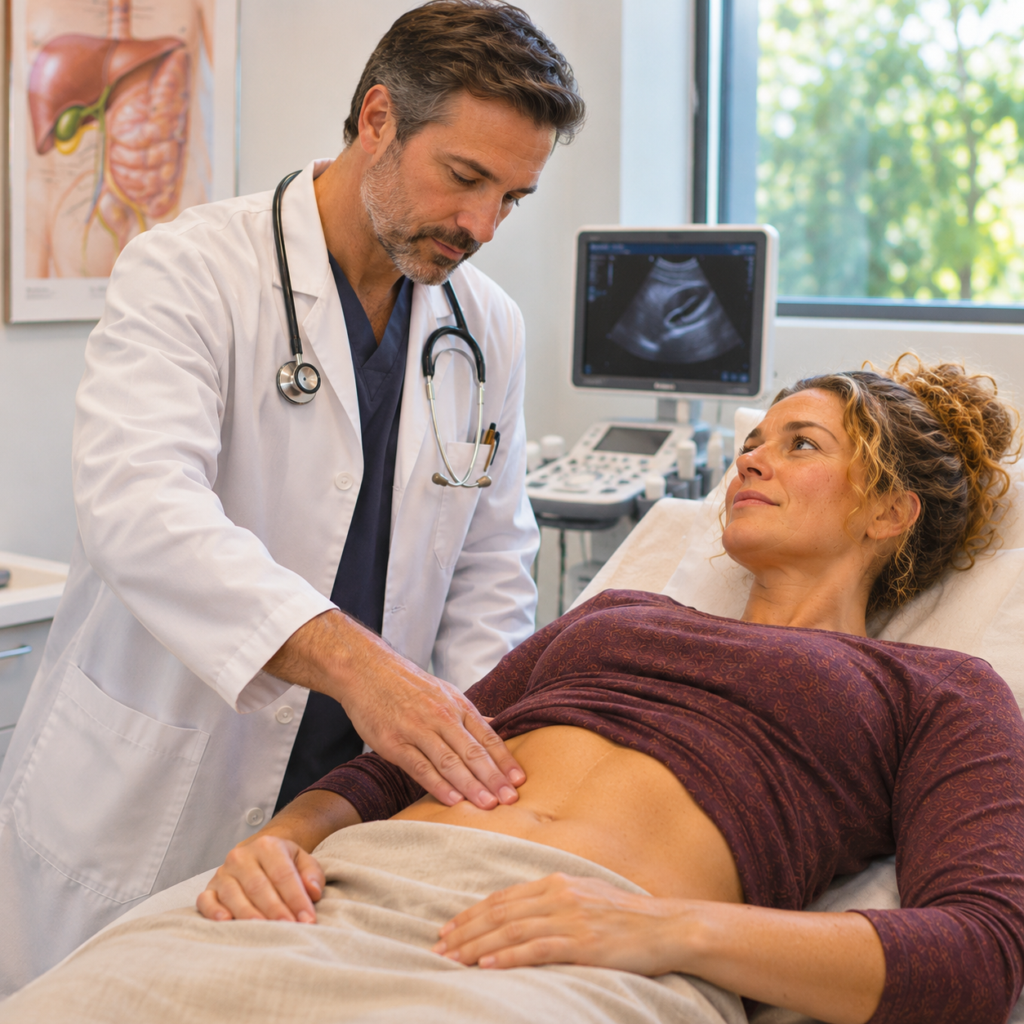
If you have abdominal pain that lasts for several hours; pain with nausea and vomiting; fever or chills; yellowing of your skin or the whites of your eyes; dark urine; or pale stools, see a doctor right away or go to the emergency room. These symptoms could mean you have a blocked bile duct or a serious infection or inflammation of your gallbladder, liver, or pancreas. If you suddenly develop severe pain in your upper abdomen or chest, especially with shortness of breath, sweating, or pain that spreads to your arm or jaw, call 911. Heart problems can sometimes feel like this. If you have pain under your right ribs for the first time, see a doctor before trying to treat it at home. Women who develop pain under the right ribs during pregnancy should contact their obstetric provider promptly. Acupressure may help with mild discomfort, but it will not dissolve or remove gallstones.
Acupressure is a gentle, supportive practice for gallbladder pain. It complements, and does not replace, diagnosis and medical care.
For related concerns, acupressure for indigestion, acupressure for vomiting, and acupressure for bloating and gas are companion pieces.
Above and Beyond Acupuncture offers acupuncture, cupping, and lifestyle coaching at the North Frank Lloyd Wright Boulevard location in Scottsdale.
Schedule an appointment online to start your healing journey.
The points above are only as effective as the technique used to apply them. Where to press, how firmly, and for how long all affect the result. For a full breakdown of how to perform acupressure properly at home, read Performing Acupressure in 3 Easy Steps.

About the Publisher
Paul Kerzner, L.Ac., is a licensed acupuncturist and board-certified herbalist, as well as the founder of Above and Beyond Acupuncture in Scottsdale. His own journey from chronic patient to practicing acupuncturist shapes his commitment to providing honest, clinically grounded information about acupuncture and Traditional Chinese Medicine. Learn more about Paul and his clinical approach on the About Us page.