Key Takeaways
- Colic is when a healthy baby cries for more than three hours a day on at least three days a week. It usually begins at two to three weeks of age and eases by three to four months.
- About one in four babies experience colic. Their crying often worsens in the evening, and holding or feeding them doesn’t always soothe them.
- In Traditional Chinese Medicine, a baby’s Spleen and Stomach are still developing, so colic is often attributed to trapped gas, cold or Heat in the belly, or a spirit that is easily startled.
- Nine gentle acupressure points across the face, arms, hands, belly, legs, and feet may ease belly discomfort and soothe a crying baby.
- Shaking a baby is never safe. If a parent feels overwhelmed, they can place the baby on their back in the crib and step away for a few minutes.

The crying usually starts at the same time each evening. Even after being fed, burped, and changed, the baby continues to cry intensely, with a flushed face, clenched fists, and knees pulled tightly toward the abdomen. Rocking may bring brief relief, but the crying soon starts again. Colic can be one of the most exhausting and overwhelming challenges for parents during the early months, so any gentle method that offers even a little comfort can be valuable.
According to Nationwide Children’s Hospital, colic occurs when a healthy baby cries for more than three hours a day on at least three days in a week. It affects one in four babies, may begin at two to three weeks of age, and can last until the baby is three or four months old. Crying is usually more frequent in the evening, and common soothing methods, such as holding or feeding, often do not stop it. During an episode, babies may flail their arms and legs, clench their fists, arch their backs, and pull their legs toward their bellies. The cause is unknown, but possible contributors include gas pain, stomach spasms, smoke exposure, and an immature nervous or digestive system.
A young baby’s digestive system is still learning to process milk, move gas, and coordinate the gut muscles. Meanwhile, the nervous system is learning to settle after noise, light, and handling. Crying can also cause babies to swallow more air, adding to belly discomfort and prolonging the cycle.
Traditional Chinese Medicine views a baby’s Spleen and Stomach as naturally delicate. When milk isn’t fully digested, gas and food can stagnate in the belly, leading to bloating and pain. Some colicky babies show signs of cold in the belly, such as a pale face, cool hands, and crying that eases with warmth and pressure. Others show signs of Heat, including a red face, loud crying, and restlessness. Babies are easily startled, so a scattered, unsettled Shen may also prolong crying after the belly has settled. Gentle points that move gas, warm and soothe the belly, and calm the mind can help a colicky baby find relief.
The points below begin at the face, move down the arms and hands, continue to the belly and legs, and end at the feet. For a baby, measure all distances using the baby’s own finger-widths, not an adult’s.
What Acupressure Points to Press and Why
1. Stroke Yintang between the eyebrows to calm crying. Yintang sits at the midpoint between the baby’s eyebrows. With the pad of your thumb, stroke gently upward from Yintang toward the hairline, alternating thumbs, for 30 seconds to one minute. Yintang means the “Hall of Impression.”
Yintang is an extra point traditionally used to calm the mind and reduce restlessness. Gentle, slow upward strokes can help a crying baby settle before you work on the belly.

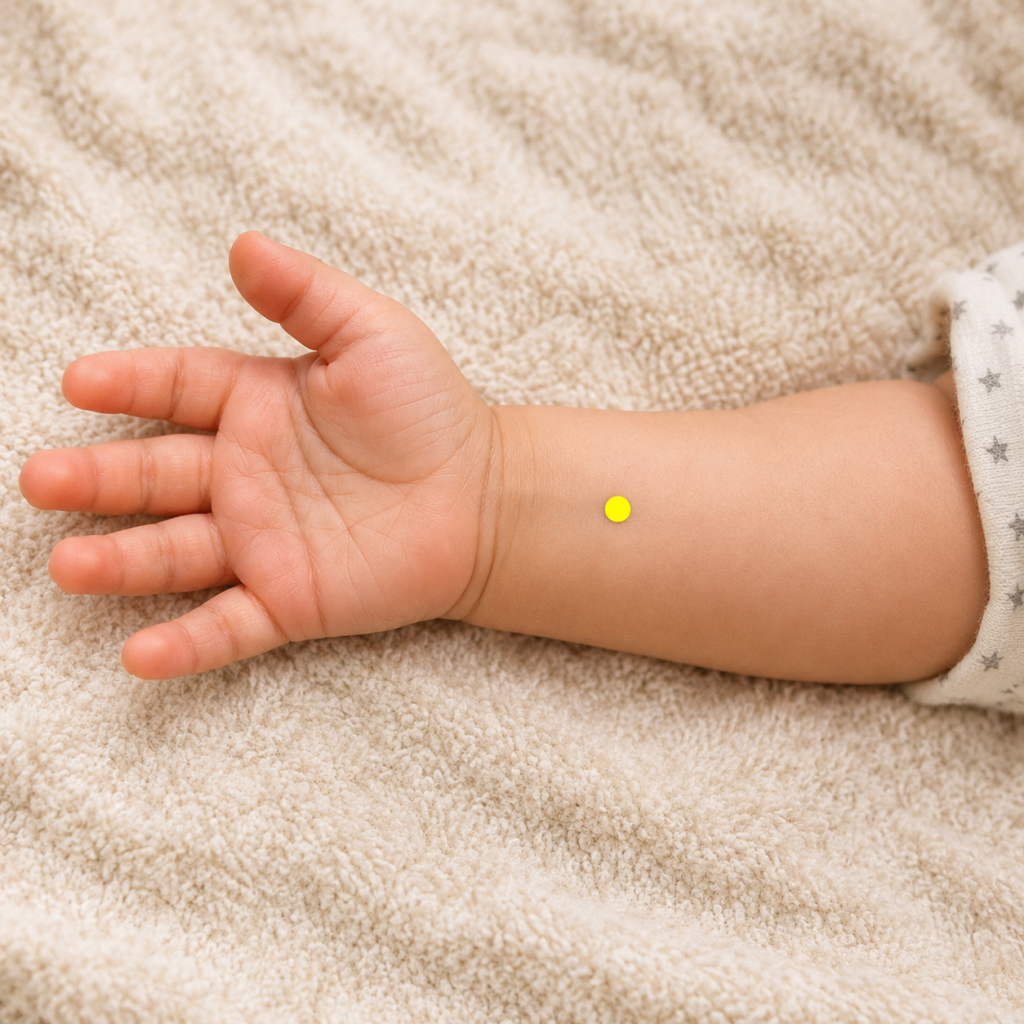
2. Press PC6 on the inner forearm to settle the stomach. PC6 sits on the inner forearm, about two of the baby’s finger-widths above the wrist crease, between the two tendons in the middle of the forearm. Make tiny, light circles with your fingertip for 30 seconds on each arm. PC6 is called “Neiguan,” the “Inner Gate.”
PC6 is the connecting point of the Pericardium. It settles the Stomach, eases discomfort in the chest and belly, and calms the mind.
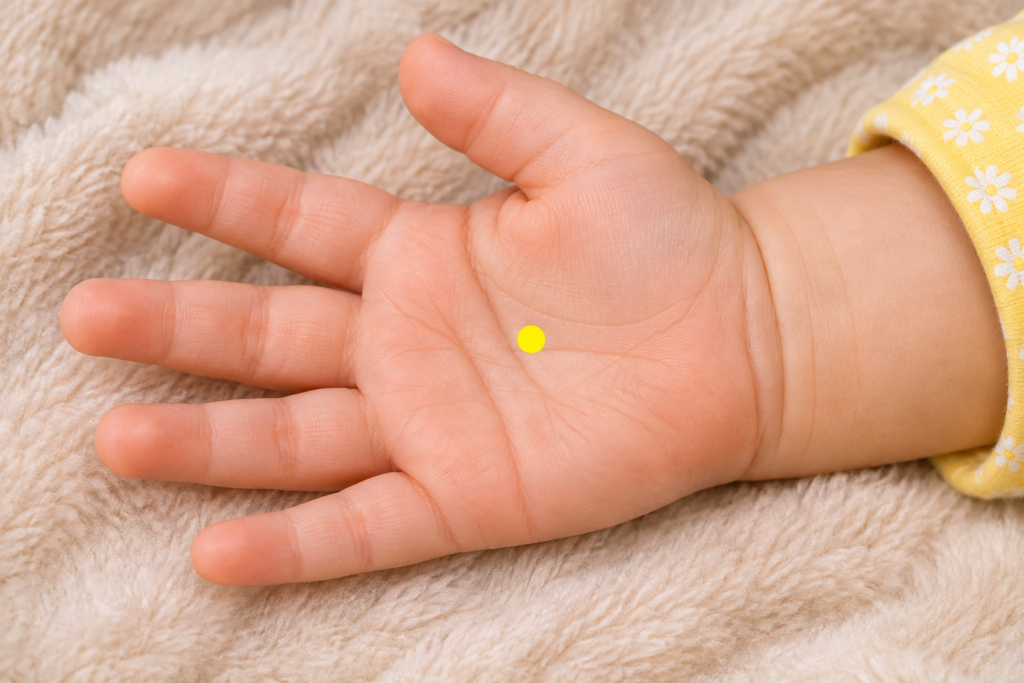
3. Circle PC8 in the center of the palm to cool and calm. PC8 sits in the center of the palm, where the tip of the middle finger touches when the baby’s hand closes into a loose fist. Make slow, light circles with your fingertip for 30 seconds on each palm. PC8 is called “Laogong,” the “Palace of Toil.”
PC8 is the spring point of the Pericardium. It clears a little extra Heat from the Heart and helps when a baby is red-faced, loud, and too wound up to settle down.
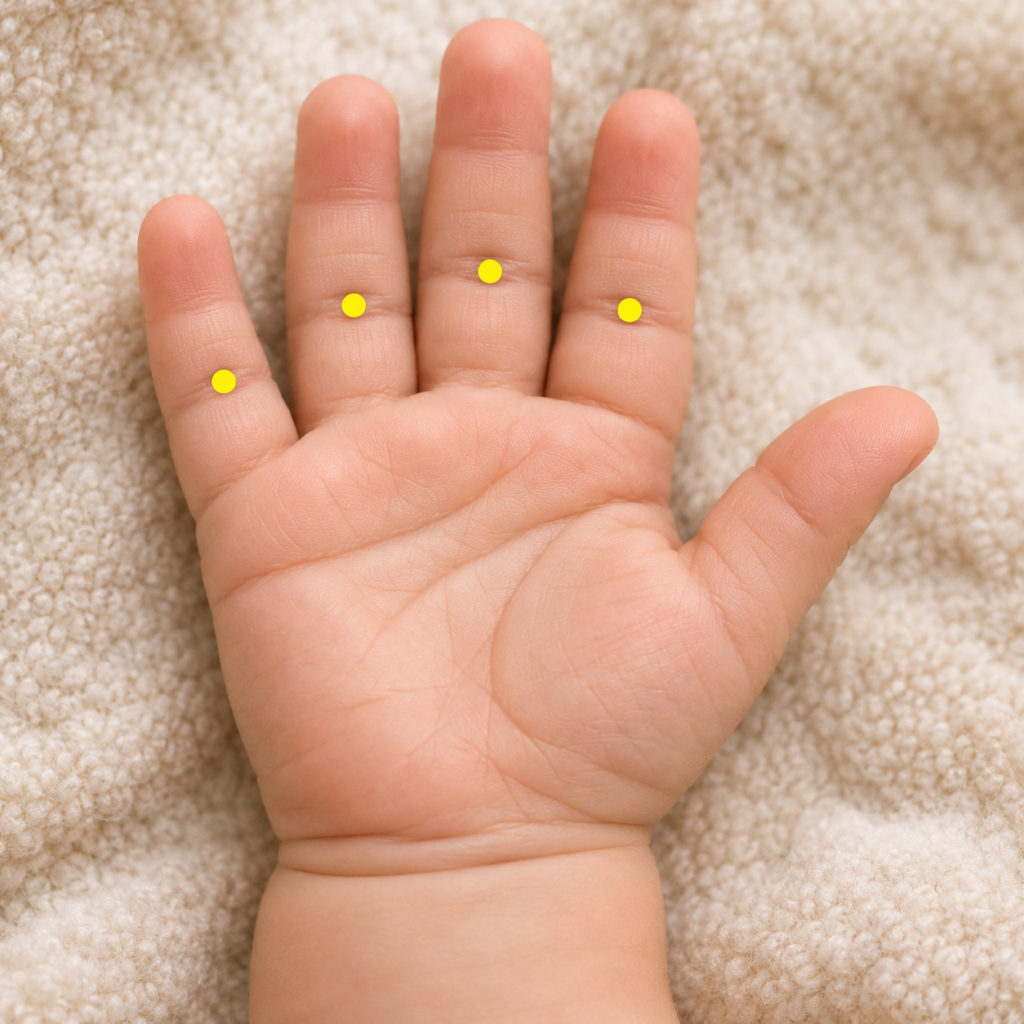
4. Press Sifeng on the fingers to ease digestion. Sifeng is a group of four points on the palm side of the index, middle, ring, and little fingers, at the center of the crease closest to the middle of each finger. Gently press or stroke each crease with your fingertip for a few seconds, moving from finger to finger, for 30 seconds on each hand. Sifeng means the “Four Seams.”
Sifeng is an extra point traditionally used in children to address poor digestion, bloating, and food stagnation. Gentle pressure on these creases is a classic part of soothing massage for babies with belly discomfort.
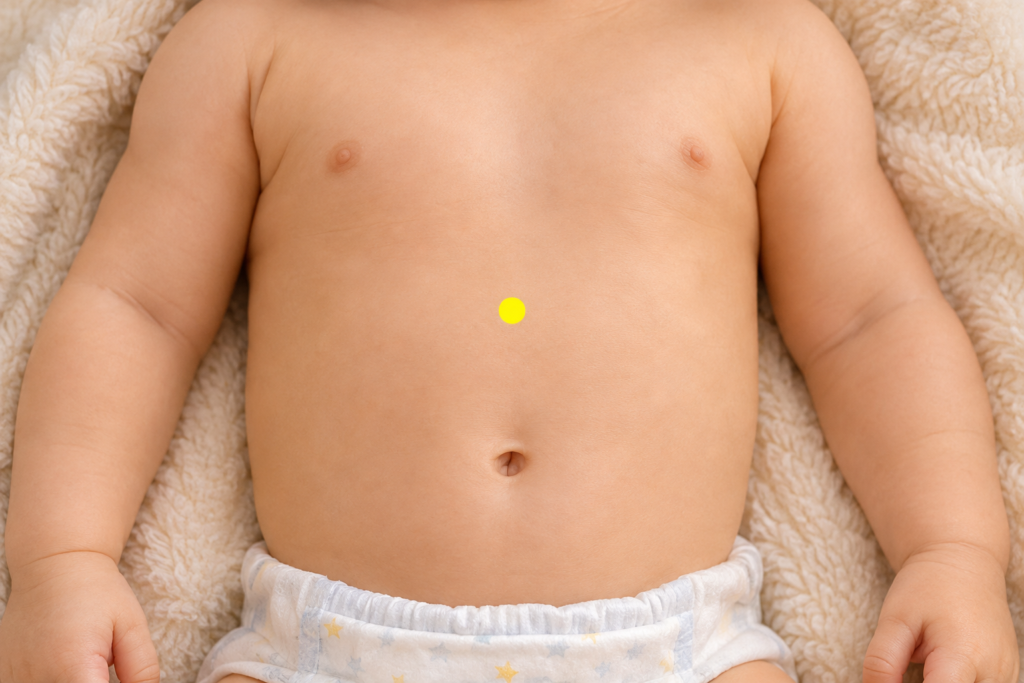
5. Circle CV12 on the belly to settle digestion. CV12 sits on the midline of the belly, halfway between the navel and the bottom of the breastbone. Rest your whole palm lightly on the belly and make slow clockwise circles around the navel, passing over CV12, for one to two minutes. CV12 is called “Zhongwan,” the “Middle Cavity.”
CV12 is the alarm point of the Stomach and one of the most important points in Traditional Chinese Medicine for digestion. Gentle clockwise circles help move gas and relieve bloating.
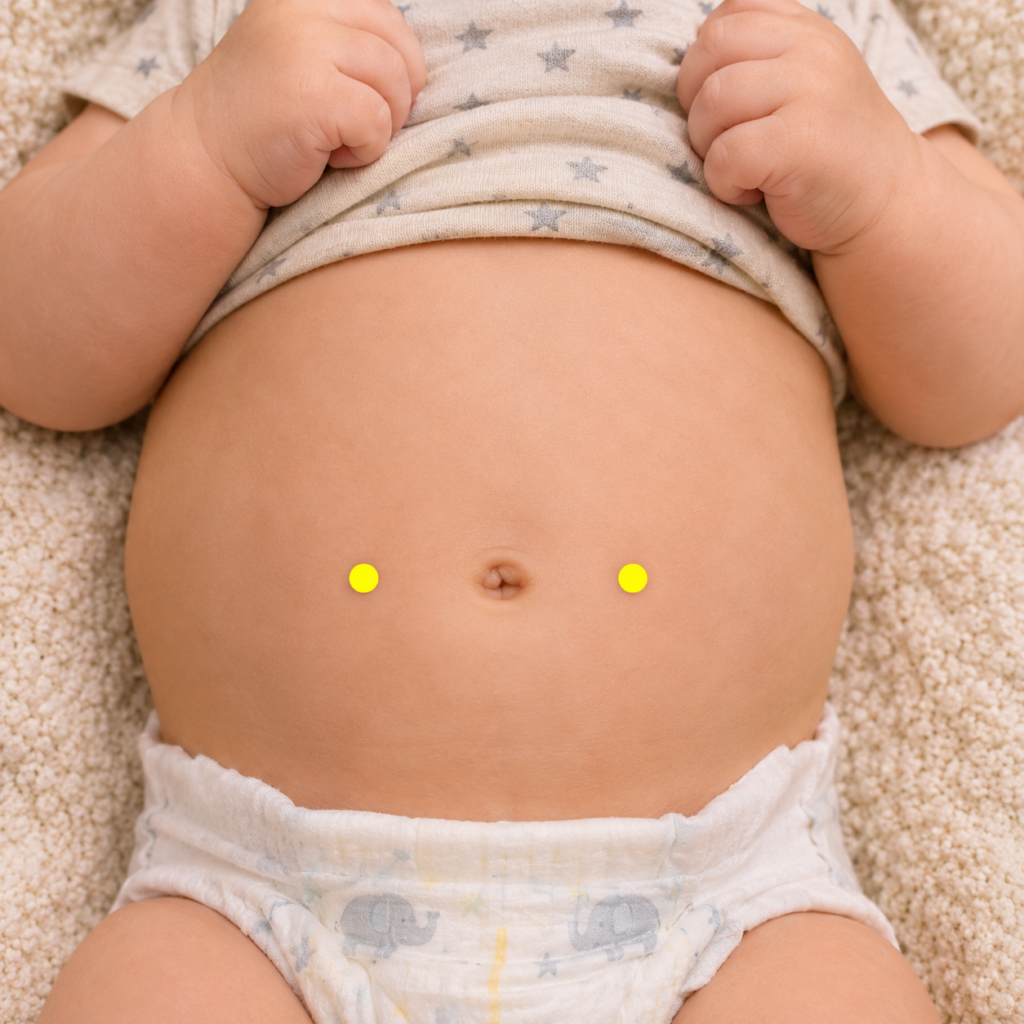
6. Press ST25 beside the navel to move gas. ST25 sits on both sides of the navel, about two of the baby’s finger-widths out from the center of the navel. Rest your fingertips on both points at the same time with very light pressure, or make tiny circles, for 30 seconds. ST25 is called “Tianshu,” the “Heavenly Pivot.”
ST25 is the alarm point of the Large Intestine. It helps move stagnation in the intestines and release trapped gas.
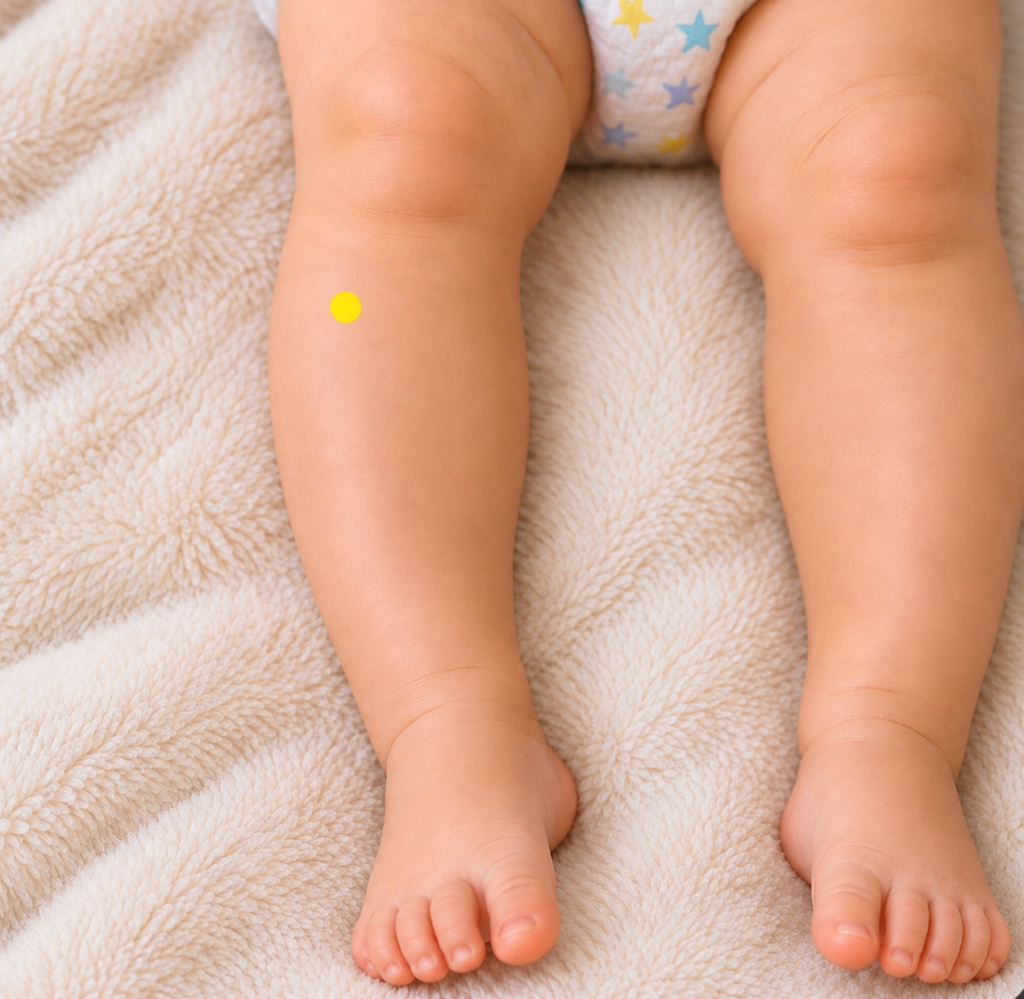
7. Press ST36 below the knee to strengthen digestion. ST36 sits on the front of the lower leg, about four of the baby’s finger-widths below the bottom of the kneecap and one of the baby’s finger-widths out from the edge of the shinbone. Make tiny, light circles with your fingertip for 30 seconds on each leg. ST36 is called “Zusanli,” the “Leg Three Miles.”
ST36 is the sea point of the Stomach. It strengthens the Spleen and Stomach and supports steady digestion.
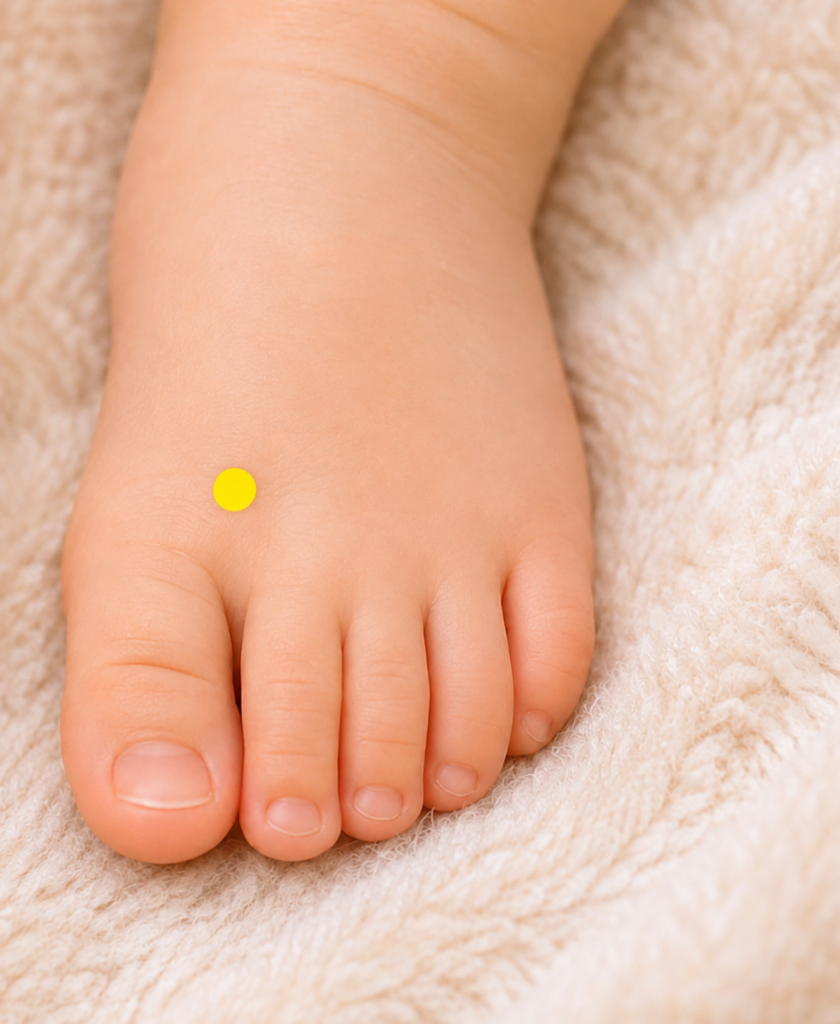
8. Press LV3 on the top of the foot to ease tension. LV3 sits on the top of the foot, in the hollow where the bones of the big toe and second toe meet. Rest your fingertip on the point with very light pressure for 30 seconds on each foot. LV3 is called “Taichong,” the “Great Rushing.”
LV3 is the source point of the Liver. It eases tension and cramping and helps a baby who arches, stiffens, and clenches during crying spells.
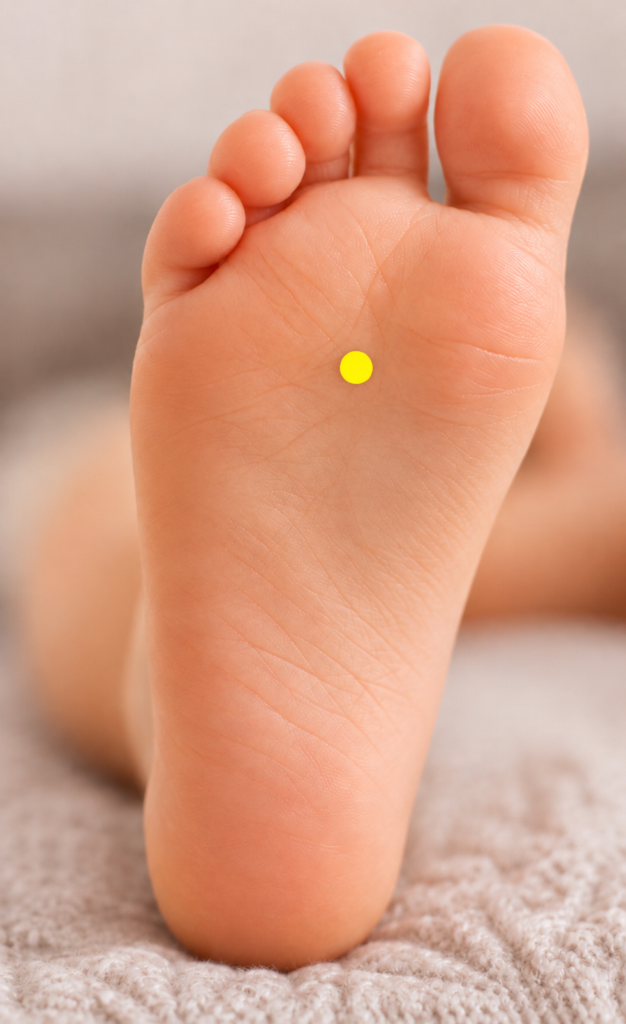
9. Rub KI1 on the sole of the foot to draw energy down. KI1 sits on the sole of the foot, in the small hollow near the front of the foot, about one-third of the way from the base of the toes to the back of the heel. Rub gently with your thumb in small circles for 30 seconds on each foot. KI1 is called “Yongquan,” the “Bubbling Spring.”
KI1 is the lowest point on the body and the well point of the Kidney. Gently rubbing the soles draws energy downward and provides a soothing way to finish.
Why These Acupressure Points Work
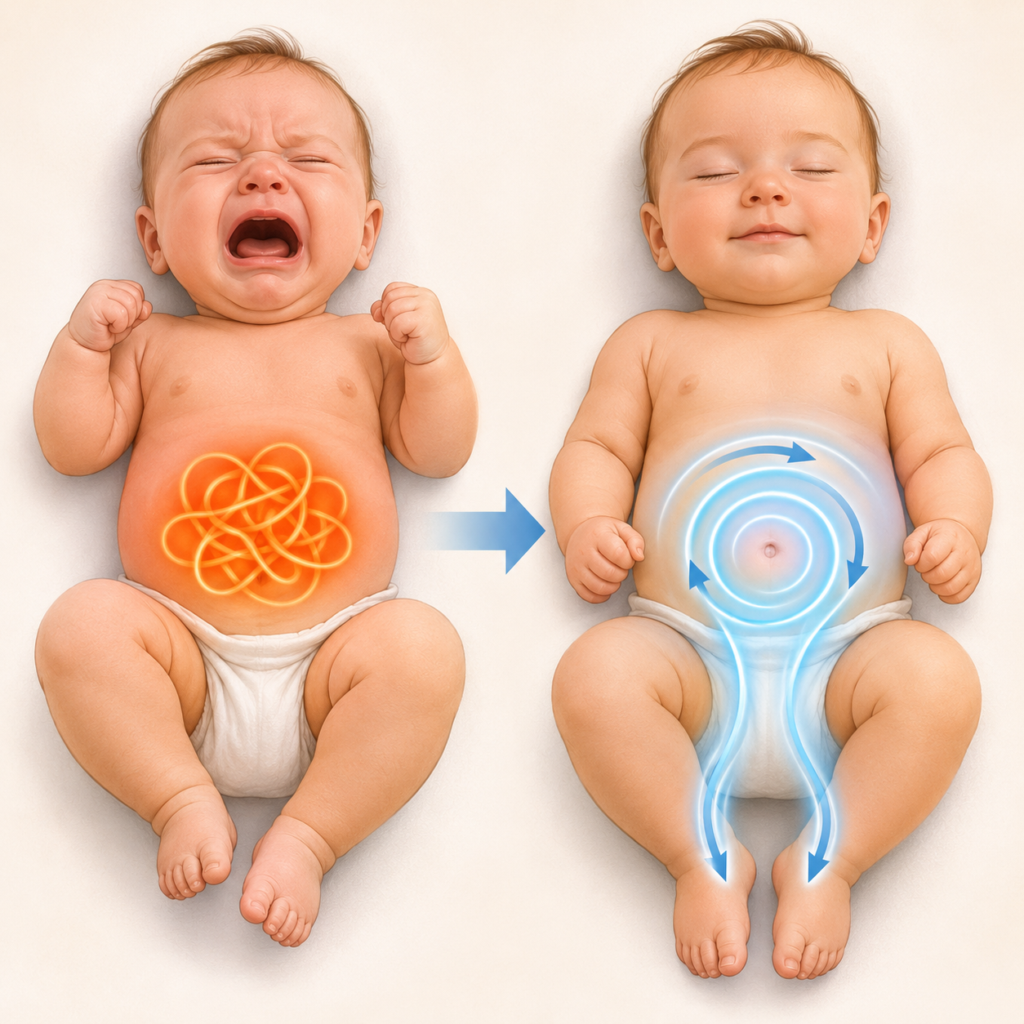
From a Traditional Chinese Medicine perspective, colic stems from a belly that struggles to digest fully and move gas, together with a mind that is easily startled and slow to settle. The belly and leg points help move gas and strengthen digestion; the arm and hand points settle the Stomach and clear Heat; and the face and foot points calm the mind and draw energy downward.
The nine points work together to alleviate colic:
- CV12, ST25, and ST36 move gas and strengthen digestion.
- PC6 and Sifeng settle the Stomach and ease bloating.
- PC8 and LV3 cool restlessness and ease cramping.
- Yintang and KI1 calm the mind and draw energy downward.
How to Properly Use These Acupressure Points

Acupressure for colic is most effective during calmer periods, before the usual evening crying begins or as a crying spell starts to ease, rather than during intense screaming.
- Begin with a few gentle upward strokes on Yintang to help the baby settle.
- Proceed to the arms and hands, applying small circular motions to PC6, light circular motions to PC8, and gentle strokes across Sifeng.
- Make slow, clockwise circles over CV12, then gently rest your fingertips on ST25 on either side of the navel.
- Conclude with gentle circular motions on ST36 and LV3, followed by a gentle rub of KI1 on both soles.
- Apply only gentle, slow pressure with the fingertips, considerably lighter than would be used on an adult. Stop if the baby becomes more distressed, stiffens, or appears uncomfortable. Avoid the soft spots on the top of the head. Wait at least 30 minutes after feeding before performing any work on the abdomen, and do not apply pressure to areas of broken, irritated, or rash-affected skin.
Simple comfort measures may help ease these symptoms. Nationwide Children’s recommends avoiding exposure to smoke, not feeding the baby every time they cry, burping the baby frequently during feedings, and gently massaging the baby’s stomach. Holding the baby, rubbing their back, using steady calming sounds such as white noise or a fan, rocking, offering a pacifier, and taking walks or stroller or car rides may also help. While awake and supervised, babies may be held on their left side or stomach; however, they should always be placed on their backs in the crib to sleep. As general guidance, gently moving the baby’s legs toward their belly in a cycling motion may help release gas. Traditional Chinese Medicine also recommends keeping the baby’s belly and feet comfortably warm and maintaining a calm, quiet home environment in the evening.
Learn more about whether acupressure is safe for kids.
Colic can be challenging for the entire family. Nationwide Children’s notes that colic is not the parent’s fault and that feelings of frustration are normal. Shaking an infant is never safe, does not stop the crying, and can cause serious brain injury. When frustration builds, place the baby safely on their back in the crib, step away for a few minutes, and check on them every five to ten minutes. Asking a trusted adult to take over care can provide a much-needed break.
When to Get Professional Help

Call 911 if a baby has trouble breathing, turns blue or gray around the lips, is limp or very difficult to wake, or may have been shaken or dropped. Seek immediate care for a baby under three months old with a temperature of 100.4°F or higher, or for green, forceful, or repeated vomiting. Contact your pediatrician about fever, hard stools, diarrhea, blood in the stool, frequent spitting up, poor feeding, poor weight gain, or crying that sounds high-pitched or different from usual, or continues past four months of age. Parents who feel overwhelmed, hopeless, or unable to cope should contact their own doctor. Support for parents matters too.
Acupressure is a gentle, supportive practice for colic. It complements, and does not replace, diagnosis and medical care.
For related health concerns, acupressure to help a baby sleep, acupressure for postpartum depression, and acupuncture for kids are companion posts.
Above and Beyond Acupuncture offers acupuncture, cupping, and lifestyle coaching at the North Frank Lloyd Wright Boulevard location in Scottsdale.
Schedule an appointment online to start your healing journey.
The points above are only as effective as the technique used to apply them. Where to press, how firmly, and for how long all affect the result. For a full breakdown of how to perform acupressure properly at home, read Performing Acupressure in 3 Easy Steps.

About the Publisher
Paul Kerzner, L.Ac., is a licensed acupuncturist and board-certified herbalist, as well as the founder of Above and Beyond Acupuncture in Scottsdale. His own journey from chronic patient to practicing acupuncturist shapes his commitment to providing honest, clinically grounded information about acupuncture and Traditional Chinese Medicine. Learn more about Paul and his clinical approach on the About Us page.