Key Takeaways
- Young infants may have a soiled diaper after each feeding. By approximately four months of age, most infants have a bowel movement once daily or every other day.
- Signs of constipation include hard, pellet-like stools that are difficult to pass and going more than four or five days without a bowel movement. Softer stools accompanied by some grunting are generally normal.
- In Traditional Chinese Medicine, constipation in infants is often understood as resulting from Heat that dries the intestines, stagnant Qi, or an immature digestive system that lacks the strength to promote bowel movements.
- Nine gentle acupressure points on the arms, hands, abdomen, legs, and feet may help stimulate bowel movement and reduce straining.
- Gentle clockwise abdominal massage and bicycle-leg movements may help. However, water should not be given to young infants, and any juice, formula changes, or remedies should be discussed with a pediatrician.

The baby strains, turns red, and grunts, but nothing happens. Hours pass, and sometimes a day or two, before the diaper is finally soiled. The stool is hard and small, and the baby cries while passing it. Constipation can be uncomfortable for babies and stressful for parents, particularly during the early months, when it may be difficult to determine what is normal. In addition to guidance from the pediatrician, a few gentle measures may help support the baby’s digestion.
According to Akron Children’s, young infants may have a dirty diaper after every feeding. By two months, they may have bowel movements about twice a day, and by four months, most babies go every day or every other day. Signs of constipation include infrequent bowel movements, particularly going more than four or five days without one, and hard, pellet-like stools that are difficult to pass. A baby’s stool should always be relatively soft. Because the muscle contractions that move stool along are not yet fully developed, babies may strain or grunt while passing stool. Akron Children’s recommends gentle clockwise belly massage just below the navel, bicycle legs, and discussing diet or formula changes with the pediatrician. It advises against giving water to babies.
Diet changes often trigger shifts in a baby’s stool pattern. Switching from breast milk to formula, changing formulas, or introducing solid foods can temporarily affect their stools. Some grunting and straining is normal as babies learn to coordinate their belly and bottom muscles. If a baby strains but passes a soft stool, they’re usually not constipated.
Traditional Chinese Medicine regards a baby’s Spleen and Stomach as naturally delicate, while the Large Intestine is understood to move stool downward and out of the body. Excess Heat may dry the intestinal fluids, resulting in hard, dry stools, often accompanied by a flushed face, irritability, and bad breath. When Qi is stagnant, the abdomen may feel bloated, and the baby may strain and pass gas with little result. If a baby’s digestion remains weak, Qi may lack the strength to propel stool, causing the baby to exert considerable effort even when the stool is not particularly hard. Gentle techniques that clear Heat, guide Qi downward, moisten the intestines, and support digestion may help promote more comfortable bowel movements.
The points below start on the arms and hands, move to the abdomen, and finish on the legs. For a baby, measure all distances using the baby’s own finger-widths, not an adult’s.
What Acupressure Points to Press and Why
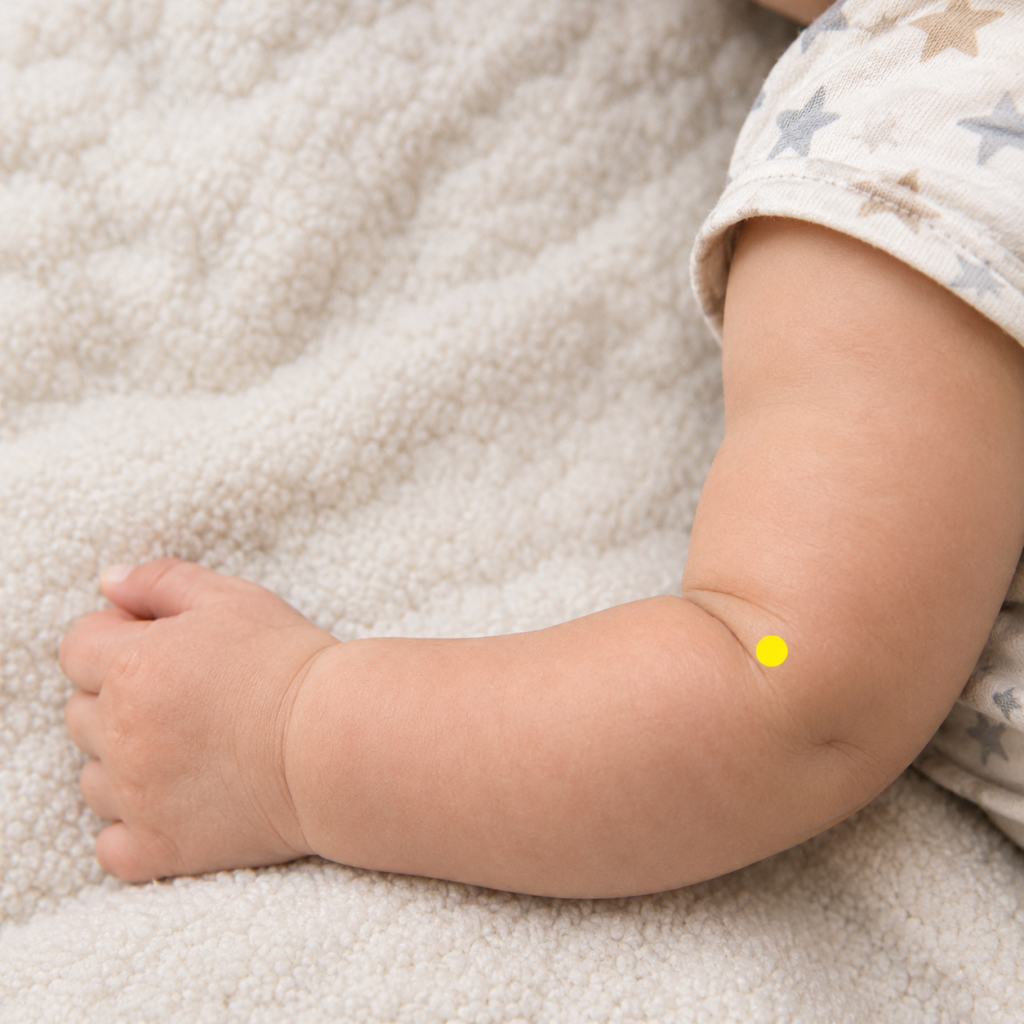
1. Press LI11 at the elbow crease to clear Heat. LI11 sits at the outer end of the elbow crease when the baby’s elbow is gently bent, on the thumb side of the arm. Make tiny, light circles with your fingertip for 30 seconds on each arm. LI11 is called “Quchi,” the “Pool at the Bend.”
LI11 is the sea point of the Large Intestine. It clears Heat from the intestines and may help relieve hard, dry stools.
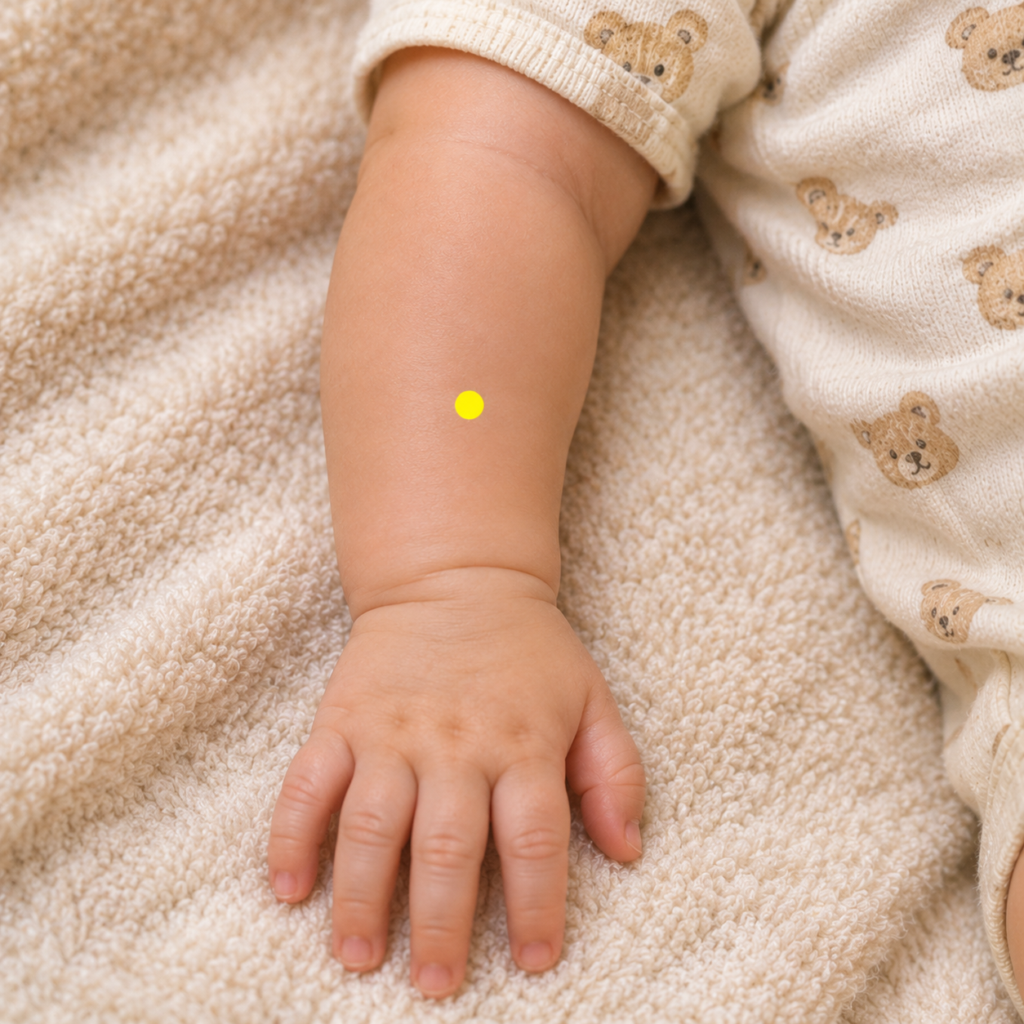
2. Press TE6 on the back of the forearm to move the bowels. TE6 sits on the back of the forearm, about three of the baby’s finger-widths above the wrist crease, in the middle between the two bones of the forearm. Make tiny, light circles with your fingertip for 30 seconds on each arm. TE6 is called “Zhigou,” the “Branch Ditch.”
TE6 is the river point of the Triple Burner and is regarded as one of the most important points in Traditional Chinese Medicine for addressing constipation. It promotes the movement of Qi through the intestines and may help facilitate bowel movements.
3. Press LI4 on the back of the hand to move Qi downward. LI4 sits on the back of the hand, in the fleshy web between the thumb and index finger. Hold the baby’s hand and make tiny, light circles on the point for 30 seconds on each hand. LI4 is called “Hegu,” the “Joining Valley.”
LI4 is the source point of the Large Intestine. It promotes the movement of Qi along the Large Intestine channel and may be used in conjunction with TE6 for constipation.

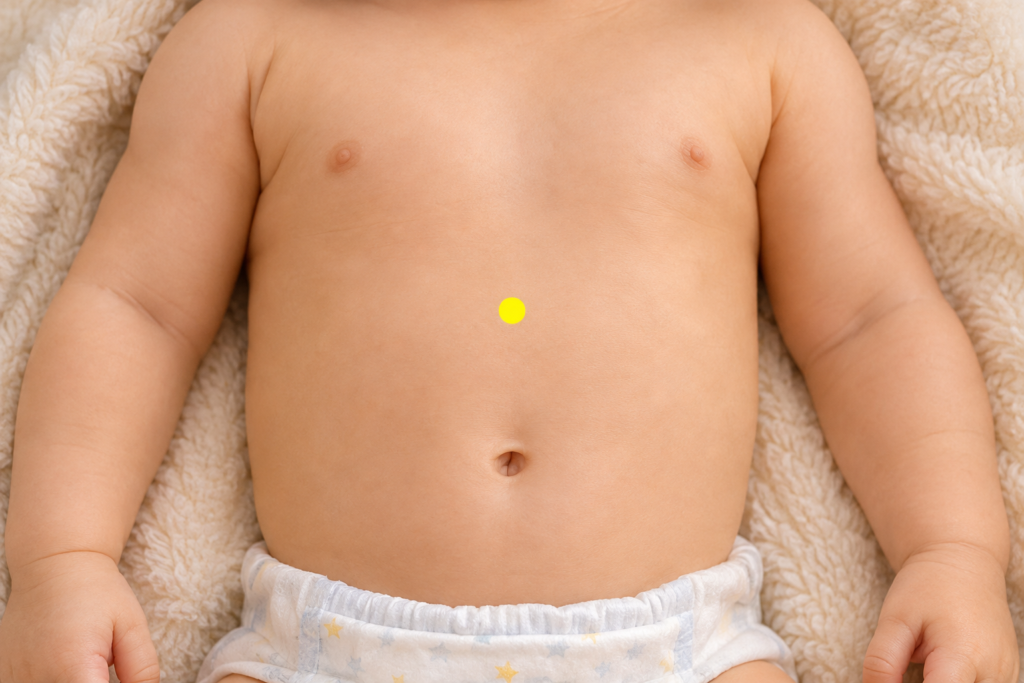
4. Circle CV12 on the belly to settle digestion. CV12 sits on the midline of the belly, halfway between the navel and the bottom of the breastbone. Rest your whole palm lightly on the belly and make slow clockwise circles around the navel, passing over CV12, for one to two minutes. CV12 is called “Zhongwan,” the “Middle Cavity.”
CV12 is the alarm point of the Stomach. Gentle, clockwise circular movements follow the natural direction of the intestines and may help facilitate stool passage.
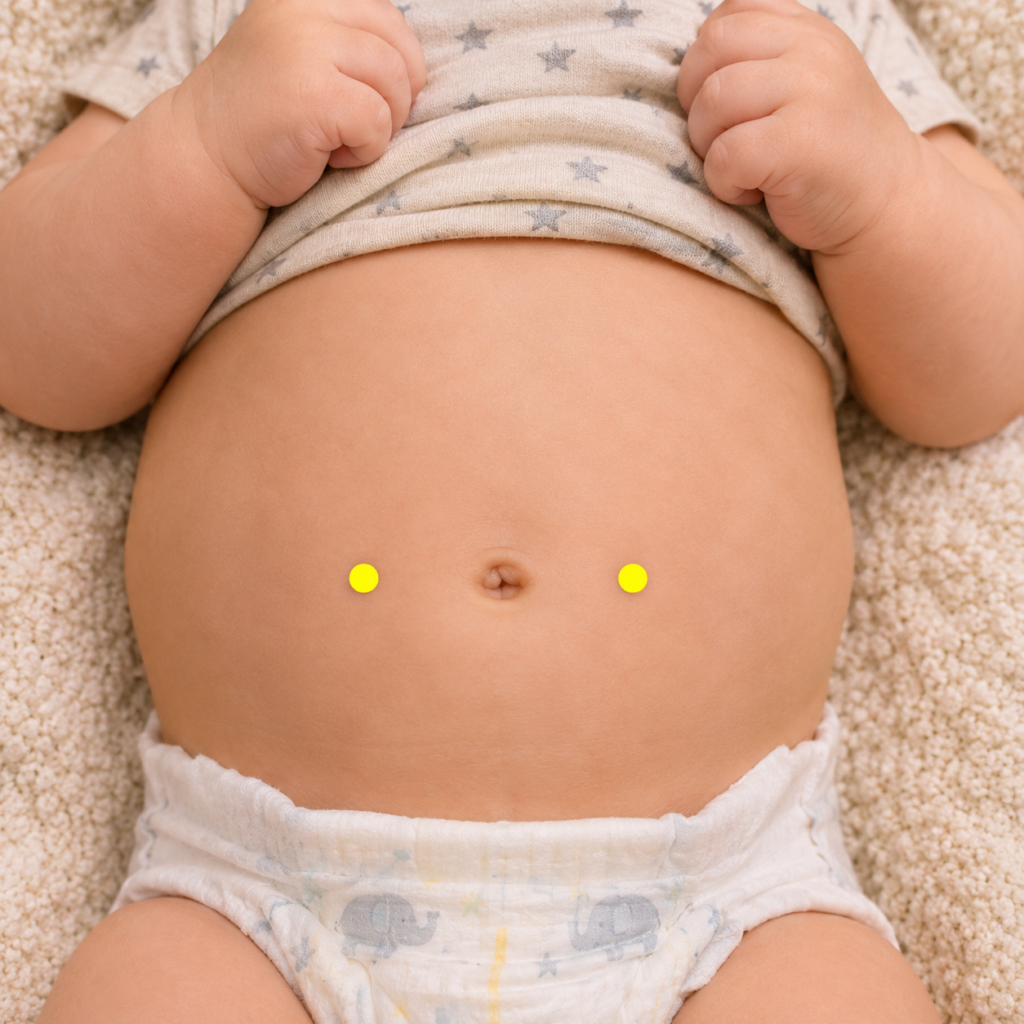
5. Press ST25 beside the navel to move the intestines. ST25 sits on both sides of the navel, about two of the baby’s finger-widths out from the center of the navel. Rest your fingertips on both points at the same time with very light pressure, or make tiny circles, for 30 seconds. ST25 is called “Tianshu,” the “Heavenly Pivot.”
ST25 is the alarm point of the Large Intestine. It helps relieve intestinal stagnation and regulate bowel movements.
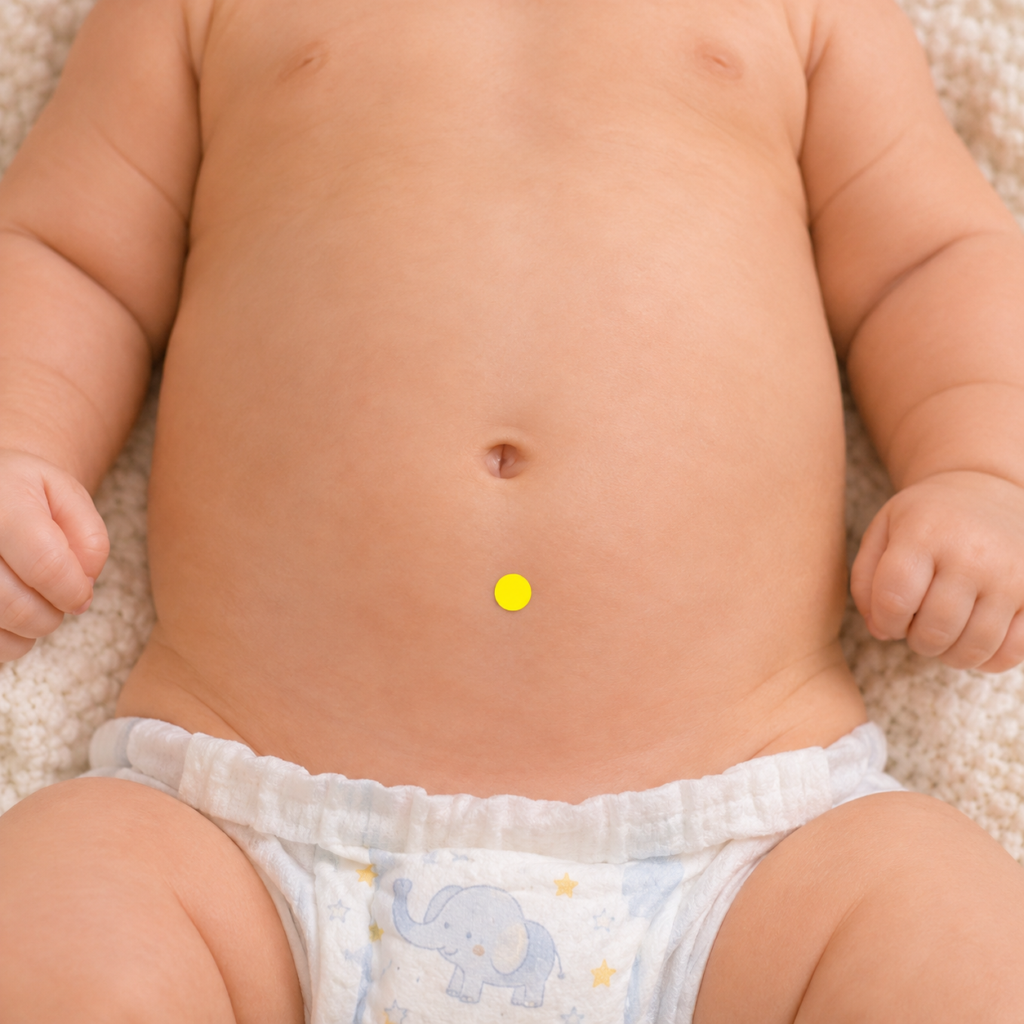
6. Press CV6 below the navel to strengthen the push. CV6 sits on the midline of the lower belly, about two of the baby’s finger-widths below the navel. Rest your fingertip on the point with very light pressure, or make tiny circles, for 30 seconds. CV6 is called “Qihai,” the “Sea of Qi.”
CV6 is a key point on the Conception Vessel that supports the movement and strengthening of Qi in the lower abdomen. It may help a baby who strains to pass stool but is unable to do so.
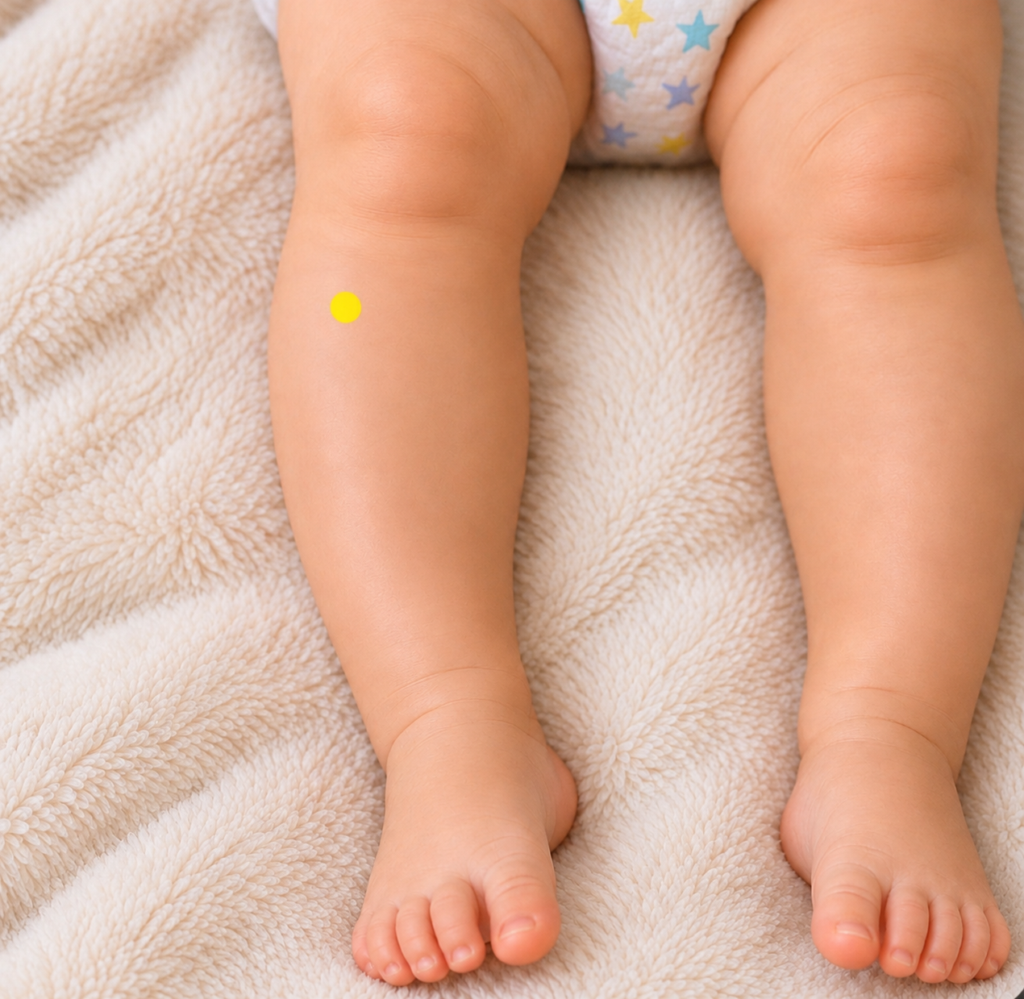
7. Press ST36 below the knee to strengthen digestion. ST36 sits on the front of the lower leg, about four of the baby’s finger-widths below the bottom of the kneecap and one of the baby’s finger-widths out from the edge of the shinbone. Make tiny, light circles with your fingertip for 30 seconds on each leg. ST36 is called “Zusanli,” the “Leg Three Miles.”
ST36 is the sea point of the Stomach. It strengthens the Spleen and Stomach and supports regular digestion.
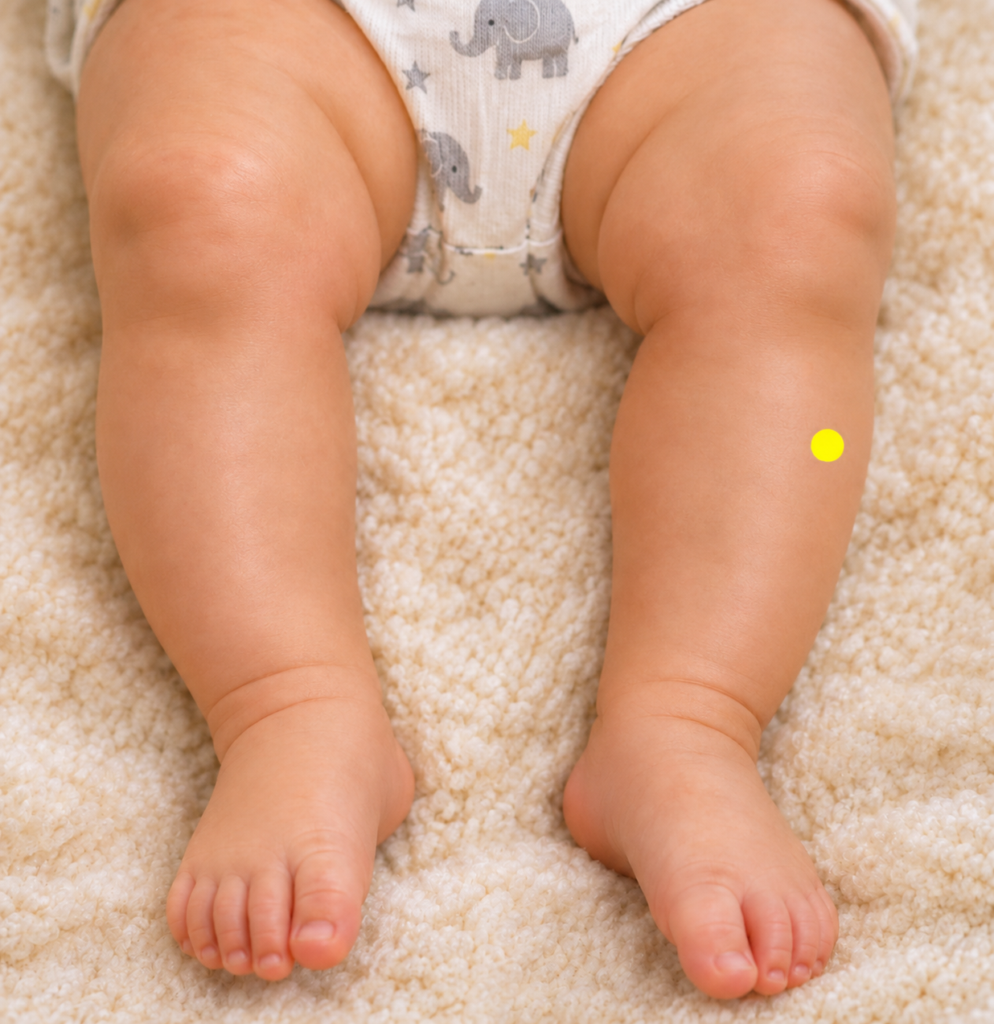
8. Press ST37 on the lower leg to move the bowels. ST37 sits on the front of the lower leg, about three of the baby’s finger-widths below ST36, one of the baby’s finger-widths out from the edge of the shinbone. Make tiny, light circles with your fingertip for 30 seconds on each leg. ST37 is called “Shangjuxian,” the “Upper Great Void.”
ST37 is the lower sea point of the Large Intestine. It supports intestinal motility and may help relieve cramping.
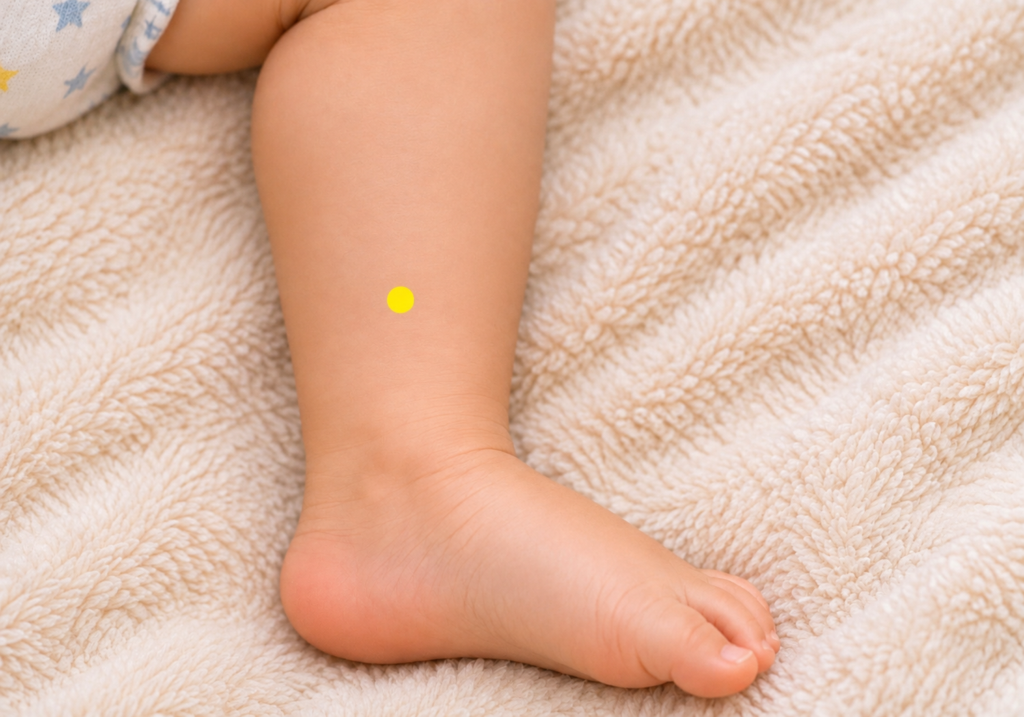
9. Press SP6 above the inner ankle to moisten the intestines. SP6 sits on the inner side of the lower leg, about four of the baby’s finger-widths above the tip of the inner ankle bone, just behind the edge of the shinbone. Make tiny, light circles with your fingertip for 30 seconds on each leg. SP6 is called “Sanyinjiao,” the “Three Yin Intersection.”
SP6 is the meeting point of the Spleen, Liver, and Kidney channels of the leg. It helps nourish bodily fluids, soften dry stools, and support digestion.
Why These Acupressure Points Work
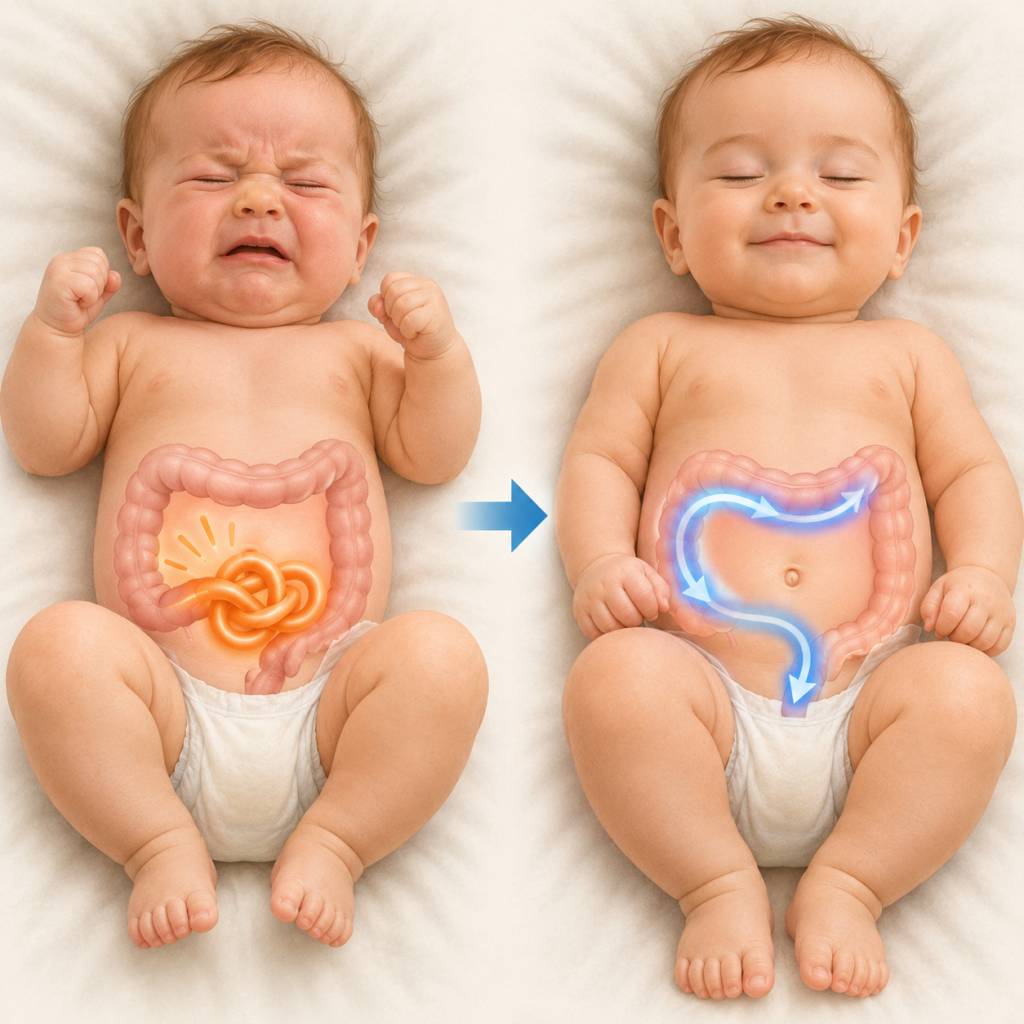
From the perspective of Traditional Chinese Medicine, constipation in infants may result from Heat drying the intestines, stagnant Qi, or an underdeveloped digestive system that is not yet strong enough to promote bowel movements. The points on the arms and hands are used to clear Heat and facilitate the movement of Qi through the Large Intestine; abdominal points are intended to promote bowel movements directly and strengthen the body’s ability to expel stool; and points on the legs are used to support digestion, promote bowel movements, and moisten dry stools.
The nine points work together to help alleviate constipation in infants:
- LI11 and LI4 clear Heat and move Qi along the Large Intestine.
- TE6, ST25, and ST37 get the intestines moving.
- CV12, CV6, and ST36 strengthen digestion and the push.
- SP6 nourishes fluids to soften dry stools.
How to Properly Use These Acupressure Points

Acupressure for infant constipation is most effective when the baby is calm and awake and at least 30 minutes have passed since feeding, such as after a warm bath or during a diaper change.
- With the baby lying on their back, begin by making small circular movements over LI11, TE6, and LI4 on both arms.
- Perform slow, clockwise circular movements over CV12. Then, gently rest your fingertips on ST25 on both sides of the navel and on CV6 below the navel.
- Continue applying gentle circular motions to ST36, ST37, and SP6 on both legs.
- Conclude with several rounds of gentle bicycle-leg movements.
- Apply only light, slow pressure with the fingertips, considerably lighter than would be used on an adult, and stop if the baby fusses, stiffens, or appears uncomfortable. Avoid the soft spots on the top of the head. Do not apply pressure to these points on broken, irritated, or rash-affected skin, or to the navel area if the umbilical cord stump has not fully healed.
Simple habits can support these measures. Akron Children’s recommends placing the baby on their back and gently massaging in a clockwise direction just below the navel for approximately one minute. It also recommends bicycle-leg movements: hold the baby’s ankles and gently press one leg at a time toward the chest for a few seconds. Water should not be given to young babies, as it can interfere with nutrient absorption from breast milk or formula. Akron Children’s notes that a small amount of 100 percent prune, pear, or apple juice may help; a pediatrician can advise whether juice is appropriate for the baby’s age and how much to give. Formula changes, suppositories, laxatives, and other remedies should be used only under a pediatrician’s guidance. Always place babies on their backs to sleep. Traditional Chinese Medicine also recommends keeping the baby’s abdomen comfortably warm and maintaining calm, regular feedings.
Learn more about whether acupressure is safe for kids.
When to Get Professional Help

Call 911 if a baby has trouble breathing, turns blue or gray around the lips, or is limp or very difficult to wake. Seek immediate care if the baby’s belly is swollen, hard, and painful to touch; if vomiting is green, forceful, or repeated; if the baby refuses to feed; or if a baby under three months old has a temperature of 100.4°F or higher. Contact your pediatrician about blood in the stool; white, gray, or black stools; a newborn who has not passed a first stool within the first two days of life; constipation that began soon after birth; poor weight gain; fewer wet diapers than usual; no bowel movement for more than four or five days; or constipation that keeps coming back.
Acupressure is a gentle, supportive practice for baby constipation. It complements, and does not replace, diagnosis and medical care.
For related health concerns, acupressure for baby gas, acupressure for constipation, and acupuncture for kids are companion posts.
Above and Beyond Acupuncture offers acupuncture, cupping, and lifestyle coaching at the North Frank Lloyd Wright Boulevard location in Scottsdale.
Schedule an appointment online to start your healing journey.
The points above are only as effective as the technique used to apply them. Where to press, how firmly, and for how long all affect the result. For a full breakdown of how to perform acupressure properly at home, read Performing Acupressure in 3 Easy Steps.

About the Publisher
Paul Kerzner, L.Ac., is a licensed acupuncturist and board-certified herbalist, as well as the founder of Above and Beyond Acupuncture in Scottsdale. His own journey from chronic patient to practicing acupuncturist shapes his commitment to providing honest, clinically grounded information about acupuncture and Traditional Chinese Medicine. Learn more about Paul and his clinical approach on the About Us page.