Key Takeaways
- Infant stools are typically soft and loose; therefore, diarrhea may be indicated by a sudden increase in stool frequency, more than one stool per feeding, or unusually watery stools.
- Most cases of diarrhea in infants are caused by a virus and resolve on their own; however, infants and young children can become dehydrated quickly.
- Any baby under three months old with diarrhea should be checked by a doctor. Dry mouth, no tears, no wet diaper for six hours, or a sunken soft spot are signs of dehydration that need medical care.
- In Traditional Chinese Medicine, an infant’s Spleen is considered delicate; therefore, diarrhea is often attributed to Dampness, Cold, or Heat disrupting digestion, or to food that has not been fully digested.
- Nine gentle acupressure points on the hands, arms, abdomen, legs, and feet may help ease digestive discomfort and soothe a baby while breastfeeding or formula feeding continues.
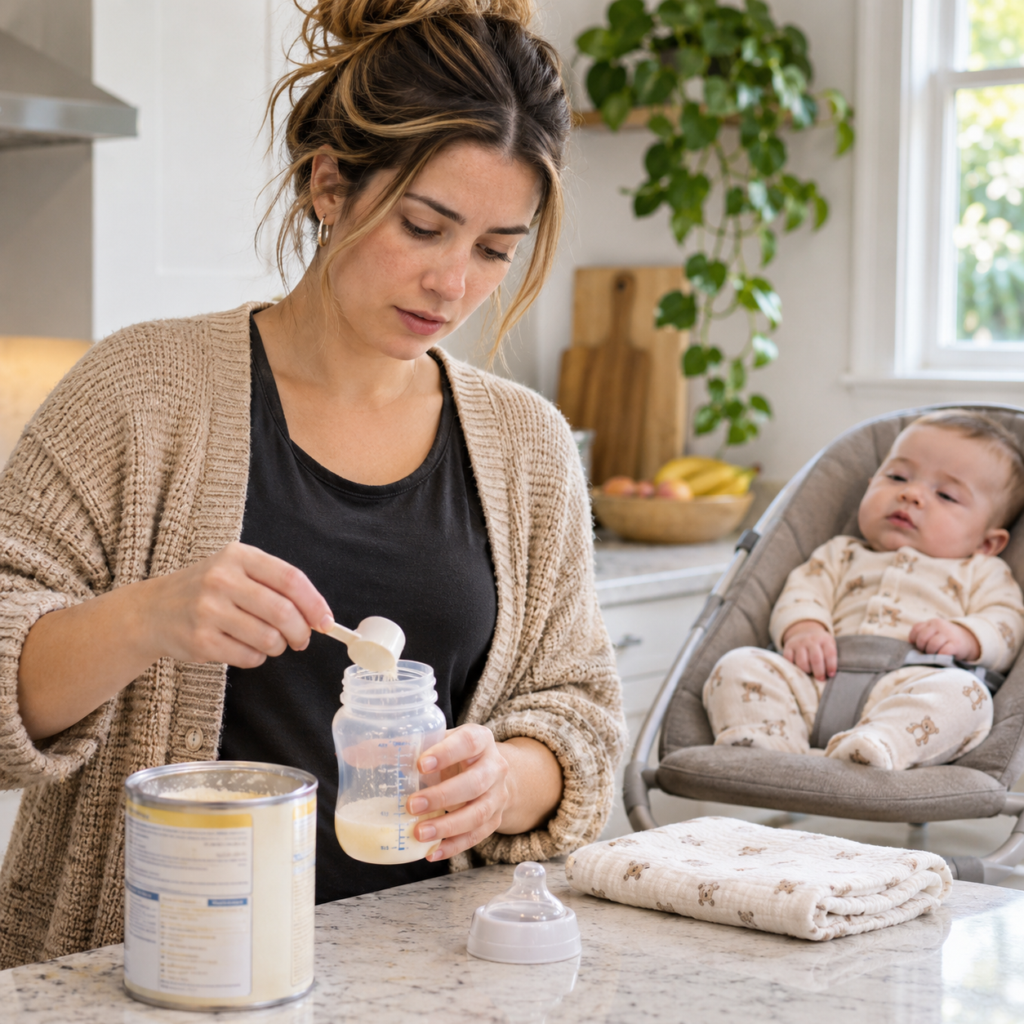
The first sign is often a diaper that keeps overflowing. Then another, and another, each one more watery than the last. A baby with diarrhea may also be fussy, gassy, or off their feedings, and parents quickly find themselves counting diapers and watching for signs of trouble. While most bouts of diarrhea pass within a few days, knowing how to keep a baby hydrated and comfortable, and when to call for help, makes a big difference.
According to UF Health, normal baby stools are soft and loose, and newborns often pass stool during feedings, making diarrhea difficult to recognize. Signs include a sudden increase in stool frequency, more than one stool per feeding, or very watery stools. Diarrhea in babies is usually caused by a virus and resolves on its own, although diet changes, antibiotics, and other infections can also cause it. Babies and children under three can become dehydrated quickly. UF Health recommends continuing to breastfeed and giving formula at full strength unless a provider advises otherwise. If the baby seems thirsty, ask a provider about an oral rehydration solution. Do not give anti-diarrhea medicine unless a provider approves it.
A baby’s small body contains less water than an older child’s, and diarrhea can quickly cause fluid loss, making dehydration the main concern. Frequent, watery stools can also irritate the skin and cause diaper rash. In most cases, a baby who continues feeding well and has plenty of wet diapers is staying hydrated as the gut recovers.
Traditional Chinese Medicine views a baby’s Spleen as naturally delicate. It turns milk into nourishment and moves fluids where they belong. When overwhelmed, food and fluids may pass through before they’re fully digested. Pale, watery stools along with cool hands and tiredness are seen as Cold and Dampness; yellow, foul-smelling stools with a red face and fussiness are seen as Damp-Heat. Sour-smelling stools and a bloated belly after a large feeding or a new food are seen as food stagnation. Gentle points that strengthen the Spleen, drain Dampness, and settle the intestines may help digestion recover.
The points below begin on the hands and arms, move to the belly, and end on the legs and feet. For a baby, measure all distances using the baby’s own finger-widths, not an adult’s.
What Acupressure Points to Press and Why
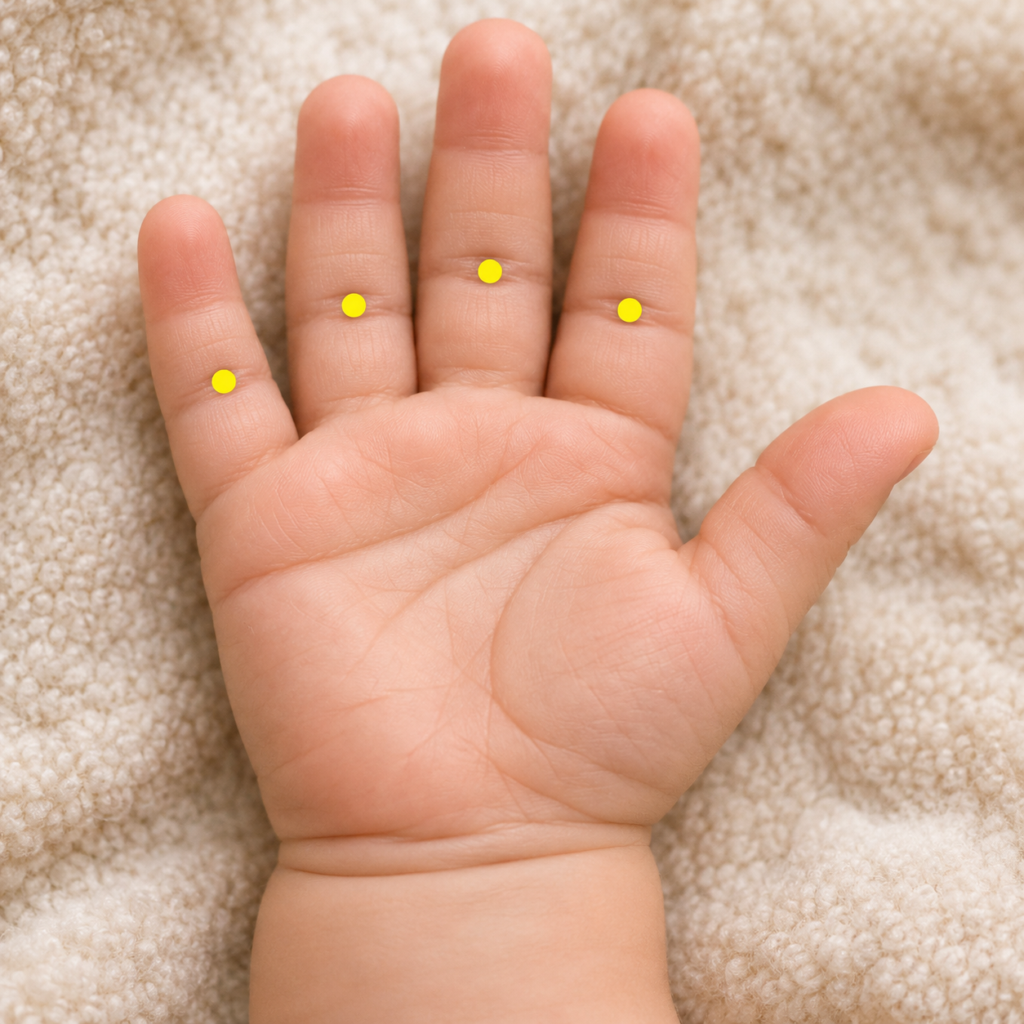
1. Press Sifeng on the fingers to ease digestion. Sifeng is a group of four points on the palm side of the index, middle, ring, and little fingers, at the center of the crease closest to the middle of each finger. Gently press or stroke each crease with your fingertip for a few seconds, moving from finger to finger, for 30 seconds on each hand. Sifeng means the “Four Seams.”
Sifeng is an extra point traditionally used in children to address poor digestion and food stagnation.
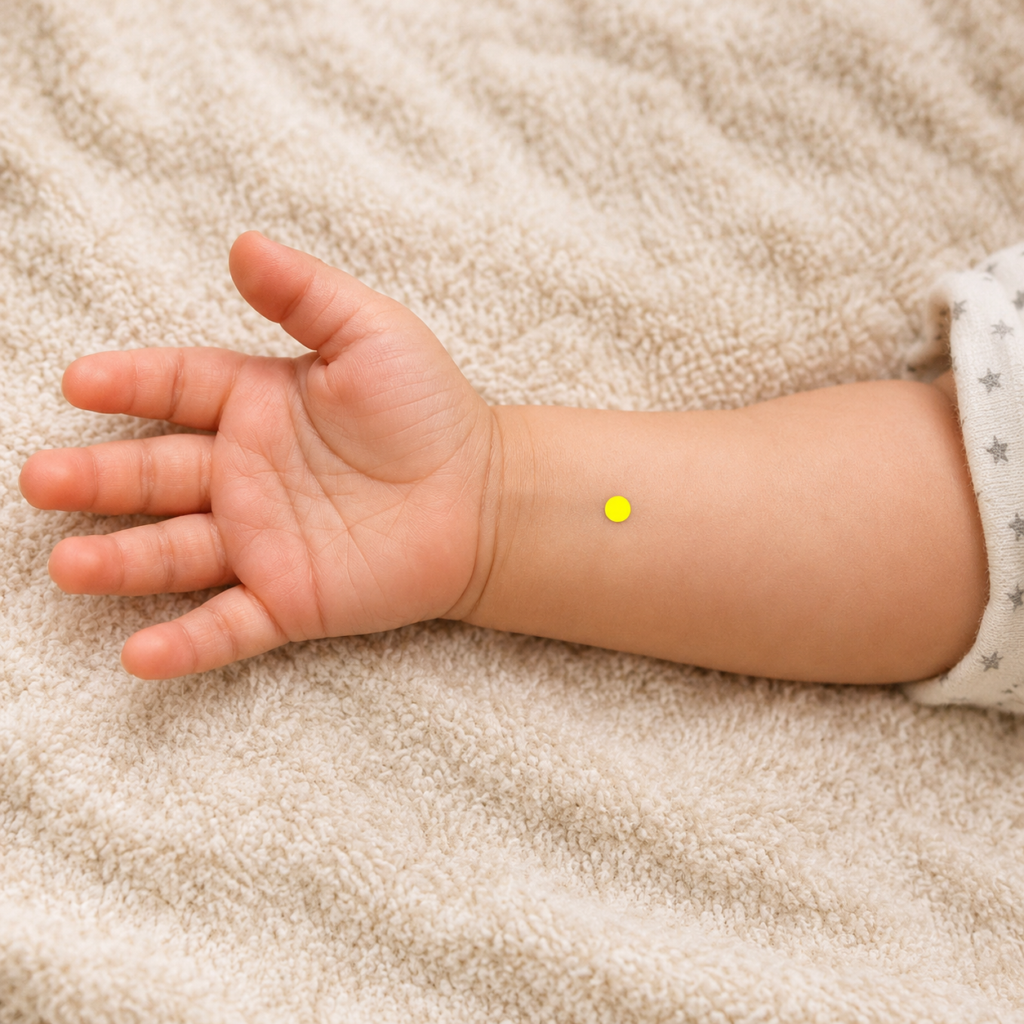
2. Press PC6 on the inner forearm to settle the stomach. PC6 sits on the inner forearm, about two of the baby’s finger-widths above the wrist crease, between the two tendons in the middle of the forearm. Make tiny, light circles with your fingertip for 30 seconds on each arm. PC6 is called “Neiguan,” the “Inner Gate.”
PC6 is the connecting point of the Pericardium. It helps settle the Stomach and has traditionally been used when diarrhea is accompanied by vomiting or an upset stomach.
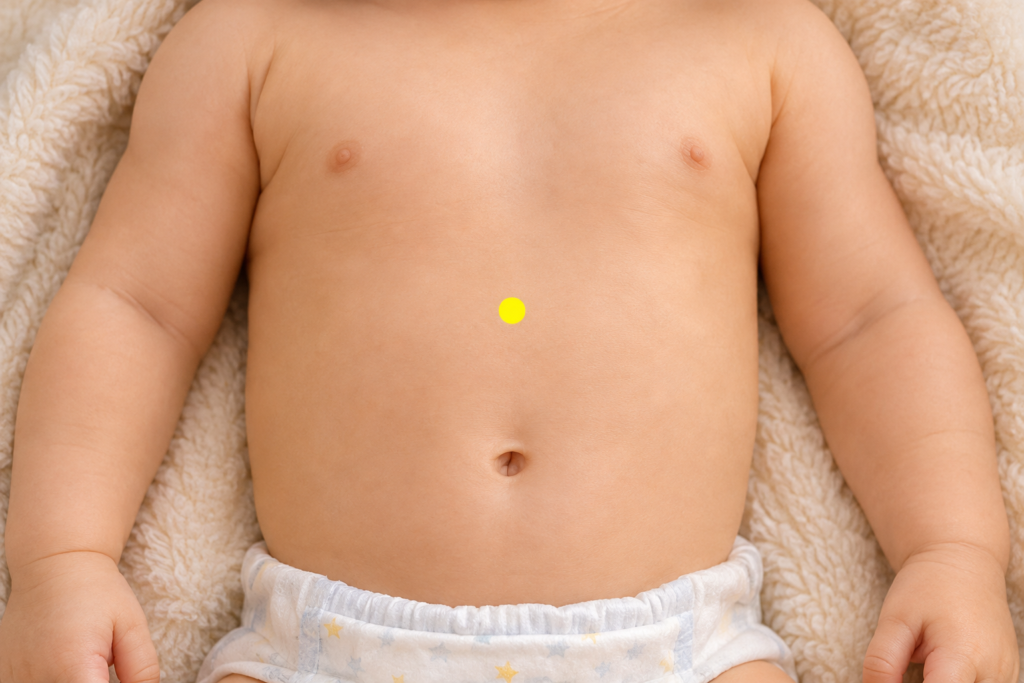
3. Circle CV12 on the belly to settle digestion. CV12 sits on the midline of the belly, halfway between the navel and the bottom of the breastbone. Rest your whole palm lightly on the belly and make slow, gentle counterclockwise circles around the navel, passing over CV12, for one to two minutes. CV12 is called “Zhongwan,” the “Middle Cavity.”
CV12 is the alarm point of the Stomach. Gentle counterclockwise circular motions are traditionally used to soothe the abdomen when stools are loose.
4. Press ST25 beside the navel to regulate the intestines. ST25 sits on both sides of the navel, about two of the baby’s finger-widths out from the center of the navel. Rest your fingertips on both points at the same time with very light pressure for 30 seconds. ST25 is called “Tianshu,” the “Heavenly Pivot.”
ST25 is the alarm point of the Large Intestine. It helps regulate intestinal function and is traditionally used to address both diarrhea and constipation.
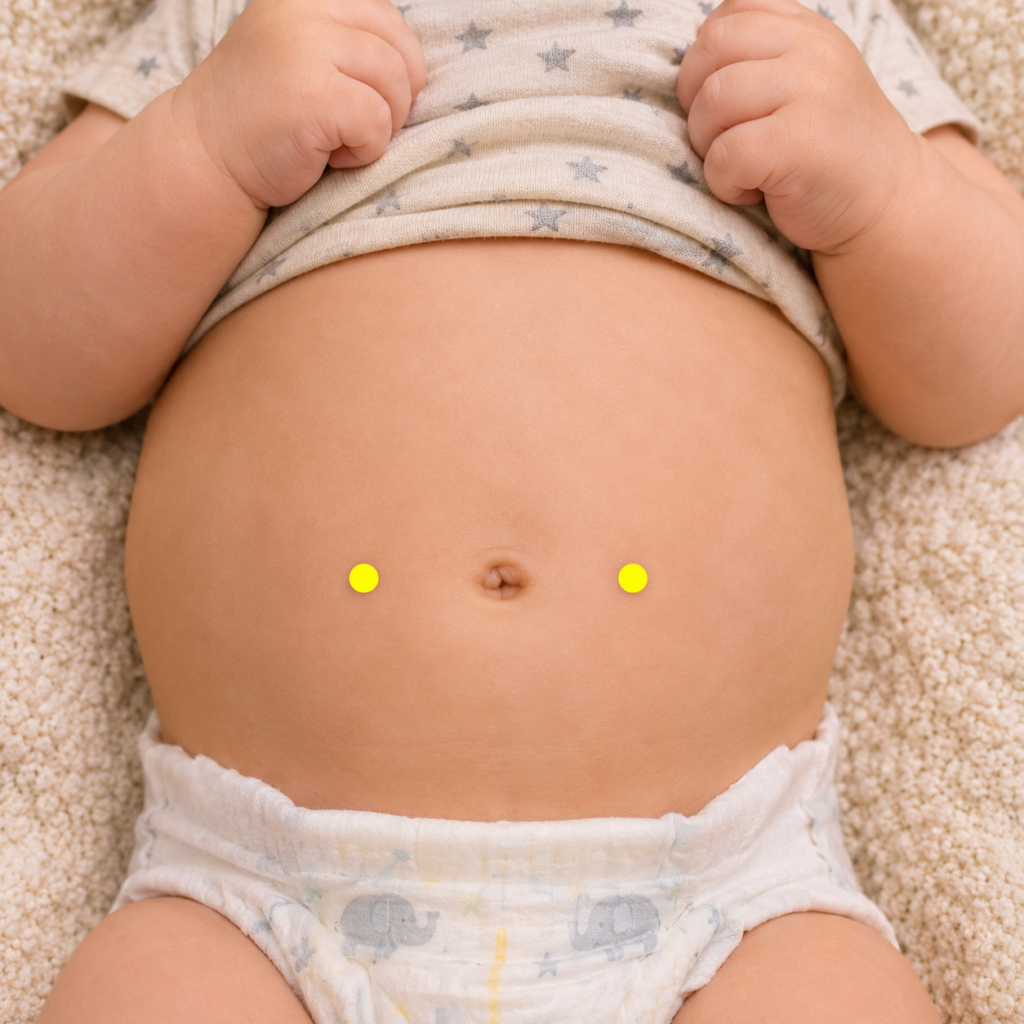
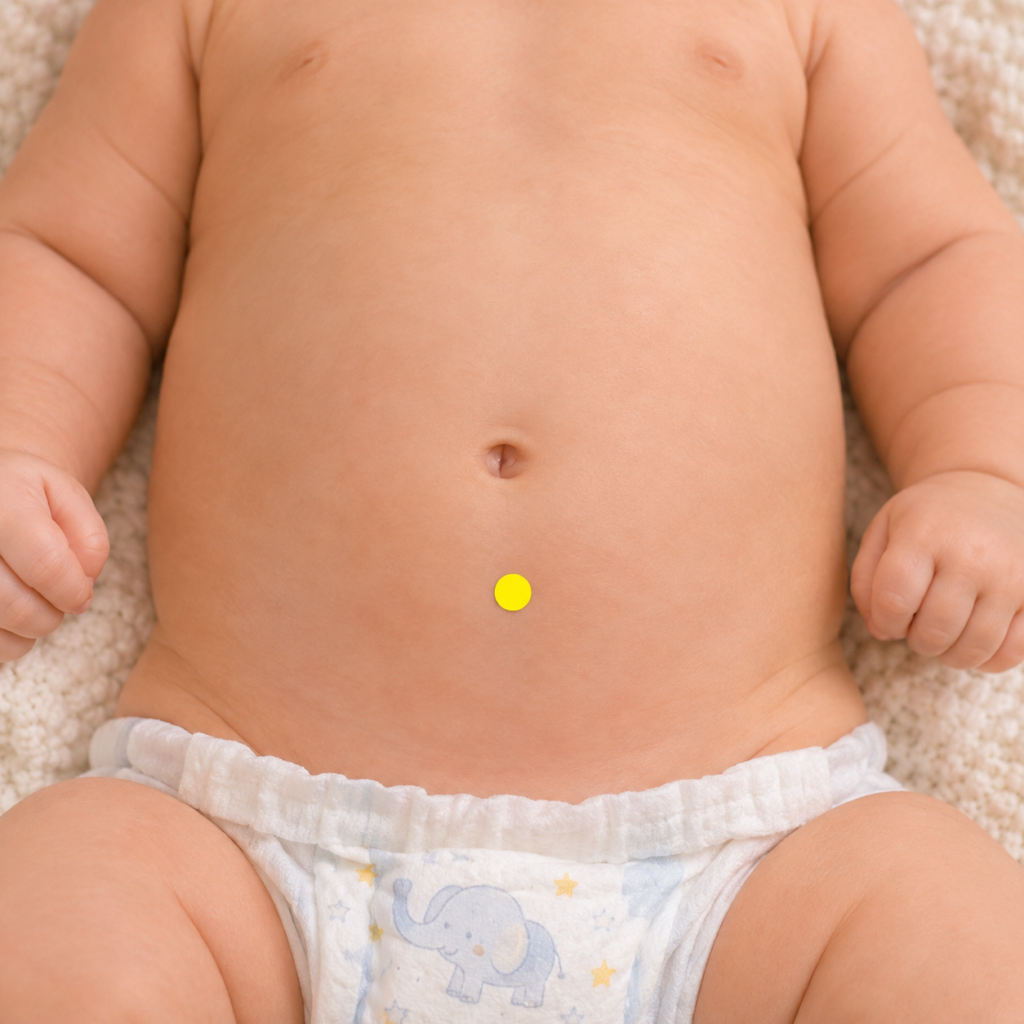
5. Press CV6 below the navel to strengthen and warm the belly. CV6 sits on the midline of the lower belly, about two of the baby’s finger-widths below the navel. Rest your fingertip on the point with very light pressure for 30 seconds. CV6 is called “Qihai,” the “Sea of Qi.”
CV6 is an important point on the Conception Vessel, traditionally used to support Qi in the lower abdomen. It is said to warm the abdomen and may be used when diarrhea leaves an infant pale and fatigued.
6. Press ST36 below the knee to strengthen digestion. ST36 sits on the front of the lower leg, about four of the baby’s finger-widths below the bottom of the kneecap and one of the baby’s finger-widths out from the edge of the shinbone. Make tiny, light circles with your fingertip for 30 seconds on each leg. ST36 is called “Zusanli,” the “Leg Three Miles.”
ST36 is the sea point of the Stomach. It strengthens the Spleen and Stomach and supports digestive recovery.
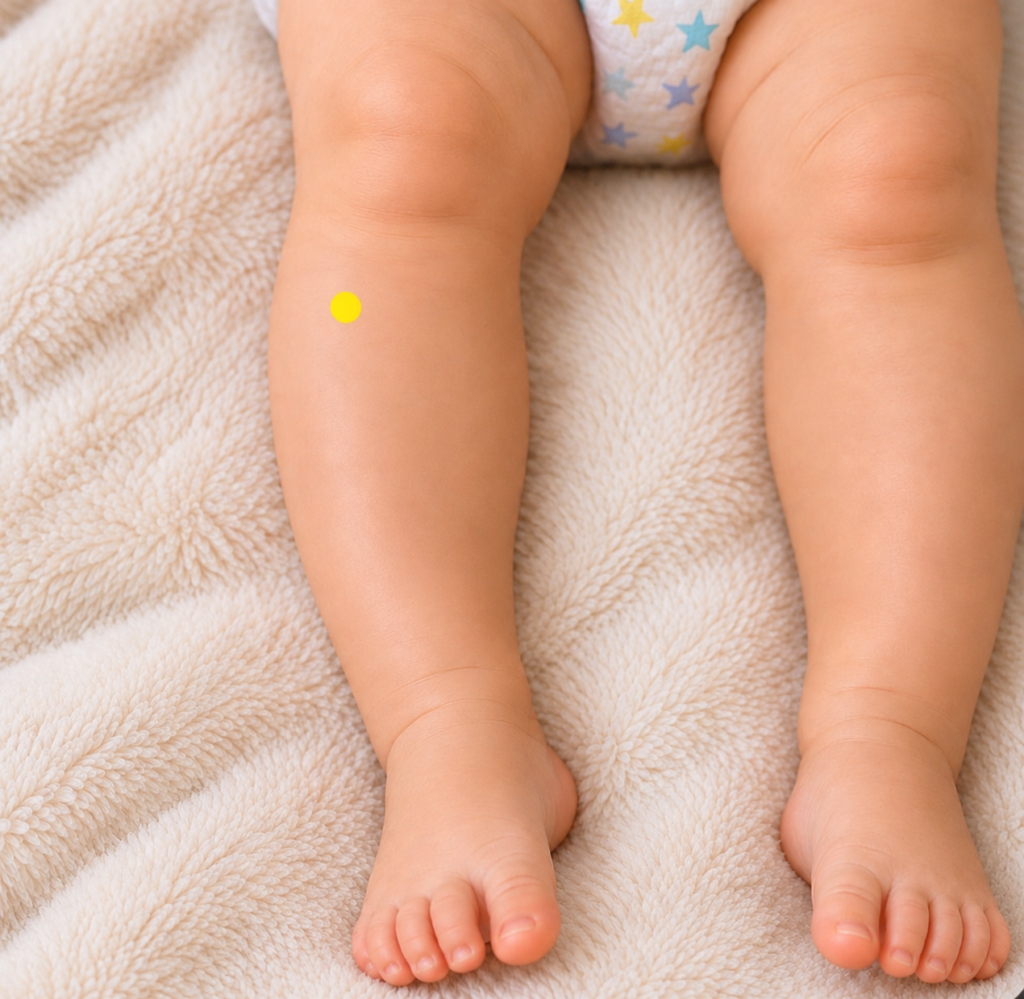
7. Press ST37 on the lower leg to settle the intestines. ST37 sits on the front of the lower leg, about three of the baby’s finger-widths below ST36, one of the baby’s finger-widths out from the edge of the shinbone. Make tiny, light circles with your fingertip for 30 seconds on each leg. ST37 is called “Shangjuxian,” the “Upper Great Void.”
ST37 is the lower sea point of the Large Intestine. It is believed to regulate intestinal function and is traditionally used to address diarrhea and abdominal cramping.
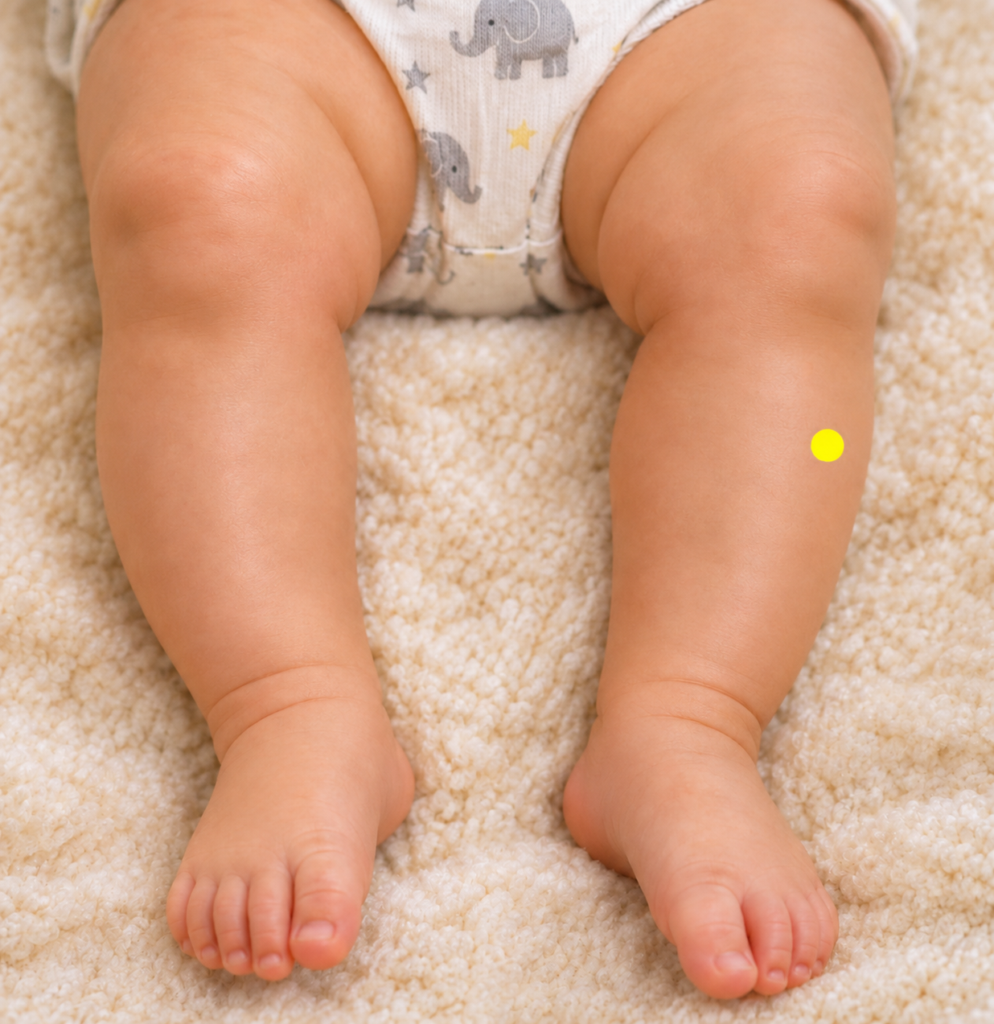
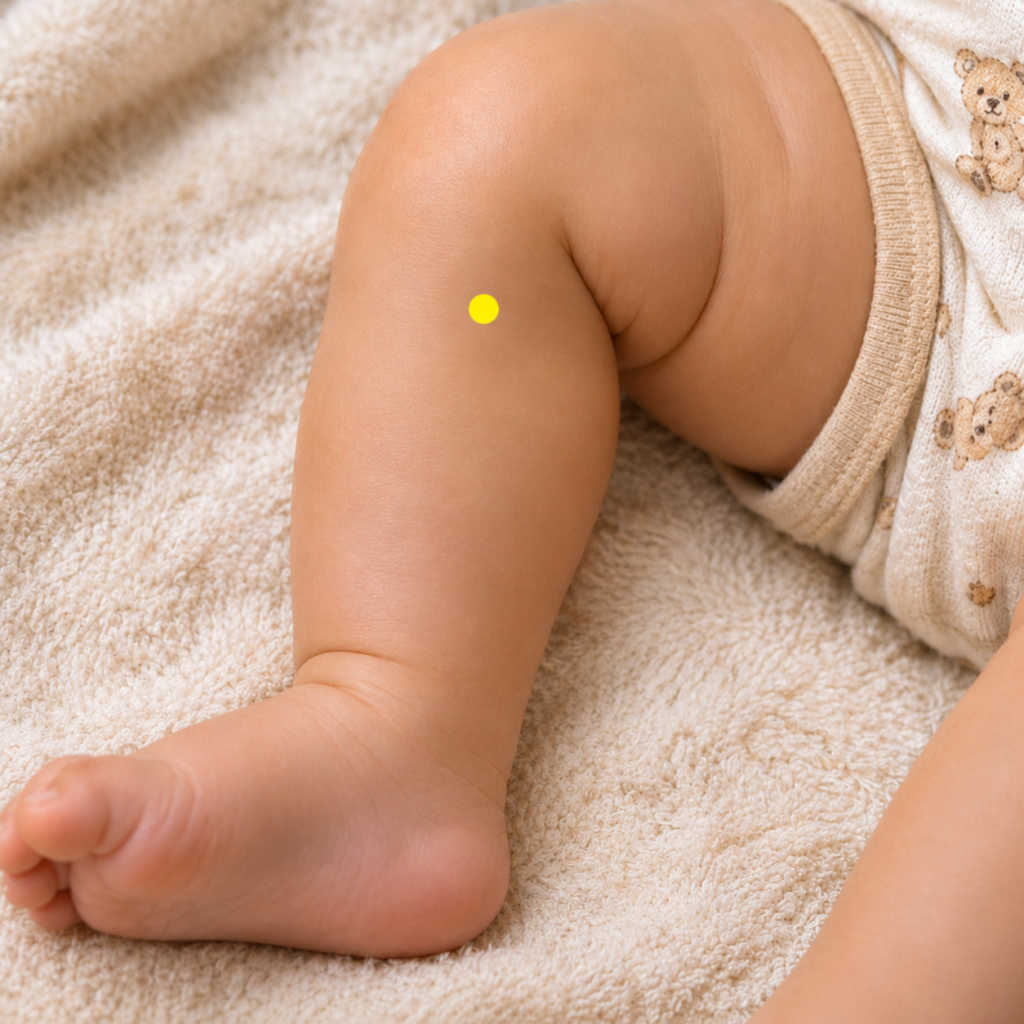
8. Press SP9 below the inner knee to drain Dampness. SP9 sits on the inner side of the lower leg, in the hollow just below the bony bulge under the inner knee, at the back edge of the shinbone. Make tiny, light circles with your fingertip for 30 seconds on each leg. SP9 is called “Yinlingquan,” the “Yin Mound Spring.”
SP9 is the sea point of the Spleen and is regarded as one of the most important points in Traditional Chinese Medicine for draining Dampness. It supports the movement of fluids throughout the body, which may help stools become firmer.
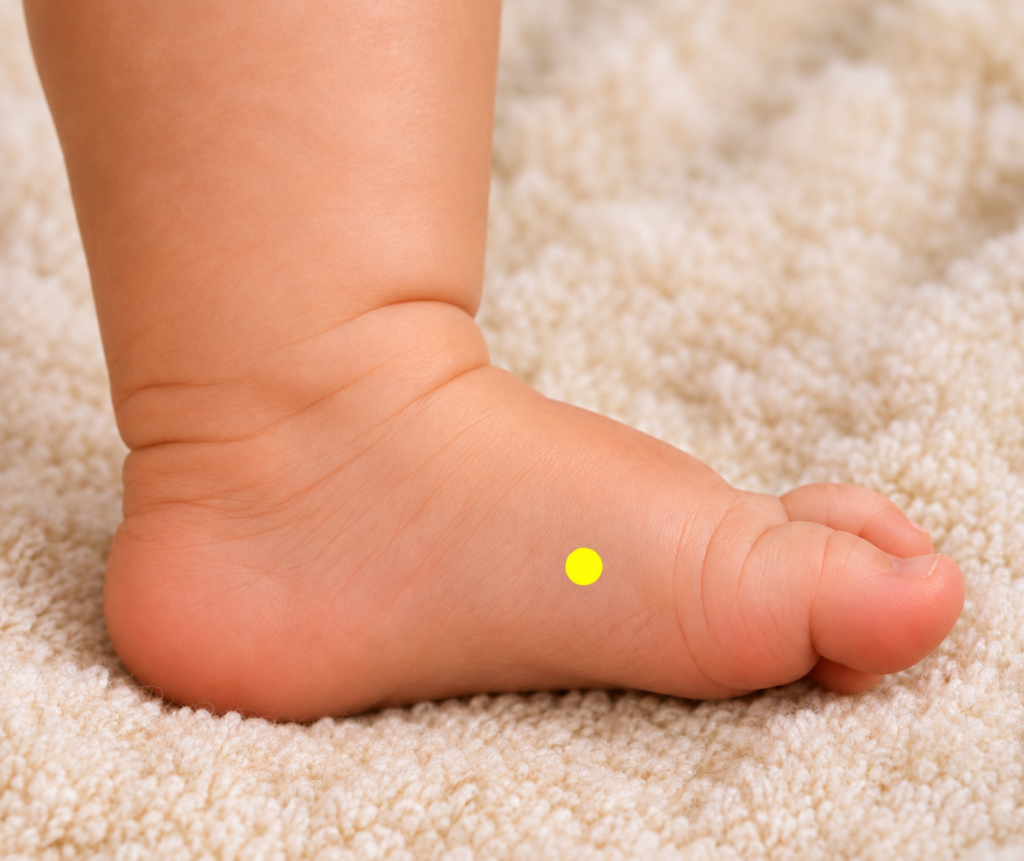
9. Press SP4 on the inner foot to strengthen the Spleen. SP4 sits on the inner edge of the foot, in the hollow just behind and below the bony bump at the base of the big toe, where the top of the foot meets the sole. Make tiny, light circles with your fingertip for 30 seconds on each foot. SP4 is called “Gongsun,” the “Grandfather Grandson.”
SP4 is the connecting point of the Spleen. It supports digestive function and is traditionally used to address loose stools and abdominal pain.
Why These Acupressure Points Work
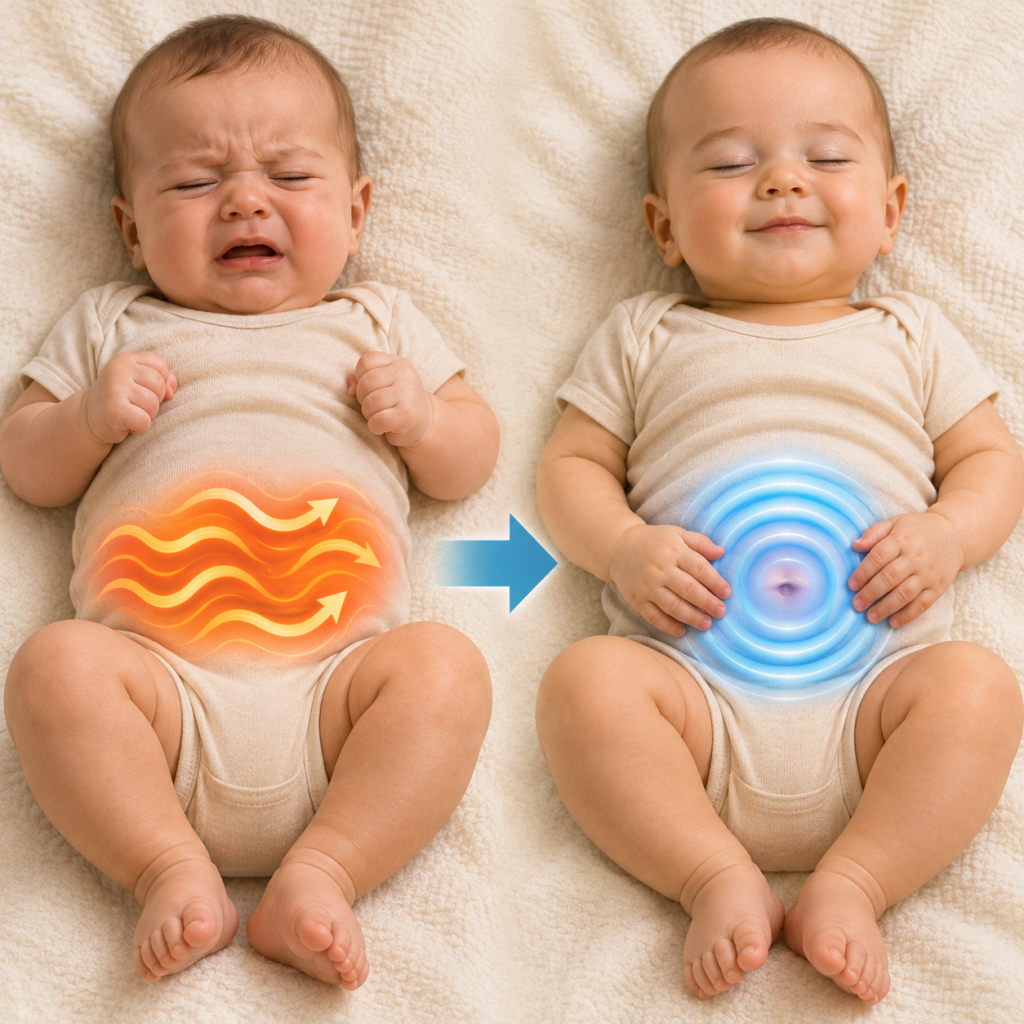
From a Traditional Chinese Medicine perspective, baby diarrhea occurs when a delicate Spleen is overwhelmed by Dampness, Cold, Heat, or undigested food. Points on the hands and arms settle the Stomach and aid digestion; belly points regulate the intestines and warm the abdomen; and points on the legs and feet strengthen the Spleen and drain Dampness.
The nine points work together to alleviate diarrhea in babies:
- Sifeng and PC6 settle the Stomach and ease digestion.
- CV12, ST25, and CV6 regulate the intestines and warm the belly.
- ST36, ST37, and SP4 strengthen the Spleen and Stomach.
- SP9 drains Dampness so stools can firm up.
How to Properly Use These Acupressure Points
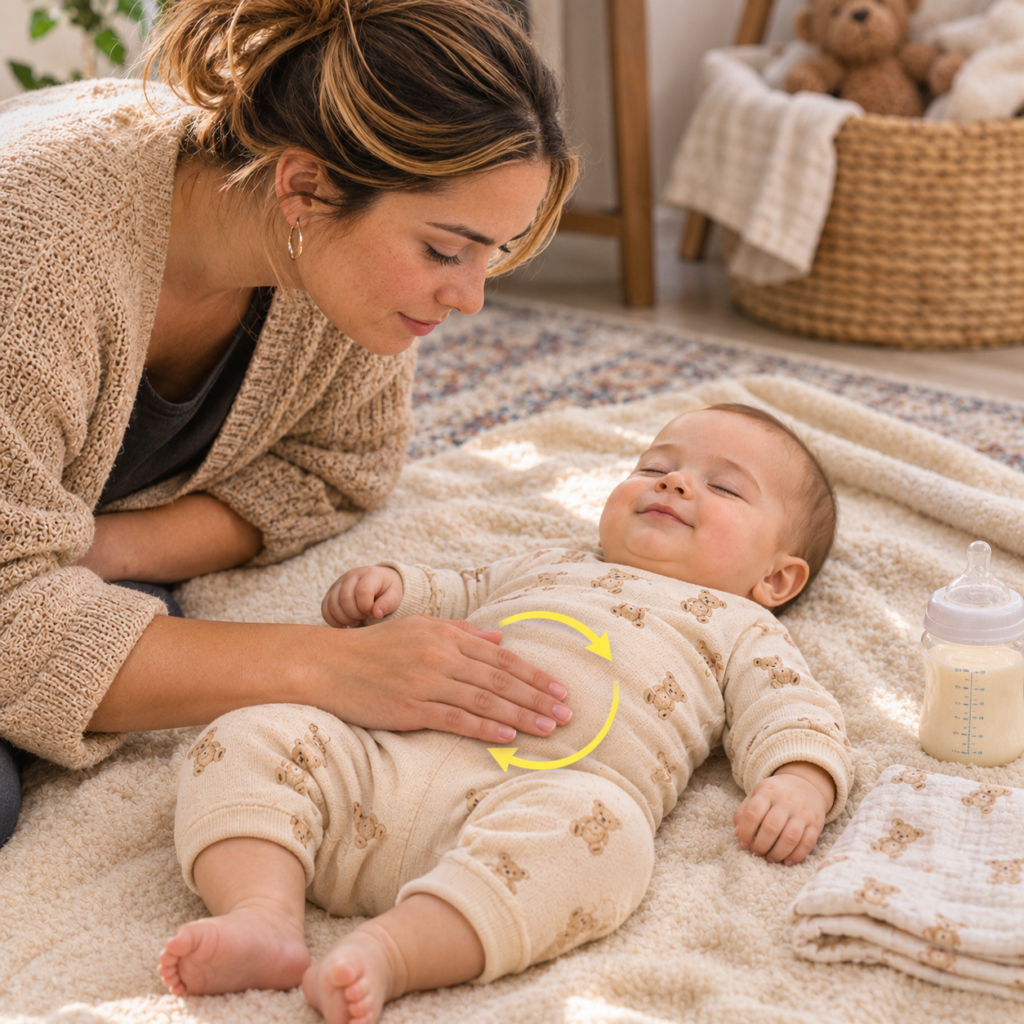
Acupressure for a baby with diarrhea is most effective when the baby is calm and at least 30 minutes have passed since feeding. Continue regular breastfeeding or formula feeding to help keep the baby hydrated.
- With the baby lying on their back, begin by applying gentle strokes across Sifeng and making small circular motions on PC6.
- Make slow, gentle counterclockwise circles over CV12 on the abdomen. Then rest your fingertips lightly on ST25 on both sides of the navel and on CV6 below the navel.
- Continue applying gentle circular motions to ST36, ST37, and SP9 on both legs.
- Conclude by applying small circular motions to SP4 on both feet.
- Apply only gentle, slow fingertip pressure, using substantially less pressure than you would on an adult. Stop if the baby fusses, stiffens, or appears uncomfortable. Avoid the soft spots on the top of the head. Do not apply pressure to broken, irritated, or rash-affected skin, or to the navel area if the umbilical cord stump has not fully healed.
Maintaining the baby’s hydration is the primary concern. UF Health recommends continuing breastfeeding and preparing formula at its usual concentration unless a healthcare provider advises otherwise. Consult a provider about whether an oral rehydration solution is appropriate. Avoid sports drinks, undiluted fruit juice, and anti-diarrheal medication unless approved by a provider. For babies who have begun eating solid foods, bland options such as bananas, crackers, toast, pasta, and cereal may be gentle on the stomach. Frequent diaper changes, cleaning the area with water, allowing the skin to air-dry, and applying a layer of diaper cream can help prevent diaper rash. Careful handwashing can help prevent the spread of germs. Always place babies on their backs to sleep. Traditional Chinese Medicine also recommends keeping the baby’s abdomen and feet comfortably warm.
Learn more about whether acupressure is safe for kids.
When to Get Professional Help

Call 911 if a baby is limp, extremely difficult to wake, or experiencing difficulty breathing. Seek immediate medical attention for signs of dehydration, including a dry, sticky mouth; absence of tears when crying; no wet diaper for six hours; sunken eyes or a sunken soft spot; significant sleepiness; or apparent pain. Contact the pediatrician if a baby under three months old has diarrhea; if the stool contains blood, mucus, or pus; if vomiting persists for more than 24 hours; if the baby has more than eight stools within eight hours; or if a fever with diarrhea lasts longer than two to three days. Any baby under three months old with a temperature of 100.4°F or higher requires immediate medical attention.
Acupressure is a gentle, supportive practice for baby diarrhea. It complements, and does not replace, diagnosis and medical care.
For related health concerns, acupressure for baby gas, acupressure for colic, and acupuncture for kids are companion articles.
Above and Beyond Acupuncture offers acupuncture, cupping, and lifestyle coaching at the North Frank Lloyd Wright Boulevard location in Scottsdale.
Schedule an appointment online to start your healing journey.
The points above are only as effective as the technique used to apply them. Where to press, how firmly, and for how long all affect the result. For a full breakdown of how to perform acupressure properly at home, read Performing Acupressure in 3 Easy Steps.
About the Publisher
Paul Kerzner, L.Ac., is a licensed acupuncturist and board-certified herbalist, as well as the founder of Above and Beyond Acupuncture in Scottsdale. His own journey from chronic patient to practicing acupuncturist shapes his commitment to providing honest, clinically grounded information about acupuncture and Traditional Chinese Medicine. Learn more about Paul and his clinical approach on the About Us page.