
Key Takeaways
- Sciatica is a common condition causing pain from the lower back to one leg, often with symptoms like numbness and muscle weakness.
- Standard treatments for sciatica, like medications and physical therapy, may not address underlying causes; acupuncture offers a different approach.
- Acupuncture treats sciatica by releasing muscle tension, reducing inflammation, and improving circulation, among other mechanisms.
- Patients typically need multiple acupuncture sessions over weeks to see sustained improvement, especially for chronic cases.
- A multi-modality approach, including activity modification and stress management, enhances recovery and supports acupuncture treatment.
Sciatica is one of the most common pain conditions in modern life. The pain radiates from the lower back through the buttock and down the back or side of one leg, sometimes reaching the foot. It can be a dull ache, a sharp electric sensation, or a persistent burning that makes sitting, standing, or walking genuinely difficult. Some patients experience numbness or tingling alongside the pain. Others experience muscle weakness that affects their gait.
The conventional approach involves anti-inflammatory medications, physical therapy, and general advice about stretching and rest. For some patients, this is sufficient. For many others, the pain persists for months or years despite following the standard recommendations. This is where acupuncture and Traditional Chinese Medicine offer a substantially different approach that addresses the underlying drivers of sciatica rather than only managing the pain.
An important clinical point that many patients are never told is that the standard advice to stretch through sciatic pain often makes the condition worse rather than better. The muscular tightness in nerve-involved back pain is often protective, and stretching removes the protection the body has put in place. How Stretching Is Making Your Back Pain Worse is an important article to read that provides information about how stretching may be exacerbating the pain and inflammation. Please read that post to learn more about this issue as many people are told stretching will provide relief when in reality it has the opposite effect.
Here is what sciatica actually is, why standard care often falls short, and how acupuncture treats the condition.
What is Sciatica?
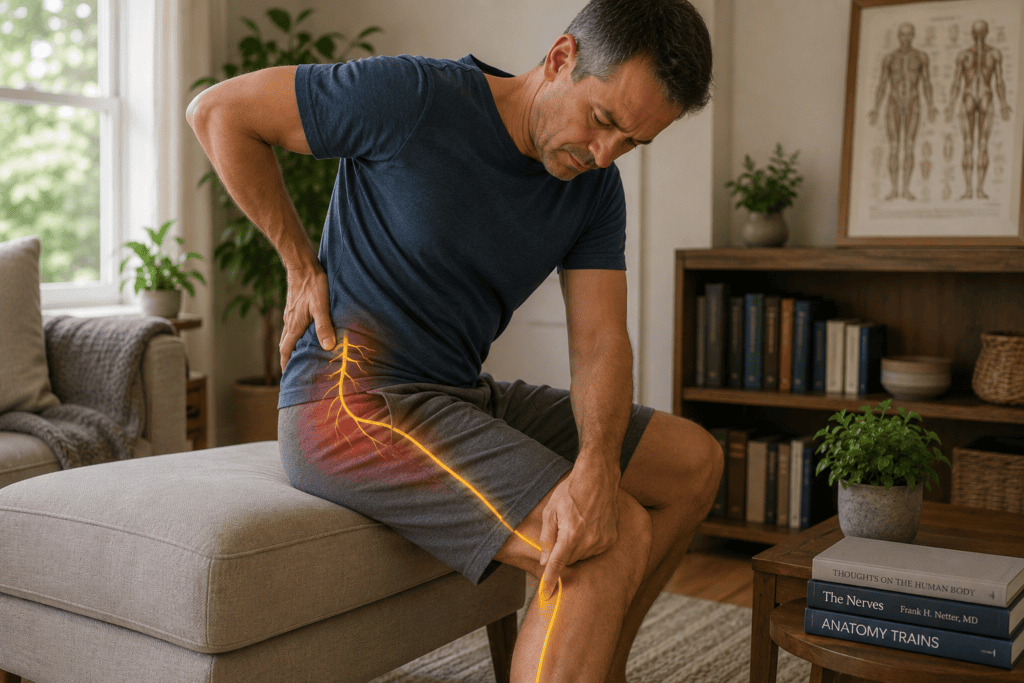
Sciatica is not a diagnosis in itself. It is a symptom pattern that reflects irritation or compression of the sciatic nerve, the largest nerve in the body. The sciatic nerve originates from nerve roots in the lower spine (L4 through S3), passes through the pelvis, runs down the back of the leg, and branches into smaller nerves that supply the lower leg and foot.
Several distinct conditions can produce sciatica, and identifying which pattern applies to a specific patient shapes the treatment approach.
- Disc herniation or bulging. The disc between vertebrae can bulge or rupture, pushing disc material against the nerve root as it exits the spine. This is one of the most common causes of sciatica and typically produces sharp pain that radiates along a specific nerve distribution.
- Spinal stenosis. The bony canal that houses the spinal cord and nerve roots can narrow due to arthritis, disc degeneration, or other structural changes. The narrowing compresses the nerves and produces sciatica that is often worse with standing or walking.
- Piriformis syndrome. The piriformis muscle in the buttock can tighten or spasm and compress the sciatic nerve as it passes through the pelvis. This is a common cause of sciatica that is often missed on imaging because the problem is muscular rather than structural.
- Spondylolisthesis. One vertebra can slip forward on the one below it, which can produce nerve root compression.
- Sacroiliac joint dysfunction. The joint between the sacrum and the pelvis can develop dysfunction that produces sciatica-like symptoms.
- Muscular imbalance and referred pain patterns. Chronic muscular imbalance, trigger points in the gluteals, and referred pain from other spinal patterns can produce sciatic symptoms without primary nerve involvement.
The Mayo Clinic overview of sciatica and the Cleveland Clinic summary on sciatica provide the medical framework for understanding these different presentations.
Why the Conventional Approach Often Fails to Offer Full Resolution
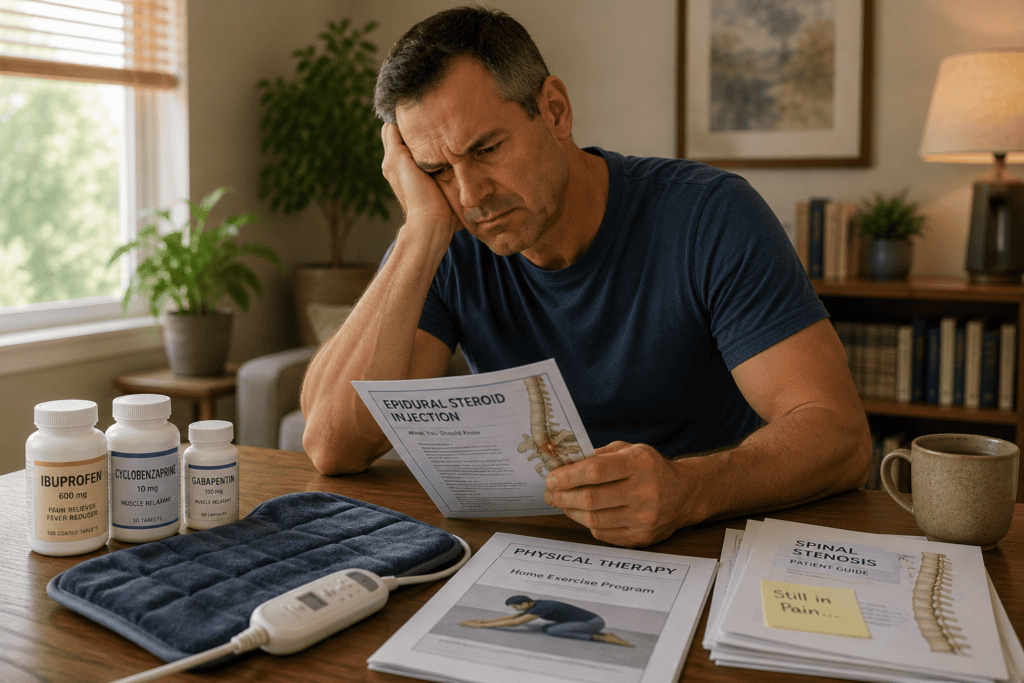
The limitations of standard care for sciatica reflect the multi-component nature of the condition. Anti-inflammatory medications reduce pain during acute flares but do not address the underlying nerve compression or muscular pattern. Muscle relaxants can help some patients but do not resolve the drivers.
- Physical therapy that focuses on generic stretching often makes sciatica worse for the reasons described above. Physical therapy that addresses the specific pattern (nerve mobilization for nerve root compression, specific protocols for disc pathology, targeted work on piriformis when that is the driver) can be genuinely helpful when performed by therapists trained in these approaches.
- Corticosteroid injections can provide temporary relief for some patients but do not address the underlying cause and are associated with higher rates of long-term recurrence.
- Surgery is sometimes indicated for severe or progressive cases but is generally considered when conservative treatment has failed. Outcomes are variable and many patients continue to have symptoms after surgery.
Many patients arrive at acupuncture treatment after having tried multiple standard interventions with partial or limited success. The American College of Physicians clinical practice guideline recommends acupuncture as a first-line treatment for chronic low back pain, which includes many sciatica patients.
How Acupuncture Treats Sciatica
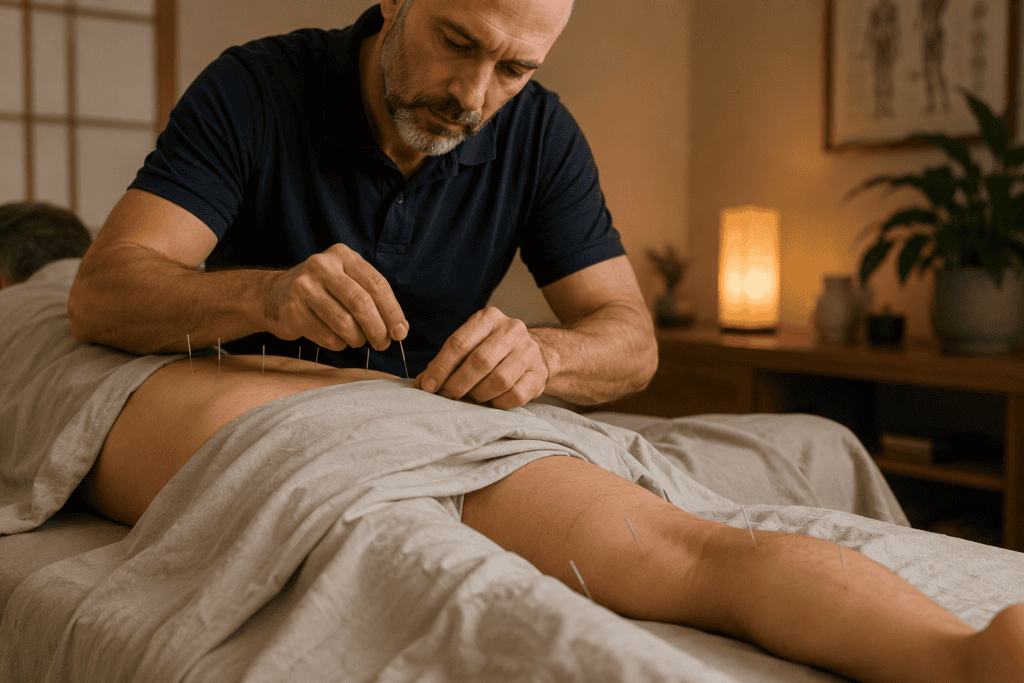
Acupuncture addresses the multiple mechanisms that produce and sustain sciatica simultaneously.
- Muscular release. The gluteals, piriformis, and other muscles that surround the sciatic nerve pathway become chronically tight in sciatica patients. Acupuncture releases this tension directly, which reduces the mechanical compression on the nerve. This is particularly important for piriformis syndrome, which often responds dramatically to acupuncture treatment.
- Nerve inflammation reduction. Sciatica involves inflammation at the compressed or irritated nerve. Acupuncture reduces inflammatory markers through documented mechanisms, which supports the resolution of the nerve inflammation over the course of treatment.
- Endogenous pain relief. The treatment stimulates the release of endorphins, enkephalins, and other natural pain-relieving chemicals produced by the body itself. This reduces the pain signal without the side effects of external medication.
- Nervous system regulation. Chronic pain patterns often develop when the nervous system sensitizes to the pain signal over time. Acupuncture calms this central sensitization, which reduces both the pain intensity and the pain persistence. A deeper dive into pain and the nervouse system can be found in: Am I Stuck in a Pain Cycle?.
- Improved circulation. Acupuncture improves circulation at and around the treatment sites, which supports the delivery of nutrients to the healing tissues and the clearance of inflammatory waste products.
- Channel-based effects. Traditional Chinese Medicine treats sciatica through the Urinary Bladder, Gallbladder, and other channels that traverse the sciatic pathway. Local points along the spine and buttock combined with distal points on the leg and foot produce effects that pure local treatment cannot achieve.
- Pattern differentiation. A licensed acupuncturist identifies the specific patterns producing the sciatica in each patient. Qi and blood stagnation in the affected channels is the most common pattern. Kidney Yang or Yin deficiency, Liver Qi stagnation, and cold or damp invasion can all contribute to specific presentations. The specific patterns identified shape the specific treatment plan.
The chronic stress component often plays a role in sciatica because chronic stress increases sympathetic activation and muscular tension throughout the body. To better understand how stress and cortisol impact sciatica please read: What Is Cortisol and Why Do I Have So Much of It?.
For patients who want to work with acupressure at home between sessions or as part of their broader self-care, the specific points that address sciatica are covered in How to Relieve Sciatica With Acupressure. The acupressure protocol works particularly well as a complement to professional acupuncture treatment.
A more complete explanation of what acupuncture does to the body across multiple biological mechanisms is found in: What Does Acupuncture Actually Do to Your Body?.
What to Expect From Treatment
Sciatica treatment with acupuncture is a course of treatment rather than a single session. The muscular, neural, and constitutional patterns that produce sciatica have usually developed over months or years, and unwinding them takes sustained work. Most patients need a course of treatment of six to twelve sessions over two to three months to see meaningful sustained improvement.
The improvements often emerge in stages. The initial sessions typically produce noticeable pain reduction that lasts hours to days. As the course of treatment progresses, the pain reduction lasts longer between sessions and the baseline pain level starts to shift downward. Range of motion improves. Sleep improves as the pain becomes less disruptive. Many patients notice improvements in areas they were not tracking including general low back tension, hip mobility, and even digestive function.
For patients with acute sciatica (recent onset), fewer sessions are often sufficient. Four to six treatments over four to six weeks can produce substantial resolution.
For patients with chronic sciatica that has persisted for months or years, treatment usually involves the initial course to shift the muscular and neural patterns followed by continued work over several months to consolidate the improvements. Modifying the activities that contribute to the condition is essential during this period.
The Multi-Modality Approach

Sciatica responds best to an integrated approach that addresses each of the components.
- Activity modification. Continuing the activities that produce or worsen the sciatica while trying to treat it undermines the intervention. Identifying the specific movements or positions that aggravate the condition and modifying them during recovery is essential.
- Gentle movement rather than aggressive stretching. Walking, gentle rotational movement, and other low-load movement supports the tissue without the mechanical stress that stretching adds. The specific stretches that patients are often told to do (knee-to-chest, figure-four, hamstring stretch) can worsen nerve-involved sciatica.
- Traction and decompression. For patients with nerve root compression, positions and techniques that unload the affected pathway support recovery. This can include specific traction devices, inversion tables, or positional work with a physical therapist trained in these approaches.
- Postural awareness. Sitting positions that avoid forward flexion, standing positions that maintain neutral spinal alignment, and sleeping positions that reduce lumbar and nerve pathway pressure all support recovery.
- Acupressure at home. The self-application acupressure protocol described in How to Relieve Sciatica With Acupressure supports the professional acupuncture treatment between sessions and gives patients an active role in their recovery.
- Stress management. The chronic stress dimension responds to breath work, meditation, and other direct nervous system practices that reduce the sympathetic activation contributing to muscular tension.
When to See a Doctor
Most sciatica responds to the conservative approaches described above. Sciatica accompanied by loss of bladder or bowel control, progressive weakness in the leg, saddle anesthesia (numbness in the area that would sit on a saddle), or severe pain following significant trauma requires immediate medical evaluation to rule out cauda equina syndrome or other serious conditions.
For patients dealing with persistent or recurring sciatica that is not responding to standard care, acupuncture treatment offers a substantial intervention that addresses the multi-component nature of the condition.
The stress and nervous system components that maintains and trigger many chronic pain conditions including sciatica is covered in Anxiety, Stress, and Depression.
To learn more about what our services acupuncture clinic offers please read: Acupuncture, Cupping & Lifestyle Coaching.
Reach out to Above and Beyond Acupuncture on North Frank Lloyd Wright Boulevard in Scottsdale to schedule a consultation.
Schedule an appointment online or call us today to start your healing journey.