
Key Takeaways
- Meditation helps bring your attention to the present moment, easing stress and anxiety.
- Various meditation techniques include mindfulness, focused breathing, and self-acceptance practices.
- Research shows meditation can improve focus, mental clarity, and emotional health by teaching awareness of thoughts and reactions.
- Start with just five minutes of meditation, focusing on your breath, and gradually increase your time as you become comfortable.
- Regular practice can enhance well-being, though it shouldn’t replace professional mental health care when needed.
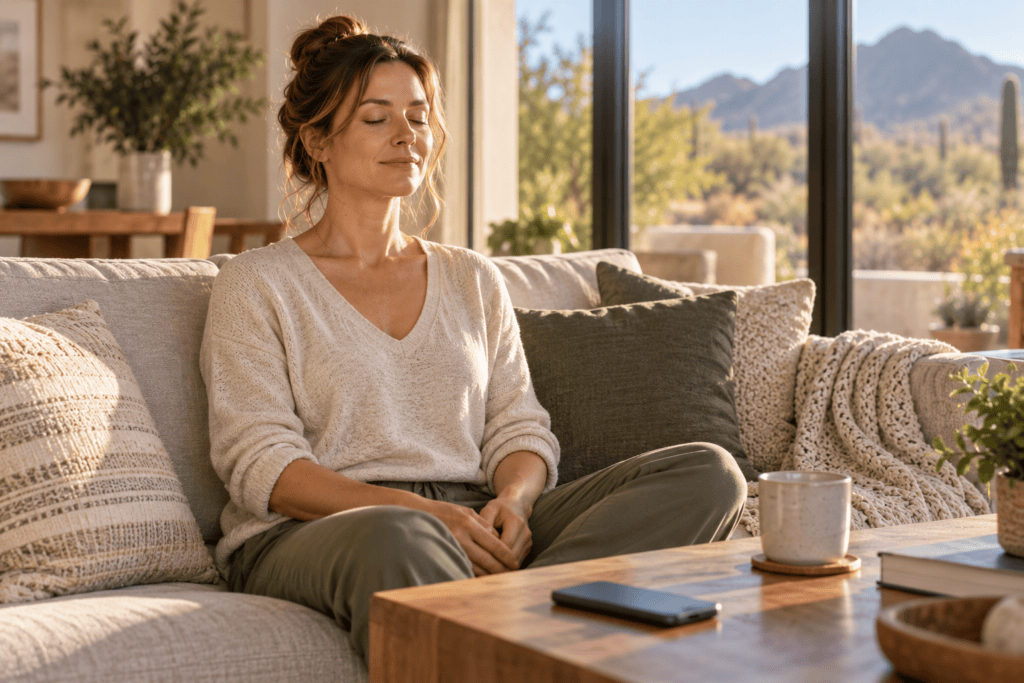
People have practiced meditation for thousands of years. You don’t have to be a monk, sit for hours, or clear your mind completely to get something out of it.
Meditation is simply about bringing your attention to the present moment. You might focus on your breath, notice how your body feels, listen to a sound, repeat a word or phrase, or just watch your thoughts come and go.
For many people, meditation offers something rare in daily life: a few minutes to slow your mind and body.
So, what is meditation actually good for?
Researchers have studied meditation and mindfulness for things like stress, anxiety, depression, sleep, pain, focus, and overall well-being. Some benefits have more evidence than others, and meditation isn’t a cure-all. Still, for many people, it’s a helpful part of a healthy lifestyle.
What Is Meditation?
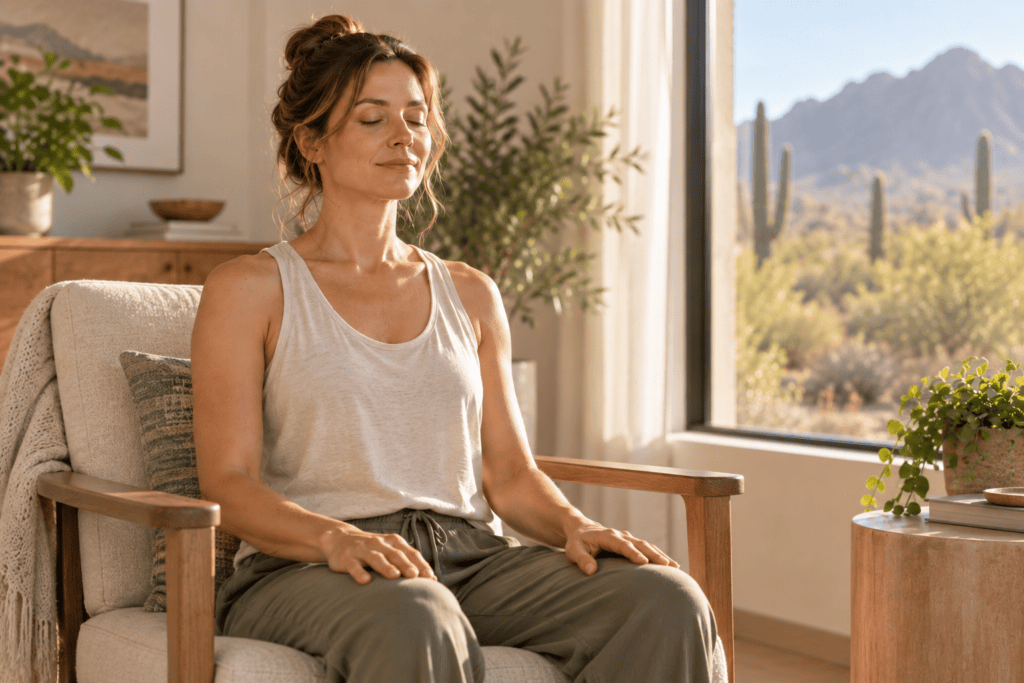
Meditation is a broad term that covers many different practices.
Some types of meditation ask you to focus on one thing, like your breath. Others encourage you to notice your thoughts, feelings, or body sensations without judging or reacting right away.
Mindfulness meditation is one of the most common types. It means paying attention to what’s happening right now, without judging it.
Other approaches include focused breathing, body scan meditation, mantra meditation, guided meditation, walking meditation, and loving-kindness meditation.
The techniques may differ, but most share a key idea. Instead of letting your mind jump from thought to thought, you practice choosing where to put your attention.
This takes practice.
What Happens to Your Body When You Meditate?

Stress doesn’t just happen in your mind.
When you perceive a threat or challenge, your body can activate its stress response. Your heart rate and breathing may increase, your muscles may tighten, and your body may release stress hormones.
This response is helpful when you really need to react to danger. The trouble is, modern life can keep this system turned on even when you’re just sitting at your desk, checking email, worrying about tomorrow, or thinking about the past.
Meditation gives you a chance to break that pattern.
Instead of reacting to every thought, feeling, notification, or worry, you practice just being in the present moment.
Research suggests that mindfulness practices may reduce stress and ease stress-related symptoms.
That doesn’t mean five minutes of meditation will magically erase all your stress.
Your problems are still there when you open your eyes.
What might change is how quickly you react to them.
Meditation for Stress and Anxiety
This is probably one of the main reasons people try meditation.
When you are anxious, your attention often shifts to the future.
What if this happens?
What if I can’t handle that?
What if something goes wrong?
Soon, your body can start reacting to things that haven’t even happened.
Meditation helps you notice when your mind gets caught in that cycle and gently bring your focus back to what’s happening now, like your breath.
You aren’t trying to force yourself not to think.
You learn that you don’t have to follow every thought that pops into your mind.
Studies on mindfulness-based approaches have found benefits for some people with anxiety and depression, though results depend on the type of meditation, who is studied, and what it’s compared to.
Meditation shouldn’t take the place of mental health care when you need it. Think of it as one helpful tool, not the only answer.
Can Meditation Help You Sleep?

If you’ve ever gone to bed tired but found your mind racing with thoughts, you already know one problem meditation can help with.
Your body is lying in bed.
Your mind is somewhere else entirely.
Meditating before bed can help you shift from the busy day to sleep. Instead of scrolling on your phone until you fall asleep, you give your mind a quieter place to focus.
Some evidence suggests mindfulness meditation can improve sleep quality, though research is mixed. It shouldn’t replace proven treatments for insomnia.
If your main problem at bedtime is a busy mind, a short meditation can be a helpful part of your nighttime routine.
Meditation for Focus and Mental Clarity
People sometimes assume that being good at meditation means never becoming distracted.
It’s actually almost the opposite.
You sit down and focus on your breathing.
Then you’re thinking about dinner.
You return to your breath.
Now you’re thinking about an email.
Back to your breath.
Then you remember something embarrassing you said eight years ago.
Back to your breath.
Noticing when your mind wanders and bringing it back, over and over, is part of the practice.
You are practicing attention.
With time, this awareness can show up outside of meditation. You might notice when you’re distracted at work, only half-listening in a conversation, or picking up your phone without thinking.
The objective isn’t perfect concentration.
It’s about getting better at noticing where your attention goes.
Meditation and Emotional Health

Meditation doesn’t prevent uncomfortable emotions.
You will still experience frustration, sadness, anger, fear, disappointment, and stress.
The benefit is that you create a bit more space between feeling something and reacting right away.
Suppose somebody says something that irritates you.
The automatic response might be to become defensive and fire something back.
Mindfulness gives you another possibility.
You notice that you’re angry.
You notice your body tightening.
You notice the urge to react.
You might still respond, but now you have a moment to choose how you want to react.
That small difference can be very valuable.
How Long Do You Need to Meditate?

You don’t have to start with 30 minutes.
If you’ve never meditated before, telling yourself you need to do it for an hour every morning is a quick way to give up.
Start small.
Five minutes is enough to begin learning the practice.
You could even start with two or three minutes.
It’s better to be consistent than to make meditation feel like another chore.
Once sitting quietly for five minutes feels comfortable, you can gradually increase the time if you want to.
There’s no prize for meditating the longest.
Why Meditation Can Feel Difficult at First

One of the most common things beginners tell themselves is:
“I can’t meditate because I can’t stop thinking.”
You’re not supposed to stop thinking.
The brain produces thoughts.
That’s what it does.
If you sit quietly for five minutes and notice your mind is really busy, meditation didn’t cause it. You just got quiet enough to see what was already there.
Your job isn’t to fight the thoughts.
Notice them, then return your attention to whatever you’re focusing on.
Your breath.
A sound.
A physical sensation.
Then another thought appears.
Notice it.
Return again.
That’s meditation.
A Simple 5-Minute Meditation for Beginners
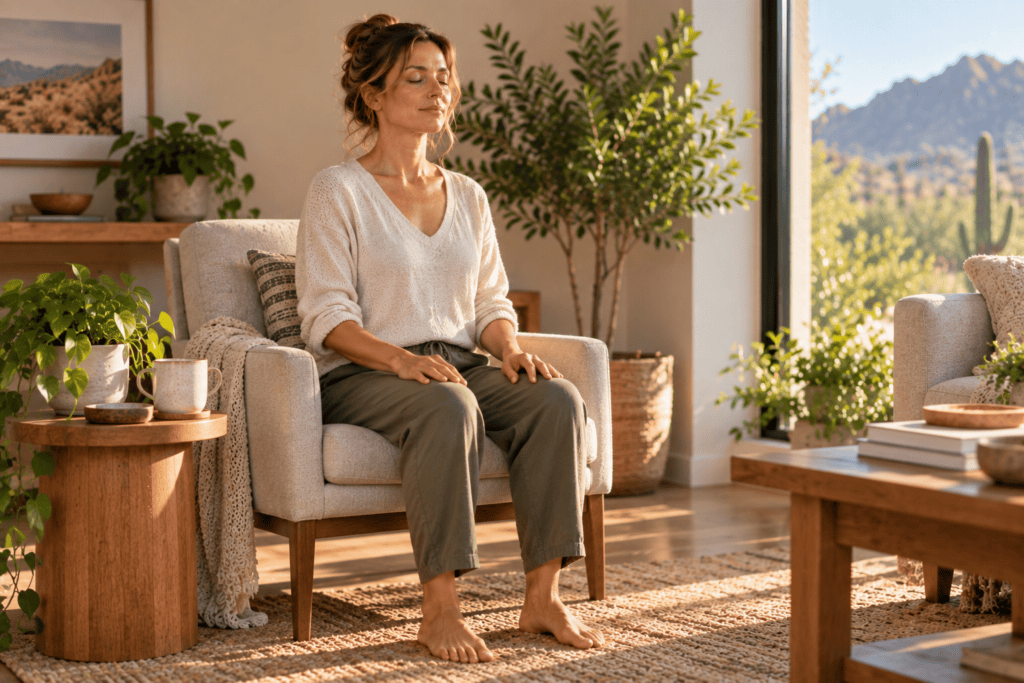
Find a quiet spot and sit comfortably. You can use a chair, let your feet rest on the floor, and place your hands wherever they feel comfortable.
Close your eyes if that feels comfortable.
Begin noticing your breathing without trying to control it.
Feel the air entering your nose.
Notice your chest or abdomen gently moving as you breathe.
Follow one breath in.
Follow one breath out.
Sooner or later, you’ll start thinking about something else.
That’s okay.
As soon as you realize your attention has wandered, gently return to your breathing.
Don’t criticize yourself.
Don’t start over.
Just return.
Continue for about five minutes.
When you’re done, open your eyes and pause for a moment before jumping back to your phone, computer, or whatever’s next.
That’s it.
You meditated.
Are There Any Risks or Downsides to Meditation?

People often say meditation is totally harmless, but that’s not always true.
For most people, regular meditation and mindfulness seem to have few risks. Still, research has found that some people have unpleasant experiences, such as increased anxiety or other mental symptoms.
This doesn’t mean meditation is dangerous. It just means not every practice is right for everyone in every situation.
If meditation keeps making you feel worse, don’t force yourself to keep going. If you’re dealing with serious mental health symptoms, it’s better to work with a qualified healthcare or mental health professional instead of relying only on meditation.
Meditation, Acupuncture, and the Mind-Body Connection

One reason meditation goes well with acupuncture is that both help you pay attention to what your body is telling you.
Many people spend most of their day lost in thought.
They’re answering emails while eating.
Looking at their phone while talking to somebody.
Thinking about tomorrow while driving home.
Replaying yesterday while trying to fall asleep.
Then they wonder why they never feel calm or settled.
Acupuncture gives you time when you don’t have to do anything else. You lie down, the needles are placed, and you just rest for a while.
For some people, it’s one of the few times each week when they aren’t expected to get anything done.
Meditation can bring that same sense of rest into your daily life.
You don’t need acupuncture to meditate, and you don’t need meditation for acupuncture to work. But they can work well together as part of a bigger approach to managing stress and feeling better.
Making Meditation Part of Your Daily Life

The best meditation practice isn’t always the longest or most complicated one you’ll actually do.
Meditate for five minutes after waking up.
Take three quiet minutes before starting work.
Try a short breathing meditation after you get home.
Meditate for a few minutes before bed instead of reaching for your phone right away.
You can also practice mindfulness without formally meditating.
When you’re eating, eat.
When you’re walking, notice that you’re walking.
When somebody is speaking to you, listen instead of preparing your response.
When you’re resting, allow yourself to rest.
The more you practice coming back to the present moment, the easier it gets to notice when your mind has drifted away.
What Is Meditation Good For?

Meditation isn’t about escaping your life.
It’s about becoming more present for it.
Research suggests meditation and mindfulness can help reduce stress and help some people manage anxiety, depression, and sleep problems. But maybe the most useful benefit is simpler: meditation teaches you to notice where your attention is and bring it back on purpose.
You don’t have to become perfectly calm.
You don’t have to stop thinking.
And you don’t need an hour every day.
Start with five minutes.
Sit down.
Breathe.
Notice when your mind wanders.
And come back.
Above and Beyond Acupuncture offers acupuncture, cupping, and lifestyle coaching at the North Frank Lloyd Wright Boulevard location in Scottsdale.
Schedule an appointment online to start your healing journey.

About the Publisher
Paul Kerzner, L.Ac., is a licensed acupuncturist and board-certified herbalist, as well as the founder of Above and Beyond Acupuncture in Scottsdale. His own journey from chronic patient to practicing acupuncturist shapes his commitment to providing honest, clinically grounded information about acupuncture and Traditional Chinese Medicine. Learn more about Paul and his clinical approach on the About Us page.