
Key Takeaways
- TMD affects around 35 million Americans and presents symptoms like jaw pain, clicking sounds, and headaches.
- Standard care typically includes medications and night guards but often addresses only symptoms, not root causes.
- Acupuncture provides a comprehensive treatment approach, targeting muscular release, stress regulation, and pain relief.
- A multi-modal approach, including dental care and stress management, enhances TMD recovery alongside acupuncture.
- Patients often need multiple sessions for lasting improvement in TMD symptoms.
Jaw pain that flares when eating. A clicking or popping sound when opening the mouth. Morning stiffness in the jaw and the muscles around it. Headaches that seem to start at the temples. Ear pain, ear fullness, or ringing without any apparent ear infection. Neck and shoulder tension that will not resolve. Nighttime tooth grinding that a partner has noticed. These are the signs of TMD, the disorder affecting the temporomandibular joint, and they affect roughly 35 million Americans on an ongoing basis.
The condition is one of the most under-treated in modern medicine. Standard care typically involves anti-inflammatory medications, a night guard from the dentist, and general advice about stress management. These help some patients but leave many still dealing with the symptoms for months or years. This is where acupuncture and Traditional Chinese Medicine offer a substantially different approach that addresses the underlying patterns driving the condition rather than only managing the resulting symptoms.
Here is what TMD actually is, what drives it, why standard care often falls short, and how acupuncture treats it.
What TMJ and TMD Actually Are
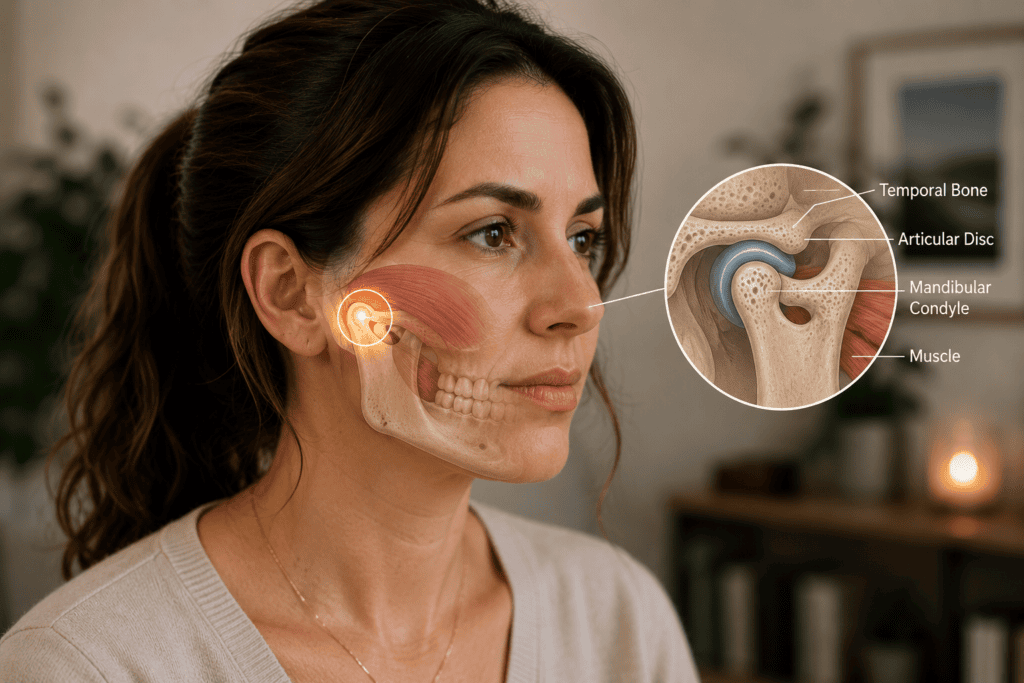
The terminology is worth clarifying because it is often used imprecisely. TMJ refers to the temporomandibular joint itself, the joint that connects the lower jaw (mandible) to the skull just in front of each ear. Everyone has two TMJs, one on each side. TMD refers to temporomandibular disorder, the condition that affects the joint and its surrounding structures. When patients say they “have TMJ,” they usually mean TMD.
The TMJ is one of the most complex joints in the body. It performs both hinge and sliding movements, contains a small disc of cartilage that allows smooth motion, and is stabilized by multiple ligaments and the powerful muscles of mastication. Because the joint operates under significant load throughout the day (chewing, talking, swallowing, and often unconscious clenching), it is vulnerable to a range of dysfunctions.
TMD is not a single condition. It is a category of related disorders that involve some combination of the following components.
- Muscular dysfunction. The muscles that move the jaw (masseter, temporalis, medial and lateral pterygoids) become chronically tight from clenching, grinding, or postural patterns. This muscular component is the driver of TMD for many patients.
- Joint dysfunction. The disc within the joint can become displaced, producing the clicking and popping sounds that many patients experience. In more advanced cases, the disc can lock the joint in specific positions.
- Inflammatory changes. The joint capsule, ligaments, and surrounding structures can become inflamed, producing the pain and swelling that patients notice.
- Behavioral patterns. Bruxism (tooth grinding, usually at night) and daytime clenching are major drivers of TMD for many patients. These behaviors often develop as unconscious responses to stress and can persist for years before the resulting jaw dysfunction becomes symptomatic.
- Stress and nervous system dysregulation. Chronic stress increases sympathetic activation, which increases muscular tension throughout the body including the jaw. Many TMD patients report that their symptoms flare during stressful periods and improve when stress reduces.
The Mayo Clinic overview of TMJ disorders and the Cleveland Clinic summary provide the medical framework for understanding the multi-component nature of the condition.
The Bruxism Connection

For a substantial percentage of TMD patients, bruxism is the primary driver. Nighttime tooth grinding produces prolonged clenching that fatigues the jaw muscles, loads the joint under sustained stress, and produces the exact symptoms that characterize TMD. Many patients are unaware they grind their teeth until a dental exam reveals the wear patterns or a partner notices the sound.
Daytime clenching, often unconscious, adds to the load. Patients who work at computers, drive in traffic, or navigate stressful situations often clench their jaws without realizing it. Over time, this sustained low-grade activation produces the same pattern of muscular fatigue and joint stress.
Standard care for bruxism involves a dental night guard that protects the teeth from the mechanical damage of grinding. This is important for preserving tooth structure but does not address why the grinding is happening or reduce the muscular load on the joint. The underlying pattern of sympathetic activation, stress, and muscular tension continues even with the night guard in place.
Why Standard Care Often Falls Short
The limitations of standard care for TMD reflect the multi-component nature of the condition. Anti-inflammatory medications reduce pain during acute flares but do not address the underlying muscular tension, behavioral patterns, or stress that maintain the condition. Night guards protect the teeth from grinding damage but do not stop the grinding itself. General stress management advice is often given without specific tools or interventions that actually shift the pattern.
Some patients receive muscle relaxants, corticosteroid injections, or Botox injections to the masseter muscles. These provide temporary relief for some patients but do not address the drivers that produced the pattern.
Physical therapy focused on jaw exercises, posture, and manual release can be genuinely helpful when performed by therapists trained in TMD specifically. Many patients do not access this level of specialized care and receive generic advice that does not fully address the condition.
Surgery is rarely indicated for TMD and is generally considered a last resort after conservative treatment has failed. The outcomes are mixed and many surgical approaches have been abandoned as our understanding of the condition has improved.
How Acupuncture Treats TMD
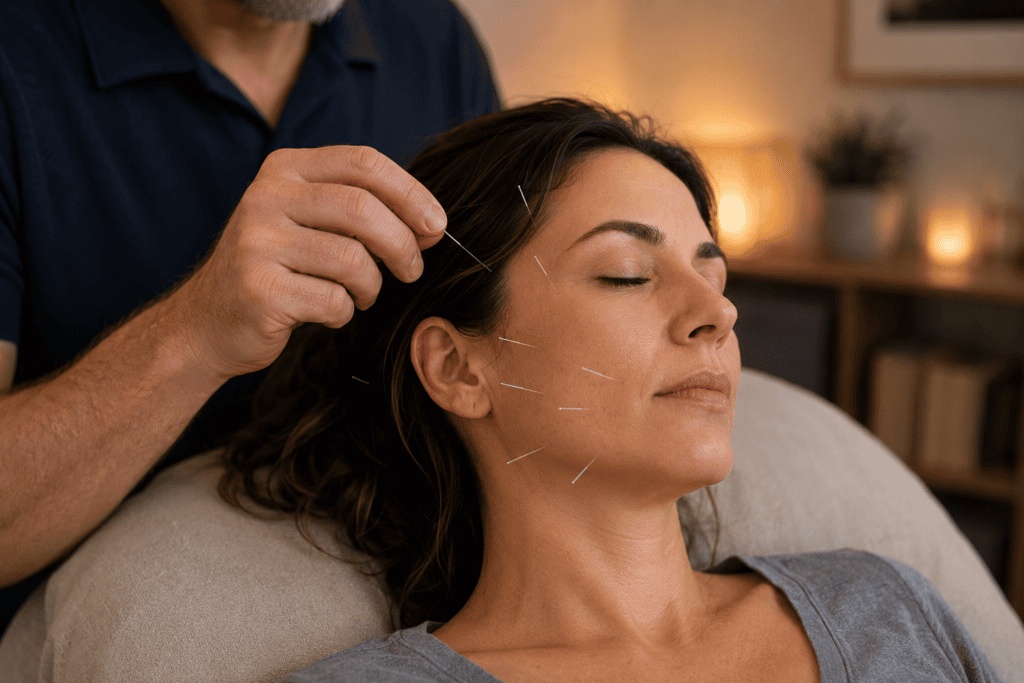
Acupuncture addresses the multiple components of TMD simultaneously in ways that standard care does not reach.
- Direct muscular release. The muscles of mastication are among the most treatable structures in the body through acupuncture. Local points at the masseter, temporalis, and around the joint produce direct release of the chronic muscular tension that maintains TMD. This is often the fastest-responding component of the treatment.
- Autonomic nervous system regulation. Chronic sympathetic activation drives the jaw clenching and grinding patterns that produce TMD. Acupuncture shifts the autonomic balance toward parasympathetic activation, which reduces the underlying tendency to clench and grind. The fuller picture of how chronic stress affects the body is in What Is Cortisol and Why Do I Have So Much of It?.
- Endogenous pain relief. Acupuncture stimulates the release of endorphins, enkephalins, and other natural pain-relieving chemicals produced by the body itself. This reduces the pain signal at its source.
- Anti-inflammatory effects. The joint capsule and surrounding structures often carry a low-grade inflammatory component that acupuncture reduces through documented mechanisms.
- Nervous system regulation for chronic pain. TMD often develops into a chronic pain pattern maintained partly by nervous system sensitization. Acupuncture calms this central component of the pain, which reduces both intensity and persistence. The fuller picture is in Am I Stuck in a Pain Cycle?.
- Sleep quality improvement. Better sleep reduces nighttime grinding and supports the recovery that reduces daytime symptoms. Acupuncture has substantial research support for improving sleep quality across multiple measures.
- Traditional Chinese Medicine pattern differentiation. Chinese medicine identifies specific patterns producing TMD in each patient. Liver Qi stagnation. Stomach channel patterns. Gallbladder channel patterns. Underlying constitutional patterns. A licensed acupuncturist identifies which patterns are dominant and treats accordingly, which is why the treatment plan differs from patient to patient.
To better understand what acupuncture does to, and for, the body across multiple system please read: What Does Acupuncture Actually Do to Your Body?.
The NCCIH summary on acupuncture describes the broader research base for the treatment as it applies to pain and musculoskeletal conditions.
What to Expect From Treatment
TMD treatment with acupuncture is a course of treatment rather than a single session. The muscular, stress, and behavioral patterns that produce TMD have usually developed over months or years, and unwinding them takes sustained work. Most patients need a course of treatment of six to twelve sessions over two to three months to see meaningful sustained improvement.
The improvements often emerge in stages. The initial sessions typically produce noticeable relaxation of the jaw muscles and pain reduction that can last hours to days. As the course of treatment progresses, the pain reduction lasts longer between sessions and the baseline tension level drops. Many patients notice improvements in areas they were not tracking including headaches, neck pain, and sleep quality.
For patients with acute TMD flares (recent onset or specific trigger), fewer sessions are often sufficient. Four to six treatments over four to six weeks can produce substantial resolution.
For patients with chronic TMD that has persisted for years, treatment usually involves the initial course to shift the muscular and stress patterns followed by continued work over several months to consolidate the improvements. Ongoing periodic treatment can maintain the gains.
The Multi-Modality Approach

TMD responds best to an integrated approach that addresses each of the components.
- Dental care and night guards. For patients with bruxism, a properly fitted night guard from a dentist protects the teeth from grinding damage. This is essential even alongside acupuncture treatment because tooth wear is progressive and difficult to reverse.
- Stress management. The stress and sympathetic activation dimension responds to breath work, meditation, movement, and other direct nervous system practices. The specific stress reduction methods with real clinical rationale are covered in 5 Ways to Get Rid of Stress Naturally.
- Postural awareness. Forward head posture from prolonged screen use loads the muscles that connect the jaw to the neck and shoulders. Addressing the postural pattern reduces the load on the TMJ.
- Behavioral awareness. Noticing daytime clenching and consciously releasing the jaw reduces the muscular load throughout the day. Many patients are surprised to notice how often they clench once they start paying attention.
- Physical therapy for specific presentations. For patients with specific joint dysfunction, physical therapy from a therapist trained in TMD can add value alongside acupuncture treatment.
When to See a Doctor
Most TMD responds to the conservative approaches described above. Sudden inability to close or open the jaw, severe pain that is not responding to any treatment, significant swelling, jaw pain associated with recent trauma, or jaw pain with fever all warrant medical evaluation to rule out other conditions.
For patients whose TMD is not responding to conservative treatment, acupuncture treatment offers a substantial intervention that addresses the multi-component nature of the condition. The broader stress and nervous system framework that maintains many chronic conditions including TMD is covered in Anxiety, Stress, and Depression.
Learn more about what this clinic offers in: Acupuncture, Cupping & Lifestyle Coaching.
Reach out to Above and Beyond Acupuncture on North Frank Lloyd Wright Boulevard in Scottsdale to schedule a consultation.
Schedule an appointment online or call us today to start your journey to relief.