
Key Takeaways
- The body reacts to stress quickly, often causing symptoms like nausea and digestive upset, indicating that the stomach hurts when upset.
- A direct connection between the brain and gut explains how emotional states can impact digestion.
- The enteric nervous system, or ‘second brain,’ controls gut function and communicates with the primary brain.
- Chronic stress can lead to digestive issues such as IBS, heartburn, and loss of appetite without clear structural causes.
- Acupuncture effectively targets the root causes of stress-related digestive symptoms by influencing the autonomic nervous system.

One of the most common physical experiences is the body’s quick response to stress. When something stressful occurs, the stomach reacts within minutes, a knot forms, appetite drops, nausea may set in, and bowel symptoms can follow shortly after. The link between emotional distress and digestive issues is so reliable that many people see it as obvious, never questioning the underlying reasons.
The key question is: why does the stomach react to emotion? Also, for many individuals with persistent digestive issues, why do standard tests often fail to reveal a clear reason?
At Above and Beyond Acupuncture in Scottsdale, one of the most frequent discussions is about patients’ digestive issues. Many arrive with symptoms like bloating, cramping, nausea, reflux, irregular bowel movements, or ongoing stomach discomfort. Despite years of testing, results often come back normal. Patients are told their scans and labs look fine, or are diagnosed with IBS, but these explanations rarely bring relief or understanding.
Stress and emotions cause digestive symptoms through a physical mechanism, not imagination. This involves a direct, bidirectional connection between the brain and the gut, which has been extensively studied by modern science and long recognized in Traditional Chinese Medicine.
The Second Brain in Your Gut
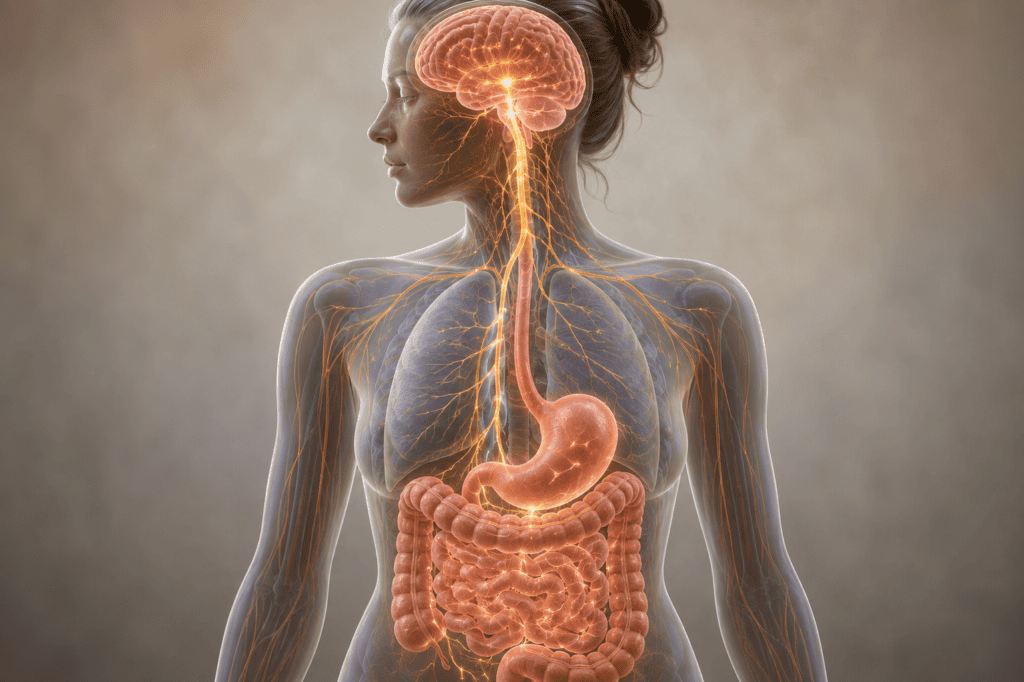
The key point about the gut is that it has its own nervous system. Located within the walls of the digestive tract is a network of over 100 million nerve cells known as the enteric nervous system, often called the second brain. This system extends from the esophagus to the rectum and has more nerve cells than the spinal cord.
This second brain interacts with your primary brain via a continuous flow of signals mainly transmitted through the vagus nerve. Communication occurs bidirectionally: the brain sends signals to the gut, and the gut sends signals back to the brain.
This is the gut-brain axis, which explains how emotional states can instantly affect digestion and vice versa. When you’re upset, the signal doesn’t stay in your mind; it travels down the vagus nerve to your gut within seconds, causing physical changes in how your digestive system works.
How Stress Becomes Stomach Symptoms

There are several distinct mechanisms by which emotional upset can lead to digestive symptoms, and people often experience multiple symptoms at once.
The initial effect is the diversion of resources from digestion. When the body perceives a threat and enters a stress response, the nervous system activates fight-or-flight mode, which prioritizes immediate physical readiness. During this response, blood and resources are diverted from the digestive organs to the muscles, heart, and brain. As a result, digestion slows significantly or stops altogether. This response is helpful in short-term danger but problematic if stress becomes chronic, as the digestive system then lacks a sustained opportunity to function properly.
The second aspect involves the direct influence of stress hormones on gut motility. Cortisol and adrenaline modify the timing and intensity of contractions that propel food through the digestive system. In some individuals, this accelerates movement, leading to diarrhea and urgent bowel movements. In others, it hampers pace, resulting in constipation, bloating, and a sensation of being backed up. Recent studies have pinpointed specific pathways through which stress hormones directly disrupt gut function, especially in cases of stress-related constipation.
The third factor is heightened gut sensitivity. Chronic stress boosts visceral perception, making the gut more responsive to usual sensations. Mild stretching, gas, and movements in the digestive system, which normally go unnoticed, suddenly feel painful. A bloated stomach that seems fine in a relaxed state can become painfully uncomfortable when stressed.
The fourth is the bidirectional cycle. Digestive symptoms cause stress about their own presence, which in turn leads to more digestive issues. This feedback loop can be particularly frustrating in stress-related gut problems, as breaking it necessitates simultaneously tackling both aspects.
Where Stress Hits the Digestive System

Stress-related digestive symptoms often appear in recognizable patterns. The five most common presentations at the clinic are listed below.
- The classic nervous stomach is the immediate response to acute emotional upset. The knot in the stomach, the butterflies, the queasy feeling before a difficult conversation or a stressful event. This is the gut-brain axis at its most visible.
- Stress-related nausea is common in patients with chronic stress, particularly when emotional intensity rises. The sensation can range from mild queasiness to severe nausea that interferes with eating.
- Bloating, cramping, and irregular bowels are the cluster of symptoms most often grouped under the IBS label. The bloating that appears after meals, the cramping that comes and goes, the alternation between constipation and diarrhea, the urgent bathroom trips that arrive with emotional intensity. These symptoms have a clear basis in gut-brain dysregulation.
- Heartburn and reflux frequently flare under stress. The lower esophageal sphincter, which is supposed to keep stomach contents from moving upward, is affected by autonomic nervous system signaling. Chronic stress reduces its tone, allowing reflux that would not otherwise occur.
- Loss of appetite arrives with strong emotional states. The body, in a stress response, suppresses hunger signals because it is preparing to act, not to eat. When the stress is chronic, the appetite suppression can become persistent, contributing to weight changes and disrupted eating patterns.
A Note on the IBS Label

Many patients experiencing digestive symptoms caused by chronic stress have been diagnosed with IBS, or irritable bowel syndrome. Although this label is accurate, it’s important to understand what it truly signifies.
IBS isn’t a diagnosis in the way that an ulcer or infection. Instead, it’s a label used for a group of digestive symptoms when tests reveal no clear cause. When endoscopy results are normal, labs are normal, and imaging shows no structural issues, yet the patient still experiences significant digestive problems, doctors often categorize these symptoms under the IBS label. This label describes the condition but does not provide an explanation for it.
What is actually driving the symptoms in most of these patients is gut-brain axis dysregulation, as outlined earlier. The conventional healthcare system, focused on identifying structural diseases, lacks effective tools for treating nervous system dysfunction. Consequently, patients leave with a diagnosis and few options to directly target the underlying mechanism causing their symptoms.
This isn’t a critique of patients given the IBS label or of the providers who diagnosed them. Instead, it’s a clarification of what the label signifies and what it doesn’t. Recognizing this difference is key to addressing the root cause rather than just managing symptoms.
Why This Often Goes Unexplained

The explanation gap we discussed earlier with chronic pain also exists here. Typically, diagnosis involves looking for structural problems such as ulcers, polyps, inflammation observed via a scope, or parasites detected in stool tests. If these tests are normal, the system usually provides limited guidance, mainly just the IBS diagnosis and dietary recommendations.
The gap is structural, not attributable to any individual’s fault.
A dysregulated gut-brain axis isn’t visible in an endoscopy. The ongoing sympathetic activation causing symptoms also doesn’t show up on a blood test. The traditional toolkit was designed for a different type of problem.
This is where a different clinical approach proves useful. To treat the nervous system pattern causing digestive symptoms, it is essential to target the gut-brain axis directly, something acupuncture and Traditional Chinese Medicine have practiced for centuries.
The Traditional Chinese Medicine Perspective

Traditional Chinese Medicine has recognized the link between emotions and digestion for thousands of years, using a well-established and clinically reliable framework.
In TCM, the Spleen and Stomach handle the digestion of food and thoughts. The Spleen is seen as the organ most affected by chronic worry and overthinking.
When someone’s mind is continuously active – processing, predicting, or dwelling- the Spleen Qi becomes drained. This can lead to typical stress-related digestive symptoms: bloating, post-meal fatigue, irregular bowel movements, mental fog, and a heavy, sluggish feeling from a digestive system that can’t function efficiently.
A second pattern, Liver Qi stagnation invading the Stomach, explains the symptoms of upper abdominal tension, reflux, nausea, and suppressed appetite that occur with stress. According to TCM, the Liver is responsible for the smooth flow of emotion and energy. When emotional pressure causes the Liver to become stuck, its dysfunction can affect the Stomach system and disrupt digestion.
These TCM patterns are not metaphors.
These clinical observations have been refined over thousands of years and align directly with modern research on gut-brain axis dysregulation. The TCM framework reached the same conclusion using different terminology and developed a comprehensive treatment approach focused on addressing the core patterns instead of targeting individual symptoms.
How Acupuncture Addresses Stress-Driven Digestive Symptoms

Acupuncture is especially effective for this issue because it targets the root cause: the autonomic nervous system that controls gut function. By stimulating designated points on the body, this treatment can move the body from a persistent sympathetic state – disrupting digestion – into a parasympathetic state that allows the digestive system to operate normally.
Treatment targets the gut-brain axis directly. Acupuncture stimulates the vagus nerve to restore disrupted regulatory signals. Specific local points aim to alleviate particular symptoms. Constitutional points help rebuild the Spleen Qi depleted by years of worry and promote the movement of stagnant Liver Qi affecting the Stomach.
The clinical focus is on the nervous system and overall constitutional pattern rather than on individual symptoms.
For patients who have undergone the gastroenterology workup, received an IBS diagnosis, and left without a definitive treatment plan, a clinical assessment from this perspective offers a fundamentally different approach. Instead of seeking a structural cause, the focus shifts to identifying the nervous system pattern driving the symptoms and finding ways to disrupt it.
Reach out to Above and Beyond Acupuncture on North Frank Lloyd Wright Boulevard in Scottsdale to schedule a consultation and begin addressing the digestive symptoms at the level where they actually live.
Schedule an appointment online or call us today to start your journey to relief.

About the Publisher
Paul Kerzner, L.Ac., is a licensed acupuncturist and board-certified herbalist, as well as the founder of Above and Beyond Acupuncture in Scottsdale. His own journey from chronic patient to practicing acupuncturist shapes his commitment to providing honest, clinically grounded information about acupuncture and Traditional Chinese Medicine. Learn more about Paul and his clinical approach on the About Us page.