Key Takeaways
- Chronic illness is often due to depleted immune reserves, not just bad luck or insufficient supplements.
- High cortisol levels from chronic stress weaken the immune system, making individuals more susceptible to infections.
- Diet can drive chronic inflammation, which occupies immune resources and reduces the body’s ability to fight off actual illnesses.
- Lack of quality sleep significantly impacts immune function, increasing the risk of infection and recovery time.
- Acupuncture aids in rebuilding immune capacity by addressing stress and supporting the body’s constitutional reserves.
Some patients walk into Above and Beyond Acupuncture in Scottsdale with a question that has been bothering them for years. Why do they catch every cold that goes through the office? Why does the flu hit them harder than it hits everyone else? Why does it take them two weeks to recover from what should be a three-day illness? Why do they feel run down most of the time, even when they are not actively sick?
The frustration is real.
They have tried the supplements, the vitamin C, the elderberry, the immunity-boosting smoothies. They have washed their hands. They have done what they were told. And the pattern continues.
The honest answer is that recurrent illness is rarely about bad luck or insufficient supplements. It is about a body operating on depleted reserves. The immune system is the most resource-intensive system in the body, and it requires specific conditions to do its work properly.
When those conditions are eroded by chronic stress, inflammatory diet, poor sleep, and a nervous system stuck in alert mode, the immune system loses its capacity to defend the body. The result is exactly the pattern these patients describe.
There are clear, identifiable reasons for what is happening. None of them are mysterious. All of them are addressable.
Chronic Stress and the Cortisol Problem
The single largest factor in stress-related immune suppression is sustained cortisol elevation. Cortisol is the body’s primary stress hormone. In short bursts, it is useful and even immune-supportive. The problem is that modern life keeps cortisol elevated continuously rather than allowing it to spike and resolve.
Chronic stress directly weakens the immune system, making the body more susceptible to infection. The mechanism is straightforward. Sustained cortisol reduces the number and effectiveness of the white blood cells responsible for identifying and destroying viral and bacterial threats. The body’s defensive surveillance system gets quieter the longer cortisol stays high.
Mayo Clinic notes that the long-term activation of the stress response system alters immune system responses along with disrupting digestion, reproductive function, and growth. The body, in chronic stress mode, deprioritizes immune function because it is preparing to deal with a perceived threat. The fight-or-flight response was never designed to run continuously, but in modern life it often does, and immune capacity is one of the first things sacrificed.
The patient who is constantly catching what is going around is often the patient whose nervous system has been in alert mode for months or years. The cortisol curve has lost its rhythm. The body is running on stress chemistry that was meant for emergencies, not for Tuesday afternoons.
The Inflammation Coming From the Plate
The second major factor is diet-driven chronic inflammation. The standard American diet contains a high volume of foods that promote systemic inflammation: refined sugars, ultra-processed foods, refined seed oils, alcohol, conventional dairy, and gluten-containing grains for those who are sensitive.
Chronic inflammation is not the same as the acute inflammation that helps the body heal after an injury. It is a low-grade, persistent state of immune activation that consumes the body’s resources without producing useful defensive work. When the immune system is occupied with managing chronic inflammation from daily dietary inputs, it has less bandwidth available to fight actual infections when they arrive.
The dietary specifics are covered in detail in the dairy, gluten, ultra-processed food, and chronic inflammation posts. The point relevant here is simpler. Foods that drive chronic inflammation are also foods that quietly suppress immune capacity, and most patients do not connect their dietary defaults to their pattern of getting sick. The body that is constantly managing inflammatory inputs at the dinner table is the body that does not have reserves left for the cold going around the office.
The Sleep Foundation
Sleep is the most underappreciated immune factor in modern life. The body does its most important immune work during deep sleep, including the production of the cells and signaling molecules that defend against infection.
Research has consistently shown that sleeping less than six or seven hours per night significantly increases the risk of infection, and that insufficient sleep makes it more likely to catch the common cold or the flu. The effect is not subtle. A single bad week of sleep produces measurable drops in immune competence. Months and years of inconsistent sleep produce a chronically depleted immune system that catches everything going around.
The timing of sleep matters as much as the duration. The body operates on a circadian rhythm that coordinates immune function with the sleep-wake cycle. Going to bed at radically different times each night, staying up late on weekends, working night shifts, or generally living against the natural light cycle all compromise the immune work that happens during sleep. Consistency in sleep timing matters as much as the total hours.
For patients dealing with recurrent illness, an honest audit of sleep habits is one of the most actionable starting points. The body that is not sleeping enough, or not sleeping consistently, is not going to fight off what is coming through the door.
The Gut Connection
A significant portion of the immune system lives in the gut.
When the gut is compromised by chronic stress, inflammatory diet, and the gut-brain dysregulation explored in the stomach post, immune function is compromised along with it. The patient with chronic digestive issues is rarely a patient with strong immune function. The two systems are too intertwined for one to thrive while the other struggles.
This is not a separate problem from the ones described above. It is the downstream consequence of the same patterns. Diet drives gut inflammation. Stress drives gut-brain dysregulation. Both feed back into a weakened immune capacity.
The Traditional Chinese Medicine Perspective: Wei Qi
Traditional Chinese Medicine has a specific framework for understanding recurrent illness that maps directly onto what modern research is now describing. It is called Wei Qi, which translates roughly as defensive Qi, or the body’s protective energy.
Wei Qi circulates on the surface of the body, functioning as the first line of defense against external pathogens. In the TCM framework, every cold, flu, and respiratory infection represents an external pathogenic factor attempting to penetrate the body, and Wei Qi is what holds the line. A strong Wei Qi means external pathogens are repelled before they can take hold.
A weakened Wei Qi means the body becomes vulnerable to repeated invasion, which manifests as exactly the pattern these patients describe: catching every cold that comes through, taking longer to recover, and lingering symptoms after the acute illness passes.
Wei Qi is produced and maintained by several other systems in the TCM framework. The Lung system governs its distribution. The Spleen system produces the Qi from food that nourishes it. The Kidney system provides the constitutional foundation from which it is generated. When any of these systems are depleted, Wei Qi suffers, and the body becomes susceptible to repeated illness.
The patients showing up with chronic recurrent illness typically have weakness in one or more of these underlying systems.
The Spleen has been overwhelmed by years of inflammatory foods and chronic worry. The Lung Qi is depleted by stress and shallow breathing patterns. The Kidney essence has been drawn down by years of pushing through without adequate rest and recovery. The Wei Qi is thin because the systems that produce it are thin.
This framework has been clinically reliable for thousands of years and gives a unifying explanation for what modern research is now documenting through the language of HPA axis dysregulation, chronic inflammation, and sleep-related immune suppression. The TCM model and the modern model are describing the same phenomenon in different vocabularies.
How Acupuncture Addresses Recurrent Illness
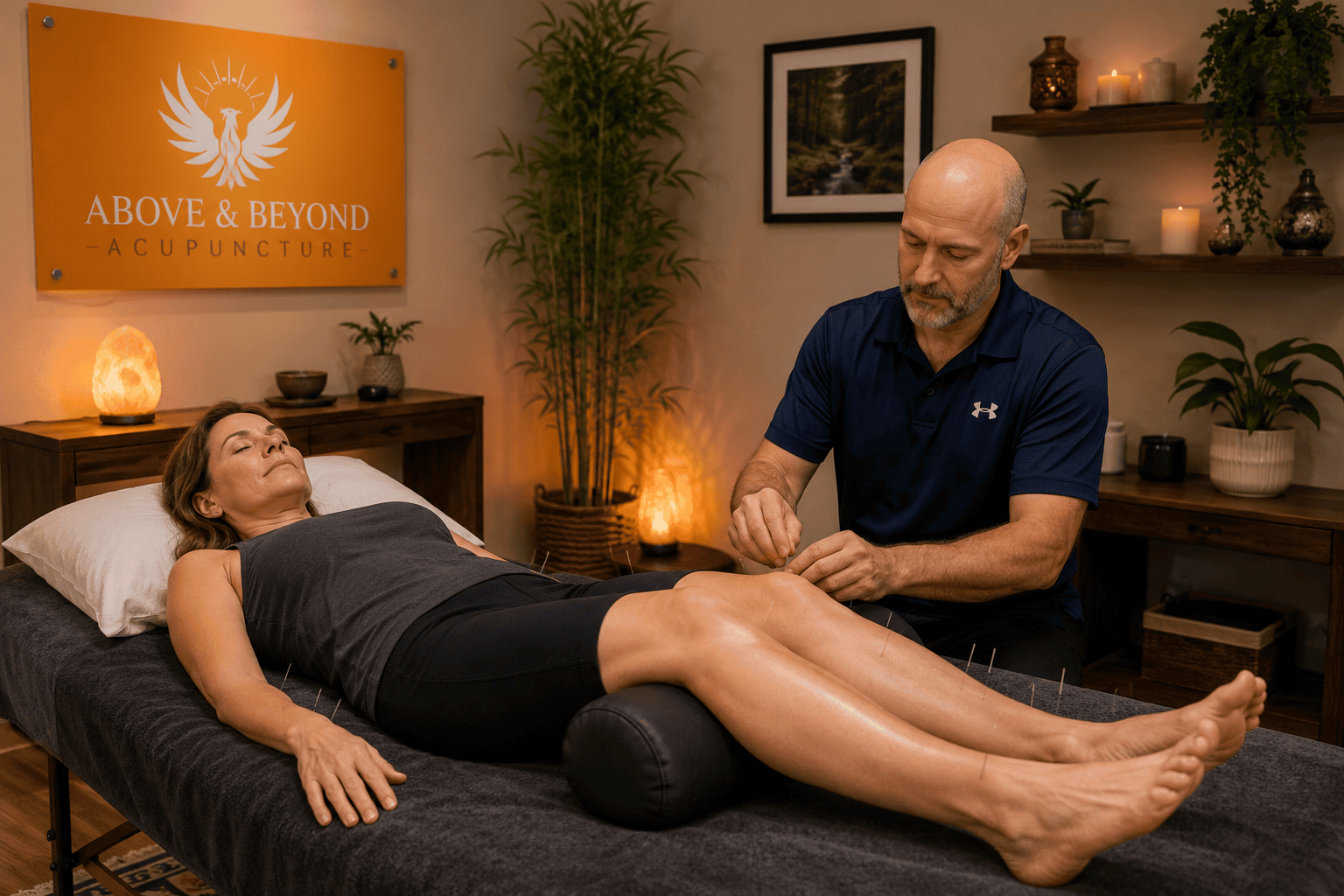
Acupuncture is particularly well-suited to addressing recurrent illness because it works at the level where the immune depletion actually lives: the nervous system, the constitutional reserves, and the Wei Qi.
Treatment shifts the body out of the chronic stress state that has been suppressing immune function. It supports the Lung system that governs Wei Qi distribution. It tonifies the Spleen and Kidney systems that produce the underlying reserves. Over a structured course of care, the body’s defensive capacity rebuilds, and the pattern of constant illness begins to break.
The treatment is paired with the dietary, sleep, and stress recommendations that address the upstream drivers. Acupuncture alone cannot fix a diet that is generating chronic inflammation or a sleep schedule that is preventing immune recovery. What it can do is provide the nervous system regulation and constitutional support that make the lifestyle changes more accessible, and that accelerate the immune rebuilding once the upstream drivers are addressed.
Where to Start
If you have been catching everything that comes around, recovering slowly from illnesses that used to bounce off, or feeling generally worn down most of the time, the answer is not another supplement. It is an honest look at the chronic stress, the inflammatory inputs, the sleep, and the constitutional reserves that have been quietly depleted.
Reach out to Above and Beyond Acupuncture on North Frank Lloyd Wright Boulevard in Scottsdale to schedule a consultation and begin the work of rebuilding the systems that have been carrying you for too long without enough support.
Schedule an appointment online or call us today to start your journey to relief.