Key Takeaways
- Carpal tunnel syndrome causes numbness and weakness in the hands, often due to nerve compression.
- Acupuncture can help alleviate symptoms but isn’t a standalone cure; it’s considered a supportive treatment.
- Conventional treatments involve wrist splints, medication, and possibly surgery if symptoms persist.
- Acupuncture benefits mild to moderate cases by reducing inflammation and promoting relaxation but can’t reverse severe damage.
- It is important to understand the true role of acupuncture to set realistic expectations.
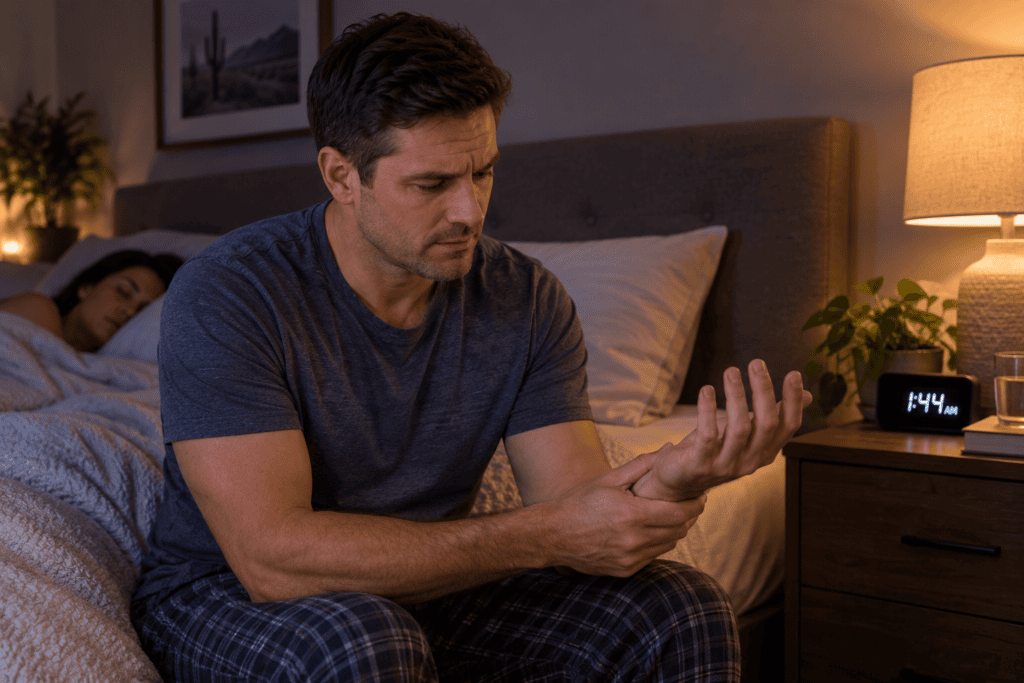
If you wake up at night with numb or tingling hands, shake your hand to try to “wake it up,” notice your grip getting weaker, or have fingers that go numb while driving or using a computer, you might have carpal tunnel syndrome.
Carpal tunnel syndrome is a common nerve problem that affects the hand and wrist. At first, symptoms may be a minor annoyance, but as pressure on the median nerve builds, numbness, pain, weakness, and difficulty using your hand can become harder to ignore.
The good news is that carpal tunnel syndrome is treatable, especially if you catch it early. The main challenge is figuring out which treatment fits how severe your symptoms are.
Acupuncture can help with carpal tunnel syndrome, but its benefits are more limited than some clinics suggest. It cannot physically make the carpal tunnel bigger or fix serious nerve damage. Still, if your symptoms are mild to moderate, acupuncture might help ease pain and improve how your hand works as part of a conservative treatment plan.
The key is knowing when acupuncture is a good option and when your median nerve needs additional medical treatment.
Here’s what you need to know before deciding if acupuncture should be part of your carpal tunnel treatment plan.
What is Carpal Tunnel Syndrome?
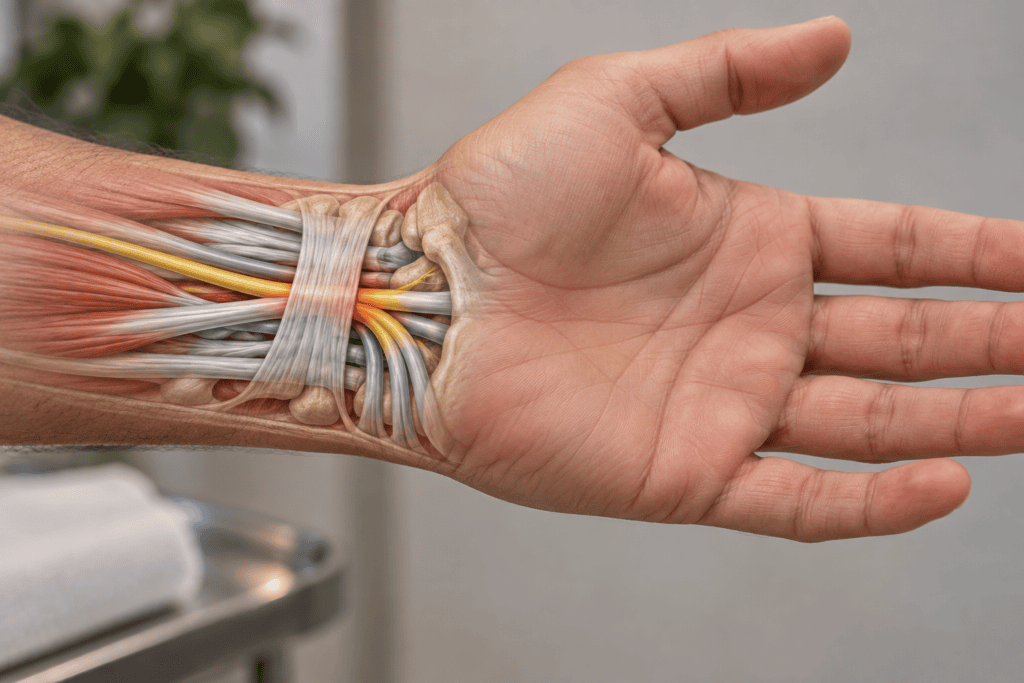
The carpal tunnel is a small passage on the palm side of your wrist. Its floor and sides are made up of the carpal bones, and the roof is formed by a tough band of tissue called the transverse carpal ligament.
Several flexor tendons and the median nerve run through this tight space. The median nerve gives feeling to the thumb, index finger, middle finger, and part of the ring finger. It also helps move some muscles at the base of the thumb.
If pressure builds up inside the carpal tunnel, the median nerve can get squeezed or irritated. This is usually when carpal tunnel syndrome symptoms start.
Early signs often include numbness, tingling, burning, or a pins-and-needles feeling in the fingers. Many people first notice these symptoms at night and wake up shaking their hand to feel better.
As carpal tunnel syndrome gets worse, symptoms can show up during the day while driving, typing, holding a phone, cooking, or doing other things with your hands. Your grip may get weaker, you might drop things without warning, and small tasks can become harder.
In more serious cases, long-term pressure can damage the median nerve and cause weakness or muscle wasting at the base of the thumb. That is why you shouldn’t ignore ongoing weakness or persistent numbness.
No single cause of carpal tunnel syndrome exists. Doing the same hand movements over and over can make symptoms worse, but things like your anatomy, wrist position, inflammation, pregnancy, diabetes, thyroid problems, rheumatoid arthritis, past wrist injuries, and other factors can also play a role. Some people are simply born with less space in their carpal tunnel.
It is important to know what is causing the pressure, since treatment should focus on more than just easing the discomfort.
The Conventional Treatment Path
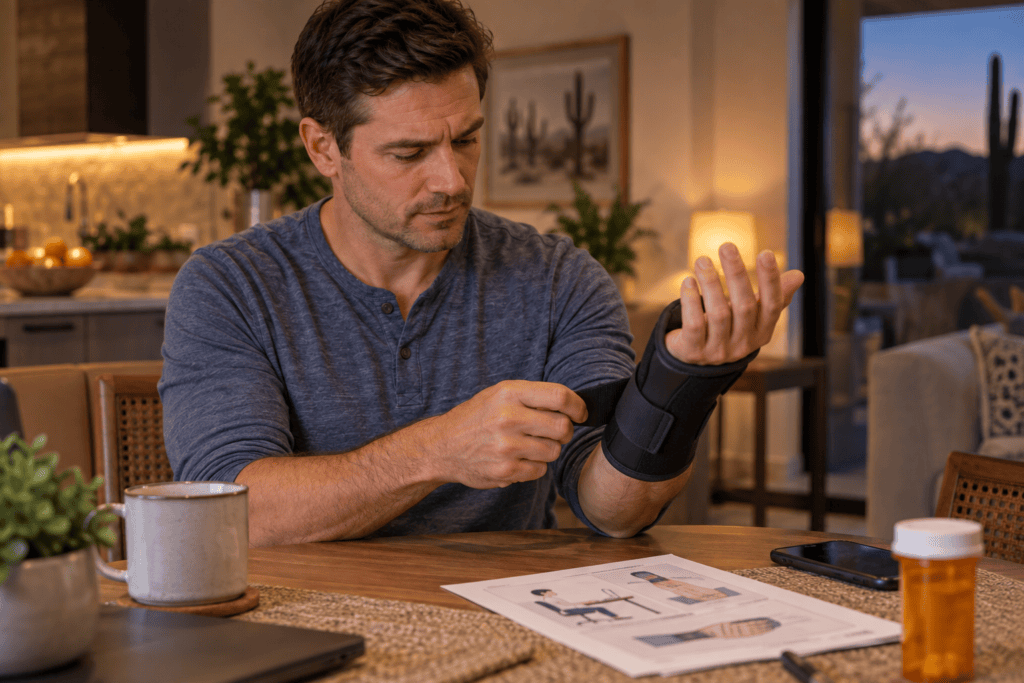
Treatment for carpal tunnel syndrome depends on how much the nerve is compressed and whether there are signs the nerve is worsening.
If symptoms are mild or intermittent, doctors usually start with simple, non-surgical treatments.
Wearing a wrist splint at night is a common suggestion. The splint helps keep your wrist straight instead of bent while you sleep. For many people, avoiding wrist bending at night can greatly reduce numbness and tingling.
Changing your activities and improving your work setup can also help. This might mean moving your keyboard or mouse, taking breaks from repetitive tasks, using different tools, or changing habits that put your wrist in awkward positions.
If symptoms do not go away, doctors might suggest a steroid injection. This can reduce swelling and pressure in the carpal tunnel and may provide relief, but the effect doesn’t always last.
If carpal tunnel syndrome gets worse, causes a lot of weakness, or shows signs of nerve damage, surgery may be needed to relieve the pressure.
Carpal tunnel release surgery involves cutting the ligament in the wrist to create more space and relieve pressure on the nerve. Most people feel much better after surgery, but recovery can take a while, and results depend on how much nerve damage there was before.
This difference matters when talking about acupuncture. Someone who only has tingling at night is not in the same situation as someone with constant numbness, weakness, muscle loss, or signs of serious nerve compression.
If nerve damage is getting worse, acupuncture should not be used to put off needed medical checks, imaging, or surgery.
The Objective Answers About Acupuncture

Where does acupuncture fit?
For mild to moderate carpal tunnel syndrome, acupuncture can be helpful as part of a conservative treatment plan. Some studies suggest it may ease pain and improve hand function for some people, but the evidence isn’t strong enough to say it fixes the underlying problem in every case.
This difference is important.
Acupuncture does not enlarge the carpal tunnel. It cannot repair nerve tissue that is already permanently damaged, and it should not replace decompression if there is serious nerve injury.
The main goal is to manage symptoms and help you use your hand better, while conservative care remains an option.
Treatment usually uses acupuncture points around the wrist and forearm, but it may also include points farther up the arm, depending on your symptoms.
Some people notice less pain, tingling, or nighttime discomfort and find it easier to use their hand. Others may only see a small improvement. How well it works depends a lot on how severe and long-lasting the condition is.
That’s why I don’t promise that acupuncture will “cure” carpal tunnel syndrome.
If your condition is mild and can improve with conservative care, acupuncture might be worth trying. But if the median nerve is severely compressed, acupuncture shouldn’t delay the treatment your nerve really needs.
What the Research Shows

Research on acupuncture for carpal tunnel syndrome shows promise, but it is important to keep expectations realistic.
Studies and reviews have found that acupuncture can help with pain, symptom severity, hand function, and sometimes nerve-conduction measurements. Some research has also compared acupuncture to treatments like nighttime splints or medication.
However, the overall evidence is limited because studies vary in quality, treatment methods, sample sizes, and follow-up duration.
In summary, evidence supports using acupuncture as a conservative or complementary approach, particularly for mild to moderate carpal tunnel syndrome. However, it lacks sufficient proof to eliminate the underlying nerve compression or to serve as a substitute for surgery when surgical intervention is required.
This matches findings in other acupuncture research. Acupuncture has been widely studied for pain, but results vary widely depending on the condition and the quality of the studies.
If you are thinking about acupuncture, the most helpful question is not, “Can acupuncture cure carpal tunnel?”
A better question to ask is, “Is my carpal tunnel syndrome at a stage where conservative treatment makes sense, and could acupuncture be part of that plan?”
This is a more practical way to look at the research.
The Traditional Chinese Medicine View
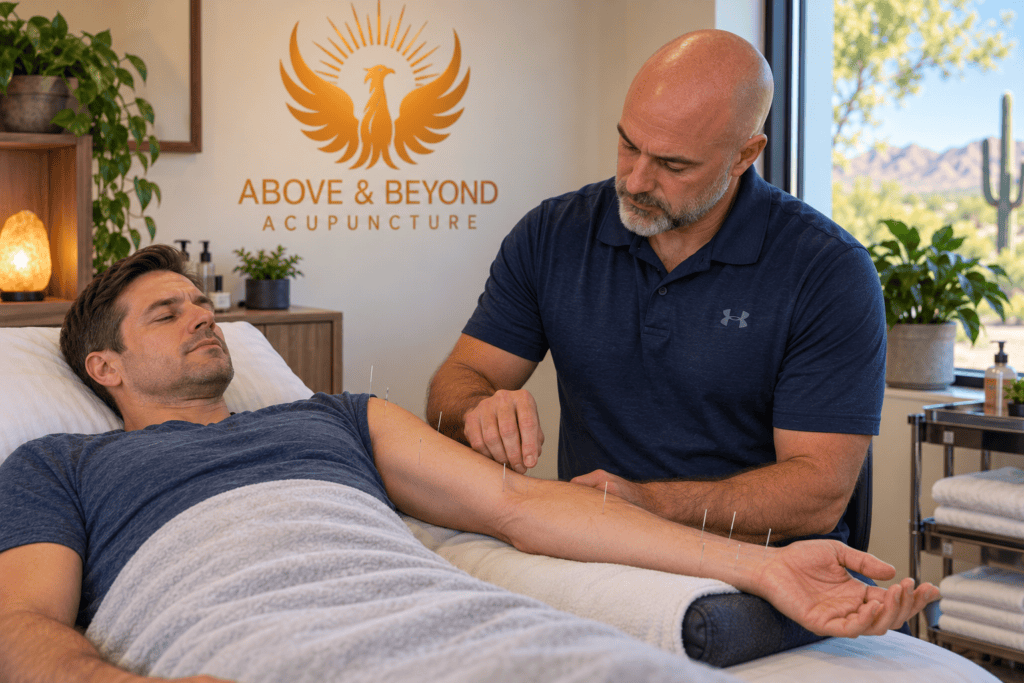
Traditional Chinese Medicine views carpal tunnel syndrome differently from conventional medicine.
In TCM, numbness, tingling, stiffness, and pain are seen as problems with how Qi and Blood move through the wrist and arm. Rather than treating only the spot where symptoms show up, practitioners often look at the whole pathway from the hand up to the neck.
This approach does not replace the usual explanation of median nerve compression. It is just the traditional way acupuncture has used to guide treatment.
That’s why acupuncture for carpal tunnel often involves more than just putting needles around the wrist.
Practitioners might use points on the forearm and elbow along with local points and may choose other points based on each person’s overall condition. So, two people with similar hand symptoms could get slightly different acupuncture treatments.
From a modern medical perspective, it’s still important to understand what’s happening physically. If there are clear signs of serious median nerve compression or worsening nerve problems, those findings are important no matter what the TCM diagnosis is.
These two approaches don’t have to conflict. Traditional acupuncture can be part of treatment while still following modern medicine guidance on nerve compression and when more help is needed.
When (and How) Acupuncture is the Right Fit

Acupuncture is usually most helpful when carpal tunnel syndrome is mild or moderate, symptoms come and go instead of being constant, or when someone is already trying other conservative treatments and wants another way to manage symptoms.
For example, if you have tingling at night, have tried a wrist splint and changed your workstation, and still feel some discomfort, acupuncture might be a good option to try.
Acupuncture can also be considered if you cannot take certain medications or want to try less invasive treatments before thinking about surgery.
Sometimes, acupuncture is used after carpal tunnel surgery, especially if you still have some discomfort. However, discuss any post-surgery treatment with your surgeon to ensure it doesn’t affect healing.
Nonetheless, there are certain situations where acupuncture should not be the primary treatment.
If you have constant numbness, worsening weakness, keep dropping things, lose a lot of thumb strength, notice muscle loss at the base of your thumb, or tests show serious nerve damage, you should see a doctor right away.
In these cases, protecting your nerve is more important than avoiding surgery.
The longer a badly compressed nerve goes untreated, the higher the risk that some loss of function could become permanent.
Where to Start
If you have symptoms that sound like carpal tunnel syndrome, the first step is understanding what you are actually dealing with and how advanced it may be.
Not every numb or tingling hand is caused by carpal tunnel syndrome. Nerve irritation in the neck, other peripheral nerve entrapments, arthritis, neuropathy, and several other conditions can produce overlapping symptoms. A proper evaluation can help distinguish between them.
If your symptoms are consistent with mild to moderate carpal tunnel syndrome and conservative treatment is appropriate, acupuncture may be one option to incorporate into your overall plan.
At Above & Beyond Acupuncture in Scottsdale, we tailor treatment rather than basing it solely on the name of the condition. We look at where your symptoms occur, how long they have been present, what makes them better or worse, and what other treatment you are already receiving before determining whether acupuncture makes sense for you.
The goal is not to promise that acupuncture can fix every case of carpal tunnel syndrome. The goal is to determine whether it can realistically help your case and recognize when you need another level of care.
Above and Beyond Acupuncture offers acupuncture, cupping, and lifestyle coaching at the North Frank Lloyd Wright Boulevard location in Scottsdale.
Schedule an appointment online to start your healing journey.

About the Publisher
Paul Kerzner, L.Ac., is a licensed acupuncturist and board-certified herbalist, as well as the founder of Above and Beyond Acupuncture in Scottsdale. His own journey from chronic patient to practicing acupuncturist shapes his commitment to providing honest, clinically grounded information about acupuncture and Traditional Chinese Medicine. Learn more about Paul and his clinical approach on the About Us page.