
Key Takeaways
- Stretching can worsen low back pain caused by nerve involvement, as it fails to address the underlying issues.
- Many healthcare providers incorrectly recommend stretching for all forms of low back pain without considering nerve-related factors.
- Stretching might benefit purely muscular pain but can harm patients with conditions like sciatica or disc herniation.
- Effective treatments for nerve-involved pain include traction, positioning, acupuncture, and gentle movement.
- Patients experiencing increased pain from stretching should seek specialized help to differentiate their pain patterns.
If you have been dealing with low back pain and stretching is making it worse rather than better, you are not imagining it. This is a real and common pattern, and it reflects a specific clinical reality that most patients are never told about. The stretching you have been advised to do may be the wrong intervention for the specific type of back pain you have. When stretching is applied to the wrong pattern, it does not just fail to help. It actively makes the underlying condition worse.
This is one of the most under-addressed issues in the standard care of low back pain. Western medicine often defaults to stretching as the primary intervention for muscular tightness without differentiating between the patients who benefit from stretching and the patients whose condition worsens with it. Physical therapists, primary care doctors, wellness content, and well-meaning friends all give the same advice. For many patients with the wrong underlying pattern, this advice makes things worse for months or years while they blame themselves for not stretching correctly.
Here is what is actually happening in your body, why the standard advice fails, and what you should be doing instead.
Why Stretching Fails for Nerve-Involved Back Pain
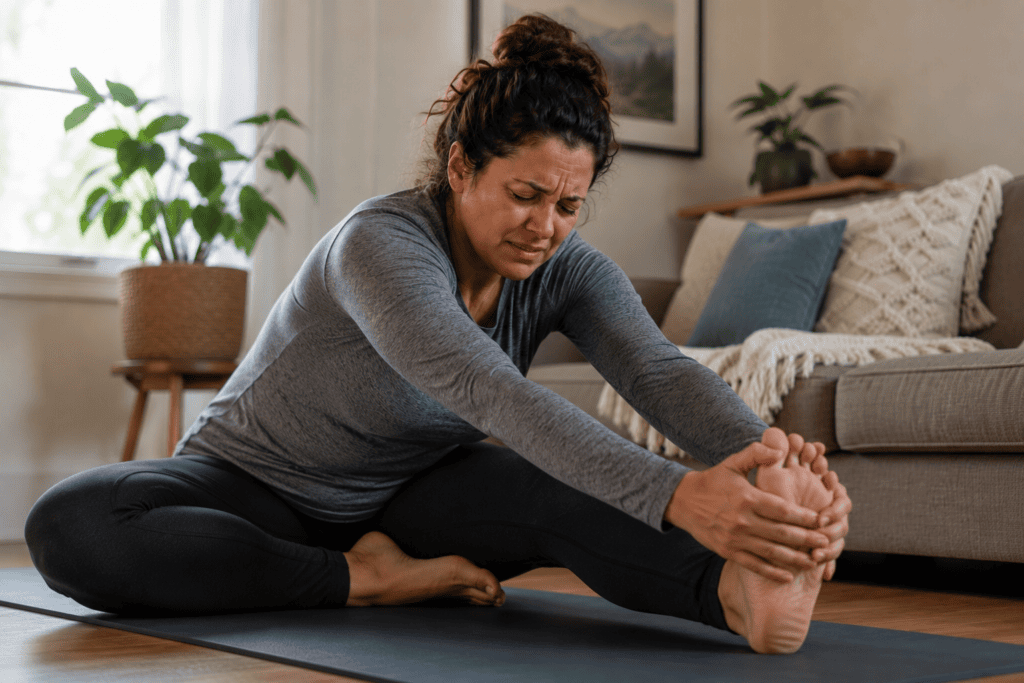
The pattern the standard advice does not account for is nerve involvement. Sciatica, disc herniation, spinal stenosis, and nerve impingement all produce low back pain, but the mechanism is fundamentally different from pure muscular tightness. When a nerve root is compressed or irritated, the surrounding muscles tighten as a protective response. This muscular guarding is the body’s attempt to limit movement that would further compress or inflame the nerve.
The tightness in these patients is protective, not causal. It is a symptom of the nerve involvement rather than the source of the pain.
Stretching removes the protection the body has put in place. The classic sciatica stretches (knee-to-chest, figure-four, hamstring stretch, piriformis stretch) pull directly on the compressed nerve pathway. Patients often feel a temporary release during the stretch itself because the mechanical distraction briefly overrides the pain signal. This is followed by hours of increased pain as the nerve becomes more inflamed from the pull. The muscles then tighten further as the body tries to re-establish the protection that was removed. The result is a worsening cycle. More nerve inflammation, more muscular guarding, more stretching, more inflammation.
Disc issues follow a similar pattern. Forward bending stretches increase intradiscal pressure and can push disc material further into the nerve root. The immediate stretch feels relieving for some patients because of the neurological override, then the delayed worsening of the pain reveals what actually happened at the disc level.
The frustrating part for patients is that the standard advice keeps coming. When the pain gets worse, the response is often to stretch more, or to stretch differently, or to work harder at it. The framework itself is the problem. Applying a stretching intervention to a nerve involvement pattern does not work.
Why Western Medicine Keeps Recommending It
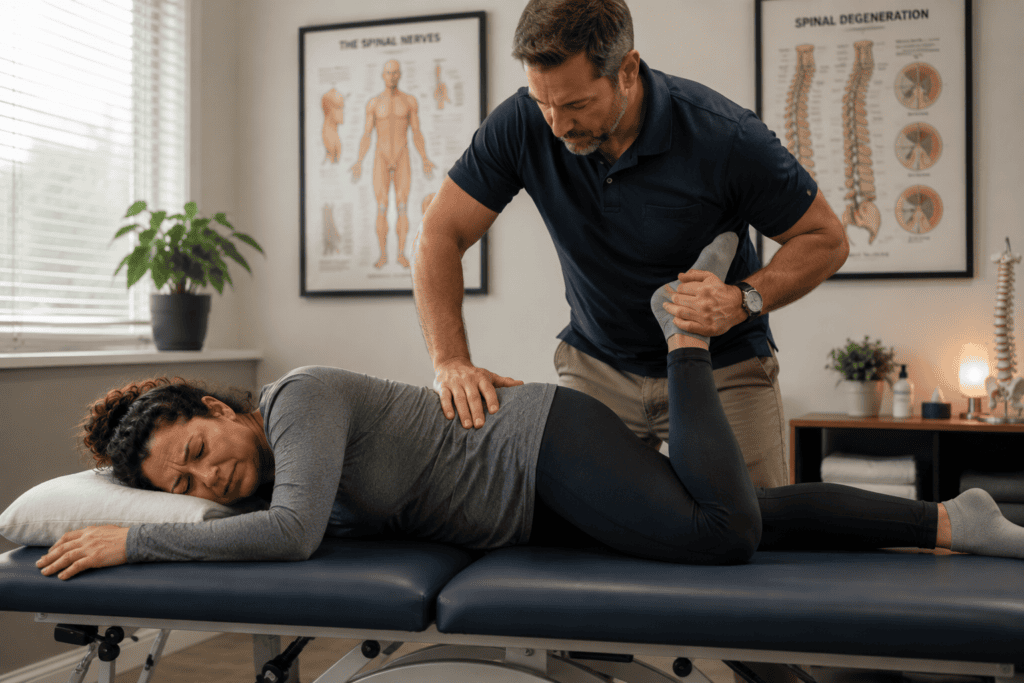
The pattern of prescribing stretching for all low back pain reflects the limits of a symptom-focused approach. Western medicine often treats muscular tightness as the primary problem to solve. When a patient presents with low back pain and tight muscles, the logical intervention appears to be lengthening the tight muscles. This works well for the patients whose pain is genuinely muscular in origin.
The framework fails for patients whose pain has an underlying structural or neurological driver. The tightness is not the problem for these patients. The nerve involvement or disc pathology is the problem, and the tightness is the body’s response to it. Stretching addresses the response without addressing the underlying issue, and often makes the underlying issue worse.
Physical therapists trained in more specialized approaches (nerve mobilization, disc protocols, specific pattern differentiation) can distinguish these presentations and adjust their treatment accordingly. Many patients never encounter this level of specificity in their care. They receive generic stretching protocols that were designed for muscular patterns and applied to their nerve-involved pattern without the necessary distinction being made.
The MRI question is worth naming here. Many patients with nerve-involved low back pain have imaging that shows nothing definitive or shows structural changes that do not perfectly explain the symptoms. The clinical picture requires more than the imaging can show, and generic advice given without proper differentiation often follows.
When Stretching Helps and When It Hurts
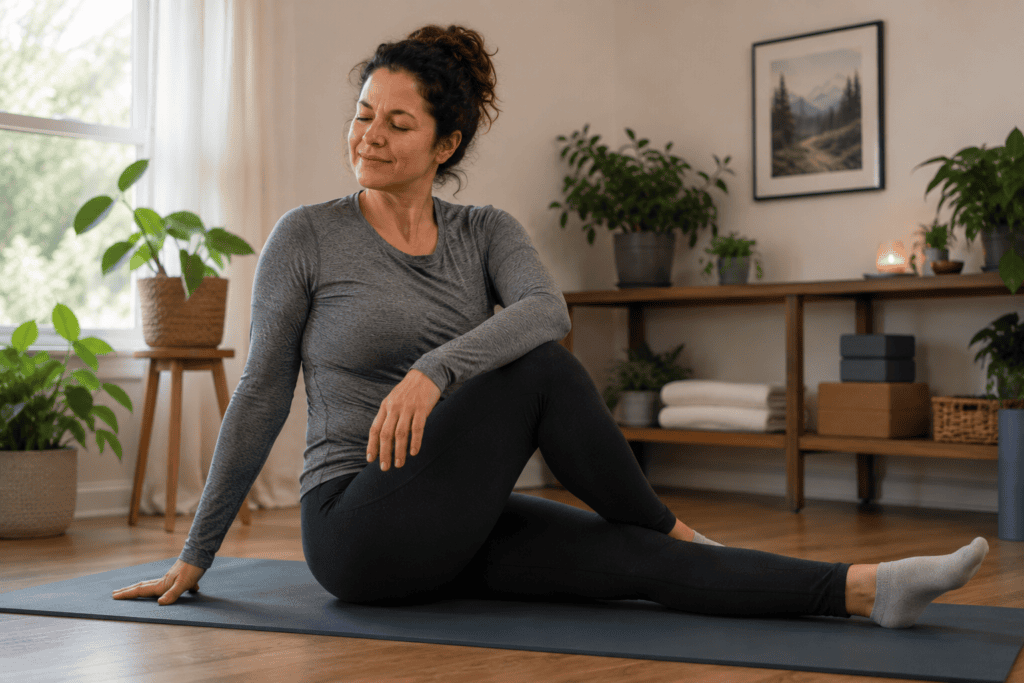
The clinical picture is not that stretching is always bad. Stretching is a useful tool for the right pattern. Understanding when it fits and when it does not fit is what most patients are never taught.
- Stretching helps when the pain is purely muscular. Chronic postural tightness from prolonged sitting. Muscular restriction from repetitive movement patterns. General mobility limitations. In these patterns, the tightness itself is the problem and lengthening the muscles reduces the pain.
- Stretching also helps for maintenance and prevention. Patients who do not have active nerve involvement or disc issues benefit from regular stretching to maintain mobility and reduce the postural tightness that develops from modern lifestyle patterns.
- Stretching hurts when there is nerve involvement. Sciatica, disc herniation, spinal stenosis, and nerve root irritation all worsen with the stretches that pull on the compressed pathway. The temporary relief during the stretch masks the delayed worsening that follows.
- Stretching hurts when there is acute inflammation. During an acute flare of any low back pain pattern, aggressive stretching often increases the inflammation. The tissue needs time to calm down before intervention that adds mechanical stress is appropriate.
- Stretching hurts when the muscles are guarding for a reason. Protective muscular tension exists to protect something. Removing the protection without addressing what is being protected produces the pattern of worsening pain that many patients experience.
What Actually Helps
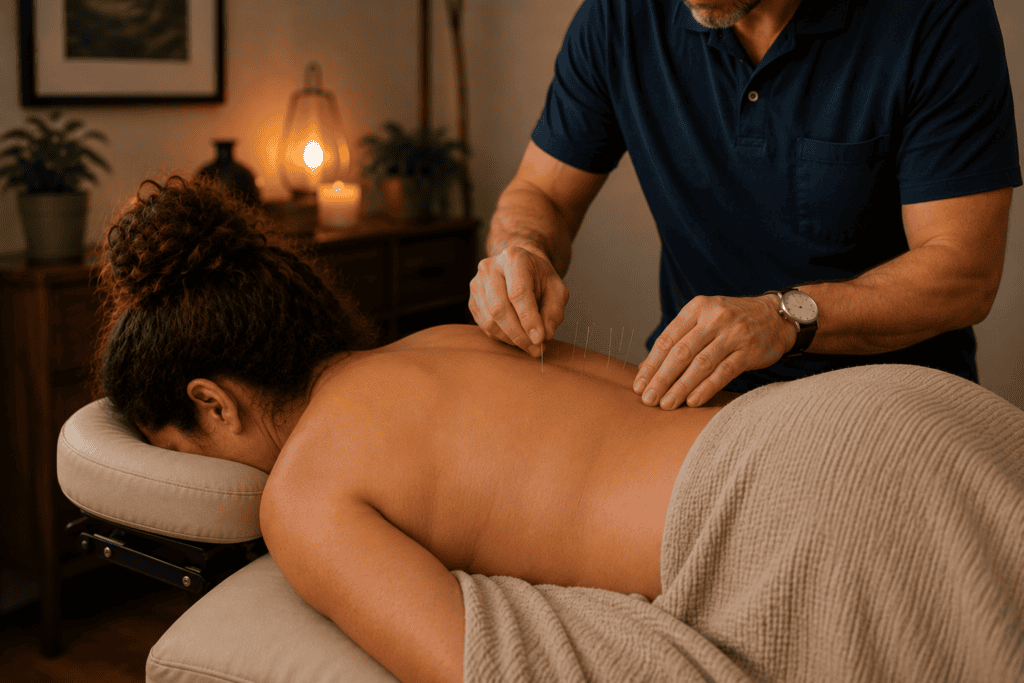
For patients with nerve-involved low back pain, the treatment framework is fundamentally different from the standard stretching approach.
- Traction and decompression work with the compression pattern rather than against it. Gentle traction that reduces the mechanical load on the nerve pathway allows the nerve to calm down and the inflammation to resolve. This is the opposite of stretching, which adds mechanical stress to the pathway.
- Positioning and unloading support the affected structures without adding stress. Sleeping positions that reduce lumbar and nerve pathway pressure. Sitting positions that avoid forward flexion. Standing positions that maintain neutral spinal alignment.
- Acupuncture treatment addresses the muscular guarding, the nerve inflammation, and the pain amplification simultaneously. The treatment works with the protective muscular pattern rather than against it, releasing the tension only as the underlying nerve issue resolves.
- Nervous system regulation calms the chronic pain amplification that develops when nerve involvement persists. Chronic pain becomes self-reinforcing through the nervous system, and interventions that address only the peripheral pain miss the central sensitization that keeps the pattern active. The fuller picture is in Am I Stuck in a Pain Cycle?.
- Muscular release through pressure rather than stretching works with the protective pattern instead of against it. Acupressure and acupuncture applied to the muscles produces release that stretching cannot achieve because the pressure works with the tissue’s protective response rather than opposing it.
- Gentle movement rather than sustained stretches supports the tissue without the delayed worsening. Walking. Water-based movement. Gentle rotational movement within a pain-free range. These allow the tissue to move without the mechanical stress of a sustained stretch.
For the specific acupressure points that help low back pain, the full guide is in How to Relieve Low Back and Hip Pain With Acupressure. For sciatica specifically, the guide is in How to Relieve Sciatica With Acupressure.
The Mayo Clinic overview of sciatica and the Cleveland Clinic summary on low back pain provide the medical framework for understanding the different presentations. The American College of Physicians clinical practice guideline recommends acupuncture as a first-line treatment for chronic low back pain.
The Broader Principle
The same clinical reasoning applies to other pain patterns. Neck pain with nerve involvement, radiating arm pain, and other conditions where nerve compression or irritation is driving the pattern all follow the same rule. Stretching the protective muscular guarding removes the protection without addressing the underlying nerve issue and often makes things worse.
The clinical reframe is that muscular tightness in these patterns is a symptom rather than the source. Treating the symptom directly (through stretching) without addressing what is being protected leads to the pattern of worsening pain that many patients experience. Treating the underlying nerve involvement and letting the muscular guarding release naturally as the nerve calms down is the framework that actually works.
When to Get Professional Help
For low back pain that is not responding to self-care or that gets worse with stretching, working with a provider who can properly differentiate the pattern is essential. Not all physical therapists, chiropractors, or other providers apply the same framework. Finding a provider who identifies whether nerve involvement is present and adjusts the treatment accordingly matters more than the specific credential.
Acupuncture treatment addresses the multiple mechanisms that drive nerve-involved low back pain simultaneously. The treatment does not require the patient to stretch through pain. It works with the protective muscular pattern rather than against it. The full picture of what the practice offers is in Acupuncture, Cupping & Lifestyle Coaching.
The broader stress and nervous system patterns that maintain chronic pain conditions are covered in Anxiety, Stress, and Depression.
Reach out to Above and Beyond Acupuncture on North Frank Lloyd Wright Boulevard in Scottsdale to schedule a consultation. Back pain that is getting worse with stretching deserves a different approach.
Schedule an appointment online or call us today to start your healing journey.