Key Takeaways
- Bell’s palsy recovery involves active participation through daily practice, such as acupressure, alongside professional treatment.
- Nine specific acupressure points target the facial muscles and enhance the healing of the facial nerve.
- Gentle pressure on these points, even for just five to ten minutes daily, can significantly aid recovery.
- Start acupressure soon after symptoms arise to improve outcomes; consistency is key to support recovery efforts.
- Seek immediate medical attention for any new neurological symptoms and maintain communication with your acupuncturist for optimal care.
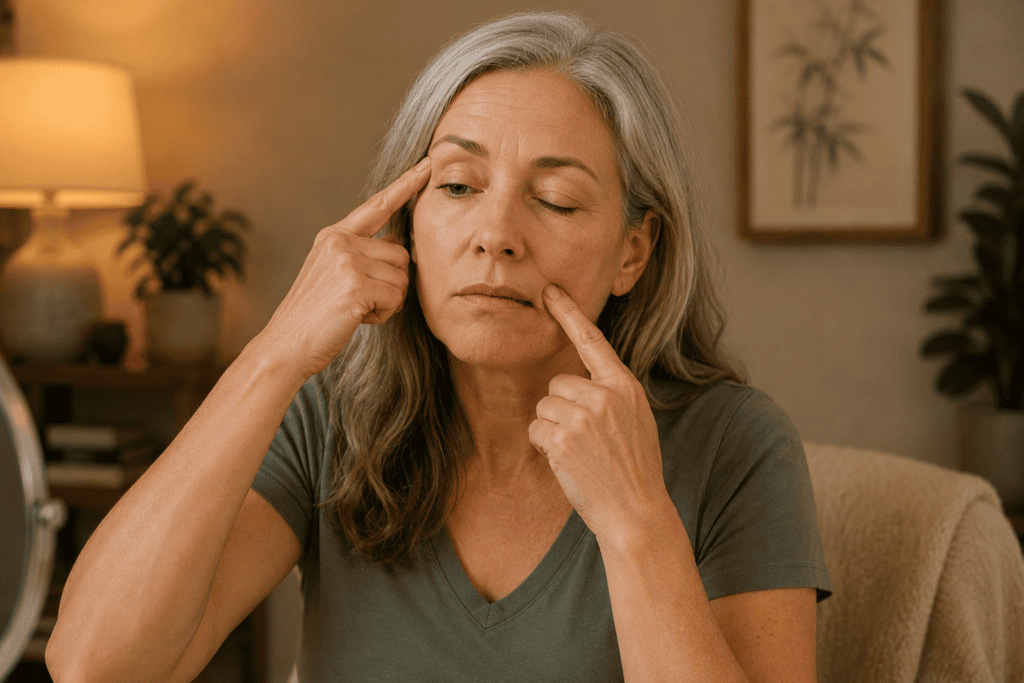
Bell’s palsy recovery is not passive. The weeks and months of gradual return of facial function respond to consistent daily practice as much as they respond to professional treatment sessions. This is where home acupressure fits.
At Above and Beyond Acupuncture, patients receiving acupuncture for Bell’s palsy are given homework. Specific points to massage daily between treatment sessions. This is not a replacement for professional care. It is what patients can do on their own to support their recovery and give the facial nerve every opportunity to heal well.
The points below are the ones commonly assigned as homework for Bell’s palsy patients. They target the affected facial muscles, the nerve pathway, and the constitutional patterns that support recovery. Consistency matters more than intensity. Even five to ten minutes of daily practice makes a meaningful difference.
An important note before starting. Sudden facial weakness or paralysis requires immediate medical evaluation to rule out stroke and confirm Bell’s palsy. This acupressure guide is for patients who have been diagnosed with Bell’s palsy and are already under care. If you are experiencing sudden facial weakness that has not been medically evaluated, please seek emergency care first. For the full clinical picture on how acupuncture treats Bell’s palsy alongside standard medical care, Can Acupuncture Treat Bell’s Palsy? covers the professional treatment path in depth.
Here are nine acupressure points that work, how to use them, and what to expect from consistent home practice.
What Acupressure Points to Press and Why
Each point addresses a different aspect of the Bell’s palsy recovery pattern. All local facial points are pressed on the affected side only. The distal points (LI4, GB20) are pressed on both sides.
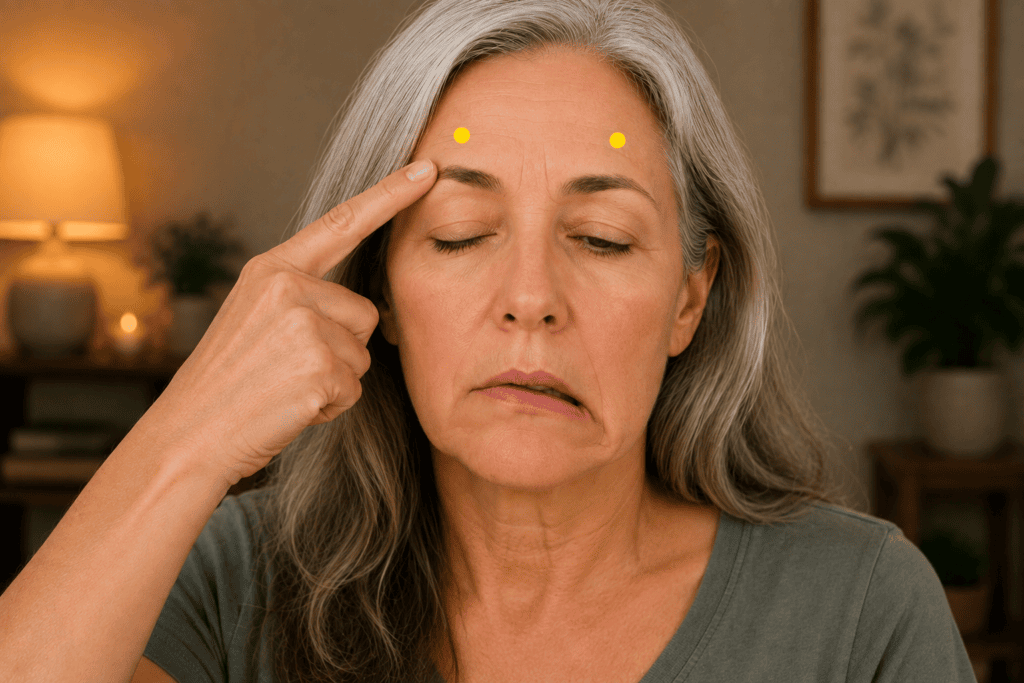
1. Press on GB14 above the eyebrow for forehead recovery. GB14 sits directly above the pupil, about one finger-width above the eyebrow on the forehead. Press gently with your fingertip for one to two minutes on the affected side. GB14 stimulates the forehead muscles that produce eyebrow raising and forehead wrinkling. These muscles are often affected in Bell’s palsy and respond well to consistent local stimulation.
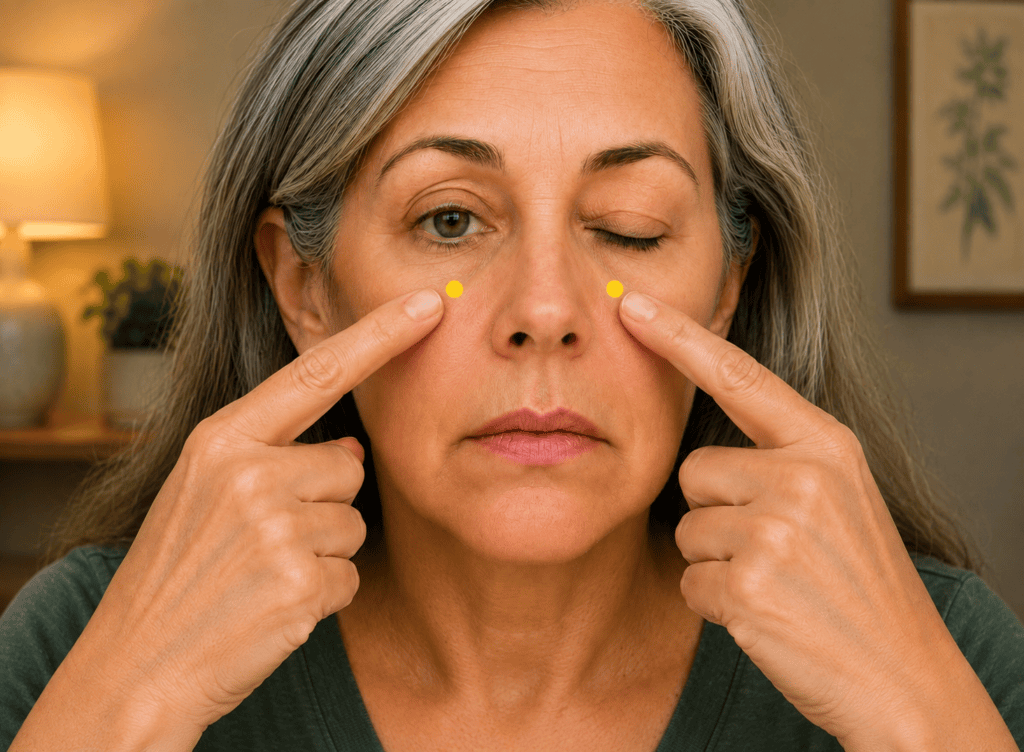
9. Press on ST2 below your eye for eye function support. ST2 sits below the pupil in the small depression that can be felt on the cheekbone, about one finger-width below the lower edge of the eye socket. Press gently with your fingertip for one to two minutes on the affected side. ST2 stimulates the muscles around the eye that control eye closure and lower eyelid function. The point supports the return of function to this critical region and helps prevent the eye closure issues that can lead to corneal damage during Bell’s palsy recovery.
3. Press on LI20 beside the nostril for upper face support. LI20 sits in the small groove beside the nostril, at the level of the midpoint of the nose. Press gently with your fingertip for one to two minutes on the affected side. LI20 stimulates the muscles that control the nasal area and upper lip. The point supports the return of function to this region and works alongside the other facial points to restore symmetry.

4. Press on ST4 at the corner of the mouth for mouth and lip recovery. ST4 sits at the corner of the mouth, just outside the lip line. Press gently with your fingertip for one to two minutes on the affected side. ST4 directly stimulates the muscles that control mouth movement and lip position. The drooping corner of the mouth that Bell’s palsy produces responds well to consistent stimulation at this point.

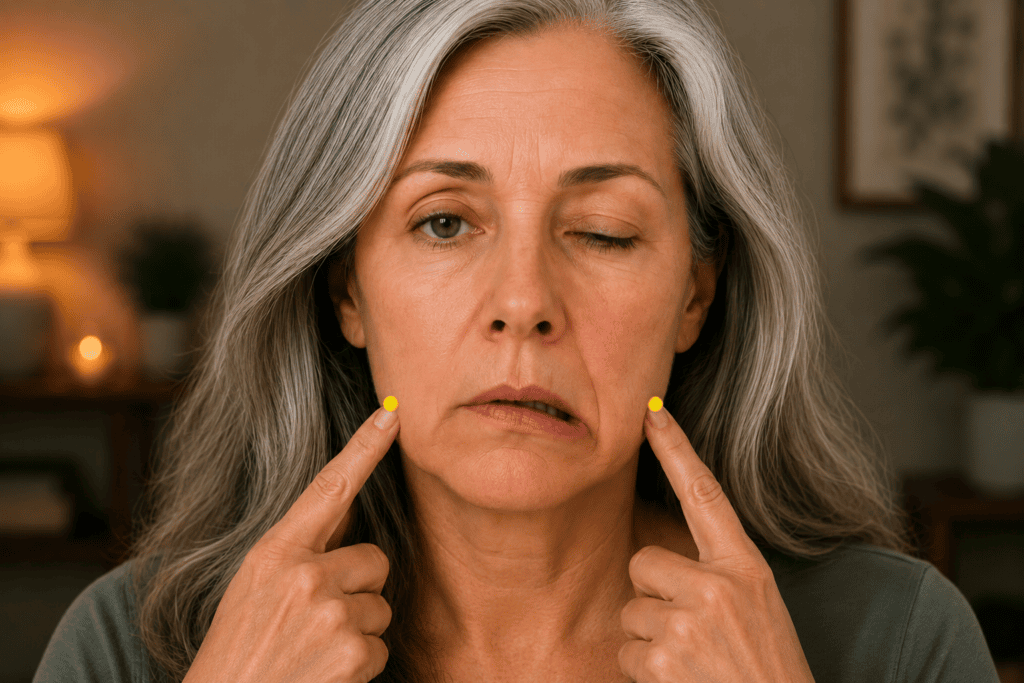
5. Press on ST6 at the jaw angle for cheek and jaw support. ST6 sits on the cheek at the front of the masseter muscle (the chewing muscle you can feel when you clench your jaw), about one finger-width in front of the angle of the jaw. Press gently with your fingertip for one to two minutes on the affected side. ST6 supports the return of function to the cheek and jaw muscles that participate in smiling, chewing, and facial expression.
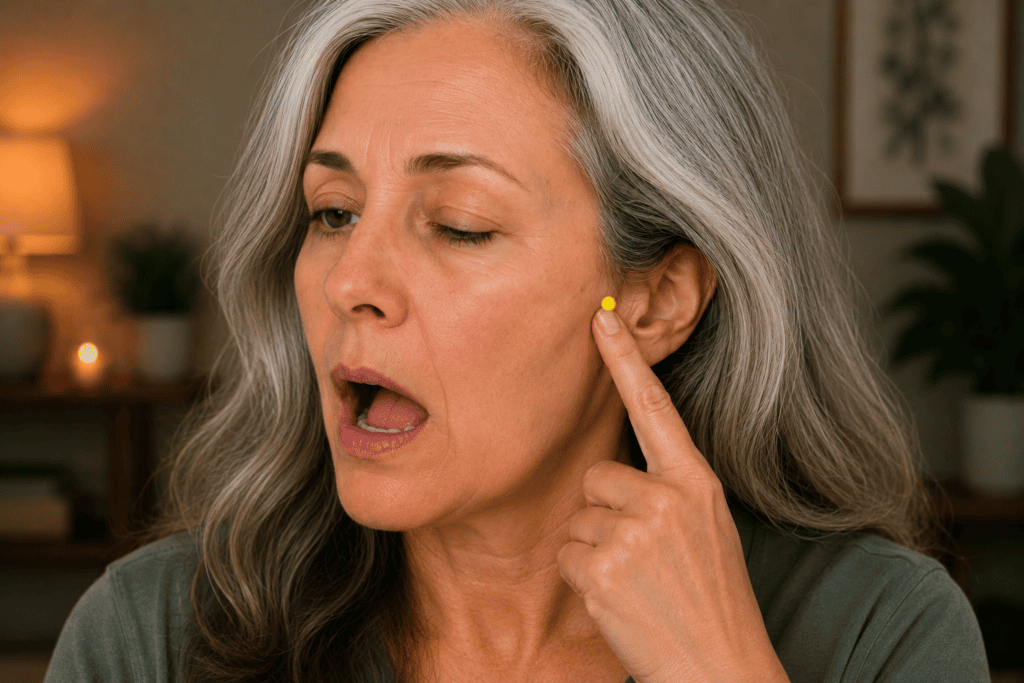
6. Press on ST7 in front of the ear for facial nerve support. ST7 sits in the depression that appears when you open your mouth, just in front of the ear where you can feel the jaw joint. Press gently with your fingertip for one to two minutes on the affected side. ST7 is near where the facial nerve exits the skull and sits along its pathway. The point directly supports the nerve function that Bell’s palsy affects.
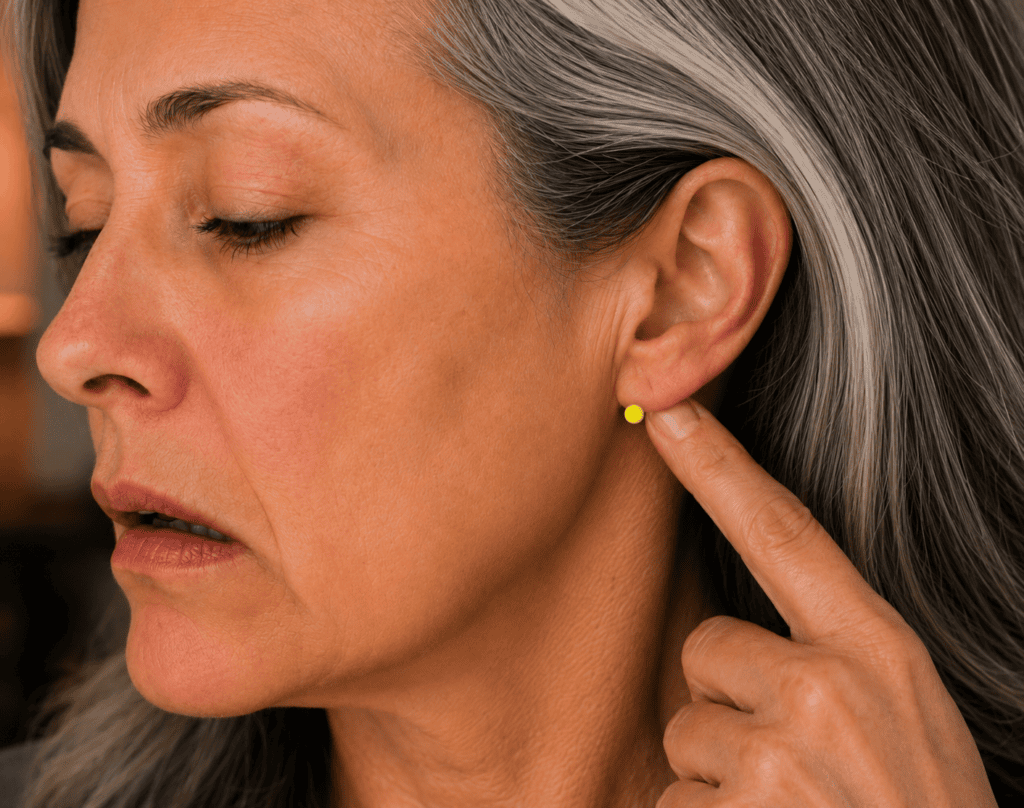
7. Press on TB17 behind the earlobe for the primary facial nerve point. TB17 sits in the depression behind the earlobe, between the ear and the mastoid bone (the bony bump behind the ear). Press gently with your fingertip for one to two minutes on the affected side. TB17 is called “Wind Screen” in Chinese medicine and sits directly over the point where the facial nerve exits the skull. This is one of the primary points for Bell’s palsy and should be part of every home practice session.
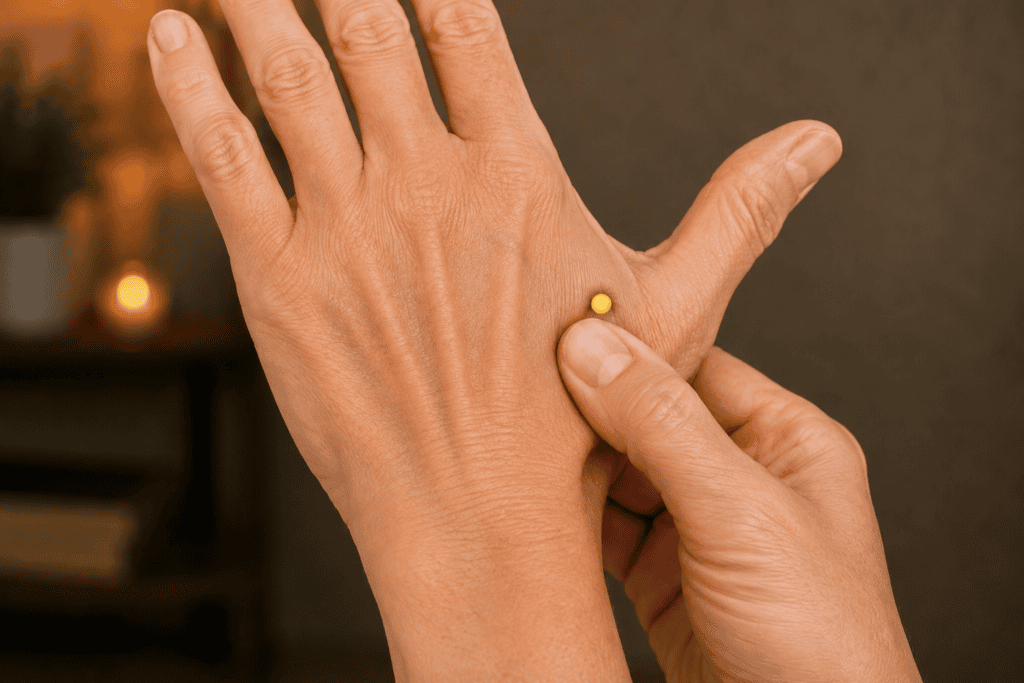
8. Press on LI4 in the webbing between your thumb and index finger for the distal command point. LI4 sits in the soft tissue webbing between the thumb and index finger, in the muscle that bulges when the thumb is pressed against the side of the index finger. Press firmly with the thumb of the opposite hand for one to two minutes on each hand. LI4 is the classical command point for the face and head in Chinese medicine. Regular pressure on LI4 supports the recovery of facial function from a distance, working through the meridian connections rather than local stimulation. LI4 is contraindicated during pregnancy.
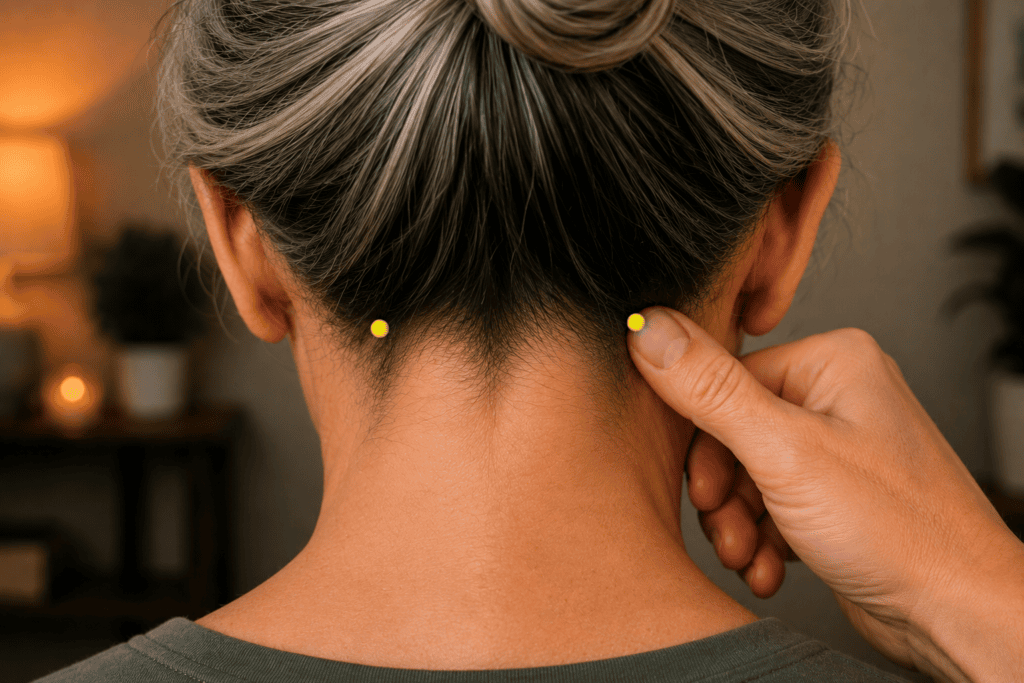
9. Press on GB20 at the base of your skull for expelling wind from the channels. GB20 sits in the hollow at the base of the skull, about two finger-widths to either side of the spine, at the point where the neck muscles attach to the skull. Press firmly with your thumbs for one to two minutes on each side. GB20 addresses the Wind pattern that Chinese medicine identifies as the underlying cause of Bell’s palsy. The point also releases the neck tension that develops from the compensatory patterns of facial paralysis.
Why This Works
Bell’s palsy involves several overlapping patterns during recovery. The facial nerve is inflamed and needs time to heal. The facial muscles are not receiving proper nerve signals, which leads to disuse patterns and atrophy. The compensatory patterns in the surrounding muscles create additional tension. The underlying constitutional pattern that made the individual susceptible needs to be addressed.
Acupressure works on several of these patterns at once.
- The local facial points (GB14, LI20, ST2, ST4, ST6, ST7) stimulate the affected muscles directly, which helps preserve muscle tone during the recovery period and prevents the disuse atrophy that can produce long-term complications.
- The facial nerve points (ST7, TB17) sit along the pathway of the affected nerve and support the recovery of nerve function through local circulation and direct stimulation.
- The distal command point (LI4) supports facial recovery through the meridian connections that Chinese medicine has mapped over centuries.
- The Wind expelling point (GB20) addresses the underlying Chinese medicine pattern of Wind invasion that produces the sudden onset of Bell’s palsy.
The Mayo Clinic overview of Bell’s palsy and the Cleveland Clinic summary provide the medical picture of the condition and the standard care approach.
How to Use These Acupressure Points
Home practice for Bell’s palsy is most effective when done consistently. Working through the full nine-point protocol once or twice a day supports the recovery process. Morning and evening sessions work well for most patients.
The pressure should be gentle on the face and firmer on LI4 and GB20. The facial nerve is inflamed during Bell’s palsy and forceful pressure can be irritating rather than supportive. Gentle sustained pressure with the fingertip works best on the local facial points.
Attempt to make the facial expressions that engage the affected muscles during and after pressing the local points. Even if the muscles are not fully functional, the intent to move them helps maintain the nerve-muscle connection during the recovery period. Try to smile. Try to raise the eyebrow. Try to close the eye. Even small attempts at movement support recovery.
The practice pairs well with professional acupuncture treatment. The homework supports the changes that happen during the professional sessions and gives the recovery process daily reinforcement.
Timing matters. The sooner acupressure is added to Bell’s palsy recovery, the better the outcomes. Ideally, home practice begins in the same window as the professional treatment, within the first weeks of symptom onset.
When to Seek Additional Care
- Contact your physician immediately if you develop new neurological symptoms including arm or leg weakness, speech difficulty, vision changes, severe headache, or loss of coordination. These symptoms could indicate stroke or other conditions requiring emergency evaluation.
- Contact your acupuncturist if the affected eye cannot fully close and lubricating drops are not preventing dryness or discomfort. Additional eye protection may be needed.
For patients whose Bell’s palsy is not fully responding to standard care and initial acupuncture treatment, Can Acupuncture Treat Bell’s Palsy? covers the professional treatment approach in more depth.
Many patients dealing with Bell’s palsy also experience anxiety, stress, and depression related to the sudden change in facial function and the uncertainty about recovery.
Above and Beyond Acupuncture offers acupuncture, cupping, and lifestyle coaching at the North Frank Lloyd Wright Boulevard location in Scottsdale.
Schedule an appointment online or call us today to start your healing journey.
The points above are only as effective as the technique used to apply them. Where to press, how firmly, and for how long all affect the result. For a full breakdown of how to perform acupressure properly at home, read Performing Acupressure in 3 Easy Steps.
About the Publisher
Paul Kerzner, L.Ac., is a licensed acupuncturist and board-certified herbalist, as well as the founder of Above and Beyond Acupuncture in Scottsdale. His own journey from chronic patient to practicing acupuncturist shapes his commitment to providing honest, clinically grounded information about acupuncture and Traditional Chinese Medicine. Learn more about Paul and his clinical approach on the About Us page.