
Key Takeaways
- Chronic sinusitis causes persistent pressure and congestion; it affects many people and often requires more than just traditional treatments.
- Acupressure effectively supports chronic sinusitis, using specific points like Yintang and Bitong for relief and management.
- The article lists seven key acupressure points to target various symptoms and underlying issues related to chronic sinusitis.
- Regular use of these points can improve overall symptoms and reduce flare frequency; consistency is crucial for effectiveness.
- Seek medical help for severe symptoms; combining acupressure with other treatment methods maximizes benefits.
If you have chronic sinusitis, you already know the pattern. The persistent facial/sinus pressure that never fully goes away. The nasal congestion that disrupts your sleep and breathing. The recurring flare-ups that have you using nasal sprays and antihistamines. The frustration of cycling through treatments with only minimal relief. Chronic sinusitis affects roughly 30 million American adults and often persists for years despite consistent medical care/intervention.
Acupressure is one of the strongest home tools for supporting, and potentially alleviating, chronic sinusitis. The acupressure points below include local sinus points that directly address the facial/sinus pressure and congestion, distal points that regulate the meridians affecting the sinuses, and constitutional points that support the immune and digestive systems triggering chronic sinus issues.
For patients whose chronic sinusitis needs more substantial support than home acupressure alone provides, Can Acupuncture Treat Chronic Sinusitis? covers the Traditional Chinese Medicine approach and how acupuncture addresses this specific condition.
Here are seven acupressure points that work, why they work, and how to use them:
What to Press and Why
Each point addresses a different aspect of the chronic sinusitis pattern. You can use them individually during acute flares or work through the full protocol daily as maintenance.
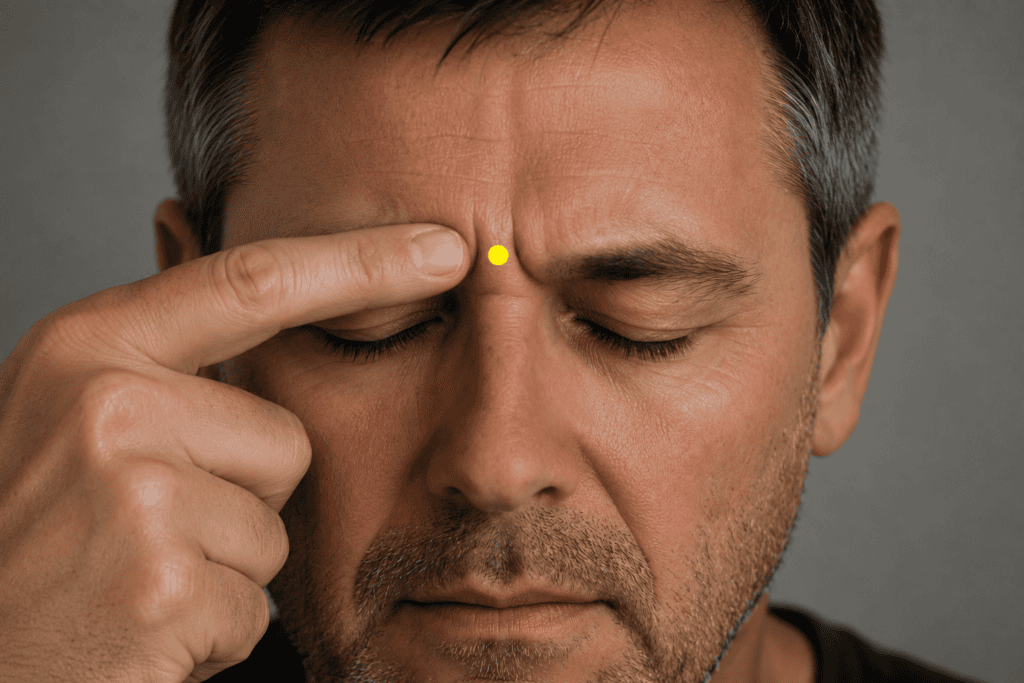
1. Press on Yintang between your eyebrows for the frontal sinus point. Yintang sits in the small hollow directly between the eyebrows, above the bridge of the nose. Press gently with your fingertip for one to two minutes. Yintang directly addresses the frontal sinus pressure that many chronic sinusitis patients experience. The point also calms the nervous system, which supports the immune function that chronic conditions require.
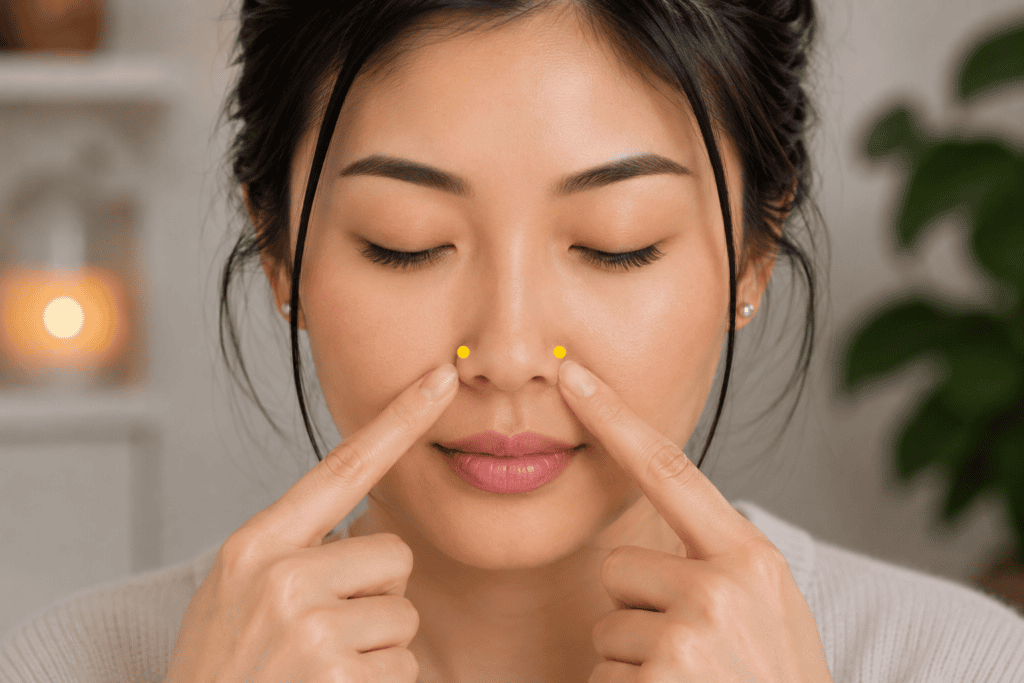
2. Press on Bitong beside your nose for congestion relief. Bitong sits at the top of the nasolabial groove, in the depression at the side of the nose about halfway between the tip of the nose and the corner of the eye. Press gently with your fingertip for one to two minutes on each side. Bitong is called “Nose Open” and is one of the most direct points for nasal congestion and sinus pressure. The point produces immediate relief for many patients during acute flares.
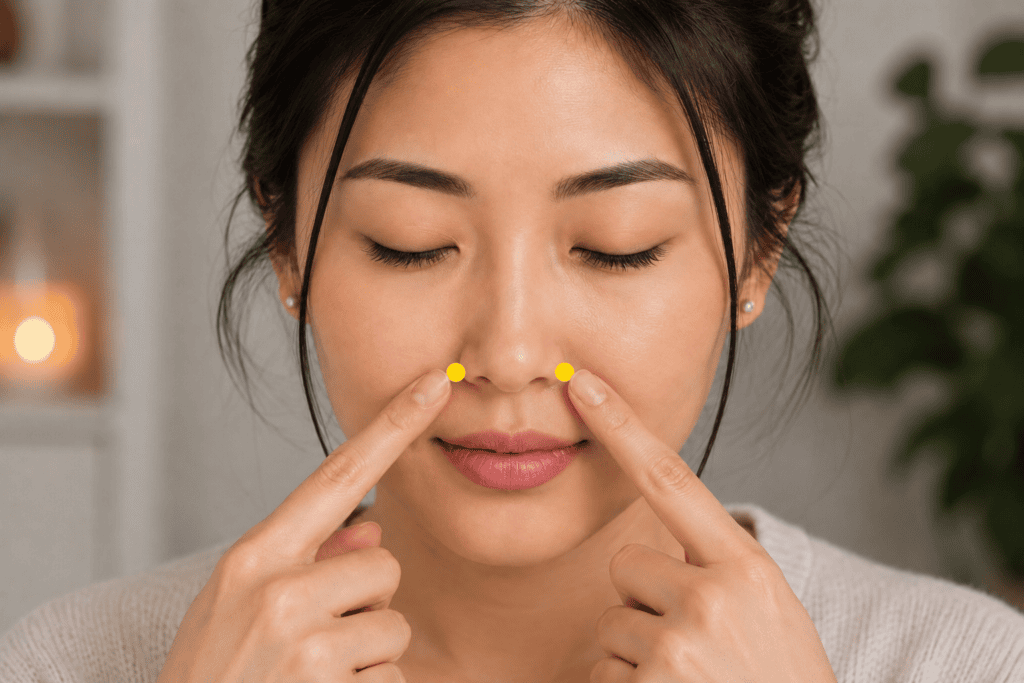
3. Press on LI20 beside your nostril for the primary sinus point. LI20 sits in the small groove beside the nostril, at the level of the midpoint of the nose. Press gently with your fingertip for one to two minutes on each side. LI20 is called “Welcome Fragrance” and is the classical point for nasal congestion, sinus pressure, and loss of smell. The point addresses the maxillary sinus region directly and supports the return of smell that chronic sinusitis often diminishes.
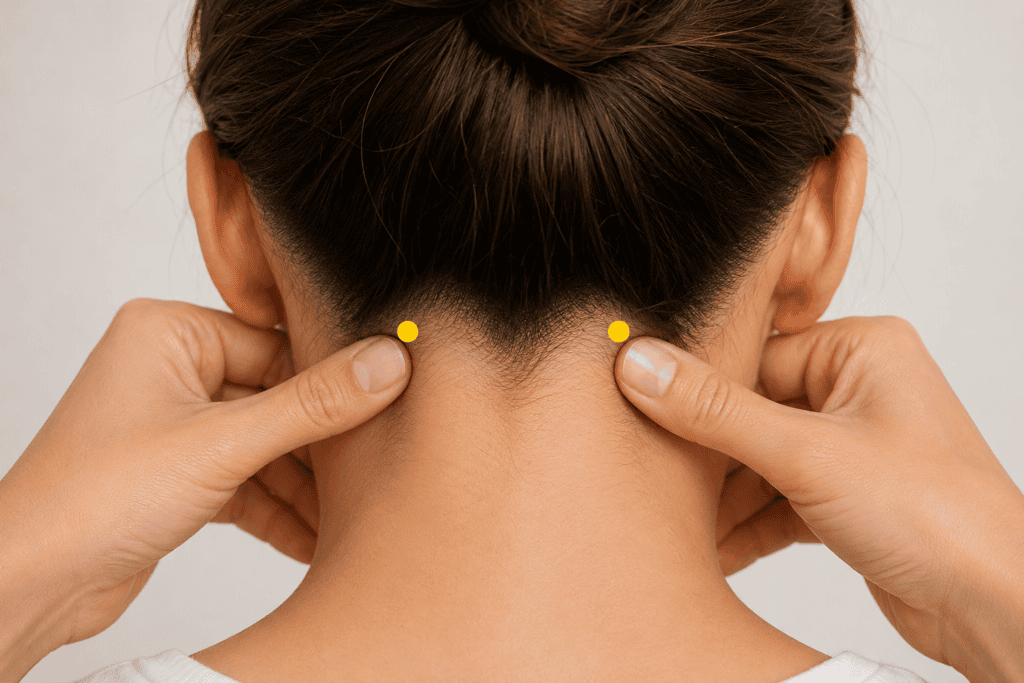
4. Press on GB20 at the base of your skull for Wind expelling. GB20 sits in the hollow at the base of the skull, about two finger-widths to either side of the spine, at the point where the neck muscles attach to the skull. Press firmly with your thumbs for one to two minutes on each side. GB20 expels Wind pathogens in Chinese medicine, which addresses the underlying Wind patterns that produce chronic sinus flares. The point also releases the neck tension that develops from compensating for chronic facial pressure.
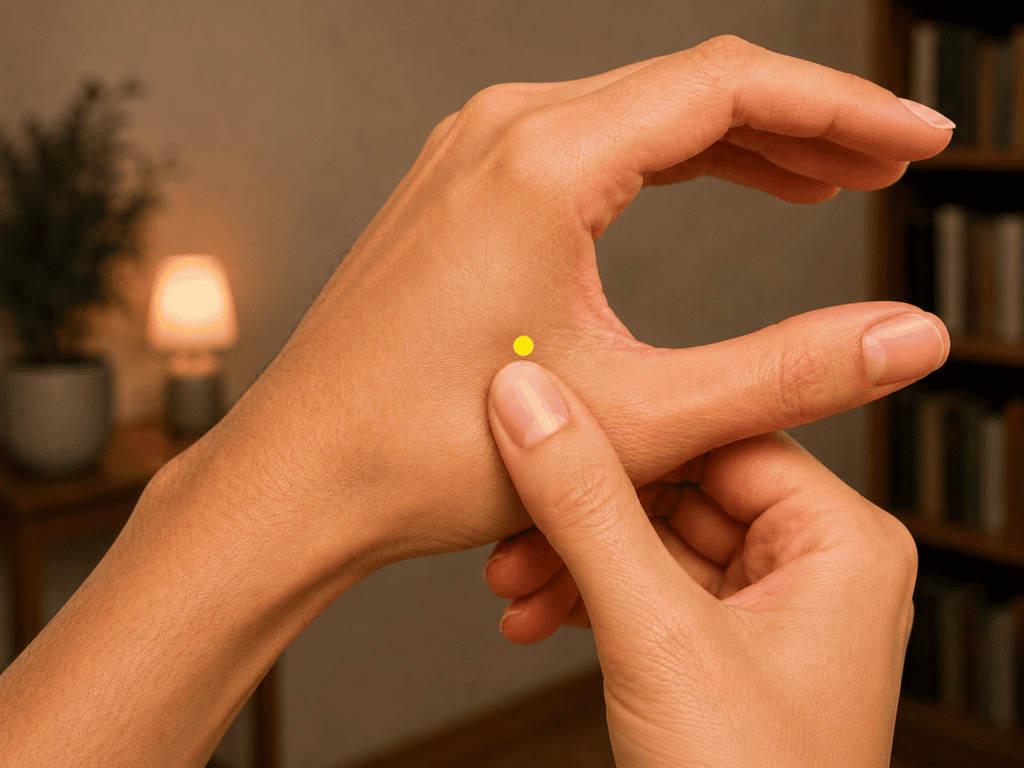
5. Press on LI4 in the webbing between your thumb and index finger for the distal command point. LI4 sits in the soft tissue webbing between the thumb and index finger, in the muscle that bulges when the thumb is pressed against the side of the index finger. Press firmly with the thumb of the opposite hand for one to two minutes on each hand. LI4 is the classical command point for the face and head. Regular pressure on LI4 provides pain relief for facial pressure and supports the meridian flow through the sinus region. LI4 is contraindicated during pregnancy.
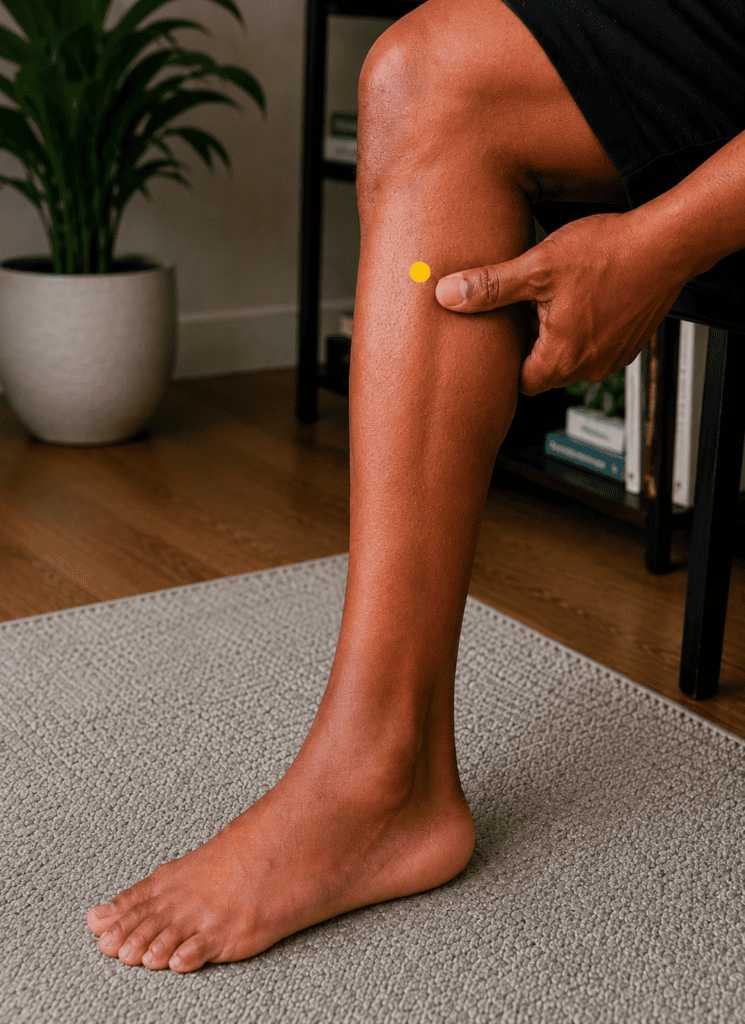
6. Press on ST36 below your knee for Spleen and immune support. ST36 sits about four finger-widths below the kneecap, one finger-width to the outside of the shinbone in the muscular depression there. Press firmly with your thumb for one to two minutes on each leg. ST36 supports the Spleen function that governs Dampness and immune patterns. Chronic sinusitis often involves Spleen deficiency producing the Dampness that thickens mucus. Regular use of ST36 addresses this constitutional pattern that many other approaches miss.
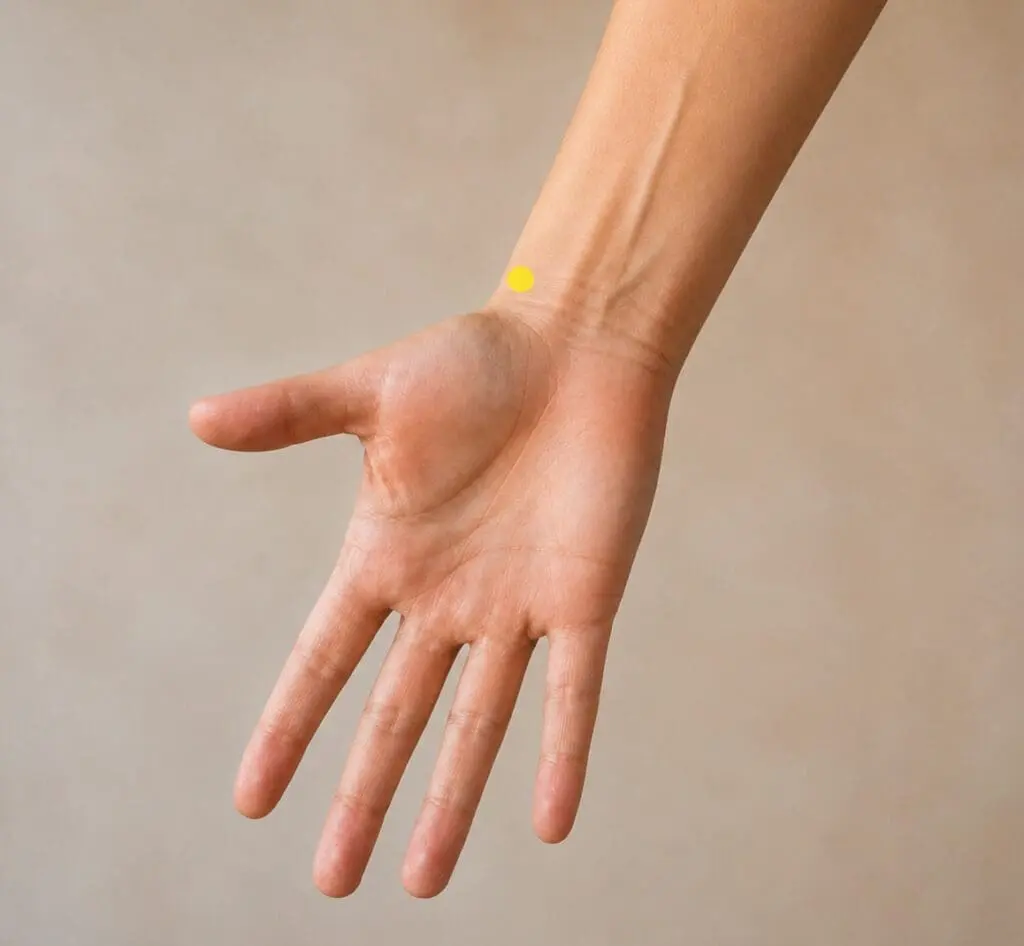
7. Press on LU7 on your forearm for the primary Lung point. LU7 sits about two finger-widths above the wrist crease on the thumb side of the forearm, in a small depression on the outer edge of the radius bone. Press firmly with your thumb for one to two minutes on each arm. LU7 is called “Broken Sequence” and is the primary Lung meridian point for respiratory and nasal issues. The point addresses the Lung system involvement in chronic sinusitis and supports the overall respiratory patterns.
Why These Points Work
Chronic sinusitis involves several overlapping patterns. The local inflammation and congestion in the sinuses that produces the pressure and drainage issues. The immune patterns that continue chronic inflammation. The Spleen and Dampness patterns that produce thick mucus. The Wind patterns that trigger flares. The nervous system activation that worsens inflammation over time.
Acupressure works on several of these patterns at once.
- The local sinus points (Yintang, Bitong, LI20) directly address the facial pressure, congestion, and drainage issues in the affected regions.
- The Wind expelling point (GB20) addresses the underlying Wind patterns and releases the neck tension from chronic compensation.
- The distal command point (LI4) provides pain relief and supports the meridian flow through the sinus region.
- The Spleen support point (ST36) addresses the constitutional Dampness patterns that continue chronic mucus production.
- The Lung meridian point (LU7) addresses the respiratory system involvement and supports the overall Lung function.
The chronic inflammation that continues chronic sinus issues responds to the acupressure practice and constitutional support these points provide.
The Mayo Clinic overview of chronic sinusitis provides the medical picture. The NCCIH summary examines the clinical evidence for acupuncture across a range of conditions.
How to Use the Points
- For acute flares with significant facial pressure, Yintang, Bitong, and LI20 produce the fastest response. These points can be pressed multiple times a day during flares.
- For daily maintenance, working through the full seven-point protocol once or twice a day supports the underlying patterns over time. Consistency matters. Two to four weeks of daily practice typically produces measurable improvement in overall symptom burden and flare frequency.
- For prevention during allergy season or times of increased susceptibility, LU7, LI20, and ST36 as a daily protocol support the immune and respiratory patterns that reduce flare likelihood.
Gentle sustained pressure works well for the facial points. Firm pressure works well for the arm, leg, and hand points.
Pairing acupressure with basic sinusitis management amplifies results. Consistent nasal saline irrigation. Adequate hydration. Anti-inflammatory nutrition. Sleep support. Environmental adjustments to reduce irritants. Working with an ENT or allergist for structural issues or specific allergy management.
When to Get Professional Help
The tools above work for many patients with mild to moderate chronic sinusitis. They are not the answer for warning signs.
Seek medical evaluation for fever with worsening facial pain suggesting acute bacterial infection, vision changes or severe eye pain, confusion or altered mental status, severe headache different from typical patterns, signs of allergic reaction or asthma exacerbation, and rapidly worsening symptoms.
For patients whose chronic sinusitis needs more substantial support than home acupressure provides, Can Acupuncture Treat Chronic Sinusitis? covers the professional treatment path.
Many patients dealing with chronic sinusitis also experience anxiety, stress, and depression that overlap with chronic health conditions.
Above and Beyond Acupuncture offers acupuncture, cupping, and lifestyle coaching at the North Frank Lloyd Wright Boulevard location in Scottsdale.
Schedule an appointment online or call us today to start your healing journey.
The points above are only as effective as the technique used to apply them. Where to press, how firmly, and for how long all affect the result. For a full breakdown of how to perform acupressure properly at home, read Performing Acupressure in 3 Easy Steps.
About the Publisher
Paul Kerzner, L.Ac., is a licensed acupuncturist and board-certified herbalist, as well as the founder of Above and Beyond Acupuncture in Scottsdale. His own journey from chronic patient to practicing acupuncturist shapes his commitment to providing honest, clinically grounded information about acupuncture and Traditional Chinese Medicine. Learn more about Paul and his clinical approach on the About Us page.