Key Takeaways
- Acupuncture has strong evidence for chronic pain, nausea, cancer treatment support, anxiety, and women’s health, while moderate evidence supports TMJ disorders and fibromyalgia.
- Modern research shows acupuncture’s effects on the nervous system, endorphin release, and inflammation, among others.
- Some conditions, like tinnitus and weight loss, have mixed evidence for acupuncture, indicating more research is needed.
- Major organizations like the WHO and NIH recognize acupuncture’s efficacy for various conditions, highlighting its integration into healthcare.
- The current research supports acupuncture as a legitimate treatment, but results vary based on individual response and treatment quality.

If you are considering acupuncture but wondering whether it actually works, you are asking the right question. Anyone spending time and money on a treatment deserves honest information about what the research shows. The good news is that acupuncture has been studied extensively over the last several decades, and the research base has grown substantially. The honest picture is that acupuncture has strong evidence for treating some conditions, moderate evidence for others, and mixed or limited evidence for a few ailments, where more research is needed.
This article covers what the science actually shows. Not marketing claims. Not overpromising. Not dismissal by skeptics who have not reviewed the current research base. Just the honest picture of what has been studied, what has been demonstrated, and what remains to be clarified.
The Basis of Modern Acupuncture Studies

Acupuncture has been practiced for over 2,500 years. The question of whether it works clinically has been answered by centuries of use across cultures. What modern research asks is different. Whether acupuncture produces effects beyond placebo. Through what pathways it works. Which conditions respond best to treatment. How it compares to standard Western care.
Over the past several decades, thousands of studies have addressed these questions. Multiple systematic reviews and meta-analyses have pooled the results across studies to produce clearer pictures. Major medical organizations have reviewed the evidence and issued recommendations. The picture that has developed is more nuanced than either the promotional claims of enthusiasts or the dismissals of skeptics suggest.
Where the Evidence Is Strongest in Support of Acupuncture

Certain health conditions have particularly strong research support for acupuncture treatment.
- Chronic pain conditions. This is where the evidence base is most substantial. Multiple systematic reviews have documented acupuncture as effective for chronic low back pain, neck pain, osteoarthritis of the knee, chronic headaches including tension and migraine, and shoulder pain. The 2017 American College of Physicians guidelines specifically recommend acupuncture as a first-line treatment for acute and chronic low back pain based on the research base. This is a significant institutional endorsement.
- Nausea and vomiting. Some of the strongest evidence of any acupuncture application. PC6 stimulation for chemotherapy-induced nausea, postoperative nausea, and pregnancy-related nausea has extensive research support. The World Health Organization has recognized this application specifically.
- Cancer treatment support. Research supports acupuncture for chemotherapy-induced peripheral neuropathy, hot flashes in patients with cancer, xerostomia (dry mouth from radiation), and general quality of life outcomes during and after cancer treatment. Major cancer centers including Memorial Sloan Kettering and MD Anderson offer acupuncture as part of integrative oncology programs.
- Anxiety and depression. Research on acupuncture for anxiety and depression has grown substantially. Multiple studies have documented meaningful effects on symptom reduction, often comparable to conventional treatments for mild to moderate cases and useful as adjunctive support for more severe cases.
- Women’s health. Menstrual pain, PMS, PCOS, endometriosis, fertility support, and menopausal symptoms all have research supporting acupuncture treatment. The evidence for hot flashes in menopause is particularly substantial.
- Insomnia and sleep issues. Multiple systematic reviews have found acupuncture effective for chronic insomnia and other sleep disorders.
The NCCIH summary on acupuncture examines the scientific and clinical evidence for acupuncture across a wide range of health conditions and provides the National Institutes of Health perspective on where the research stands.
Where the Evidence Supporting Acupuncture Is Moderate
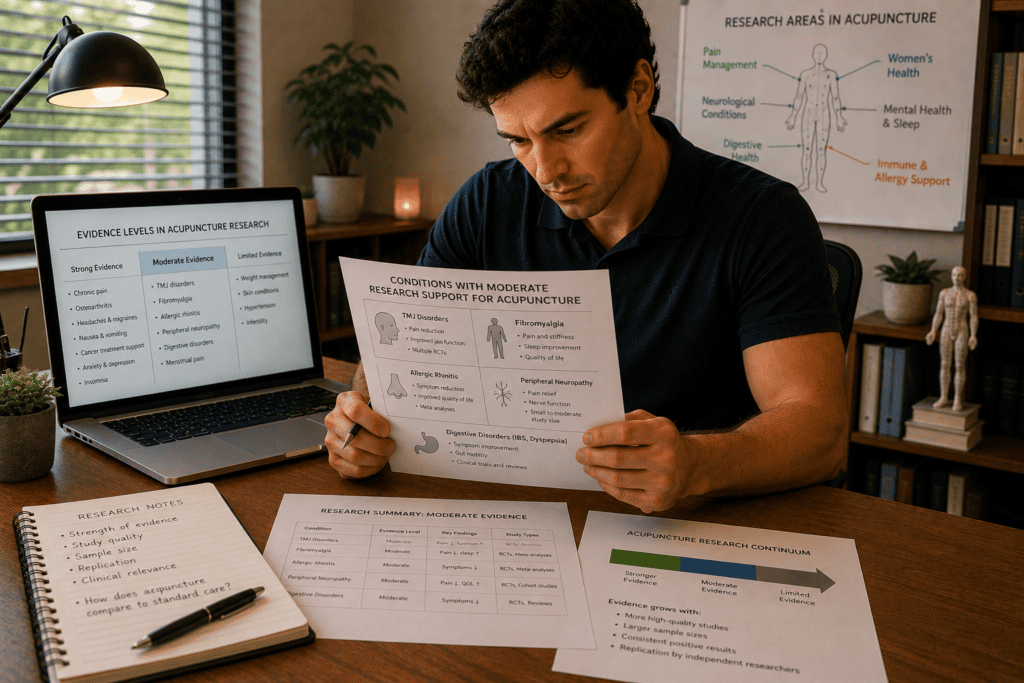
Certain health conditions have moderate evidence supporting acupuncture treatment.
- TMJ disorders. Research supports acupuncture for jaw pain and dysfunction, though the studies are smaller than in the pain conditions above.
- Fibromyalgia. Research has documented improvements in pain and function, though patient response varies significantly.
- Allergic rhinitis. Multiple studies have shown benefits for seasonal allergies and chronic rhinitis.
- Neuropathy. Research supports acupuncture for various types of neuropathy including diabetic peripheral neuropathy and chemotherapy-induced peripheral neuropathy. The neuropathy piece covers the specific research in more depth.
- Chronic fatigue syndrome. Research has documented improvements in fatigue and function, though the condition itself remains challenging to treat with any approach.
- Digestive conditions. IBS, functional dyspepsia, and chronic constipation have moderate research support.
Where the Evidence Supporting Acupuncture Is Mixed or Limited

Certain health conditions have mixed research results or limited high-quality evidence.
- Tinnitus. Research has produced mixed results. Some studies show meaningful improvements in tinnitus severity and quality of life. Other studies have not shown effects beyond placebo. The tinnitus piece covers the honest picture of what acupuncture can and cannot do for this condition.
- Weight loss. Research on acupuncture for weight loss has produced modest results. Acupuncture may support weight loss efforts as part of a broader program but is not a standalone weight loss intervention.
- Smoking cessation. Research has produced mixed results, though many patients find acupuncture helpful as part of quit programs.
- Certain autoimmune conditions. Research is limited for specific autoimmune conditions, though many patients report benefit and clinical experience supports the applications.
- Fertility. Research supports acupuncture as adjunctive support alongside standard fertility treatments including IVF. The evidence for acupuncture alone as fertility treatment is less clear.
How Modern Research Explains What Acupuncture Does for the Body
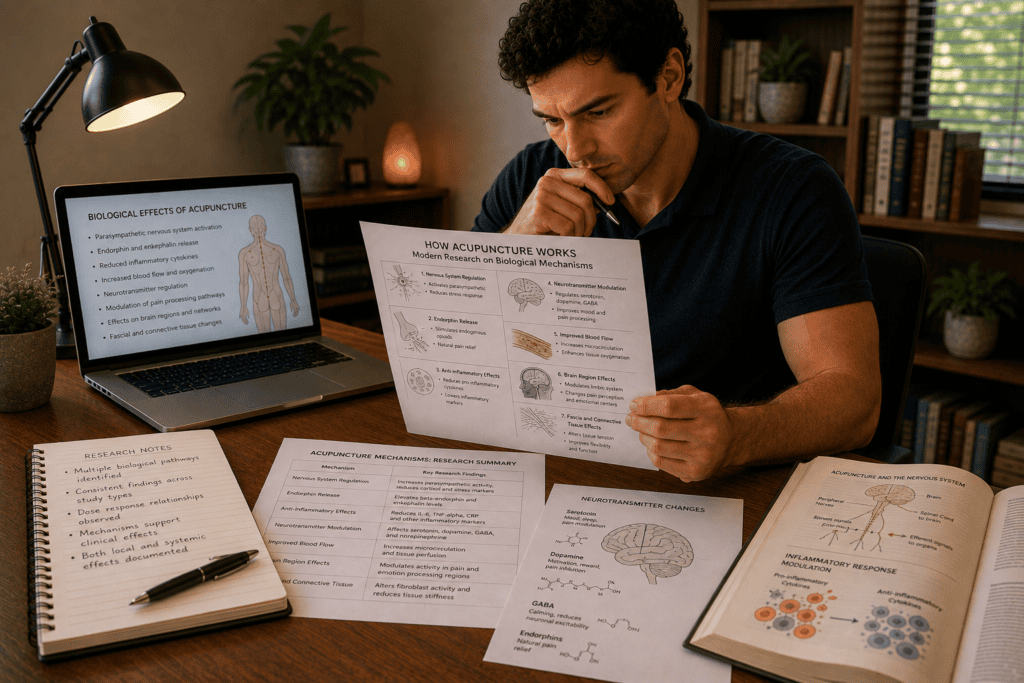
Beyond documenting that acupuncture works for specific health conditions, modern research has identified how it works at the biological level.
- Nervous system regulation. Acupuncture activates the parasympathetic nervous system, which shifts the body from stress response to rest and recovery mode. This produces measurable effects on heart rate variability, cortisol levels, and stress hormone patterns.
- Endorphin release. Acupuncture stimulates the release of endorphins and other natural pain-relieving chemicals. This produces both immediate pain relief and reduces the pain sensitivity that chronic pain patients develop over time.
- Anti-inflammatory effects. Research has documented that acupuncture reduces inflammatory markers throughout the body. The chronic inflammation that underlies many conditions responds directly to acupuncture treatment.
- Improved circulation. Local blood flow at needle sites increases measurably. This supports tissue healing and reduces pain.
- Neurotransmitter effects. Serotonin, dopamine, GABA, and other neurotransmitters shift in response to acupuncture treatment, which contributes to the mood and sleep effects patients experience.
- Central nervous system modulation. Functional MRI studies have documented specific brain region activation patterns during acupuncture treatment, particularly in pain processing regions and stress response areas.
- Fascia and connective tissue effects. Research has documented that acupuncture affects the fascia and connective tissue in ways that support tissue mobility and reduce pain patterns.
Why Some Studies on Acupuncture Show Weaker Results

Skeptics often point to studies that have shown weaker results or effects comparable to placebo. Understanding why these results occur helps interpret the research base fairly.
- Sham acupuncture is not really a placebo. Sham acupuncture usually involves needle insertion at points other than traditional acupuncture points or shallow insertion at correct points. Both of these produce physiological effects, which is why sham acupuncture often shows results better than expected. The comparison to sham may underestimate the actual effect size of proper acupuncture.
- Individual variation matters. Different patients respond differently based on constitution, Chinese medicine patterns, and the specific presentation of their condition. Studies that treat everyone with the same protocol may underestimate the effects that individualized treatment produces.
- Treatment quality varies. The skill and training of the acupuncturist matters. Studies conducted with less experienced practitioners may show weaker effects than treatment with skilled licensed acupuncturists.
- Dose matters. Adequate courses of treatment produce better results than one or two sessions. Studies with limited treatment protocols may underestimate the effects of proper courses.
- Condition selection matters. Acupuncture works better for some conditions than others. Studies on conditions where acupuncture has limited effect will show limited effect regardless of methodology.
Institutional Recognition of the Evidence Base Supporting Acupuncture

Several major medical and governmental organizations have reviewed the acupuncture evidence base and issued endorsements or recommendations.
- The World Health Organization has recognized acupuncture as effective for numerous conditions since 1979, with an expanded list published in 2003.
- The National Institutes of Health issued a consensus statement in 1997 that affirmed acupuncture’s effectiveness for various conditions and its integration into modern healthcare.
- The American College of Physicians specifically recommends acupuncture for acute and chronic low back pain in their 2017 clinical practice guidelines.
- The Joint Commission requires that hospitals address pain with non-pharmacological approaches including acupuncture where appropriate.
- Major medical centers including Cleveland Clinic, Mayo Clinic, Memorial Sloan Kettering, MD Anderson, Duke, and Johns Hopkins have integrative medicine programs that include acupuncture.
- Insurance coverage for acupuncture has expanded substantially. Medicare covers acupuncture for chronic low back pain. Many private insurance plans cover acupuncture for various conditions.
The Honest Interpretation of the Evidence for Acupuncture

The evidence base for acupuncture is substantial. It is not perfect. Some conditions have stronger evidence than others. Some studies have methodological limitations. Some questions remain to be answered.
But the current state of research supports acupuncture as an evidence-based treatment for many common conditions. The dismissive claim that acupuncture is unproven or works only through placebo does not reflect the current research base. The overpromising claim that acupuncture cures everything does not reflect the research either.
The honest picture is that acupuncture is a legitimate treatment with real research support that patients can reasonably consider for many conditions. Working with a licensed acupuncturist gives patients the best chance of benefit. Coordinating with standard medical care ensures the integrated approach that most patients need.
For patients wanting the honest picture of what acupuncture can and cannot do, Can Acupuncture Help Me Heal? covers this topic, providing context and objective information.
For patients still deciding whether acupuncture is right for them, Does Acupuncture Work? covers the clinical experience with acupuncture and its efficacy.
Many patients considering acupuncture also experience anxiety, stress, and depression that respond well to Traditional Chinese Medicine.
Above and Beyond Acupuncture offers acupuncture, cupping, and lifestyle coaching at the North Frank Lloyd Wright Boulevard location in Scottsdale.
Schedule an appointment online or call us today to start your healing journey.

About the Publisher
Paul Kerzner, L.Ac., is a licensed acupuncturist and board-certified herbalist, as well as the founder of Above and Beyond Acupuncture in Scottsdale. His own journey from chronic patient to practicing acupuncturist shapes his commitment to providing honest, clinically grounded information about acupuncture and Traditional Chinese Medicine. Learn more about Paul and his clinical approach on the About Us page.