
Key Takeaways
- Trouble staying asleep is frustrating, especially when you fall asleep easily.
- Acupressure can address specific waking patterns in the night, using points corresponding to Chinese medicine principles.
- Key acupressure points include HT7 for calming the mind, Anmian for sleep support, and LR3 for liver Qi movement.
- If you have trouble falling asleep, consider acupressure techniques you can use at night or as part of your bedtime routine.
- Seek medical help for chronic sleep issues that may indicate sleep apnea, especially if problems persist for more than three months.

If you find it easy to fall asleep but then wake up during the night and struggle to fall back asleep, you know how frustrating this experience can be. Even if you fall asleep quickly, you may wake up around 1am, 2am, 3am, or 4am and find yourself fully awake. Your mind races with thoughts you shouldn’t be ruminating on. You lie there for an hour or two, hoping to fall asleep again. When you finally do, the alarm rings soon after. The exhaustion isn’t just being tired; it’s a specific type of depletion caused by interrupted sleep, not simply short sleep.
Difficulty staying asleep is different from trouble falling asleep. According to Chinese medicine, different patterns are linked to specific waking times. Liver Qi Stagnation usually causes a person to wake between 1am and 3am. Waking up between 3am and 5am is associated with Kidney Yin deficiency and Lung issues. Blood deficiency leads to frequent waking and difficulty falling back asleep. Waking at night with mental alertness and restlessness can indicate cortisol dysregulation or blood sugar issues. You can target each pattern with specific acupressure points.
Important note: Chronic sleep imbalances, even after making holistic changes, should be medically evaluated for conditions like sleep apnea, thyroid issues, or hormonal issues that require specific and additional treatments. Acupressure supports the nervous system and Traditional Chinese Medicine patterns but doesn’t treat structural or hormonal conditions requiring medical care.
For patients who have difficulty falling asleep rather than waking up in the middle of the night, “How to Use Acupressure for Trouble Falling Asleep” offers guidance on acupressure techniques better suited to that specific issue. For patients waking at 3am, “Why Am I Waking Up at 3am Every Night?” and “How to Fall Back Asleep When You Wake Up at 3am” cover that particular imbalance.
Here are eight acupressure points that can help:
What Acupressure Points to Press and Why
Each acupressure point covers a different aspect of sleep maintenance. Use them when you wake up at night to help you fall back asleep, or follow the full protocol at bedtime to reduce the likelihood of waking back up.
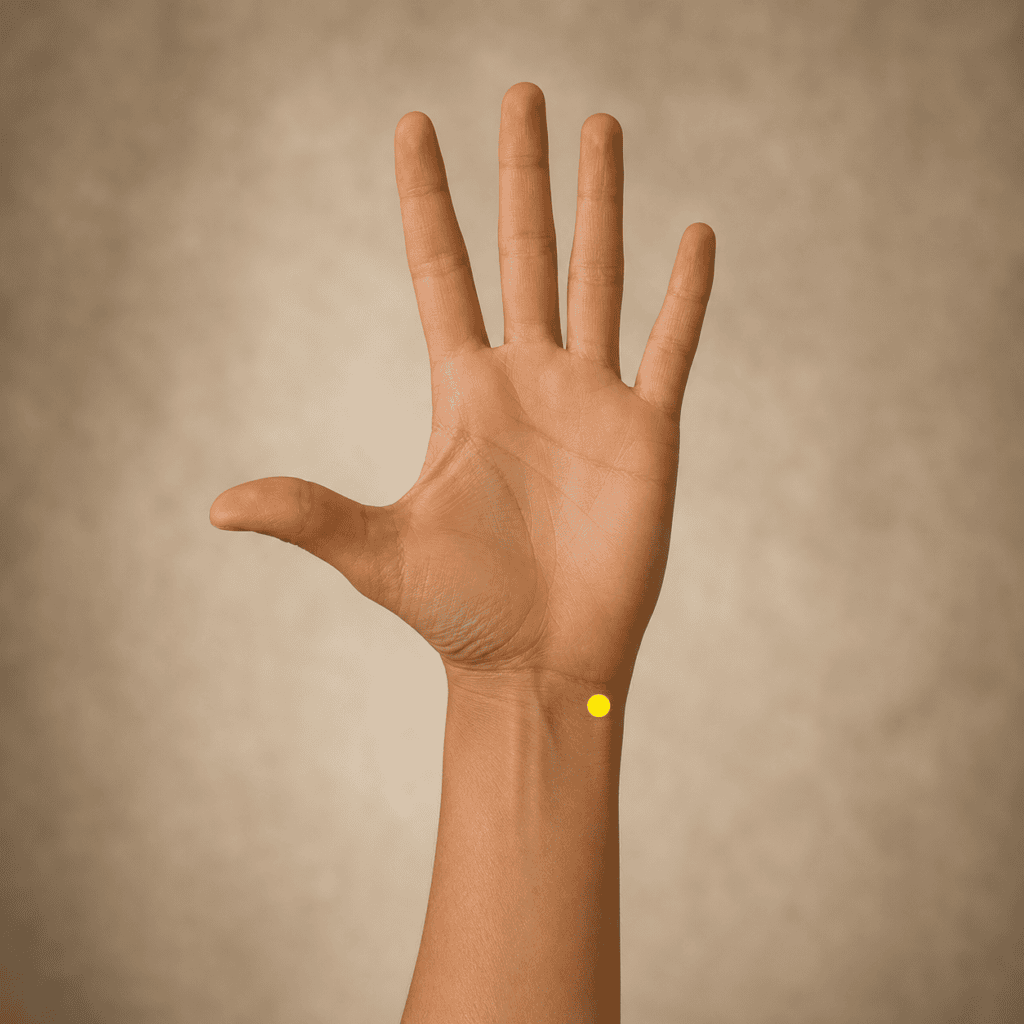
1. Press on HT7 at the pinky-side wrist crease for the Spirit Gate. HT7 sits at the wrist crease on the pinky side, in the small depression just above the wrist bone. Press gently with your thumb for two to three minutes on each wrist. HT7 is called “Shenmen” or “Spirit Gate” in Chinese medicine and directly calms the Shen.
The point is one of the most important for sleep maintenance issues. When you wake in the middle of the night with a busy mind, HT7 pressed while lying in bed calms the Shen and supports the return to sleep. The point can be pressed under the covers without requiring you to sit up.
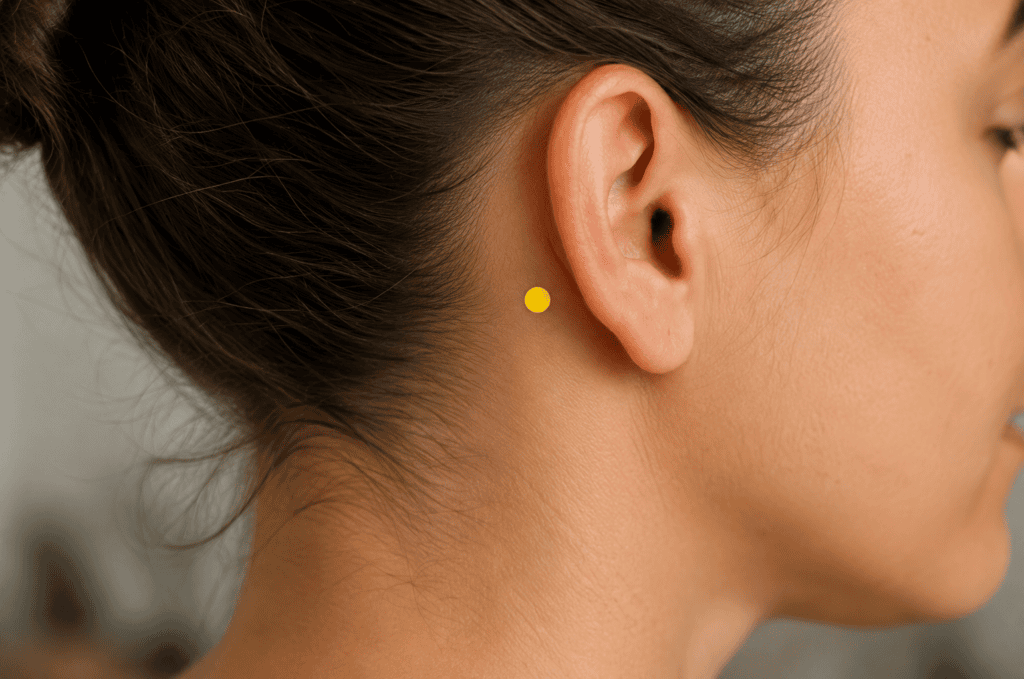
2. Press on Anmian behind your ear for the sleep point. Anmian sits behind the ear, in the depression behind and below the earlobe, roughly at the junction where the skull meets the neck. Press gently with your fingertip for two to three minutes on each side. Anmian is an extra point whose name translates literally to “Peaceful Sleep.”
This is the classical point specifically for sleep issues in Chinese medicine and works particularly well for sleep maintenance. When you wake in the middle of the night, Anmian pressed while lying in bed supports the return to sleep more directly than most other points. The point works particularly well combined with HT7.
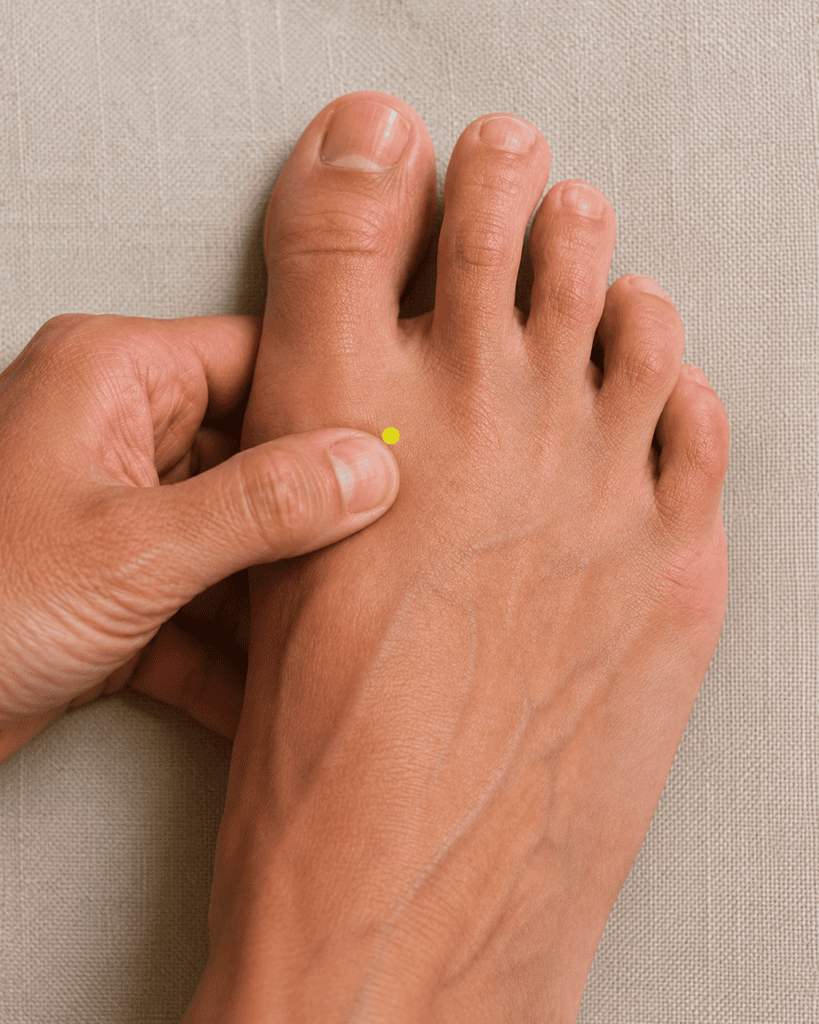
3. Press on LR3 on top of your foot for Liver Qi movement. LR3 sits on the top of the foot in the webbing between the first and second toes, about two finger-widths back from the web. Press firmly with your thumb for two to three minutes on each foot. LR3 is called “Great Rushing” and moves Liver Qi.
The point specifically addresses the 1am to 3am waking pattern in Chinese medicine. This time corresponds to the Liver in the traditional Chinese medicine clock, and Liver Qi Stagnation from unresolved emotional patterns of the day frequently produces waking during these hours. LR3 addresses this pattern directly. Include LR3 as part of bedtime preparation if you consistently wake between 1am and 3am.
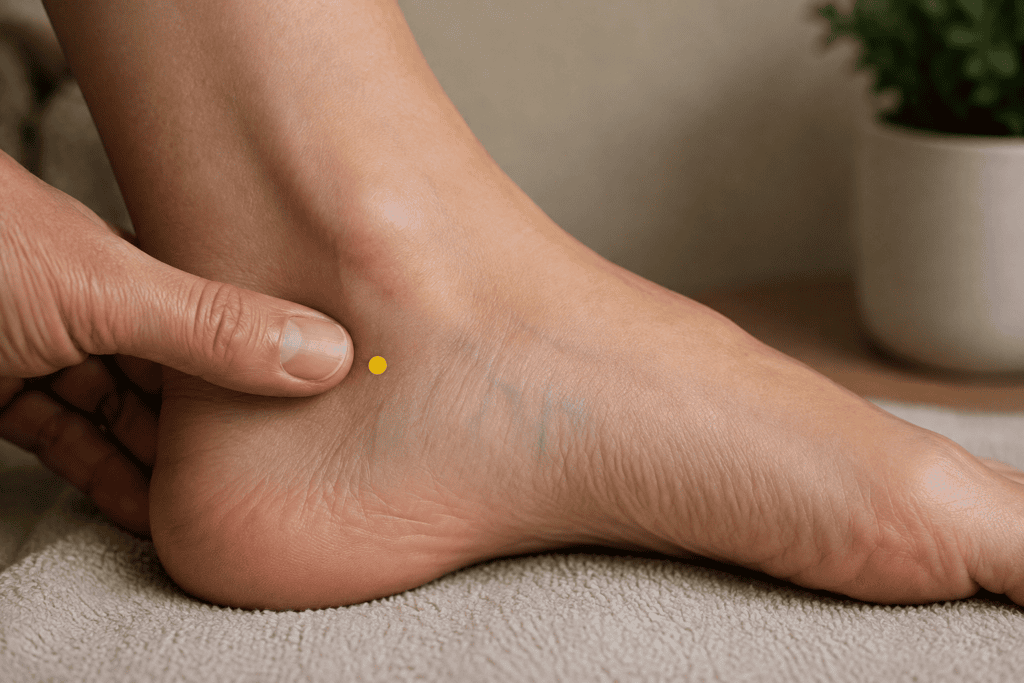
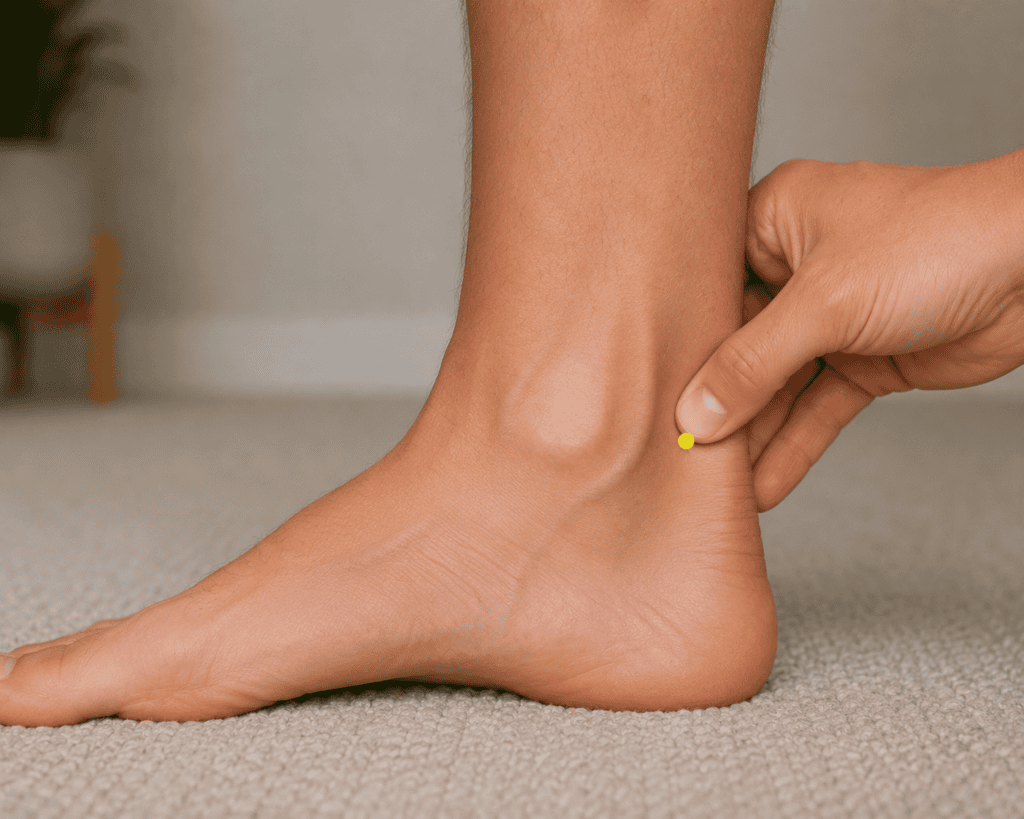
4. Press on KI6 below your inner ankle for the Yin Heel Vessel. KI6 sits directly below the inner ankle bone, in the depression on the underside of the ankle bone. Press firmly with your thumb for two to three minutes on each ankle. KI6 is called “Zhaohai” or “Shining Sea” and is the opening point of the Yin Heel Vessel.
The Yin Heel Vessel governs the sleep-wake cycle in Chinese medicine. When the Yin Heel Vessel is out of balance, sleep maintenance suffers. KI6 supports this vessel and addresses the underlying pattern behind waking during the night. The point works particularly well for waking with racing thoughts and inability to settle back to sleep.
5. Press on SP6 above your inner ankle for the three Yin meeting point. SP6 sits about four finger-widths above the inner ankle bone, just behind the shinbone. Press firmly with your thumb for two to three minutes on each leg. SP6 is called “Three Yin Intersection” and is where the Spleen, Liver, and Kidney meridians meet.
The point supports the Yin patterns that maintain sleep throughout the night. In Chinese medicine, sleep is a Yin function that requires adequate Yin resources to sustain. SP6 tonifies the Yin across three meridians simultaneously. This supports the deep patterns underlying chronic sleep maintenance issues, particularly the 3am to 5am waking that reflects Yin depletion. SP6 is contraindicated during pregnancy.
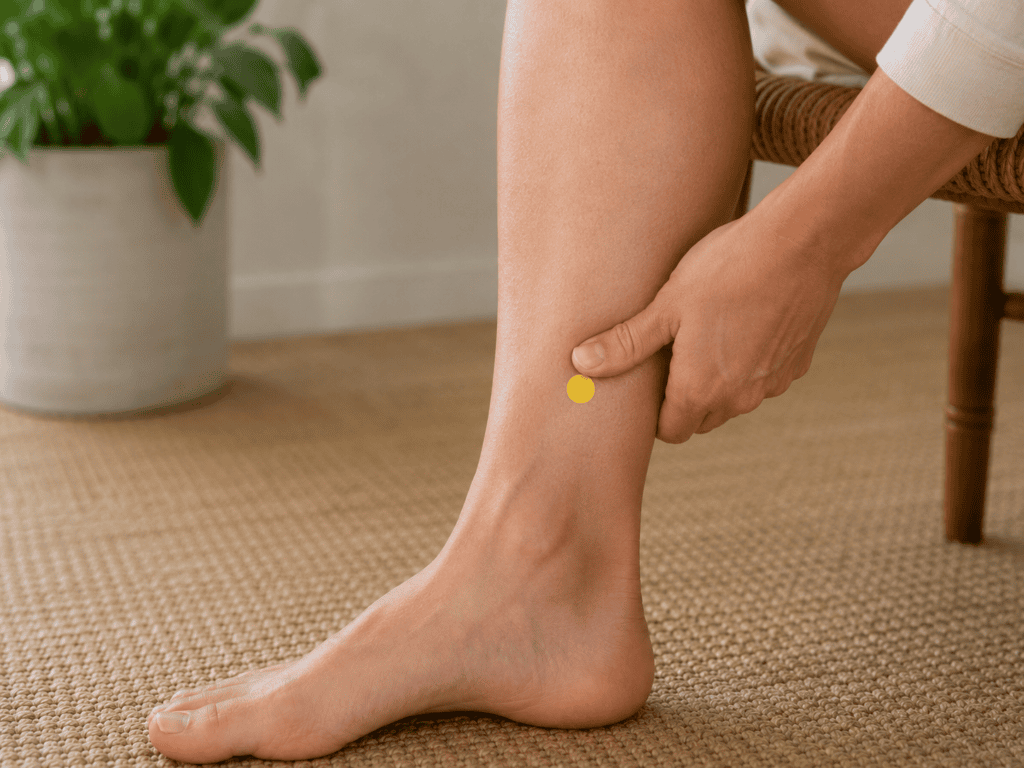
6. Press on KI3 behind your inner ankle for Kidney essence support. KI3 sits in the depression behind the inner ankle bone, between the ankle bone and the Achilles tendon. Press firmly with your thumb for two to three minutes on each leg. KI3 tonifies Kidney essence.
The point addresses the constitutional Kidney depletion that produces the 3am to 5am waking pattern common in perimenopause, menopause, and long-standing sleep issues. Chronic sleep maintenance difficulty depletes the Kidneys over time, and KI3 supports the constitutional foundation that quality sleep requires.
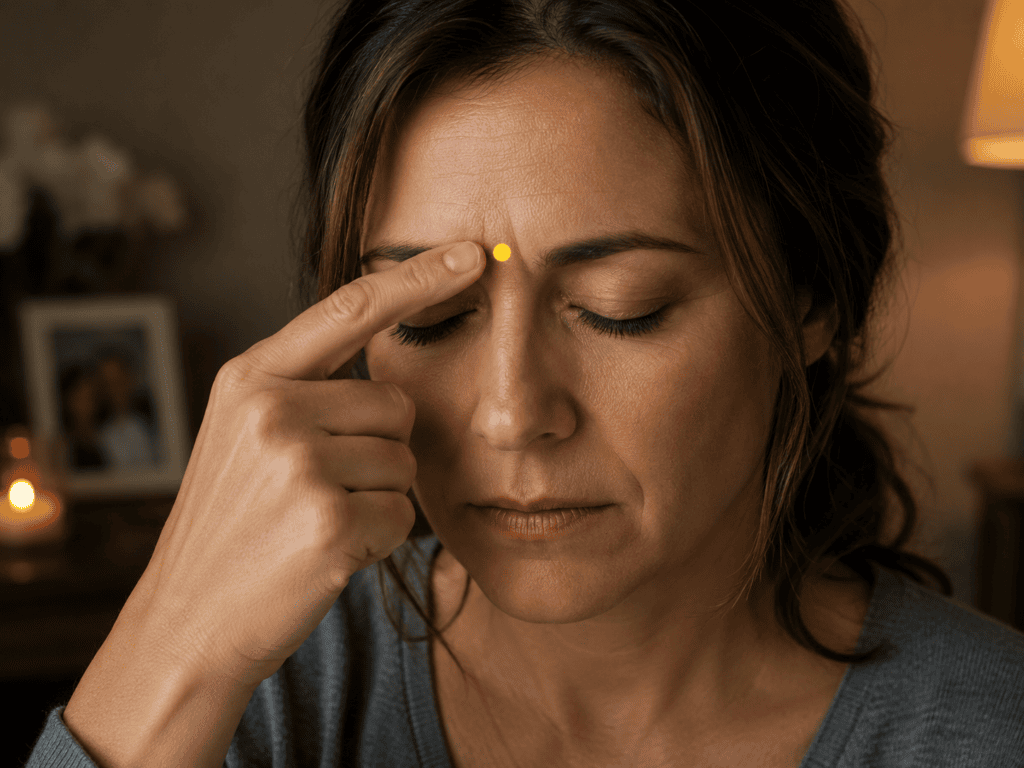
7. Press on Yintang between your eyebrows for calming the mind. Yintang sits in the small hollow directly between the eyebrows, above the bridge of the nose. Press gently with your fingertip for two to three minutes. Yintang activates the parasympathetic nervous system directly.
The point works quickly to shift the nervous system state when you wake in the middle of the night with mental activation. Yintang can be pressed while lying in bed to calm the racing thoughts that keep you awake once you have woken. Even one minute of pressure produces noticeable shifts.
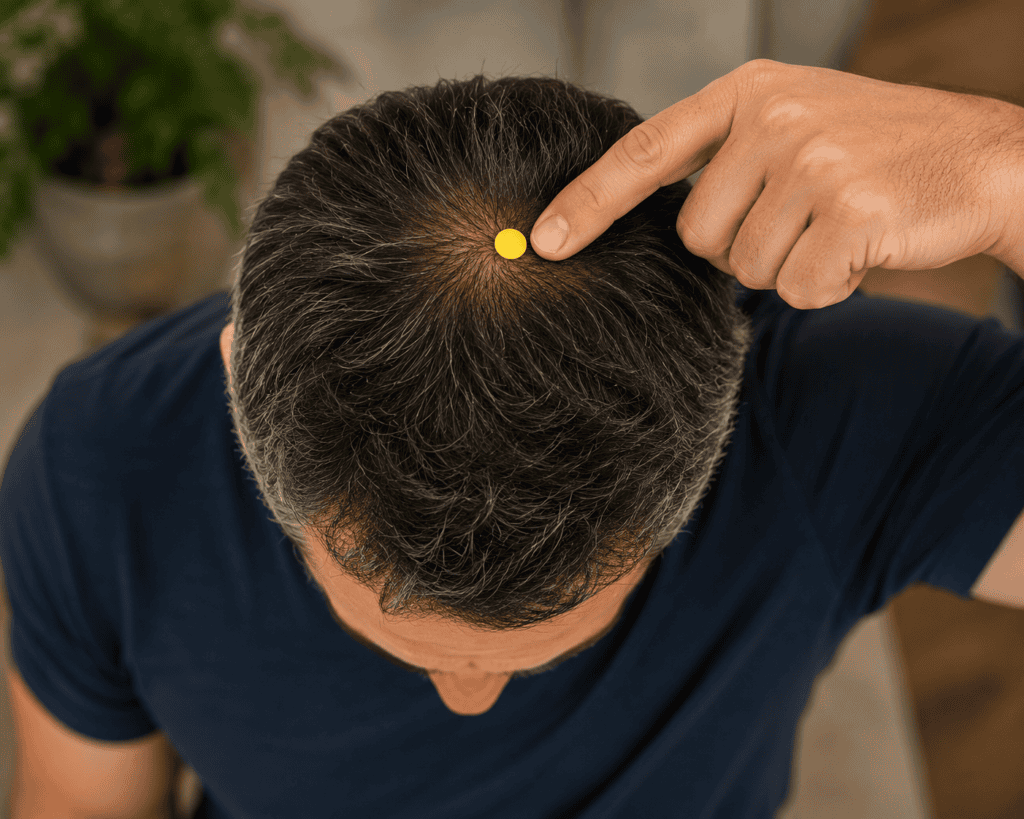
8. Press on GV20 at the crown of your head for grounding. GV20 sits at the crown of the head, in the small hollow at the top of the head roughly midway between the ears. Press gently with your fingertips for two to three minutes. GV20 is called “Baihui” or “Hundred Meetings” and grounds the nervous system.
The point pulls scattered mental energy downward from the head. Middle-of-the-night waking often involves the mind spiraling through problems, plans, and worries that feel urgent at 3am but resolve to less urgent status by morning. GV20 grounds this scattered activation and supports the return to sleep.
Why These Acupressure Points Work
Difficulty staying asleep can stem from different imbalances and factors. The specific time you wake up may reveal the underlying cause. In Chinese medicine, certain hours are linked to particular organ systems, and waking during these times can suggest issues with those organs. For example, waking between 1am and 3am often indicates Liver Qi Stagnation, while waking between 3am and 5am may relate to Lung and Yin deficiencies. Frequently waking up throughout the night can also be a sign of Blood deficiency.
Acupressure works on several of these patterns at once:
- The Shen calming points (HT7, Anmian) directly address the mental activation that keeps you awake once you have woken.
- The Liver Qi moving point (LR3) addresses the 1am to 3am waking pattern from unresolved emotional stagnation.
- The Yin Heel Vessel point (KI6) addresses the underlying sleep-wake cycle regulation.
- The Yin tonification points (SP6, KI3) support the deep Yin and Kidney resources that sleep maintenance requires.
- The mind calming points (Yintang, GV20) address the racing thoughts and mental scattering that keep you awake.
Chronic stress increases cortisol, disrupting sleep and causing people to wake up in the middle of the night mentally alert, which acupressure can help address.
How to Use These Acupressure Points
- For waking at night and unable to sleep, press HT7, Anmian, and Yintang together in bed. Press each point for 2-3 minutes while breathing slowly for quick relief.
- For nightly prevention as part of bedtime preparation, working through the full eight-point protocol before sleep supports the patterns that prevent middle-of-the-night waking. Start the protocol 30 to 45 minutes before intended sleep time.
- For 1am to 3am waking specifically, LR3 pressed before bed addresses the Liver Qi Stagnation pattern that produces this timing. Include LR3 as a nightly preventive point if you consistently wake during these hours.
- For 3am to 5am waking specifically, KI3, KI6, and SP6 pressed before bed address the Yin and Kidney depletion patterns that produce this timing. Include these three points as nightly preventive points if you consistently wake during these hours.
- For waking with racing thoughts, Yintang and GV20 pressed together address the mental scattering that keeps you awake. These points can be worked while lying in bed.
- For waking with anxiety or chest tension, HT7 and Anmian pressed together address the Heart-Shen patterns.
- Gentle sustained pressure works best for the head and face points (Yintang, GV20, Anmian). Firm sustained pressure works well for the wrist, leg, ankle, and foot points.
Combining acupressure with simple and holistic sleep techniques enhances the effectiveness and results:
- Consistent bedtime and wake time even on weekends.
- Dark room throughout the night including reducing exposure to any light if you wake.
- Cool room temperature (65 to 68 degrees works well for most people).
- Avoiding checking the clock when you wake, which often intensifies the anxiety about not sleeping.
- Reduced alcohol which specifically fragments sleep by producing middle-of-the-night waking as it metabolizes.
- Reduced caffeine after 2pm.
- Adequate protein at dinner to support blood sugar stability through the night.
- Not eating large meals close to bedtime.
- Wind-down routine that signals to the body that sleep is coming.
When to Get Professional Help
The tools above help with everyday sleep issues, but they’re not a solution for serious sleep disorders.
Seek medical assistance for chronic sleep issues that go on for more than three months despite making changes to your routine, loud snoring or gasping during sleep that may indicate sleep apnea, waking with headaches or feeling unrefreshed despite adequate sleep time, sleep issues accompanied by depression or anxiety that is not addressed, sleep issues with unexplained weight changes or other symptoms suggesting thyroid or hormonal conditions, and any sleep pattern that significantly affects daily life.
Sleep apnea requires a medical diagnosis and proper treatment. If your partner reports that you snore loudly, gasp for air, or stop breathing during sleep, or if you wake feeling unrefreshed despite adequate sleep, get an evaluation for sleep apnea from your medical professional. Sleep apnea often shows up as waking up at night, which people usually attribute to other causes.
For patients dealing with perimenopause or menopause sleep issues specifically, hormonal changes contribute to sleep issues; it’s advisable to get an evaluation with a physician or specialist.
Many patients dealing with chronic sleep issues also experience anxiety, stress, and depression that overlap with the patterns underlying sleep difficulties.
Above and Beyond Acupuncture offers acupuncture, cupping, and lifestyle coaching at the North Frank Lloyd Wright Boulevard location in Scottsdale.
Schedule an appointment online or call us today to start your healing journey.
The points above are only as effective as the technique used to apply them. Where to press, how firmly, and for how long all affect the result. For a full breakdown of how to perform acupressure properly at home, read Performing Acupressure in 3 Easy Steps.
About the Publisher
Paul Kerzner, L.Ac., is a licensed acupuncturist and board-certified herbalist, as well as the founder of Above and Beyond Acupuncture in Scottsdale. His own journey from chronic patient to practicing acupuncturist shapes his commitment to providing honest, clinically grounded information about acupuncture and Traditional Chinese Medicine. Learn more about Paul and his clinical approach on the About Us page.