Key Takeaways
- Acupressure supports weight loss by addressing underlying issues like cravings, stress eating, and slow digestion, but it doesn’t directly cause fat loss.
- Nine specific acupressure points help with weight-related patterns: ST36 for digestion, ST40 for dampness, CV12 for fullness, and others for emotional and fluid regulation.
- Using these points regularly, along with proper nutrition and movement, enhances weight loss efforts, but consistency is key.
- Seek professional help if experiencing unexplained weight changes or emotional issues related to eating.
- Acupressure techniques matter; effective application influences the results, so proper technique is essential.
If you’re on a weight loss journey, you’ve probably come across acupressure as a potential tool to speed up the process. Here’s the honest truth: acupressure won’t magically melt away fat, and simply pressing points won’t make weight fall off.
It can be a valuable practice that supports your efforts by addressing patterns that make weight loss harder – such as cravings, increased appetite, stress eating, sluggish digestion, and fluid retention that affects progress. Combined with sensible nutrition and exercise, acupressure is an accessible, easy-to-use practice you can do at home.
Just remember, while it isn’t a complete weight-loss method on its own, it can support and boost your overall efforts.
This article introduces nine helpful acupressure points, showing you where to find them and explaining the benefits of each one. For a visual guide on how a licensed acupuncturist uses these points in treatment, check out ‘Top Acupuncture Points for Weight Loss.’ If you’re curious about whether acupuncture can help you lose weight, ‘Can Acupuncture Help Me Lose Weight?‘ offers an honest clinical perspective to consider in your wellness plan.
An important note before starting: Acupressure supports appetite, digestion, and stress related to weight. It doesn’t replace healthy eating, exercise, or medical care. If you have unexplained weight changes without diet or activity changes, see a doctor to rule out thyroid, hormonal, or other medical issues.
Here are nine acupressure points that can help:
What Acupressure Points to Press and Why
Each acupressure point addresses a different aspect of the weight pattern. You can use them individually when cravings or stress rise, or work through the full protocol daily for maintenance.
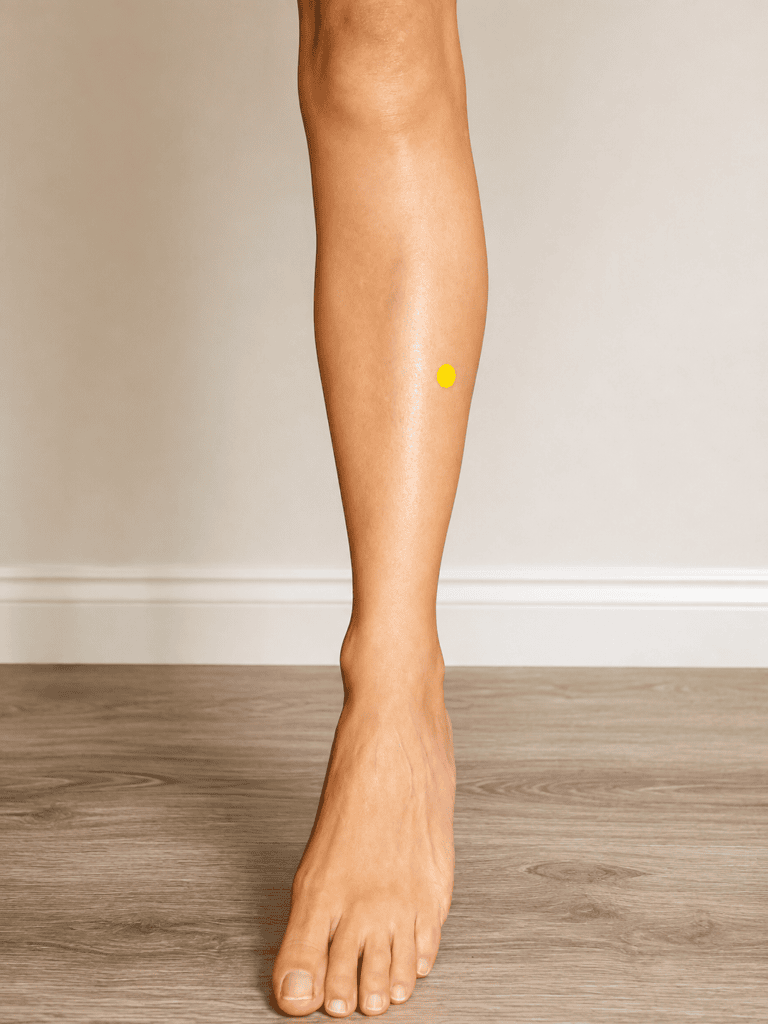
1. Press on ST36 below your knee for digestion and satiety. ST36 sits about four finger-widths below the kneecap, one finger-width to the outside of the shinbone in the muscular depression there. Press firmly with your thumb for one to two minutes on each leg. ST36 is one of the most-used points in all of acupressure.
For weight loss, ST36 regulates digestion, supports a healthy metabolism, and helps normalize appetite and satiety, so fullness registers as it should. It also boosts overall energy, which supports the activities that weight loss depends on. This is a foundational point to include daily.
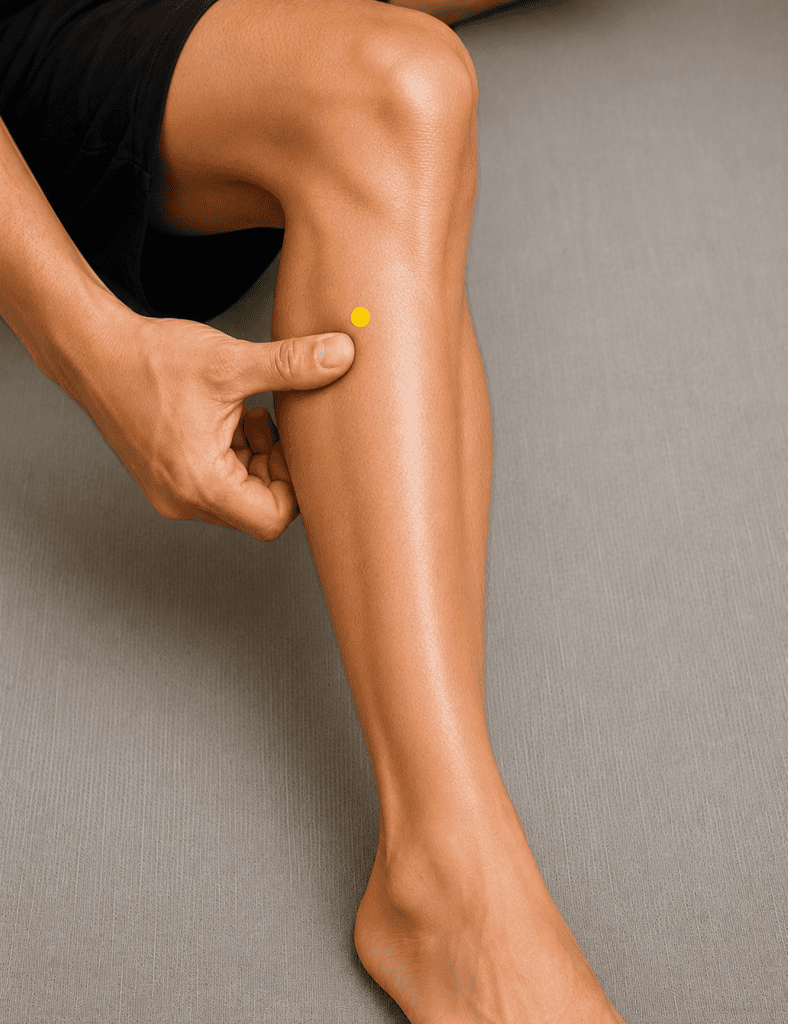
2. Press on ST40 on your outer lower leg for resolving dampness. ST40 sits on the outer lower leg, roughly midway between the knee and the ankle, about two finger-widths to the outside of the shinbone. Press firmly with your thumb for one to two minutes on each leg. ST40 is called “Fenglong” and is the classic point for resolving phlegm and dampness.
In the Chinese medicine view of weight, dampness and phlegm accumulation underlie weight retention, heaviness, and a sluggish metabolism. ST40 is the single most important point for this pattern, which is why almost any weight-focused practice includes it. If you press only a few of these points, make ST40 one of them.
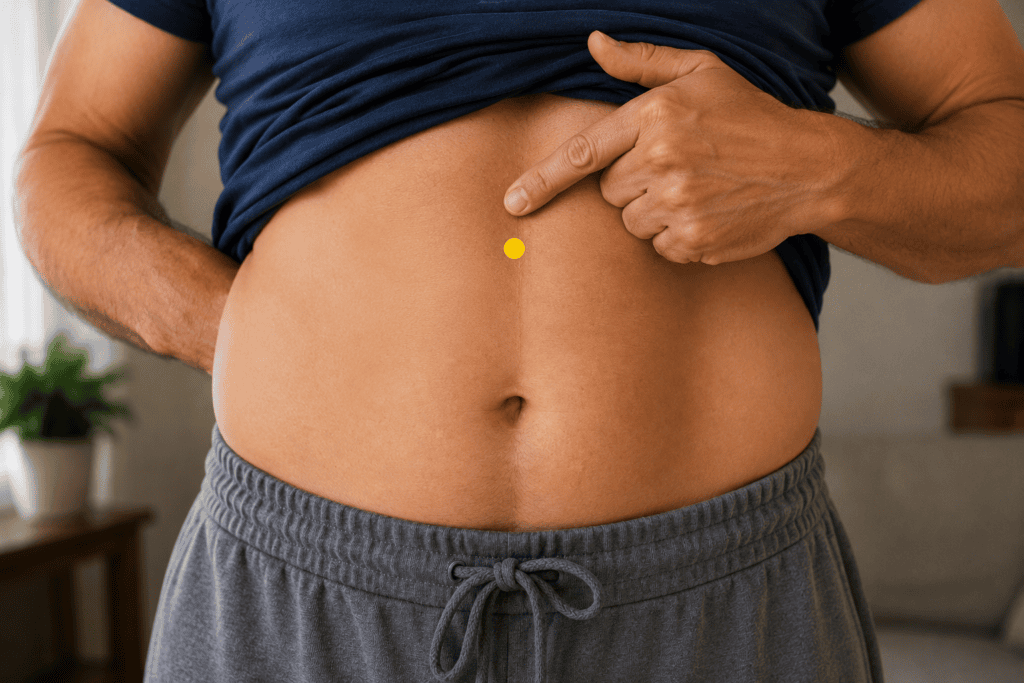
3. Press on CV12 on your upper abdomen for the Stomach gathering point. CV12 sits on the midline of the upper abdomen, about halfway between the bottom of the breastbone and the navel. Press gently with your fingertips for one to two minutes. CV12 is called “Zhongwan” and is the gathering point of the Stomach.
The point supports digestion and the sensation of comfortable fullness, and it settles the digestive discomfort that often comes with changing how you eat. Use gentle pressure here.
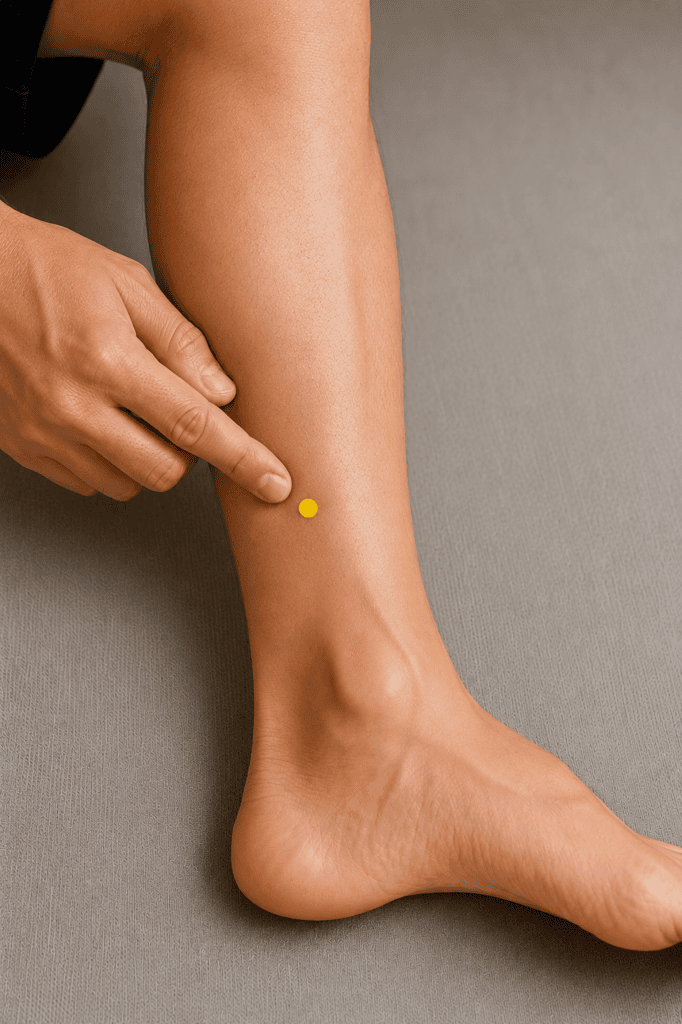
4. Press on SP6 above your inner ankle for the three Yin meeting point. SP6 sits about four finger-widths above the inner ankle bone, just behind the shinbone. Press firmly with your thumb for one to two minutes on each leg. SP6 is where the Spleen, Liver, and Kidney channels meet.
The point supports the Spleen’s handling of fluids and dampness, helps regulate the hormonal patterns that affect weight, and addresses fluid retention that can mask real progress. SP6 is avoided during pregnancy.
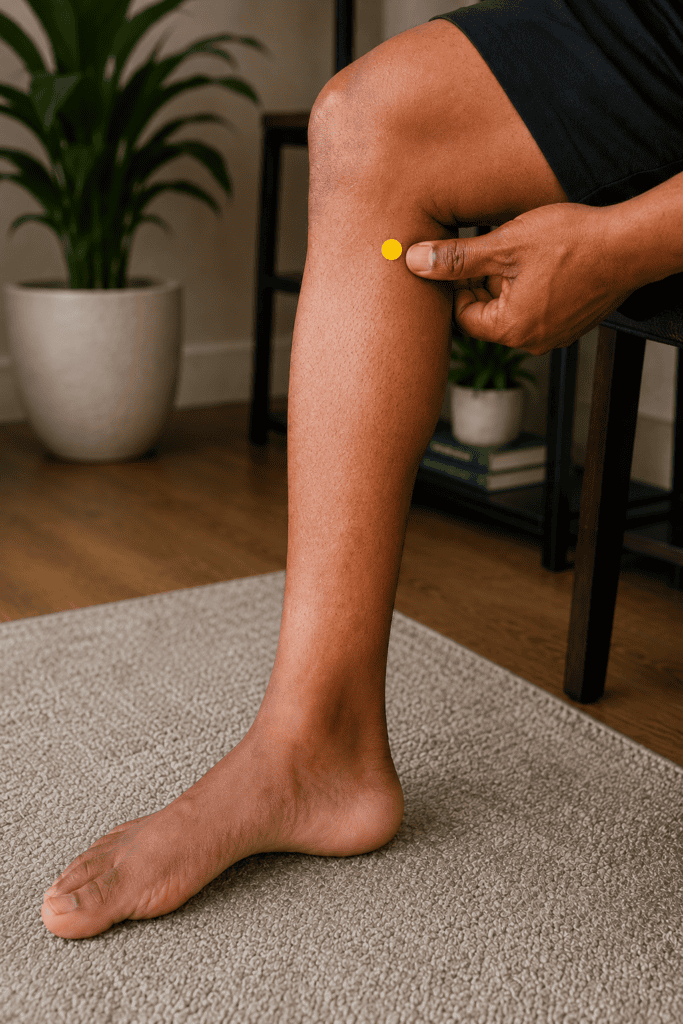
5. Press on SP9 on your inner lower leg for resolving dampness and fluid. SP9 sits on the inner lower leg, in the depression just below the inner side of the knee where the shinbone curves. Press firmly with your thumb for one to two minutes on each leg. SP9 is called “Yinlingquan.”
The point is one of the primary points for resolving dampness and draining excess fluid, which makes it especially useful for the heavy, waterlogged, puffy pattern that many people carry. SP9 works well combined with SP6 and ST40 for comprehensive damp resolution.
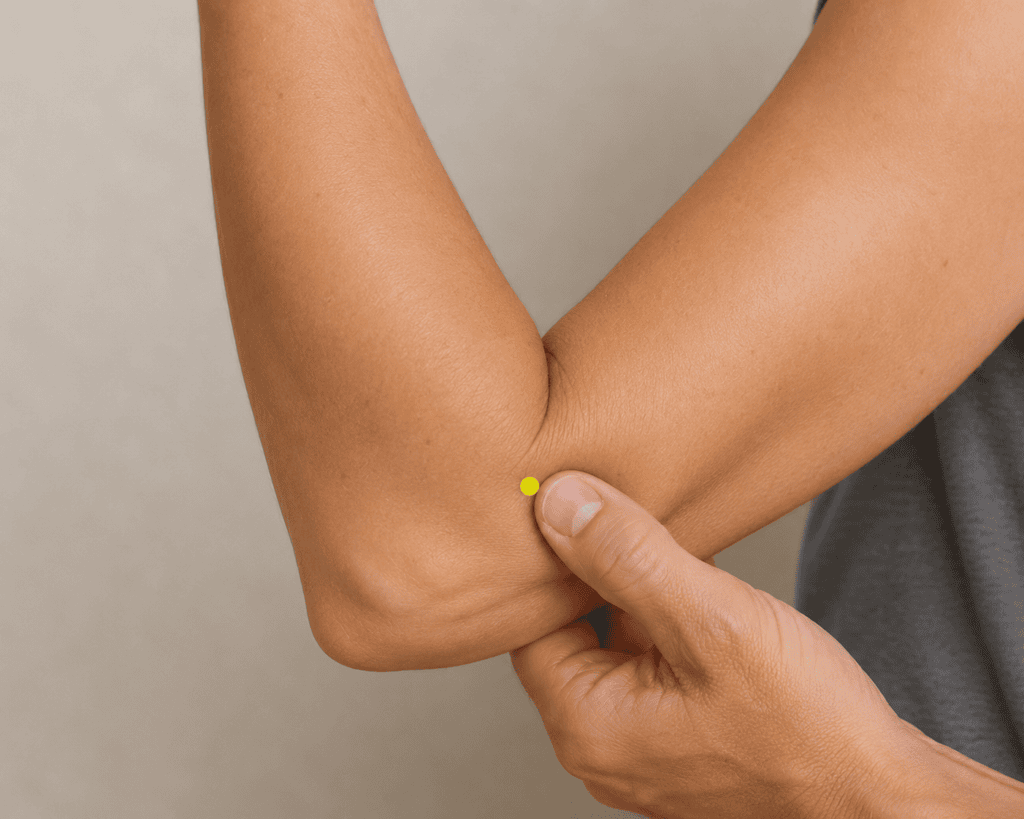
6. Press on LI11 at your elbow crease for clearing heat and supporting metabolism. LI11 sits at the outer end of the elbow crease when the arm is bent, in the depression at the end of the crease. Press firmly with the thumb of the opposite hand for one to two minutes on each arm. LI11 is called “Quchi.”
The point clears heat and supports elimination and healthy metabolism. It is particularly useful when a Stomach-heat pattern drives excessive hunger and a constant appetite that never quite settles.
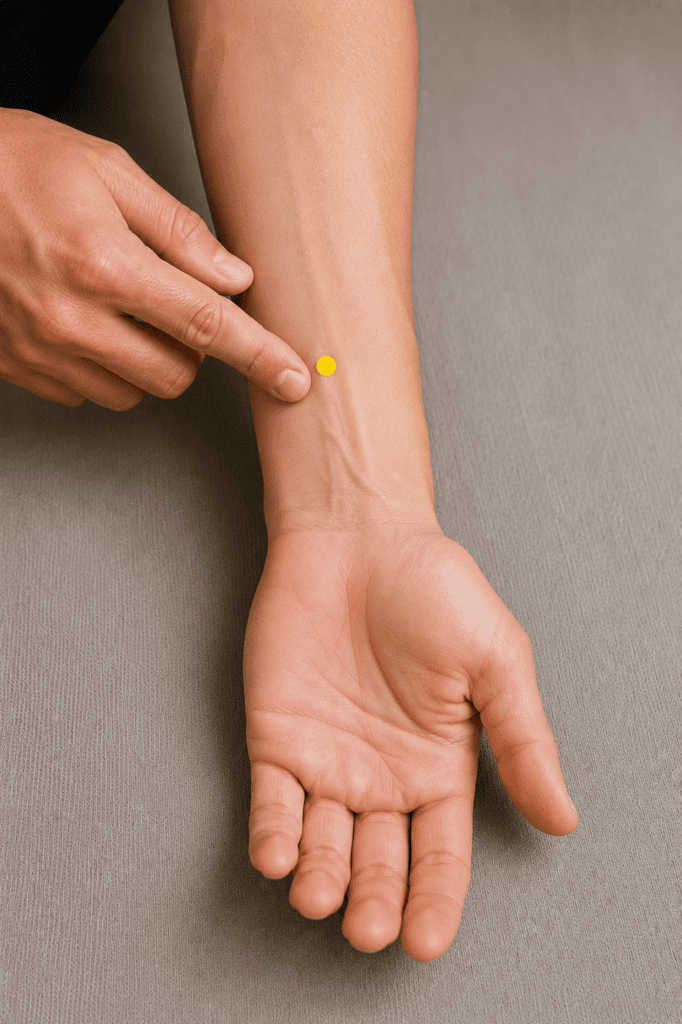
7. Press on PC6 on your inner forearm for calming stress eating. PC6 sits about three finger-widths above the inner wrist crease, between the two tendons in the center of the forearm. Press firmly with your thumb for one to two minutes on each arm. PC6 is called “Neiguan” or “Inner Pass.”
The point calms the Shen and the emotional intensity that drives stress eating and late-night eating. For the very common pattern of eating to soothe anxiety rather than actual hunger, PC6 addresses the emotional root rather than the food itself. Press it when a craving is clearly emotional rather than physical.
8. Press on Yintang between your eyebrows for calming the mind. Yintang sits in the small hollow directly between the eyebrows, above the bridge of the nose. Press gently with your fingertip for one to two minutes. Yintang activates the parasympathetic nervous system directly.
The point calms the mind and reduces the stress and cortisol patterns that both drive emotional eating and encourage the body to store weight, particularly around the midsection. Yintang works well combined with PC6 in moments when stress and cravings rise together.

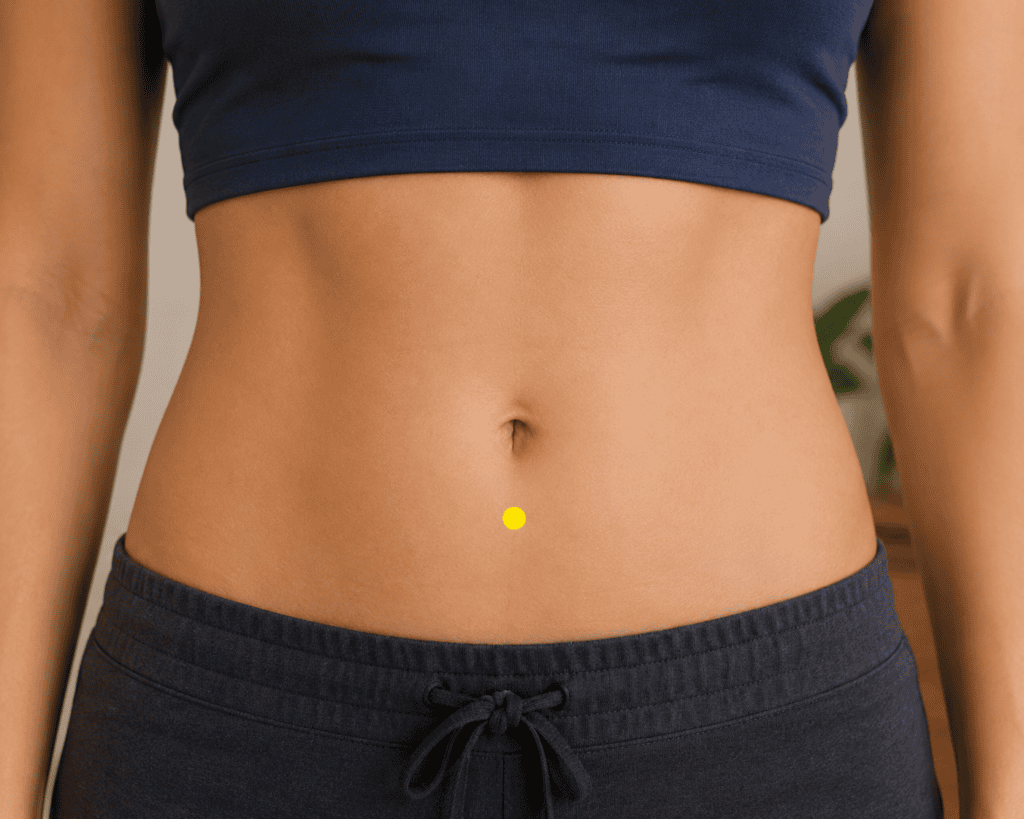
9. Press on CV6 on your lower abdomen for the Sea of Qi. CV6 sits on the midline of the lower abdomen, about two finger-widths below the navel. Press gently with your fingertips for one to two minutes. CV6 is called “Qihai” or “Sea of Qi.”
The point provides constitutional and metabolic support, strengthening the deep energy that a slow metabolism reflects. Use gentle pressure here. CV6 supports the overall vitality that sustained weight loss requires.
Why These Acupressure Points Work
In Chinese medicine, weight isn’t just about calories. It reflects the unique patterns and imbalances within our bodies.
The Spleen plays a key role in transforming food and fluids, and when it’s weak, dampness can build up, leading to weight retention and a feeling of heaviness. The Stomach influences our appetite, and when it overheats, hunger can feel never-ending. The Liver governs the smooth flow of Qi, and when stress causes stagnation, it can lead to emotional eating. The Kidneys oversee constitutional patterns, which gradually degrade over time.
Acupressure works on several of these patterns at once:
- The digestion and appetite points (ST36, CV12) support healthy digestion and normal satiety.
- The damp-resolving points (ST40, SP6, SP9) address the phlegm and fluid accumulation that underlie weight retention in the Chinese medicine view.
- The heat-clearing point (LI11) addresses the excessive hunger of a Stomach-heat pattern.
- The calming points (PC6, Yintang) address stress eating and the cortisol patterns that drive central weight gain.
- The constitutional point (CV6) supports the deep metabolic energy that sustained weight loss requires.
How to Use These Acupressure Points
For cravings as they rise, PC6 and Yintang pressed together produce the fastest response, particularly when the craving is driven by stress rather than real hunger. Press for a few minutes and breathe slowly before deciding whether you are actually hungry.
- For daily maintenance, working through the full nine-point protocol once or twice a day supports the underlying patterns over time. Consistency matters far more than intensity.
- For the heavy, puffy, water-retentive pattern, ST40, SP6, and SP9 pressed together target the dampness and fluid retention directly.
- For excessive constant hunger, ST36, CV12, and LI11 pressed together support satiety and clear the Stomach heat that drives overeating.
- For emotional and stress eating specifically, PC6 and Yintang are the points to reach for in the moment.
- Firm pressure works well for the leg, arm, and forearm points. Gentle pressure is better for the abdominal points and Yintang.
Pairing acupressure with a strong holistic foundation of healthy weight loss produces results:
- Sensible nutrition that reduces processed foods and refined sugar.
- Regular movement.
- Adequate sleep, since poor sleep drives cravings and weight gain.
- Stress management.
- Adequate hydration.
- Realistic expectations and patience.
Acupressure makes the process easier by addressing cravings, stress eating, digestion, and fluid retention. It does not do the work for you.
When to Get Professional Help
Acupressure supports healthy weight loss. It does not address medical causes of weight changes.
Seek medical evaluation for unexplained weight gain or loss that occurs without changes in diet or activity, weight changes accompanied by fatigue, hair loss, or temperature sensitivity that may indicate a thyroid condition, and any rapid or dramatic weight change. A physician can rule out thyroid dysfunction, hormonal conditions, medication effects, and other medical causes.
Many patients working on weight also experience anxiety, stress, and depression that lead to emotional eating.
Above and Beyond Acupuncture offers acupuncture, cupping, and lifestyle coaching at the North Frank Lloyd Wright Boulevard location in Scottsdale.
Schedule an appointment online or call us today to start your healing journey.
The points above are only as effective as the technique used to apply them. Where to press, how firmly, and for how long all affect the result. For a full breakdown of how to perform acupressure properly at home, read Performing Acupressure in 3 Easy Steps.

About the Publisher
Paul Kerzner, L.Ac., is a licensed acupuncturist and board-certified herbalist, as well as the founder of Above and Beyond Acupuncture in Scottsdale. His own journey from chronic patient to practicing acupuncturist shapes his commitment to providing honest, clinically grounded information about acupuncture and Traditional Chinese Medicine. Learn more about Paul and his clinical approach on the About Us page.