
Key Takeaways
- Acupressure can be done independently, and with the right guidebook, beginners can learn to locate pressure points and treat themselves.
- The article recommends five key books that offer clear instructions on acupressure techniques and point locations.
- ‘Acupressure’s Potent Points’ by Michael Reed Gach is a classic and a comprehensive starter guide for various ailments.
- ‘Acupressure Made Simple’ by Deborah Bleecker focuses on practical, effective techniques for quick treatment of common issues.
- Highlighting the importance of self-care, these books help individuals manage their health through acupressure without scheduling appointments.
One of acupressure’s greatest advantages is that you don’t need a practitioner to get started. All you need are your hands, some patience, and a reliable manual. A well-crafted book can be a beginner’s most valuable resource, showing point locations, how much pressure to apply, and which points to target for specific issues. The right book turns an interest into a practical skill you can develop with ease.
The five books below have earned their place through easy to understand instruction, accurate point location, and genuine respect for the reader. Some are decades old and still in print because nothing has replaced them. All of them share the same goal this practice is built on: putting self-care tools into the hands of ordinary people, no appointment needed.
To get a solid understanding of acupressure before you try it, ‘What Is Acupressure?‘ offers a great overview of its origins and fundamentals.
1. Acupressure’s Potent Points by Michael Reed Gach
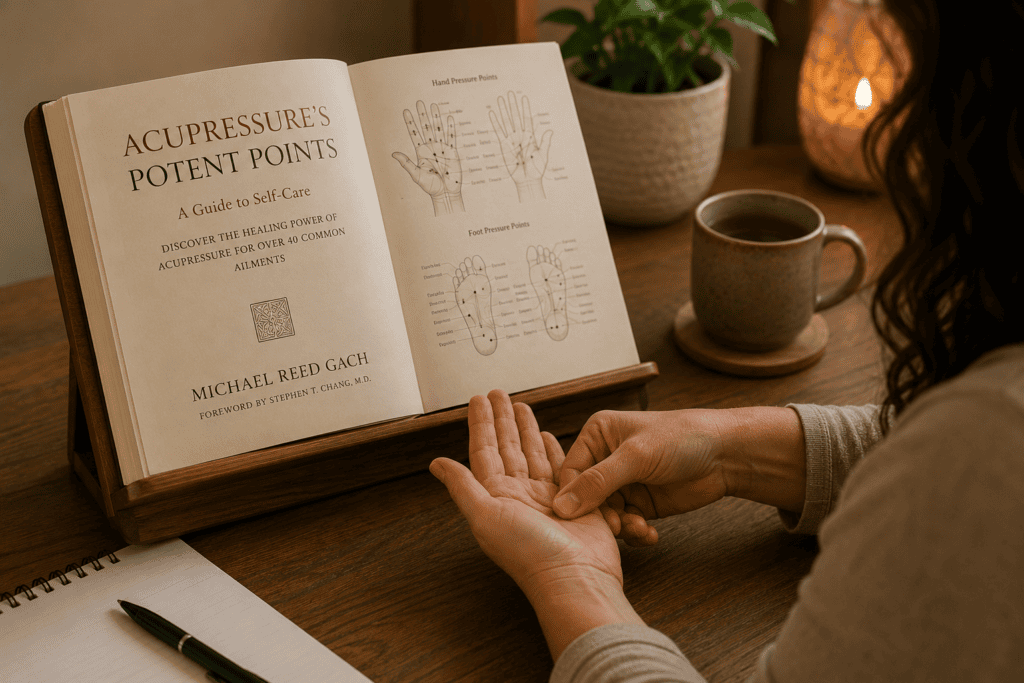
If there’s a classic in this field, it’s this one.
Michael Reed Gach founded the Acupressure Institute in 1976 and spent decades teaching the modality. This book distills that experience into the most recommended acupressure guide available. It addresses more than forty common issues, from headaches and insomnia to back pain and digestive problems, and features pressure-point maps and clear, step-by-step instructions for each. The abundance of photographs and illustrations, paired with warm, approachable writing, makes it easy to follow. For most beginners, this is the ideal starting point. It feels less like a textbook and more like a knowledgeable friend guiding you to the right points.
2. Acupressure Made Simple by Deborah Bleecker
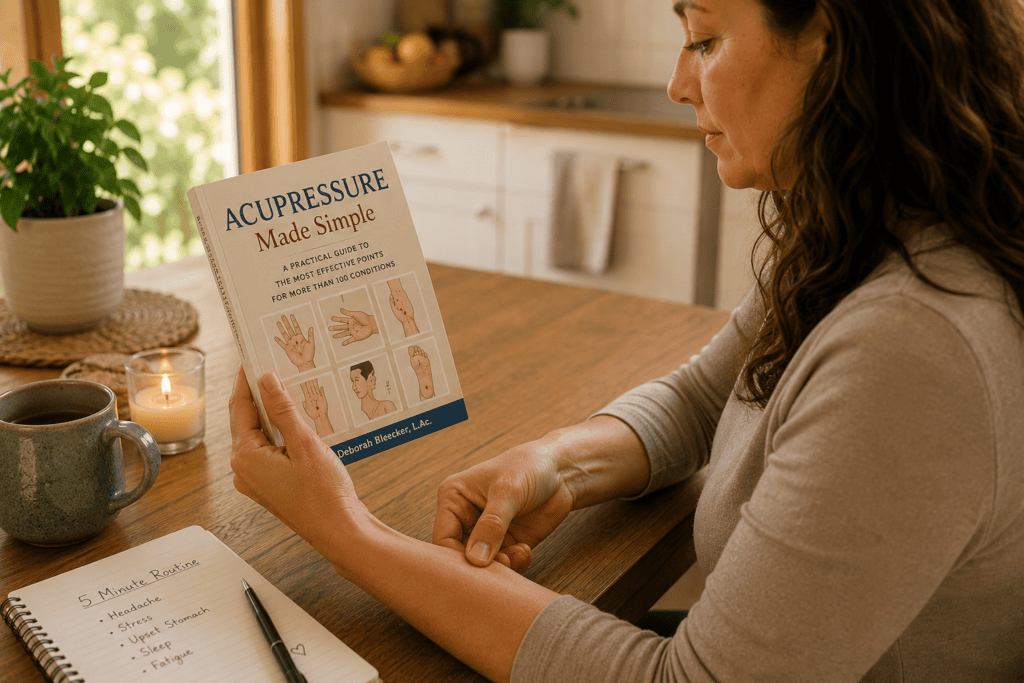
Deborah Bleecker, a licensed acupuncturist with a master’s in Oriental Medicine, demonstrates her clinical expertise in her point selection. Rather than overwhelming readers with every option, she focuses on the most effective points for common ailments and guides quick, five-minute treatments. The book’s strength is its practicality: it’s organized around real problems so you can find solutions quickly. Bleecker also wrote the Acupuncture Points Handbook, a straightforward reference on the location and function of over 400 points for those who want to learn more. While the two books complement each other well, Acupressure Made Simple is the best place to start.
3. Acupressure for Everybody by Cathryn Bauer
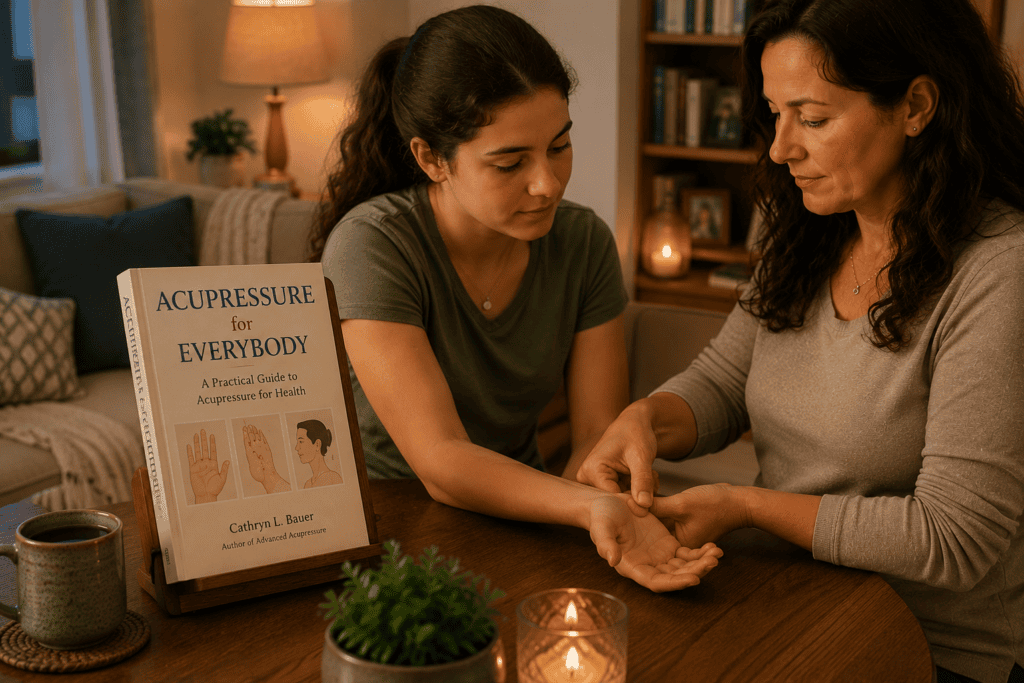
The title truly captures the spirit of this book. Bauer crafted it with everyone in mind, from children to the elderly, presenting acupressure as an accessible first-aid tool right at your fingertips. It covers over a hundred common issues and thoughtfully emphasizes safety, making sure you know when it’s best to seek traditional medical help instead of relying solely on self-treatment. This honest and grounded perspective really makes it stand out among other books. A small note: some readers might find the point illustrations more difficult to follow than those in Gach’s book. In that case, pairing this manual with a more detailed acupressure point diagram might help. Overall, with its approach, scope, and guidance, this book remains a truly valuable resource.
4. Acupressure for Common Ailments by Chris Jarmey and John Tindall
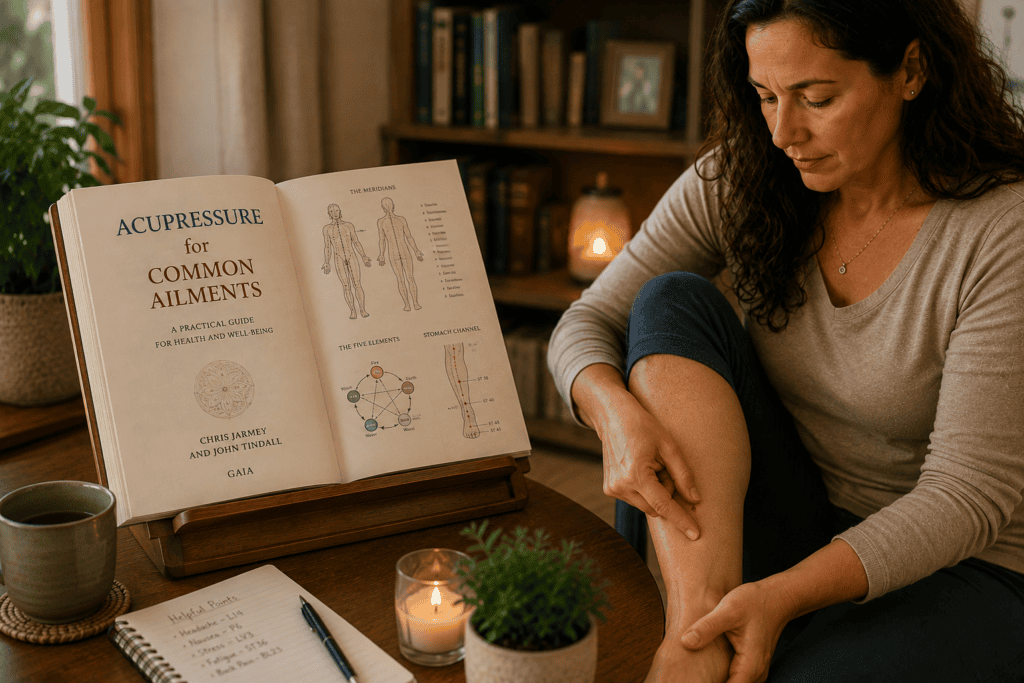
Part of the Gaia series, this compact yet dense book by respected shiatsu and bodywork teacher Chris Jarmey explores channels and points. It begins with basic concepts of Oriental medicine and then organizes treatments by body system – respiration, digestion, and circulation – making it easy to find relevant information. Clear illustrations help locate points. It’s ideal for those who want theoretical understanding without a full textbook.
5. Acupressure for Emotional Healing by Michael Reed Gach and Beth Ann Henning
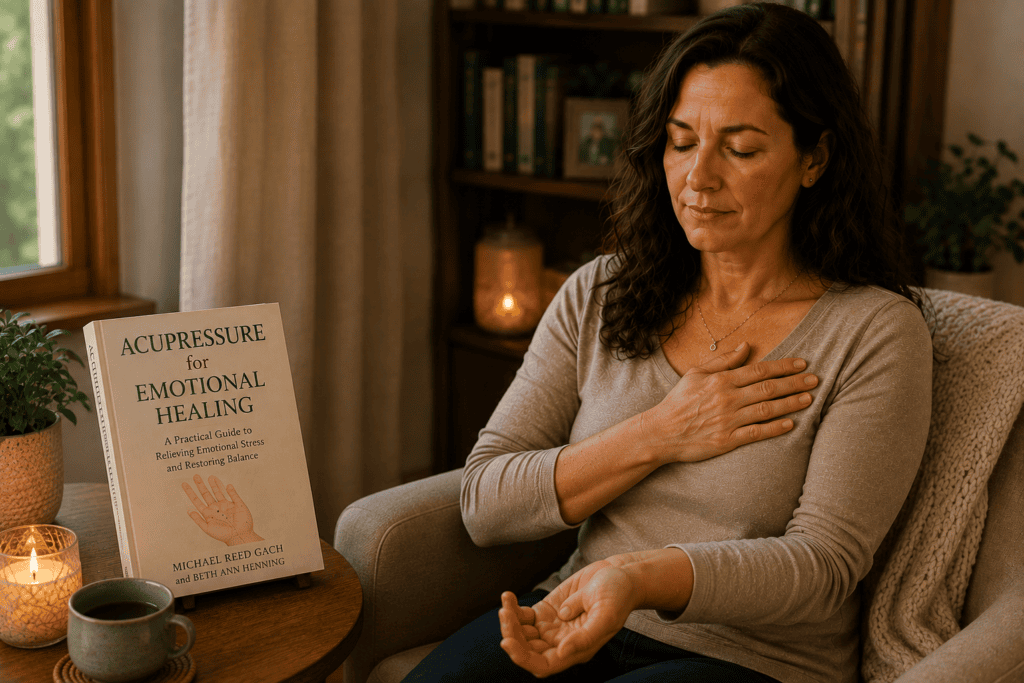
Most acupressure books focus on physical issues, but this book by Gach and Beth Ann Henning emphasizes emotional patterns like anxiety, grief, and insomnia from stress, trauma, and physical tension. It provides point combinations for emotional states, along with breathing and awareness practices to enhance effects. Ideal for those seeking emotional well-being and physical relief, it complements acupressure’s typical focus on pain, stress, and emotional issues.
For an objective view of the research, we recommend reading ‘Does Acupressure Really Work?‘ alongside this book.
A Note on Learning From Books
A book can teach you a lot, and for many, it’s all they need. However, it’s important to be honest about its limits. Point location requires practice, and even the best illustrations can’t match the feel of trained hands. If self-study isn’t giving you the results you want, or if you’re dealing with a specific health issue, working with a licensed acupuncturist can improve your accuracy in locating points and help you understand the patterns behind your symptoms. Many people combine both approaches – learning from books at home and seeking professional guidance to expand their understanding.
No matter your approach, the core goal stays the same: giving you practical tools to support your health. This is the essence of acupressure, which takes very little effort to start. ‘Performing Acupressure in 3 Easy Steps’ explains the basic technique and covers the essentials. Additionally, ‘What Is Acupressure Used For?‘ explores the variety of health issues you can address as you begin practicing.
Above and Beyond Acupuncture offers acupuncture, cupping, and lifestyle coaching at the North Frank Lloyd Wright Boulevard location in Scottsdale.
Schedule an appointment online or call us today to start your healing journey.
About the Publisher
Paul Kerzner, L.Ac., is a licensed acupuncturist and board-certified herbalist, as well as the founder of Above and Beyond Acupuncture in Scottsdale. His own journey from chronic patient to practicing acupuncturist shapes his commitment to providing honest, clinically grounded information about acupuncture and Traditional Chinese Medicine. Learn more about Paul and his clinical approach on the About Us page.