Key Takeaways
- Arthritis causes chronic pain, stiffness, and swelling, influenced by external factors like wind, cold, damp, and heat.
- Traditional Chinese Medicine treats arthritis as Bi syndrome and emphasizes Qi and Blood flow through acupressure to relieve symptoms.
- Acupressure points can naturally and effectively alleviate arthritis pain by targeting local joints and supporting overall health.
- For best results, combine acupressure with regular movement, a healthy diet, and adequate sleep.
- Seek professional medical help for severe symptoms or if arthritis diagnosis is unclear, as it may require specific treatment.
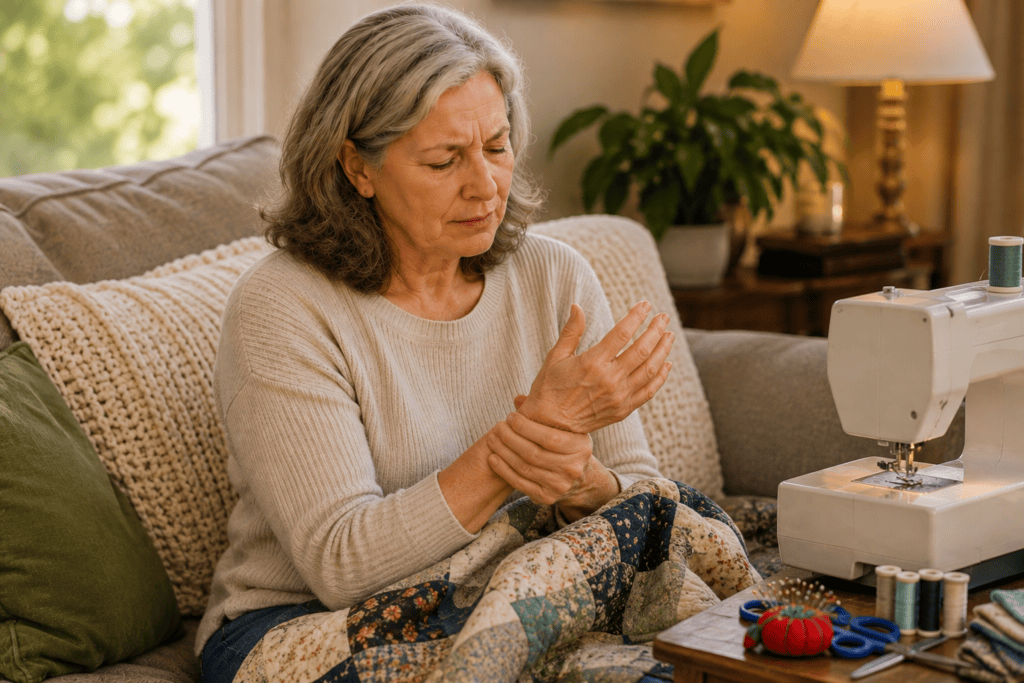
Arthritis is a leading cause of chronic pain, showing up in everyday moments: stiffness after waking, swollen knuckles that won’t fully close, knee pain when going down stairs, or a hip that locks in cold weather. Whether it’s osteoarthritis, which gradually wears down cartilage, or inflammatory types like rheumatoid arthritis, the daily impact is similar: pain, stiffness, swelling, and joints that lose their normal range of motion.
Traditional Chinese Medicine has long recognized this pattern as “Bi syndrome“, meaning painful obstruction. Symptoms like pain, stiffness, and swelling result from Qi and Blood being blocked in the channels and joints, preventing proper flow. This obstruction is often influenced by external factors that individuals can often identify in their own joints. Wind causes pain to shift from joint to joint and come and go; Cold makes the pain sharp, fixed, and worse in winter, easing with warmth; Damp causes heaviness, swelling, and numbness, especially in wet weather; Heat leads to red, hot, inflamed joints during active flare-ups. Most forms of arthritis involve a mixture of these factors, and recognizing which one is most prominent can guide how to treat the joints and what to use alongside pressure.
Acupressure cannot reverse arthritis joint damage or cure the root disease. However, it can help move Qi and Blood in affected joints, reducing pain and stiffness. It provides a way to manage flare-ups independently and supports the body in handling chronic conditions. When practiced regularly, it offers consistent relief, though it is not a permanent fix or cure.
For a closer look at how this condition is managed in clinical practice, ‘Can Acupuncture Treat Arthritis?‘ and “How Acupuncture Treats Arthritis” both explain the topic in much greater detail.
Here are acupressure points that can help:
What Acupressure Points to Press and Why
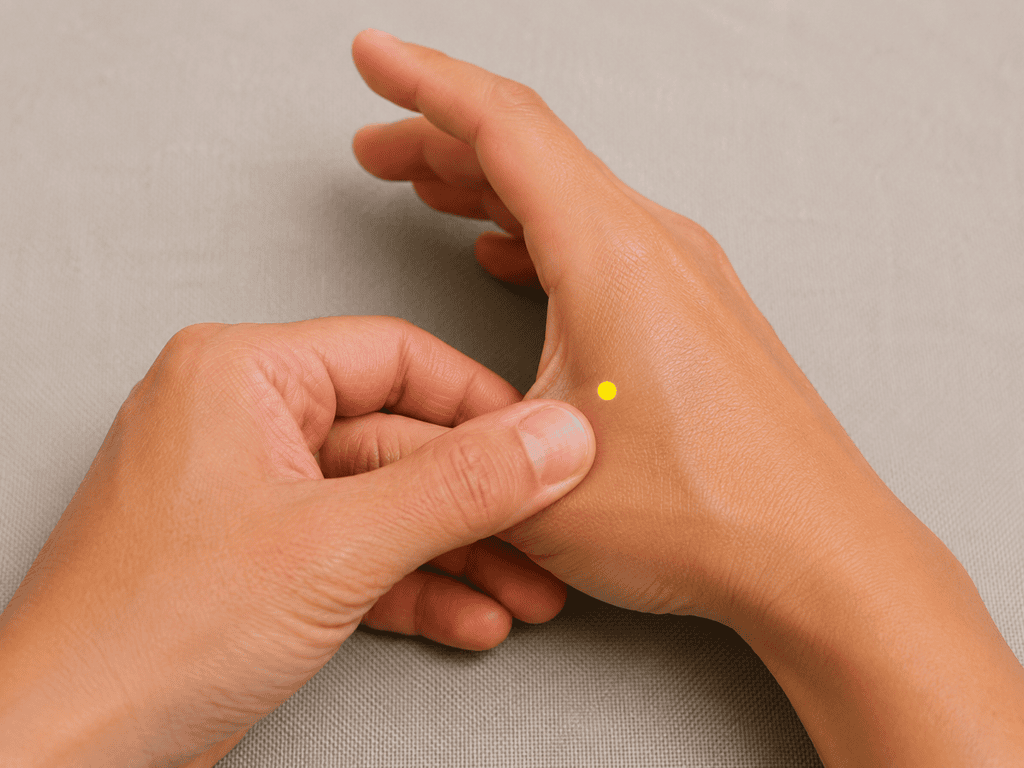
1. Press on LI4 in the webbing between your thumb and index finger for pain anywhere in the body. LI4 sits in the fleshy mound between the thumb and index finger, in the muscle that bulges when you bring the two together. Press toward the bone of the index finger with the thumb of your opposite hand for one to two minutes on each hand. LI4 is called “Hegu” or “Joining Valley” and is one of the great pain-relieving points of the entire body.
LI4 moves Qi and Blood through the whole system and clears the obstruction that Bi syndrome creates, which is why its reach extends far past the hand it sits on. It is the point to press for arthritic pain anywhere, and in the hand it doubles as a local point for the thumb. Traditionally paired with LR3 on the foot, the two form the Four Gates, the strongest Qi and Blood moving combination in acupressure, worth adding whenever pain is widespread. LI4 is avoided during pregnancy.
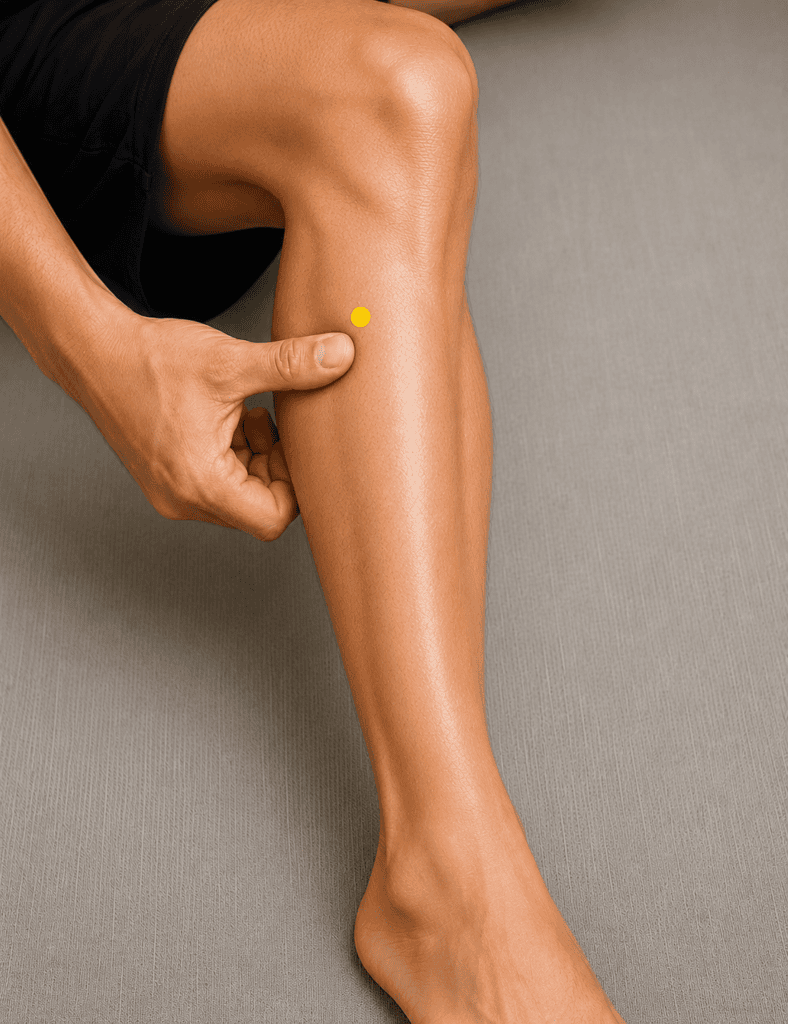
2. Press on ST36 below your knee for strength and resilience. ST36 sits four finger-widths below the lower edge of the kneecap and one finger-width to the outside of the shinbone, on the muscle that rises when you flex your foot. Press firmly with your thumb for one to two minutes on each leg. ST36 is called “Zusanli” or “Leg Three Miles,” the premier tonifying point of the body.
Arthritis is a long game, and ST36 supports the body’s capacity to carry it. It builds Qi and Blood, strengthens the Spleen, and in doing so helps the body resolve the dampness that settles into swollen, heavy, aching joints, since the Spleen governs the transformation of damp in Chinese medicine. For the damp type of Bi syndrome especially, the puffy, stiff, weather-sensitive joints, strengthening the Spleen through ST36 addresses the terrain the pain grows in rather than only the pain itself. Regular daily work here is constitutional support, not quick relief.
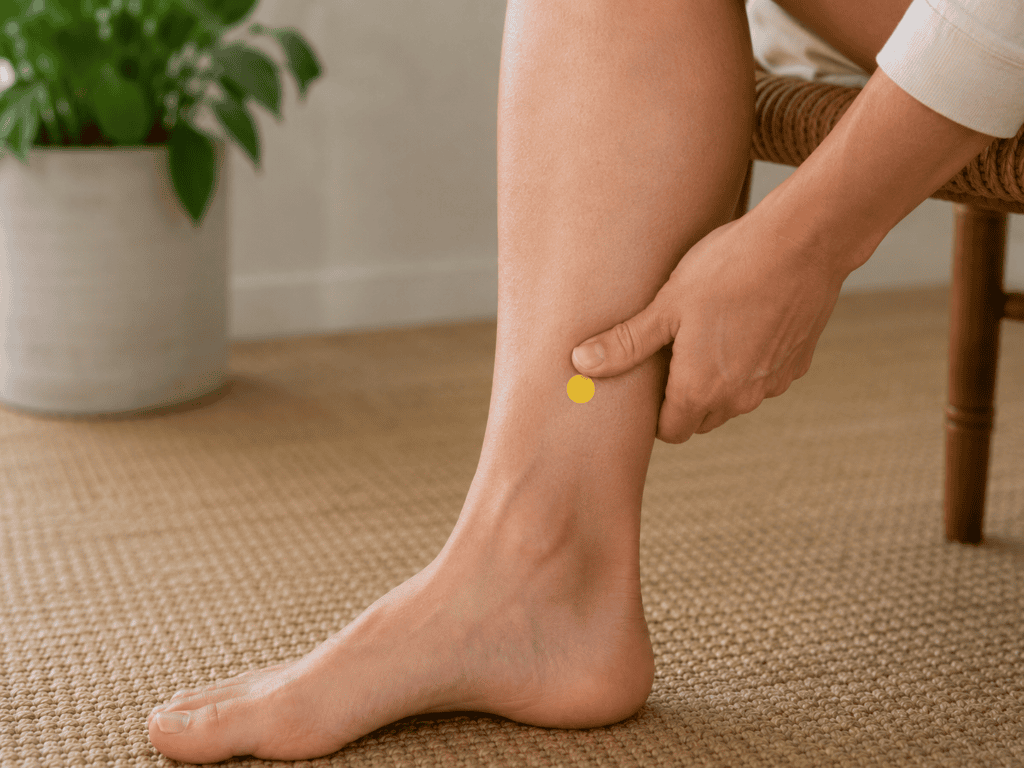
3. Press on SP6 above your inner ankle for Blood and the tissues. SP6 sits four finger-widths up from the tip of the inner ankle bone, just behind the back edge of the shinbone. Press firmly for one to two minutes on each leg. SP6 is called “Sanyinjiao” or “Three Yin Intersection,” where the Spleen, Liver, and Kidney channels meet.
Because three channels cross here, SP6 does several things arthritis needs at once. It nourishes the Blood that keeps the joints, tendons, and surrounding tissues supplied and supple, it moves Blood to clear obstruction, and it supports the Spleen’s work of draining damp. For the person whose joints are dry, stiff, and undernourished as much as inflamed, SP6 feeds the tissue that local points cannot reach. It works well paired with ST36 for comprehensive Spleen and Blood support. SP6 is avoided during pregnancy.
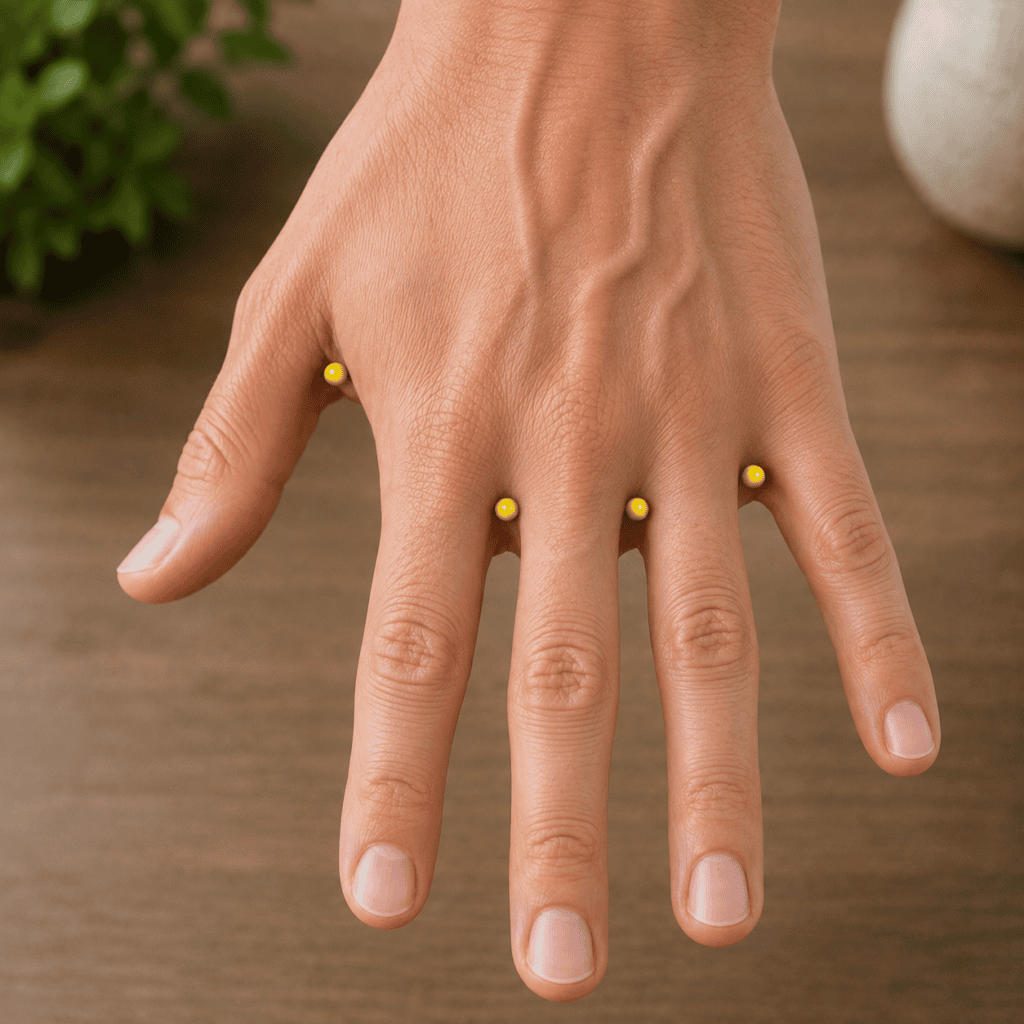
4. Press on the Ba Xie points in your finger webbings for the finger joints. The Ba Xie are eight extra points on the back of the hand, sitting in the webbings where the fingers meet the hand, four to a hand. Pinch each webbing between your thumb and finger and press for thirty seconds or so, moving across all four. The name means “Eight Evils.”
These are the classic local points for stiff, swollen, aching finger joints, and they work by moving Qi and Blood through the small joints of the hand and clearing the local obstruction and heat that make knuckles red and puffy. For hand arthritis, where the constant small motions of a day each ask something of the joints, the Ba Xie can be worked quickly and often, whenever the hands stiffen. They pair naturally with LI4 and the next point for the whole hand and wrist.
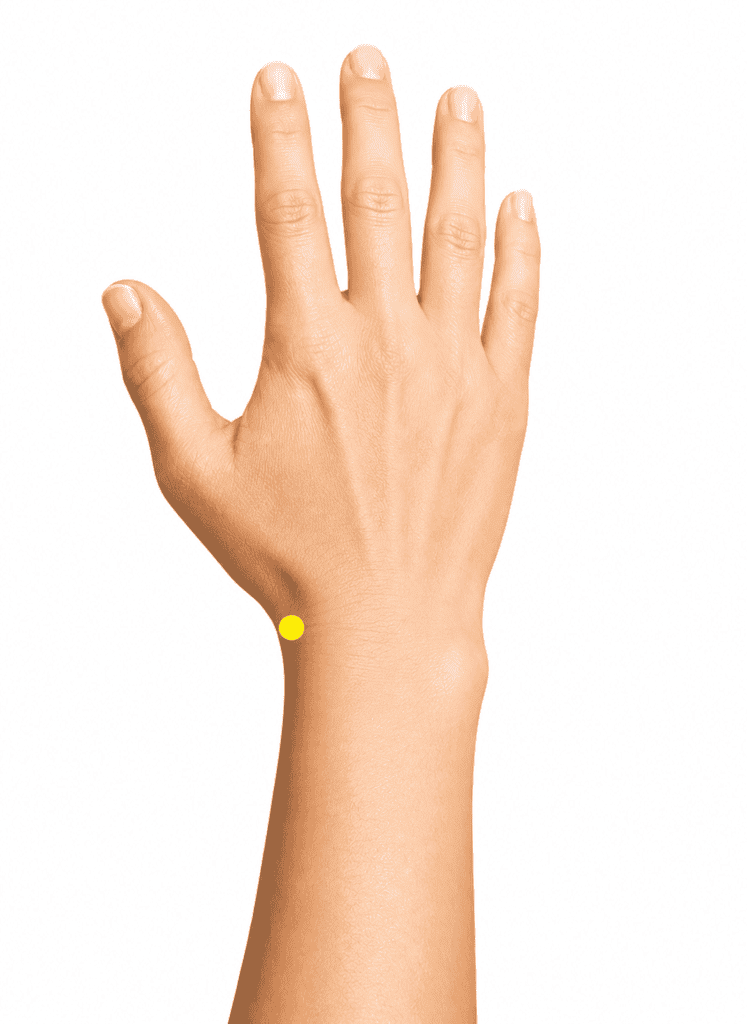
5. Press on LI5 at your wrist for the wrist joint. LI5 sits in the hollow on the thumb side of the wrist, the dip that deepens when you lift your thumb, known anatomically as the anatomical snuffbox. Press into it for one to two minutes on each side. LI5 is called “Yangxi” or “Yang Stream.”
LI5 addresses the wrist joint directly, clearing heat and obstruction from the joint and easing the pain and stiffness that settle there. Wrist and finger arthritis usually travel together, so LI5 completes the hand work the Ba Xie begins, and sitting on the same Large Intestine channel as LI4, the three form a natural sequence up the hand and wrist. Firm, steady pressure into the hollow works better here than heavy force.
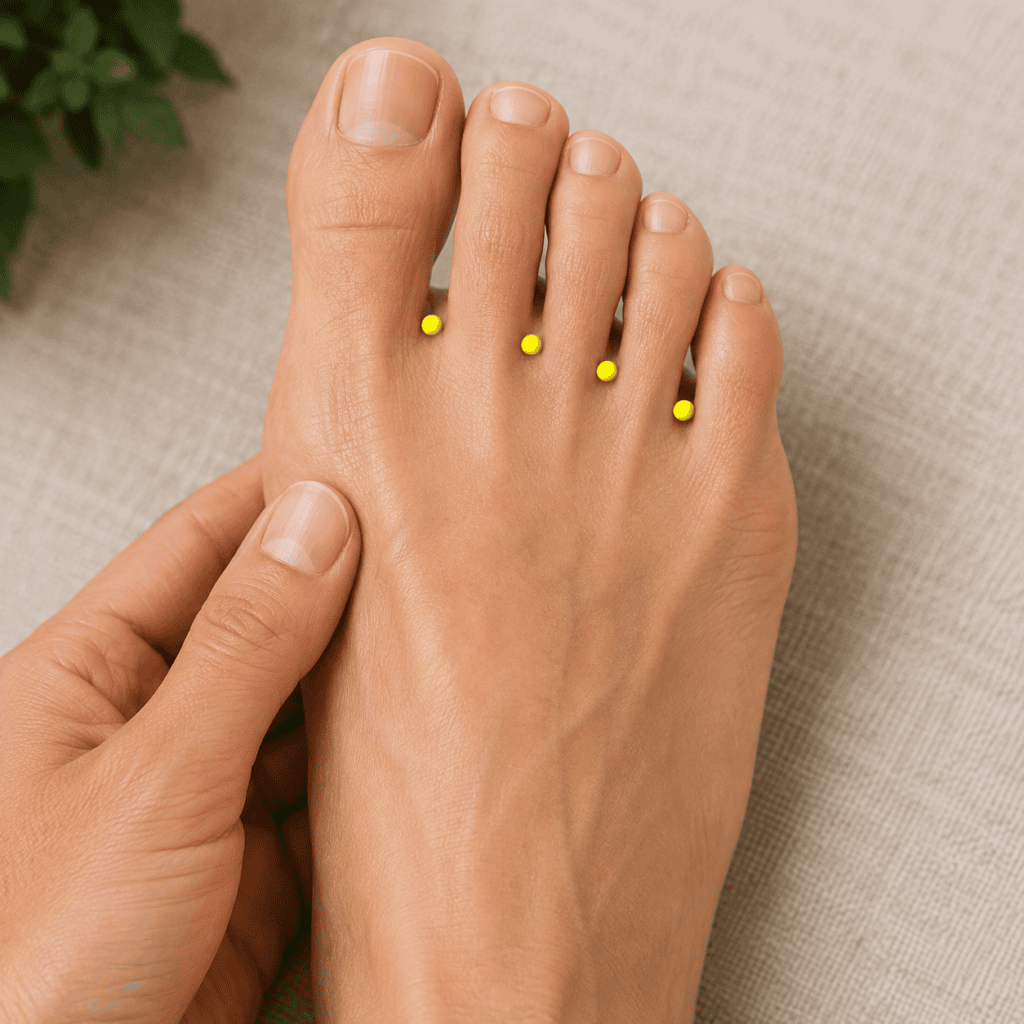
6. Press on the Ba Feng points in your toe webbings for the toe joints. The Ba Feng are eight extra points on the top of the foot, in the webbings between the toes, four per foot. Press each webbing for thirty seconds or so. The name means “Eight Winds.”
These are the feet’s counterpart to the Ba Xie, and they do the same work below: moving Qi and Blood through the small joints of the toes, easing the pain, stiffness, and swelling that collect there, and helping drain the puffiness that gathers in an arthritic foot. Because the feet carry the body’s whole weight, toe and forefoot arthritis turns each step into a negotiation, and the Ba Feng give a direct way to work the joints that hurt. They pair with the constitutional points below for feet that ache from the ground up.
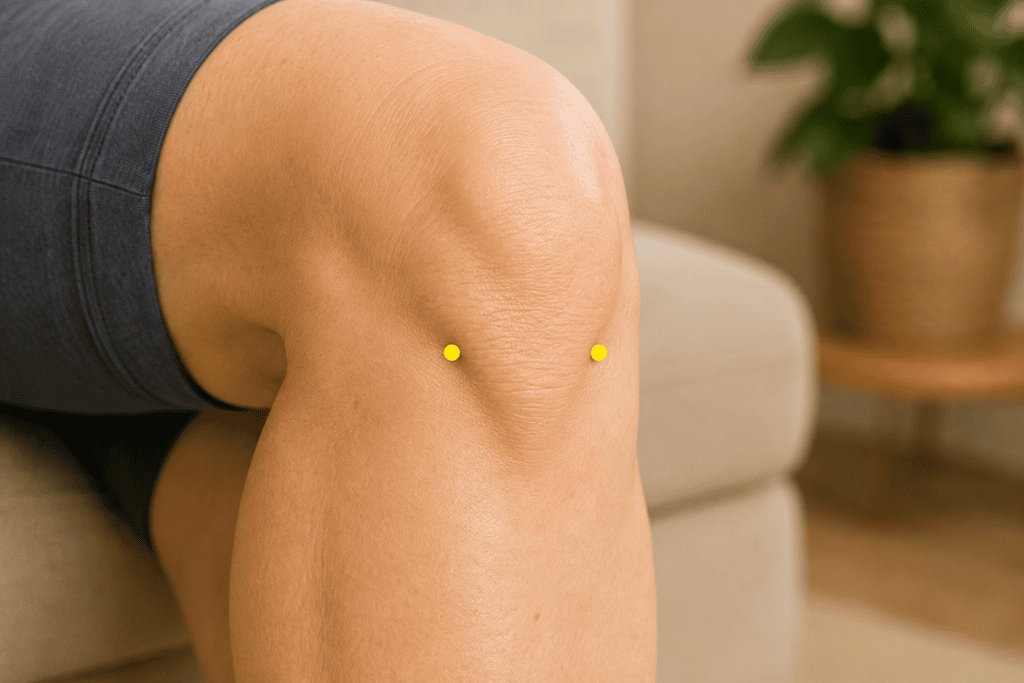
7. Press on the knee eyes below your kneecap for the knee joint. Bend your knee and feel for the two hollows just below the kneecap, one on the inner side and one on the outer. Press into both for one to two minutes. These paired points are known as Xiyan, the “Knee Eyes,” the outer one corresponding to the point ST35.
The knee is the joint where arthritis is most common and most studied, and the knee eyes work directly on it, moving Qi and Blood through the joint and relieving the pain that lives right around the kneecap. Pressing into both hollows at once brackets the front of the joint and reaches the space where wear and inflammation settle. For knee arthritis these local points are the anchor, and they pair with the next point just below to address the joint and its supporting tissue together.
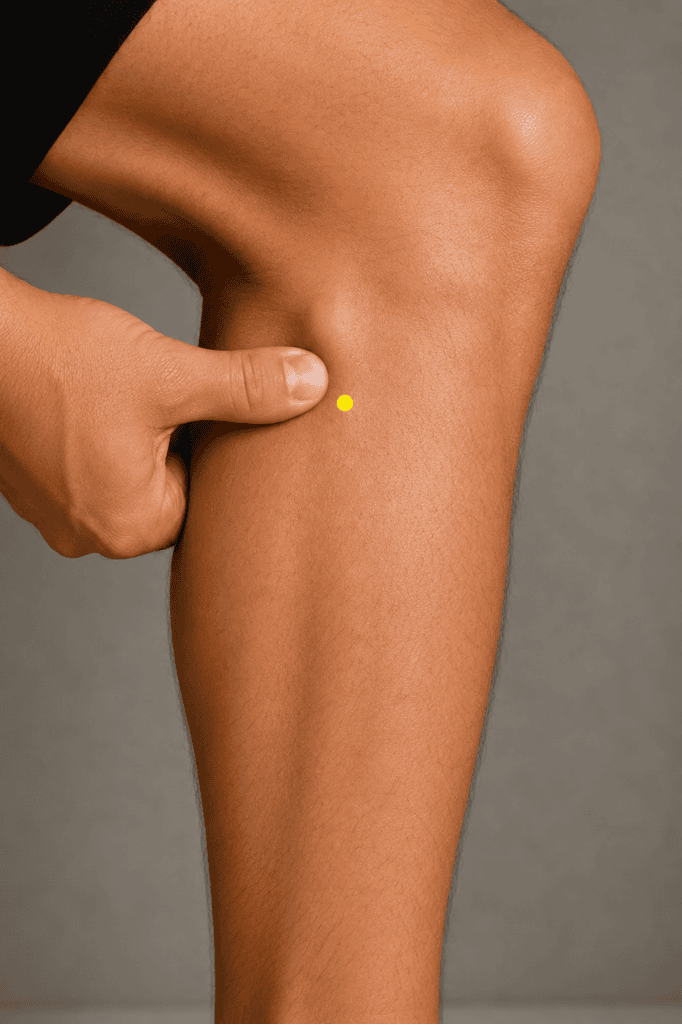
8. Press on GB34 below your outer knee for the tendons and sinews. GB34 sits just below and in front of the head of the fibula, the small bony bump on the outer lower leg below the knee. Press firmly with your thumb for one to two minutes on each leg. GB34 is called “Yanglingquan” or “Yang Mound Spring,” and it is the influential point for the tendons and sinews of the whole body.
This is the point for the soft tissue around a joint rather than the joint surface itself, and because every arthritic joint is braced and pulled by tightened tendons and sinews, GB34 earns a place in almost any arthritis routine. It relaxes and nourishes the connective tissue, eases the stiffness that locks a joint, and moves the Liver and Gallbladder Qi that governs the sinews. It sits perfectly placed to serve the knee first, but its influence over the tendons makes it useful for a stiff shoulder, hip, or any braced joint.
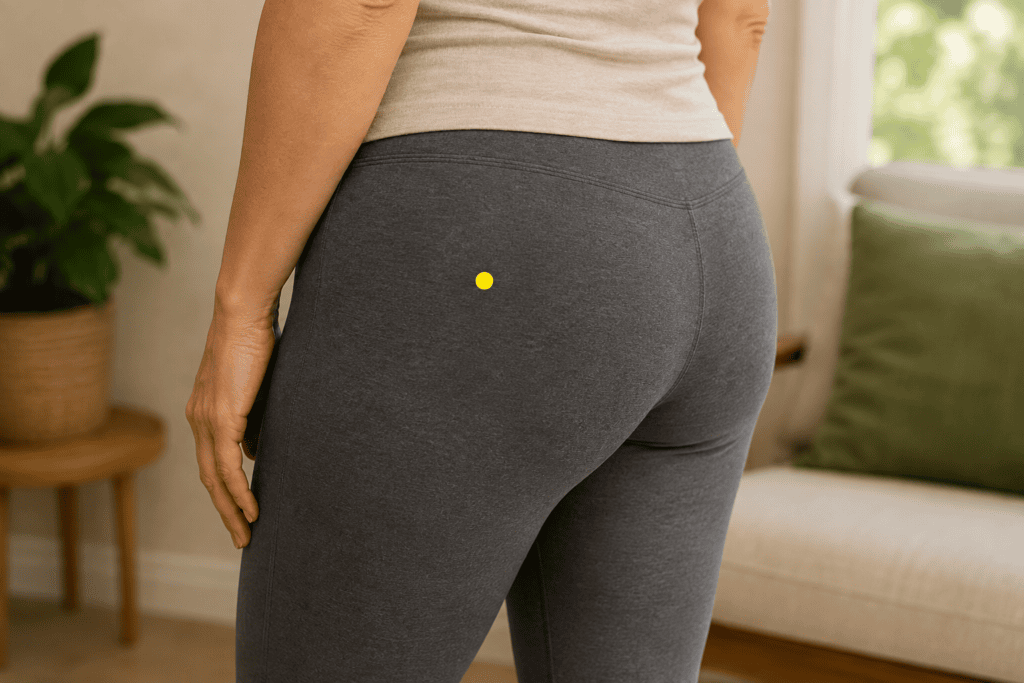
9. Press on GB30 in your buttock for the hip. GB30 sits deep in the meat of the buttock, roughly a third of the way from the top of the hip bone toward the tailbone. Because it lies under a thick layer of muscle, firm pressure is needed, and most people find it easiest to lie down and press into a firm ball, a tennis or lacrosse ball, letting body weight do the work, for two to three minutes each side. GB30 is called “Huantiao” or “Jumping Round.”
GB30 is the major point for hip pain, opening the deep obstruction in the joint that surface points cannot reach and moving Qi and Blood through the hip and down the leg. It is especially suited to the fixed, deep ache of hip arthritis and to the wind-damp obstruction that stiffens the joint in cold, wet weather. Because the hip sits so deep, patience and sustained weight matter more than sharp pressure, and working it regularly keeps the joint from locking down.
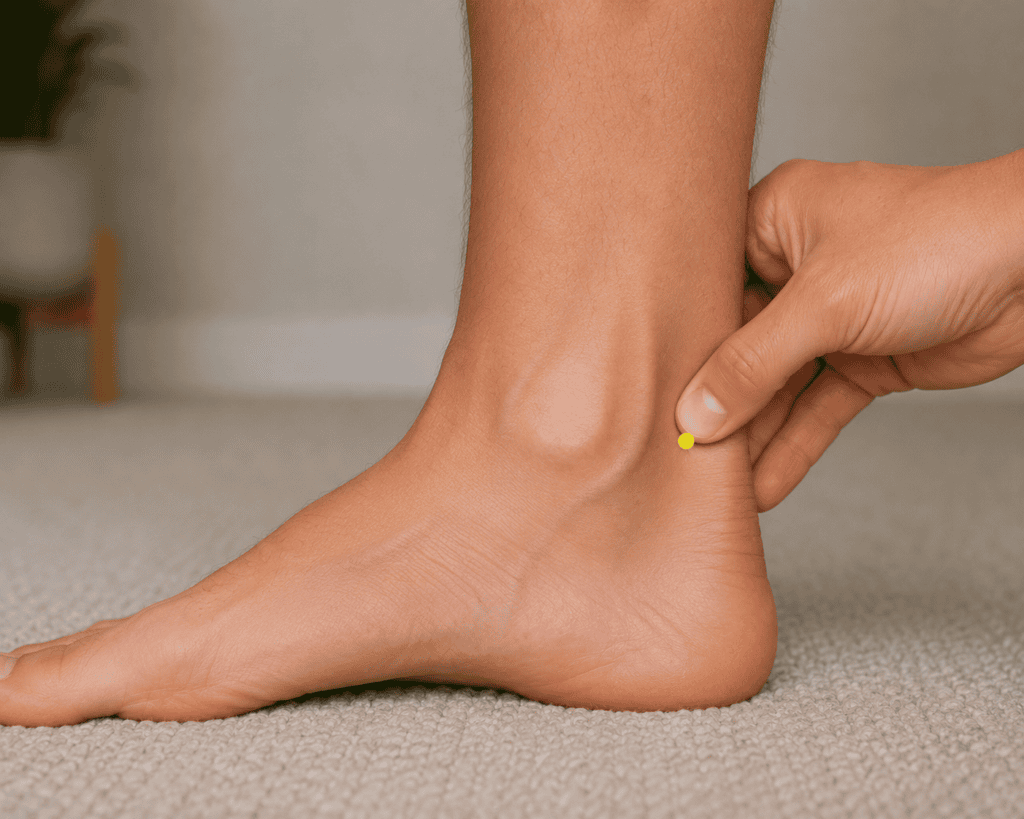
10. Press on KI3 behind your inner ankle for the bones and the root. KI3 sits in the hollow between the inner ankle bone and the Achilles tendon. Press firmly with your thumb for two to three minutes on each ankle. KI3 is called “Taixi” or “Great Ravine,” the source point of the Kidney channel.
In Chinese medicine the Kidneys govern the bones, and the wearing down of the joints that comes with age and use is understood as a depletion of that deep Kidney reserve. KI3 tends that root. It will not act on a single joint the way a local point does, but for a chronic, degenerative condition like arthritis, and for the osteoarthritis that grinds down cartilage over years, supporting the Kidneys is part of the real work, and KI3 is where it begins. It pairs with ST36 and SP6 to build the constitutional support underneath all the local point work.
Why These Acupressure Points Work
In Chinese medicine, arthritis involves multiple interconnected patterns, addressed collectively rather than individually. It includes the obstruction itself, with Qi and Blood blocked in the joint, causing Bi syndrome pain. It also considers the underlying terrain: a weak Spleen that lets dampness accumulate and swell the joints, a depleted Kidney that governs bones and deteriorates with age, and undernourished Blood that dries and stiffens tissues. Additionally, the specific joint, such as the hand, knee, foot, or hip, is considered. Acupressure targets all these aspects simultaneously.
- The whole-body pain point (LI4) moves Qi and Blood through the entire system and clears the obstruction of Bi syndrome wherever it sits.
- The constitutional points (ST36, SP6, KI3) build the Qi, Blood, and Kidney reserve that a chronic joint condition draws on, and drain the dampness that settles into swollen, heavy joints.
- The tendon point (GB34) relaxes and nourishes the sinews that brace and pull on every arthritic joint.
- The local joint points (Ba Xie, LI5, Ba Feng, the knee eyes, GB30) move Qi and Blood directly through the hands, wrists, feet, knees, and hips where the pain and swelling collect.
Understanding the connection between stress and sleep is crucial, as pain, inadequate sleep, and tension often create a self-perpetuating cycle. Chronic pain can spike cortisol levels, increasing inflammation and pain. Calming the nervous system is essential for pain management, enhancing other methods rather than acting independently.
How to Properly Use These Acupressure Points
Identify the areas affected by your arthritis, then integrate the constitutional points into your daily routine. This practice can help you maintain consistency and support your overall health and well-being.
- For hand and finger arthritis, work the Ba Xie webbings, LI5 at the wrist, and LI4, which serves as both a local thumb point and a whole-body pain point.
- For foot and toe arthritis, work the Ba Feng webbings and lean on KI3 for the constitutional support the weight-bearing feet need.
- For knee arthritis, press the knee eyes and pair them with GB34 just below, addressing the joint and its supporting tendons together.
- For hip arthritis, work GB30 with sustained weight into a firm ball, and add GB34 for the sinews around the joint.
- Every day, regardless of the joint, work ST36, SP6, and KI3 to build the constitutional support that a long condition rests on.
The type of Bi syndrome guides how you press the points:
- For a hot, red, swollen joint in an active flare, keep the local pressure light and lean on LI4 and the general points, and do not dig into an acutely inflamed joint.
- For cold, stiff joints that ache in winter and ease with warmth, warm the joint first with a compress or warm water, then press, since the cold and damp types respond to heat.
Firm, steady pressure works well for most points, and none should ever be pressed so hard that it causes sharp pain.
Combining acupressure with holistic health practices that benefit arthritis significantly enhances the effectiveness:
- Gentle regular movement matters more than almost anything, since joints need motion to stay supple, and walking, swimming, and tai chi move the Qi and Blood without pounding the joints.
- Keep warm and dry during cold, damp weather if your joints are sensitive. Maintain your body’s health with an anti-inflammatory diet and sufficient sleep, as both influence joint pain.
- When weight-bearing joints like the knees and hips are involved, reducing the load they carry directly reduces wear.
When to Get Professional Medical Help
The tools listed above aid in managing arthritis pain daily but should not replace proper diagnosis or medical treatment necessary for certain types of arthritis.
If your joint pain hasn’t been diagnosed yet, consult a physician, as the specific type of arthritis is very important.
- Osteoarthritis, rheumatoid, other inflammatory or autoimmune arthritis, gout, and joint infection require different treatments. Early medical care is crucial for inflammatory and autoimmune arthritis to prevent joint damage.
- Seek prompt care for a hot, red, swollen joint, joint pain with fever, morning stiffness over an hour, or symmetrical swelling on both sides, as these signs indicate conditions needing early treatment.
- Deforming joints or pain unresponsive to treatment also need a physician’s evaluation. Acupressure can support symptom relief but should not replace essential medical treatment for inflammatory or autoimmune arthritis.
Above and Beyond Acupuncture offers acupuncture, cupping, and lifestyle coaching at the North Frank Lloyd Wright Boulevard location in Scottsdale.
Schedule an appointment online or call us today to start your healing journey.
The points above are only as effective as the technique used to apply them. Where to press, how firmly, and for how long all affect the result. For a full breakdown of how to perform acupressure properly at home, read Performing Acupressure in 3 Easy Steps.

About the Publisher
Paul Kerzner, L.Ac., is a licensed acupuncturist and board-certified herbalist, as well as the founder of Above and Beyond Acupuncture in Scottsdale. His own journey from chronic patient to practicing acupuncturist shapes his commitment to providing honest, clinically grounded information about acupuncture and Traditional Chinese Medicine. Learn more about Paul and his clinical approach on the About Us page.