Key Takeaways
- The term ‘holistic’ means considering the entire person, not just symptoms, in medical practice.
- Holistic approaches involve asking broader questions about a patient’s overall well-being, including emotional and lifestyle factors.
- Unlike conventional medicine, which focuses on specialties, holistic care views symptoms as interconnected and addresses root causes.
- Holistic is not the same as alternative; it integrates traditional care with complementary methods for comprehensive healing.
- Patients in holistic practices undergo a thorough intake process, leading to more effective and lasting treatment plans.
You might have encountered the term “holistic” and wondered what it truly means. It’s often used in wellness marketing, sometimes vaguely and sometimes with clear intent, which leads many to be unsure about its actual significance. In reality, its meaning is straightforward and more practical than the marketing implies.
In medicine, the term refers to an approach that addresses the entire person instead of just focusing on a specific symptom or disease. A holistic practitioner considers physical, emotional, and lifestyle factors that influence the patient’s condition, rather than merely treating the visible symptoms. The logic is simple: nearly all chronic conditions have multiple causes, and addressing just one usually doesn’t lead to lasting improvement.
The Quick Definition

The term originates from the Greek “holos,” meaning whole. According to the dictionary, it describes something related to or focused on entire systems or wholes, rather than on analyzing, treating, or dissecting parts. In medicine, this approach means considering the entire person and the overall situation instead of just the specific part causing the symptom.
This differs from how most patients experience the typical medical system, which usually concentrates on isolating and addressing individual issues. Both methods are valuable. The holistic approach, however, involves asking a broader range of questions.
What Holistic Actually Means in Practice

In a clinical setting, adopting a holistic approach changes what happens during an appointment, making the experience more comprehensive and patient-centered.
A holistic practitioner will ask about your stress level when you come in for back pain, because chronic stress directly contributes to muscle tension and pain perception. They will ask about your sleep when you come in for anxiety, because poor sleep worsens anxiety and anxiety worsens sleep. They will ask about your digestion when you come in for skin issues, because the gut and the skin are connected through the immune system.
The questions are intentional, based on an understanding of how body systems influence each other. The treatment is guided by this broader perspective. Instead of focusing solely on the main complaint, the holistic approach also tackles the underlying patterns that caused it.
How Holistic Differs from Conventional Medicine

Conventional medicine tends to focus on specialization, where a patient with chest pain might visit a cardiologist, someone dealing with depression consults a psychiatrist, and digestive troubles are addressed by a gastroenterologist. Each specialist typically cares for their specific area, often without much collaboration with others, which can sometimes make the overall experience feel a bit disconnected.
This system has real strengths, with its deep knowledge in each specialty has produced extraordinary advances in treatments, especially for acute conditions. However, it faces a challenge when it comes to managing chronic, complex, or multi-system issues. Patients juggling anxiety, digestive problems, sleep difficulties, and ongoing pain often see four different specialists, receive four different medications, and may not always get a comprehensive view of their overall health.
A holistic approach assumes that a patient’s symptoms are interconnected, even if conventional medicine treats them separately. Symptoms like anxiety, digestive issues, sleep disturbances, and chronic pain often reflect the same root pattern. Addressing this core pattern can lead to improvements in all of these symptoms simultaneously.
Is Holistic the Same as Alternative?

This is one of the most common misunderstandings. Wellness marketing often uses the two words interchangeably, but they actually mean different things.
“Alternative’ refers to treatments chosen instead of standard medicine, while “Holistic” describes an approach that can be used alongside conventional care or on its own. Most holistic practitioners work in coordination with conventional medical providers, rather than replacing them, to ensure the best care for everyone.
The National Center for Complementary and Integrative Health defines integrative health as the coordinated use of both conventional and complementary methods. This closely reflects how most holistic practitioners actually practice in real clinical settings.
What a Holistic Intake Looks Like

When a new patient arrives at a holistic practice, the intake process differs from their usual experience. The discussion includes more than just the main complaint.
A practitioner will inquire about your sleep, stress levels, digestion, daily energy patterns, emotional state, physical activity, diet, and overall life context. They will ask how your symptoms began, what worsens or improves them, and any other patterns you’ve observed in your body. The initial appointment usually lasts longer than a typical medical visit because it aims to gather a broader overall picture.
The treatment plan that follows usually addresses more than one issue. A patient who comes in for chronic neck pain may also receive treatment for the chronic stress that has been driving the tension, along with lifestyle recommendations for sleep and dietary patterns that have been contributing. This integrated approach is what produces lasting results in conditions that have not responded well to single-focus treatment.
Where Acupuncture Fits Into the Holistic Picture
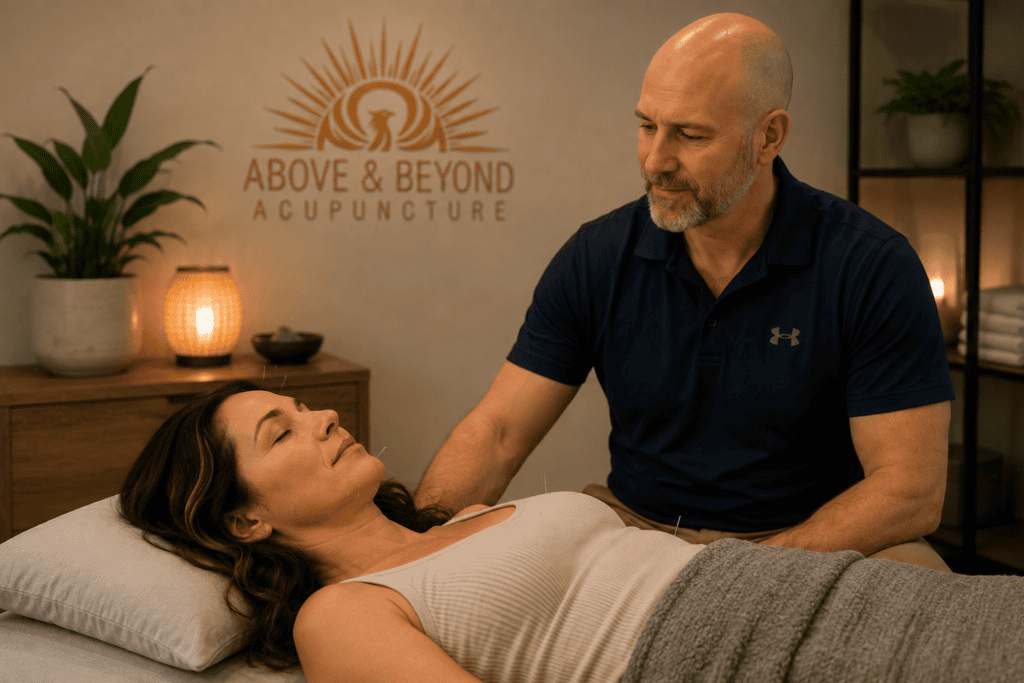
Acupuncture is one of the oldest holistic medical systems in continuous practice. Traditional Chinese Medicine, which acupuncture is part of, has been built around the principle that the body is a connected system and that treating one part affects the others.
This is why acupuncture for back pain often unexpectedly improves sleep, mood, and digestion. The treatment does more than target the back; it influences the nervous system, inflammation patterns, and energy flow, affecting the whole body. For a comprehensive understanding of how acupuncture affects the whole body, see “How Long Until I Feel Better From Acupuncture?“
Where to Start

If the holistic approach seems like a good fit for what you’ve been searching for, the next step is to have a conversation with a practitioner experienced in this method. Your initial appointment will help you determine whether this approach aligns with your needs.
Reach out to Above and Beyond Acupuncture on North Frank Lloyd Wright Boulevard in Scottsdale to schedule a consultation.
Schedule an appointment online or call us today to start your journey to relief.
About the Publisher
Paul Kerzner, L.Ac., is a licensed acupuncturist and board-certified herbalist, as well as the founder of Above and Beyond Acupuncture in Scottsdale. His own journey from chronic patient to practicing acupuncturist shapes his commitment to providing honest, clinically grounded information about acupuncture and Traditional Chinese Medicine. Learn more about Paul and his clinical approach on the About Us page.