
Key Takeaways
- To stop a nosebleed, sit up straight, lean forward, and pinch the soft part of your nose for 10-15 minutes.
- Acupressure points such as GV26, LI20, and GV23 can help during a nosebleed, while others help reduce recurrence.
- Traditional Chinese Medicine views frequent nosebleeds as heat-related, and specific points can address underlying issues.
- Use the correct acupressure technique and distinguish between immediate care and long-term prevention.
- If a nosebleed persists or is accompanied by other symptoms, seek professional evaluation.

A nosebleed can be startling: the sudden flow or trickle, the frantic search for tissues, and the concern about how long it will last.
Most nosebleeds are minor and self-limiting with the proper first aid. Knowing the right method to stop a nosebleed matters because the straightforward first-aid steps below are effective. Acupressure can help provide support during a nosebleed and help to address frequent nosebleeds linked to internal heat, according to Traditional Chinese Medicine.
This article first explains how to stop a nosebleed properly, then describes acupressure points that may help.
First, Stop the Bleeding Properly
If you start to have a nosebleed, please follow these steps:
- Sit up straight and lean forward gently; tilting your head back can cause blood to run down your throat, leading to choking, gagging, or nausea. Let the blood drain naturally from your nose.
- Use your thumb and index finger to firmly pinch the soft part of your nose just below the bridge.
- Maintain this pressure for ten to fifteen minutes without releasing it, as releasing it early can disrupt clot formation. Breathe through your mouth during this time, and spit out any blood rather than swallowing it.
- Applying a cold compress or ice pack to the bridge of your nose can also help reduce bleeding by constricting blood vessels.
The pinch is what stops a typical nosebleed, and the acupressure points mentioned should complement it, not replace it. Keep pinching throughout, and use your other hand to apply pressure to the nearby points while you do.
How Traditional Chinese Medicine Views Nosebleeds
Traditional Chinese Medicine views nosebleeds, especially frequent ones, as bleeding driven by heat.
When there is too much heat in the body, it can force the blood to move recklessly and push it out of the vessels, and because the Lung opens into the nose and the Stomach channel travels up to it, heat in the Lung or Stomach rises straight to the nose and shows up as bleeding. Liver fire, often stoked by stress, can do the same. Dryness also plays a part, drying and cracking the delicate lining inside the nose, which is why nosebleeds are so common in dry, heated winter air. Less often, the opposite pattern is at work, where the Spleen, which is meant to hold the blood inside the vessels, is too weak to keep it contained. The points below help in two ways: some support the nose and can be used during a bleed, while others clear the heat and settle the fire that drives recurrent nosebleeds over the longer term.
Here are nine acupressure points that can help:
What Acupressure Points to Press and Why
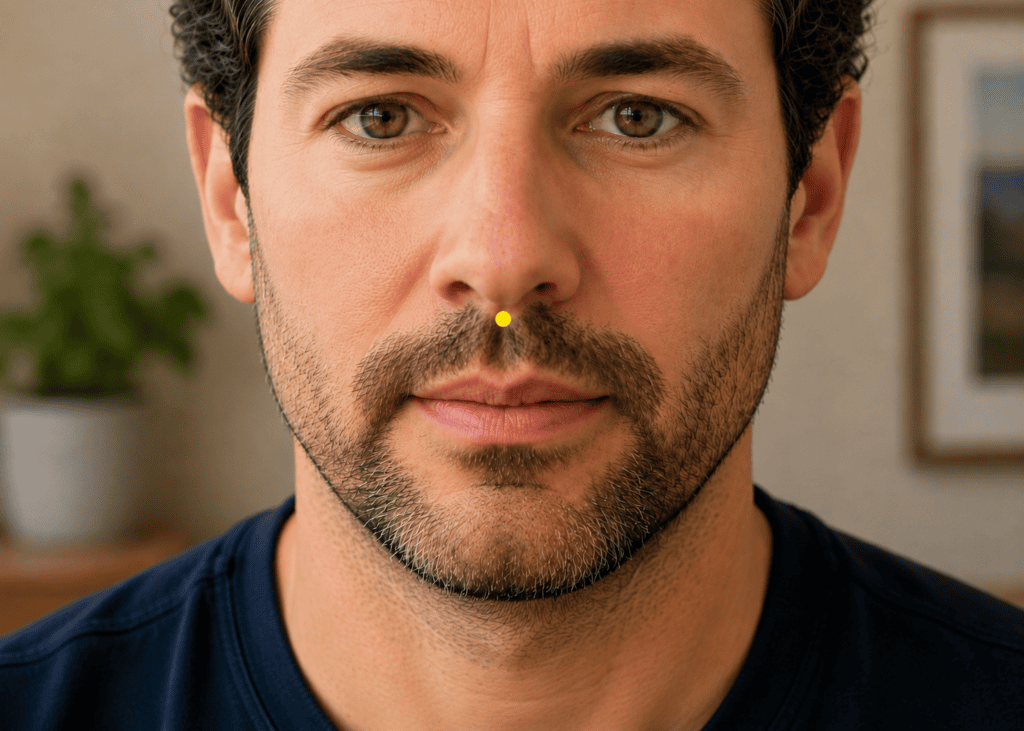
1. Press on GV26 below the nose to support the nose during a bleed. GV26 sits on the midline of the face, in the small vertical groove between the base of the nose and the upper lip, about a third of the way down from the nose. Press firmly upward against the gum with your fingertip for one to two minutes. GV26 is called “Renzhong,” and it is a classic point used during a nosebleed.
GV26 sits directly below the nose and has long been pressed to help settle a nosebleed, making it a natural point to work with your free hand while the other keeps up the pinch. It is a strong, reviving point on the Governing Vessel, the channel that runs up the midline and over the head, and firm pressure here is traditionally used to help stem bleeding from the nose. Because it sits just below the nostrils and does not interfere with pinching, it is the first point to reach for during an active bleed.
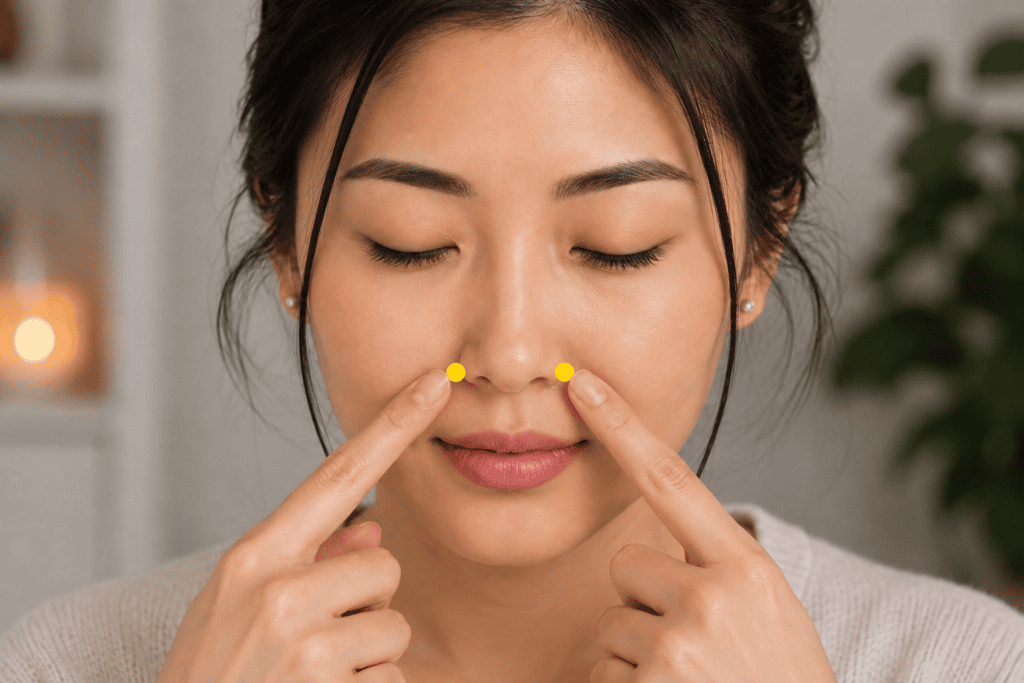
2. Press on LI20 beside the nostrils to support the nose. LI20 sits in the groove beside each nostril, at the outer edge where the nostril meets the cheek. Press gently inward and upward with your fingertips for about a minute on both sides. LI20 is called “Yingxiang,” which means “Welcome Fragrance,” and it is the main point for the nose.
LI20 sits right beside the nostrils over the vessels of the nose and is the primary point for nasal complaints of every kind, so it is a fitting point to press during and after a nosebleed to support the area. On the Large Intestine channel, which is paired with the Lung that opens into the nose, it helps regulate the nose and clear the passages. Pressed gently alongside the pinch and GV26, it rounds out the local work at the site of the bleed, and it is useful afterward as the nose recovers.
3. Press on GV23 on the forehead for the nose and nosebleeds. GV23 sits on the midline of the head, about one thumb-width back into the hairline above the center of the forehead. Press firmly with your fingertip for one to two minutes. GV23 is called “Shangxing,” the “Upper Star,” and it is a classic empirical point for nasal disorders and nosebleeds.
GV23 has a long traditional reputation specifically for nosebleeds and other nose complaints, working on the nose from above along the Governing Vessel as it crosses the top of the head. It is one of the points classically chosen for bleeding from the nose, clearing the passage and helping settle the tendency to bleed. For the person prone to recurrent nosebleeds, this point is worth knowing and using between episodes as well as during one, since it targets the nose directly through the channel.

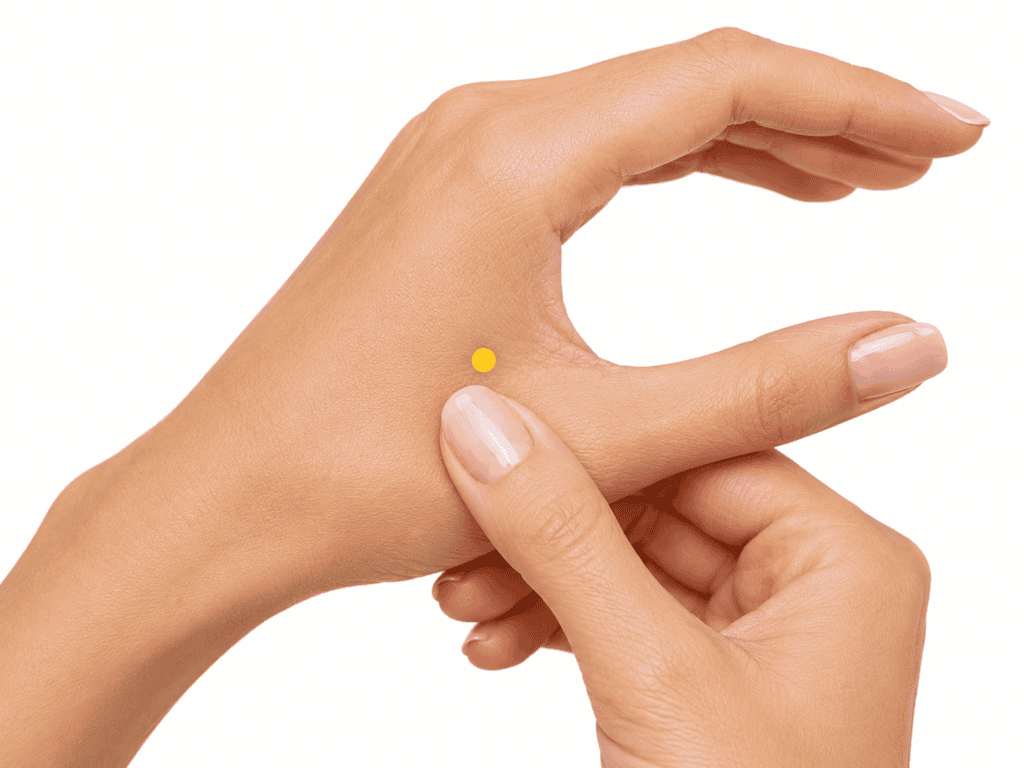
4. Press on LI4 in the hand to regulate the face and nose. LI4 sits in the webbing between the thumb and index finger, at the highest point of the muscle when the thumb and finger are brought together. Press firmly with the thumb of your other hand for one to two minutes on each hand. LI4 is called “Hegu,” and it is the command point for the face. LI4 is avoided during pregnancy.
LI4 draws Qi through the entire face and is used for a wide range of complaints of the head and face, including those of the nose, which makes it a supportive point during and after a nosebleed. On the same Large Intestine channel that reaches the nose at LI20, it regulates the whole region from a distance and helps clear heat, since it is one of the body’s main heat-clearing points. Easy to reach with the opposite hand while you keep pinching, it is a practical point to add during a bleed and a useful one for the heat pattern behind recurrent nosebleeds.
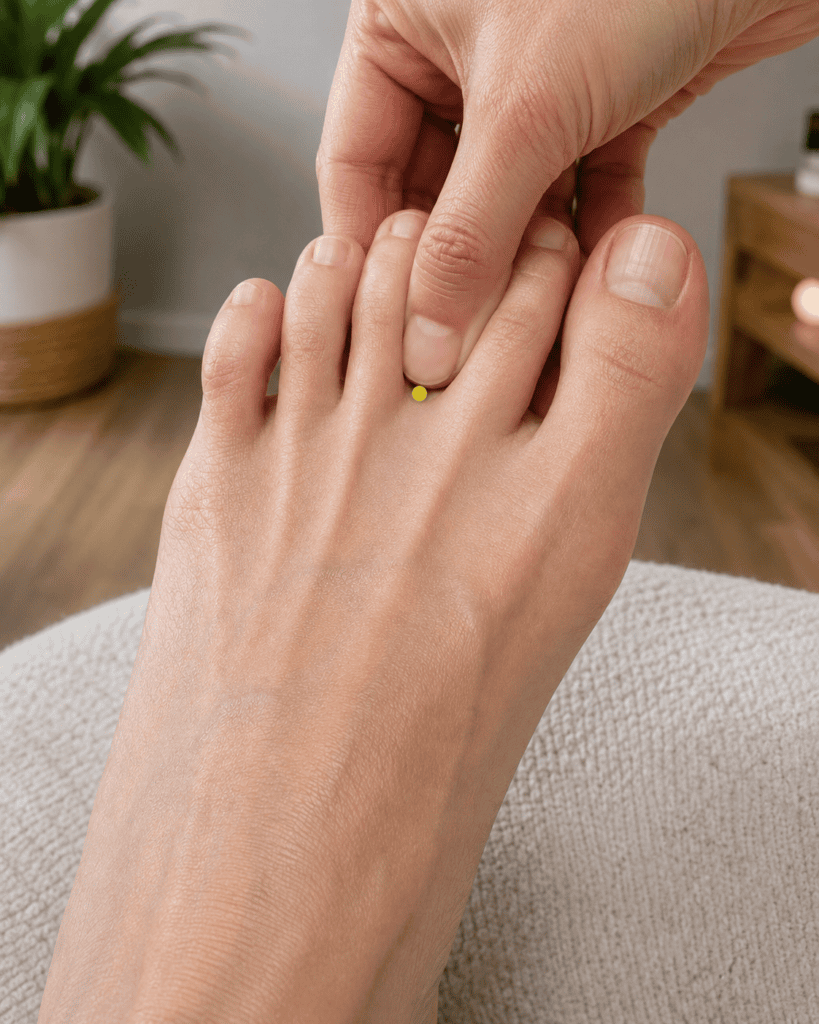
5. Press on ST44 between the toes to clear Stomach heat. ST44 sits on the top of the foot, in the webbing between the second and third toes, just where they meet. Press firmly with your thumb for one to two minutes on each foot. ST44 is called “Neiting,” and it is the point for clearing heat from the Stomach.
Because the Stomach channel runs up to the nose, heat in the Stomach is a common driver of nosebleeds in Chinese medicine, especially in people who run hot, favor rich, spicy, greasy food, or bleed along with bad breath or a dry mouth. ST44 clears that heat and takes away the pressure that forces blood recklessly out of the vessels. This is a point for the pattern behind frequent nosebleeds rather than for the moment of a bleed, worked between episodes to address the root, and it is one of the most reliable heat-clearing points on the Stomach channel.
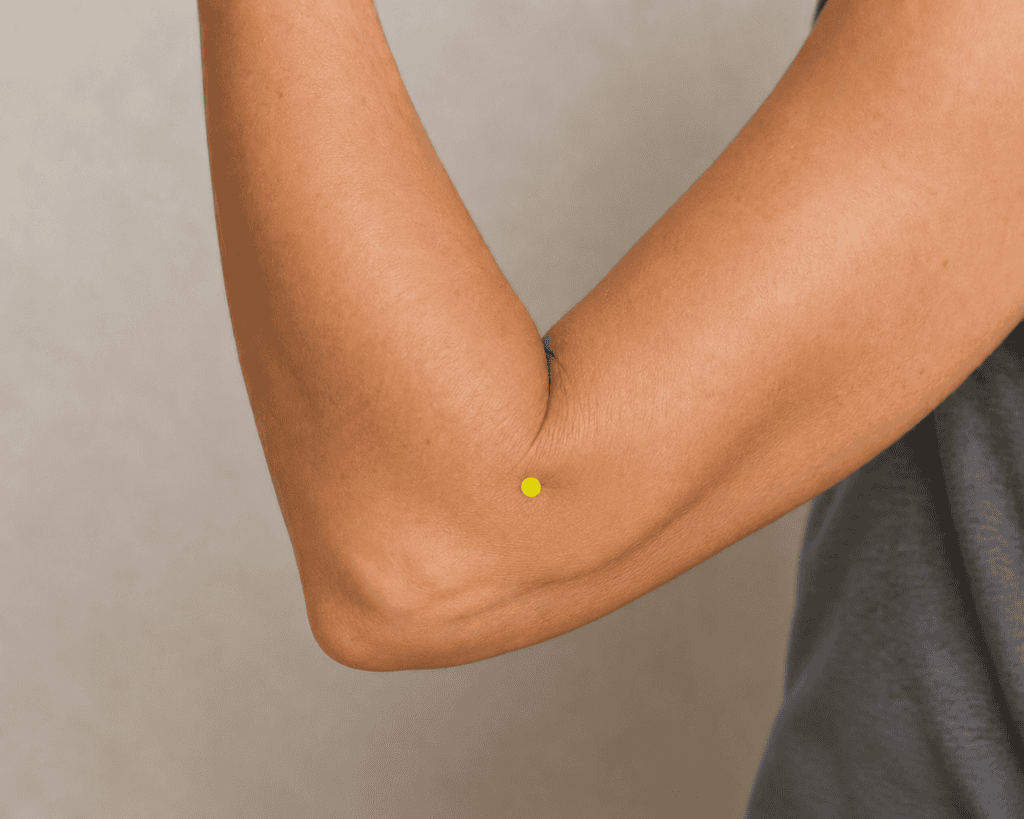
6. Press on LI11 at the elbow to clear heat from the body. LI11 sits at the outer end of the elbow crease, in the hollow that forms when the elbow is bent, at the top of the forearm. Press firmly with your thumb for one to two minutes on each arm. LI11 is called “Quchi,” and it is one of the strongest general heat-clearing points in the body.
LI11 clears heat broadly from the body, which suits the nosebleed that comes from too much internal heat pushing the blood outward. On the Large Intestine channel that connects up to the nose, it cools the heat that drives reckless bleeding and works well together with ST44 for the person whose nosebleeds come with a generally overheated constitution. Like the other heat-clearing points, this one is for addressing the underlying tendency between episodes rather than for the moment of an active bleed.
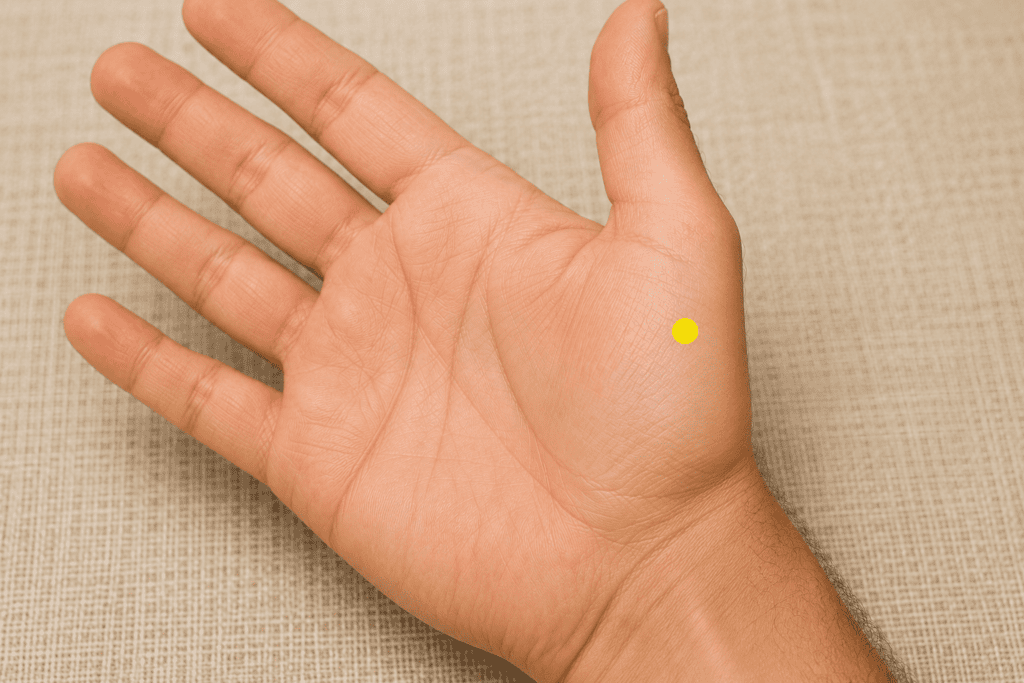
7. Press on LU10 on the thumb to clear Lung heat. LU10 sits on the palm side of the hand, on the fleshy mound at the base of the thumb, midway along the thumb bone where the red and white skin of the palm edge meet. Press firmly with the thumb of your other hand for about a minute on each hand. LU10 is called “Yuji,” the “Fish Border,” and it clears heat from the Lung.
Because the Lung opens into the nose, Lung heat rises directly to it and is a frequent cause of nosebleeds, often alongside a dry nose, a dry throat, or a dry cough. LU10 is the point that clears heat specifically from the Lung, cooling the source that sends heat up into the nose. For the person whose nosebleeds come with dryness and heat in the chest and throat, this point addresses that particular pattern, and it belongs to the between-episode work of settling the heat behind recurrent bleeding.
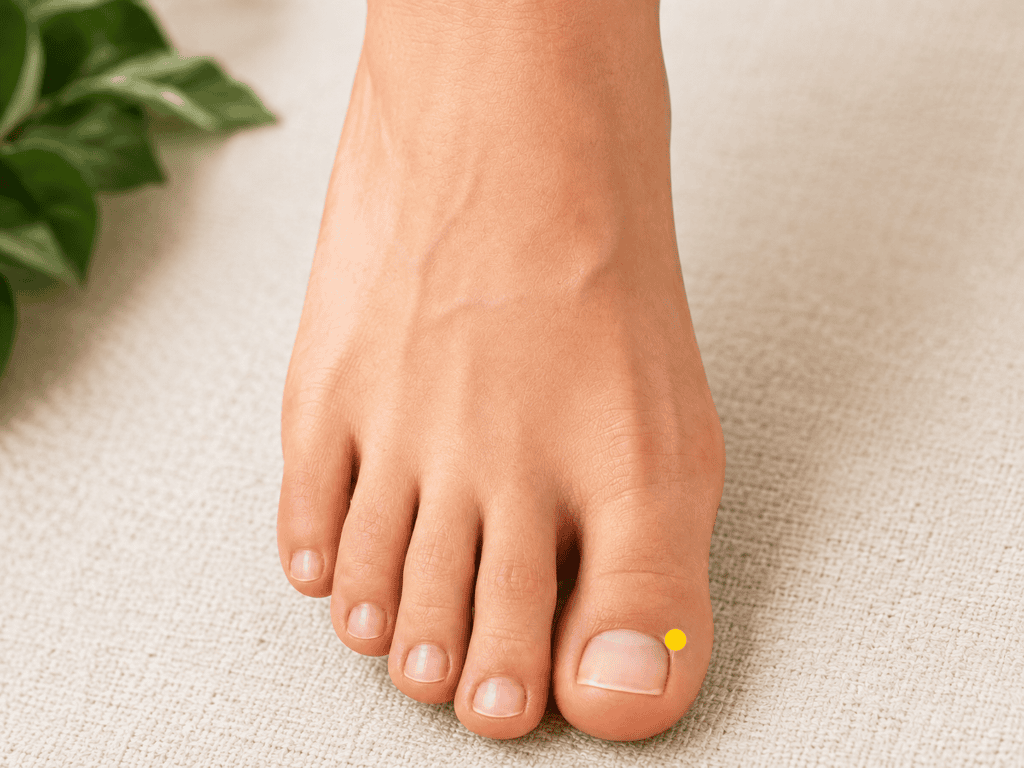
8. Press on SP1 at the big toe to help hold the blood. SP1 sits at the inner corner of the big toenail, at the base of the nail on the side nearest the other toes. Press firmly with your thumbnail or fingertip for about a minute on each foot. SP1 is called “Yinbai,” and it is the classic point for helping the body hold blood in the vessels.
In Chinese medicine the Spleen governs the blood and keeps it contained within the vessels, and when the Spleen is weak, blood can leak out, which is one pattern behind recurrent bleeding. SP1 is the traditional point for strengthening that holding function and settling bleeding, long used for a range of bleeding complaints. For the person whose nosebleeds seem to come from a general tendency to bleed easily rather than from obvious heat, this point addresses that side of the picture, and it is worked between episodes as part of the longer-term approach.
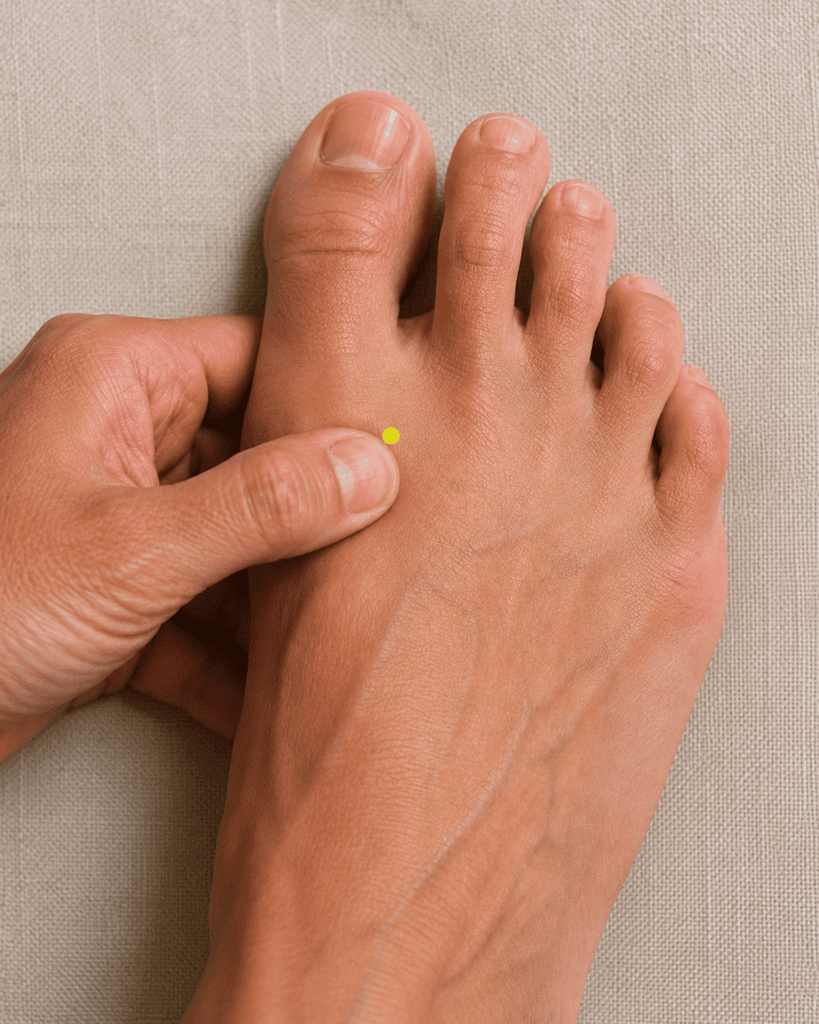
9. Press on LR3 on the top of the foot to settle Liver fire. LR3 sits on the top of the foot, in the webbing between the big toe and second toe, about two finger-widths back where the bones meet in a small hollow. Press firmly with your thumb for one to two minutes on each foot. LR3 is called “Taichong,” and it is the primary point for settling the Liver.
When nosebleeds are tied to stress, irritability, headaches, or a red, flushed face, Chinese medicine often reads them as Liver fire blazing upward and forcing the blood out, and LR3 is the point that brings that fire back down. It settles the Liver and clears the heat that rises to the head, which makes it valuable for the person whose nosebleeds flare during stressful, heated periods. As with the other root points, this one is used between episodes to calm the fire that drives the bleeding rather than during the bleed itself.
Why These Acupressure Points Work
In Traditional Chinese Medicine, most nosebleeds, especially frequent ones, are caused by heat forcing blood out of the vessels. This heat rises to the nose via the Lung, which opens into it, and the Stomach channel that reaches it. Sometimes, nosebleeds can also stem from Liver fire or from a Spleen too weak to retain blood. These nine acupressure points target the whole pattern.
- The local nose points (GV26, LI20, GV23) support the nose directly and can be used alongside the pinch during a bleed, with GV23 also targeting the nose between episodes.
- The face command point (LI4) regulates the whole facial region and helps clear heat.
- The heat-clearing points (ST44, LI11, LU10) cool the Stomach, general, and Lung heat that drive reckless bleeding, worked between episodes to address the root.
- The blood-holding point (SP1) strengthens the Spleen’s job of keeping blood in the vessels.
- The Liver point (LR3) settles the fire that rises to the head when stress and heat are behind the bleeding.
How to Properly Use These Acupressure Points
Make sure to clearly differentiate between two key steps: immediate response when a nosebleed occurs and strategies to decrease their frequency over time.
- During an active nosebleed, the pinch comes first and stays first. Keep leaning forward and pinching the soft part of the nose for the full ten to fifteen minutes, and use GV26, LI20, and LI4 with your free hand to support the nose while you do.
- For recurrent nosebleeds, work the heat-clearing and root points, ST44, LI11, LU10, SP1, and LR3, along with GV23, between episodes, holding each for one to two minutes once or twice a day over a stretch of weeks to address the underlying tendency.
- Match the root points to your pattern where you can, LU10 for dryness and heat in the chest, ST44 for a hot, rich-food constitution, LR3 for stress and irritability.
Prevention plays a significant role in managing nosebleeds.
To avoid dryness, which is a major trigger, use a humidifier in dry or heated environments and apply saline gel or petroleum jelly inside the nostrils to keep the lining moisturized. Avoid picking your nose or blowing it forcefully, and stay well-hydrated. After a nosebleed, refrain from bending over, lifting heavy objects, or blowing your nose for several hours to prevent disturbing the clot. In Chinese medicine, those prone to heat-induced nosebleeds are advised to limit spicy, greasy, and heating foods, as well as alcohol.
When to Get Professional Help
Most nosebleeds are minor and stop with the pinch. Some need medical care, and it is important to know which ones.
Seek emergency care for a nosebleed that will not stop after twenty to thirty minutes despite continuous pressure, if the bleeding is very heavy, if you feel faint, dizzy, or short of breath, or if the nosebleed results from a fall, blow to the head or face, or an accident, as these could indicate a broken nose or other serious injury. Consult a doctor for recurrent nosebleeds, which need proper evaluation. Be extra cautious if you use blood thinners or have a bleeding disorder, as bleeding may be harder to control. Nosebleeds accompanied by easy bruising, bleeding elsewhere, or frequent recurrence with no clear cause should be checked by a healthcare professional.
Acupressure and good home care can help manage common nosebleeds and reduce their frequency, but they are not substitutes for medical evaluation when needed.
Above and Beyond Acupuncture offers acupuncture, cupping, and lifestyle coaching at the North Frank Lloyd Wright Boulevard location in Scottsdale.
Schedule an appointment online or call us today to start your healing journey.
The points above are only as effective as the technique used to apply them. Where to press, how firmly, and for how long all affect the result. For a full breakdown of how to perform acupressure properly at home, read Performing Acupressure in 3 Easy Steps.

About the Publisher
Paul Kerzner, L.Ac., is a licensed acupuncturist and board-certified herbalist, as well as the founder of Above and Beyond Acupuncture in Scottsdale. His own journey from chronic patient to practicing acupuncturist shapes his commitment to providing honest, clinically grounded information about acupuncture and Traditional Chinese Medicine. Learn more about Paul and his clinical approach on the About Us page.