
Key Takeaways
- Heartburn occurring twice weekly may indicate GERD, involving acid reflux and various symptoms like chest burning and difficulty swallowing.
- Acupressure for GERD targets nine specific points that help direct Stomach Qi downward, balance Liver Qi, and relieve symptoms.
- Pressing PC6 and CV12 is crucial for managing heartburn, while CV17 and CV22 can help with chest and throat discomfort.
- Stress relief is essential; points like LR14 and LR3 can help reduce stress-related reflux.
- Acupressure can complement medication but consult a doctor if symptoms are frequent or severe.

If you experience heartburn two or more times weekly, it may indicate gastroesophageal reflux disease (GERD). This condition occurs when the muscle at the lower end of the esophagus fails to close properly, allowing stomach acid to flow back up. Symptoms include a burning sensation in the chest, a sour or bitter taste, regurgitation, a lump-in-the-throat sensation, and difficulty swallowing. Other signs include a persistent cough, hoarseness, frequent throat clearing, or worsening asthma. If untreated, GERD can inflame and damage the esophageal lining. While medication is essential, acupressure might also help alleviate symptoms and target patterns identified in Traditional Chinese Medicine.
Traditional Chinese Medicine (TCM) attributes reflux to issues with Stomach Qi, where its normal downward flow reverses, and acid moves upward. Various factors can contribute to this. Stress can block Liver Qi, impacting the Stomach and pushing Qi upwards, which worsens reflux during stressful periods and causes tightness under the ribs. Excess heat in the Stomach, often from spicy, greasy, or rich foods, or alcohol and coffee, can lead to burning sensations, a sour taste, and bad breath. Weakness in the Spleen and Stomach can cause dampness to build up, resulting in bloating, regurgitation, and a heavy feeling after eating. When Stomach Yin is deficient, typically with age or chronic reflux, nighttime burning and dryness in the mouth and throat tend to worsen.
Here are nine acupressure points that help direct Stomach Qi downward, balance Liver, clear heat, support digestion, and soothe the throat.
What Acupressure Points to Press and Why
1. Press on PC6 on the inner forearm to send the Stomach Qi down. Locate PC6 about three finger-widths above the inner wrist crease, in the middle of the forearm between the two tendons. Apply firm pressure with your thumb for one to two minutes on each arm. PC6 is also known as “Neiguan,” which means the “Inner Pass.”
PC6 is a key point for calming the upward movement of Stomach Qi and sending it back down. It helps relieve heartburn, nausea, and regurgitation while opening the chest and calming the mind; it’s especially useful for stress-induced reflux. This point is central to this routine and can be pressed whenever symptoms occur.

2. Press on CV12 above the navel to settle the Stomach. CV12 is located on the midline of the abdomen, roughly midway between the navel and the lower end of the breastbone, about four finger-widths above the belly button. Gently press in slow, clockwise circles for one to two minutes, and do this at least an hour after eating. This point is known as “Zhongwan,” the gathering point of the Stomach.
CV12 is located directly above the stomach and serves as the primary point for harmonizing the stomach and encouraging the downward movement of its contents. It helps relieve feelings of fullness, pressure, and the upward push of acid. Apply gentle pressure, and avoid pressing this point immediately after a large meal.

3. Press on CV17 at the center of the chest to ease burning. CV17 is located on the midline of the breastbone, aligned with the space between the nipples. Apply gentle pressure with your fingertip or rest your palm over it for one to two minutes while exhaling slowly. This point is known as “Shanzhong.”
CV17 is located over the esophagus, the area associated with heartburn, and helps to soothe the upward-rising Qi. It reduces the burning and tight sensation in the chest and works well with PC6.

4. Press gently on CV22 at the base of the throat for throat symptoms. CV22 is located in the small hollow at the base of the throat, just above the top of the breastbone. Gently press with your fingertip, angling it downward behind the top of the breastbone rather than straight back into the throat, for about thirty seconds to a minute. This point is called “Tiantu,” meaning “Heaven’s Chimney.”
When reflux reaches the throat, it can cause a hoarse voice, a lump-in-the-throat feeling, the urge to clear your throat, and a cough. CV22 is a key point for the throat and helps move Qi downward. Press gently and angle the pressure downwards, as this area is sensitive.

5. Press on LR14 below the chest for stress-driven reflux. LR14 is located on the chest, directly below the nipple in the gap between the ribs, roughly two ribs down. Gently press with your fingertips for one to two minutes on both sides. It is known as “Qimen,” or the “Gate of Hope.”
LR14 is a classic point for when stress and the Liver overwhelm the Stomach, used for sour regurgitation, belching, and tightness under the ribs. When stress disrupts digestion and causes acid to rise, stimulating this point helps relieve the constriction.

6. Press on LR3 on the top of the foot to calm the Liver. LR3 is located on top of the foot, in the webbing between the big toe and second toe, about two finger-widths back from the webbing, in the hollow just before the two bones meet. Press firmly with your thumb for one to two minutes on each foot. LR3 is also known as “Taichong.”
LR3 helps release blocked Liver Qi and lower stress, which eases pressure on the Stomach. When used with LR14, it targets reflux caused by stress from both directions, making it a useful acupressure point to press during stressful times when reflux might intensify.
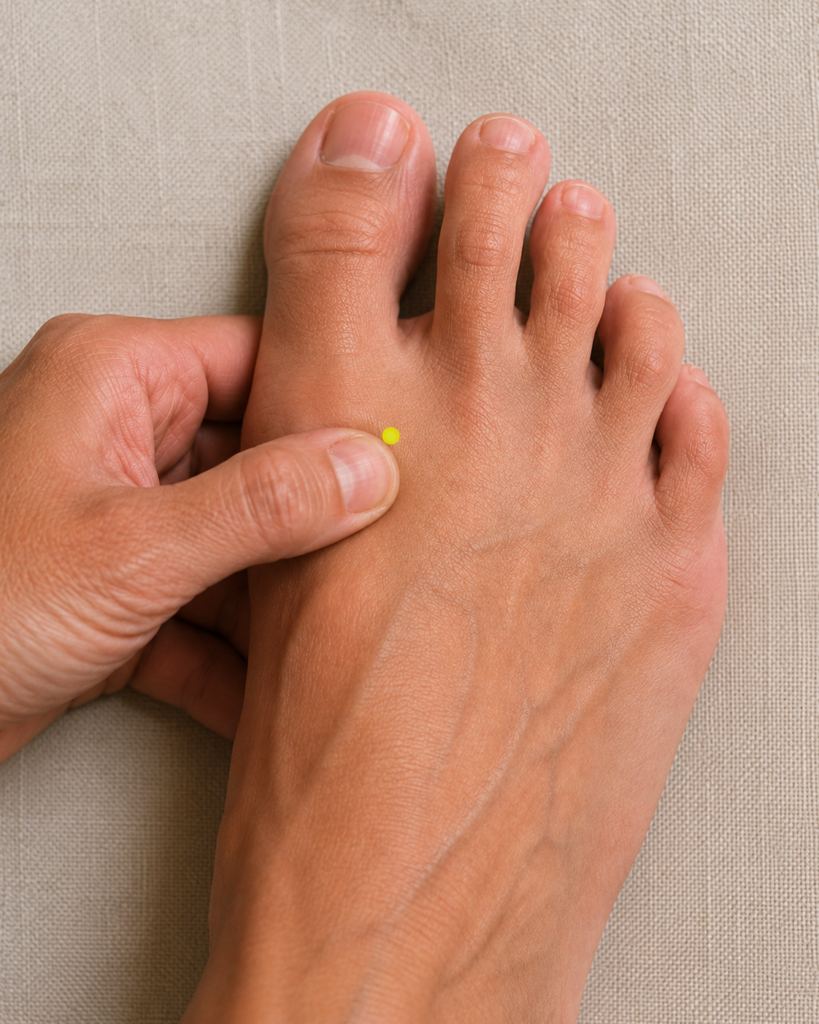
7. Press on ST44 between the toes to clear Stomach heat. ST44 is located on the top of the foot, in the webbing between the second and third toes where they meet. Apply firm pressure with your thumb for one to two minutes on each foot. This point is known as “Neiting.”
If reflux results in a sour taste, bad breath, or a strong appetite, Traditional Chinese Medicine interprets this as excess heat in the Stomach. ST44 is the primary acupressure point used to eliminate this heat and is especially effective after meals that are rich, spicy, or fatty.

8. Press on SP4 on the arch of the foot to settle the gut. SP4 is located on the inner arch of the foot, in the depression just below and in front of the bony bump behind the big toe joint. Press firmly with your thumb for one to two minutes on each foot. SP4 is also known as “Gongsun.”
SP4 and PC6 form a highly reliable pairing for the upper digestive tract, commonly used to alleviate feelings of fullness, regurgitation, and discomfort in the stomach and chest. Because SP4 supports the Spleen, it is particularly beneficial when reflux is combined with bloating and a heavy feeling.

9. Press on ST36 below the knee to strengthen digestion. ST36 is located four finger-widths below the lower edge of the kneecap and one finger-width to the outside of the shinbone, on the muscle that bulges when you flex your foot. Press firmly with your thumb for one to two minutes on each leg. This point is known as “Zusanli,” meaning “Leg Three Miles.”
ST36 is the main point for the Stomach and helps enhance digestion by directing the Stomach’s Qi downward. Regularly stimulating this point in cases of chronic GERD can promote more consistent digestion over time.

Why These Acupressure Points Work
In Traditional Chinese Medicine, GERD is referred to as rebellious Stomach Qi. This condition arises from stress pressing on the Stomach, heat, poor digestive function, or depleted Stomach Yin. The nine points are relevant for this situation.
- The descending points (PC6, SP4, CV12, ST36) direct Stomach Qi downward and enhance digestion.
- The chest and throat points (CV17, CV22) help alleviate burning sensations and throat issues.
- The Liver points (LR14, LR3) help relieve the stress that causes acid to move upward.
- The cooling point (ST44) relieves heat buildup behind the burning sensation and reduces sour taste.
Research indicates that acupuncture might help alleviate GERD symptoms, even in individuals experiencing symptoms despite medication. However, evidence is still developing, so acupressure should be used as a complementary treatment alongside standard medical care.
How to Properly Use These Acupressure Points
- Press PC6 and SP4 whenever you experience heartburn, and also before bed if you have nighttime reflux.
- Gently massage CV12 in slow, clockwise circles at least an hour after eating, but never immediately after a meal.
- Add CV17 and CV22 for chest burning and throat symptoms, ensuring CV22 remains gentle and angled downward.
- If stress aggravates your reflux, include LR14 and LR3. After consuming rich or spicy meals, add ST44.
- Activate ST36 daily to strengthen digestion over time.
- Hold each point for one to two minutes and continue taking any medication your doctor has prescribed.
Daily habits are some of the most effective ways to manage GERD. Ensure you finish eating at least three hours before bed. Elevate your bed’s head with blocks or a wedge, avoiding stacking pillows. Sleep on your left side, which appears to lower nighttime reflux. Eat smaller, slower meals and identify personal triggers such as coffee, alcohol, chocolate, mint, spicy or fatty foods, citrus, tomatoes, and fizzy drinks. Avoid tight waistbands and belts, refrain from smoking, and if overweight, work towards a healthier weight to reduce stomach pressure. Practicing slow belly breathing for a few minutes daily can strengthen the muscle that keeps the valve closed and lessen stress that worsens reflux. Following Traditional Chinese Medicine guidance, opt for warm, cooked, simple meals and limit greasy, spicy, and rich foods.
When to Get Professional Help
Consult your doctor for diagnosing and managing GERD, especially if symptoms are frequent or you have relied on antacids or acid reducers for a long time. Seek emergency care if you experience chest pain or pressure, particularly with shortness of breath, sweating, or pain spreading to the arm or jaw, as heart issues can mimic heartburn. Seek help promptly for difficulty or pain when swallowing, a sensation of food being stuck, vomiting blood or material resembling coffee grounds, black or tarry stools, unexplained weight loss, or signs of anemia like unusual fatigue. Also, see your doctor for hoarseness lasting over a few weeks, a chronic cough, symptoms that persist despite medication, or new reflux symptoms later in life. Discuss whether your medical history warrants esophageal checks for long-term changes.
Acupressure offers natural, holistic support for GERD and can complement medical treatment.
Above and Beyond Acupuncture offers acupuncture, cupping, and lifestyle coaching at the North Frank Lloyd Wright Boulevard location in Scottsdale.
Schedule an appointment online to start your healing journey.
The points above are only as effective as the technique used to apply them. Where to press, how firmly, and for how long all affect the result. For a full breakdown of how to perform acupressure properly at home, read Performing Acupressure in 3 Easy Steps.
For occasional heartburn, acupressure for acid reflux is the companion post; for a more extensive look at diet and lifestyle, treating acid reflux holistically, part 1 and part 2 provide more information.

About the Publisher
Paul Kerzner, L.Ac., is a licensed acupuncturist and board-certified herbalist, as well as the founder of Above and Beyond Acupuncture in Scottsdale. His own journey from chronic patient to practicing acupuncturist shapes his commitment to providing honest, clinically grounded information about acupuncture and Traditional Chinese Medicine. Learn more about Paul and his clinical approach on the About Us page.