Key Takeaways
- Stress affects both the mind and body, and prolonged tension can lead to serious issues; acupressure offers a natural way to relieve them.
- Traditional Chinese Medicine views stress as a blockage of Qi, particularly in the Liver, which manifests as physical tension and irritability.
- Key acupressure points include LR3 for freeing stuck Qi, LI4 for moving stress out, GB21 for releasing shoulder tension, and Yintang for calming the mind.
- To effectively manage stress with acupressure, consistently press on specific points, hold for one to two minutes, and incorporate deep breathing exercises.
- For severe, constant stress that affects daily life, seeking professional help is essential because acupressure is not a substitute for medical care.

Stress is part of modern life and something many people experience every day.
The mind stays active, the shoulders rise toward the ears, the jaw tightens, and a tightness settles in the chest, accompanied by a constant hum of pressure throughout the day. While some stress is normal, prolonged tension can strain both mind and body, so it is important to find ways to relieve it. Acupressure offers a simple, natural remedy that helps release built-up tension and calm an overstimulated nervous system.
In Traditional Chinese Medicine, stress is seen as a blockage in the flow of Qi, especially in the Liver, since the Liver helps the energy move smoothly through the body. If stress interferes with this flow, it may cause feelings of tightness, tension, irritability, and being wound up. Physically, disrupted flow can show up as knotted shoulders, a clenched jaw, headaches, and a churned stomach. This happens because the nervous system stays in a sympathetic fight-or-flight state, which raises cortisol levels and makes it hard to relax. The points listed below aim to unblock and smooth Liver Qi, release physical tension, and calm the mind and nervous system to help the body relax.
Acupressure is a helpful tool for reducing everyday stress and works well alongside clinical care that addresses stress more deeply, as the article “Can Acupuncture Reduce Stress?” explains.
The following points help release physical tension and calm an anxious mind:
What Acupressure Points to Press and Why
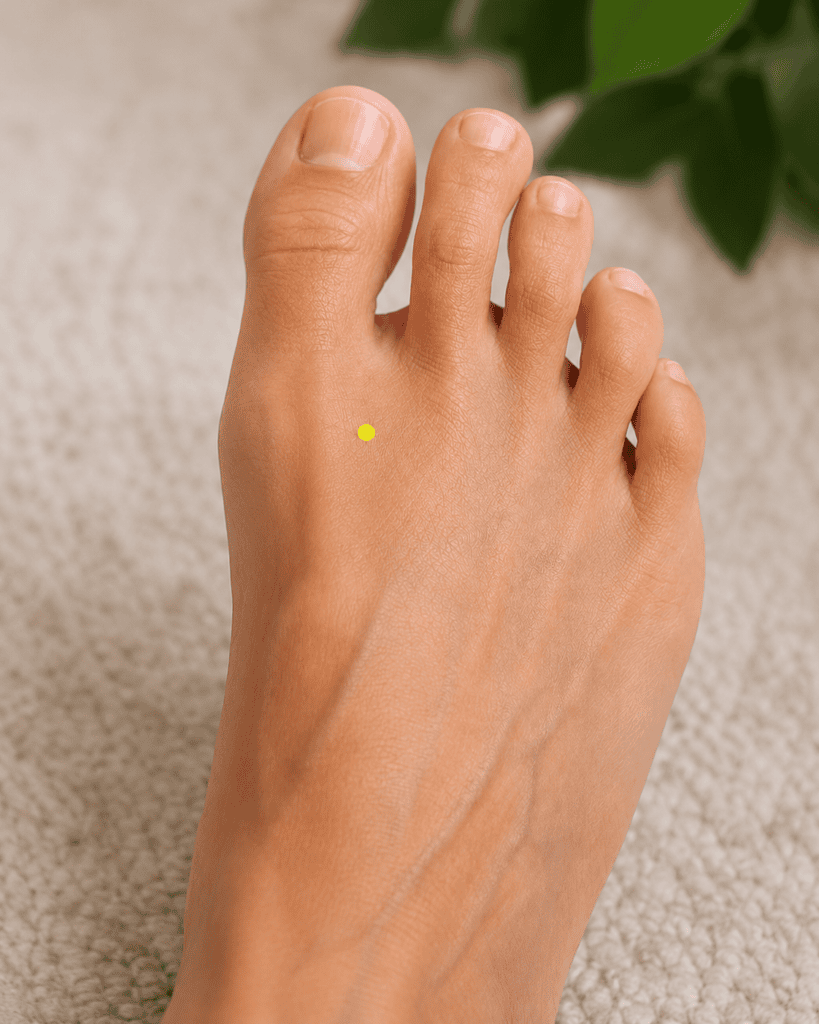
1. Press on LR3 on the top of the foot to free the stuck Qi of stress. LR3 sits on the top of the foot, in the webbing between the big toe and second toe, about two finger-widths back where the bones meet in a small hollow. Press firmly with the thumb for one to two minutes on each foot. LR3 is called “Taichong,” and it is the primary point for the Liver and for moving stuck Qi.
Because stress binds the Liver Qi, LR3, the Liver’s key regulating point, is the most stress-specific point available. It releases stagnation, easing tension, irritability, and the tight, wound-up feeling of stress and allowing the whole system to relax. It also grounds an overwhelmed body by guiding energy downward toward the feet, reducing focus on a racing head. When stress makes you feel tense and stuck, this is the first point to target, serving as the foundation of the routine.
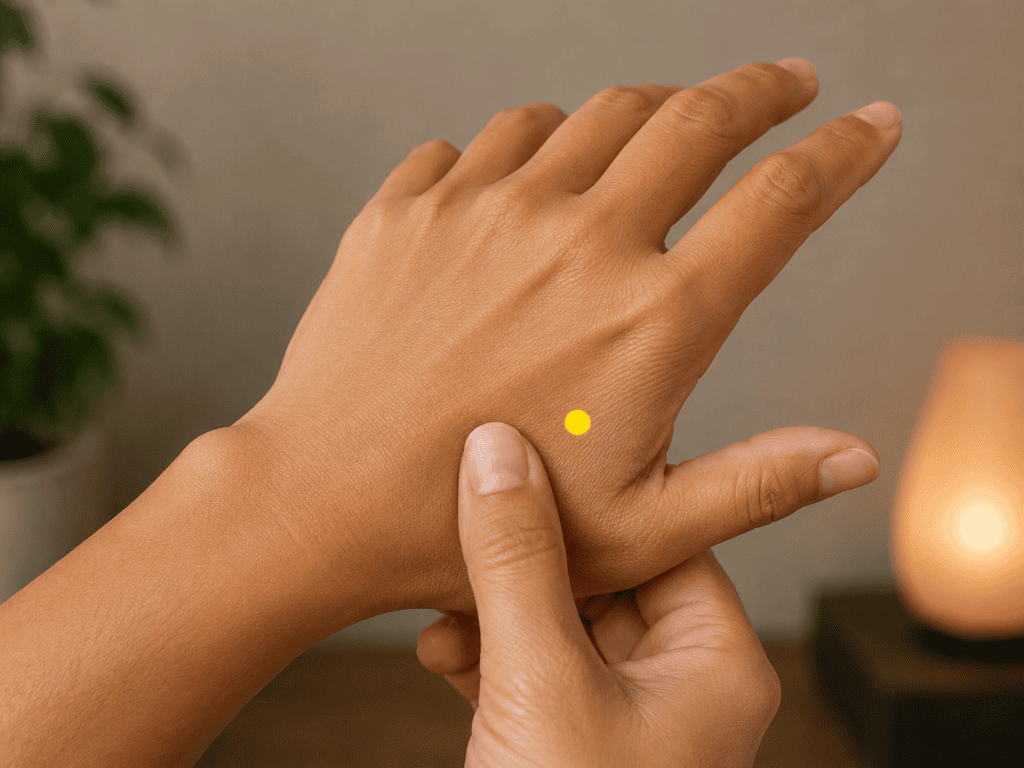
2. Press on LI4 in the hand to move stress through and out. LI4 sits in the webbing between the thumb and index finger, at the highest point of the muscle when you bring the thumb and finger together. Press firmly with the thumb of your other hand for one to two minutes on each hand. LI4 is called “Hegu,” and it is one of the great points for moving Qi through the body. LI4 is avoided during pregnancy.
LI4 helps move stagnant Qi and relieves head tension. When pressed together with LR3 on the foot, they create the well-known Four Gates, a powerful acupressure duo that promotes free energy flow and calms a stressed system. Using both points together releases accumulated stress throughout the body more effectively than using either alone. Additionally, this combination can alleviate tension headaches common after a stressful day and can be pressed quietly at any time when pressure increases.
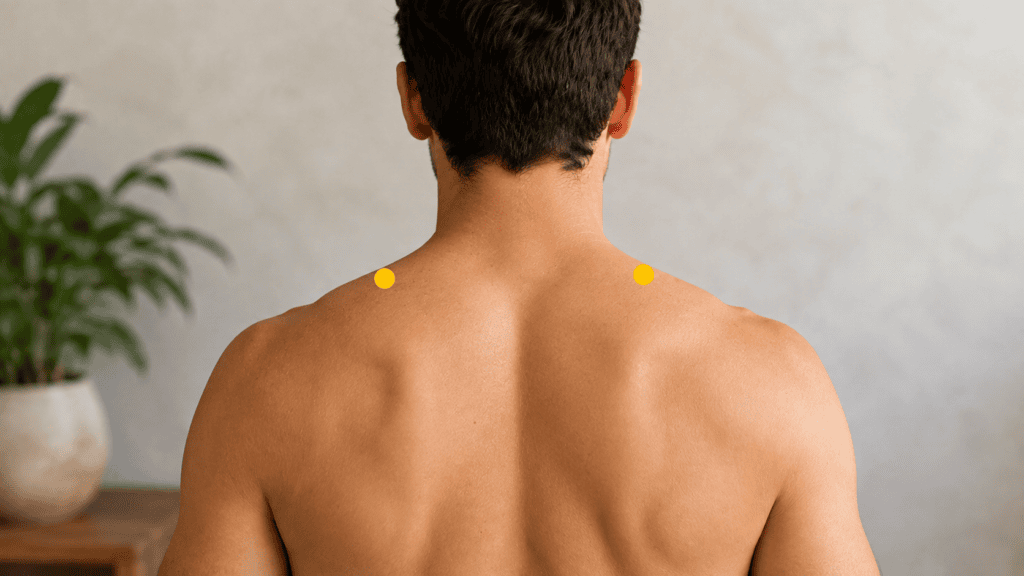
3. Press on GB21 on top of the shoulder to release where stress sits. GB21 sits at the highest point of the shoulder, midway between the base of the neck and the tip of the shoulder, on the ridge of the trapezius muscle. Press down firmly with your fingertips, or pinch the muscle, for one to two minutes on each side. GB21 is called “Jianjing.” GB21 is avoided during pregnancy.
Stress often manifests physically in the shoulders, particularly in the tight, hunched, and aching trapezius muscles that rise toward the ears as the day progresses. GB21 is a key point for relieving this tension. It helps release both stuck energy (Qi) and accumulated stress, making it especially soothing to press after a tiring day. For those who carry their stress in a knotted upper back and shoulders, this point offers a direct way to unwind it. As one of the most satisfying points to work on, it effectively alleviates tension in that area.
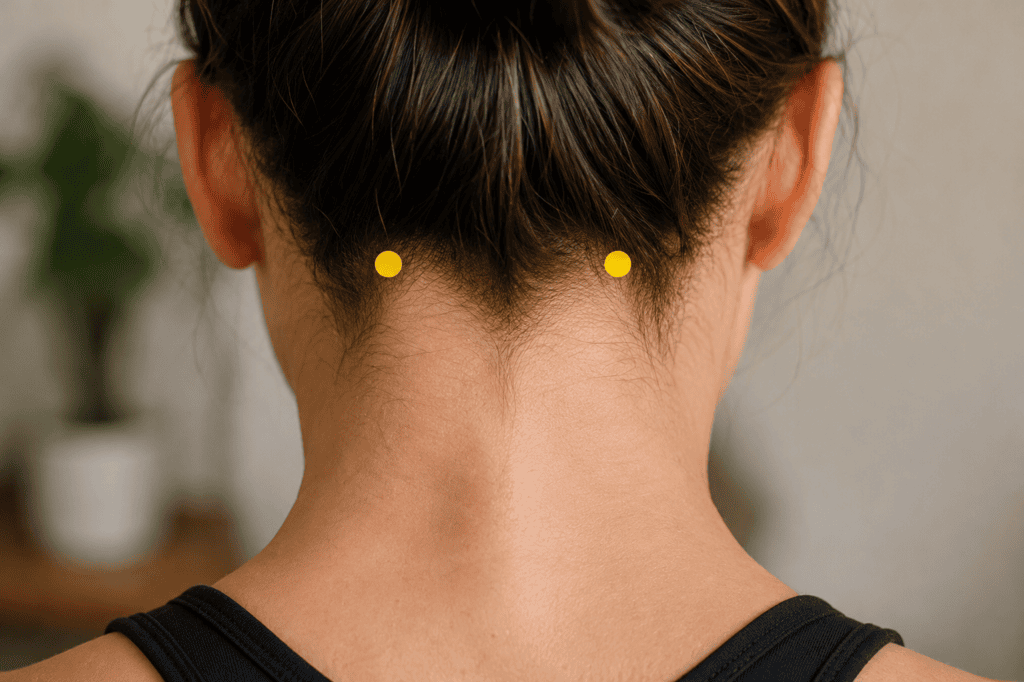
4. Press on GB20 at the base of the skull to release neck tension. GB20 sits in the two hollows at the base of the skull, between the two large vertical neck muscles and the outer edge, roughly level with the tops of the ears. Tip your head back slightly and press firmly up and inward with your thumbs for one to two minutes. GB20 is called “Fengchi,” a major point for the head and neck.
Stress travels up the neck into the head, tightening muscles at the base of the skull and causing pressure and headaches typical of a stressful day. GB20 helps by releasing tension at the neck-head junction, reducing the heavy, tight feeling associated with stress. For those with a stiff neck and stress-related tension headaches, this point relieves both symptoms and calms the mind by easing bodily tension.
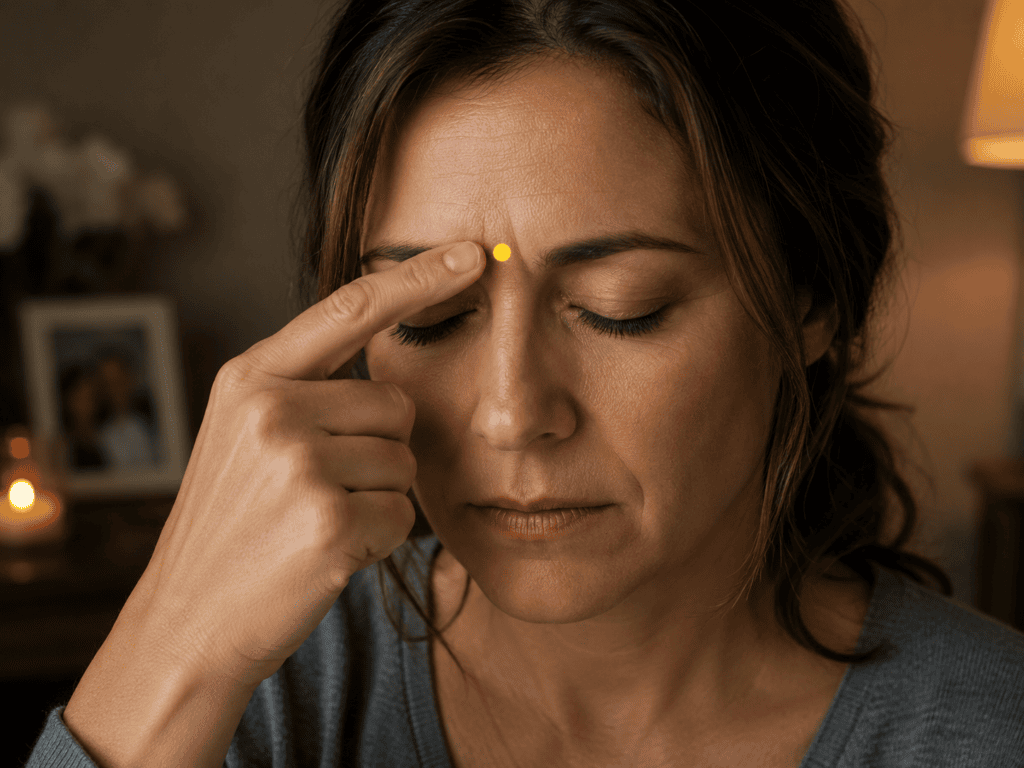
5. Press on Yintang between the eyebrows to quiet the wound-up mind. Yintang sits in the small hollow directly between the two eyebrows. Press steadily and hold, or make small, slow circles with your fingertip for one to two minutes. Yintang is an extra point and one of the most calming points in the body.
Yintang helps settle the Shen and quiet the restless, overstressed mind. It relaxes racing thoughts and relieves the feeling of being frazzled and stretched thin. The point calms the entire nervous system and relieves tension between the brows from stress and prolonged intense focus. For mental stress, such as an endlessly active mind or overwhelming feelings, Yintang reduces these symptoms, and applying gentle pressure with a few deep breaths can create a true moment of pause.
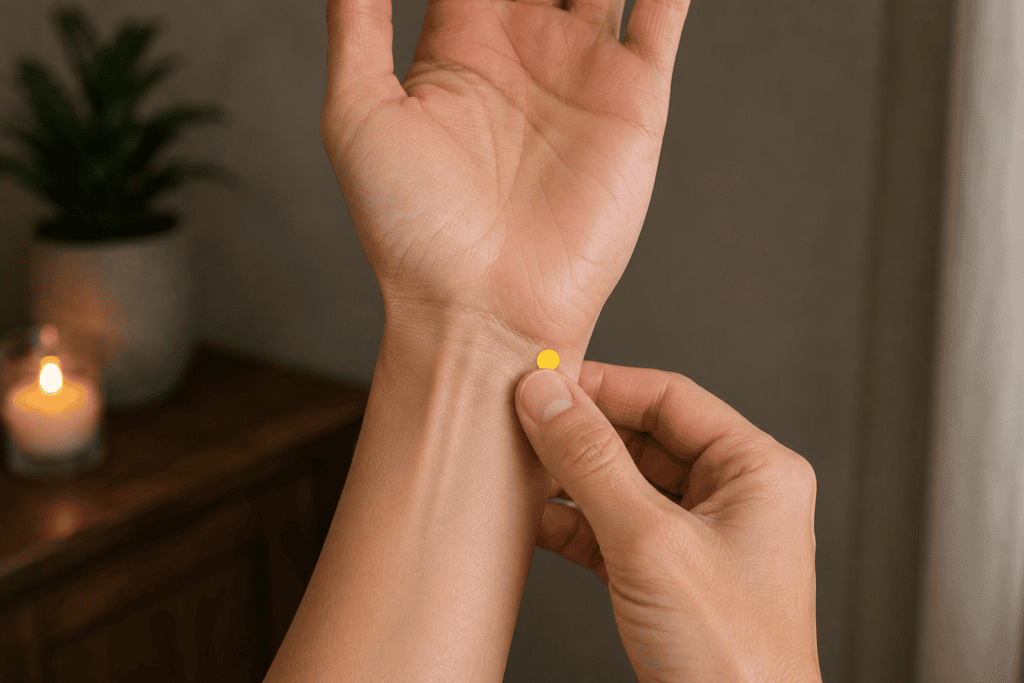
6. Press on HT7 at the wrist to calm the nervous system. HT7 sits on the inner wrist crease, on the pinky side, in the small hollow just inside the tendon. Press firmly with your thumb for one to two minutes on each wrist. HT7 is called “Shenmen,” the “Spirit Gate,” and it is the source point of the Heart and the most important point for calming the Shen.
HT7 calms the Heart and settles the Shen, easing the anxious, on-edge, restless feeling that builds under stress and steadying the whole nervous system. As the Spirit Gate, it is the single most important point for a mind that cannot settle, and it helps with the poor sleep that a stressful stretch so often brings. For the wired, unsettled quality of being stressed, this point steadies it at the root, and it is discreet and easy to press wherever you are.
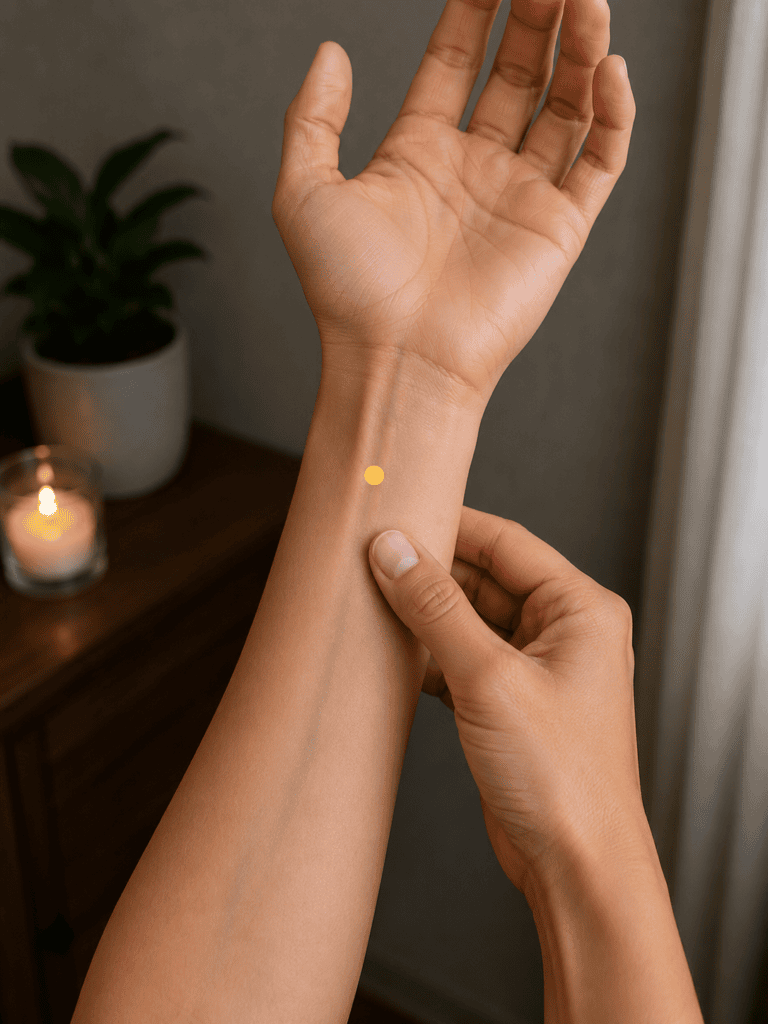
7. Press on PC6 on the inner forearm to open a tight chest. PC6 sits three finger-widths above the inner wrist crease, in the center of the forearm between the two tendons. Press firmly with your thumb for one to two minutes on each arm. PC6 is called “Neiguan,” the “Inner Pass,” and it opens the chest and calms the mind.
Stress often shows up as a tight, constricted sensation in the chest, with a churning stomach and shallow breathing. PC6 helps to alleviate these symptoms by opening and releasing that tension. It relaxes the chest, settles an unsettled stomach, and calms the nervous system at the same time, making it one of the most valuable points when stress causes chest tightness and rapid, shallow breathing. For those who experience stress as a knot in the chest and a fluttering or off-center stomach, this point helps to release that tension and encourages deeper breathing.
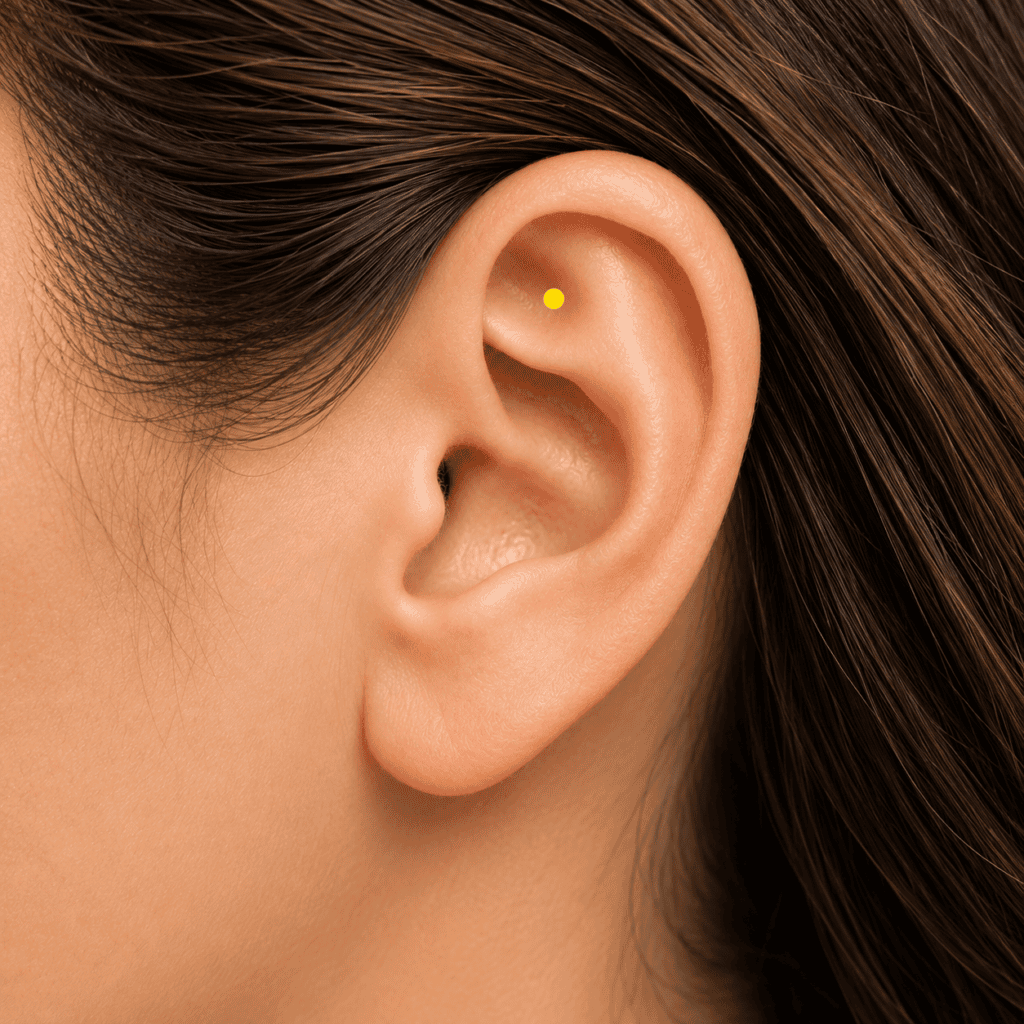
8. Press on Ear Shenmen for quick, discreet calm. Ear Shenmen sits in the upper part of the ear, in the triangular hollow near the top, at its apex. Press gently with your fingertip or squeeze between your finger and thumb for about a minute on each ear. Ear Shenmen is one of the most calming points on the ear and shares its name, “Spirit Gate,” with the Heart point HT7.
Ear Shenmen is a highly dependable point for calming the mind, often used to relieve stress, tension, and feelings of overwhelm. It acts quickly, rapidly calming the Shen and reducing stress spikes in moments. Its discreet nature means resting a hand near your ear goes unnoticed. Whether in a meeting, in traffic, or before a challenging task, this point calms the entire system immediately.
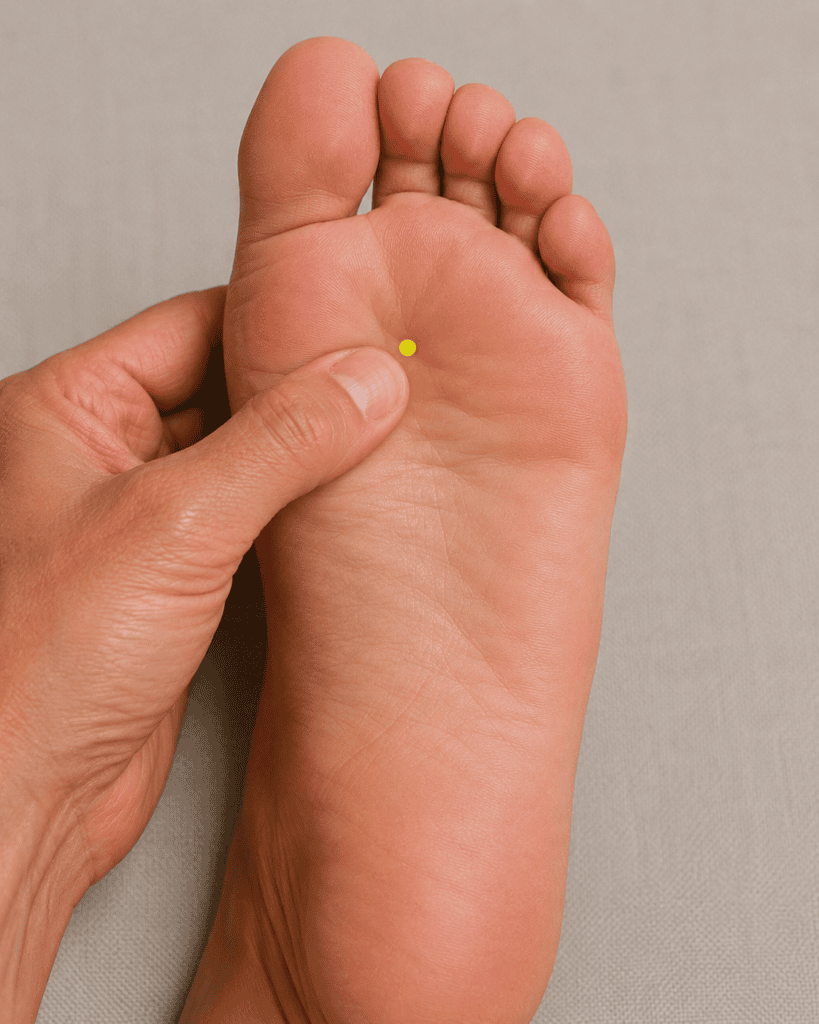
9. Press on KI1 on the sole of the foot to ground a frazzled system. KI1 sits on the sole of the foot, in the hollow that forms in the center of the ball of the foot when you curl the toes, about a third of the way down from the toes to the heel. Press firmly with your thumb for one to two minutes on each foot. KI1 is called “Yongquan,” the “Bubbling Spring,” and it is the lowest point on the body.
KI1 helps redirect the scattered, head-focused energy of stress downward and anchor it into the earth, providing the perfect reset for an overwhelmed, frazzled system. As the body’s lowest point, it offers a deeply calming effect, pulling you out of a spinning head and racing chest back to stable ground. When stress leaves you feeling ungrounded, scattered, and pulled in multiple directions, this point helps you find your center, serving as a fitting conclusion to a routine and settling everything released by the other points.
Why These Acupressure Points Work
In Traditional Chinese Medicine, stress binds the flow of Qi, particularly affecting the Liver, which can manifest as physical tension in the shoulders, neck, and chest, and can also affect the mind. In modern terms, this reflects a nervous system trapped in fight-or-flight, with elevated cortisol levels. The nine points address both aspects.
- The Qi-moving points (LR3, LI4) free the bound Liver Qi at the root of stress, working together as the Four Gates to move the pent-up pressure through and out of the body.
- The tension-release points (GB21, GB20) unlock the shoulders and neck where stress physically lodges.
- The calming points (Yintang, HT7, PC6, Ear Shenmen) quiet the wound-up mind, open a tight chest, and settle the nervous system.
- The grounding point (KI1) draws the scattered energy down and steadies a frazzled system.
How to Properly Use These Acupressure Points
Use these points whenever stress increases and regularly to prevent it from building up.
- For the physical tension of stress, work GB21 and GB20 to release the shoulders and neck, and the Four Gates of LR3 and LI4 to move the stuck Qi through the whole body.
- For the mental side, work Yintang, HT7, PC6, and Ear Shenmen to quiet the mind, open the chest, and calm the nervous system, and finish with KI1 to ground.
- In a stressful moment when you cannot step away, reach for the discreet points, Ear Shenmen, HT7, and LI4, pressed quietly with slow breathing.
- Hold each point for one to two minutes with firm, steady pressure, and slow your breathing while you press, since slow breathing is itself one of the fastest ways to calm the stress response.
Acupressure is most effective when combined with habits that prevent stress accumulation. Practicing slow, deep breathing can temporarily move the body out of the fight-or-flight response, making it worth doing regularly. Regular physical activity helps release built-up stress tension, while time outdoors, adequate sleep, and real breaks support the nervous system’s recovery. Limiting caffeine intake is advisable, as it can intensify feelings of stress and jitteriness. Additionally, addressing the root causes of ongoing stress is as important as managing its symptoms.
When to Get Professional Help
Everyday stress is normal, and these tools can help manage it. Sometimes stress is more severe. If it feels constant and overwhelming, affecting your sleep, health, work, or relationships, or if it leads to ongoing anxiety, low mood, or burnout, it’s important to seek help from a doctor or therapist. Care is effective for stress-related conditions.
If you ever feel overwhelmed to a crisis point or have thoughts of self-harm, contact the 988 Suicide and Crisis Lifeline immediately by calling or texting—available 24/7. While acupressure can help relieve everyday stress, it is not a substitute for professional support when stress becomes unmanageable.
Above and Beyond Acupuncture offers acupuncture, cupping, and lifestyle coaching at the North Frank Lloyd Wright Boulevard location in Scottsdale.
Schedule an appointment online or call us today to start your healing journey.
The points above are only as effective as the technique used to apply them. Where to press, how firmly, and for how long all affect the result. For a full breakdown of how to perform acupressure properly at home, read Performing Acupressure in 3 Easy Steps.

About the Publisher
Paul Kerzner, L.Ac., is a licensed acupuncturist and board-certified herbalist, as well as the founder of Above and Beyond Acupuncture in Scottsdale. His own journey from chronic patient to practicing acupuncturist shapes his commitment to providing honest, clinically grounded information about acupuncture and Traditional Chinese Medicine. Learn more about Paul and his clinical approach on the About Us page.