
Key Takeaways
- Trauma impacts both the body and mind, causing nervous system dysregulation; acupressure aids in calming it.
- Nine specific acupressure points address trauma-related symptoms by grounding, calming, and restoring energy.
- Practicing acupressure with gentle, mindful care can offer quick relief; always focus on safety and comfort.
- Combine acupressure with professional help for effective trauma recovery; techniques such as EMDR can be beneficial.
- Seek professional support if trauma symptoms persist or worsen; acupressure does not replace trauma-informed care.

Trauma affects the body as deeply as it does the mind. Long after a terrifying or traumatic event, the nervous system might stay in a constant state of alertness, leading to anxiety, agitation, heightened sensitivity, insomnia, and feeling on edge, as if a threat is still present, or it may go the other way and become numb, heavy, and detached. Acupressure cannot erase traumatic memories or replace professional trauma treatment. Its main role is to help calm and stabilize an overactive nervous system, serving as a grounding tool to reduce physical stress, promote calmness, and provide stability during difficult times.
When engaging with trauma-related practices, prioritize the context. Body-based techniques may trigger intense feelings or sensations, so proceed carefully and gently. Keep your eyes open if closing them feels unsafe. If any activity becomes more distressing than soothing, stop right away. Don’t force yourself to continue. If you start to feel overwhelmed, reduce the intensity and consider consulting a professional for safe support.
Throughout history, Traditional Chinese Medicine has understood that intense shock or fear significantly affects the Heart and Kidneys. The Heart, which houses the Shen (mind and spirit), can become disturbed by trauma, leading to symptoms such as a rapid heartbeat, hypervigilance, insomnia, and feelings of insecurity inside the body. At the same time, the Kidney governs fear and stores vital energy. Severe fright can scatter Qi and drain the Kidney, causing deep fear, fatigue, shakiness, and disrupting the vital link between the Heart and Kidney. These points are designed to calm and reconnect the Shen, stabilize dispersed energy, reduce fear, restore what trauma depletes, and gently awaken a numb system, helping the body recover a sense of safety and calm.
Below are nine acupressure points that can support your well-being. These points are suitable for gentle self-care and work best when used together with professional guidance.
What Acupressure Points to Press and Why
1. Press on KI1 on the sole of the foot to ground and come back to your body. KI1 sits on the sole of the foot, in the hollow that forms in the center of the ball of the foot when you curl the toes, about a third of the way down from the toes to the heel. Press firmly with your thumb for one to two minutes on each foot. KI1 is called “Yongquan,” the “Bubbling Spring,” and it is the lowest point on the body.
KI1 is the primary grounding point and often the most effective place to start trauma work. It helps to bring scattered, preoccupied, and floating energy back down into the earth, fostering a sense of rootedness. If trauma causes feelings of detachment, anxiety, or dissociation from your body, this point assists in reconnecting you with your physical self and stabilizing your system. As the lowest point on the body and the first point of the Kidney channel, it directly addresses deep-seated fear and restores central balance. Applying pressure to this point, especially when you feel your feet on the floor, enhances its grounding effect.

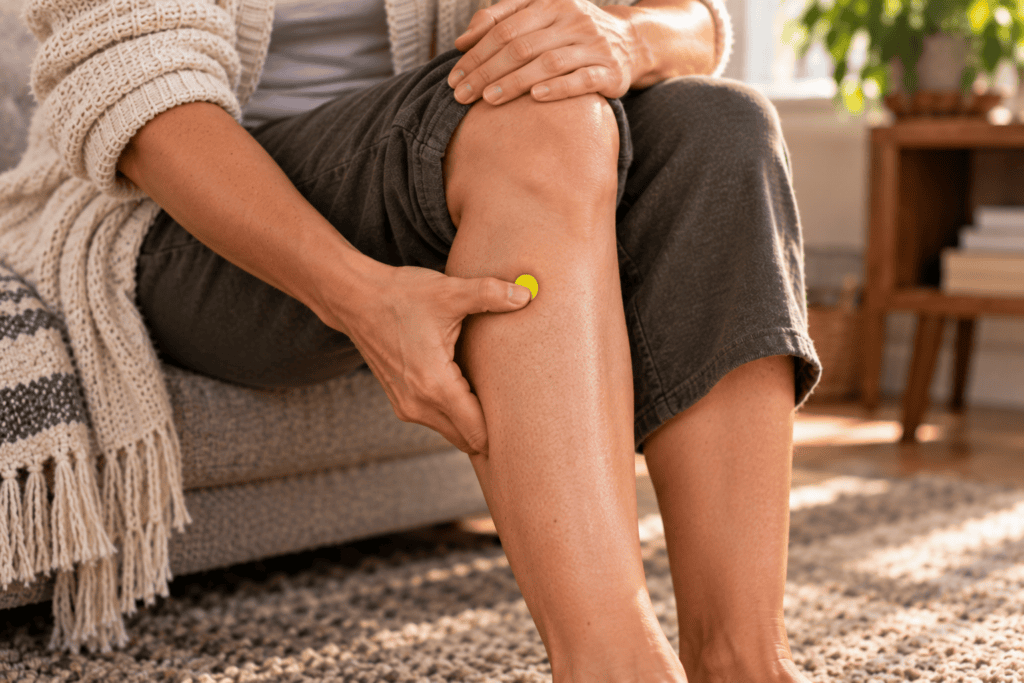
2. Press on ST36 below the knee to steady and rebuild the body. ST36 sits four finger-widths below the lower edge of the kneecap and one finger-width to the outside of the shinbone, on the muscle that rises when you flex your foot. Press firmly with your thumb for one to two minutes on each leg. ST36 is called “Zusanli,” the “Leg Three Miles,” and it is the master point for grounding and rebuilding the body.
ST36 provides a solid grounding and strengthening benefit, perfectly suited for a body in trauma. Persistent alertness can be draining, and this acupoint helps restore Qi and vitality lost due to hypervigilance. It also redirects anxious energy downward into the lower body, offering stability and supporting recovery. By giving the nervous system a more stable foundation, it helps replenish the body’s reserves from trauma-related exhaustion. Regular activation of this point can improve overall stability, making it easier to cope with difficult situations.
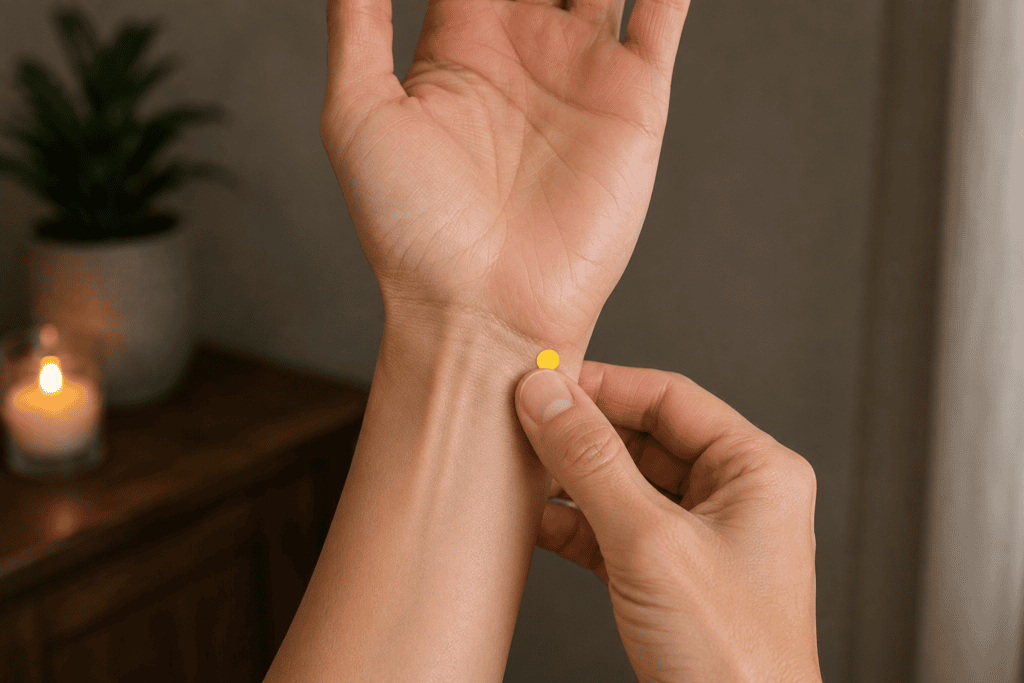
3. Press on HT7 at the wrist to calm and re-anchor the spirit. HT7 sits on the inner wrist crease, on the pinky side, in the small hollow just inside the tendon. Press firmly but gently with your thumb for one to two minutes on each wrist. HT7 is called “Shenmen,” the “Spirit Gate,” and it is the source point of the Heart and the most important point for calming the Shen.
HT7 helps soothe the Heart and reestablish the Shen, which trauma often scatters. It’s essential for calming a racing heart, hypervigilance, and that restless feeling in the body. Known as the Spirit Gate, this point is vital for a restless spirit and supports restoring the connection between the Heart and Kidney that trauma has disrupted. For conditions such as fear, nervousness, and insomnia linked to trauma, it directly targets the cause, offering a gentle, accessible way to regain calm.
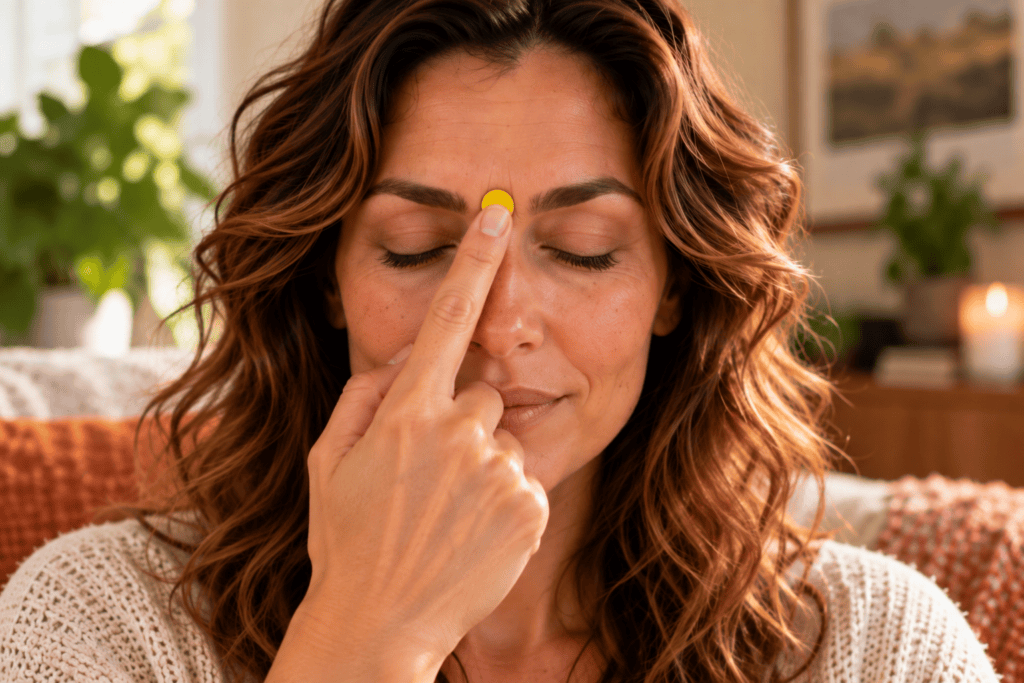
4. Press on Yintang between the eyebrows to quiet a hypervigilant mind. Yintang sits in the small hollow directly between the two eyebrows. Press steadily and hold, or make small, slow circles with your fingertip for one to two minutes. Yintang is an extra point and one of the most calming points in the body.
Yintang calms the Shen and alleviates the restless, hyper-alert mind often triggered by trauma, which makes you constantly watchful for threats. It relaxes the nervous system and relaxes facial tension from being on guard. This may lessen intrusive thoughts, trouble switching off, and trauma-related insomnia. When you feel safe, gently press this point while taking slow breaths to foster a deeper sense of peace.
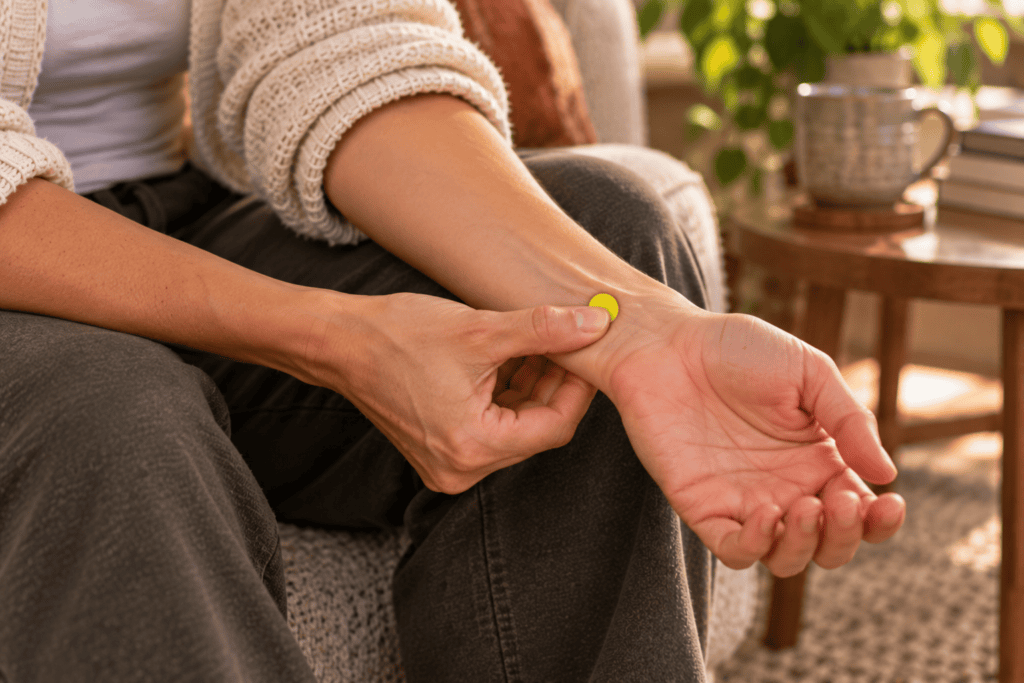
5. Press on PC6 on the inner forearm to ease a braced, panicky chest. PC6 sits three finger-widths above the inner wrist crease, in the center of the forearm between the two tendons. Press firmly with your thumb for one to two minutes on each arm. PC6 is called “Neiguan,” the “Inner Pass,” and it opens the chest and calms the spirit.
Activating PC6 opens the chest, easing feelings of tightness, clenching, and panic linked to trauma. It also decreases rapid heartbeat and shallow breathing. As a vital point connected to the chest and emotions, it helps relax physical tension and calm the nervous system. When anxiety or panic causes chest tightness, this point helps relieve it and allows for deeper breathing. Its discreet position makes it convenient for use whenever these sensations occur.
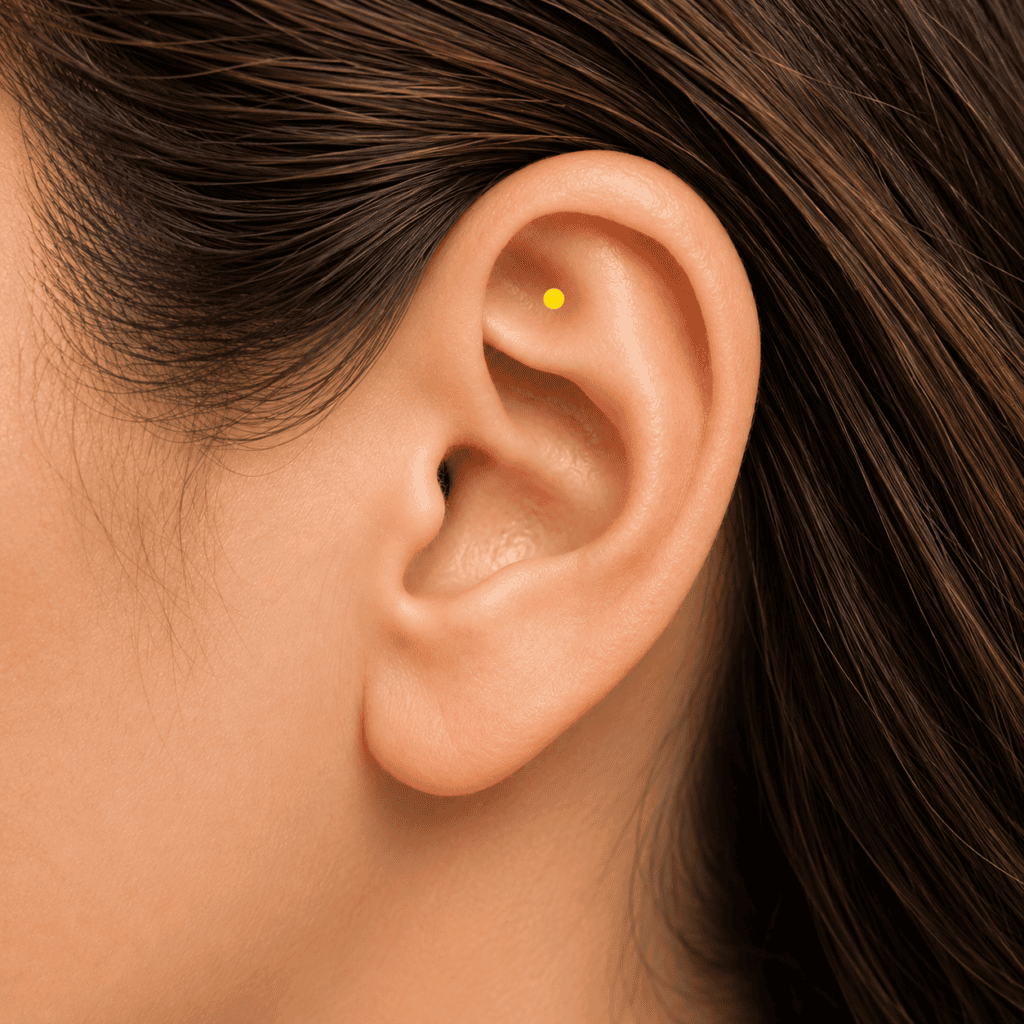
6. Press on Ear Shenmen for deep, fast calm in a hard moment. Ear Shenmen sits in the upper part of the ear, in the triangular hollow near the top, at its apex. Press gently with your fingertip or squeeze between your finger and thumb for about a minute on each ear. Ear Shenmen is one of the most calming points on the ear and shares its name, “Spirit Gate,” with the Heart point HT7.
Ear Shenmen is highly effective at calming the whole body and is often used during intense stress or trauma because of its fast-acting calming effect. It quickly calms the Shen, reducing sudden feelings of fear, panic, or overwhelm, and is discreet and simple to activate whenever necessary. During a flashback, panic attack, or overwhelming sensation, this point provides quick relief and is particularly useful when pressed along with wrist points to help stabilize your emotions.
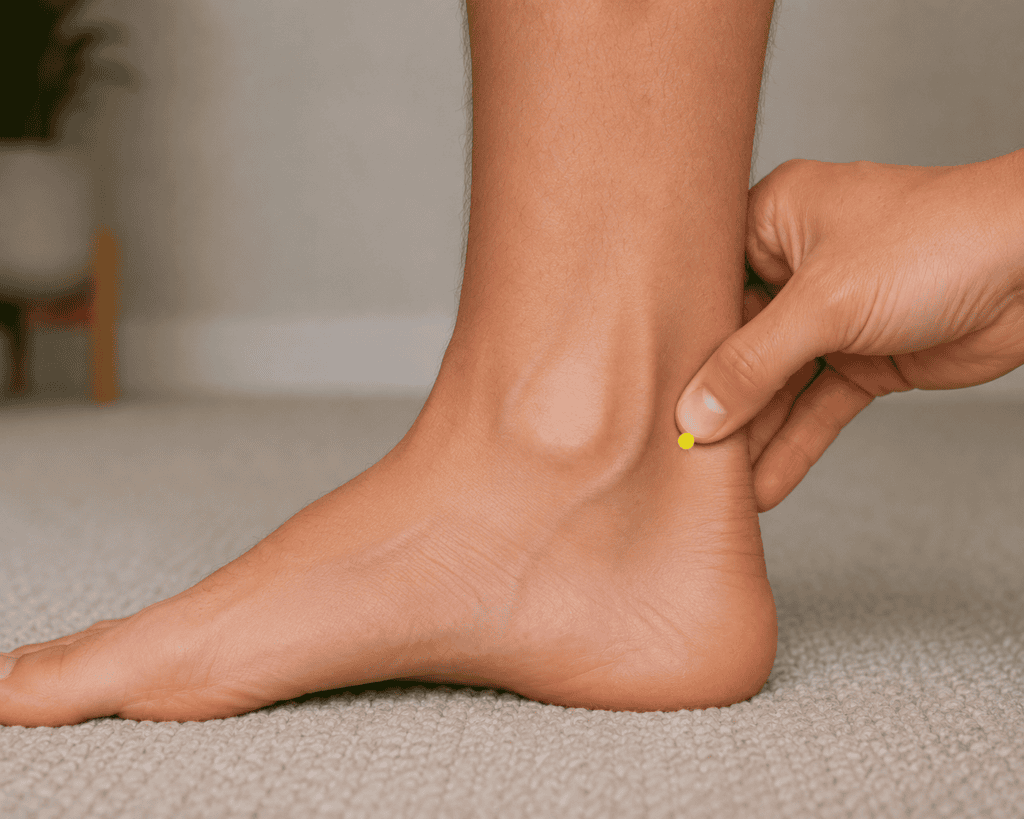
7. Press on KI3 above the inner ankle to settle fear at its root. KI3 sits in the hollow between the inner ankle bone and the Achilles tendon, level with the tip of the ankle bone. Press firmly with your thumb for one to two minutes on each ankle. KI3 is called “Taixi,” the source point of the Kidney.
Since trauma affects the Kidney and triggers the deep-rooted fear it controls, KI3, the main Kidney point, addresses that core fear and replenishes the energy lost through severe fright. It helps stabilize the often shaky, insecure feelings linked to trauma and reconnects the Kidney below with the Heart above, restoring stability from the ground up. For intense trauma-related fear and exhaustion, this point operates at a fundamental level and, alongside KI1, aids in stabilizing the entire Kidney system.
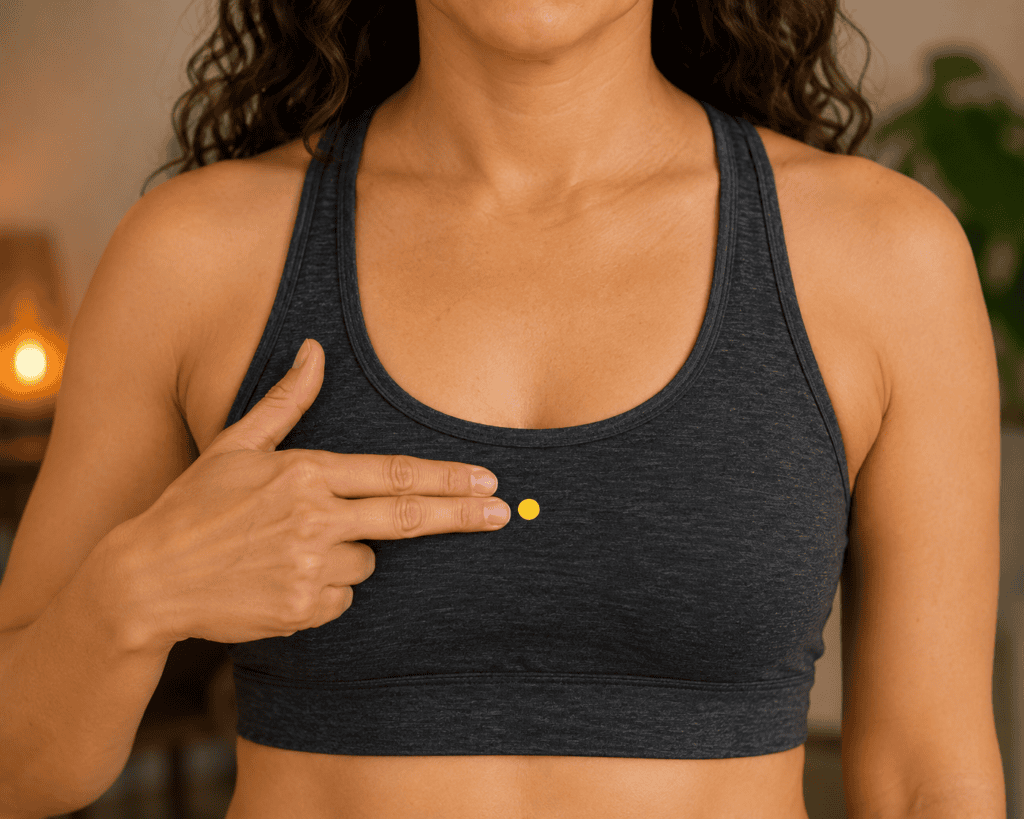
8. Press on CV17 at the center of the chest to release what is held there. CV17 sits on the midline of the breastbone, level with the space between the nipples, in the center of the chest. Press gently and steadily with your fingertip for one to two minutes, breathing slowly if that feels safe. CV17 is called “Shanzhong,” the gathering point of Qi in the chest and the body’s emotional center.
CV17 helps open the chest, reducing the heavy, tight, and guarded feelings linked to trauma. It releases grief stored there, eases tension, and lifts the weight on the chest. This point is key to freeing emotional Qi that can become stuck there due to emotional stress. For those experiencing trauma as a constricted, heavy chest and guarded heart, CV17 gently relaxes these symptoms. When applying pressure, do so softly and slowly, as the chest can hold a lot of emotion. The goal is a gentle release, not forcefulness.
9. Press on GV20 at the top of the head to lift a numb, shut-down system. GV20 sits at the very top of the head, on the midline, on a line drawn up from the tops of both ears. Press straight down, or make small circles, with your fingertip for one to two minutes. GV20 is called “Baihui,” the “Hundred Meetings,” where many channels converge at the crown.
Trauma isn’t always about being on high alert; sometimes it manifests as a heavy, numb, and shut-down sensation marked by distant and flat responses. GV20 carefully helps restore a system that has collapsed inward in this way. It enhances Qi and spirit while clearing mental fog and a checked-out mentality, helping you feel more present and engaged rather than distant and dulled. For the numb, disconnected, and low-energy aspects of trauma, this point provides a gentle uplift, balancing grounding and calming with a brightening effect to counter feelings of shutdown.

Why These Acupressure Points Work
In Traditional Chinese Medicine, trauma affects both the Heart and the Kidney, scattering the Shen because the Heart contains it and triggering the deep fear governed by the Kidney, while also disrupting the stabilizing connection between the two organs. In modern terms, this results in a dysregulated nervous system that stays in constant hyperarousal or collapses into a numb shutdown. The nine points apply to all of these aspects.
- The points known as KI1 and ST36 help draw dispersed energy down, anchor you back into your body, and restore what constant alertness has drained.
- The points for calming the mind, HT7, Yintang, PC6, and Ear Shenmen, have the effect of calming a racing heart and a hypervigilant mind, loosening a stiff chest, and quickly steadying you during a difficult situation.
- The Kidney point (KI3) eliminates the deep fear at its root and reestablishes the connection between the Heart and the Kidney.
- The chest point, CV17, gently releases the emotional weight that trauma holds in the body.
- The GV20 lifting point causes a numb, shut-down system to become aware of the present again.
The body’s ability to start feeling safe again depends on calming the nervous system, and this calming effect, combined with professional care, helps reduce the anxiety, stress, and depression often experienced after trauma.
How to Properly Use These Acupressure Points
Take your time with these points, whether you’re experiencing a tough period or regularly using them to help your system stabilize gradually.
- If you feel activated, panicked, or detached, use the grounding and rapid-calming points KI1 and ST36 to reconnect with your body, and use Ear Shenmen (HT7) and PC6 for quick relief. You can also amplify this effect by feeling your feet on the ground and taking slow, controlled breaths.
- To help your nervous system calm gradually, work through the full range of points, including KI3 to steady deep fear, CV17 to gently open the chest, and Yintang to quiet the mind- during calm moments, not only in a crisis.
- GV20, together with the grounding points, may help you feel more present if you’re experiencing numbness or a shutdown.
- A few people press points while tapping them; this method is known as tapping, or EFT, a technique that has been studied in the context of trauma. It involves tapping at these points together with some kind of focused psychological work, and when it comes to trauma, it is advisable to learn it from a qualified practitioner rather than attempting it by oneself.
- Most important of all, proceed slowly and gently; if that feels more comfortable, keep your eyes open, stop at any moment when you feel yourself being activated rather than calmed, and never push yourself to do anything. The aim is to soothe, not to cause disturbance.
Acupressure is only one method for calming yourself and works best when combined with other supportive measures that help the body recover from trauma. These include sticking to regular routines, maintaining safe relationships with trusted individuals, staying active, resting adequately, and, most importantly, seeking professional help. Be patient and gentle with yourself; healing from trauma takes time, and caring for your nervous system kindly during this process is both authentic and valuable.
When to Get Professional Help
Acupressure can help calm and stabilize your nervous system, but it cannot directly heal trauma.
Trauma generally responds best to professional, trauma-informed care, so seeking such treatment is the most beneficial step. If you’re experiencing symptoms like flashbacks, nightmares, feeling on edge, being easily startled, avoiding trauma triggers, feeling numb or detached, or having trouble sleeping or functioning, especially if these persist for weeks or get worse, it’s important to see a doctor or mental health professional. These reactions are common trauma responses and do not mean you are weak; effective treatments like EMDR and trauma-focused cognitive behavioral therapy have strong evidence supporting their effectiveness.
In case of crisis or if you feel unsafe or have thoughts of harming yourself, contact the 988 Suicide and Crisis Lifeline immediately by phone or text.
Acupressure can complement professional support, but it should not replace it.
Above and Beyond Acupuncture provides services including acupuncture, cupping, and lifestyle coaching at its location on North Frank Lloyd Wright Boulevard in Scottsdale.
Schedule an appointment online or call us today to start your healing journey.
The points above are only as effective as the technique used to apply them. Where to press, how firmly, and for how long all affect the result. For a full breakdown of how to perform acupressure properly at home, read Performing Acupressure in 3 Easy Steps.

About the Publisher
Paul Kerzner, L.Ac., is a licensed acupuncturist and board-certified herbalist, as well as the founder of Above and Beyond Acupuncture in Scottsdale. His own journey from chronic patient to practicing acupuncturist shapes his commitment to providing honest, clinically grounded information about acupuncture and Traditional Chinese Medicine. Learn more about Paul and his clinical approach on the About Us page.