
Key Takeaways
- Acupressure wristbands are elastic bands with a small plastic stud that applies pressure to PC6, a point on the inner forearm used in Traditional Chinese Medicine to treat nausea for centuries.
- The strongest evidence concerns postoperative nausea and vomiting, with a 2025 Cochrane review of 77 trials finding that noninvasive PC6 stimulation, including wristbands, reduced nausea compared with sham treatment.
- Placement matters because a stud resting even slightly off the point may not engage it at all, and many people wear the bands incorrectly.
- Wristbands are inexpensive and very safe, but they are a supportive tool, not a replacement for medical care when nausea is severe, persistent, or may signal something more serious.

As the ferry leaves the dock, the horizon quickly tilts. Your stomach tightens, your mouth waters, and every movement of the deck makes things worse. Nausea can take over your whole body, whether it happens on a boat, in a car, during early pregnancy, after surgery, or while receiving chemotherapy.
For years, a simple option has been a soft elastic band worn around the wrist. These acupressure wristbands are available at pharmacies, travel shops, and maternity stores, and many people keep a pair in their suitcase or car. They’re affordable, drug-free, and easy to use, making them popular with travelers, pregnant women, and anyone who wants to avoid the drowsiness caused by some anti-nausea medicines.
Nausea is a common reason people seek drug-free relief. Most women experience it in early pregnancy, about a third of people feel it after general anesthesia, and many undergoing chemotherapy know it well. If medication isn’t wanted, doesn’t work well enough, or causes side effects, a simple band worn for hours can be an appealing option.
Unlike many other acupressure products, wristbands have been studied for more than 30 years in hospitals, cancer centers, and labs. The findings are more nuanced than packaging or skeptics might suggest: wristbands work well in some cases, offer modest help in others, and have little effect in at least one situation.
The next sections cover how these bands work, what research says about their uses, how to wear them correctly, and when you may need more than a wristband to relieve nausea.
What Is an Acupressure Wristband?
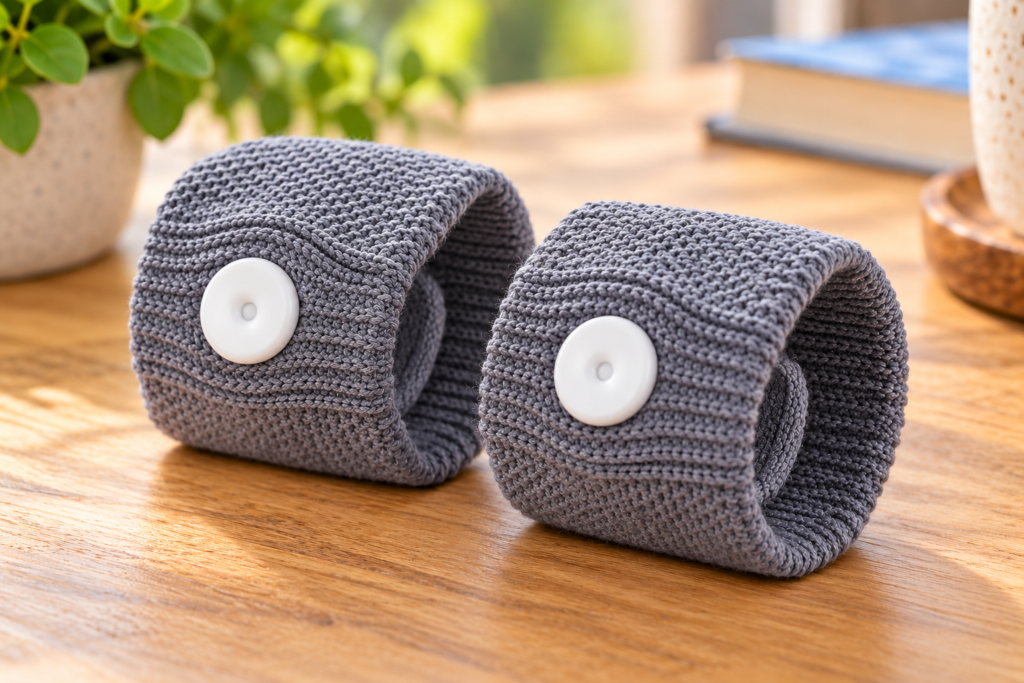
An acupressure wristband is a knitted elastic band about the width of a watchband, with a small, rounded plastic stud on the inside. When worn correctly, the stud presses on PC6, a point on the inner forearm about three finger-widths above the wrist crease, between the two central tendons. Bands are usually sold in pairs for both wrists and are available in adult and child sizes. They are reusable, washable, and available without a prescription. Because they contain no medicine, they pose no risk of drug interactions.
Another type, sometimes called an acustimulation band, uses a small battery-powered device to deliver a gentle electrical pulse to the same point rather than applying steady pressure. These bands cost more and have been studied separately, but they target the same spot and serve the same purpose.
How Acupressure Wristbands Are Believed to Work

PC6 lies over the median nerve, which runs down the center of the forearm. One leading idea is that steady pressure at this point sends signals through the nervous system, affecting brain areas that regulate nausea and stomach rhythms. Researchers have also investigated whether pressing PC6 alters stomach contractions or the release of chemicals involved in nausea, but the exact process is still under study.
Expectations matter too. Some studies show that people wearing sham bands, which press on a spot away from PC6, also report less nausea. This does not mean the bands have no effect, since the best studies compare real bands with sham bands and still find a difference. However, it suggests that some relief comes from feeling that you are doing something helpful.
In Traditional Chinese Medicine, PC6 is called “Neiguan,” meaning “Inner Pass.” It is the connecting point of the Pericardium channel and one of the most important points for regulating the Stomach. Nausea is understood as Stomach Qi rising when it should descend, and PC6 helps redirect that Qi downward. It also calms the Shen, or spirit, which is why it is often used when nausea is accompanied by anxiety, as it often is before surgery, during pregnancy, or on rough water.
What the Research Shows

The evidence varies depending on what’s causing the nausea, so it helps to consider each situation separately.
After surgery, the evidence is strongest. A 2025 update of the Cochrane review on PC6 stimulation for preventing postoperative nausea and vomiting combined 77 randomized trials involving 9,847 people. Noninvasive PC6 stimulation, which includes wristbands, reduced the risk of nausea by about a third and vomiting by about 40 percent compared with sham treatment, and it also reduced the need for rescue anti-nausea medicine. None of the studies reported serious complications, and side effects were minor, such as skin irritation, redness, and swelling. The reviewers rated the certainty of the evidence as low because of differences between studies, but the direction of the results was consistent. An earlier version of the same Cochrane review found that PC6 stimulation performed about as well as several common anti-nausea drugs.
For morning sickness, the picture is encouraging but less certain. A meta-analysis of 14 trials involving 1,655 pregnant women found that acupressure applied by finger pressure or wristband reduced nausea and vomiting compared with controls, although the authors also noted a placebo effect. A Cochrane review of interventions for early pregnancy concluded that the evidence for P6 acupressure was limited, while emphasizing that this is not the same as saying it does not work, and that no treatment for morning sickness, including medications, had strong high-quality evidence behind it.
For chemotherapy-related nausea, results are mixed. The ANCHoR trial, which followed 500 people starting chemotherapy in the United Kingdom, compared real wristbands, sham wristbands, and standard care alone. There was no statistically significant difference between the groups, but people wearing either type of band reported somewhat less nausea than those on standard care alone, and many described the bands as helpful. The authors pointed to a placebo effect and called for further research, rather than ruling the bands out.
Motion sickness is the area with the weakest evidence. In a lab study with 77 people exposed to a rotating drum (to induce motion sickness), none of the interventions (pressure bands, electrical bands, or placebo) were effective at preventing the symptoms. In that same study, none of the people who used a pressure band without any training actually used it correctly (a useful reminder that positioning is important).
Overall, research suggests wristbands are a reasonable, low-risk option for nausea after surgery and are worth trying for morning sickness. For chemotherapy- and motion-related sickness, they may help some people, but they work best as one part of a plan rather than as the only solution.
How to Wear an Acupressure Wristband Correctly
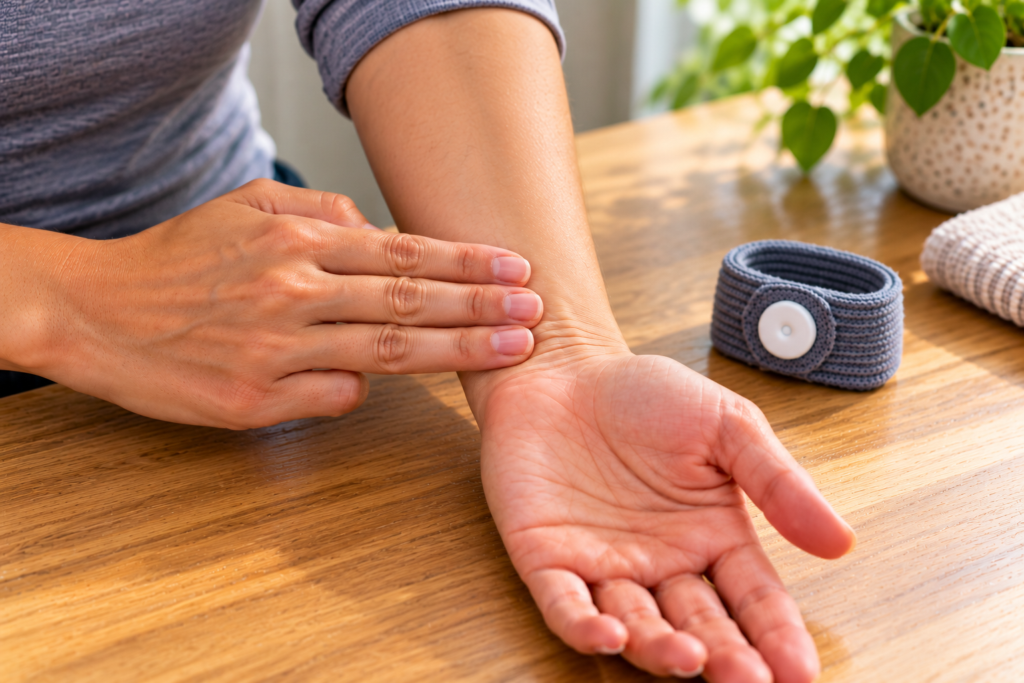
Incorrect placement is the most common reason a wristband seems not to work. A few simple adjustments can make a big difference.
- Turn your palm upwards and place the first three fingers of your other hand across your wrist (the edge of the ring finger on the wrist crease). PC6 is just above the index finger, in the center of the forearm between the two tendons.
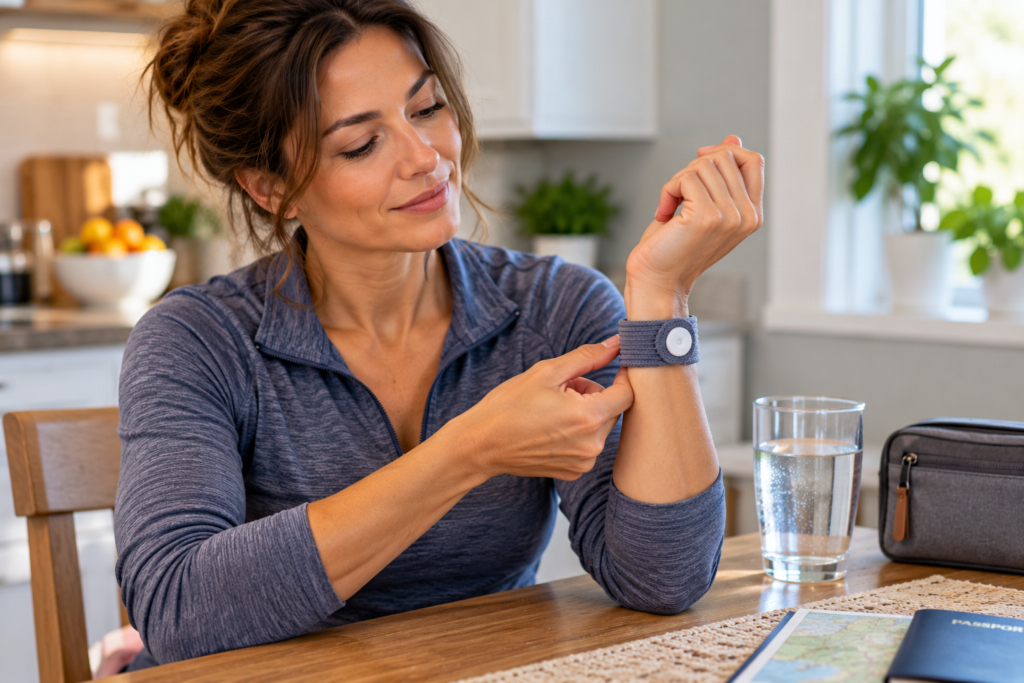
- Slide the band on so that the stud is sitting directly on that point rather than on the side of the wrist or on the crease.
- Wear a band on both wrists (most of the studies used one on each arm).
- Put the bands on prior to the trigger if possible (e.g., 15 to 30 minutes prior to travel or prior to going into surgery) with the agreement of your care team.
- When the nausea builds up press the stud firmly 20 to 30 times every few minutes to enhance the effect.
- The band should be snug but not tight. If your hand starts to tingle, swell, or change color, then remove it.
- For morning sickness, put the bands on before you get out of bed (as nausea is often at its worst on an empty stomach) and wear them throughout the day.
Take the bands off at least once a day to let the skin breathe, and wash them according to the package directions. Learn the full hands-on technique for PC6 and other nausea points in how to stop nausea with acupressure.
Who Should Be Careful With Acupressure Wristbands
Wristbands are among the safest self-care tools available, but some situations call for extra care. Avoid wearing one on an arm with lymphedema or on the side where lymph nodes were previously removed, such as after breast cancer surgery, unless your care team approves it. Snug elastic can affect fluid drainage. Don’t wear a band over broken skin, a rash, or an injury, and remove it if your skin becomes red, blistered, or irritated. If you have poor circulation in your hands, diabetes with reduced sensation, or swollen wrists, check the fit often. Pregnant women can generally use wristbands because PC6 is not one of the points avoided during pregnancy, but should still mention them to their provider. Anyone with a pacemaker or other implanted device should talk with their doctor before using an electrical acustimulation band. Children should use child-sized bands, with an adult checking the placement and fit.
Wristband or Hands-On Acupressure?
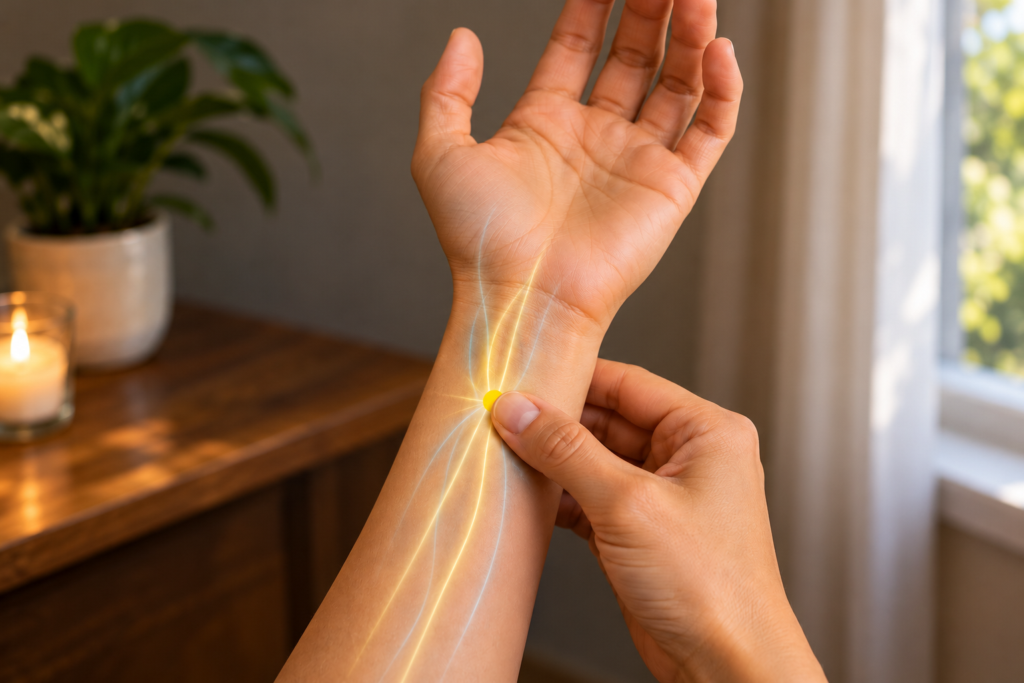
A wristband and hands-on acupressure apply pressure to the same point, but in different ways. A band provides steady, hands-free pressure for hours, making it useful during travel, at work, or in bed. Pressing PC6 with your thumb offers firmer, more focused pressure and lets you target other points often used for nausea, such as ST36 below the knee and CV12 on the upper abdomen. Many people use both methods: wearing the bands as a base and pressing the point by hand when nausea worsens.
For more about what home acupressure tools can and cannot do, read do acupressure mats really work.
When to Get Professional Help

Get emergency help if vomiting occurs with severe belly pain, chest pain, a severe headache, confusion, a stiff neck, vomit that looks bloody or like coffee grounds, or signs of dehydration, such as very little urine, dizziness when standing, or a racing heart. See a doctor if nausea or vomiting lasts more than a day or two, prevents you from drinking fluids, causes unexplained weight loss, or begins after starting a new medicine. If you are pregnant, call your provider if you cannot keep food or fluids down for 24 hours, are losing weight, or feel faint. Severe nausea and vomiting during pregnancy, known as hyperemesis gravidarum, needs medical care. If you are receiving chemotherapy, continue taking the anti-nausea medicines prescribed by your oncology team, and tell them if your nausea is not well controlled. Acupressure wristbands are a gentle, supportive option for nausea. They are intended to complement, not replace, diagnosis and medical care.
For related health concerns, acupressure for motion sickness, acupressure for morning sickness, and acupressure for postoperative nausea and vomiting are companion articles. If treatment for cancer is the reason for the nausea, learn about acupressure for chemotherapy side effects.
Above and Beyond Acupuncture offers acupuncture, cupping, and lifestyle coaching at the North Frank Lloyd Wright Boulevard location in Scottsdale.
Schedule an appointment online to start your healing journey.

About the Publisher
Paul Kerzner, L.Ac., is a licensed acupuncturist and board-certified herbalist, as well as the founder of Above and Beyond Acupuncture in Scottsdale. His own journey from chronic patient to practicing acupuncturist shapes his commitment to providing honest, clinically grounded information about acupuncture and Traditional Chinese Medicine. Learn more about Paul and his clinical approach on the About Us page.