Key Takeaways
- Most coughs in infants occur alongside a cold, and a viral cough typically lasts two to three weeks.
- Honey should not be given to children under one year of age, and over-the-counter cough and cold medicines are not approved for children under six years of age.
- Any infant younger than six months who has a cough should be evaluated by a pediatrician within 24 hours. Difficulty breathing, bluish lips, or reduced alertness requires emergency care.
- In Traditional Chinese Medicine, a baby’s Lung is regarded as the most delicate organ and is therefore easily affected by Wind, Cold, and Heat. A still-developing Spleen may also contribute to phlegm formation.
- Nine gentle acupressure points on the arms, hands, chest, upper back, and legs may help alleviate coughing and promote a baby’s comfort during a cold.
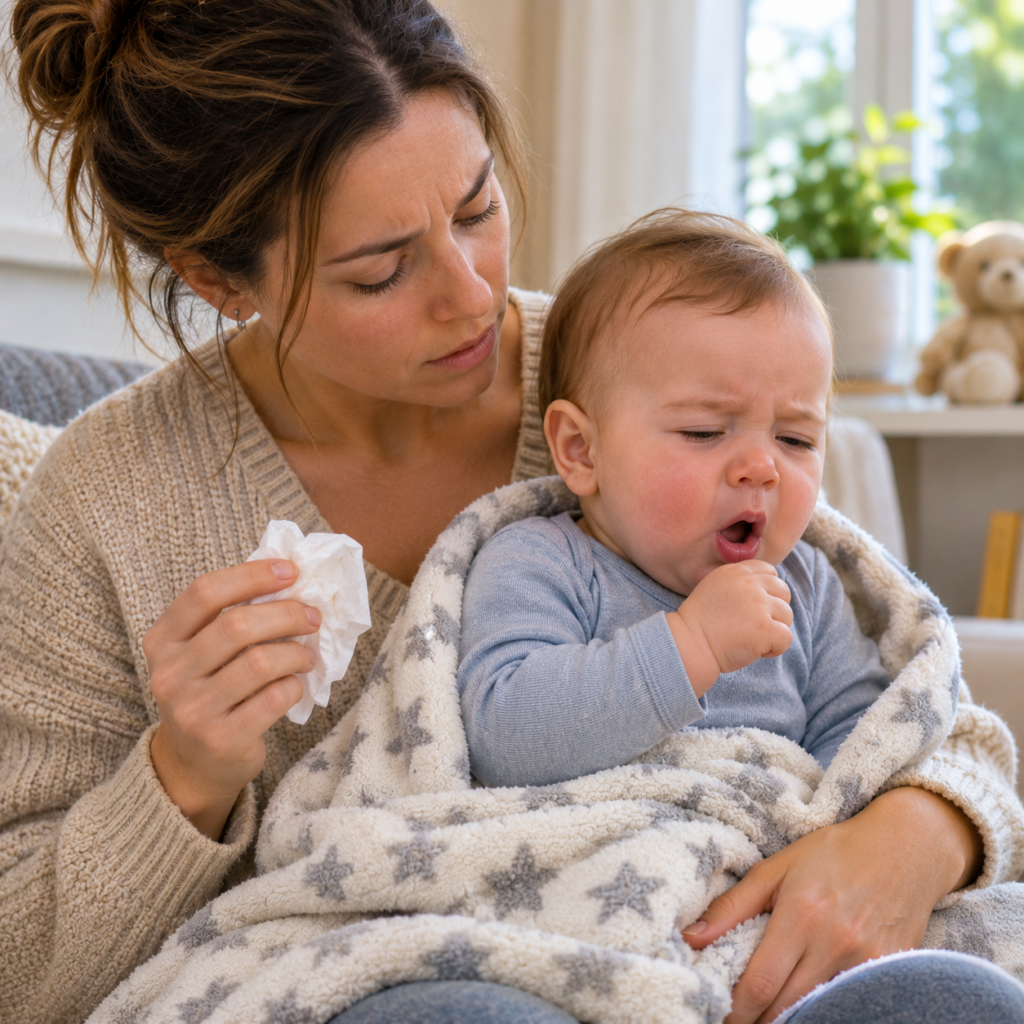
It often starts with a sniffle. A day or two later, the cough arrives: a little dry hack during the day that turns wet and rattly at night, waking the baby just as everyone is finally asleep. Watching a small baby cough is unsettling for any parent. Along with the right medical guidance, a few gentle ways to help a baby feel more comfortable are worth knowing.
According to St. Louis Children’s Hospital, most coughs in infants are associated with a cold, and viral coughs generally last two to three weeks. Airway irritants, including tobacco smoke, vehicle exhaust, and paint fumes, may also trigger coughing. The hospital advises against giving honey to children under one year of age and notes that over-the-counter cough and cold medications are not FDA-approved for children under six years of age. Nasal saline, a humidifier when indoor air is dry, and warm mist from a running shower in a closed bathroom may provide relief. Infants under six months of age who develop a cough should be evaluated by a doctor within 24 hours. Severe difficulty breathing, bluish lips, or a baby who has stopped breathing requires an immediate call to 911.
A cough helps clear mucus and irritants from the airway. Babies have small, narrow airways and cannot blow their noses or clear their throats like older children. As a result, mucus from a cold often runs down the back of the throat and triggers coughing, especially when they lie down. Most colds go away on their own, but some coughs in babies can signal infections that need medical care, such as bronchiolitis, pneumonia, or whooping cough.
Traditional Chinese Medicine calls the Lung the “delicate organ” because it opens to the outside through the nose and throat, making it the first organ affected by Wind, Cold, and Heat. A baby’s Lung is considered especially tender and easily disturbed. A cough with clear mucus and a pale face reflects Wind-Cold, while thick yellow mucus, a red face, and restlessness reflect Wind-Heat. Because a baby’s Spleen is still developing, digestion may produce extra phlegm that settles in the Lung and causes a wet, rattly cough. Gentle points that open and calm the Lung, clear Wind, and resolve phlegm can ease coughing and support a baby’s comfort.
The points below begin on the arms and hands, move to the chest and upper back, and end on the legs. For a baby, measure all distances using the baby’s own finger-widths, not an adult’s.
What Acupressure Points to Press and Why
1. Press LU5 at the elbow crease to clear the Lung. LU5 sits on the elbow crease, on the thumb side of the large tendon in the middle of the crease, when the baby’s elbow is gently bent. Make tiny, light circles with your fingertip for 30 seconds on each arm. LU5 is called “Chize,” the “Cubit Marsh.”
LU5 is the sea point of the Lung. It clears Heat and phlegm from the Lung and is traditionally used to treat a cough with thick mucus.
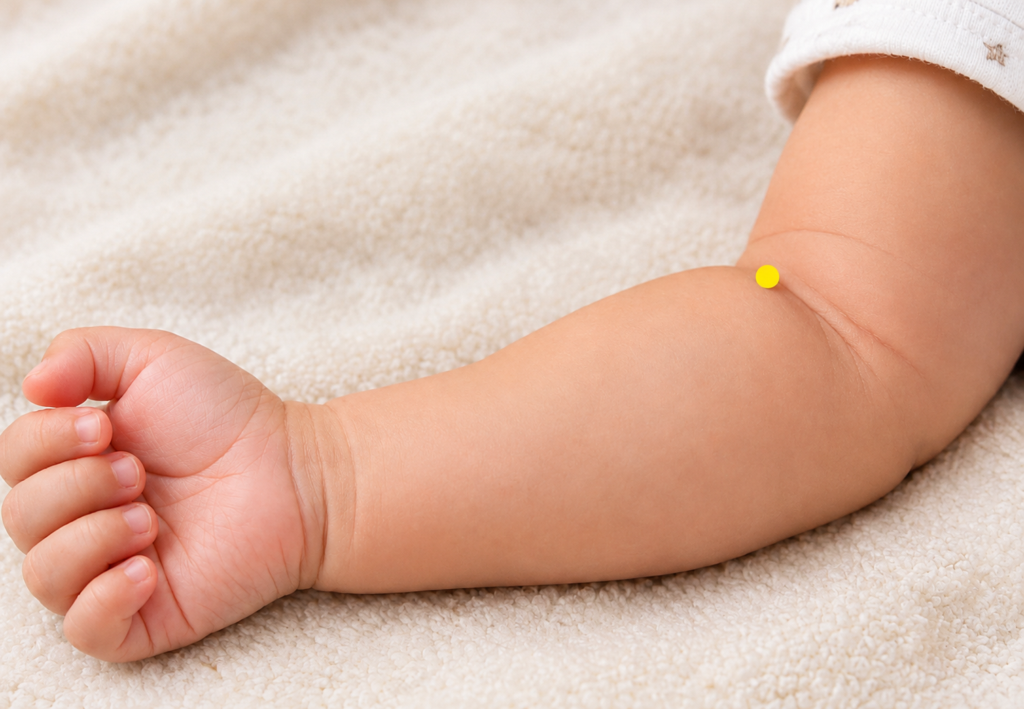
2. Press LU7 above the wrist to open the Lung. LU7 sits on the thumb side of the forearm, about one and a half of the baby’s finger-widths above the wrist crease, just above the small bony bump on the thumb side of the wrist. Make tiny, light circles with your fingertip for 30 seconds on each arm. LU7 is called “Lieque,” the “Broken Sequence.”
LU7 is the connecting point of the Lungs. It opens the Lungs, releases Wind, and is traditionally used to treat a cough and a stuffy nose at the start of a cold.
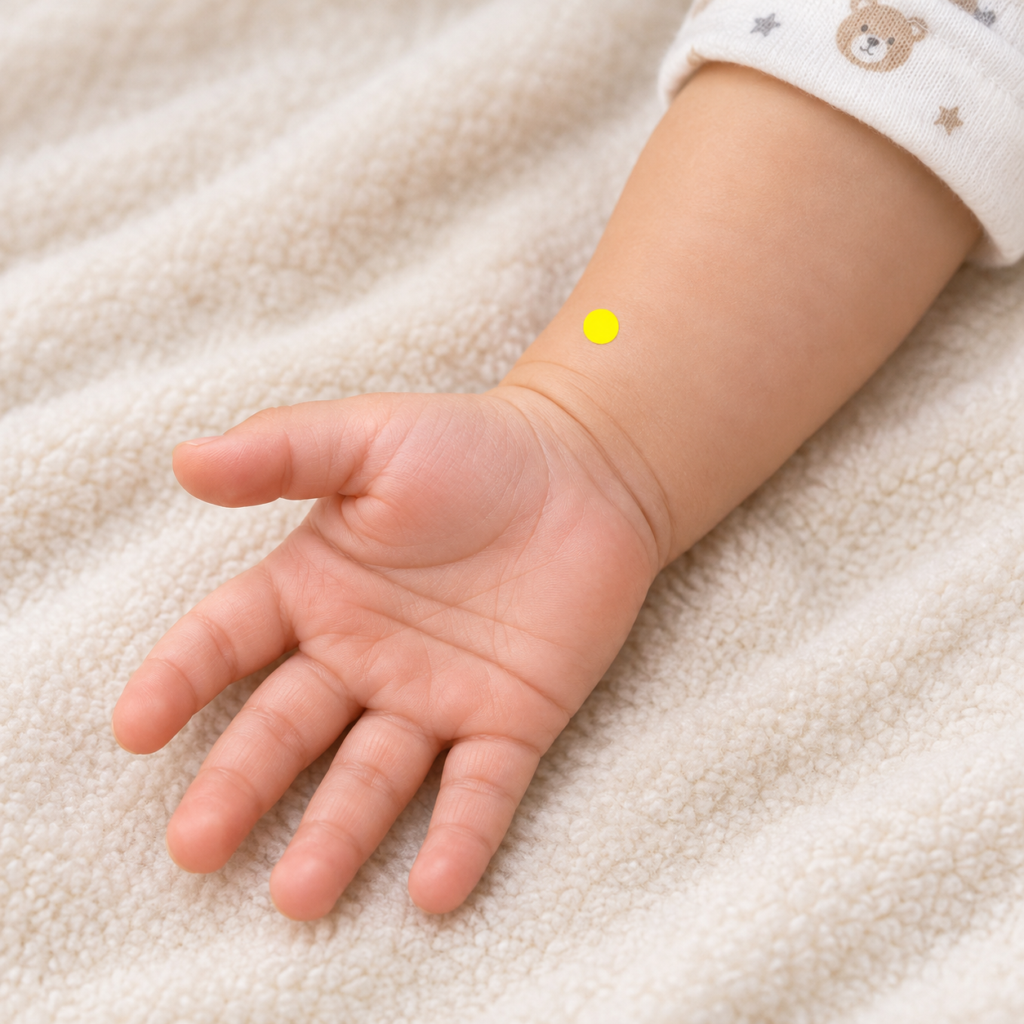
3. Press LU9 on the wrist crease to strengthen the Lung. LU9 sits on the inner wrist crease, on the thumb side, in the small hollow next to the pulse. Rest your fingertip on the point with very light pressure for 30 seconds on each wrist. LU9 is called “Taiyuan,” the “Great Abyss.”
LU9 is the source point of the Lungs. It strengthens the Lungs and helps with a lingering cough that leaves a baby tired.
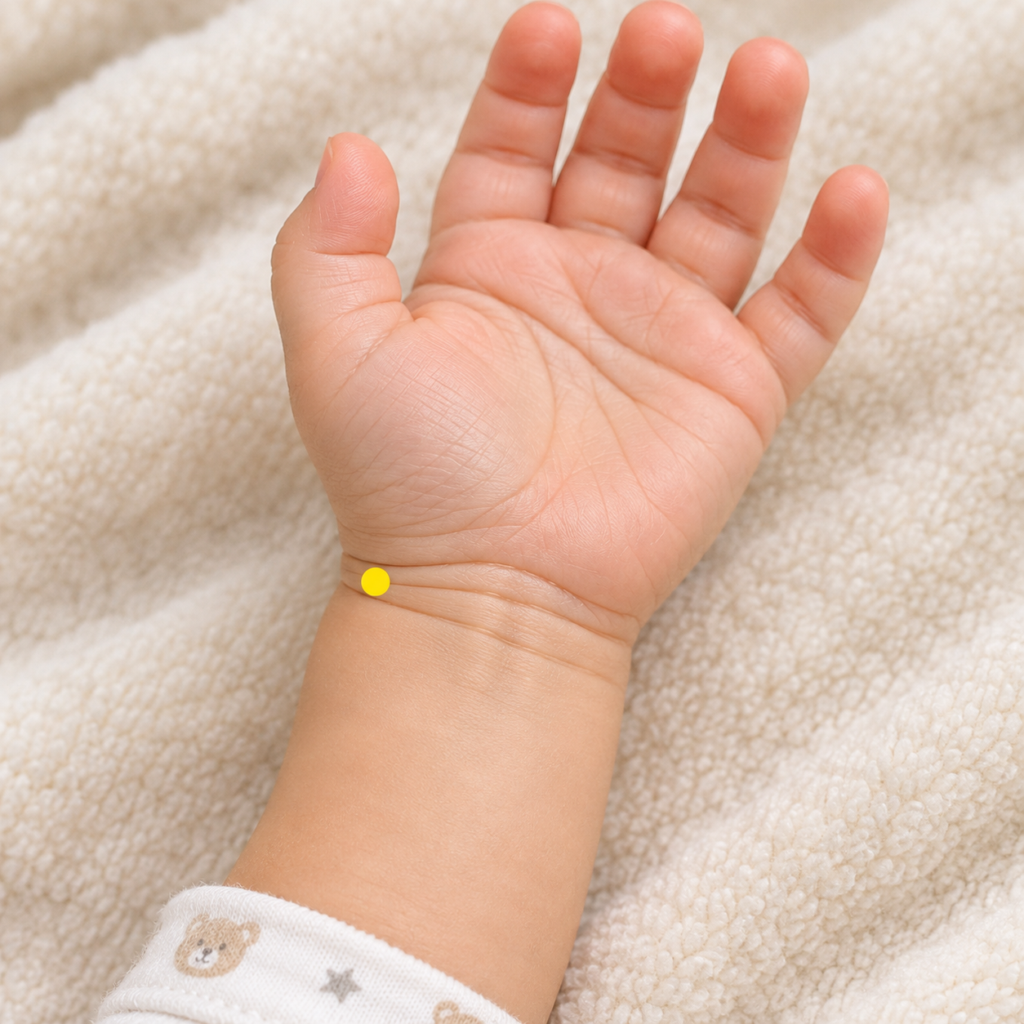
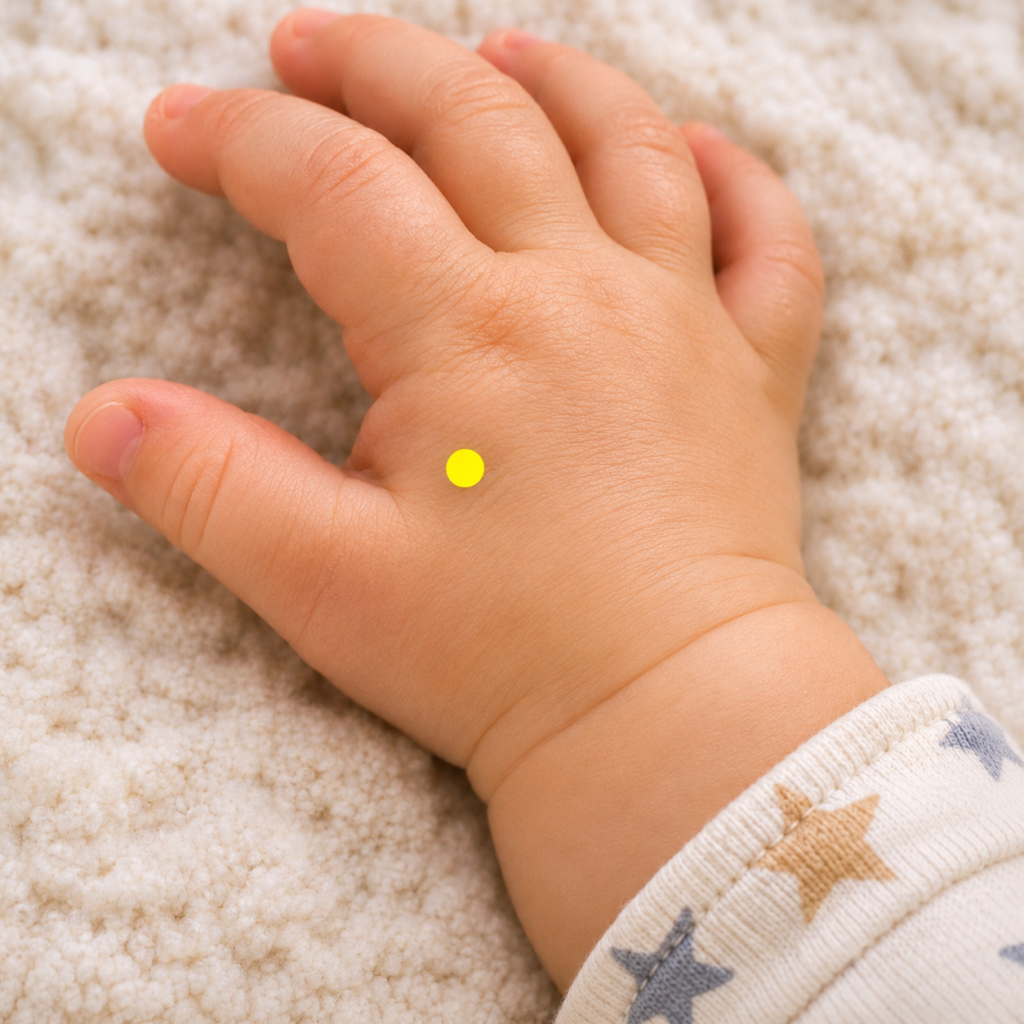
4. Press LI4 on the back of the hand to release Wind. LI4 sits on the back of the hand, in the fleshy web between the thumb and index finger. Hold the baby’s hand and make tiny, light circles on the point for 30 seconds on each hand. LI4 is called “Hegu,” the “Joining Valley.”
LI4 is the source point of the Large Intestine, the channel paired with the Lung. It releases Wind and is traditionally used to treat colds, a stuffy nose, and sore throat.
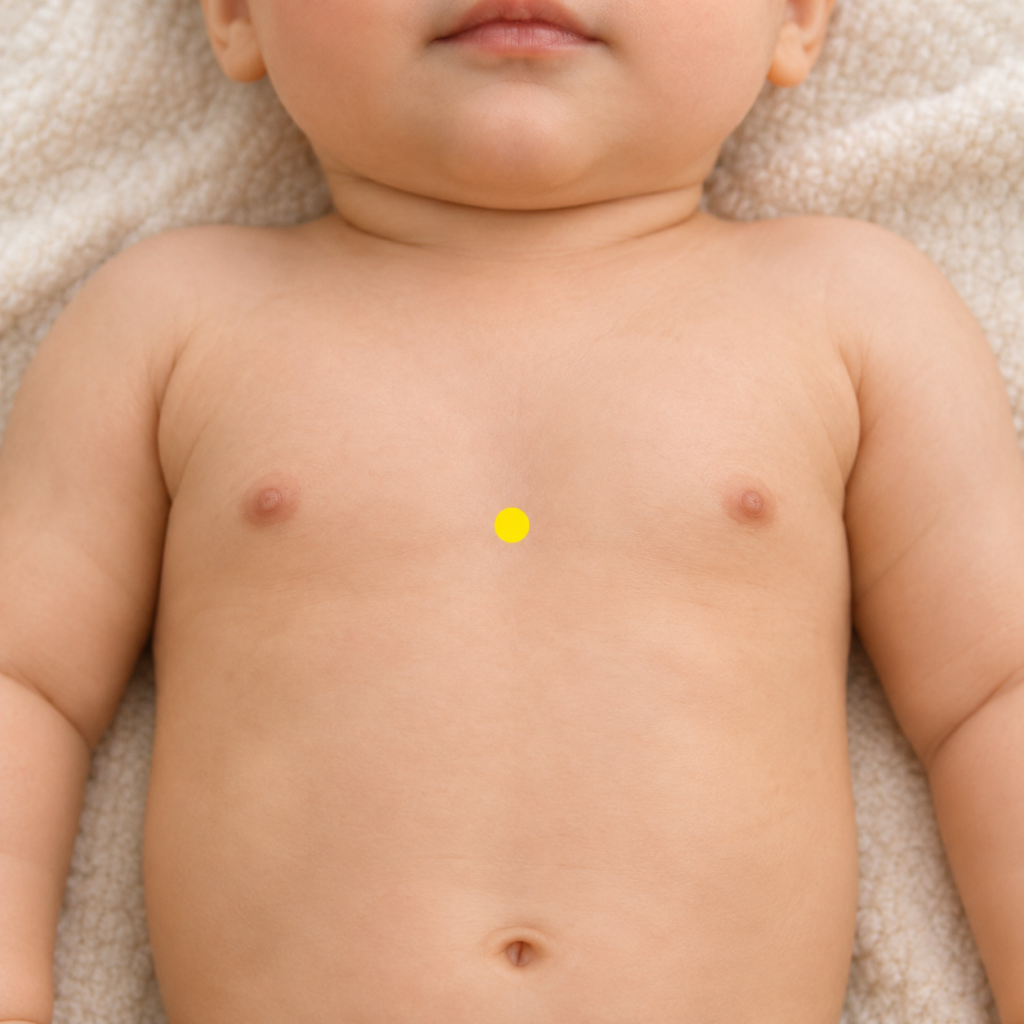
5. Press CV17 in the center of the chest to ease the breath. CV17 sits on the midline of the breastbone, level with the nipples. Rest your fingertip on the point with very light pressure, or make tiny circles, for 30 seconds. CV17 is called “Shanzhong,” the “Chest Center.”
CV17 is the influential point of Qi. It opens the chest, helps the breath flow freely, and eases tightness caused by coughing.
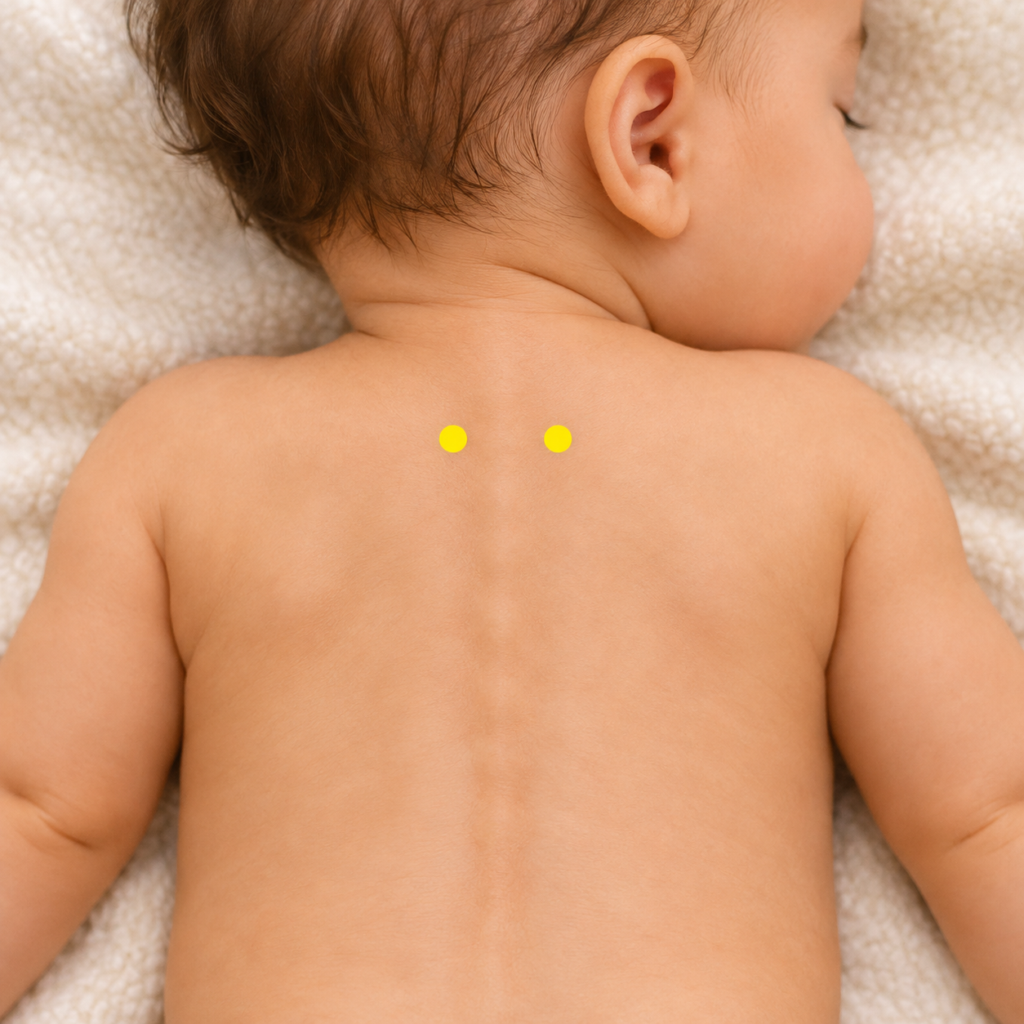
6. Rub BL12 on the upper back to clear Wind. BL12 sits on the upper back, on both sides of the spine, about one of the baby’s finger-widths out from the spine, level with the space just below the second bump of the spine below the base of the neck. With the baby lying on your chest or held upright against your shoulder, make slow, light circles on both sides with your fingertips for 30 seconds. BL12 is called “Fengmen,” the “Wind Gate.”
BL12 is a point on the Bladder channel traditionally used to release Wind at the onset of a cold, when sneezing, a runny nose, and a new cough appear.
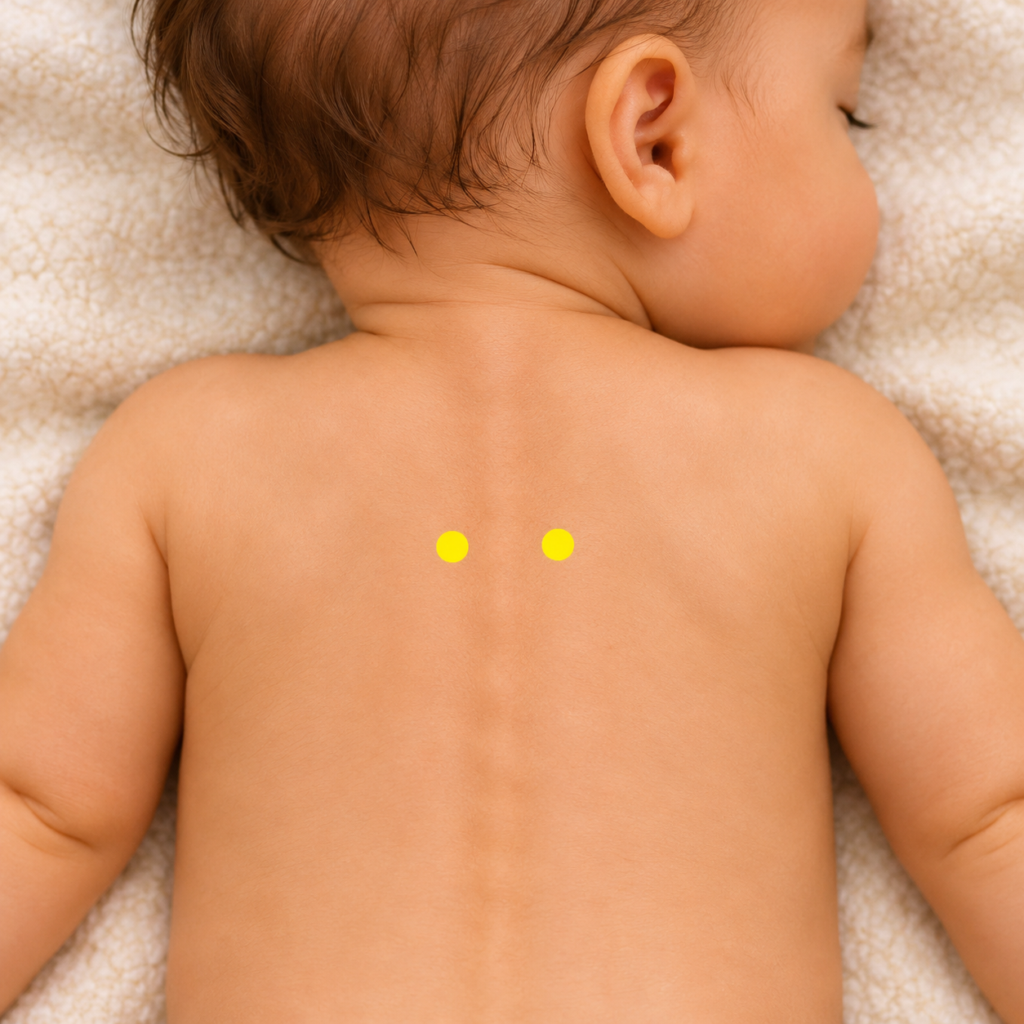
7. Rub BL13 on the upper back to calm the cough. BL13 sits on the upper back, on both sides of the spine, about one of the baby’s finger-widths out from the spine, just below BL12, level with the space below the third bump of the spine below the base of the neck. Make slow, light circles on both sides with your fingertips for 30 seconds. BL13 is called “Feishu,” the “Lung Shu.”
BL13 is the back transport point of the Lung and one of the most important points in Traditional Chinese Medicine for treating cough. Gentle circles here calm coughing and help loosen phlegm.
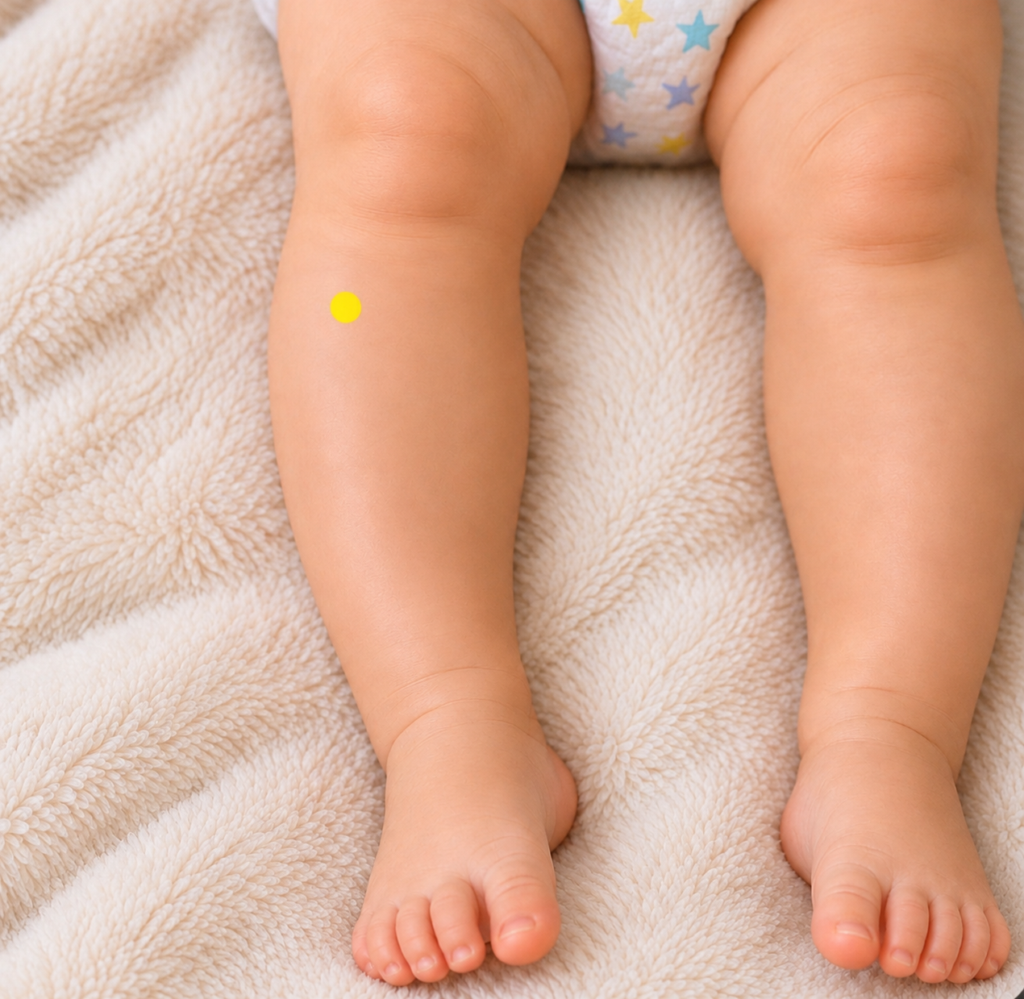
8. Press ST40 on the lower leg to resolve phlegm. ST40 sits on the front of the lower leg, halfway between the bottom of the kneecap and the ankle, about two of the baby’s finger-widths out from the edge of the shinbone. Make tiny, light circles with your fingertip for 30 seconds on each leg. ST40 is called “Fenglong,” the “Abundant Bulge.”
ST40 is the connecting point of the Stomach. It is the classic point for resolving phlegm and helps with a wet, rattly cough.
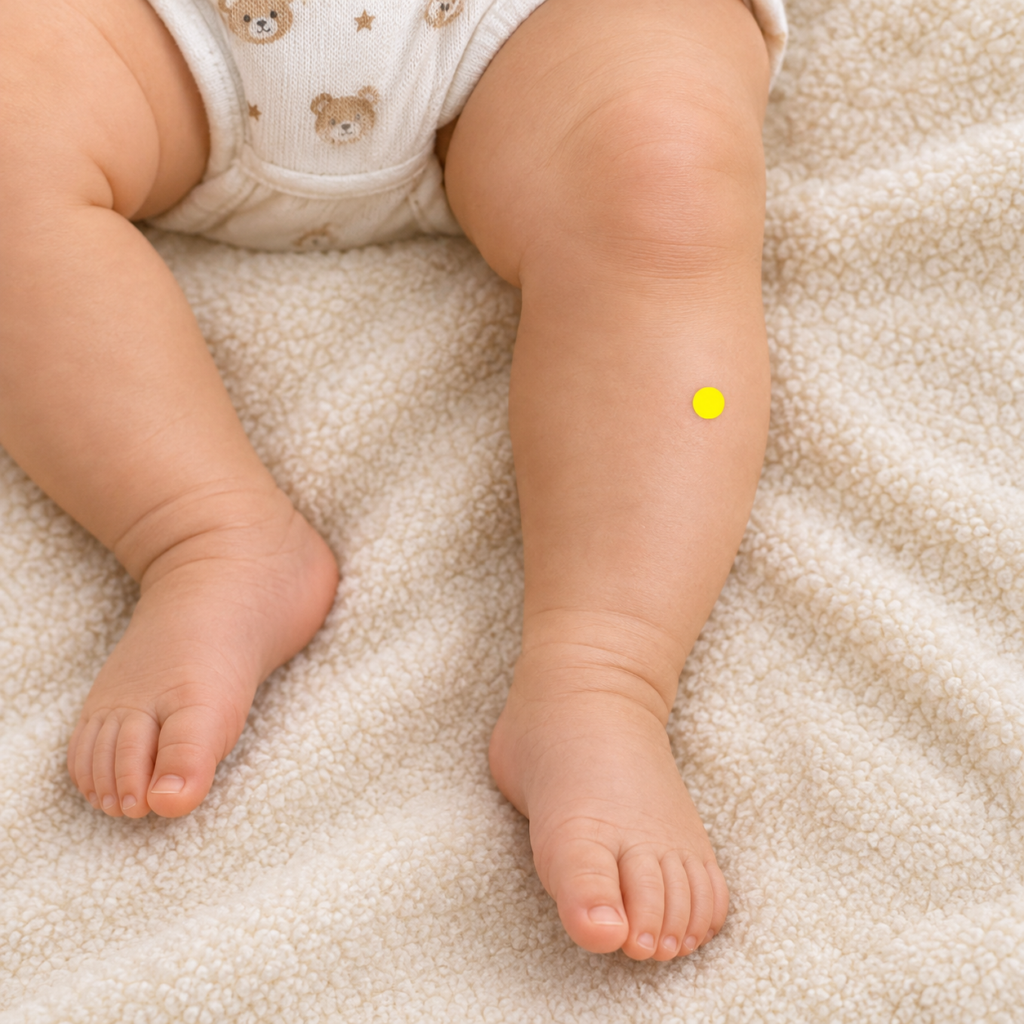
9. Press ST36 below the knee to strengthen the body. ST36 sits on the front of the lower leg, about four of the baby’s finger-widths below the bottom of the kneecap and one of the baby’s finger-widths out from the edge of the shinbone. Make tiny, light circles with your fingertip for 30 seconds on each leg. ST36 is called “Zusanli,” the “Leg Three Miles.”
ST36 is the sea point of the Stomach. It strengthens the Spleen, reducing phlegm formation, and supports a baby’s overall strength during a cold.
Why These Acupressure Points Work
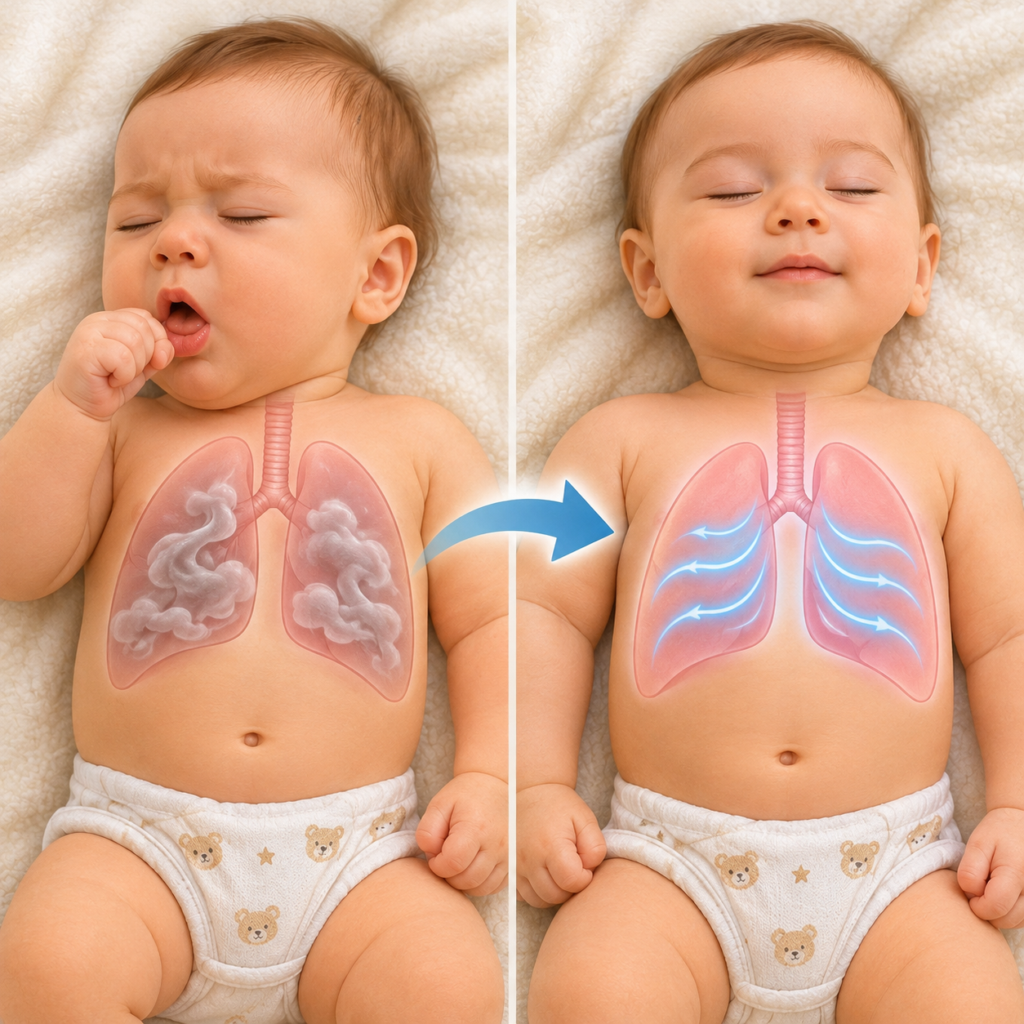
From a Traditional Chinese Medicine perspective, a baby’s cough may result when Wind, Cold, or Heat disrupts the delicate Lung, often alongside phlegm linked to a still-developing Spleen. Points on the arms and hands help open and clear the Lung and release Wind; points on the chest and upper back soothe the cough and ease breathing; and points on the legs help resolve phlegm and strengthen the body.
The nine points work together to help alleviate a baby’s cough:
- LU5, LU7, and LU9 open, clear, and strengthen the Lung.
- LI4 and BL12 release Wind at the start of a cold.
- CV17 and BL13 calm the cough and ease the breath.
- ST40 and ST36 resolve phlegm and strengthen digestion.
How to Properly Use These Acupressure Points
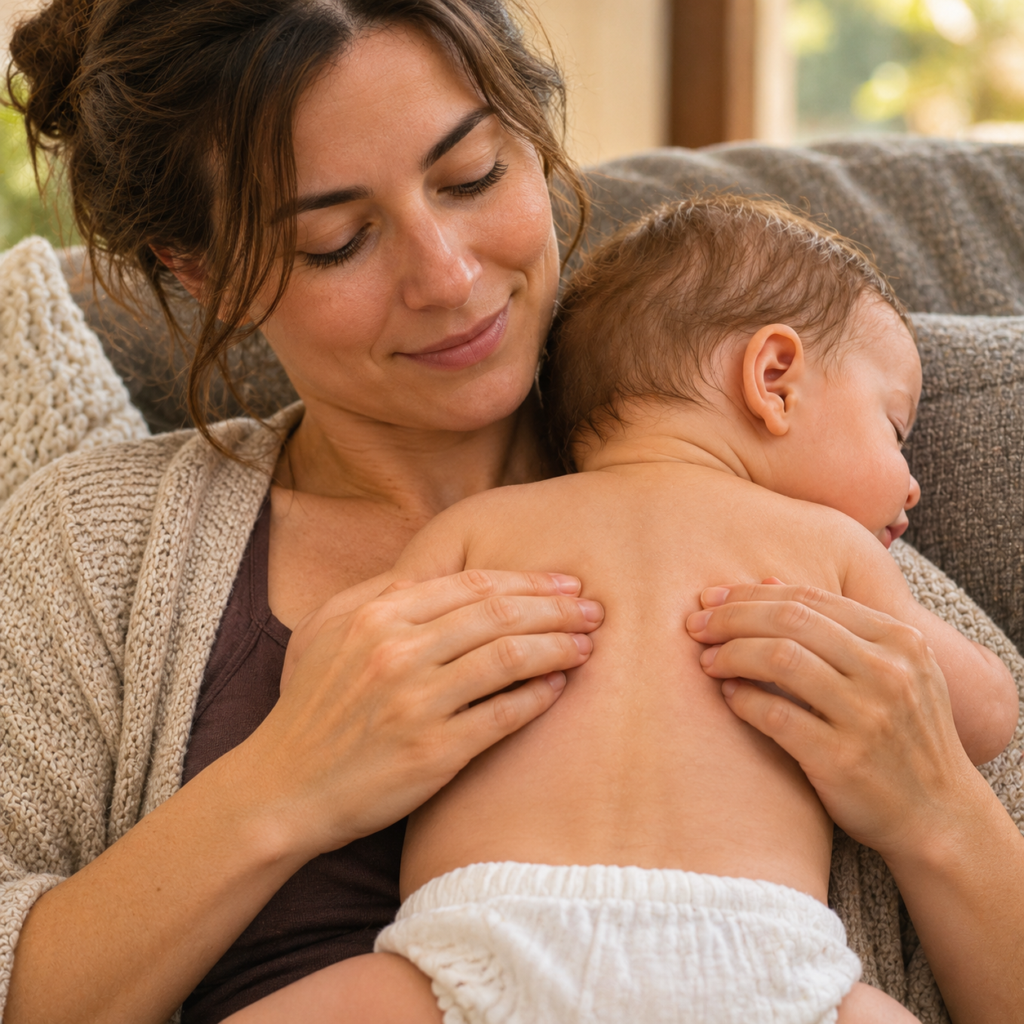
Acupressure for a baby’s cough works best when the baby is calm and comfortable, such as after a feeding, during a cuddle, or as part of the bedtime routine. It should always be used alongside the care plan from the baby’s pediatrician.
- With the baby lying on their back, begin by applying gentle circular motions to LU5, LU7, and LU9 on both arms, followed by LI4 on both hands.
- Gently place a fingertip on CV17, located at the center of the chest.
- Hold the baby upright against your shoulder or face-down on your chest, and gently make circular motions over BL12 and BL13 on both sides of the spine.
- Conclude by applying gentle circular motions to ST40 and ST36 on both legs.
- Use only light, slow fingertip pressure, much lighter than you would on an adult. Stop if the baby fusses, coughs more, or seems uncomfortable. Never press on the front of the throat or the soft spots on top of the head. Do not use these points on broken, irritated, or rashy skin. Skip acupressure and call the pediatrician if the baby is struggling to breathe.
Simple home care can help ease symptoms. St. Louis Children’s recommends using nasal saline for dried mucus, a humidifier when indoor air is dry, and warm mist from a running shower in a closed bathroom during coughing spells. Babies three months and older can have small amounts of warm clear fluids to help loosen mucus, but warm fluids are not recommended for babies under three months. Avoid honey before one year of age and drugstore cough and cold medicines, and keep the baby away from tobacco smoke and other fumes. Ask the pediatrician before giving any fever medicine. Always place babies on their backs to sleep, without pillows or wedges, even during a cold. Traditional Chinese Medicine also recommends keeping the baby’s neck, chest, and upper back warm and covered outdoors, and offering plenty of rest.
Learn more about whether acupressure is safe for kids.
When to Get Professional Help

Call 911 if a baby is struggling to breathe, can barely cry, has stopped breathing or lost consciousness, or has bluish lips or face when not coughing. Go to the emergency room if a baby may have choked on a small object, has ribs pulling in with each breath, or is not alert while awake. Seek immediate medical care for difficulty breathing, nonstop coughing spells, bluish lips during coughing, wheezing or harsh, noisy breathing when inhaling, breathing much faster than usual, any fever in a baby under 12 weeks old, a fever above 104°F, or if the baby appears or acts very ill. Contact the pediatrician within 24 hours if a baby under six months has a cough, if the baby has an earache or ear drainage, or if a fever lasts more than three days or returns after being absent for a day. Call during office hours if coughing causes vomiting three or more times, a runny nose lasts more than 14 days, or a cough lasts more than three weeks.
Acupressure is a gentle, supportive practice for baby cough. It complements, and does not replace, diagnosis and medical care.
For related health concerns, acupressure for a cough, acupressure to help a baby sleep, and acupuncture for kids are companion articles.
Above and Beyond Acupuncture offers acupuncture, cupping, and lifestyle coaching at the North Frank Lloyd Wright Boulevard location in Scottsdale.
Schedule an appointment online to start your healing journey.
The points above are only as effective as the technique used to apply them. Where to press, how firmly, and for how long all affect the result. For a full breakdown of how to perform acupressure properly at home, read Performing Acupressure in 3 Easy Steps.

About the Publisher
Paul Kerzner, L.Ac., is a licensed acupuncturist and board-certified herbalist, as well as the founder of Above and Beyond Acupuncture in Scottsdale. His own journey from chronic patient to practicing acupuncturist shapes his commitment to providing honest, clinically grounded information about acupuncture and Traditional Chinese Medicine. Learn more about Paul and his clinical approach on the About Us page.