Key Takeaways
- Most bad breath originates in the mouth, where bacteria feed on food particles, plaque, and the coating on the tongue.
- Dry mouth, smoking, certain foods and medications, postnasal drip, tonsil stones, and GERD-related heartburn can all cause or worsen bad breath.
- In Traditional Chinese Medicine, persistent bad breath usually indicates heat in the Stomach, poor digestion, or dryness from a lack of fluids.
- Nine acupressure points on the hands, arms, face, belly, legs, and feet help clear Stomach heat, support digestion, and keep the mouth moist.
- Acupressure supports fresh breath but does not replace brushing, flossing, and tongue cleaning. Bad breath that persists despite good oral care needs a dentist’s evaluation.

Many people do not realize when they have bad breath. The sense of smell quickly adapts to familiar odors, so others may be more likely to notice them. Often, the first indication is a friend offering a piece of gum or someone leaning away during a conversation.
According to Mayo Clinic, most bad breath originates in the mouth. Food particles left between the teeth feed bacteria, and skipping brushing and flossing allows plaque to build up, which can lead to gum disease. The tongue’s uneven surface can also trap odor-producing bacteria. Dry mouth can make the problem worse because saliva normally rinses the mouth clean; some medications can cause dry mouth as a side effect. Smoking, onions, garlic, and spices can contribute, too. Causes beyond the mouth include postnasal drip, tonsil stones, and persistent heartburn from GERD. Mayo Clinic recommends improving oral care by cleaning the tongue, flossing, and drinking water, and seeing a dentist if the bad breath does not improve.
Brushing and flossing help remove bacteria. However, bad breath can persist despite good oral hygiene, especially when accompanied by a coated tongue, a dry or bitter taste, acid reflux, or an unsettled stomach after eating.
Traditional Chinese Medicine links persistent bad breath to the digestive system. Heat in the Stomach, often associated with rich, spicy, or greasy foods, alcohol, or stress, can rise to the mouth and cause bad breath, swollen gums, thirst, and a yellow tongue. Poorly digested food can produce a sour smell. When the body lacks fluids, the mouth becomes dry and sticky, making it easier for bacteria to grow.
The nine points below focus on clearing heat from the Stomach and supporting digestion, while also moistening a dry mouth and clearing the sinuses that drain into the throat.
What Acupressure Points to Press and Why
1. Press on ST44 between the second and third toes to clear Stomach heat. ST44 sits on the top of the foot, at the edge of the web between the second and third toes. Press firmly with your thumb for one to two minutes on each foot. ST44 is called “Neiting,” the “Inner Courtyard.”
ST44 is the spring point of the Stomach channel and the primary point for clearing Stomach heat. It is traditionally indicated for bad breath, swollen or painful gums, and toothache, all of which are considered manifestations of heat rising from the Stomach channel to the mouth.

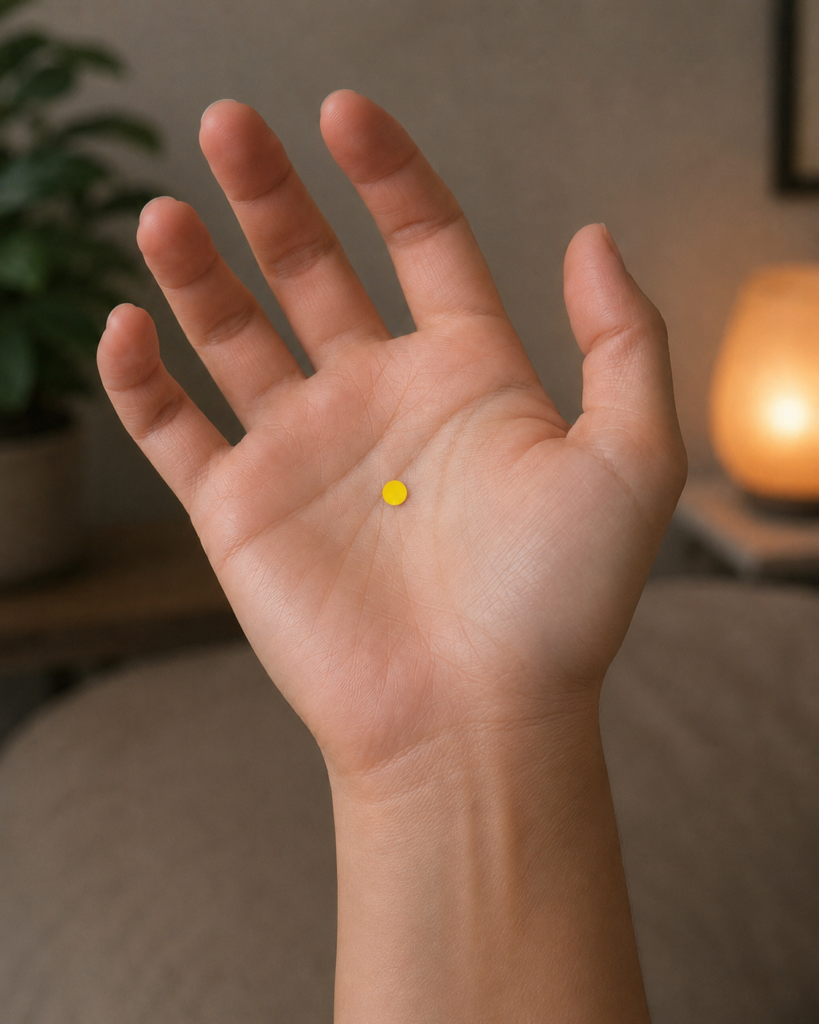
2. Press on PC8 in the center of the palm to freshen the breath. PC8 sits in the center of the palm, between the second and third hand bones, where the tip of the middle finger lands when a loose fist is made. Press firmly with the thumb of your other hand for one to two minutes on each palm. PC8 is called “Laogong,” the “Palace of Labor.”
PC8 is the Pericardium’s spring point, and classical Traditional Chinese Medicine texts list foul breath as one of its indications. It clears heat that has risen to the mouth and tongue, especially when bad breath occurs alongside mouth ulcers or a bitter taste.
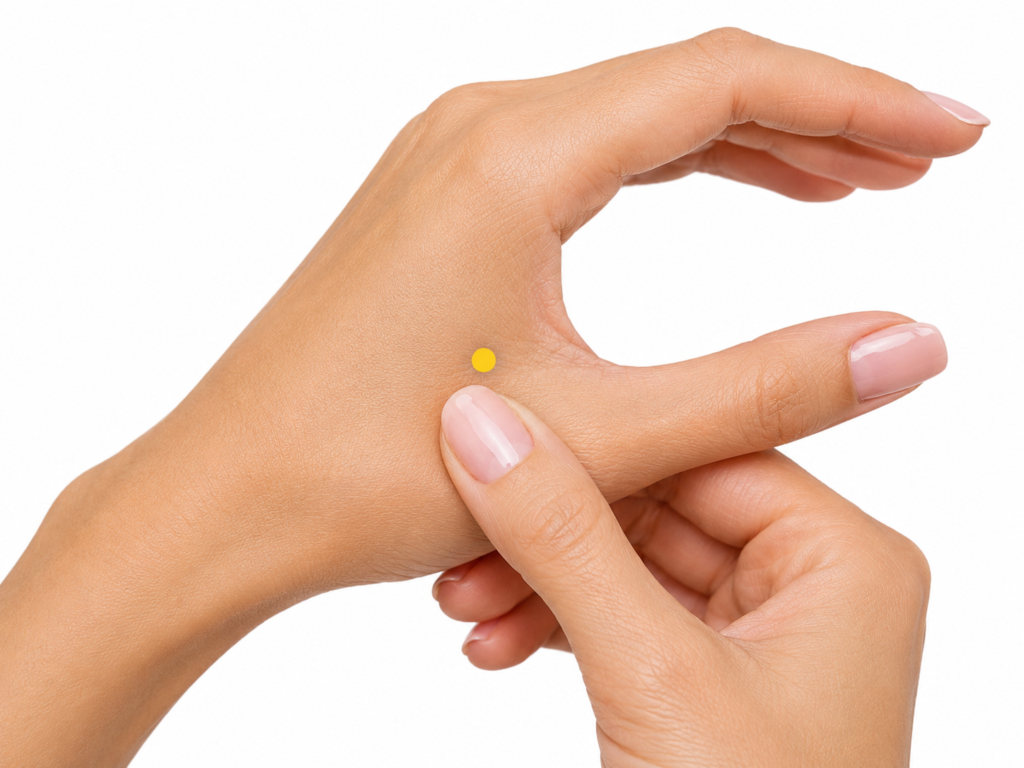
3. Press on LI4 on the back of the hand to clear heat from the face and mouth. LI4 sits in the webbing between the thumb and index finger, at the highest point of the muscle when the two are pressed together. Press firmly with the thumb of your other hand for one to two minutes on each hand. LI4 is called “Hegu,” the “Joining Valley.” LI4 is avoided during pregnancy.
LI4 is the point most commonly used for problems affecting the face, mouth, and teeth. The Large Intestine channel extends to the gums and lips, and LI4 is used to clear heat and swelling along its path.
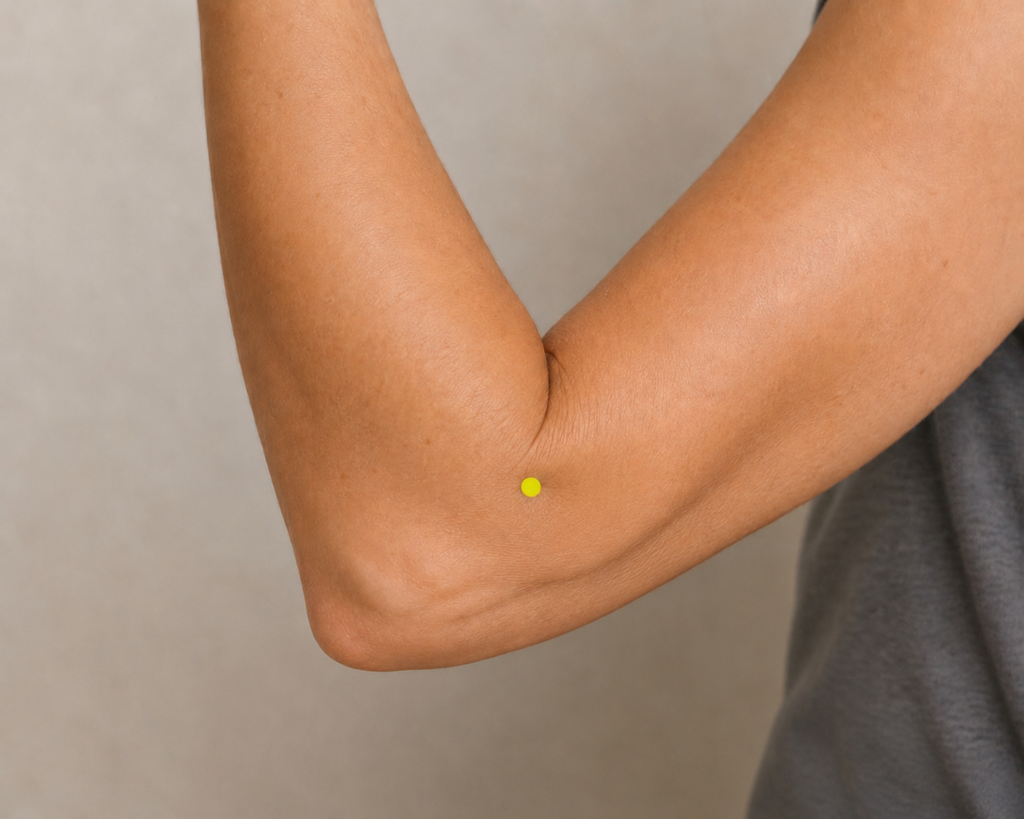
4. Press on LI11 at the outer elbow crease to cool inflammation. LI11 sits on the outer end of the elbow crease. Bend the elbow, and the point is in the hollow at the end of the crease, on the thumb side. Press firmly with your thumb for one to two minutes on each arm. LI11 is called “Quchi,” the “Pool at the Crook.”
LI11 is a key point for clearing heat throughout the body. Used with LI4, it can calm inflamed gums and reduce heat in the digestive tract, which is often the underlying cause of chronic bad breath.
5. Press on CV12 on the upper belly to help food digest. CV12 sits on the midline of the upper belly, halfway between the bottom of the breastbone and the navel. Press gently with two or three fingertips, or rest a warm palm over the area, for one to two minutes while breathing slowly. CV12 is called “Zhongwan,” the “Middle Cavity.”
CV12 is the Stomach’s alarm point. It helps move food that has been sitting too long, which, according to Traditional Chinese Medicine, can cause sour, heavy breath. It also helps relieve associated bloating and fullness.

6. Press on ST36 below the knee to strengthen digestion. ST36 sits four finger-widths below the bottom of the kneecap, about one finger-width to the outside of the shinbone. Press firmly with your thumb for one to two minutes on each leg. ST36 is called “Zusanli,” the “Leg Three Miles.”
ST36 strengthens the Spleen and Stomach so that food is properly digested rather than just sitting around and fermenting. In the long term, that leads to more stable digestion and hence fewer of the conditions that give rise to bad breath from below.

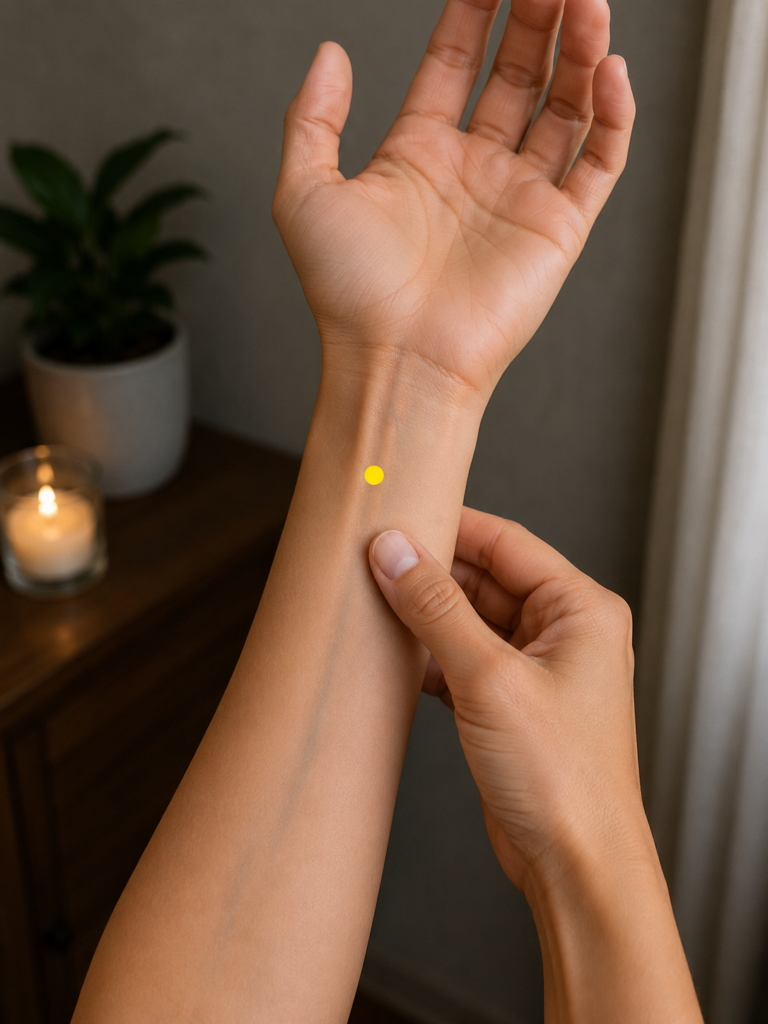
7. Press on PC6 on the inner forearm to settle reflux. PC6 sits on the inner forearm, three finger-widths above the wrist crease, between the two tendons. Press firmly with the thumb of your other hand for one to two minutes on each arm. PC6 is called “Neiguan,” the “Inner Pass.”
PC6 is the connecting point of the Pericardium and a primary point for nausea, belching, and acid rising into the throat. Since ongoing heartburn can cause bad breath, calming stomach acid that rises can help.
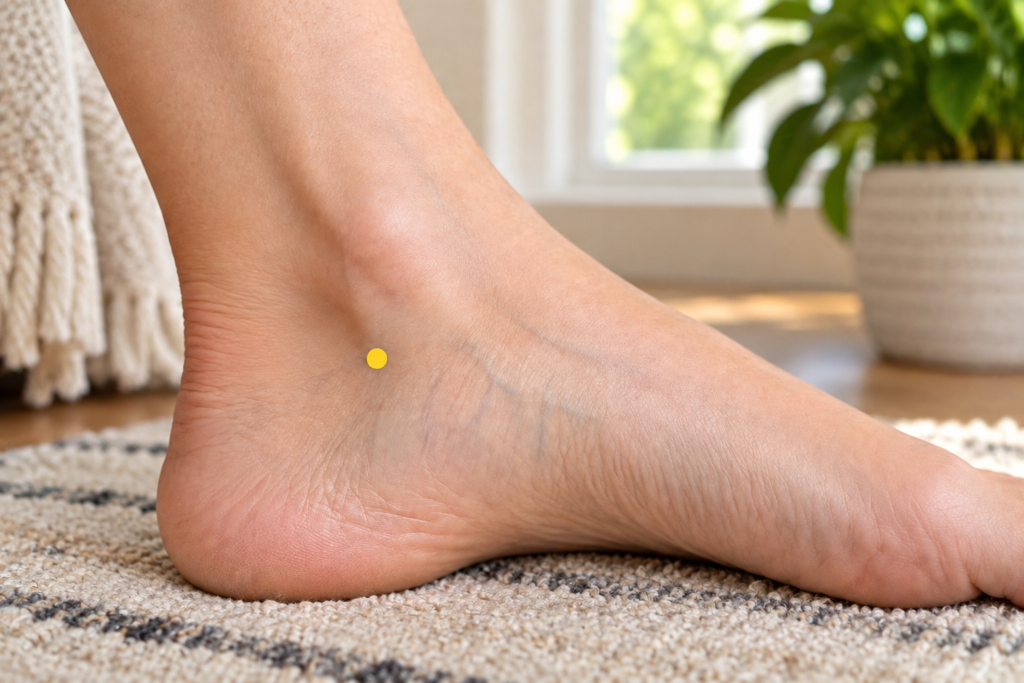
8. Press on KI6 below the inner ankle to moisten a dry mouth. KI6 sits on the inside of the ankle, in the small hollow about one thumb-width directly below the tip of the inner ankle bone. Press gently with your thumb for one to two minutes on each foot. KI6 is called “Zhaohai,” the “Shining Sea.”
KI6 nourishes Yin (the cooling, moistening fluids of the body in Traditional Chinese Medicine). It’s traditionally used for a dry mouth and throat (particularly at night) to help saliva do its job of keeping the bacteria in check.
9. Press on LI20 beside the nostrils to clear the sinuses. LI20 sits in the groove right beside the widest part of each nostril. Press gently with your fingertips, one on each side, for one to two minutes. LI20 is called “Yingxiang,” the “Welcome Fragrance.”
LI20 opens the nose and eases congestion. Postnasal drip carries mucus down the back of the throat, feeding odor-causing bacteria. Clearing the sinuses removes that source of food.

Why These Acupressure Points Work
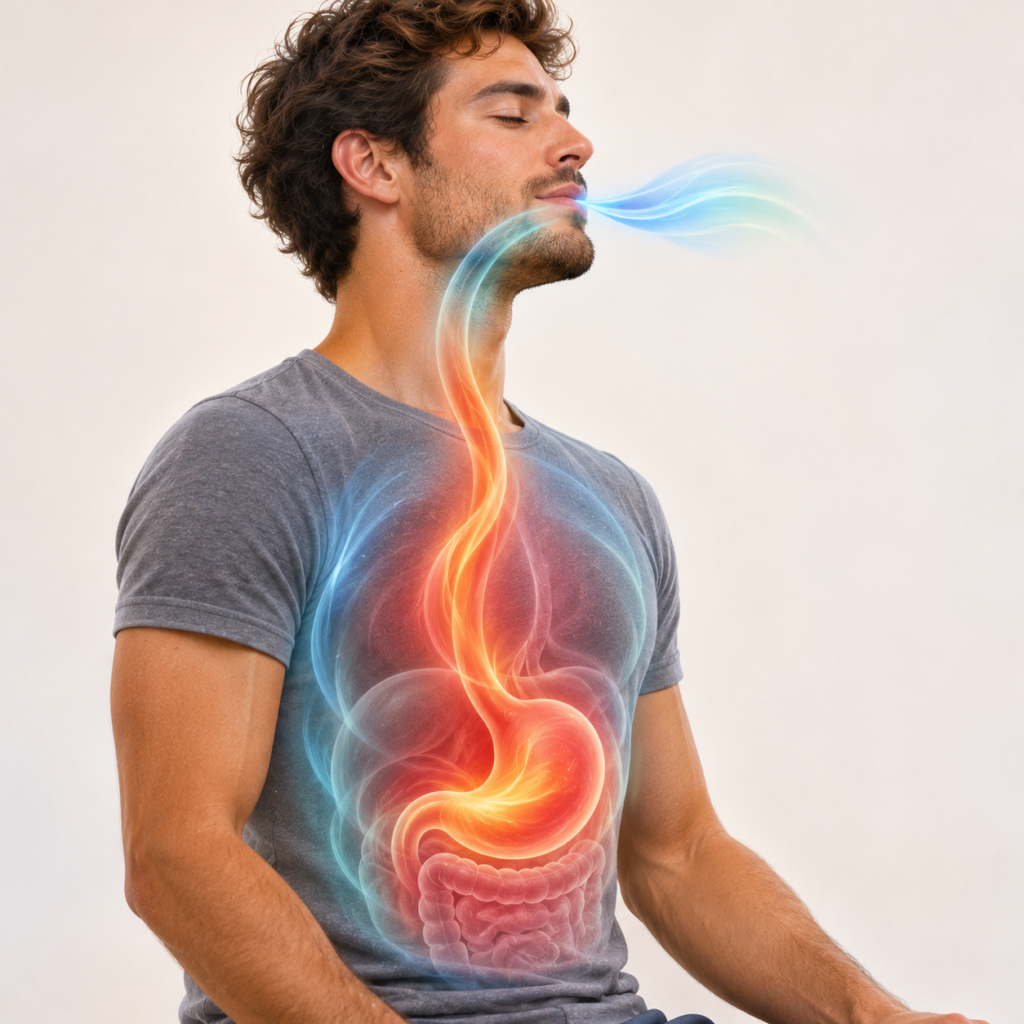
From a Traditional Chinese Medicine perspective, persistent bad breath often stems from a digestive issue that shows up in the mouth. Stomach heat rises along its channel to the gums and tongue, lingering food ferments, and a lack of fluids dries the mouth. Each creates an opportunity for odor to develop. Treatment cools excess heat, clears what is stuck in the stomach, and restores the moisture the mouth needs.
The nine points work together to freshen breath at its source:
- ST44, PC8, LI4, and LI11 clear heat from the Stomach, mouth, and gums.
- CV12, ST36, and PC6 support digestion and settle reflux.
- KI6 moistens a dry mouth and throat.
- LI20 clears the sinuses that drain into the back of the throat.
How to Properly Use These Acupressure Points

Acupressure for halitosis is most effective when incorporated into a daily routine alongside proper oral hygiene, as the aim is to address the factors that cause bad breath.
- Once a day, spend one to two minutes on each of the nine points, beginning with ST44, PC8, LI4, and LI11.
- After a heavy or rich meal, press CV12 and PC6 for one extra minute to help settle your stomach.
- If your mouth tends to feel dry overnight, press KI6 on both ankles before bed.
- Apply gentle pressure to the face, belly, and inner ankle, and use firmer pressure on the hands, arms, legs, and feet. Continue daily for at least four to six weeks.
Fresh breath starts with the fundamentals. Brush twice a day, floss once a day, and clean your tongue with a scraper or a toothbrush (working from back to front). Drink water throughout the day and chew sugar-free gum to keep saliva flowing. Replace your toothbrush every three to four months and keep up with your regular dental cleanings. Cut down on smoking, alcohol, and strong foods (especially garlic and onions). Don’t eat late at night, as that gives food more time to sit in the stomach. Traditional Chinese Medicine also recommends lighter, less greasy meals, plenty of vegetables, and cooling foods (cucumber and mung beans in particular) if you have bad breath with a hot, coated tongue.
Read more about the 5 foods that will improve your digestion.
When to Get Professional Help

If you have bad breath that persists despite brushing, flossing, and cleaning your tongue, you should see a dentist, as the most likely causes are gum disease, tooth decay, and infection, all of which require professional treatment. You should see a doctor if your bad breath is accompanied by persistent heartburn, a sore throat that won’t clear, white stones in the tonsils, sinus pain or thick nasal discharge, or a persistently dry mouth (which could be due to GERD, a sinus infection, tonsil problems, or a side effect of a medication). You need to get medical attention promptly if your breath smells sweet or fruity, with extreme thirst, frequent urination, and/or confusion (which could be a sign of a serious blood sugar problem) or if it has an ammonia or musty smell (which could be a sign of kidney or liver problems).
Acupressure is a gentle, supportive practice for bad breath. It complements, and does not replace, diagnosis and medical care.
For related health concerns, acupressure for dry mouth, acupressure for GERD, and acupressure for postnasal drip are companion articles.
Above and Beyond Acupuncture offers acupuncture, cupping, and lifestyle coaching at the North Frank Lloyd Wright Boulevard location in Scottsdale.
Schedule an appointment online to start your healing journey.
The points above are only as effective as the technique used to apply them. Where to press, how firmly, and for how long all affect the result. For a full breakdown of how to perform acupressure properly at home, read Performing Acupressure in 3 Easy Steps.

About the Publisher
Paul Kerzner, L.Ac., is a licensed acupuncturist and board-certified herbalist, as well as the founder of Above and Beyond Acupuncture in Scottsdale. His own journey from chronic patient to practicing acupuncturist shapes his commitment to providing honest, clinically grounded information about acupuncture and Traditional Chinese Medicine. Learn more about Paul and his clinical approach on the About Us page.