Key Takeaways
- Diabetes affects 38 million Americans and requires comprehensive management, where acupressure can support home care.
- Acupressure cannot replace medical treatments but aids in stress regulation, digestion, and circulation related to diabetes.
- Nine specific acupressure points address different diabetes aspects, enhancing overall management and addressing nerve function.
- Consistency in acupressure practice, alongside standard diabetes care, supports better long-term outcomes.
- Seek professional help for severe symptoms; consider acupuncture for more comprehensive support.
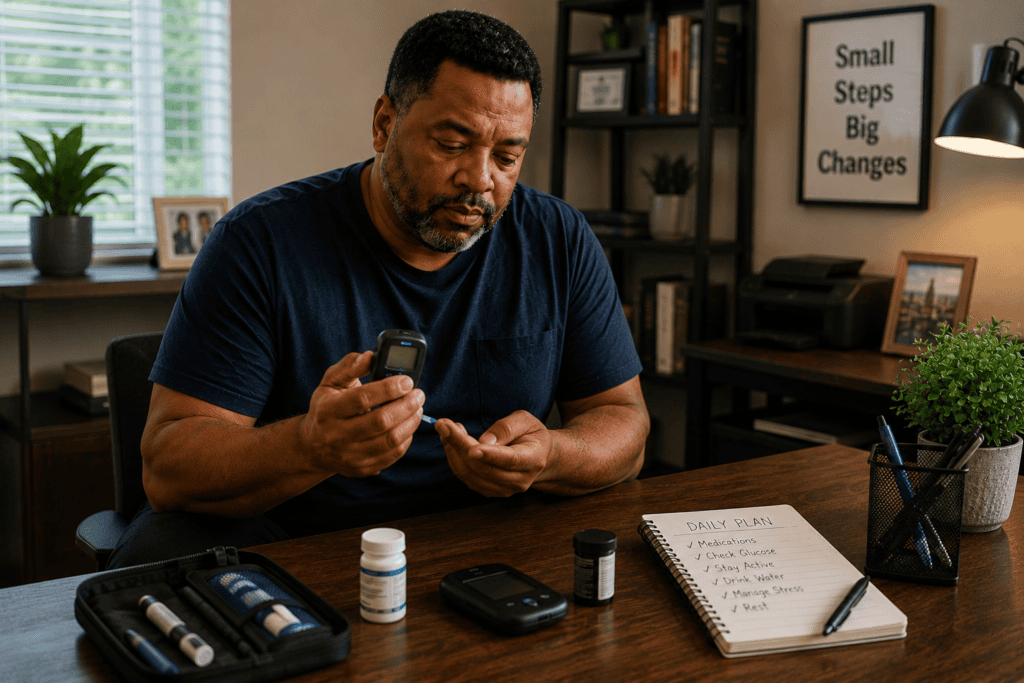
Diabetes affects roughly 38 million Americans and continues to grow. This condition requires consistent medical management including medications, glucose monitoring, blood pressure and cholesterol management, and often insulin. Many patients living with diabetes also want additional tools they can apply at home to support their overall management.
Acupressure is one of the tools that fits this supportive role. The technique addresses several patterns that affect diabetes including stress and cortisol regulation, digestive function, peripheral circulation and neuropathy, and the constitutional patterns involved in the condition. Regular practice of the points below supports the broader work of managing diabetes.
An honest note before starting. Acupressure does not treat diabetes as a primary intervention. It cannot replace insulin, oral medications, glucose monitoring, or the medical management that diabetes requires. What acupressure can do is support the stress patterns that affect blood sugar, the digestive function that affects nutrient absorption, the peripheral circulation that affects neuropathy, and the constitutional patterns involved in the disease. Please continue your medical care alongside any acupressure practice, and please talk with your physician before making any changes to your management plan.
Here are nine acupressure points that support diabetes management, why they work, and when to get help if symptoms progress.
What to Press and Why
Each point addresses a different aspect of the diabetes pattern. You can use them individually when specific symptoms are bothering you, or work through the full protocol once or twice a day.
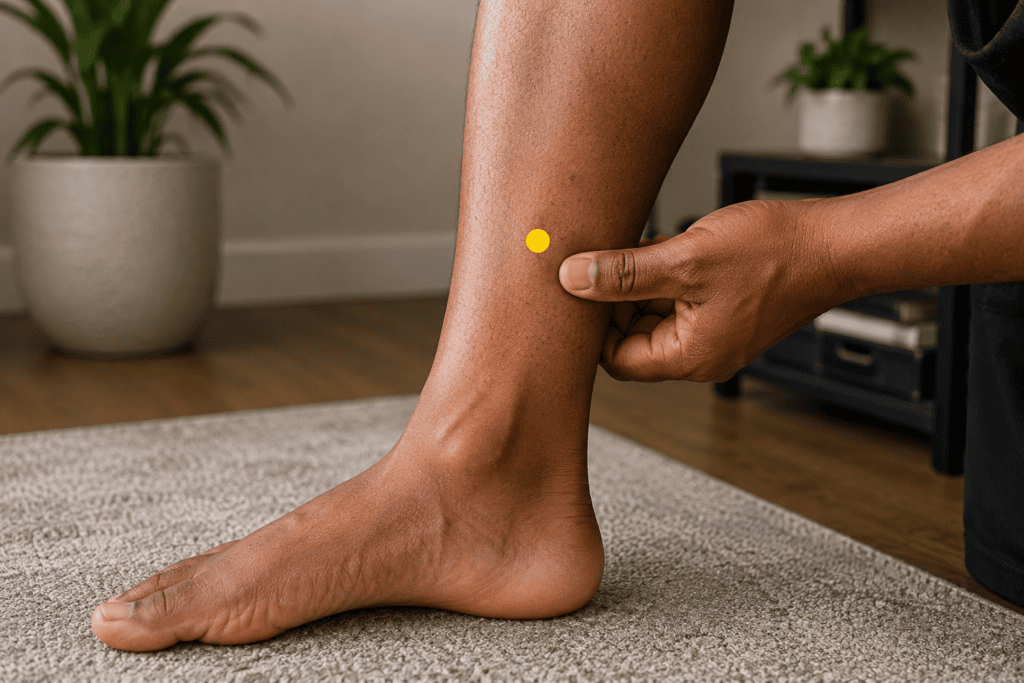
1. Press on SP6 above your inner ankle for the three Yin meeting point. SP6 sits about four finger-widths above the inner ankle bone, just behind the shinbone. Press firmly with your thumb for one to two minutes on each leg. SP6 is called “Three Yin Intersection” in Chinese medicine and is where the Spleen, Liver, and Kidney meridians meet. All three of these systems are involved in the Chinese medicine understanding of diabetes, which makes SP6 one of the central points for supporting the condition. SP6 is contraindicated during pregnancy.
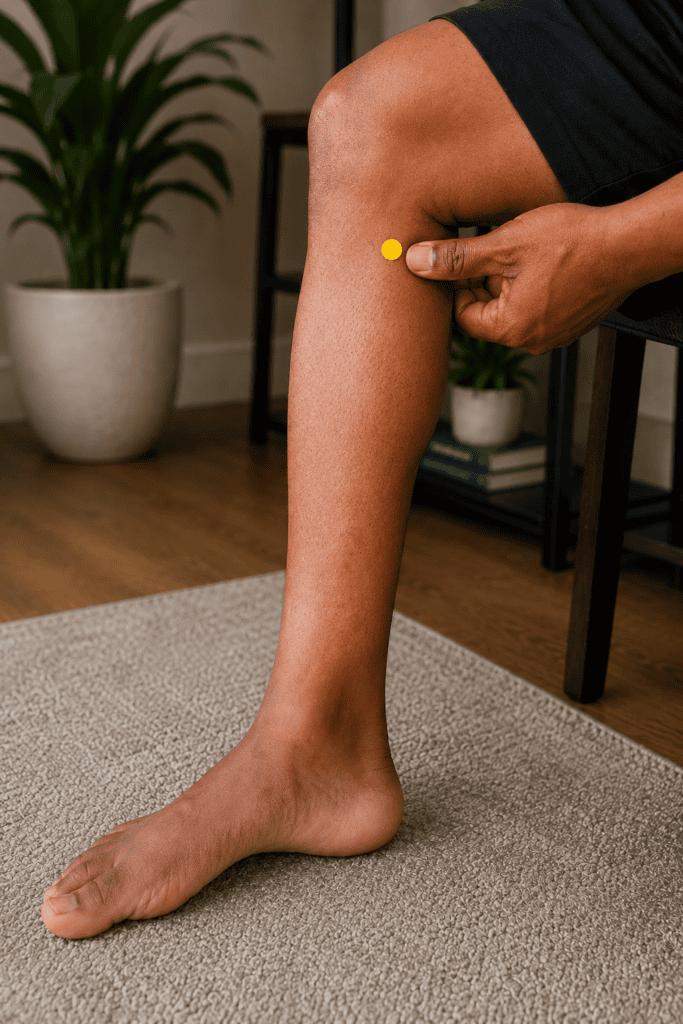
2. Press on SP9 below your inner knee for the Dampness pattern. SP9 sits in the depression on the inner side of the leg just below the knee, at the level where the shinbone curves inward. Press firmly with your thumb for one to two minutes on each leg. SP9 is called “Yin Mound Spring” and drains Dampness. Damp accumulation is common in Type 2 diabetes and contributes to the sluggishness, weight patterns, and metabolic sluggishness that many patients experience.
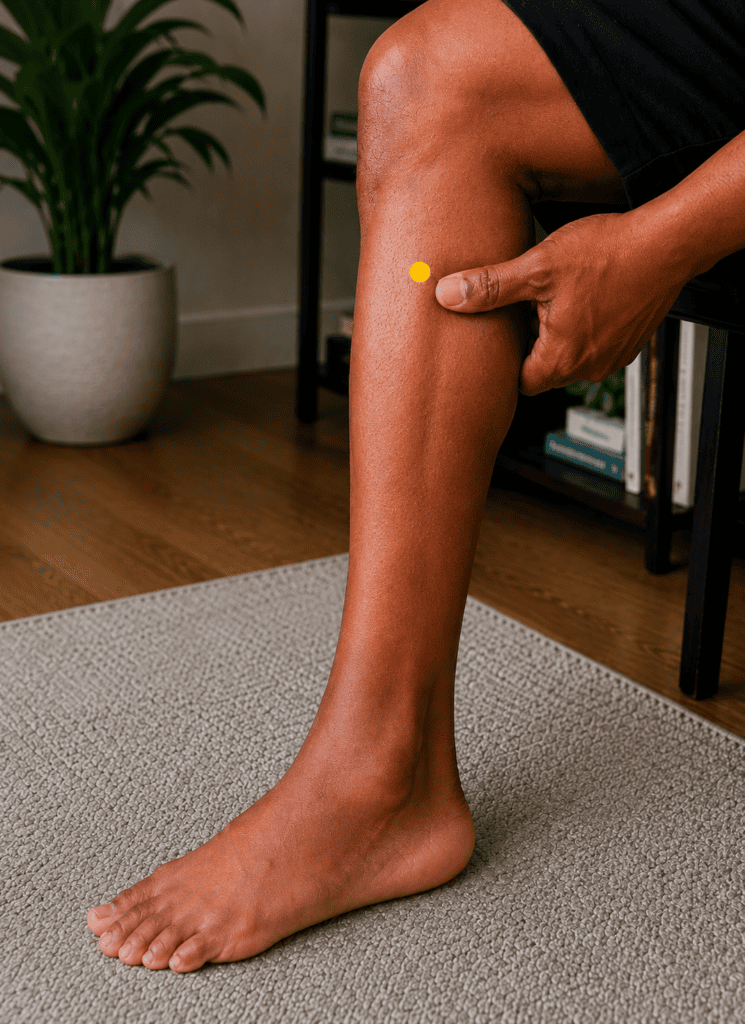
3. Press on ST36 below your knee for Stomach and Spleen support. ST36 sits about four finger-widths below the kneecap, one finger-width to the outside of the shinbone in the muscular depression there. Press firmly with your thumb for one to two minutes on each leg. ST36 is one of the most important points in Chinese medicine and directly supports the Stomach and Spleen function that governs digestion, energy production, and metabolic function. Regular use of ST36 supports the foundational digestive patterns that diabetes affects.
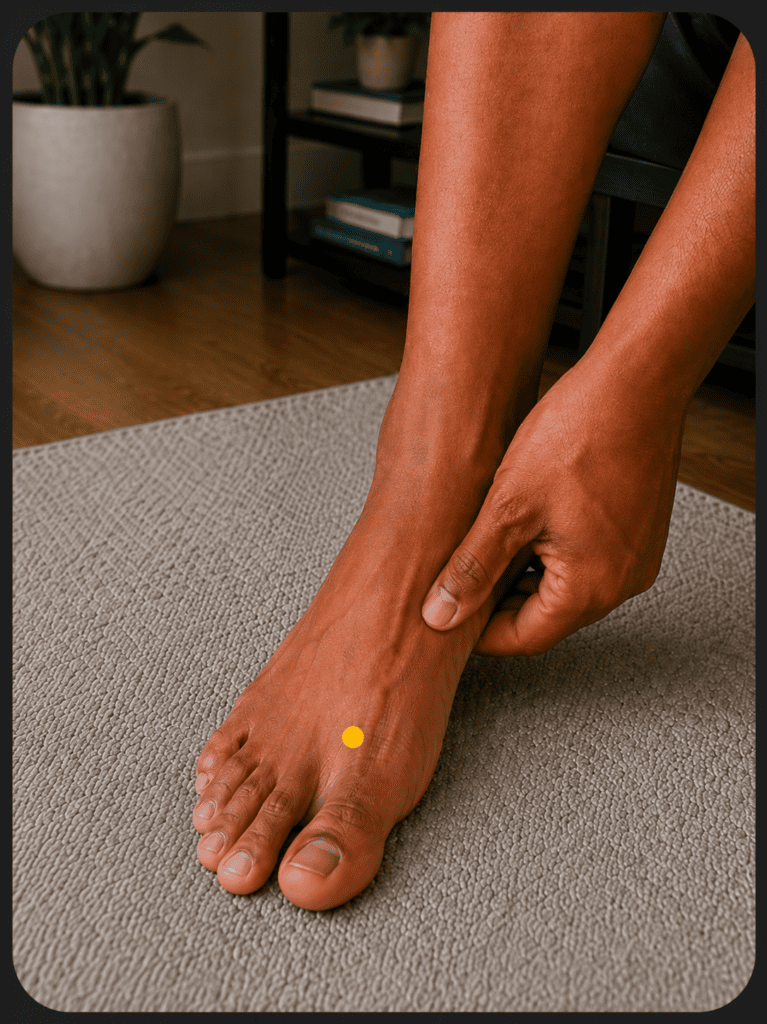
4. Press on LR3 on top of your foot for peripheral neuropathy and Liver system support. LR3 sits on the top of the foot in the webbing between the first and second toes, about two finger-widths back from the web. Press firmly with your thumb for one to two minutes on each foot. LR3 is called “Great Rushing” and moves Liver Qi that stagnates from chronic disease. The point directly addresses the peripheral neuropathy common in diabetic feet by supporting the circulation and nerve function in the feet. LR3 also addresses the mood and irritability patterns that often accompany chronic disease management.
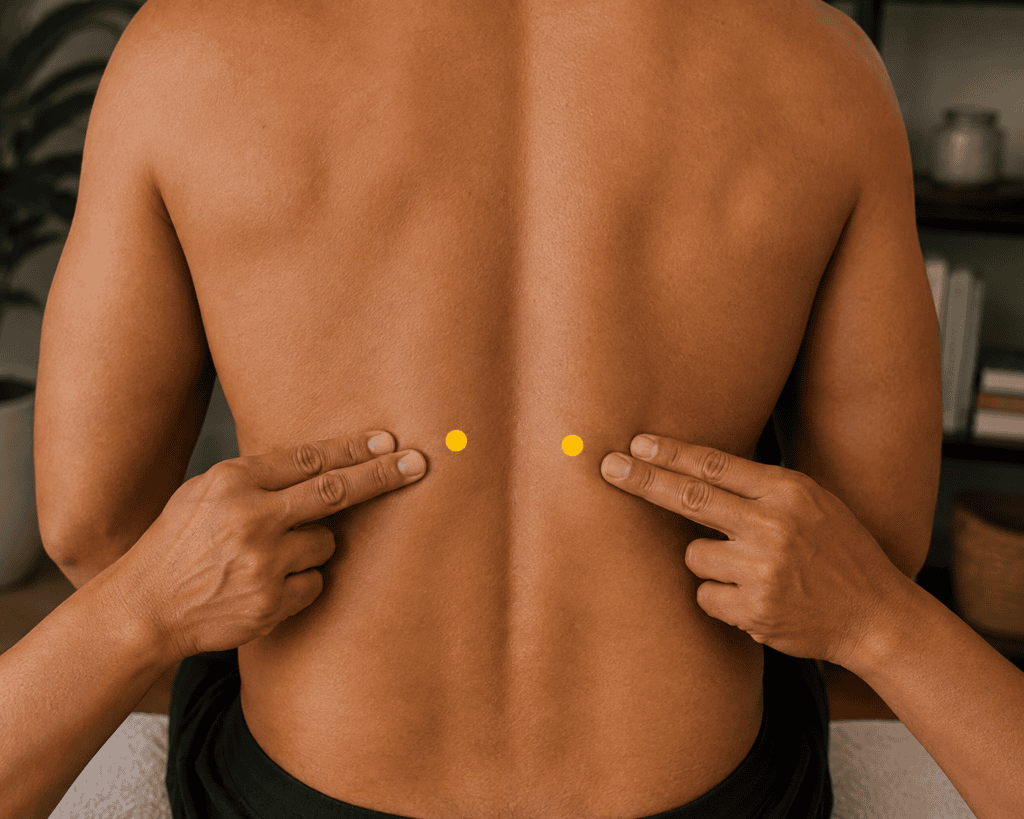
5. Press on BL20 on your mid back for the back-shu point of the Spleen. BL20 sits on either side of the spine at the level of the eleventh thoracic vertebra, about two finger-widths lateral to the spine. Finding this level can be tricky. A general approximation is at the lower edge of the shoulder blades or slightly above the bottom of the ribcage. Press with your fingertips or have a partner press for one to two minutes on each side. BL20 is the back-shu point of the Spleen and provides direct constitutional support for the Spleen system that is central to the Chinese medicine understanding of diabetes.
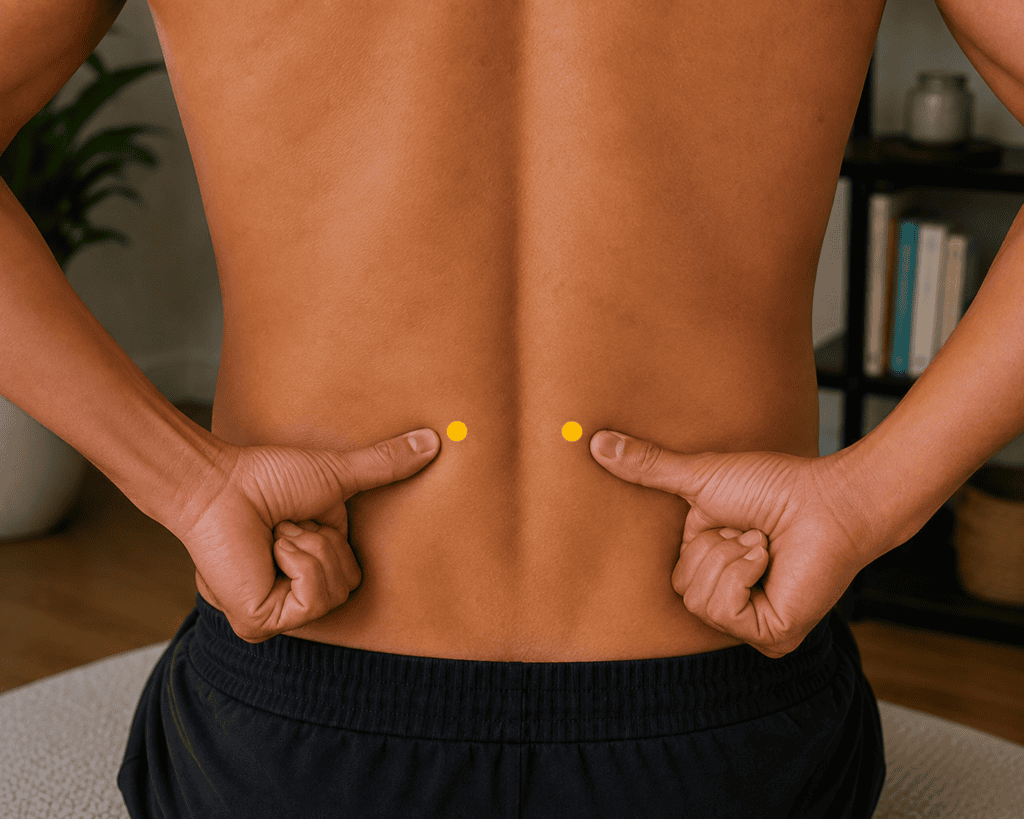
6. Press on BL23 on your low back for the back-shu point of the Kidneys. BL23 sits on either side of the spine at the level of the second lumbar vertebra, about two finger-widths lateral to the spine. This level roughly corresponds to the height of the belly button when wrapped around the low back. Press with your fingertips or have a partner press for one to two minutes on each side. BL23 is the back-shu point of the Kidneys. In Chinese medicine, chronic diabetes depletes the Kidney reserves, and BL23 provides direct constitutional support for the Kidney system.
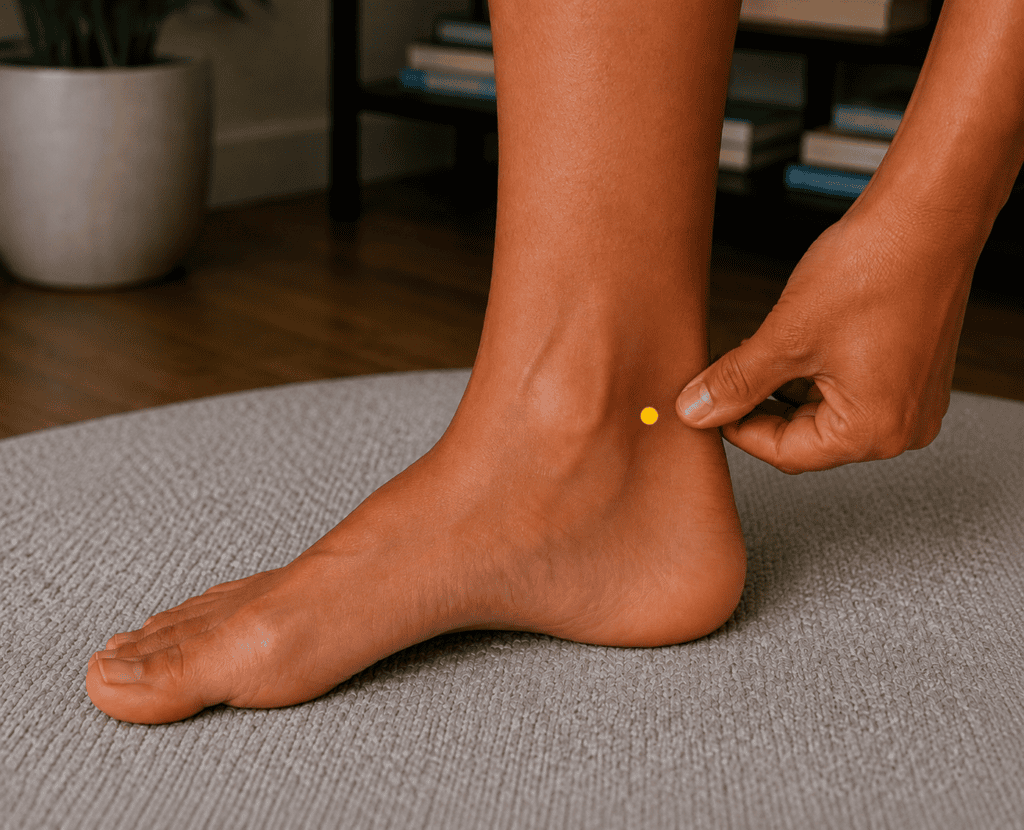
7. Press on KI3 behind your inner ankle for Kidney essence. KI3 sits in the depression behind the inner ankle bone, between the ankle bone and the Achilles tendon. Press firmly with your thumb for one to two minutes on each leg. KI3 tonifies Kidney essence. Combined with BL23, KI3 addresses the Kidney depletion common in chronic diabetes and supports the constitutional foundation that long-term management requires.
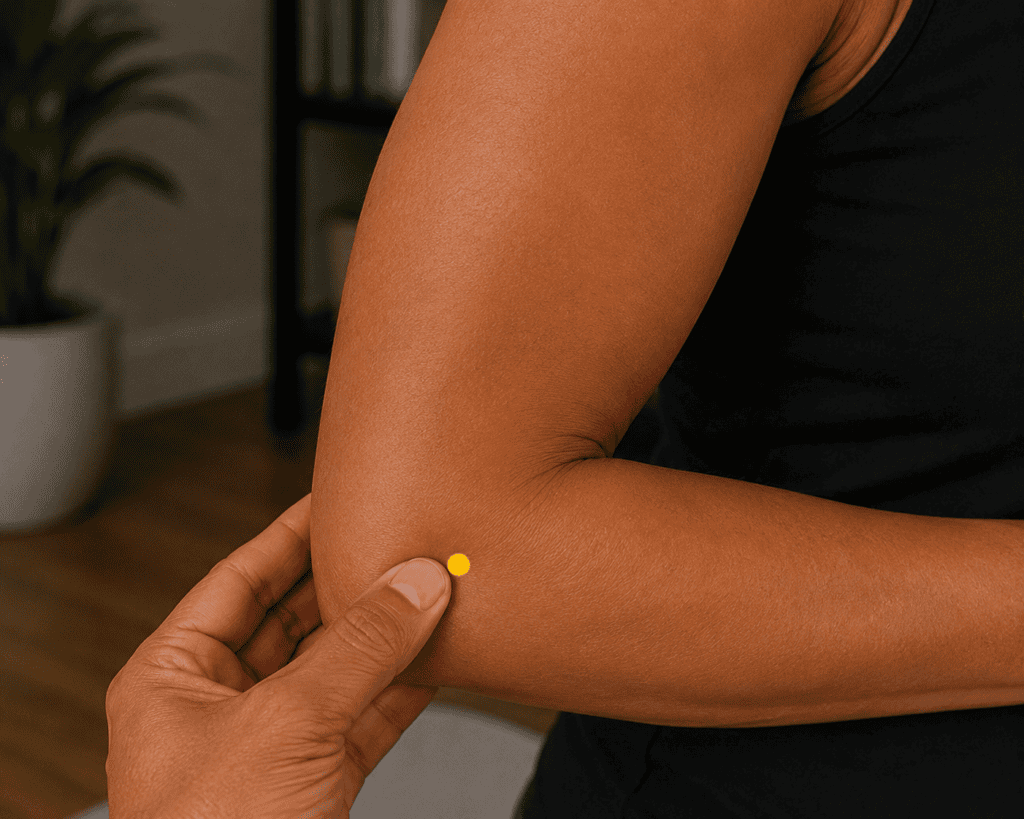
8. Press on LI11 at your outer elbow for the traditional heat-clearing point. LI11 sits at the outer end of the elbow crease when the arm is bent, in the depression that forms there. Press firmly with your thumb for one to two minutes on each arm. LI11 is called “Pool at the Bend” and is one of the traditional points used in Chinese medicine formulas for Xiao Ke, which is the traditional term for the pattern of excessive thirst, hunger, and urination that describes what we now call diabetes. The point clears Heat and supports the overall diabetes pattern.
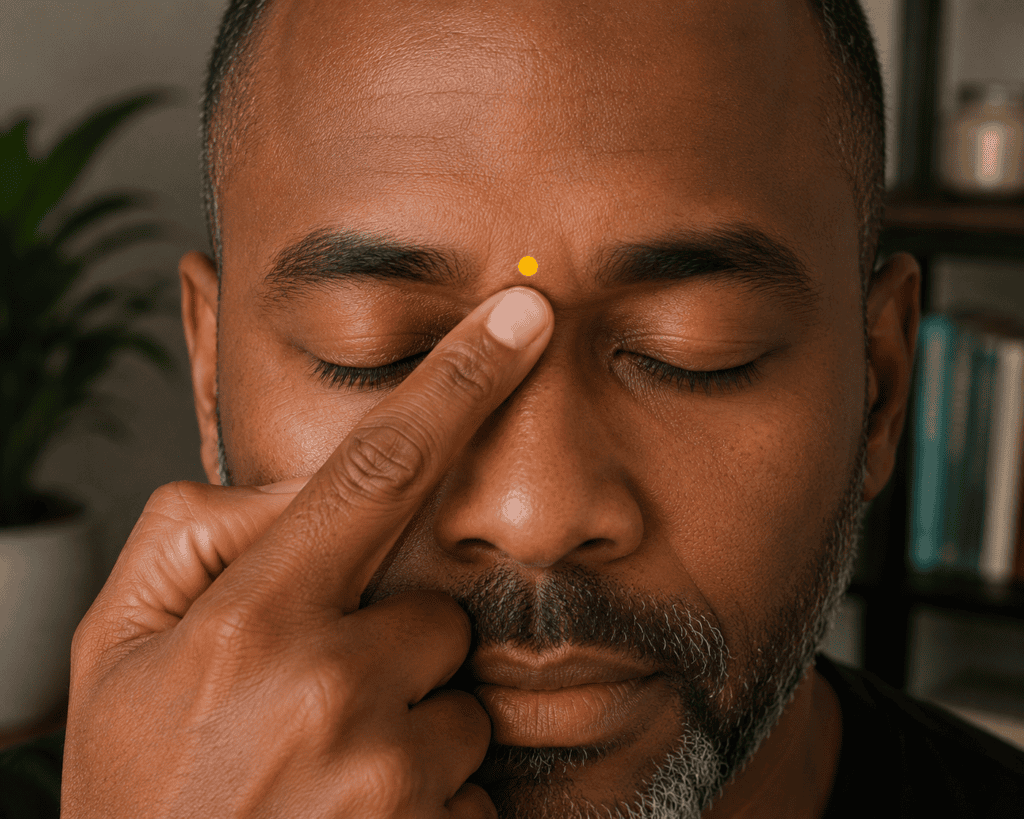
9. Press on Yintang between your eyebrows for stress reduction. Yintang sits in the small hollow directly between the eyebrows, above the bridge of the nose. Press gently with your fingertip for one to two minutes. Yintang calms the mind and reduces the chronic stress that directly affects blood sugar regulation through cortisol elevation. Stress is one of the most underappreciated factors affecting glucose control, and Yintang addresses this dimension directly through the nervous system.
Why This Works
Diabetes involves several overlapping patterns:
- The metabolic imbalance affects how the body processes glucose.
- The digestive patterns affect nutrient absorption and appetite regulation.
- The stress and nervous system patterns directly affect blood sugar through cortisol and adrenaline.
- The peripheral circulation patterns affect the nerves and tissues in the feet and other extremities.
- The constitutional patterns including Kidney and Spleen depletion contribute to the chronic nature of the disease.
Acupressure works on several of these mechanisms at once:
- The Spleen and Stomach points (SP6, SP9, ST36, BL20) address the digestive and metabolic patterns central to the condition.
- The Liver and neuropathy point (LR3) addresses the peripheral circulation and mood patterns.
- The Kidney points (BL23, KI3) address the constitutional depletion that chronic diabetes produces.
- The traditional Xiao Ke point (LI11) addresses the classical pattern of the condition.
- The calming point (Yintang) addresses the stress and cortisol patterns that affect blood sugar.
The chronic inflammation that contributes to insulin resistance and diabetic complications responds to acupressure through the constitutional support the points provide.
The Mayo Clinic overview of diabetes covers the medical framework for understanding Type 1 and Type 2 diabetes. The American Diabetes Association provides comprehensive resources for patients managing the condition.
How to Use the Points
- For daily maintenance, working through the full nine-point protocol once or twice a day supports the underlying patterns over time. Consistency matters more than intensity. Even a few minutes of daily practice provides meaningful constitutional support.
- For patients dealing with peripheral neuropathy specifically, LR3, SP6, and KI3 as a daily protocol support the peripheral circulation and nerve function in the feet. Combining acupressure with gentle foot self-massage amplifies the effect.
- For patients whose blood sugar spikes with stress, Yintang and SP6 can be pressed during stressful moments to support the nervous system regulation that affects glucose control.
- For patients dealing with the constitutional exhaustion of chronic diabetes management, BL20, BL23, and ST36 provide the deeper constitutional support.
Gentle sustained pressure works well for the more sensitive points (Yintang, LR3). The other points tolerate firmer pressure.
Pairing acupressure with foundational work of diabetes management increases the results:
- Consistent glucose monitoring.
- Medication adherence.
- Nutritional work with a registered dietitian familiar with diabetes management.
- Regular movement including both aerobic activity and strength training.
- Adequate sleep.
- Direct stress management practices.
- Regular foot care and inspection to catch complications early.
When to Get Professional Help
The tools above support diabetes management alongside medical care. They are not the answer for serious warning signs. Contact your physician immediately for very high or very low blood sugar readings that do not respond to your usual management, symptoms of diabetic ketoacidosis (nausea, vomiting, fruity breath, confusion, difficulty breathing), signs of severe infection especially in the feet, new or rapidly worsening neuropathy, or vision changes that could indicate diabetic retinopathy.
If you are dealing with the ongoing challenges of diabetes management and want more substantial support than acupressure alone provides, acupuncture treatment offers additional intervention that addresses the underlying patterns more comprehensively.
The nervous system patterns underlying chronic disease connect to the broader anxiety, stress, and depression patterns that many patients with diabetes navigate. Above and Beyond Acupuncture offers acupuncture, cupping, and lifestyle coaching at the North Frank Lloyd Wright Boulevard location in Scottsdale.
Reach out to schedule a consultation.
Schedule an appointment online or call us today to start your healing journey.
The points above are only as effective as the technique used to apply them. Where to press, how firmly, and for how long all affect the result. For a full breakdown of how to perform acupressure properly at home, read Performing Acupressure in 3 Easy Steps.
About the Publisher
Paul Kerzner, L.Ac., is a licensed acupuncturist and board-certified herbalist, as well as the founder of Above and Beyond Acupuncture in Scottsdale. His own journey from chronic patient to practicing acupuncturist shapes his commitment to providing honest, clinically grounded information about acupuncture and Traditional Chinese Medicine. Learn more about Paul and his clinical approach on the About Us page.