Key Takeaways
- Disappointment often stems from unfulfilled hopes, leading to emotional and physical reactions like a sinking heart and loss of appetite.
- Acupressure for disappointment involves specific points like CV14 for easing heaviness, LU5 for letting go, and GV4 for restoring motivation.
- Practicing acupressure consistently can help release stuck energy and improve emotional well-being after disappointments.
- Daily habits, such as sharing your feelings and adjusting expectations, complement acupressure and aid in processing disappointment.
- Seek professional help if feelings of disappointment persist and affect your day-to-day life; acupressure supports but does not replace medical care.

Disappointment always begins with hope. Maybe you’re waiting for a job offer, a second date, a promotion, a good test result, or even a friend to keep their word. When things don’t work out, the gap between what you pictured and what actually happened can feel unexpectedly hard.
How deeply disappointment hurts often depends on how much you’ve invested. A cancelled dinner might upset you for a night, but losing a business, facing infertility, or ending a long relationship can leave you grieving the future you imagined. Sometimes, disappointment comes from falling short of your own goals, breaking a promise to yourself, or feeling you haven’t become the person you hoped to be.
Your body reacts to disappointment right away. Many people describe it as their heart sinking or their stomach dropping. You might feel tired, slump your shoulders, sigh more often, or lose your appetite or interest for a while. Studies show that when you don’t get something you hoped for, dopamine levels in your brain drop, which can make you feel let down. If disappointments keep happening, you may start expecting less, stop trying, or avoid hoping to protect yourself.
In Traditional Chinese Medicine, the Liver looks ahead and makes plans; when those plans are thwarted, its Qi becomes constrained. The Spleen supports the center and lifts Qi upward, but a hard letdown causes it to sink, creating a heavy, deflated feeling in the chest and belly. The Lung governs letting go, while the Heart, which houses the Shen (spirit), loses some of its warmth and joy.
These nine points can help ease that sinking feeling, release the stuck Qi of unmet expectations, let go of what didn’t happen, and renew your motivation to move forward.
What Acupressure Points to Press and Why
1. Press on CV14 below the breastbone to ease a sinking heart. CV14 sits on the midline of the upper abdomen, about three finger-widths below the spot where the lower ribs meet at the bottom of the breastbone. Rest your fingertips on the point and press gently, or make slow circles, for one to two minutes while breathing into the belly. CV14 is called “Juque,” the “Great Gateway.”
CV14 is the Heart’s front gathering point, where Heart Qi collects at the front of the body. It calms the Shen and can help ease the heavy, sinking sensation just below the breastbone that often follows bad news.

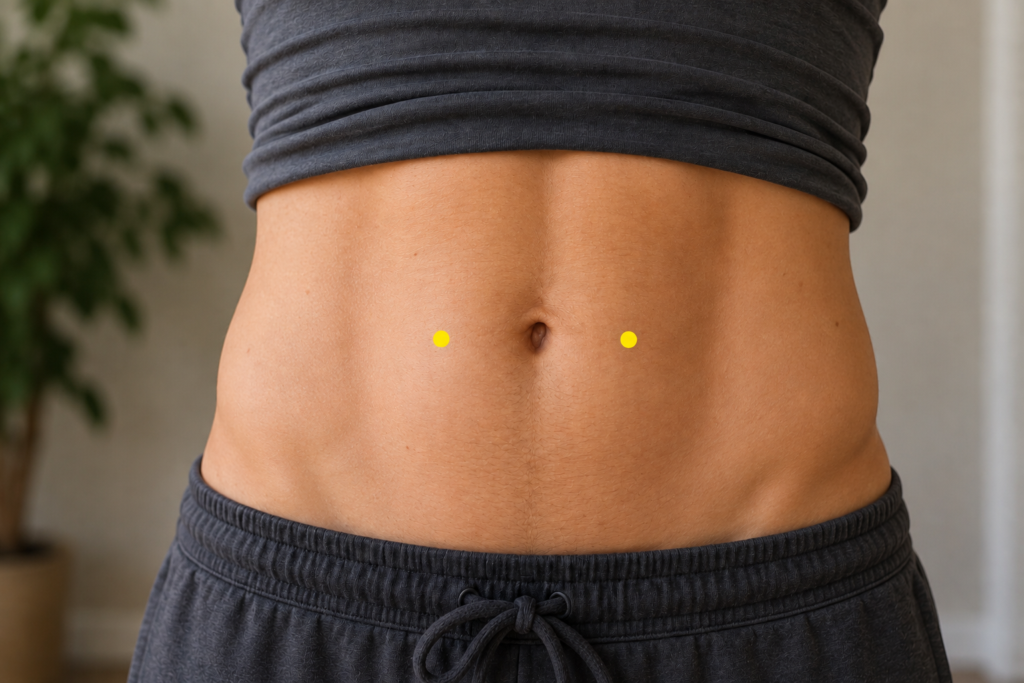
2. Press on ST25 beside the navel to steady the center. ST25 sits on the abdomen, about three finger-widths to each side of the navel. Press both points gently with your fingertips, or make slow circles, for one to two minutes while breathing slowly into the belly. ST25 is called “Tianshu,” the “Heavenly Pivot.”
ST25 regulates the Stomach and Intestines and can help with that knotted, sinking feeling in the stomach that comes with a letdown. It is known as the Heavenly Pivot, referring to its position at the pivot point between the upper and lower body. This is an apt reminder that a setback can also become a turning point.
3. Press on SP21 on the side of the rib cage for comfort and support. SP21 sits on the side of the rib cage, directly below the center of the armpit, in the sixth space between the ribs, about two rib spaces below the level of the nipple. Cross your arms in a gentle self-hug and press with your fingertips, or make slow circles, for one to two minutes on both sides. SP21 is called “Dabao,” the “Great Embrace.”
SP21 is the Great Connecting point of the Spleen, linking the Spleen channels throughout the body. It’s traditionally indicated for a heavy, drained feeling in the limbs and for opening the sides of the chest to let the breath move. The self-hug you use to reach it is comforting in itself.

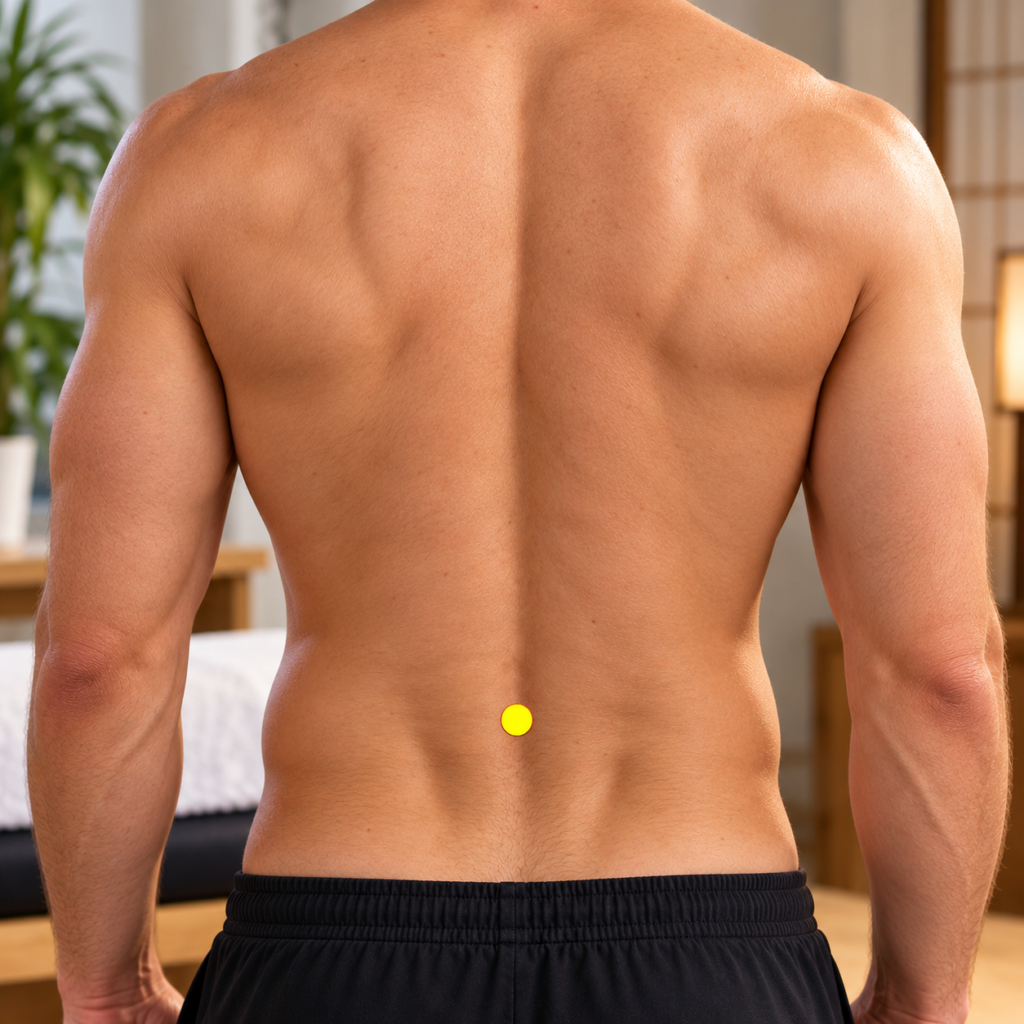
4. Press on GV4 on the lower back to rekindle your drive. GV4 sits on the midline of the lower back, in the hollow just below the second lumbar vertebra, roughly level with the navel. Press firmly with your knuckles, or rub your palms together until they are warm and rest them over the area for one to two minutes. GV4 is called “Mingmen,” the “Gate of Life.”
GV4 is one of the most important Traditional Chinese Medicine points for “warming the fire,” the energy that powers the whole body. After a hard letdown, that fire can feel as though it has gone out. Applying a little warmth and pressure to GV4 can help reignite that energy and restore your drive to get going.
5. Press on LU5 at the inner elbow to help let go. Bend the elbow slightly and find the strong tendon of the biceps at the center of the inner elbow crease. LU5 sits on the crease, just on the thumb side of that tendon. Press firmly with the thumb of your other hand for one to two minutes on each arm. LU5 is called “Chize,” the “Cubit Marsh.”
In Traditional Chinese Medicine, the Lung governs the ability to let go. LU5 is the Water point on the Lung channel and is traditionally used to descend Lung Qi and relieve fullness and tightness in the chest. It helps deepen the breath, allowing you to release hope that didn’t come true rather than hold on to it.

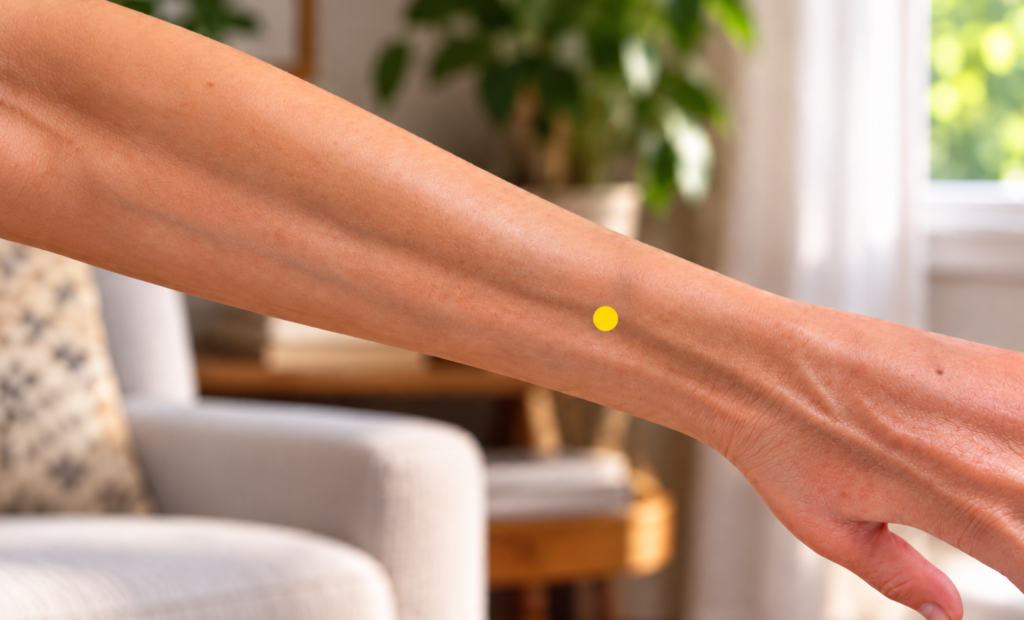
6. Press on TE6 on the back of the forearm to move stuck energy. TE6 sits on the back of the forearm, four finger-widths above the wrist crease, between the two forearm bones. Press firmly with the thumb of your other hand for one to two minutes on each arm. TE6 is called “Zhigou,” the “Branch Ditch.”
TE6 belongs to the Shaoyang channels, which include the Gallbladder channel and work closely with the Liver, and Traditional Chinese Medicine uses it to move Qi that has become stuck along the sides of the body.
7. Press on LR5 on the inner shin to release unmet expectations. LR5 sits on the inner side of the lower leg, about seven finger-widths above the tip of the inner ankle bone, on the flat inner surface of the shinbone. Press firmly with your thumb for one to two minutes on each leg. LR5 is called “Ligou,” the “Woodworm Canal.”
LR5 is the connecting point of the Liver (the organ that plans and envisages the future). If those plans are disrupted, the Liver Qi becomes constrained, often with sighing and a sensation of a lump in the throat. LR5 helps to unblock the Liver Qi so the mind can get back into gear.
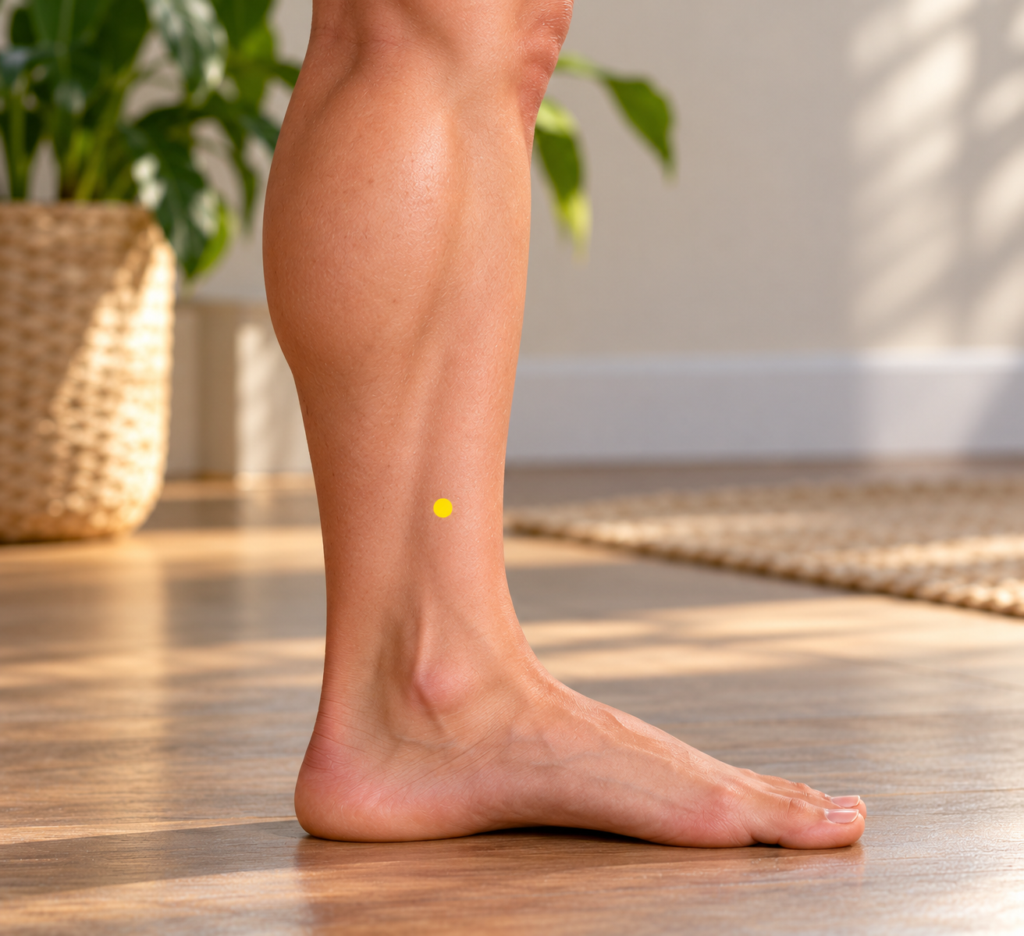
8. Press on GB37 on the outer lower leg to see the way forward. GB37 sits on the outer side of the lower leg, about seven finger-widths above the tip of the outer ankle bone, just in front of the fibula. Press firmly with your thumb for one to two minutes on each leg. GB37 is called “Guangming,” the “Bright Light.”
GB37 connects the Gallbladder and the Liver and is traditionally used to brighten the eyes. Its name, Bright Light, speaks to clear sight. After a disappointment, it supports the Gallbladder’s ability to look ahead and choose where to go next, rather than stay focused on what has been lost.
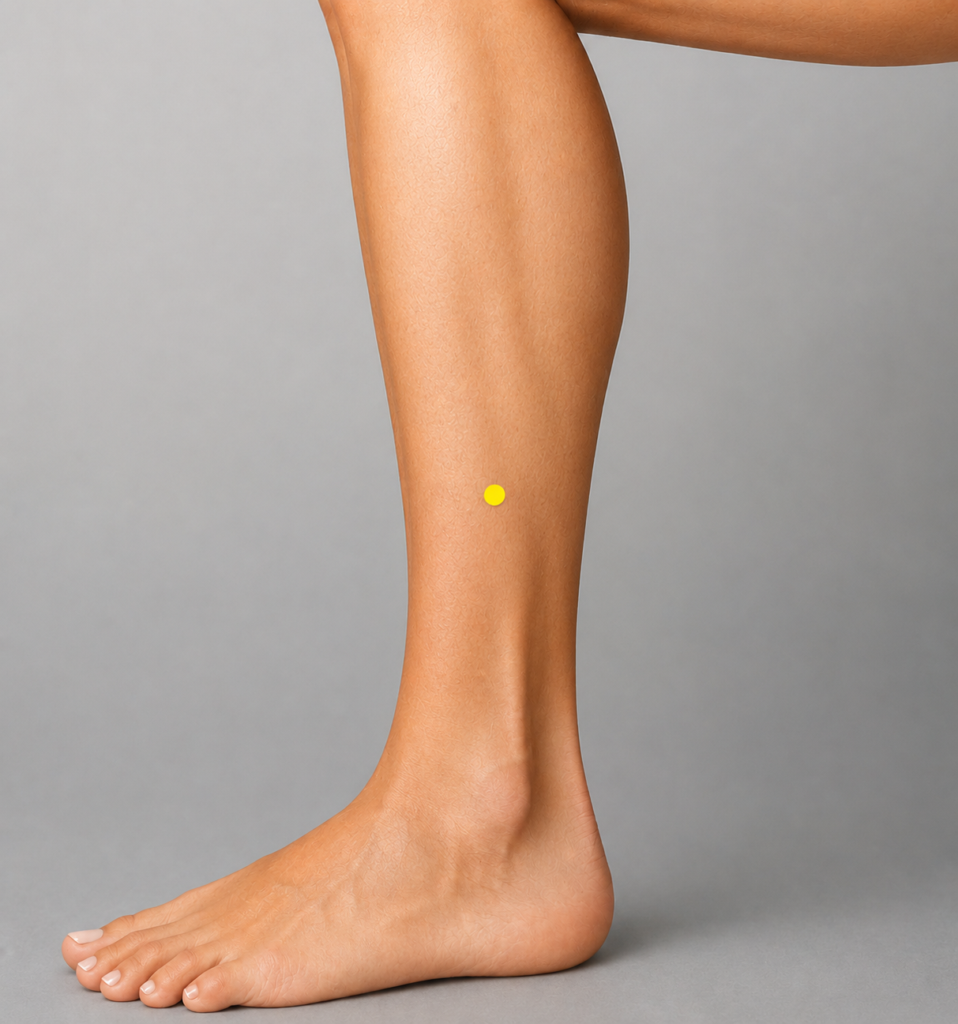
9. Press on SP2 on the big toe to lift sinking energy. SP2 sits on the inner edge of the big toe, in the hollow just in front of the big toe joint, where the smooth skin of the sole meets the top of the foot. Press firmly with your thumb for one to two minutes on each foot. SP2 is called “Dadu,” the “Great Capital.”
SP2 is the fire point of the Spleen channel and is traditionally used to warm and strengthen the Spleen. A strong Spleen supports the center and lifts Qi upward, just what’s needed to counter the heaviness and deflation that disappointment can leave behind.

Why These Acupressure Points Work

In Traditional Chinese Medicine, emotional well-being depends on a Liver that can adapt its plans, a Spleen strong enough to keep the Qi elevated, a Lung that can let go, and a Heart warm enough to keep hope alive. Disappointment causes the Qi to sink and stagnate at the same time, leaving you feeling heavy, stuck, and utterly unsure of what will happen next.
The nine points work together to help the letdown pass:
- The centering points (CV14, ST25, SP21) ease the sinking feeling in the chest and stomach and offer a sense of comfort.
- The letting-go points (LU5, TE6, LR5) release the stuck Qi of unmet expectations and help the mind adjust.
- The forward points (GB37, GV4) support a clear view ahead and rekindle the drive to try again.
- The lifting point (SP2) strengthens the Spleen and counters the heavy, deflated feeling.
How to Properly Use These Acupressure Points

Acupressure is most beneficial in the days following a disappointment and when practiced consistently during periods of ongoing setbacks.
- Complete the full routine once daily, holding each point for one to two minutes. If possible, perform it in the evening, when the letdown tends to recur.
- When feelings of unease arise, gently place your fingertips on CV14, then apply pressure to LU5 on both arms while taking five slow, deep breaths.
- Apply gentle pressure to the abdomen and sides of the chest, and firmer pressure to the arms, lower back, and legs.
- Practice consistently for several weeks, or longer if you have experienced a series of disappointments.
Daily habits can help you work through disappointment. Try to name what you lost, whether it’s an outcome, an opportunity, or a dream for the future, because naming it can make it easier to grieve and let go. Talk with someone you trust instead of keeping it to yourself. Remember, what happened doesn’t define your worth, and pay attention if your inner voice gets critical. Adjust your expectations, but don’t give up on hope. When you’re ready, take a small step toward a new plan. Move your body, eat warm, regular meals, and get enough sleep, since being tired can make disappointment feel even heavier.
Learn more about embracing change.
When to Get Professional Help

If disappointment leaves you feeling low for most of the day for two weeks or longer, you lose interest in things you once enjoyed, or your sleep or appetite changes, these may be signs of treatable depression. Seek help if repeated disappointments have stopped you from pursuing goals or relationships, a major loss has left you grieving the future you hoped for, or you’re using alcohol or other substances to cope.
If you feel hopeless or think about harming yourself, call or text 988 to reach the Suicide and Crisis Lifeline right away.
Acupressure is a natural, practical way to support you through periods of disappointment, but it doesn’t replace proper diagnosis or medical care.
For related emotional challenges, acupressure for sadness, acupressure for frustration, and acupressure for hopelessness are companion posts. If someone else let you down, learn about acupressure for resentment.
Above and Beyond Acupuncture offers acupuncture, cupping, and lifestyle coaching at the North Frank Lloyd Wright Boulevard location in Scottsdale.
Schedule an appointment online to start your healing journey.
The points above are only as effective as the technique used to apply them. Where to press, how firmly, and for how long all affect the result. For a full breakdown of how to perform acupressure properly at home, read Performing Acupressure in 3 Easy Steps.

About the Publisher
Paul Kerzner, L.Ac., is a licensed acupuncturist and board-certified herbalist, as well as the founder of Above and Beyond Acupuncture in Scottsdale. His own journey from chronic patient to practicing acupuncturist shapes his commitment to providing honest, clinically grounded information about acupuncture and Traditional Chinese Medicine. Learn more about Paul and his clinical approach on the About Us page.