
Key Takeaways
- Dupuytren’s contracture causes finger stiffness due to thickening of the palmar fascia, often leading to a firm lump in the palm.
- Acupressure for Dupuytren’s contracture uses nine specific points to improve circulation and nourish the sinews, helping relieve stiffness.
- Daily routines with gentle acupressure can ease stiffness and help maintain hand flexibility; avoid aggressive pressure on nodules.
- Signs that professional help is needed include severe contracture or rapid changes, where treatments like injections or surgery may be necessary.
- Acupressure supports, but does not replace, medical care for Dupuytren’s contracture; seek specialist advice if symptoms worsen.

The first sign is usually a small, firm lump in the palm, often near the base of the ring or little finger. Over time, a firm cord can develop beneath the skin, gradually pulling one or more fingers toward the palm. Eventually, the hand may no longer lie flat on a table, and putting on a glove, shaking hands, or reaching into a pocket may feel awkward.
This condition is called Dupuytren’s contracture. Beneath the skin of the palm lies a thin, tough layer of connective tissue called the palmar fascia. It anchors the skin and helps you grip. In Dupuytren’s contracture, the tissue gradually thickens and shortens, forming nodules that develop into cords extending into the fingers. The tendons are unaffected, so the fingers can still curl into a fist even when they cannot straighten.
Genetics plays a big role. According to the Mayo Clinic, this condition is most common in people over 50. Men are much more likely than women to develop it, and people of Northern European descent face a higher risk. It often runs in families. Diabetes, smoking, and alcohol use are also associated with increased risk. Some people have a single nodule that never changes, while others experience a gradual bend in the finger over several years.
In Traditional Chinese Medicine, this is understood as a problem involving the sinews, the connective tissue governed by the Liver. The Liver’s stored Blood keeps the sinews moist and flexible. As people age and this Blood becomes depleted, the sinews can dry out and contract. Qi and Blood may then stagnate in the palm, leading to firm nodules and cords. Cold and dampness can worsen the stiffness, which is why the hand often feels tighter in cold weather or in the morning.
The nine points below work around the nodules and cords rather than directly on them. They ease stiffness, improve circulation to the palm and fingers, and nourish the sinews that keep the hand flexible.
What Acupressure Points to Press and Why
1. Press on HT8 in the palm near the little finger to ease tightness. HT8 sits in the palm, between the bones leading to the ring and little fingers, where the tip of the little finger lands when you make a loose fist. Press gently with the thumb of your other hand for about one minute, staying just beside any nodule or cord you can feel. HT8 is called “Shaofu,” the “Lesser Mansion.”
HT8 is located near the area where Dupuytren’s contracture typically begins and helps promote circulation through the palm along the Heart channel. It moves Qi and Blood through the part of the palm that supports the ring and little fingers, helping ease tightness there.
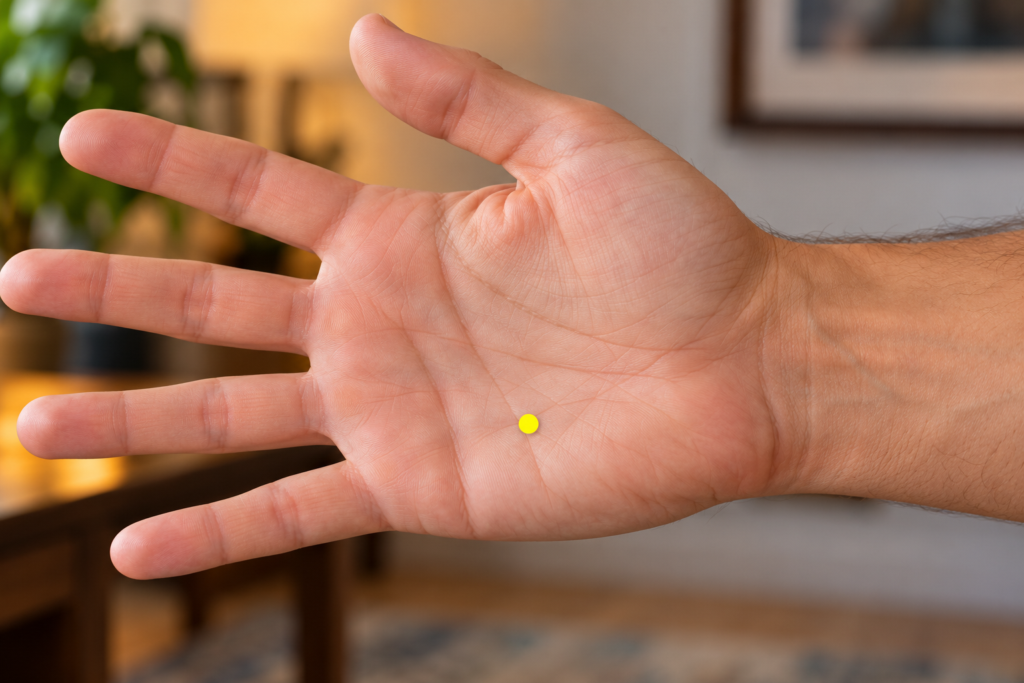
2. Press on PC8 in the center of the palm to relax the hand. PC8 sits in the center of the palm, where the tip of the middle finger lands when you make a loose fist. Press gently with the thumb of your other hand for about one minute, or rub the palms together until they are warm. PC8 is called “Laogong,” the “Palace of Labor.”
PC8 helps relax the entire palm and ease stiffness in hands affected by work or age, as its name, the Palace of Labor, suggests. Rubbing your palms together to warm this point is a soothing way to start the day, and the warmth helps soften the tissue.
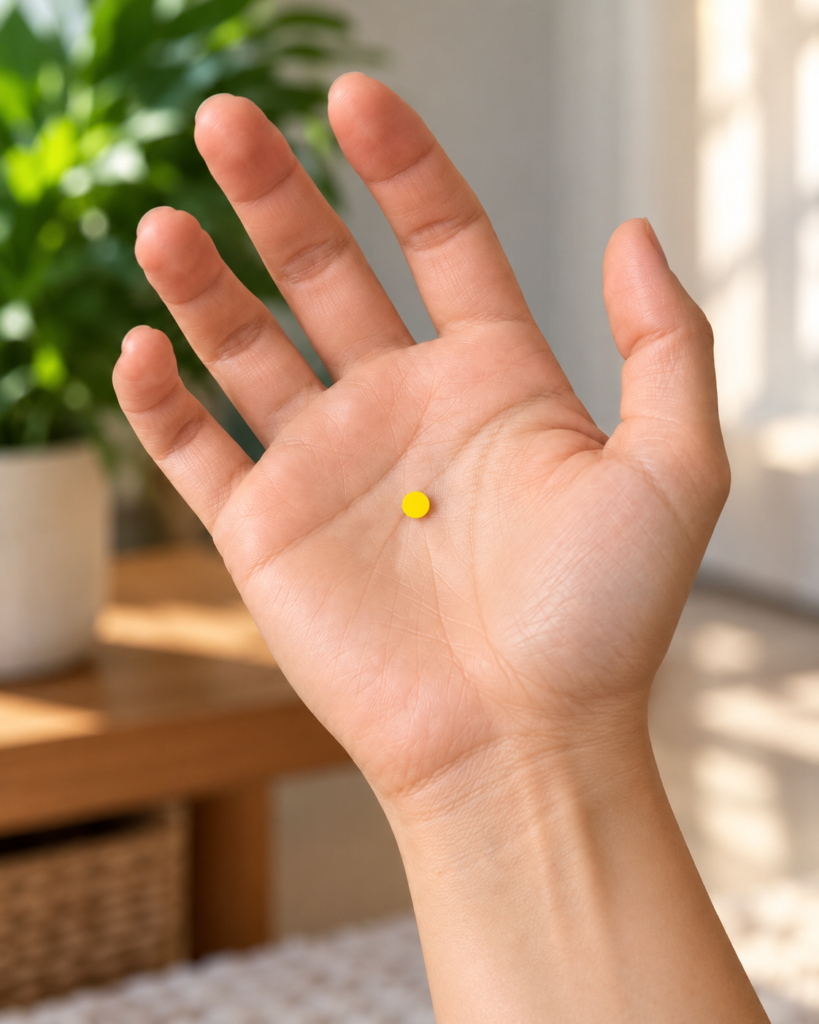
3. Press on PC7 at the center of the wrist crease to open the way into the palm. PC7 sits in the middle of the inner wrist crease, between the two tendons that stand out when you make a fist and bend the wrist slightly. Press gently but firmly with the thumb of your other hand for one to two minutes on the affected hand. PC7 is called “Daling,” the “Great Mound.”
The tendons and fascia in the palm connect through the wrist beneath PC7, allowing this point to influence the pathway into the affected area without touching the cords. It helps relax the palm and wrist, move stagnation along the Pericardium channel into the hand, and works well with PC8.
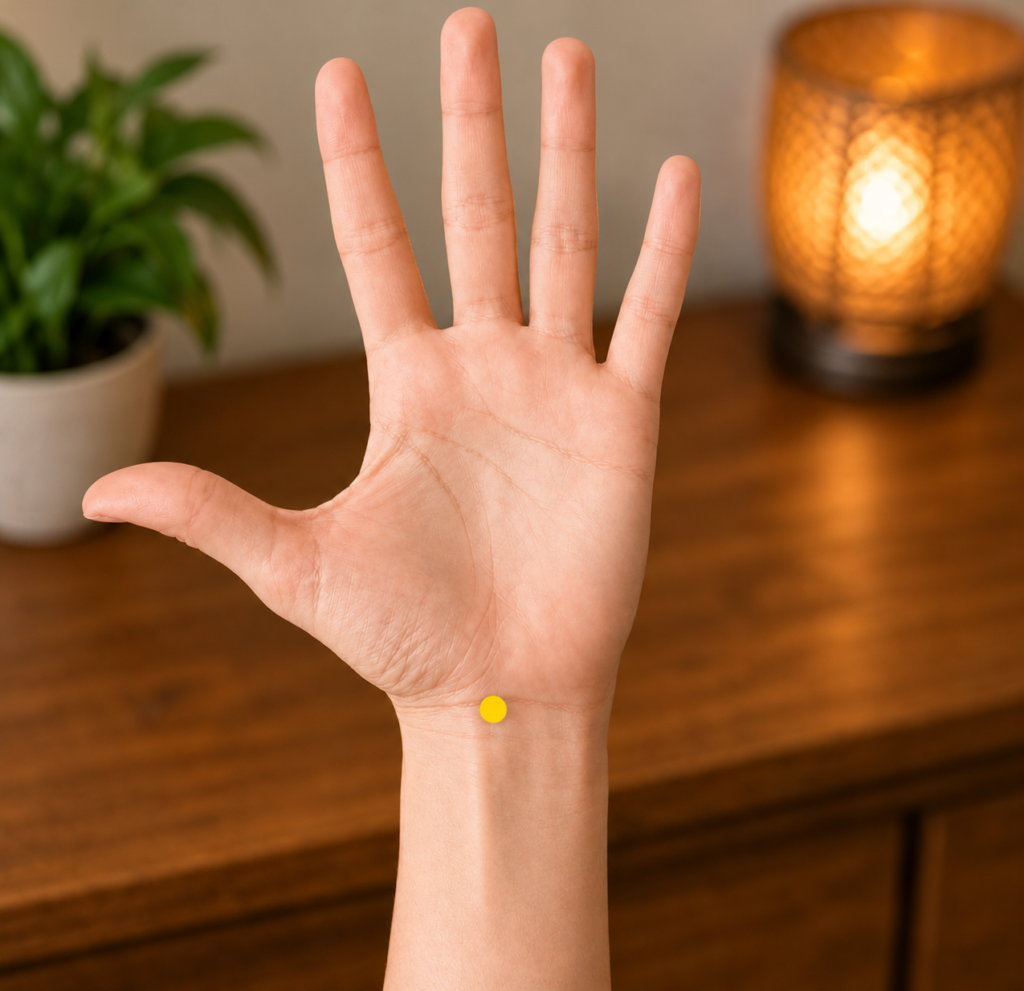
4. Press on TE3 on the back of the hand to reach the ring and little fingers. TE3 sits on the back of the hand, in the hollow between the bones leading to the ring and little fingers, just behind the knuckles. Press firmly with the thumb of your other hand for one to two minutes on the affected hand. TE3 is called “Zhongzhu,” the “Central Islet.”
TE3 is located on the back of the hand, directly opposite the area where Dupuytren’s contracture usually develops in the palm. It helps move Qi and Blood along the ring-finger side of the hand and ease finger stiffness. Because it’s on the back of the hand, you can apply firm pressure here.
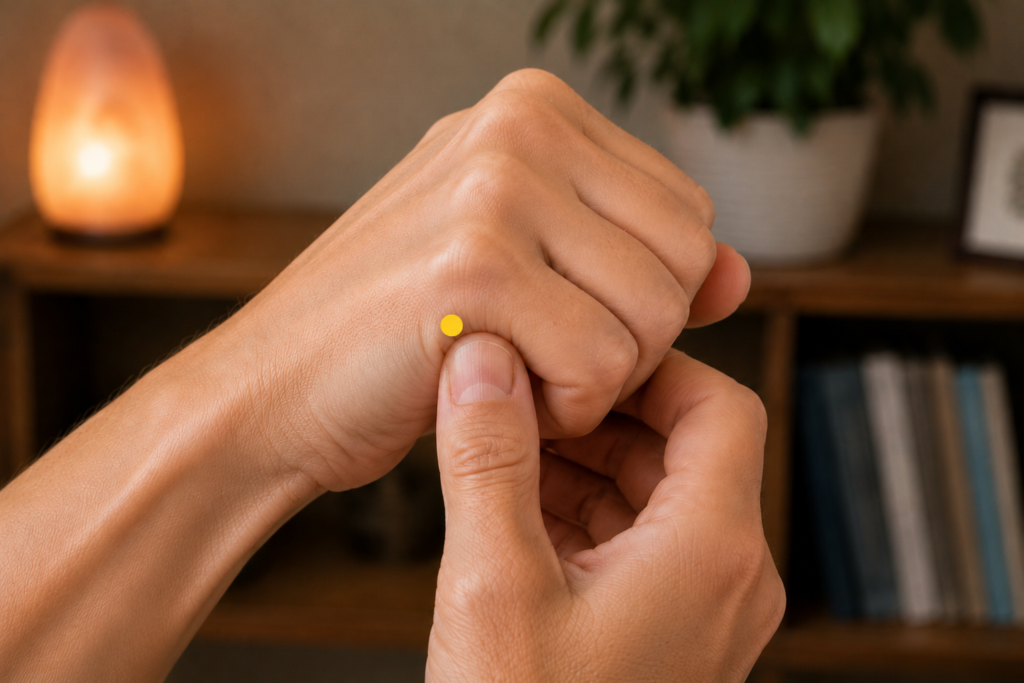
5. Press on SI3 on the edge of the hand to free the little finger. SI3 sits on the outer edge of the hand, on the little finger side. Make a loose fist; the point sits at the end of the crease just below the little-finger knuckle. Press firmly with the thumb of your other hand for one to two minutes on the affected hand. SI3 is called “Houxi,” the “Back Stream.”
SI3 helps move circulation along the Small Intestine channel toward the little-finger side of the hand, where the cords often draw the smallest fingers inward. In Traditional Chinese Medicine, it is used to address finger stiffness and contraction and to relax the sinews along the edge of the hand.
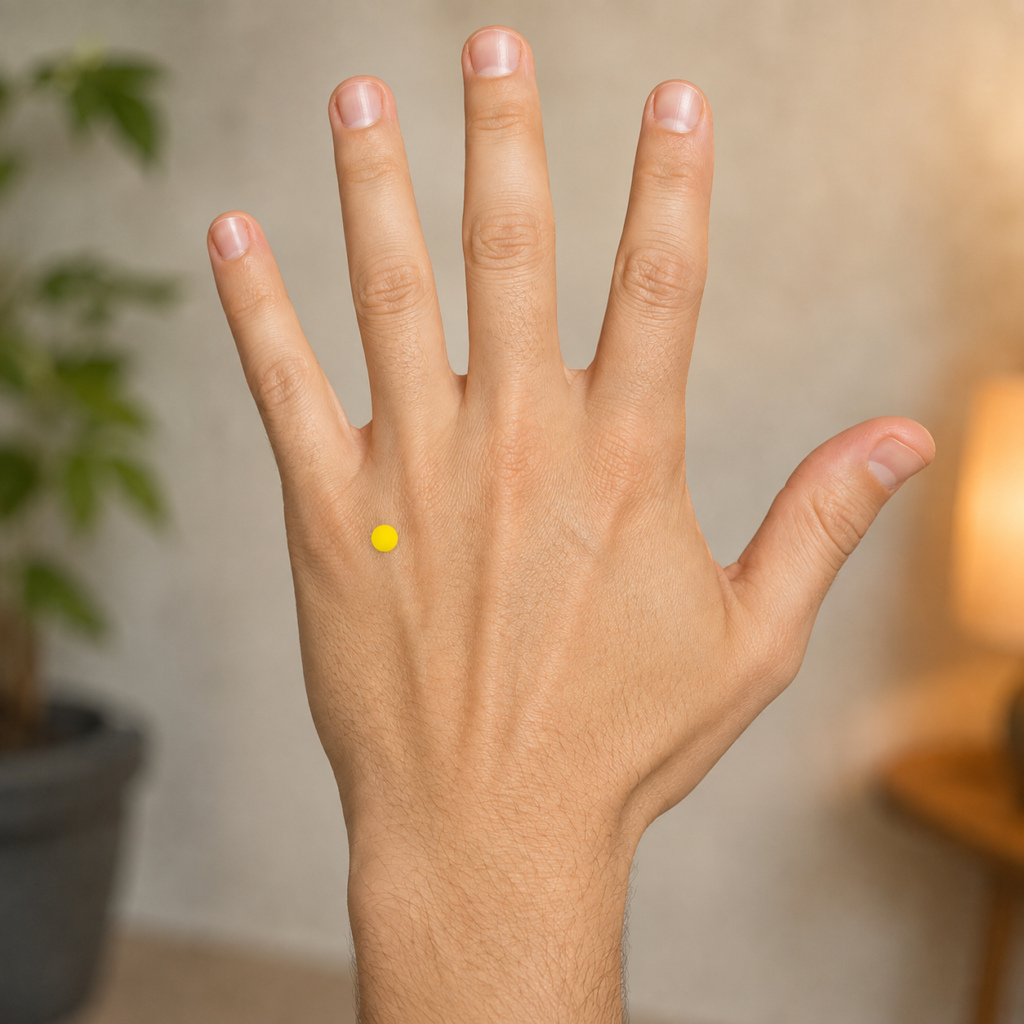
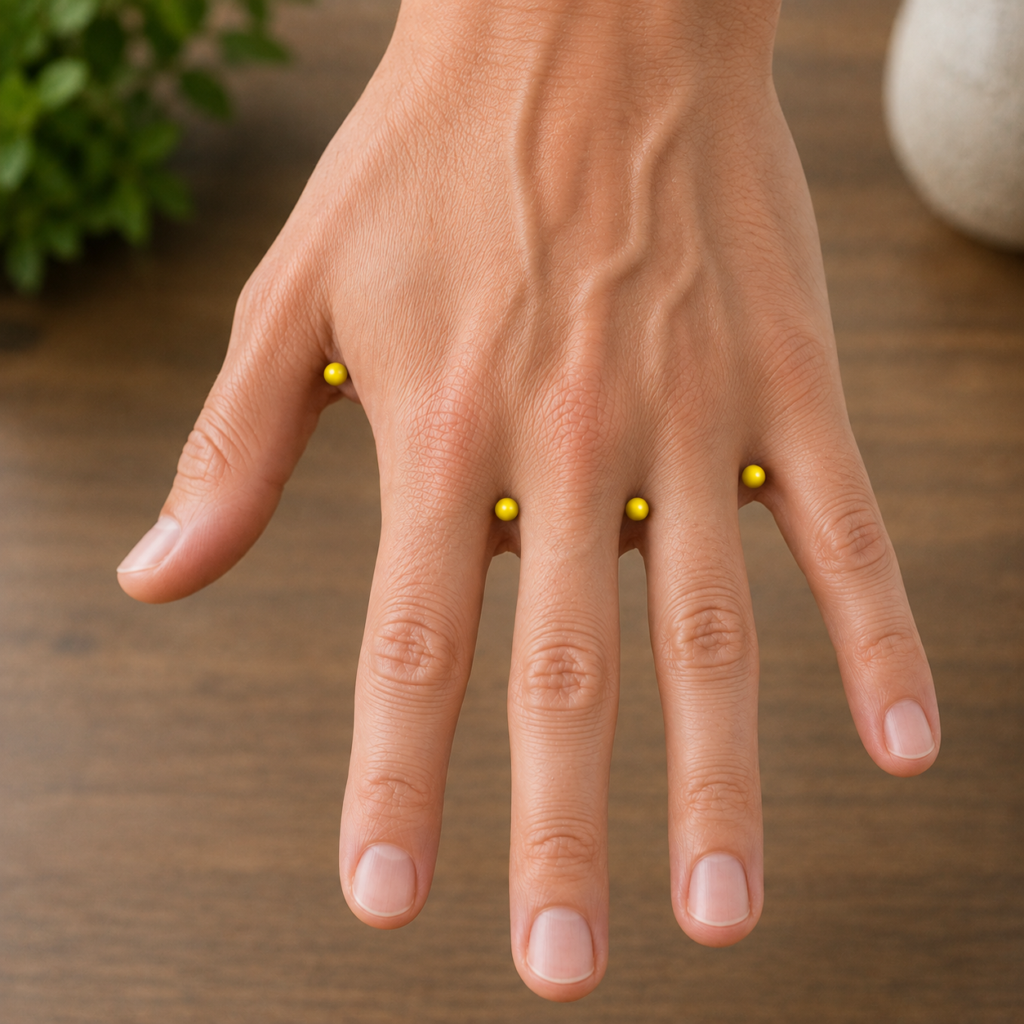
6. Press on Baxie between the knuckles to keep the fingers supple. Baxie are four points on the back of each hand, at the edge of the webbing between each pair of fingers, just behind where the fingers meet the hand. Gently pinch each web between your thumb and index finger for thirty seconds to one minute, working across the hand. Baxie is an extra point group whose name means “Eight Evils.”
Baxie are classic finger points used for stiffness, swelling, and restricted movement. Working these points on the back of the hand helps move Qi and Blood through the fingers, particularly around the webbing between the ring and little fingers.
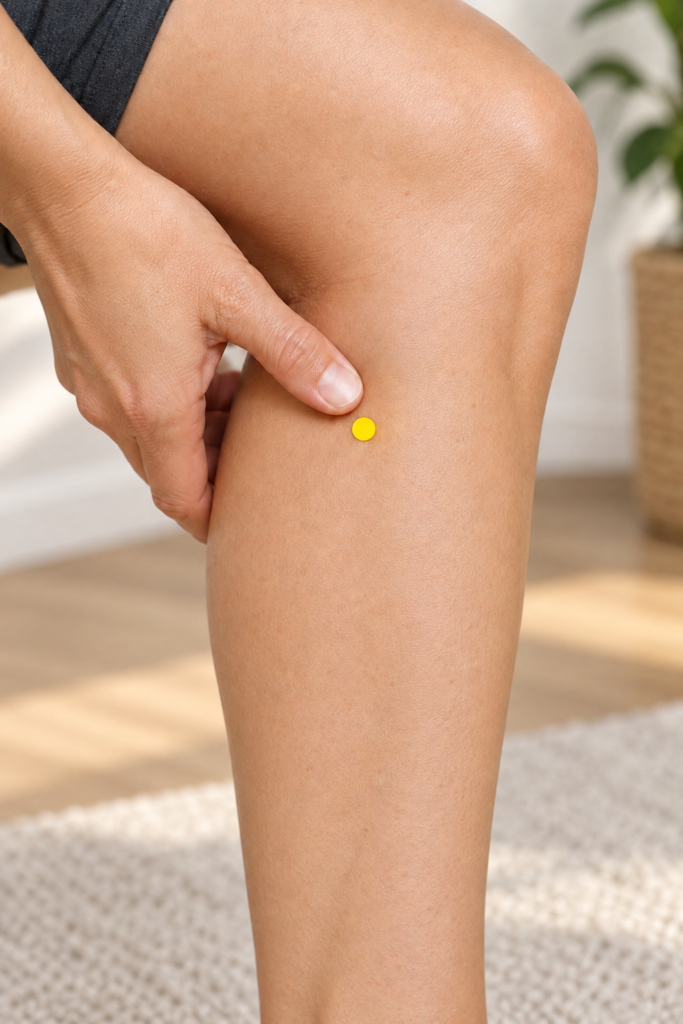
7. Press on GB34 below the outer knee to relax the sinews. GB34 sits on the outer side of the lower leg, in the hollow just in front of and below the bony bump at the top of the outer leg bone, just below the knee. Press firmly with your thumb for one to two minutes on each leg. GB34 is called “Yanglingquan,” the “Yang Mound Spring.”
GB34 is known as the influential point of the sinews, meaning it has a special effect on tendons, ligaments, and connective tissue throughout the body. Because Dupuytren’s contracture affects the sinews, GB34 helps relax and nourish them from a distance, while the hand points work locally.
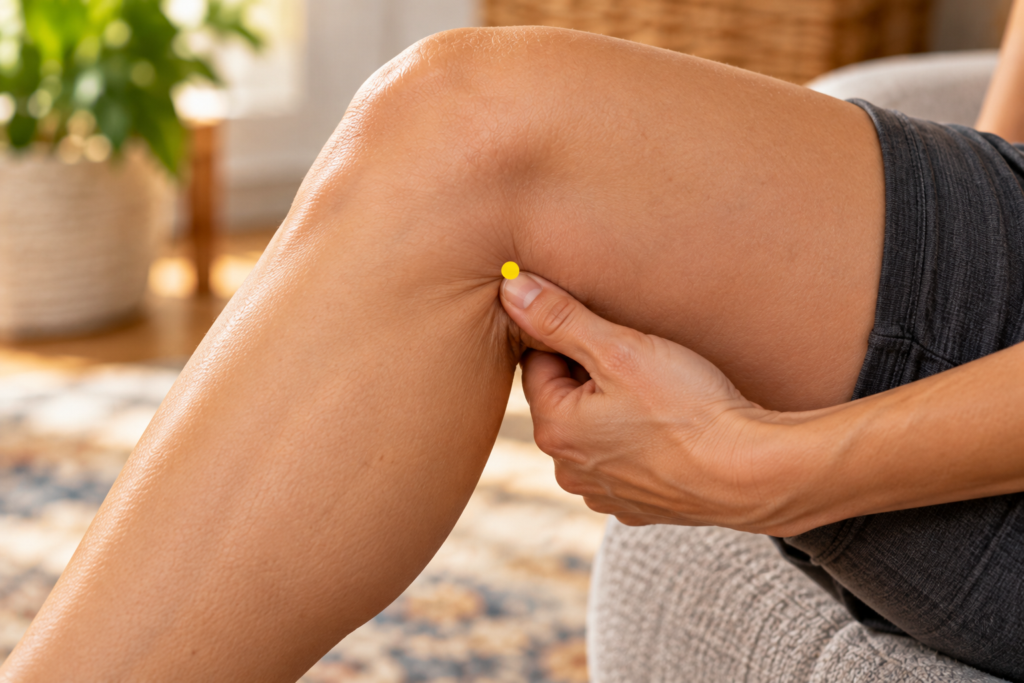
8. Press on LR8 at the inner knee to nourish the sinews. Bend the knee and find the inner end of the knee crease, then press into the hollow just in front of the tendons there. Press firmly with your thumb for one to two minutes on each leg. LR8 is called “Ququan,” the “Spring at the Bend.”
The Liver governs the sinews and stores the Blood that keeps them moist and flexible. LR8 nourishes Liver Blood, addressing the underlying cause of sinews becoming dry, tight, and contracted with age.
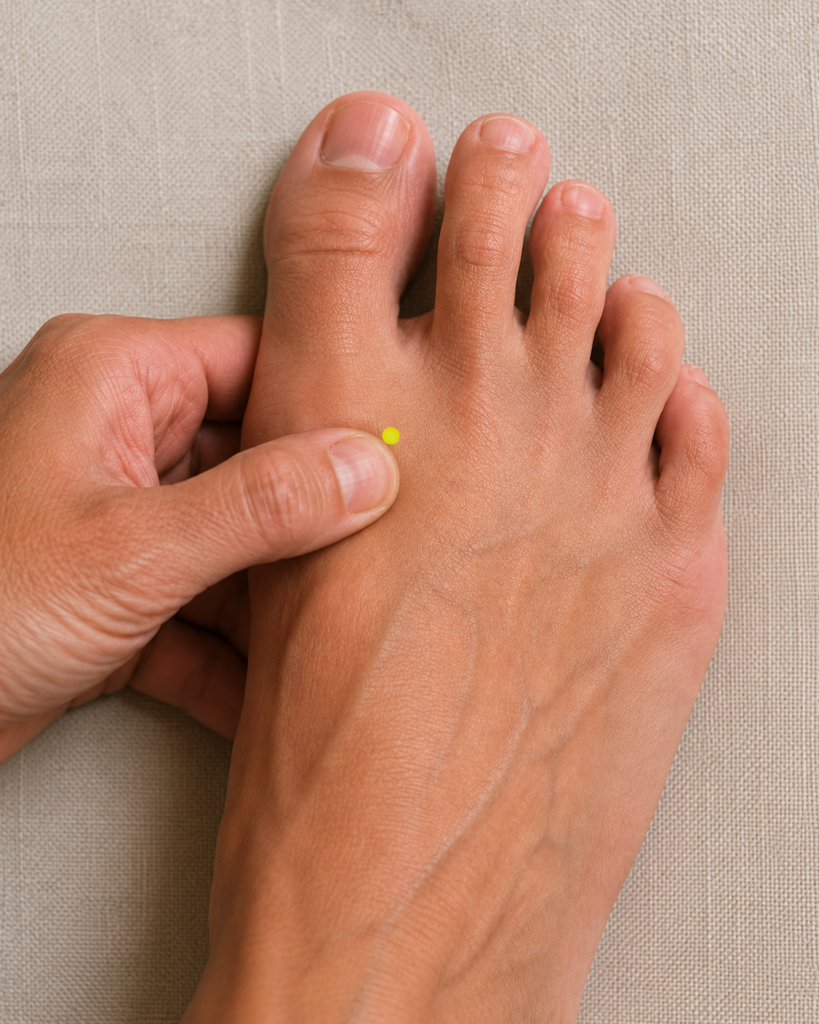
9. Press on LR3 on the top of the foot to support the Liver. LR3 sits on the top of the foot, in the webbing between the big toe and second toe, about two finger-widths back from the webbing, in the hollow just before the two bones meet. Press firmly with your thumb for one to two minutes on each foot. LR3 is called “Taichong,” the “Great Surge.”
LR3 is the Liver’s source point. It helps the Liver move Qi and nourish the body’s sinews, and pairs well with LR8. LR3 also helps the Liver manage the effects of alcohol, rich foods, and stress.
Why These Acupressure Points Work
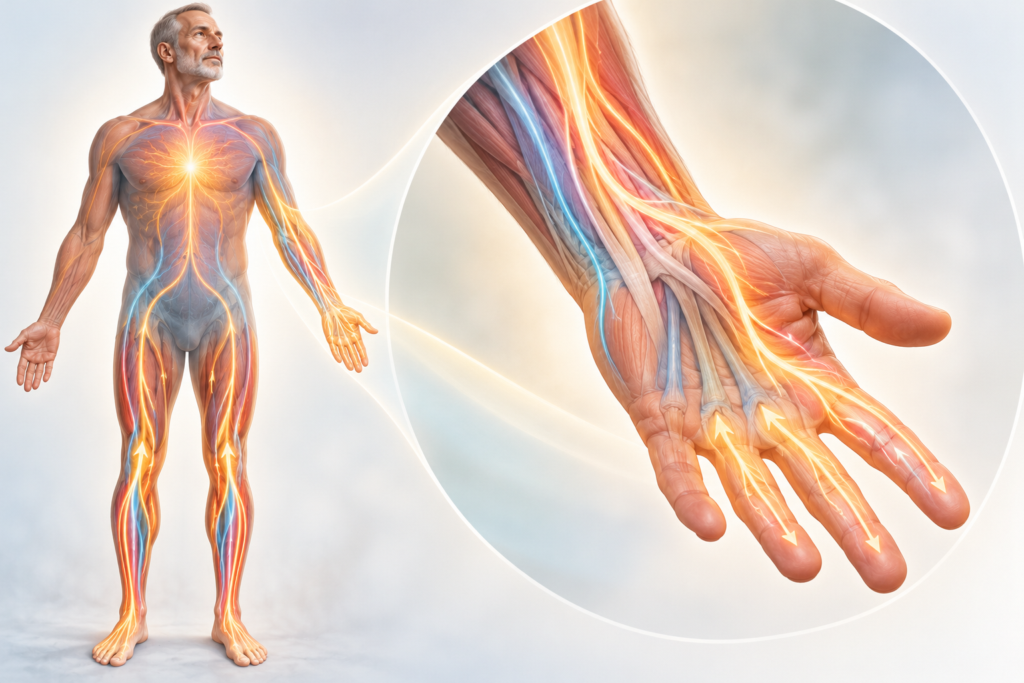
In Traditional Chinese Medicine, flexible hands depend on Liver Blood nourishing and moistening the sinews, and on Qi and Blood flowing freely through the palm and fingers. Dupuytren’s contracture develops when the sinews in the palm become undernourished, dry, and stagnant, with cold and dampness often worsening the stiffness.
The nine points work together to keep the hand supple:
- The palm points (HT8, PC8) gently relax the palm and bring circulation to the area where the condition begins.
- The wrist point (PC7) opens the pathway into the palm without touching the cords.
- The back-of-hand points (TE3, SI3, Baxie) work the ring and little fingers from behind and from the side and keep each finger supple.
- The sinew points (GB34, LR8, LR3) nourish and relax the connective tissue throughout the body and support the Liver.
How to Properly Use These Acupressure Points
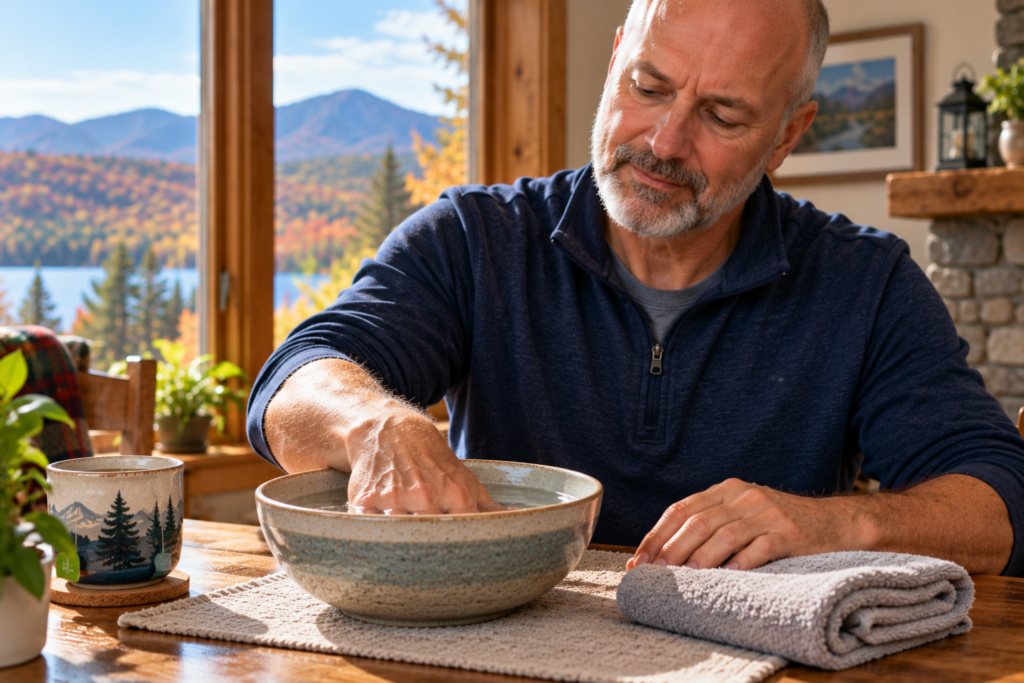
Acupressure for Dupuytren’s contracture is most effective when performed as a gentle daily routine after warming the hands. Apply firm pressure to the back of the hand and the legs.
- Soak your hand in comfortably warm water or hold a warm mug for a few minutes. Then do the full routine once daily, holding each point for one to two minutes; hold HT8 and PC8 for about one minute each, and each Baxie point for thirty seconds to one minute.
- If your hand feels stiff after gripping tools, driving, or spending time in the cold, press TE3 and SI3. Then rub your palms together over PC8 as you take five slow breaths.
- Apply only light pressure to the palm. Never press hard on the nodules or cords, or force bent fingers straight, as aggressive pressure and stretching can irritate the tissue.
- Practice regularly for several weeks, ending each session by gently opening and closing your hand within a comfortable range.
Daily habits can help protect your hand and keep it comfortable. Wear padded gloves and use tools with thick, cushioned handles. Avoid gripping tightly for long periods, and keep your hands warm and dry, especially in air-conditioned spaces and cold weather. Check your hand regularly with the tabletop test: place your palm flat on a table to track changes over time. If you have diabetes, keep your blood sugar steady. Limit alcohol, and eat warm, cooked meals with dark leafy greens, beets, black sesame, and goji berries, which Traditional Chinese Medicine uses to nourish Liver Blood.
Smoking is also linked to this condition, so quitting can help protect your hand. Learn more about how to use acupuncture to quit smoking.
When to Get Professional Help

See a hand specialist if you notice nodules or cords in your palm. Seek care promptly if you can no longer lay your hand flat on a table, as this is often when doctors consider treatment. Options include needle procedures to divide the cord, injections to soften it, and surgery to remove the thickened tissue. These treatments work best before the contracture becomes severe. Get prompt care if the condition worsens quickly, you develop numbness or tingling in your fingers, or a lump in your palm becomes painful, grows, or changes. After any procedure, follow your hand therapy plan closely. Resume acupressure only after your care team approves, and contact them if you notice redness, swelling, warmth, drainage, or increasing pain.
Acupressure is a natural, supportive practice for Dupuytren’s contracture. It is intended to complement, not replace, diagnosis and medical care.
For related health concerns, acupressure for trigger finger, acupressure for arthritis, and acupressure for osteoarthritis are companion articles.
Above and Beyond Acupuncture offers acupuncture, cupping, and lifestyle coaching at the North Frank Lloyd Wright Boulevard location in Scottsdale.
Schedule an appointment online to start your healing journey.
The points above are only as effective as the technique used to apply them. Where to press, how firmly, and for how long all affect the result. For a full breakdown of how to perform acupressure properly at home, read Performing Acupressure in 3 Easy Steps.

About the Publisher
Paul Kerzner, L.Ac., is a licensed acupuncturist and board-certified herbalist, as well as the founder of Above and Beyond Acupuncture in Scottsdale. His own journey from chronic patient to practicing acupuncturist shapes his commitment to providing honest, clinically grounded information about acupuncture and Traditional Chinese Medicine. Learn more about Paul and his clinical approach on the About Us page.