Key Takeaways
- Highly sensitive people experience emotions intensely and react strongly to stress and stimuli due to traits such as sensory processing sensitivity.
- Acupressure for emotional sensitivity targets nine key points to calm the mind, restore balance, and regulate emotional flow.
- These points include BL2 for tearfulness, Anmian for an overstimulated mind, and CV15 for steadying the spirit.
- Practicing acupressure daily may help manage emotional sensitivity, particularly after stressful days or during hormonal changes.
- Consult a mental health professional if emotional reactions significantly affect daily life or are accompanied by symptoms such as anxiety or depression.

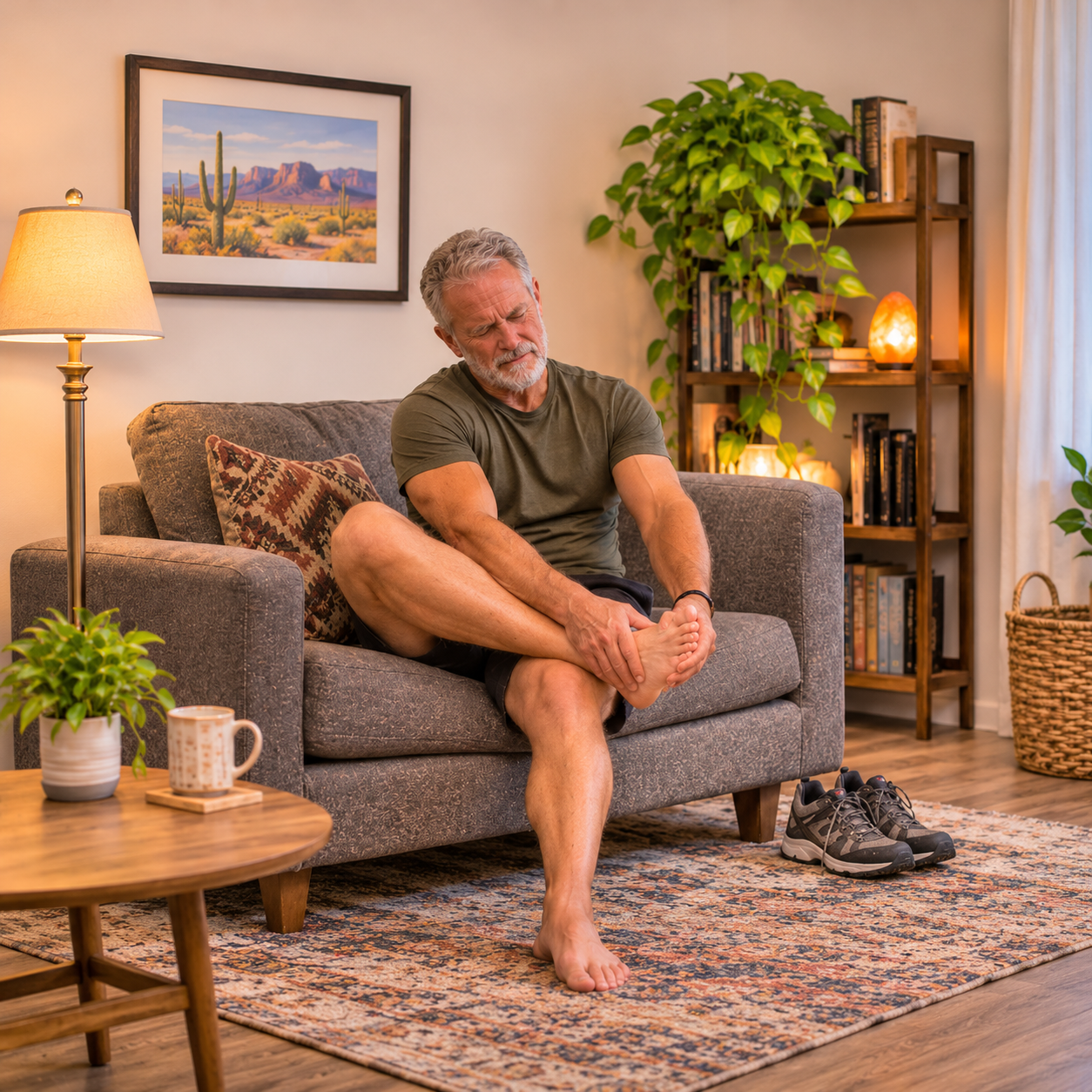
Some people experience emotions more intensely. A sad movie may bring them to tears within minutes, a coworker’s sharp tone can affect them for the rest of the day, and a crowded store may leave them needing quiet time to recharge. They quickly sense the mood in a room and often carry other people’s stress home with them.
Psychologist Elaine Aron coined the term highly sensitive person to describe this trait, which research calls sensory processing sensitivity. According to Psychology Today, an estimated 15 to 20 percent of the population is highly sensitive. The same depth of feeling that makes these people empathetic, perceptive, and caring can also leave them overwhelmed, particularly when they don’t get enough rest or space to recover.
Even people who aren’t usually sensitive may react more strongly when life gets tough. Chronic stress, poor sleep, exhaustion, and hormonal changes before a period, during pregnancy, or in perimenopause can make it easier to feel overwhelmed or tearful. Grief, past trauma, anxiety, and depression can also intensify reactions, and intense emotions are common in people with attention deficit hyperactivity disorder.
In Traditional Chinese Medicine, the Pericardium surrounds and protects the Heart, forming a boundary between your inner life and the outside world. When this boundary is thin, outside moods and stimulation can reach the Heart too easily and unsettle the Shen. The Liver stores Blood and governs tears, so low Blood and Yin can cause emotions to rise quickly and overflow. The Spleen manages thought and may absorb other people’s worries, while the Kidney provides the calm, steady reserves that help you stay grounded.
These nine points calm the Shen, strengthen the Heart’s protector, support healthy boundaries, and nourish the reserves that help prevent strong feelings from overwhelming you.
What Acupressure Points to Press and Why
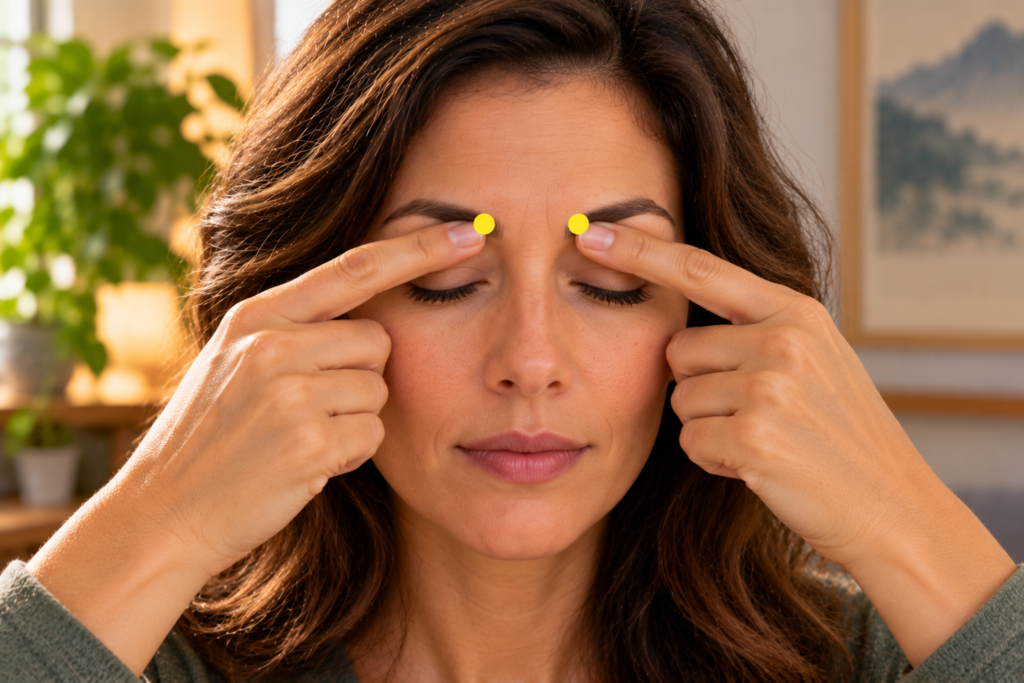
1. Press on BL2 at the inner eyebrow to ease the tearful feeling. BL2 sits in the small notch at the inner end of each eyebrow, just above the inner corner of the eye. Press both points gently with your fingertips, or make slow circles, for one to two minutes while closing your eyes. BL2 is called “Zanzhu,” the “Gathered Bamboo.”
BL2 is traditionally used to ease tension around the eyes and excessive tearing. Many people feel emotion building around the eyes and forehead just before tears come. Gentle pressure in this area relaxes it, helping the face and mind soften.
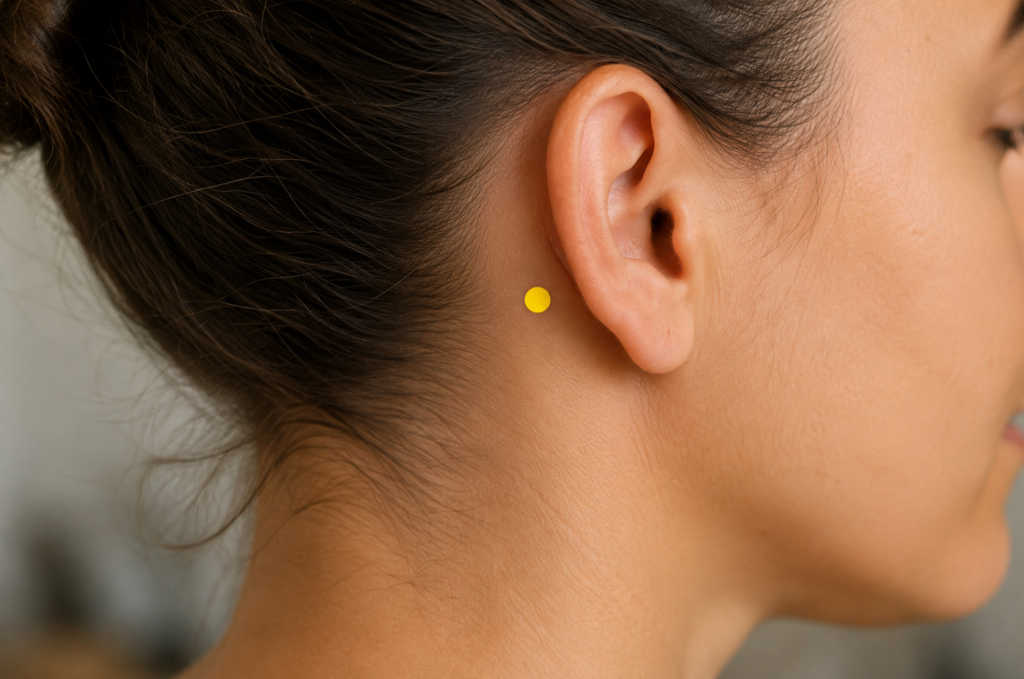
2. Press on Anmian behind the ear to settle an overstimulated mind. Anmian sits behind each ear, in the small hollow halfway between the bony bump just behind the earlobe and the hollow at the base of the skull. Press gently with your fingertips for one to two minutes on both sides at once. Anmian means “Peaceful Sleep.”
Anmian is an extra point traditionally used to calm the mind and promote restful sleep. Sensitive people may lie awake replaying the day’s conversations and impressions. After an overstimulating day, Anmian helps the mind settle, allowing the body to rest and recover.
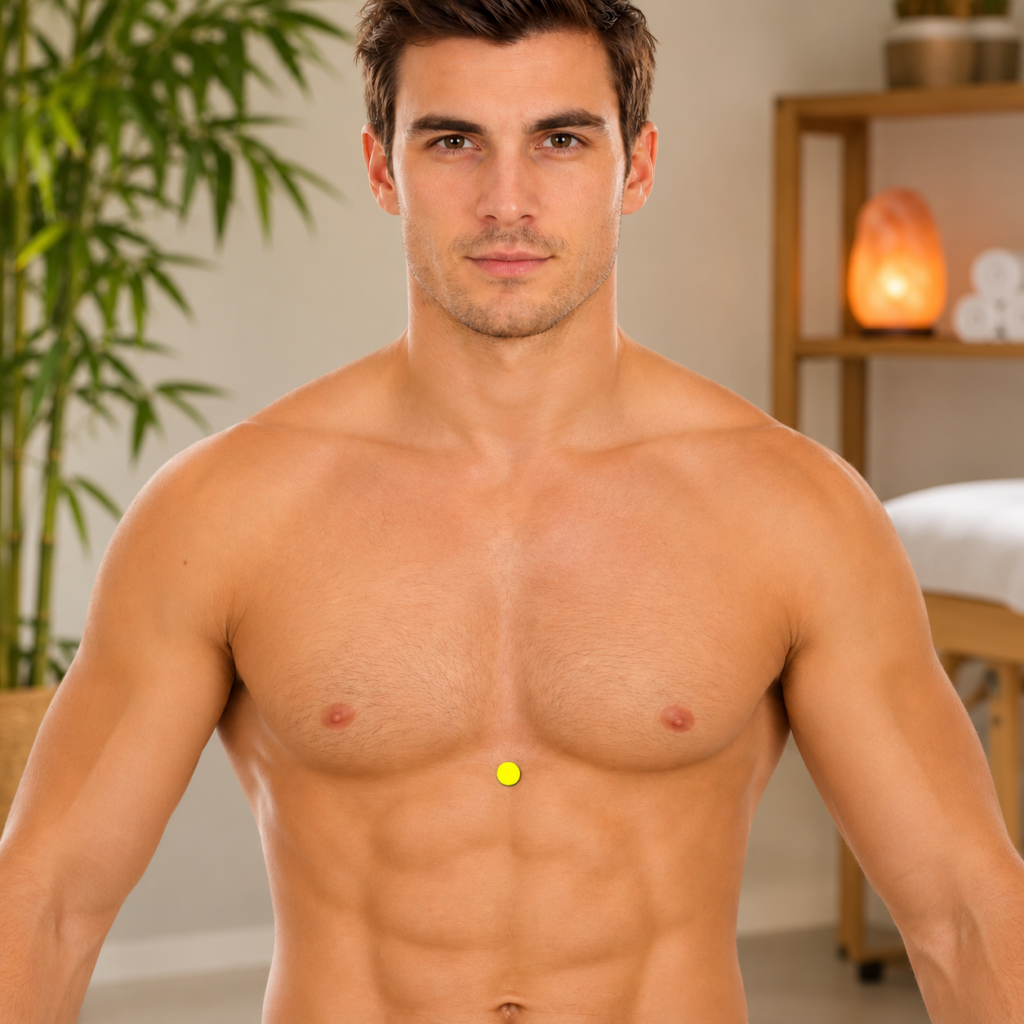
3. Press on CV15 below the breastbone to steady the spirit. CV15 sits on the midline of the upper abdomen, about one thumb-width below the spot where the lower ribs meet at the bottom of the breastbone. Rest your fingertips on the point and press gently, or make slow circles, for one to two minutes while breathing into the belly. CV15 is called “Jiuwei,” the “Turtledove Tail.”
CV15 is the connecting point of the Conception Vessel and one of the most important points in Traditional Chinese Medicine for calming the Shen. It eases the fluttery, unsettled feeling below the breastbone that often comes with strong emotion and helps the spirit feel more anchored.
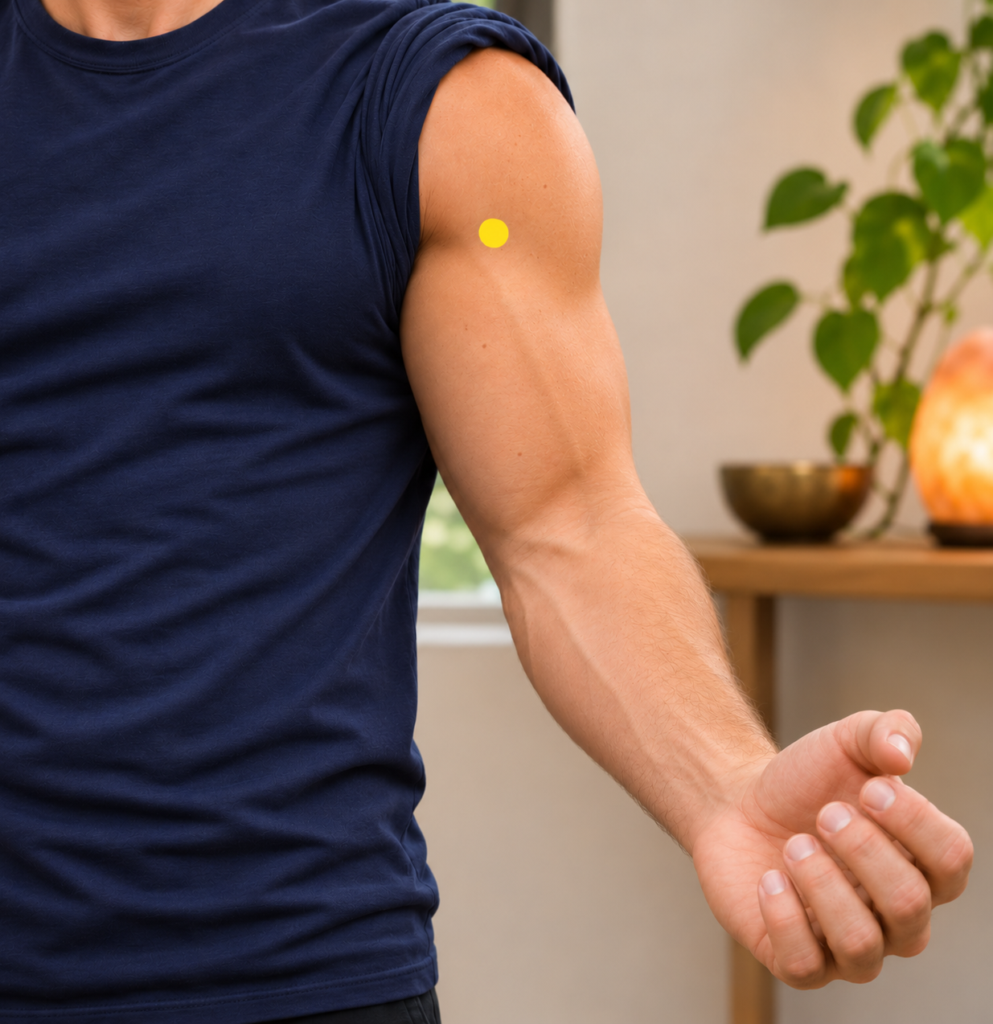
4. Press on PC2 on the upper arm to strengthen the Heart’s protector. PC2 sits on the inner side of the upper arm, about three finger-widths below the front fold of the armpit, between the two parts of the biceps muscle. Press firmly with the thumb of your other hand for one to two minutes on each arm. PC2 is called “Tianquan,” the “Heavenly Spring.”
PC2 lies along the Pericardium channel, which protects the Heart from emotional harm. In Traditional Chinese Medicine, it is used to open the chest and calm the Heart. For sensitive people, supporting the Pericardium can create a gentle buffer, helping other people’s moods and words feel less intense.
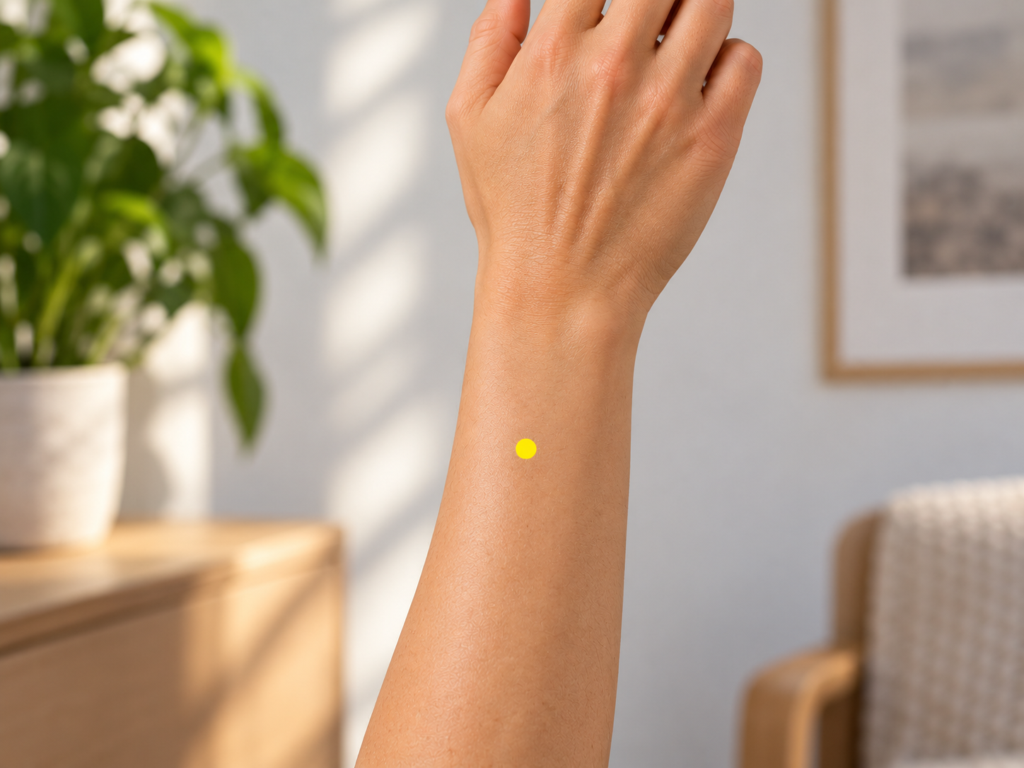
5. Press on TE5 on the back of the forearm to support healthy boundaries. TE5 sits on the back of the forearm, three finger-widths above the wrist crease, between the two forearm bones. Press firmly with the thumb of your other hand for one to two minutes on each arm. TE5 is called “Waiguan,” the “Outer Pass.”
TE5 opens the Yang Linking Vessel, which connects the body’s outer, protective layers. Its name, the Outer Pass, reflects its role as a gate between inside and outside. Paired with the Pericardium, TE5 helps strengthen your sense of where you end and others begin.
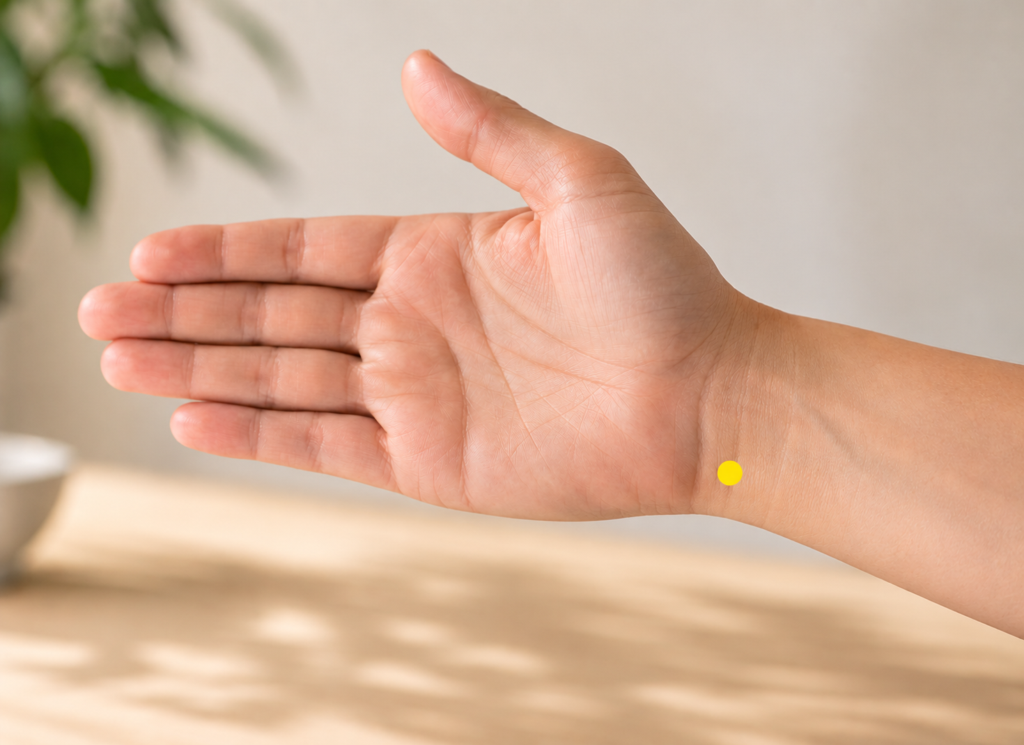
6. Press on HT6 on the inner wrist to calm and nourish the Heart. HT6 sits on the inner wrist, on the pinky side, just inside the tendon, about half a thumb-width above the wrist crease. Press gently with the thumb of your other hand for one to two minutes on each wrist. HT6 is called “Yinxi,” the “Yin Cleft.”
HT6 is the Heart’s cleft point and a classic point for nourishing Heart Yin, the calm, cooling reserve that helps keep the Shen settled. When Heart Yin runs low, emotions can surge quickly, and the heart may race or flutter. HT6 helps steady these surges and restore a calmer baseline.
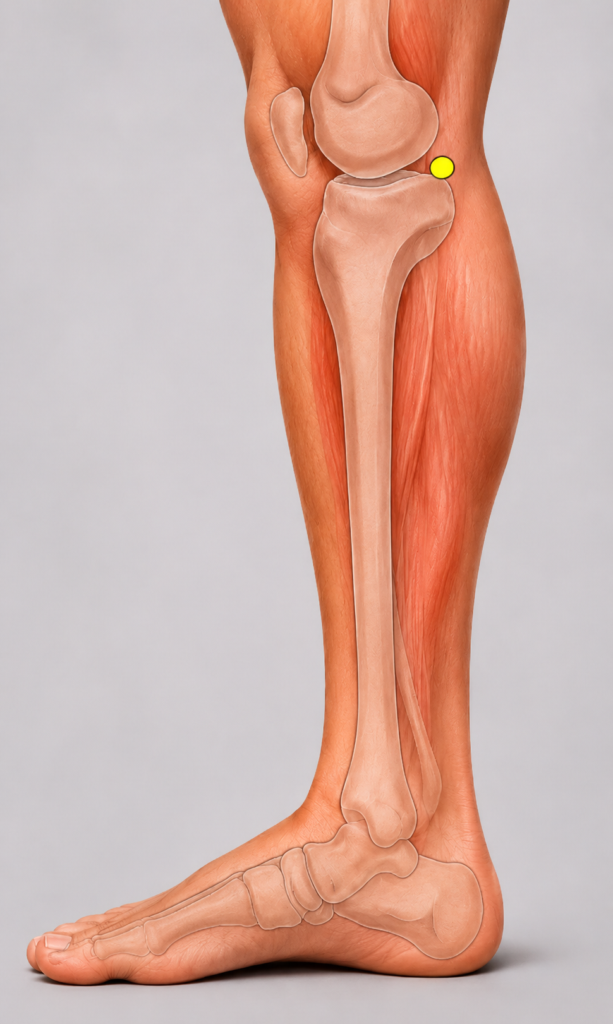
7. Press on KI10 at the inner knee to restore calm reserves. KI10 sits at the inner end of the knee crease, between the two tendons that stand out at the back of the inner knee when the knee is slightly bent. Press firmly with your thumb for one to two minutes on each leg. KI10 is called “Yingu,” the “Yin Valley.”
KI10 is the water point of the Kidney and nourishes the Kidney Yin, the deepest source of calm and steadiness in the body. When those reserves are full, a person can feel deeply without being swept away. KI10 helps rebuild that steady foundation, especially after periods of stress or poor sleep.
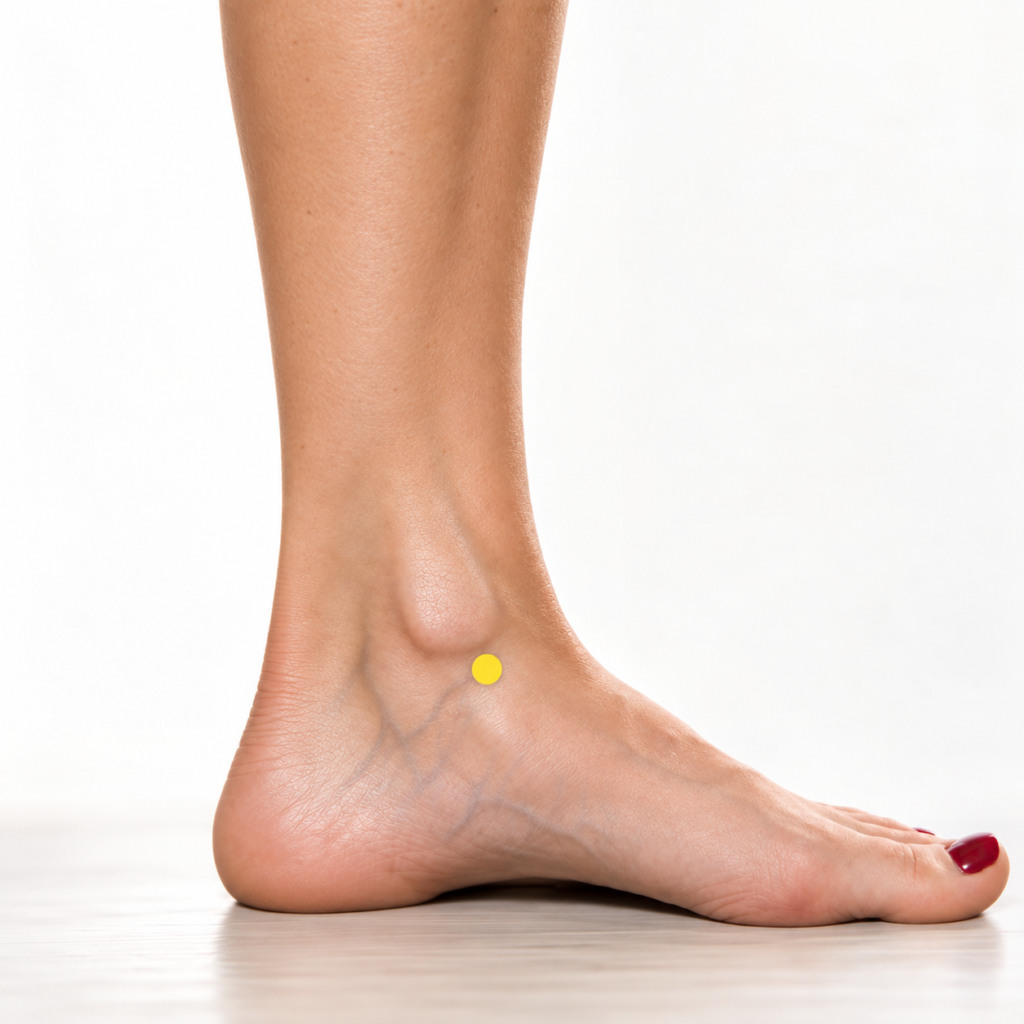
8. Press on SP5 near the inner ankle to stop absorbing others’ worries. SP5 sits in the hollow just in front of and below the inner ankle bone. Press firmly with your thumb for one to two minutes on each foot. SP5 is called “Shangqiu,” the “Shang Mound.”
In Traditional Chinese Medicine, the Spleen governs thought. When it is weak, a person may take on other people’s concerns as their own. SP5 strengthens the Spleen and drains Dampness, helping them stay grounded in their own experience instead of carrying everyone else’s concerns.
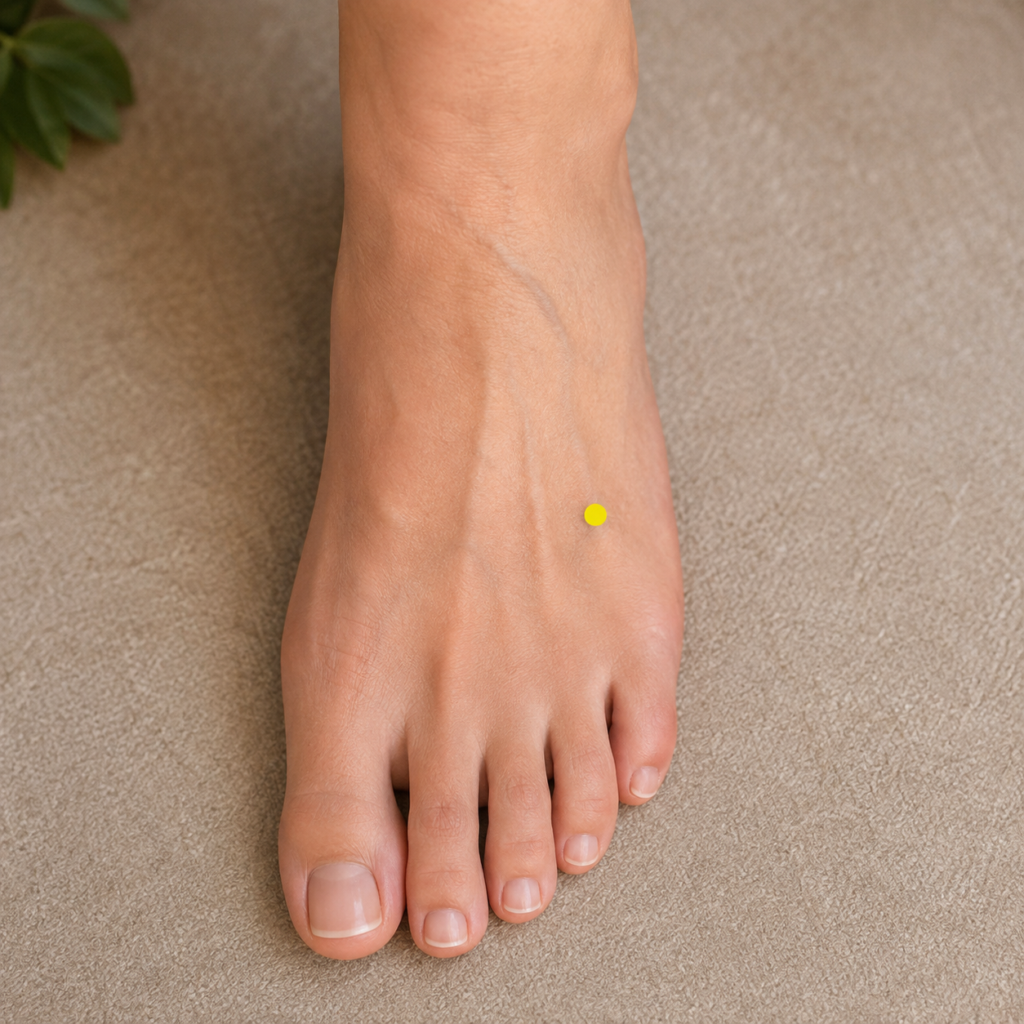
9. Press on GB41 on the top of the foot to steady the flow of tears. GB41 sits on the top of the foot, in the hollow just in front of where the bones leading to the fourth and fifth toes meet, on the outer side of the small tendon to the little toe. Press firmly with your thumb for one to two minutes on each foot. GB41 is called “Zulinqi,” the “Foot Governor of Tears.”
In Traditional Chinese Medicine, tears are associated with the Liver, and GB41 connects closely with it through the Gallbladder channel. Known as the Foot Governor of Tears, it’s a fitting point when tears come easily and often. GB41 helps the Liver Qi flow smoothly, allowing emotions to move through without spilling over.
Why These Acupressure Points Work
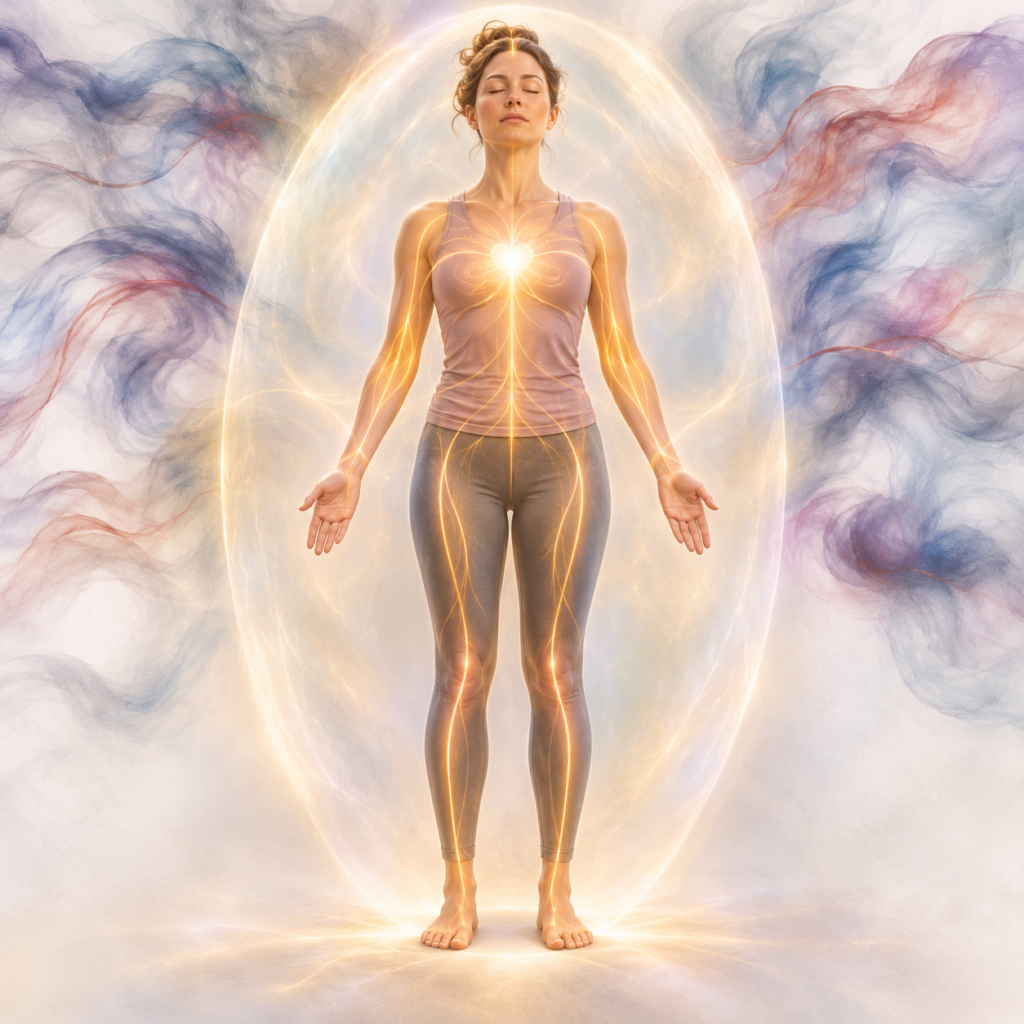
In Traditional Chinese Medicine, emotional steadiness depends on the Pericardium protecting the Heart, the Shen staying anchored, sufficient Yin and Blood to keep feelings from rising too quickly, and the Spleen maintaining its center. Emotional sensitivity can become overwhelming when the Heart’s boundary weakens and these reserves run low.
The nine points work together to make emotional sensitivity feel more manageable:
- The eye and head points (BL2, Anmian) ease tearfulness around the eyes and calm an overstimulated mind.
- The Heart and protector points (CV15, PC2, HT6) steady the Shen, strengthen the Heart’s protector, and nourish Heart Yin.
- The boundary point (TE5) supports a healthy sense of where you end and others begin.
- The grounding points (KI10, SP5, GB41) restore calm reserves, keep you centered in your own experience, and help emotions move without spilling over.
How to Properly Use These Acupressure Points

For emotional sensitivity, acupressure works best as a gentle daily practice, especially after a day filled with people, noise, or intense emotions.
- Complete the full routine once daily, holding each position for one to two minutes. Ideally, perform it in the evening to support the body’s recovery from the day.
- When emotions begin to intensify, gently apply pressure to CV15, followed by HT6 on both wrists, while taking five slow breaths.
- Apply gentle pressure to the face, head, and abdomen, and firmer pressure to the arms and legs.
- Practice consistently for several weeks, particularly during stressful periods or in the days preceding menstruation, when sensitivity tends to increase.
Daily habits can help sensitivity feel like a strength rather than a burden. Build quiet time into each day, even if it’s just ten minutes alone without screens, to let your nervous system settle. Protect your sleep, since sensitivity can rise sharply when you’re tired. Notice which places, people, and situations leave you drained, and plan time to recover afterward. Practice gentle boundaries, such as stepping away from a heated conversation or limiting time with people who leave you feeling worse. Reduce overstimulation with softer lighting, quieter spaces, and fewer back-to-back commitments. Spend time in nature, eat regular, nourishing meals, and limit caffeine and alcohol, which can heighten reactivity.
Learn more about self-care tips to care for the mind and body.
When to Get Professional Help

See a mental health professional if your emotional reactions are far out of proportion to what happened, last for hours or days, or seriously affect your work, relationships, or daily life. You should also seek support if your sensitivity comes with ongoing anxiety, low mood, panic attacks, or a history of trauma, as these conditions respond very well to treatment. See your doctor if you’ve recently become much more tearful and reactive, especially if you’re also experiencing fatigue, sleep disturbances, or changes in your menstrual or menopausal cycle. These symptoms can be caused by hormonal fluctuations, thyroid issues, or depression.
If you’re feeling hopeless or you have any thoughts of self-harm, then please call or text 988 to speak to the Suicide and Crisis Lifeline immediately.
Acupressure is a gentle, supportive practice for emotional sensitivity. It complements, and does not replace, diagnosis and medical care.
For related emotional concerns, acupressure for sadness, acupressure when feeling overwhelmed, and acupressure for anxiety are companion articles.
Above and Beyond Acupuncture offers acupuncture, cupping, and lifestyle coaching at the North Frank Lloyd Wright Boulevard location in Scottsdale.
Schedule an appointment online to start your healing journey.
The points above are only as effective as the technique used to apply them. Where to press, how firmly, and for how long all affect the result. For a full breakdown of how to perform acupressure properly at home, read Performing Acupressure in 3 Easy Steps.

About the Publisher
Paul Kerzner, L.Ac., is a licensed acupuncturist and board-certified herbalist, as well as the founder of Above and Beyond Acupuncture in Scottsdale. His own journey from chronic patient to practicing acupuncturist shapes his commitment to providing honest, clinically grounded information about acupuncture and Traditional Chinese Medicine. Learn more about Paul and his clinical approach on the About Us page.