Key Takeaways
- Foot pain may result from overuse, tight or worn-out shoes, injuries, arthritis, nerve problems, or structural issues such as flat feet and bunions.
- In Traditional Chinese Medicine, sore feet reflect stagnation of Qi and Blood, Dampness settling in the lower body, or weakened Kidney energy, because the Kidney channel begins on the sole.
- Nine acupressure points around the ankle, on the top and sole of the foot, and between the toes can help relieve aching, stiffness, and swelling.
- Supportive shoes, regular stretching, and rest after long days on the feet keep the feet functioning.
- Severe pain or swelling after an injury, inability to bear weight, or a foot wound that will not heal require prompt medical attention.
Each foot contains 26 bones and 33 joints, along with many muscles, tendons, and ligaments. With every step, your feet carry your entire body, usually without complaint. But new shoes may pinch, a long day at a theme park can leave your soles sore, or weeks of standing at a counter can make your arches ache before lunch. Pain may occur in the ball of the foot, along the arch, across the top, or in the toes.
According to Mayo Clinic, foot pain can have many possible causes. Injuries include stress fractures and broken bones. Longer-term problems include tendinitis, bursitis, bunions, bone spurs, corns and calluses, metatarsalgia in the ball of the foot, and plantar fasciitis. Other conditions, including flat feet, gout, hammertoe, Morton neuroma, rheumatoid arthritis, and nerve damage from diabetes, can also cause foot pain. For everyday pain, Mayo Clinic recommends avoiding activities that worsen it, icing the foot, and using a support or brace as needed.
Some causes of foot pain require medical attention. However, many problems develop gradually from daily strain, such as wearing shoes that are too tight or flat, standing on hard floors for hours, suddenly increasing how much you walk or run, or carrying extra weight. This type of pain often improves with home care.
Traditional Chinese Medicine pays close attention to the feet because six of the twelve main channels begin or end there. The Kidney channel starts on the sole, so aching, tired soles and weak ankles often suggest depleted Kidney energy, especially with age or prolonged exhaustion. The Spleen channel runs along the inner arch. When the Spleen fails to clear Dampness, it tends to settle in the lower body, leaving the feet puffy, heavy, and stiff. Tight shoes, injuries, and long hours of standing can block the movement of Qi and Blood, causing sharp, fixed pain. Cold can also settle in the feet and make them ache, especially in the morning or during winter.
The nine points begin around the ankle, follow the top and inner side of the foot, and end at the toes and sole.
What Acupressure Points to Press and Why
1. Press on ST41 at the front of the ankle to ease foot and ankle pain. ST41 sits at the front of the ankle, at the midpoint of the crease where the foot meets the leg, in the hollow between the two tendons that stand out when the toes are pulled up. Press with moderate pressure for one to two minutes on each foot. ST41 is called “Jiexi,” the “Stream Divide.”
ST41 is a key point on the Stomach channel for pain at the front of the ankle and across the top of the foot. It can also help with ankle stiffness that makes walking difficult, as well as swelling on the top of the foot.
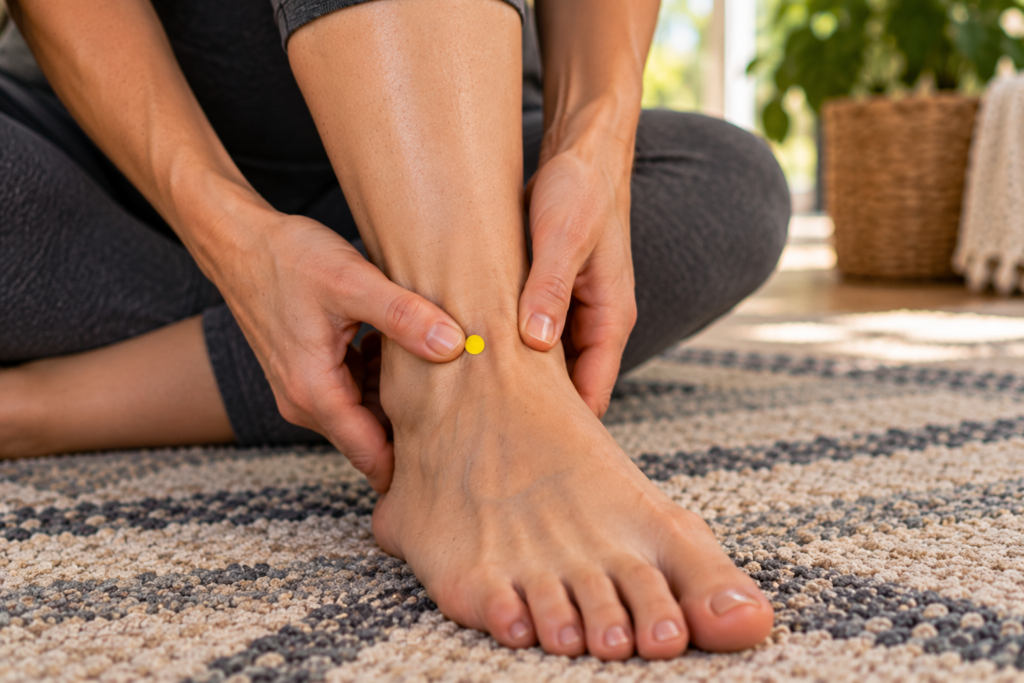
2. Press on BL60 behind the outer ankle to relieve pain in the heel and outer foot. BL60 sits in the hollow between the tip of the outer ankle bone and the Achilles tendon. Press with moderate pressure for one to two minutes on each foot. BL60 is called “Kunlun,” the “Kunlun Mountains.” BL60 is avoided during pregnancy.
BL60 moves Qi and Blood along the entire Bladder channel and is a classic point for pain in the heel, ankle, and outer edge of the foot. It’s often used after a long walk or run.
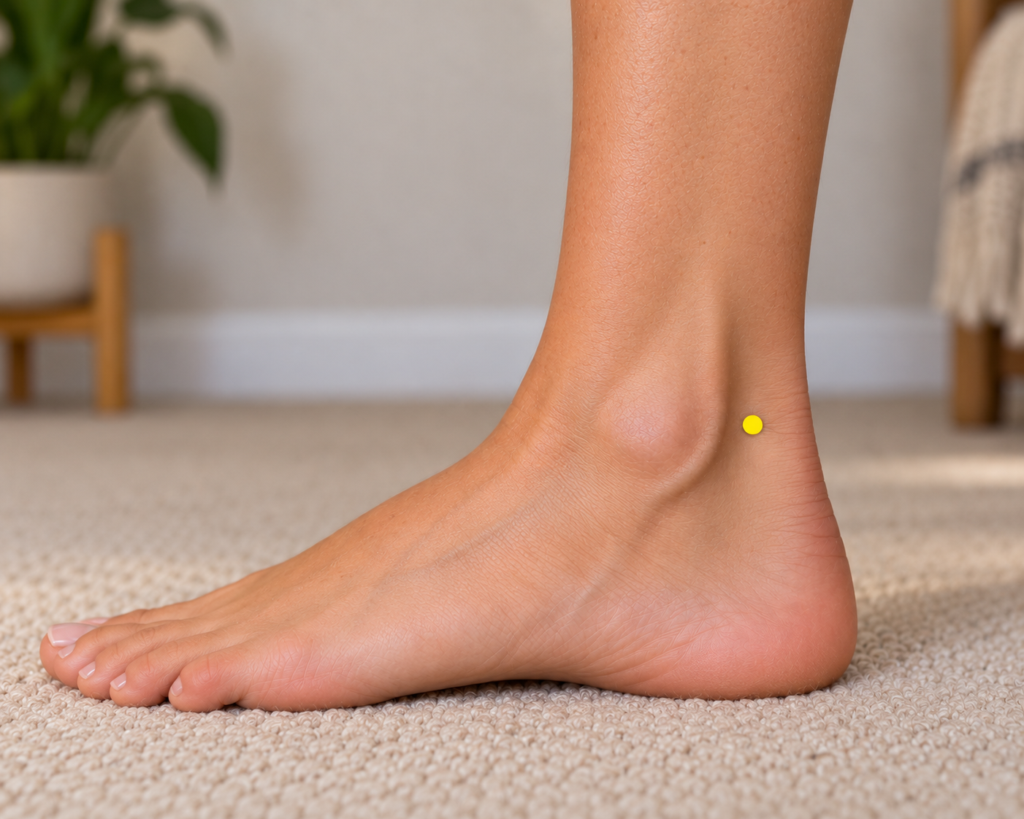
3. Press on KI3 behind the inner ankle to strengthen tired feet. KI3 sits in the hollow between the tip of the inner ankle bone and the Achilles tendon, directly across from BL60. Press with moderate pressure for one to two minutes on each foot. KI3 is called “Taixi,” the “Great Stream.”
KI3 is the Kidney’s source point. It supports the Kidney energy that helps keep the bones and ankles strong, and may suit feet that ache after long hours of standing or feel weak and sore with age.
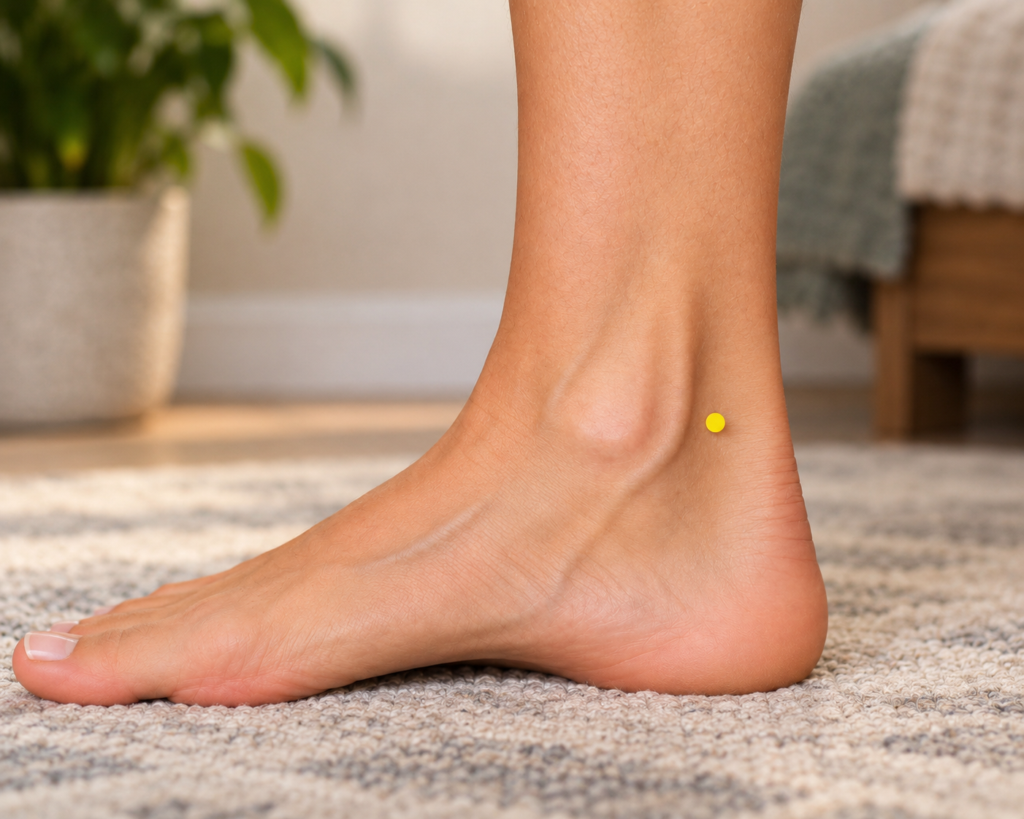
4. Press on BL62 below the outer ankle to release a stiff ankle and outer foot. BL62 sits in the small hollow directly below the tip of the outer ankle bone. Press with moderate pressure for one to two minutes on each foot. BL62 is called “Shenmai,” the “Extending Vessel.”
BL62 opens the Yang Heel Vessel, which supports movement and balance in the legs and feet. It helps ease stiffness around the outer ankle and pain along the outer edge of the foot, particularly when it worsens as the day goes on.
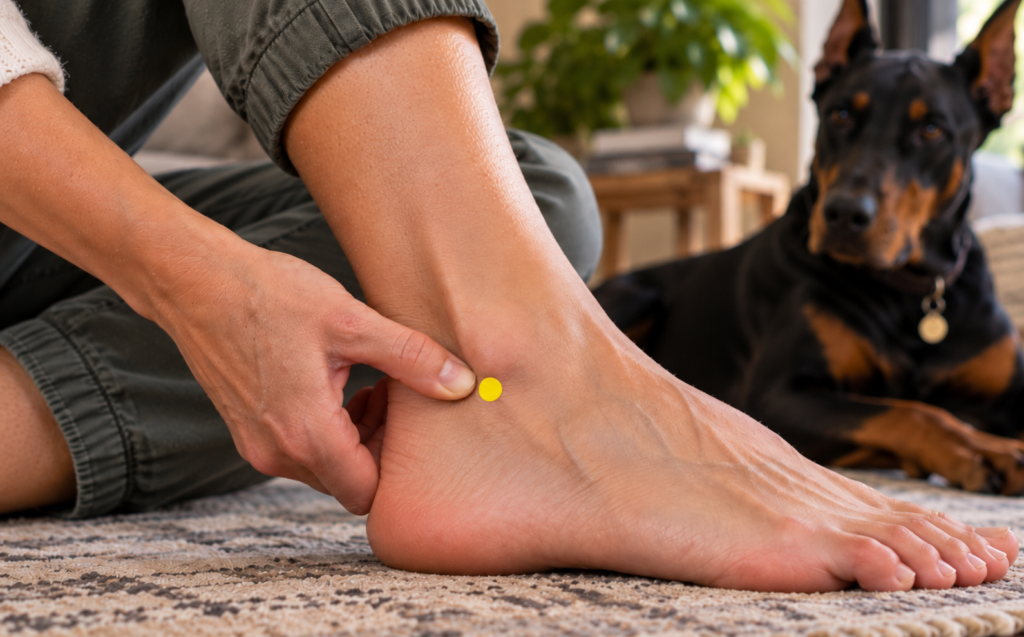
5. Press on SP4 along the inner arch to ease arch pain and swelling. SP4 sits on the inner side of the foot, in the hollow just in front of and below the bony bump at the base of the big toe bone, where the skin of the sole meets the skin of the top of the foot. Press firmly with your thumb for one to two minutes on each foot. SP4 is called “Gongsun,” the “Grandfather Grandson.”
SP4 is the Spleen’s connecting point. It eases aching along the inner arch, drains Dampness that builds up in the feet, and helps relieve swelling that develops by the end of the day.
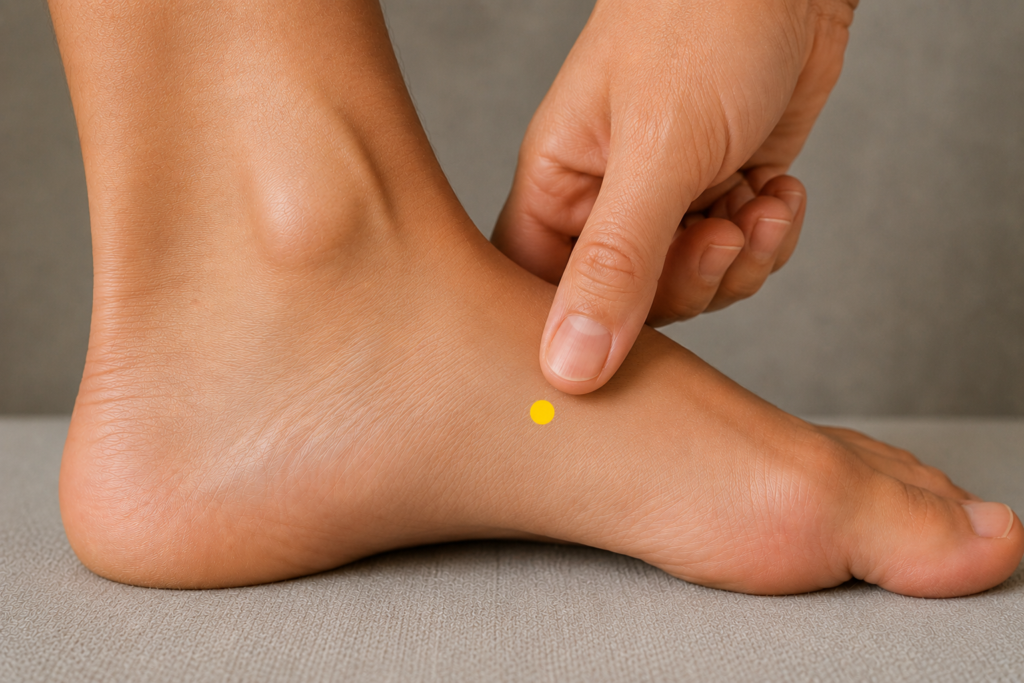
6. Press on LV3 on the top of the foot to ease tension and pain. LV3 sits on the top of the foot, in the hollow where the bones of the big toe and second toe meet, about two finger-widths back from the web between the toes. Press firmly with your thumb for one to two minutes on each foot. LV3 is called “Taichong,” the “Great Rushing.”
LV3 is the source point of the Liver, which nourishes the tendons. It moves Qi and Blood through the top of the foot, eases tight, cramping feet, and may help when stress and tension worsen foot pain.
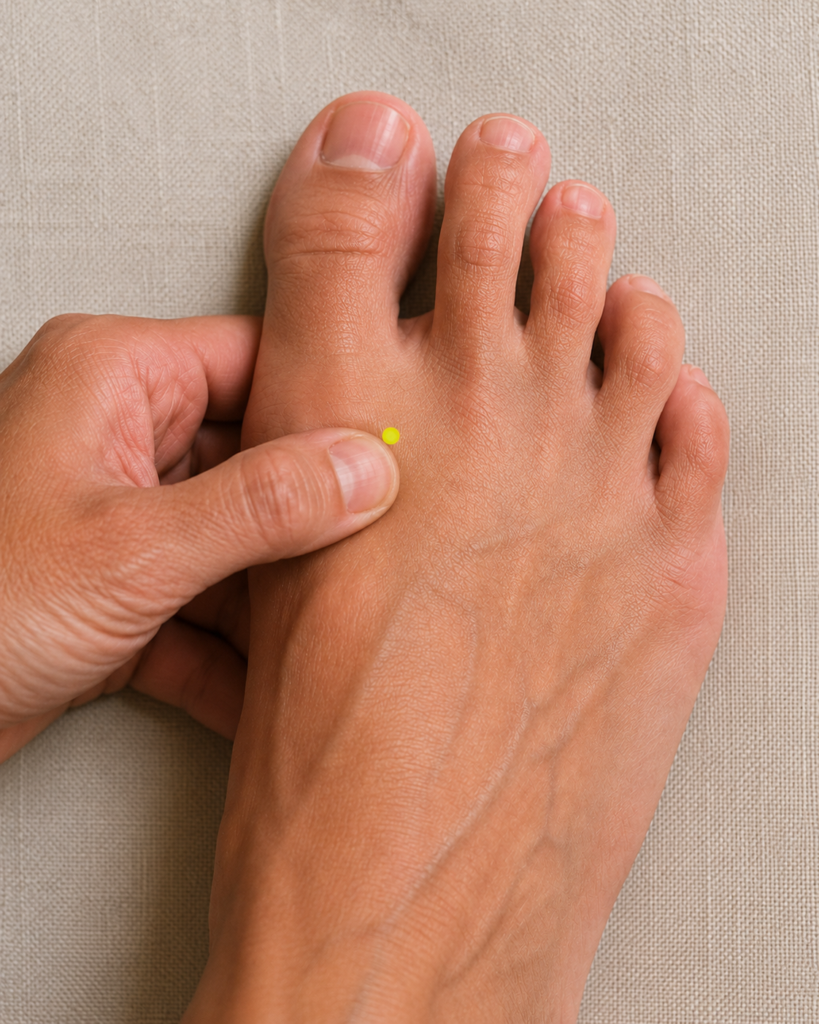
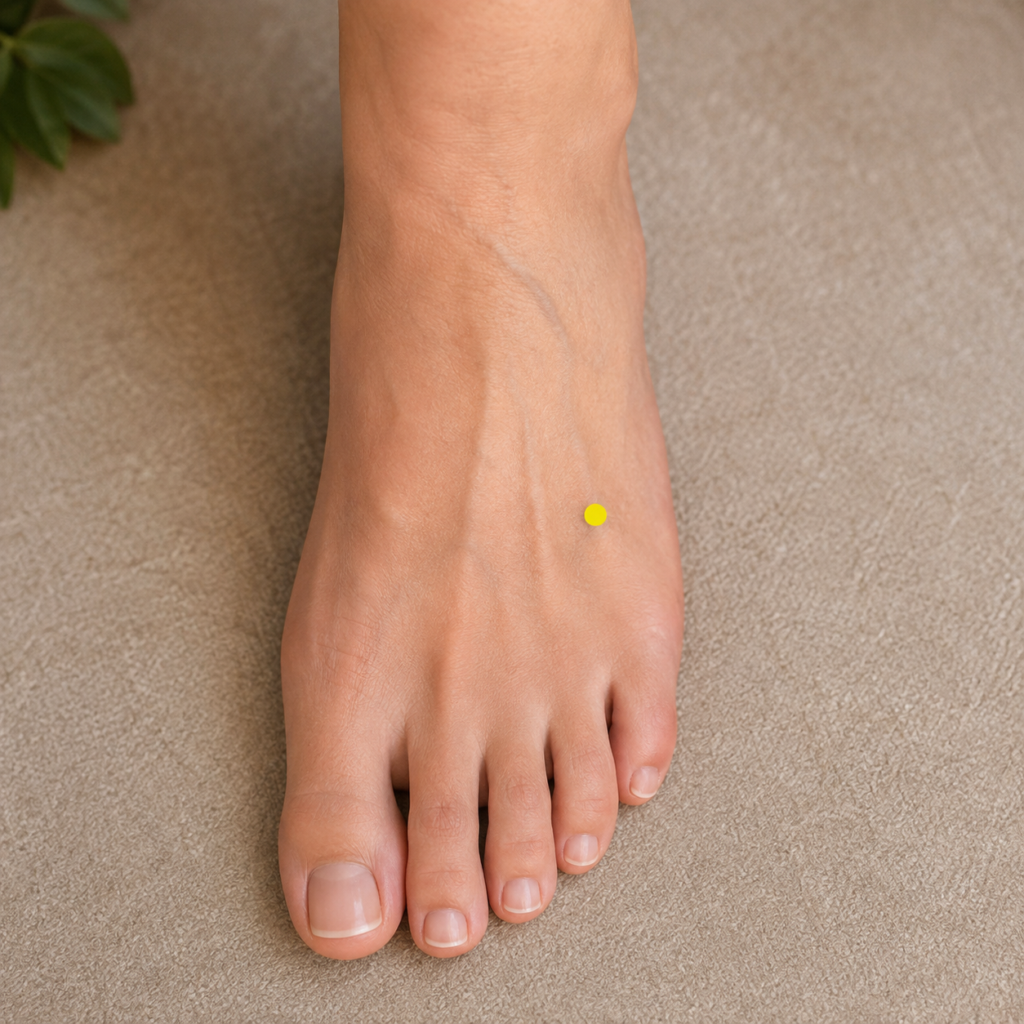
7. Press on GB41 on the outer top of the foot to relieve pain in the outer toes. GB41 sits on the top of the foot, in the hollow just in front of where the bones leading to the fourth and fifth toes meet, on the outer side of the small tendon to the little toe. Press firmly with your thumb for one to two minutes on each foot. GB41 is called “Zulinqi,” the “Foot Governor of Tears.”
GB41 moves Qi along the Gallbladder channel on the outer foot. It is used to relieve pain, swelling, and tightness across the top outer foot and in the fourth and fifth toes, often caused by shoes that are too narrow.
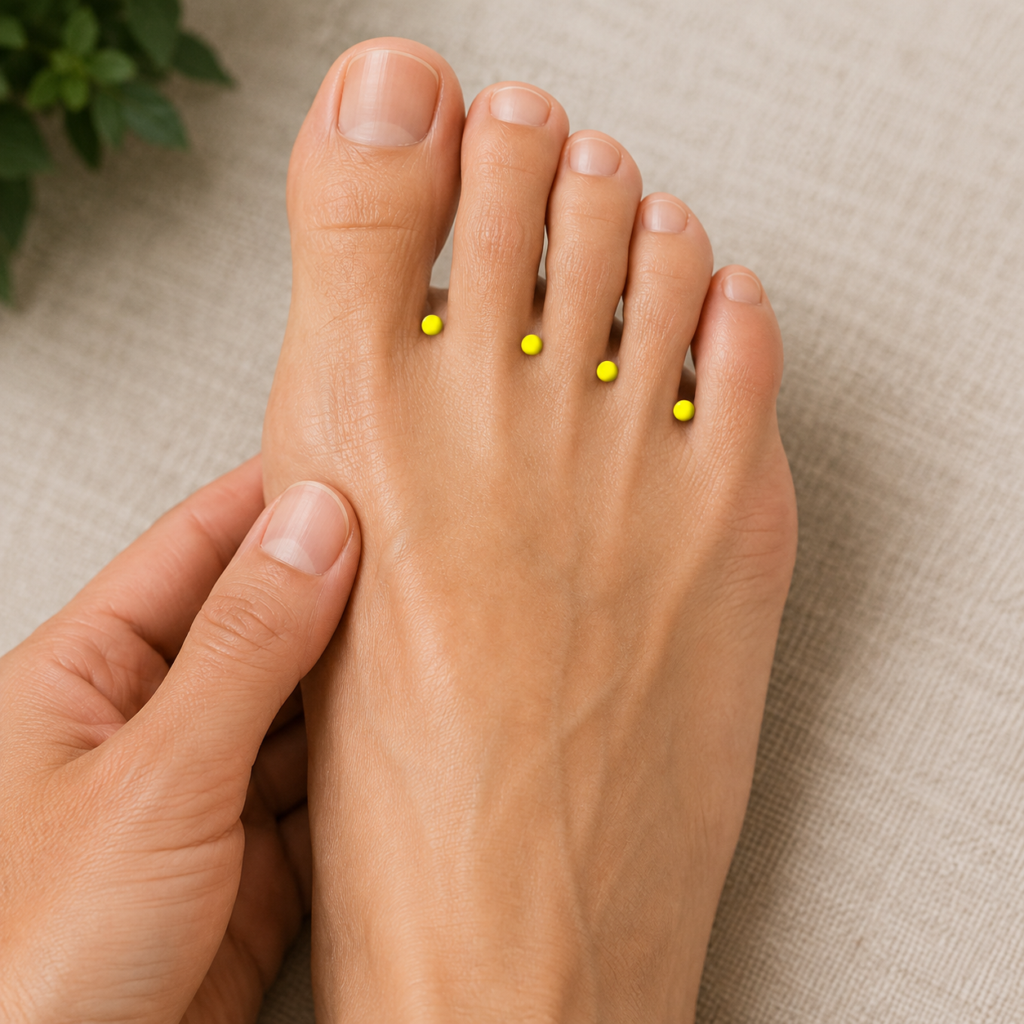
8. Press on Bafeng between the toes to ease toe pain and numbness. Bafeng is a set of eight points, four on each foot, at the ends of the webs between each pair of toes on the top of the foot. Press each point with your thumb or index finger for 20 to 30 seconds, working from the big toe to the little toe on both feet. Bafeng means the “Eight Winds.”
Bafeng is a group of extra points traditionally used to relieve pain, swelling, numbness, and stiffness in the toes and forefoot. It can be especially helpful after a day in tight or high-heeled shoes.
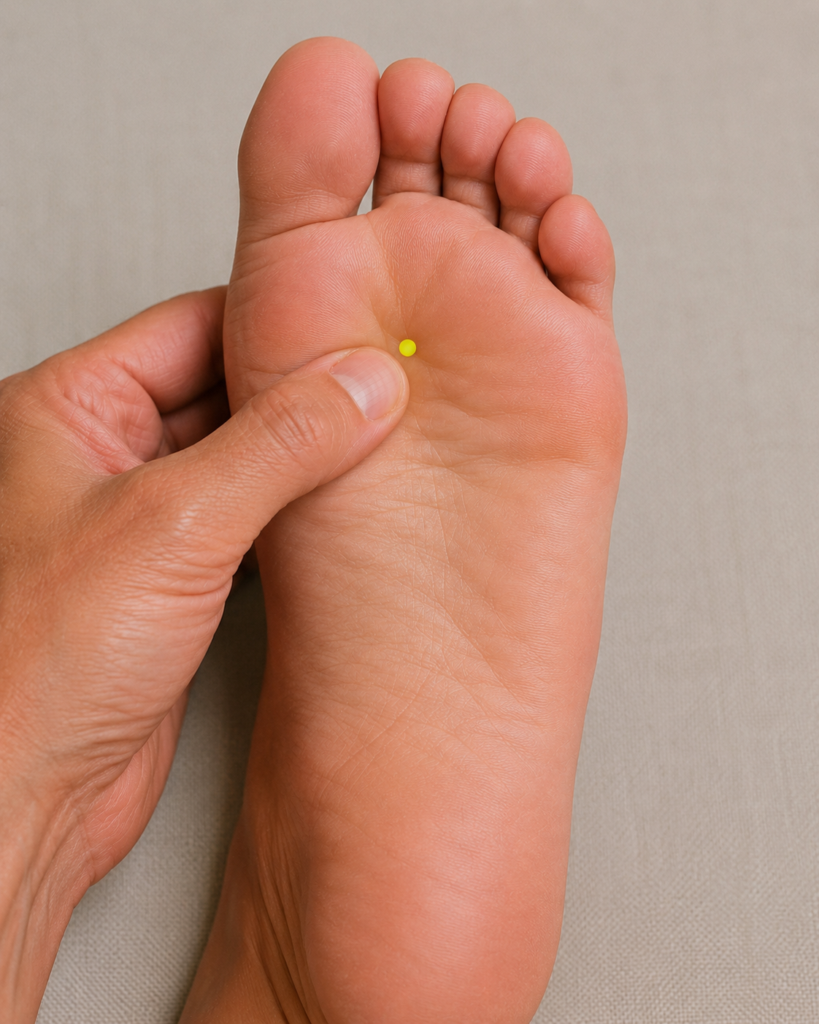
9. Press on KI1 on the sole of the foot to soothe aching soles. KI1 sits on the sole of the foot, in the hollow that forms about one third of the way from the base of the second toe to the back of the heel when the toes curl. Press firmly with your thumb for one to two minutes on each foot. KI1 is called “Yongquan,” the “Bubbling Spring.”
KI1 is the well point of the Kidney and the starting point of the Kidney channel. It eases burning, tired, or aching soles, relieves tension from the head, and helps the body relax before sleep.
Why These Acupressure Points Work
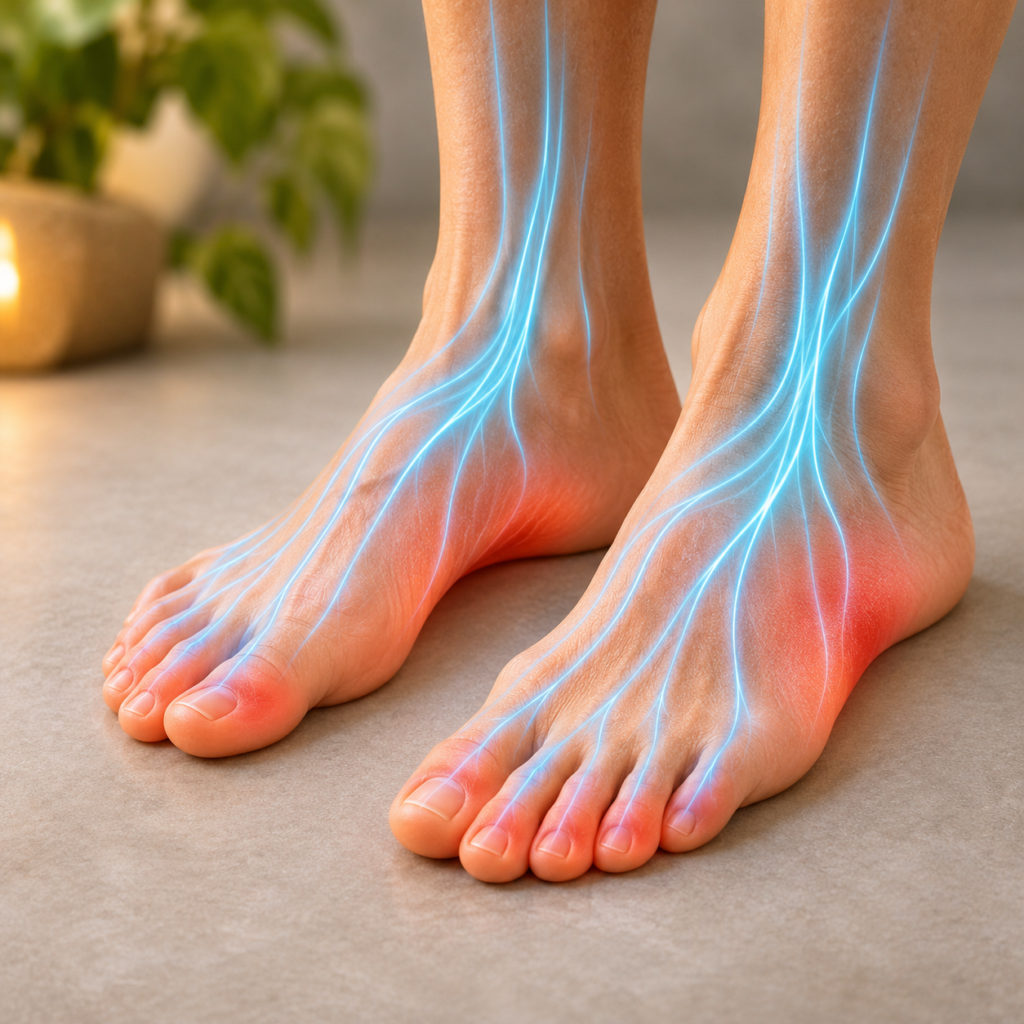
From a Traditional Chinese Medicine perspective, feet stay comfortable when Qi and Blood flow freely to them, and when the Kidney and Spleen nourish and dry the bones, tendons, and tissues. Strain and tight shoes impede circulation, Dampness makes the feet feel heavy, and weakened Kidney energy leaves them sore and tired. Points around the ankles open the channels leading into the foot; points on the top and arch help move local stagnation; and points on the sole and inner ankle rebuild underlying support.
The nine points work together to relieve foot pain and support recovery:
- ST41, BL60, and BL62 ease pain and stiffness around the ankle and outer foot.
- SP4 relieves the arch and drains Dampness.
- LV3, GB41, and Bafeng move Qi and Blood across the top of the foot and toes.
- KI3 and KI1 strengthen the feet and soothe aching soles.
How to Properly Use These Acupressure Points
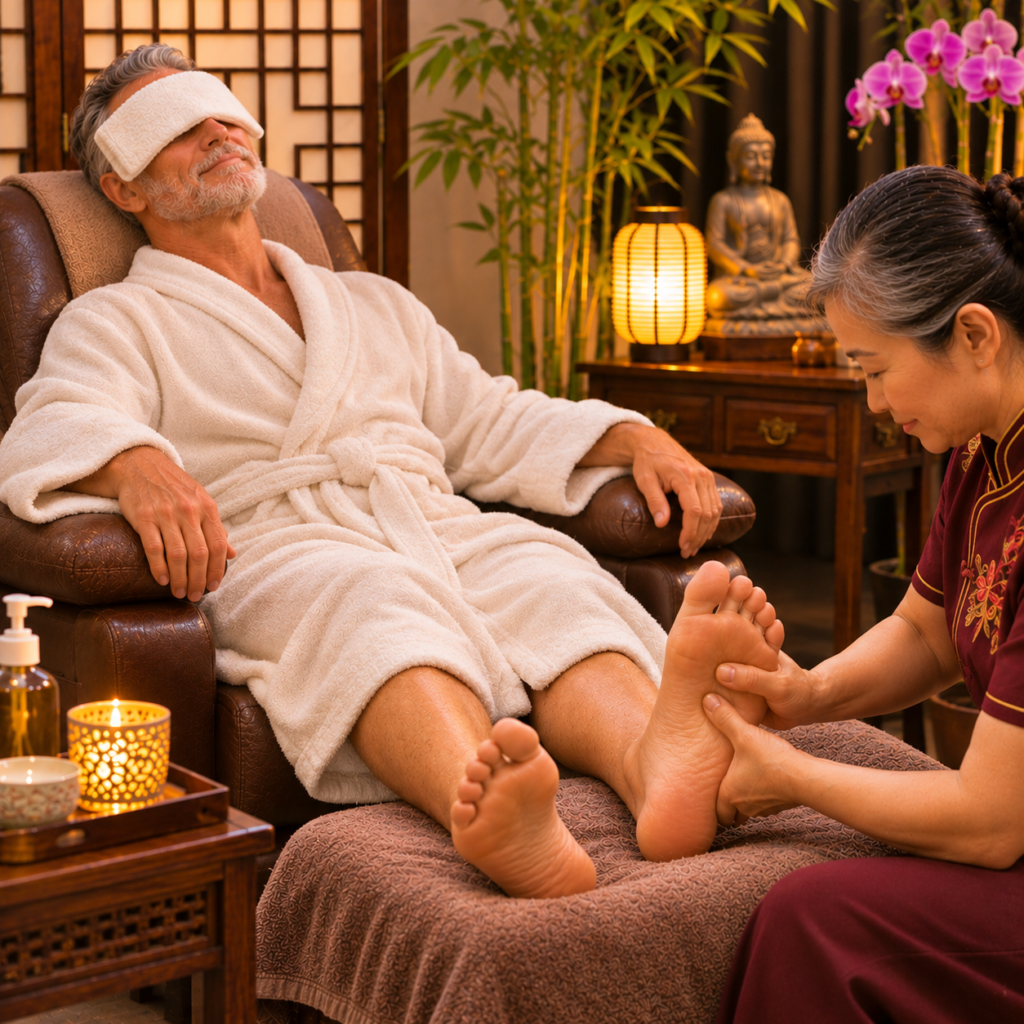
Acupressure for foot pain fits easily into the end of the day, when your feet are tired and your shoes are finally off.
- Sit with one foot crossed over the opposite knee. Press each of the nine points for one to two minutes, then switch feet.
- For pain on the top of the foot or in the toes, target LV3, GB41, and Bafeng.
- If your arches and soles ache, spend more time on SP4, KI3, and KI1. Then finish by rolling the sole over a tennis ball for one minute.
- Apply firm pressure to the sole and arch, and moderate pressure around the ankle. Avoid BL60 during pregnancy, and never apply pressure to skin that is swollen, red, warm, or broken.
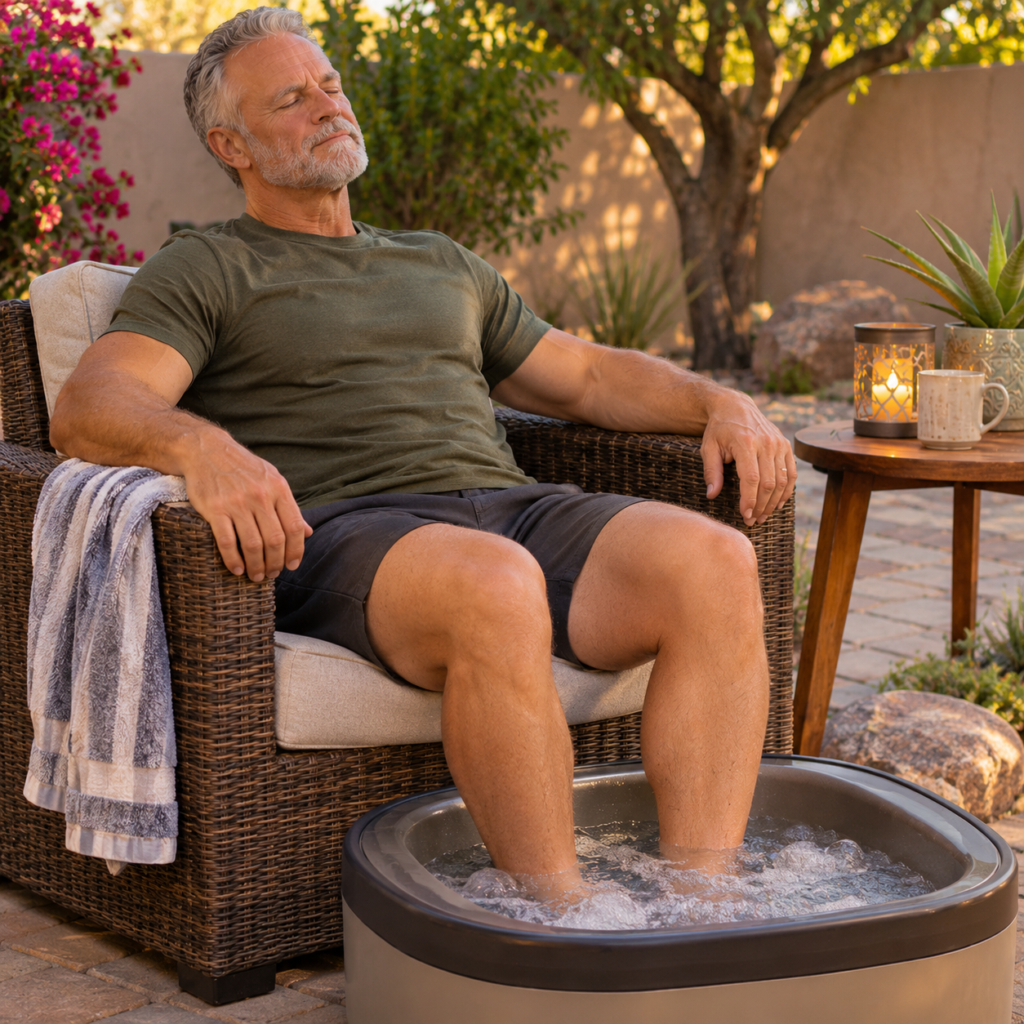
Shoes are just as important as anything else when managing foot pain. Choose pairs with a wide toe box, firm heel support, and enough cushioning for the surface you walk on. Replace walking and running shoes when their cushioning wears down, and limit time in high heels, flip-flops, and completely flat shoes. Stretch your calves and roll your arches daily, as tight calves can pull on the foot. Gradually increase new walking or running distances. Use a cushioned mat when standing at a counter, and sit for a few minutes when possible. Traditional Chinese Medicine also recommends soaking your feet in warm water in the evening to relax the tendons and warm feet that feel cold and stiff.
Learn more about home remedies for plantar fasciitis.
When to Get Professional Help
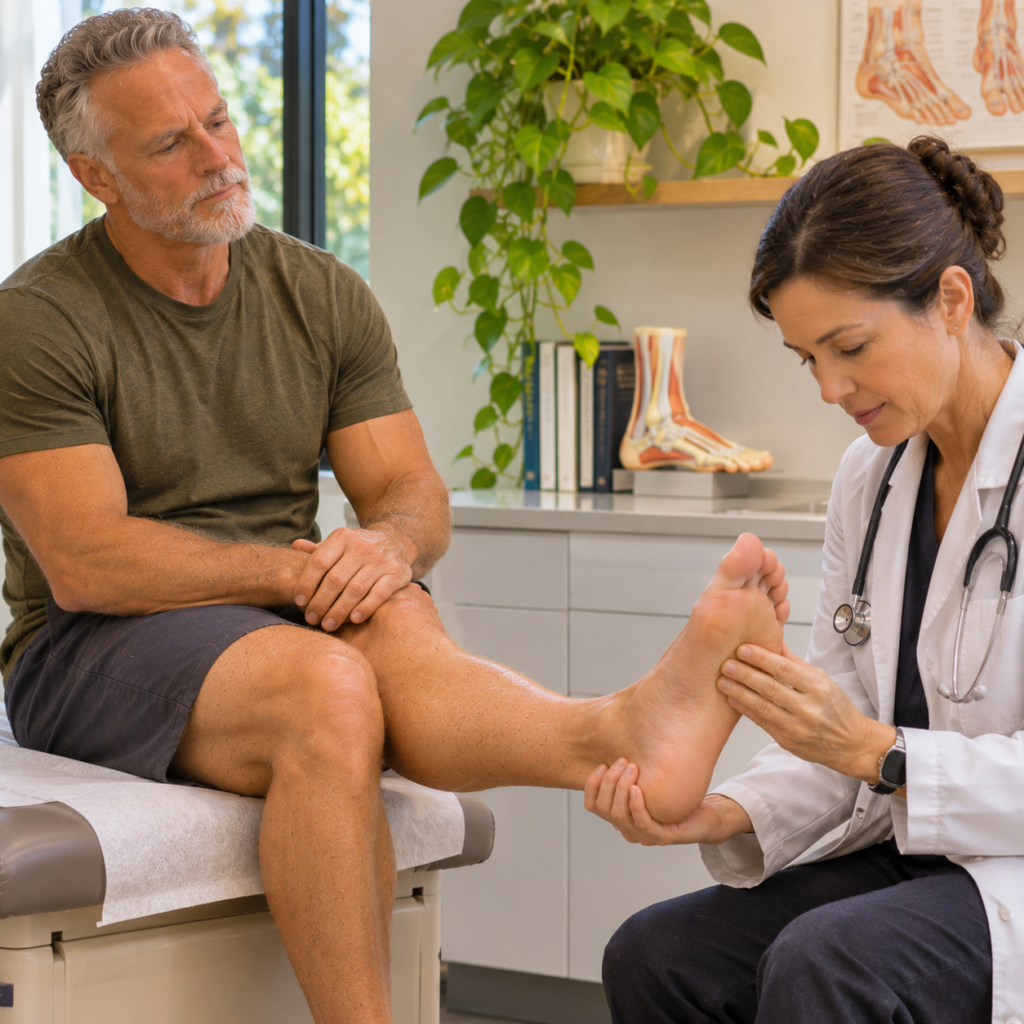
Seek emergency care for severe pain or swelling after an injury, inability to walk or bear weight on the foot, or an open wound, especially one oozing pus. Get prompt medical attention if the foot shows signs of infection, such as warmth, redness, tenderness or fever. Anyone with diabetes should be seen immediately for a foot wound that isn’t healing, is deep or discolored, or is swollen or warm, as a foot infection can progress very quickly in people with diabetes. See a doctor if swelling doesn’t resolve after 2-5 days of home care, pain lasts more than a few weeks, or you experience burning, numbness or tingling over most of the sole. A sudden, very painful, red and swollen big toe joint may be gout and should be assessed. Anyone with diabetes or poor circulation should talk with a doctor before starting home care for foot pain.
Acupressure is a gentle, supportive practice for foot pain. It complements, and does not replace, diagnosis and medical care.
For related concerns, acupressure for plantar fasciitis, acupressure for heel pain, and acupressure for neuropathy in the feet are companion pieces. If the pain centers on the ankle, learn about acupressure for ankle pain.
Above and Beyond Acupuncture offers acupuncture, cupping, and lifestyle coaching at the North Frank Lloyd Wright Boulevard location in Scottsdale.
Schedule an appointment online to start your healing journey.
The points above are only as effective as the technique used to apply them. Where to press, how firmly, and for how long all affect the result. For a full breakdown of how to perform acupressure properly at home, read Performing Acupressure in 3 Easy Steps.

About the Publisher
Paul Kerzner, L.Ac., is a licensed acupuncturist and board-certified herbalist, as well as the founder of Above and Beyond Acupuncture in Scottsdale. His own journey from chronic patient to practicing acupuncturist shapes his commitment to providing honest, clinically grounded information about acupuncture and Traditional Chinese Medicine. Learn more about Paul and his clinical approach on the About Us page.