
Key Takeaways
- Feeling overwhelmed can stem from having too many demands in life, leaving your thoughts scattered and your body tense.
- Acupressure may help calm the mind, release tension, and promote a sense of grounding when you feel overwhelmed.
- The article presents nine key acupressure points, including Yintang, GV20, and CV17, and explains how to use them effectively.
- Daily acupressure practice can ease feelings of overwhelm and help you feel more stable over time.
- If feeling overwhelmed persists and disrupts your daily life, seek professional help, as it may signal anxiety, depression, or burnout.

Do you ever feel as if everything is happening all at once? Maybe your to-do list is so long that you don’t know where to start, so you end up doing nothing. Your chest may feel tight, your thoughts may race, and even little things that normally wouldn’t bother you can suddenly make you want to cry. That’s what feeling overwhelmed can be like.
Feeling overwhelmed doesn’t mean you’re weak or have failed. It can happen when life’s demands exceed what your mind and body can handle. Work, family, finances, health, and constant notifications pile up, keeping your nervous system in fight-or-flight mode. Stress hormones (cortisol) remain elevated, your breathing becomes shallow, sleep gets harder, and planning or prioritizing becomes harder. You may feel restless and tired at the same time.
Traditional Chinese Medicine teaches that the Heart holds the Shen, or spirit, helping you think clearly and feel settled. When too much happens at once, the Shen becomes scattered and your mind races. The Liver, which keeps energy (Qi) moving, tightens under stress, making your chest and throat feel constricted. The Spleen, which supports thinking, becomes weighed down by excessive worry, while prolonged overwhelm drains the Kidney, your body’s deepest energy reserve. That’s why feeling overwhelmed can leave you both tense and drained.
These nine acupressure points calm your mind, open your chest, release stagnant energy, and ground you, clearing the way for your next step.
What Acupressure Points to Press and Why
1. Press on Yintang between the eyebrows to quiet a racing mind. Yintang sits in the small hollow directly between the eyebrows. Press gently with your middle fingertip, or make slow circles for one to two minutes while closing your eyes. Yintang is called the “Hall of Impression.”
Yintang is one of the body’s most calming points. It can quiet racing thoughts, ease tension headaches that often accompany overwhelm, and help your mind settle so you can rest. It’s a good first point to try when you’re feeling overwhelmed.

2. Press on GV20 at the top of the head to clear the mind. GV20 sits on the top of the head, at the midpoint of an imaginary line drawn from the top of one ear to the top of the other. Press gently but steadily with your fingertips for one to two minutes. GV20 is called “Baihui,” the “Hundred Meetings.”
GV20 is where many energy channels converge. It can clear a foggy mind, lift your mood when you feel weighed down, and help you see things more clearly. Pressing GV20 and Yintang together is a simple way to calm your whole head.

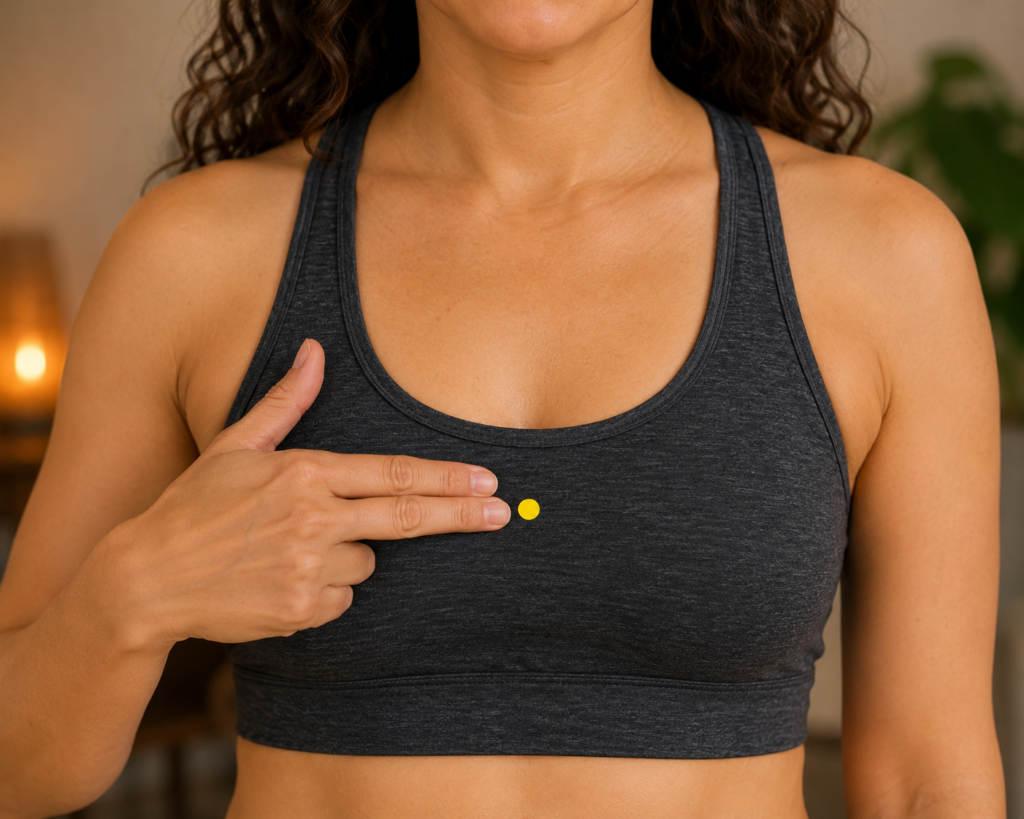
3. Press on CV17 in the center of the chest to release tightness. CV17 sits in the center of the breastbone, level with the nipples. Rest two or three fingertips on the point and press gently, or make slow circles, for one to two minutes while breathing slowly into the chest. CV17 is called “Danzhong,” the “Chest Center.”
In Traditional Chinese Medicine, CV17 is an important point for moving Qi, especially when energy feels stuck in the chest. It can ease the tight, heavy feeling of overwhelm, open your breathing, and help release emotions that feel trapped.
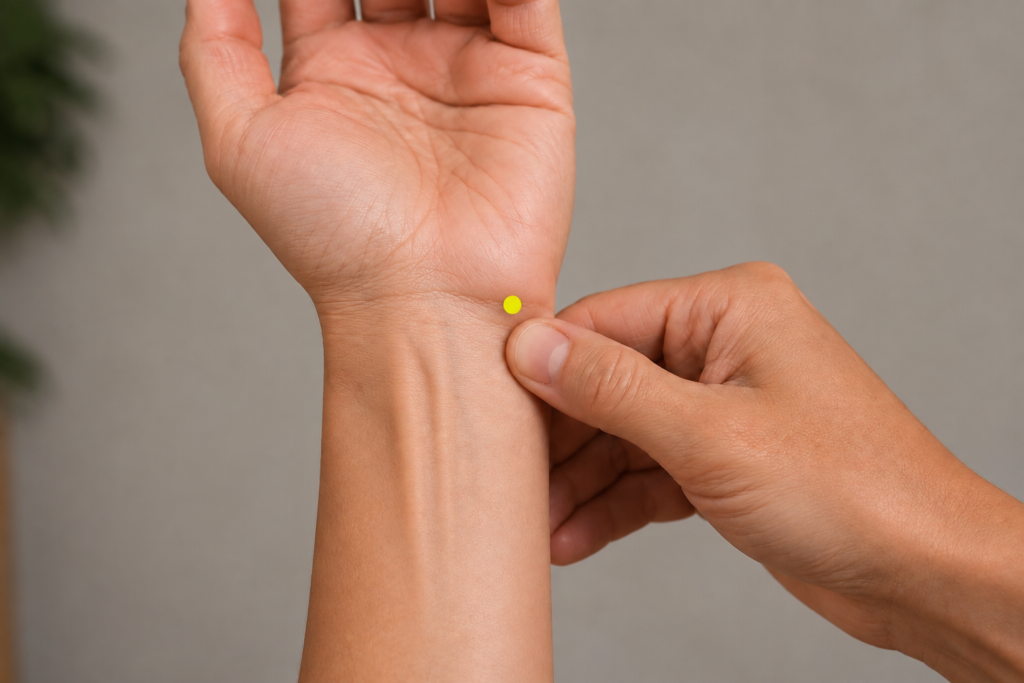
4. Press on HT7 on the wrist to settle the spirit. HT7 sits on the inner wrist crease, on the pinky side, in the small hollow just inside the tendon. Press gently with the thumb of your other hand for one to two minutes on each wrist. HT7 is called “Shenmen,” the “Spirit Gate.”
HT7 is the main Heart point and is especially useful for calming the Shen. It can ease feelings of overwhelm and unease, slow a racing heart, and help improve restless sleep after a stressful day.
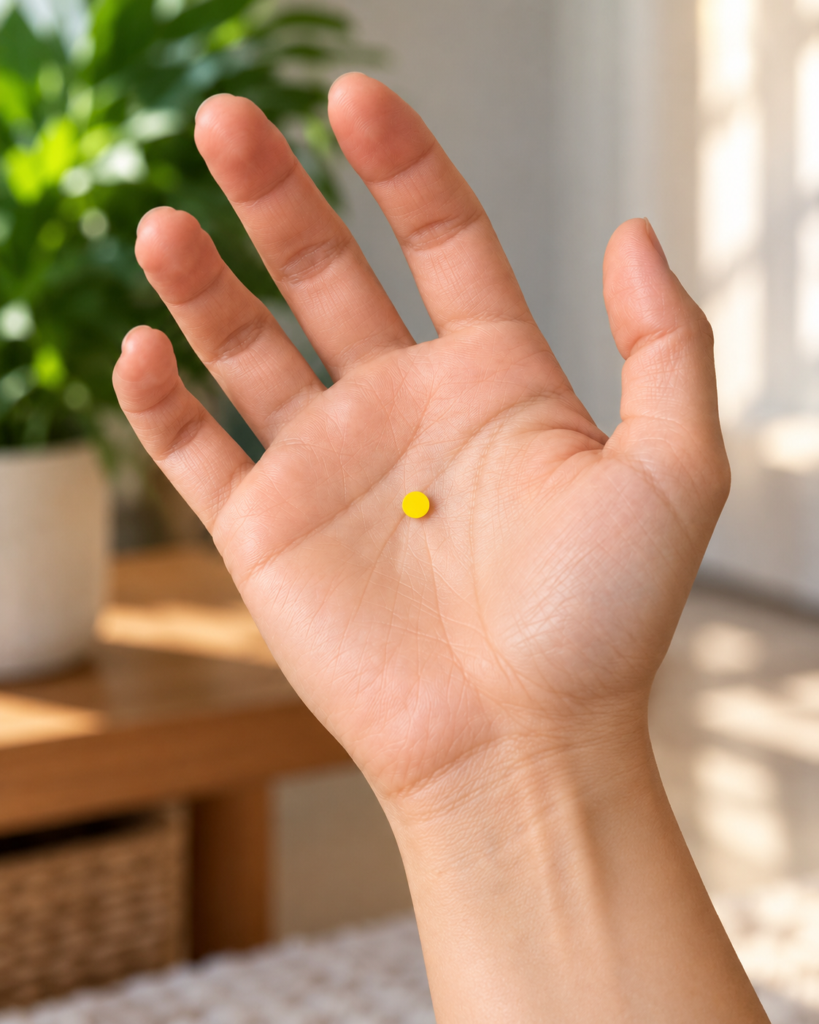
5. Press on PC8 in the center of the palm to cool and calm. PC8 sits in the center of the palm, where the tip of the middle finger lands when you make a loose fist, between the second and third hand bones. Press firmly with the thumb of your other hand for one to two minutes on each hand. PC8 is called “Laogong,” the “Palace of Toil.”
PC8 helps release heat and agitation from the Heart, which can build up when you feel overwhelmed. Located in your palm, it can be pressed discreetly during a meeting, in traffic, or whenever you begin to feel stressed.
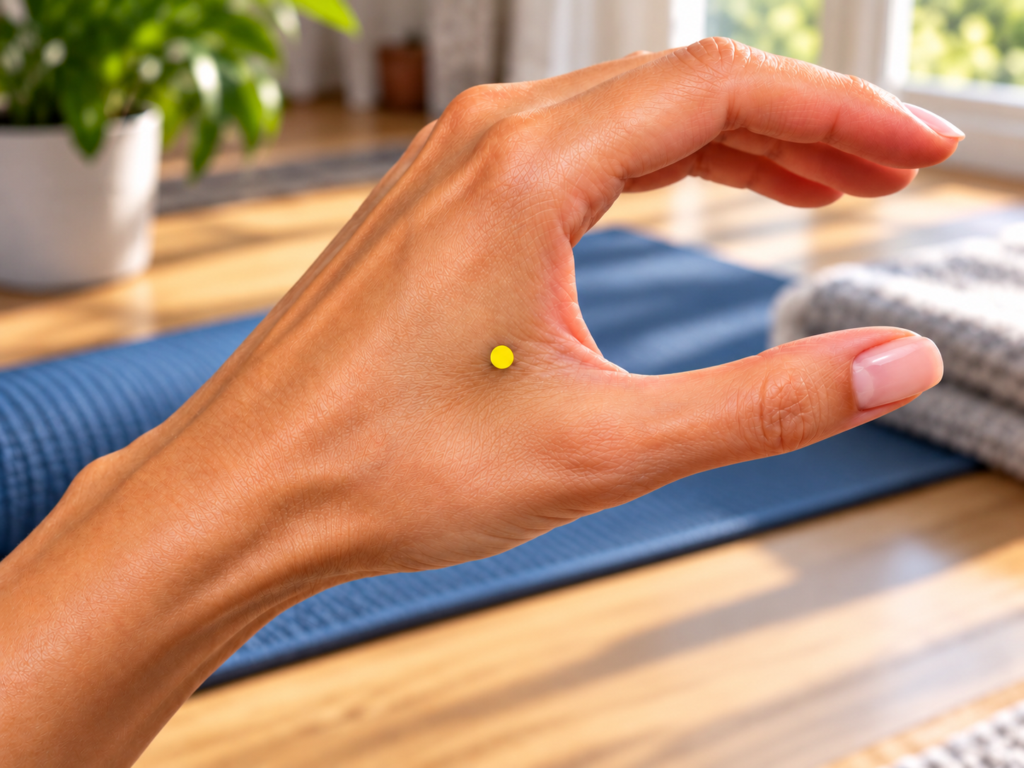
6. Press on LI4 in the hand to release tension. LI4 sits in the webbing between the thumb and index finger, at the highest point of the muscle when you bring the thumb and index finger together. Press firmly with the thumb of your other hand for one to two minutes on each hand. LI4 is called “Hegu,” the “Joining Valley.” LI4 is avoided during pregnancy.
LI4 helps move Qi through your body and ease tension in your head, jaw, neck, and shoulders when you’re stressed. It’s often used with LR3 to release the tight, stuck feeling that can come with overwhelm.
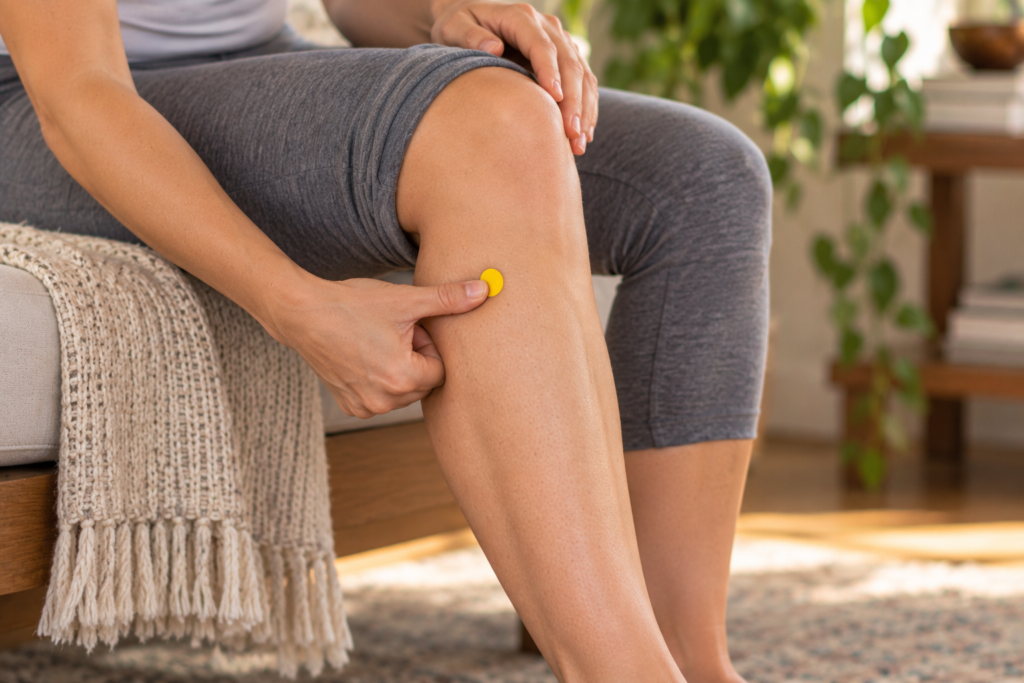
7. Press on ST36 below the knee to restore depleted energy. ST36 sits four finger-widths below the lower edge of the kneecap and one finger-width to the outside of the shinbone. Press firmly with your thumb for one to two minutes on each leg. ST36 is called “Zusanli,” the “Leg Three Miles.”
Feeling overwhelmed can wear down your body, especially when it lasts for weeks or months. In Traditional Chinese Medicine, ST36 is a key point for boosting energy and strengthening the Spleen, which helps your mind process and organize what’s happening.
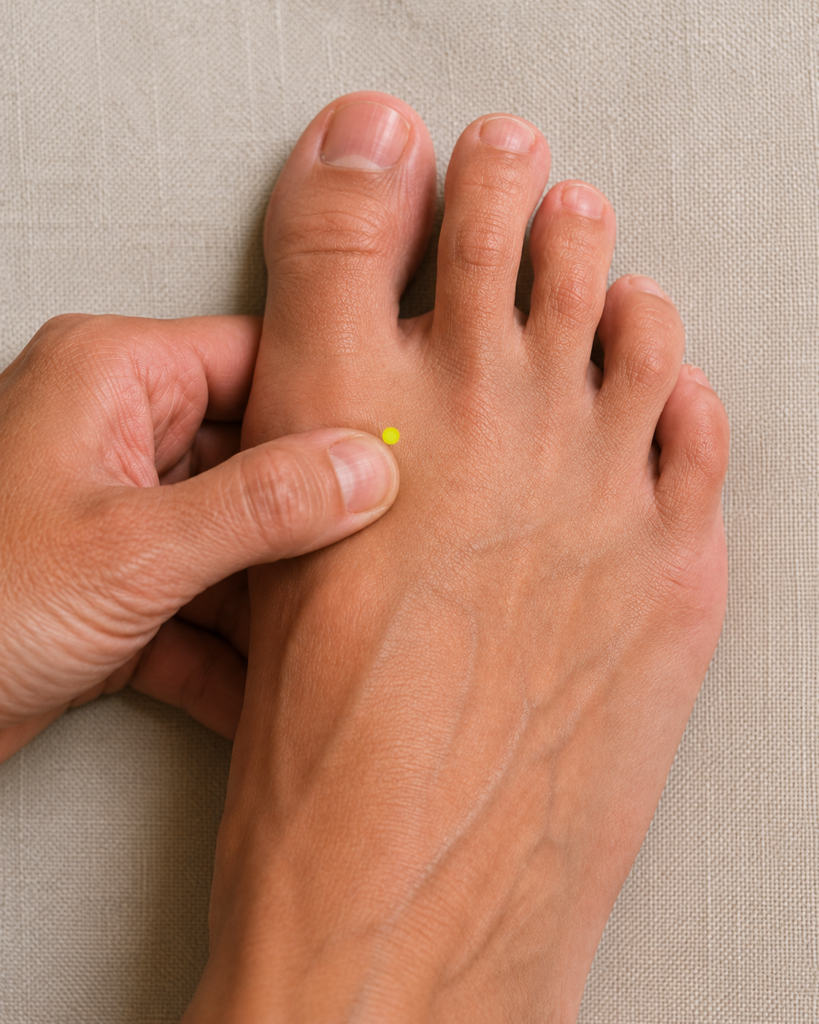
8. Press on LR3 on the top of the foot to move stuck Qi. LR3 sits in the webbing between the big toe and second toe, about two finger-widths back from the webbing, in the hollow just before the two bones meet. Press firmly with your thumb for one to two minutes on each foot. LR3 is called “Taichong,” the “Great Surge.”
LR3 is the main Liver point and can be especially helpful for stress. It helps move Liver Qi when it tightens under pressure, eases irritability and frustration, and releases tension in your head. Together, LI4 and LR3 are known as the “Four Gates,” a classic way to move energy throughout the body.
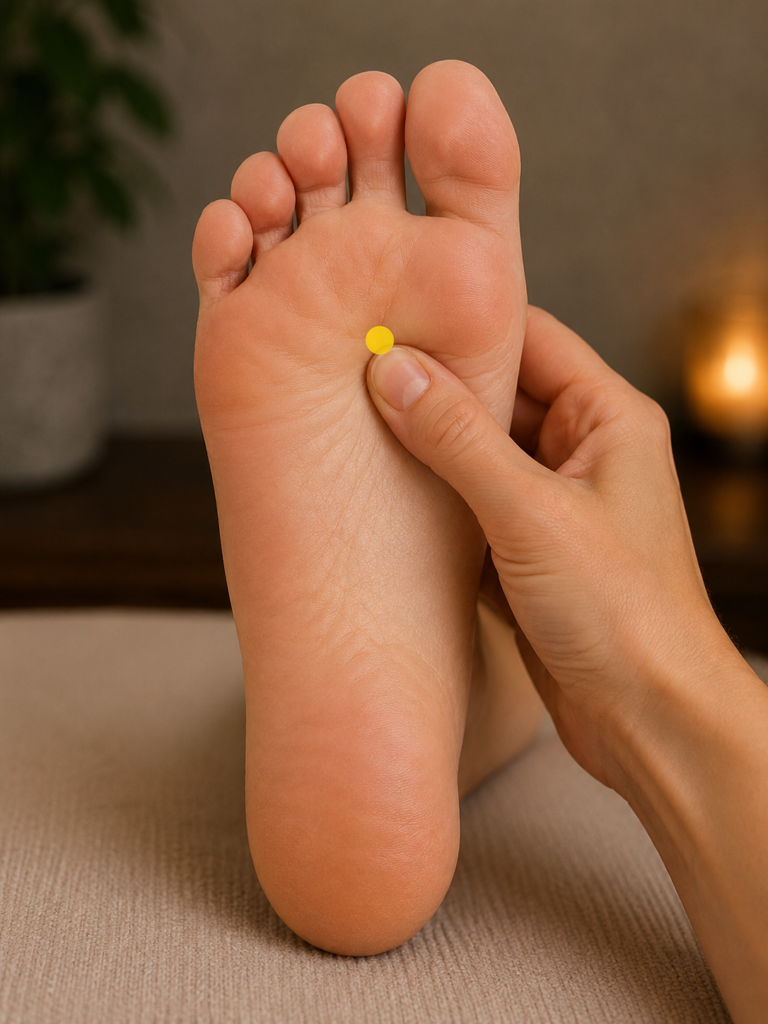
9. Press on KI1 on the sole of the foot to ground scattered energy. KI1 sits on the sole of the foot, in the hollow that forms near the front of the foot when you curl the toes, about one-third of the way from the base of the second toe to the back of the heel. Press firmly with your thumb for one to two minutes on each foot, or roll the sole over a tennis ball. KI1 is called “Yongquan,” the “Bubbling Spring.”
KI1 is the lowest point on your body, making it deeply grounding. When overwhelm pulls energy into your head and chest, KI1 helps draw it back down, steady your mind, and support your Kidney reserves, which long-term stress can deplete. It can be especially helpful before bed when your mind won’t settle.
Why These Acupressure Points Work

According to Traditional Chinese Medicine, a calm, clear mind depends on a settled Shen, Qi flowing freely through your chest and body, and enough energy in reserve to meet daily demands. When you’re overwhelmed, the Shen becomes scattered, Qi gets knotted in the chest, energy rises upward, and your body’s reserves gradually drain.
Each part of that pattern is addressed by the nine acupressure points:
- The head points (Yintang, GV20) quiet racing thoughts and clear a crowded mind.
- The chest and heart points (CV17, HT7, PC8) release tightness in the chest, cool agitation, and settle the spirit.
- The moving points (LI4, LR3) release stuck Qi and the tension it creates throughout the body.
- The grounding points (ST36, KI1) restore depleted energy and draw scattered energy back down into the body.
How to Properly Use These Acupressure Points

Acupressure can help with feelings of overwhelm in two ways. It can offer quick relief and, if you practice it daily, help you become more resilient over time.
- When you feel overwhelmed, pause for three to five minutes. Press CV17 as you breathe slowly, then press HT7, PC8, and LI4. Finish with a long, slow exhale.
- Complete the full routine once daily, preferably in the evening, holding each point for one to two minutes.
- Pair each point with slow breathing, making every exhale slightly longer than the inhale to signal safety to the nervous system.
- Keep practicing consistently for several weeks; a nervous system that’s been on high alert needs time to reset.
Small changes that lighten your load matter just as much as using acupressure points. Write everything on your mind on one page so you don’t have to keep it all in your head, then choose just one task to tackle next. Turn off unnecessary notifications, take short screen breaks, and go for a walk outside when you can. Protect your sleep, eat regular meals, and limit caffeine, which can make your mind race even more.
Overwhelm often comes from taking on too much, so learning to protect your time is part of the healing process. Learn more about how to say no.
When to Get Professional Help

If feelings of overwhelm last more than a few weeks and interfere with sleeping, working, or caring for yourself and your family, or are accompanied by persistent sadness, hopelessness, or loss of interest in activities you once enjoyed, they may be signs of anxiety, depression, or burnout, all of which can be treated. Seek medical attention as soon as possible if you have frequent panic attacks, rely heavily on alcohol or other substances to cope, or feel overwhelmed after a traumatic event. For chest pain, pressure spreading to the arm or jaw, or difficulty breathing, seek emergency care. These symptoms should not be assumed to be caused by stress.
If you’re thinking about harming yourself, call or text 988 right away to reach the Suicide and Crisis Lifeline.
Acupressure is a gentle, supportive approach that may be beneficial when you feel overwhelmed; however, it should complement, not replace, diagnosis and medical treatment.
For related health concerns, acupressure for stress, acupressure for worry, and acupressure to calm down are companion posts. If overwhelm turns into a racing heart and shortness of breath, learn how to stop a panic attack.
Above and Beyond Acupuncture offers acupuncture, cupping, and lifestyle coaching at the North Frank Lloyd Wright Boulevard location in Scottsdale.
Schedule an appointment online to start your healing journey.
The points above are only as effective as the technique used to apply them. Where to press, how firmly, and for how long all affect the result. For a full breakdown of how to perform acupressure properly at home, read Performing Acupressure in 3 Easy Steps.

About the Publisher
Paul Kerzner, L.Ac., is a licensed acupuncturist and board-certified herbalist, as well as the founder of Above and Beyond Acupuncture in Scottsdale. His own journey from chronic patient to practicing acupuncturist shapes his commitment to providing honest, clinically grounded information about acupuncture and Traditional Chinese Medicine. Learn more about Paul and his clinical approach on the About Us page.