Key Takeaways
- Excessive sweating, called hyperhidrosis, goes well beyond what the body needs to cool down and most often affects the underarms, hands, feet, and face.
- Primary hyperhidrosis has no underlying cause, whereas secondary hyperhidrosis results from a medication or another medical condition. An accurate diagnosis helps guide treatment.
- In Traditional Chinese Medicine, sweat is considered the fluid of the Heart. Excessive sweating may indicate weak protective Qi, Yin that can no longer contain heat, or Heat driving fluids outward.
- Nine acupressure points on the hands, wrists, legs, and feet, led by the classic pairing of KI7 and LI4, help regulate sweating, calm the stress that triggers it, and strengthen the body’s protective Qi.
- Acupressure for excessive sweating works best alongside medical care, and sweating with chest pain, shortness of breath, or lightheadedness requires emergency care.

People who sweat excessively often become experts at hiding it. They wear dark or patterned shirts, carry tissues or a spare shirt, wipe their hands before every handshake, and avoid holding hands, gripping a steering wheel, or raising an arm in a meeting. Paper sticks to their palms, phones slip from their hands, and their shoes get soaked even on cool days. The sweating can start without any heat or effort, and worrying about it often makes it worse.
According to the American Academy of Dermatology, treatment for excessive sweating can improve quality of life. The goal is to reduce sweating until it no longer interferes with everyday activities, such as holding a pen or mouse without it slipping. Hyperhidrosis most commonly affects the underarms, hands, feet, and face, but it can also affect the groin, back, chest, and area beneath the breasts. Primary hyperhidrosis is not caused by a medication or medical condition; secondary hyperhidrosis is, and treating the underlying cause may resolve it. Treatment options include prescription antiperspirants, iontophoresis, botulinum toxin injections, prescription cloths and gels, oral medications, an in-office heat treatment for the underarms, and surgery.
Sweating serves an important purpose: it cools the body during heat, exercise, and fever. Some sweating with anxiety or menopause is normal, too. With hyperhidrosis, the system that triggers sweating works much harder than necessary, often affecting just a few areas and starting at a young age. Stress, heat, spicy food, caffeine, and alcohol can all make it worse.
Traditional Chinese Medicine teaches that sweat is the fluid of the Heart, while the Lung carries protective Qi to the skin to regulate the opening and closing of the pores. When protective Qi is weak, sweat may leak out with little effort, accompanied by fatigue and a tendency to catch colds. When Yin is low, it can no longer contain heat, leading to sweating alongside warm palms and soles or night sweats. Heat in the Stomach or Heart, often associated with stress, rich food, or a busy mind, pushes fluids outward, causing sticky, heavy sweating that flares with anxiety.
The nine points below help regulate sweating, strengthen protective Qi, nourish Yin, clear Heat, and ease the stress that often triggers an episode.
What Acupressure Points to Press and Why
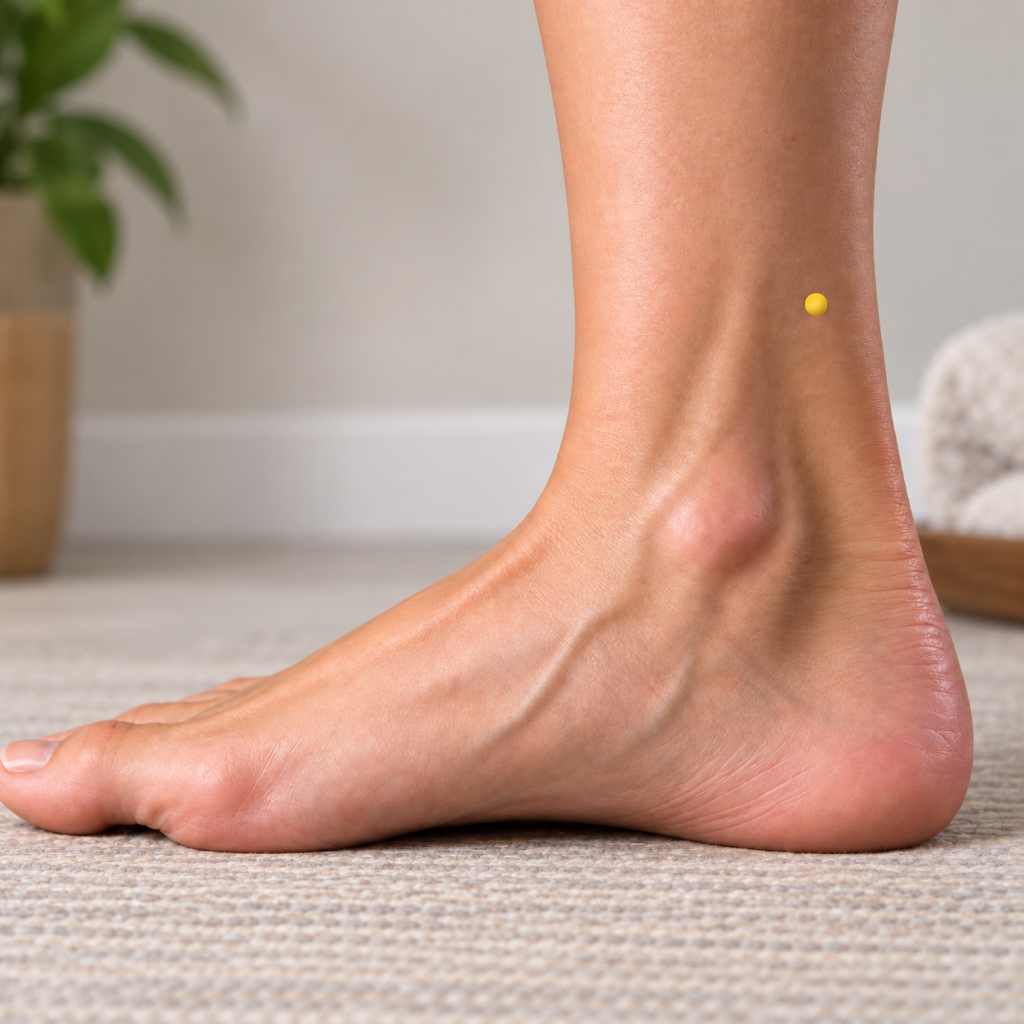
1. Press on KI7 above the inner ankle to regulate sweating. KI7 sits on the inner lower leg, about three finger-widths above the hollow between the inner ankle bone and the Achilles tendon, just in front of the tendon. Press firmly with your thumb for one to two minutes on each leg. KI7 is called “Fuliu,” the “Returning Current.”
KI7 is the main point in Traditional Chinese Medicine for controlling sweating. It’s used both to stop too much sweating and to help when sweating is missing, making it the key part of this routine.
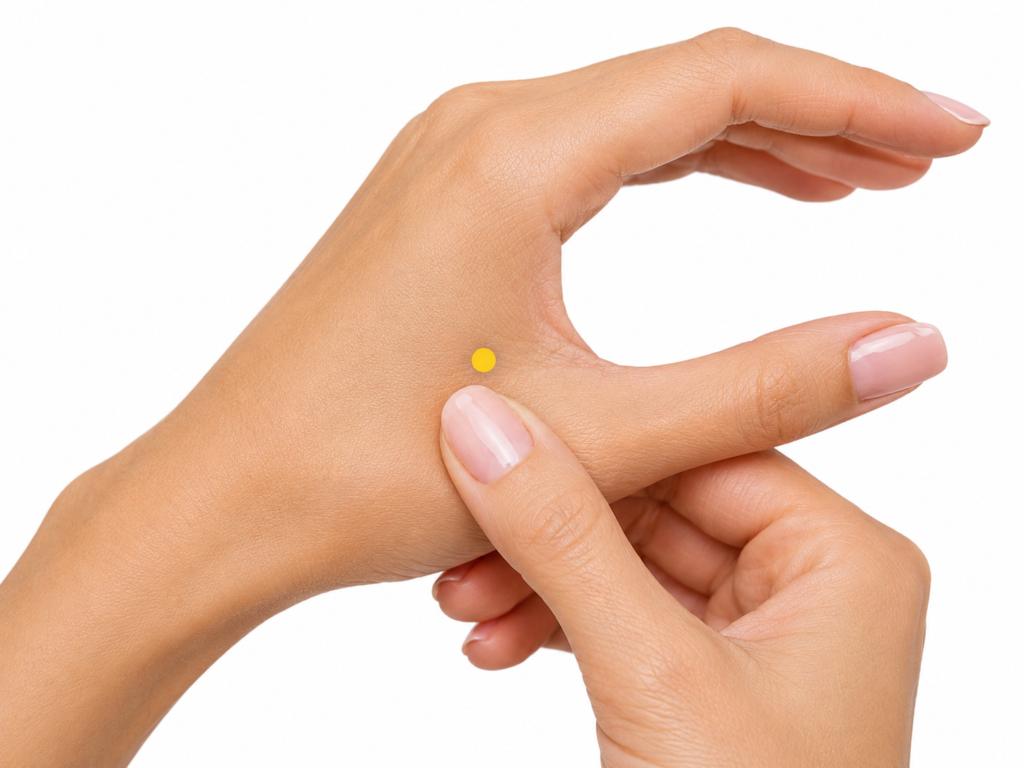
2. Press on LI4 on the back of the hand to balance sweating with KI7. LI4 sits in the webbing between the thumb and index finger, at the highest point of the muscle when the two are pressed together. Press firmly with the thumb of your other hand for one to two minutes on each hand. LI4 is called “Hegu,” the “Joining Valley.” LI4 is avoided during pregnancy.
LI4 is the source point of the Large Intestine channel, which is paired with the Lung. Used together with KI7, these two points are the classic combination in Traditional Chinese Medicine for balancing sweating and helping the pores open and close properly.
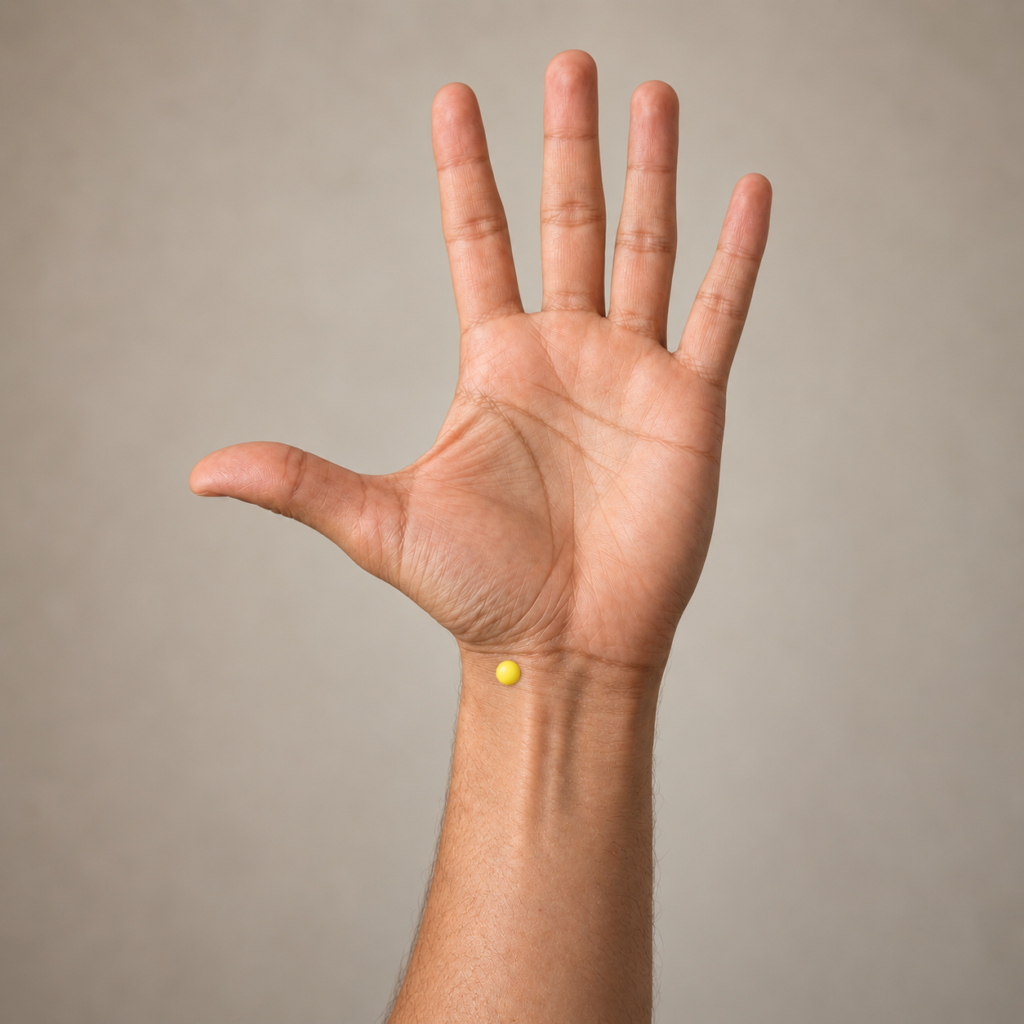
3. Press on HT6 just above the wrist crease to calm sweating linked to the Heart. HT6 sits on the inner forearm, on the pinky side, just inside the tendon, about half a thumb-width above the wrist crease. Press firmly with the thumb of your other hand for one to two minutes on each wrist. HT6 is called “Yinxi,” the “Yin Cleft.”
HT6 is the cleft point of the Heart channel. Because sweat is linked to the Heart, HT6 is a key point for all types of sweating, especially night sweats or sweating that accompanies a fast heartbeat.
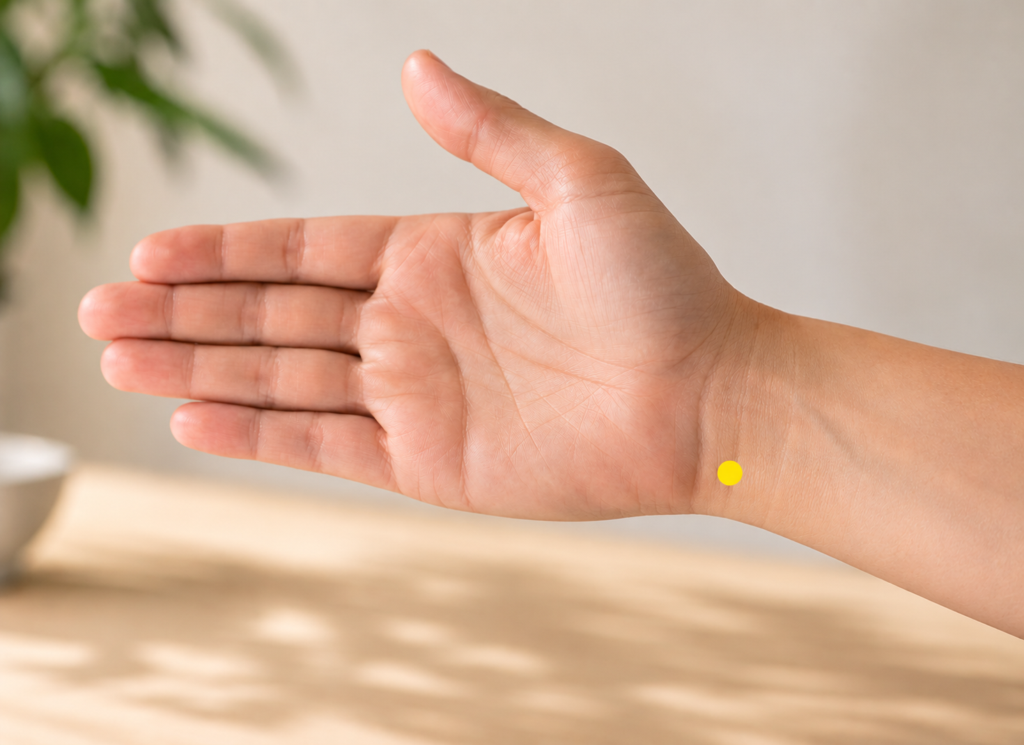
4. Press on HT7 on the wrist crease to calm stress-related sweating. HT7 sits on the inner wrist crease, on the pinky side, in the small hollow just to the thumb side of the tendon that runs along the edge of the wrist. Press gently with the thumb of your other hand for one to two minutes on each wrist. HT7 is called “Shenmen,” the “Spirit Gate.”
HT7 is the source point of the Heart, which, in Traditional Chinese Medicine, is said to house the mind. It helps calm anxiety and anticipation that can trigger sweating. HT7 is close to HT6, so you can press both at the same time with the side of your thumb.
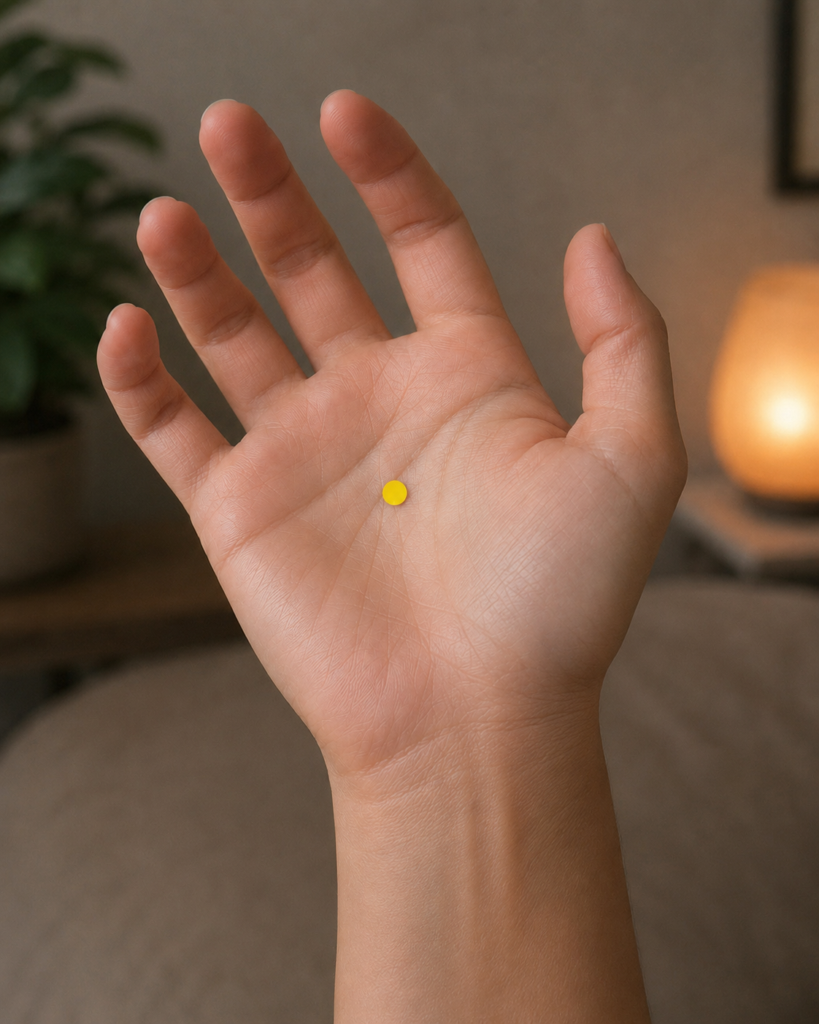
5. Press on PC8 in the center of the palm to ease sweaty palms. PC8 sits in the center of the palm, where the tip of the middle finger touches when you make a loose fist. Press firmly with the thumb of your other hand for one to two minutes on each hand. PC8 is called “Laogong,” the “Palace of Toil.”
PC8 is a Pericardium point that helps clear Heat from the Heart and calm the mind. It can be especially helpful for hot, sweaty palms. Press it discreetly before a handshake, meeting, or any other situation that may cause sweating.
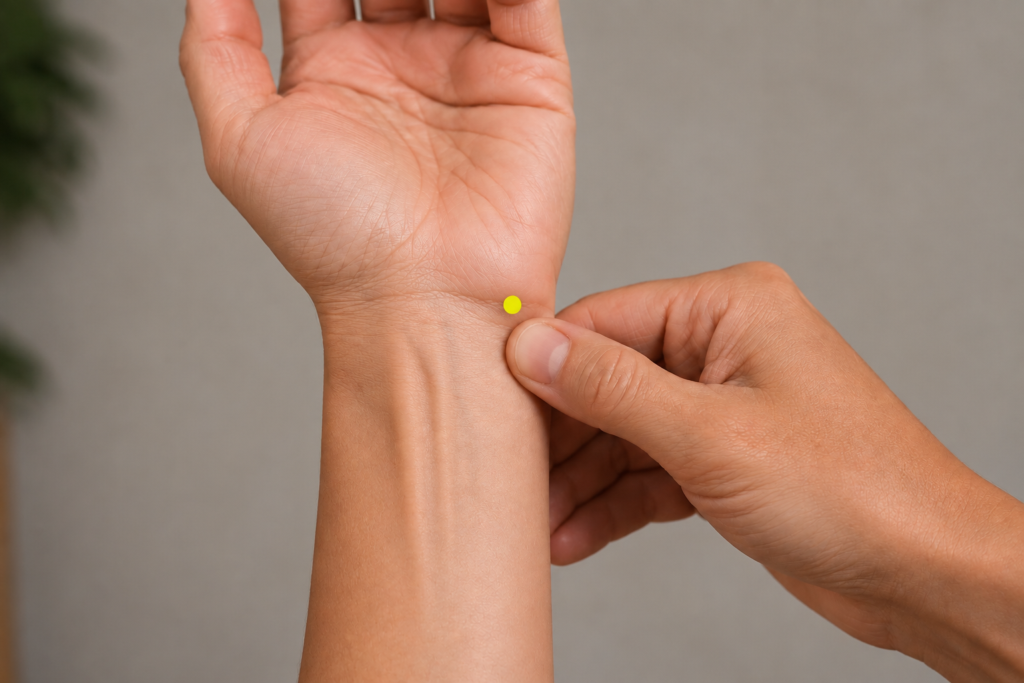
6. Press on LU9 at the wrist crease to strengthen the protective Qi. LU9 sits on the inner wrist crease, on the thumb side, in the hollow just beside the pulse. Press gently with the thumb of your other hand for one to two minutes on each wrist. LU9 is called “Taiyuan,” the “Great Abyss.”
LU9 is the Lung’s source point. The Lung sends protective Qi to the skin and regulates the pores. Strengthening the Lung helps the pores close properly, which may ease excessive sweating, tiredness, and frequent colds.
7. Press on ST36 below the knee to build the body’s Qi. ST36 sits four finger-widths below the bottom of the kneecap, about one finger-width to the outside of the shinbone. Press firmly with your thumb for one to two minutes on each leg. ST36 is called “Zusanli,” the “Leg Three Miles.”
In Traditional Chinese Medicine, ST36 is a key point for strengthening the Spleen and Stomach, the body’s source of Qi. More Qi can help support protective Qi at the surface and regulate sweating that leaves you feeling tired.
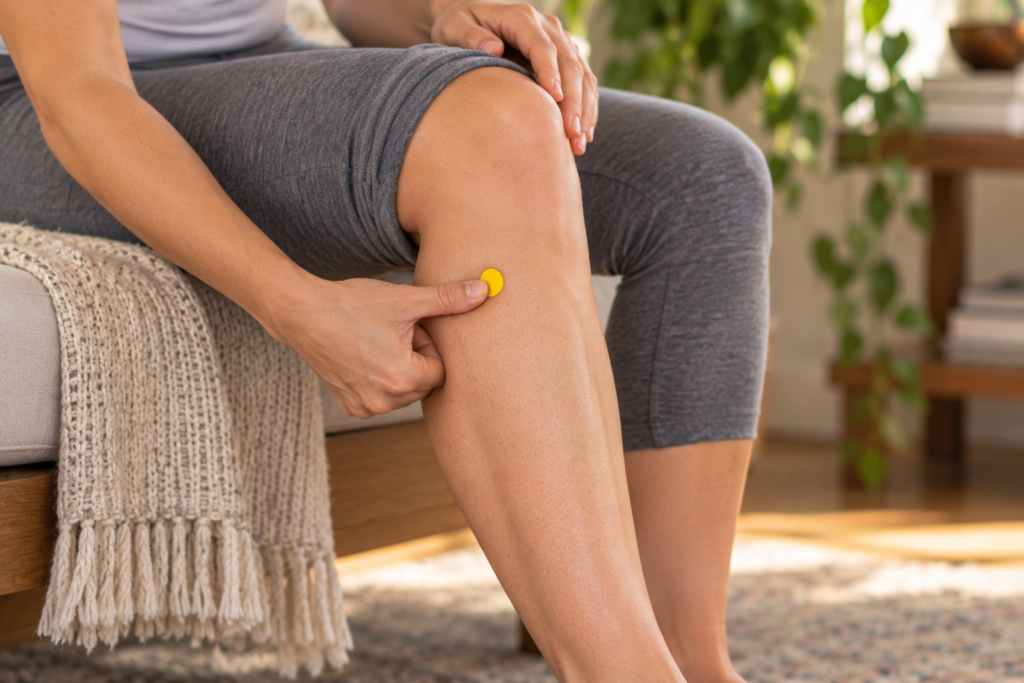
8. Press on SP6 on the inner lower leg to nourish Yin. SP6 sits on the inner lower leg, four finger-widths above the tip of the inner ankle bone, just behind the edge of the shinbone. Press firmly with your thumb for one to two minutes on each leg. SP6 is called “Sanyinjiao,” the “Three Yin Intersection.” SP6 is avoided during pregnancy.
SP6 is where the Spleen, Liver, and Kidney channels converge. It helps nourish Yin and Blood, keeping heat and fluids in. SP6 may help with sweating accompanied by warm palms and soles, night sweats, or feeling hot in the evening.
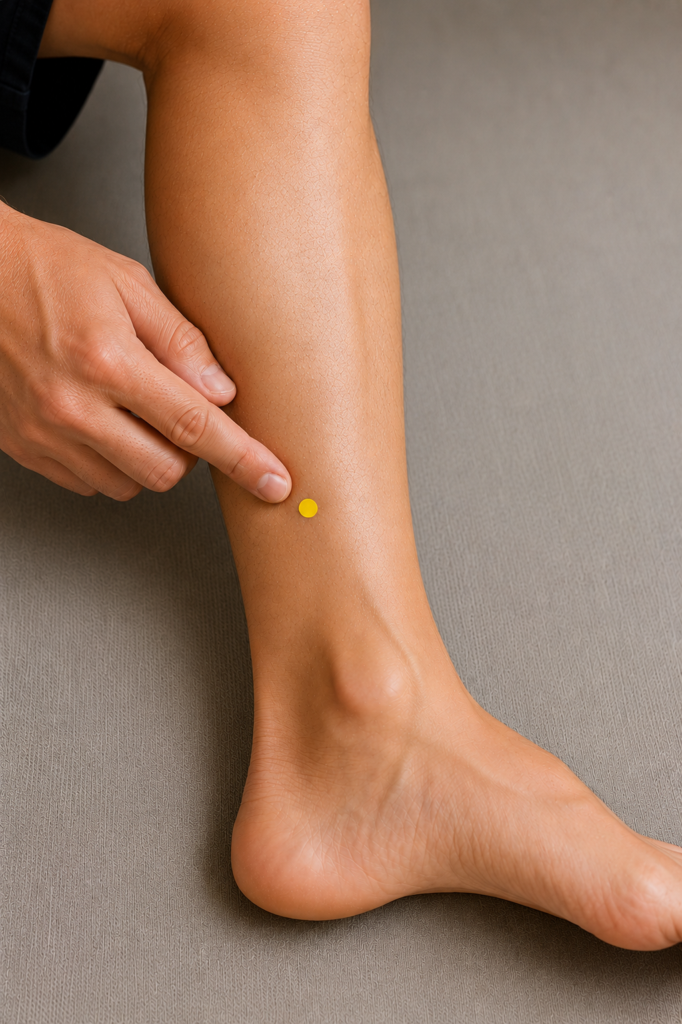
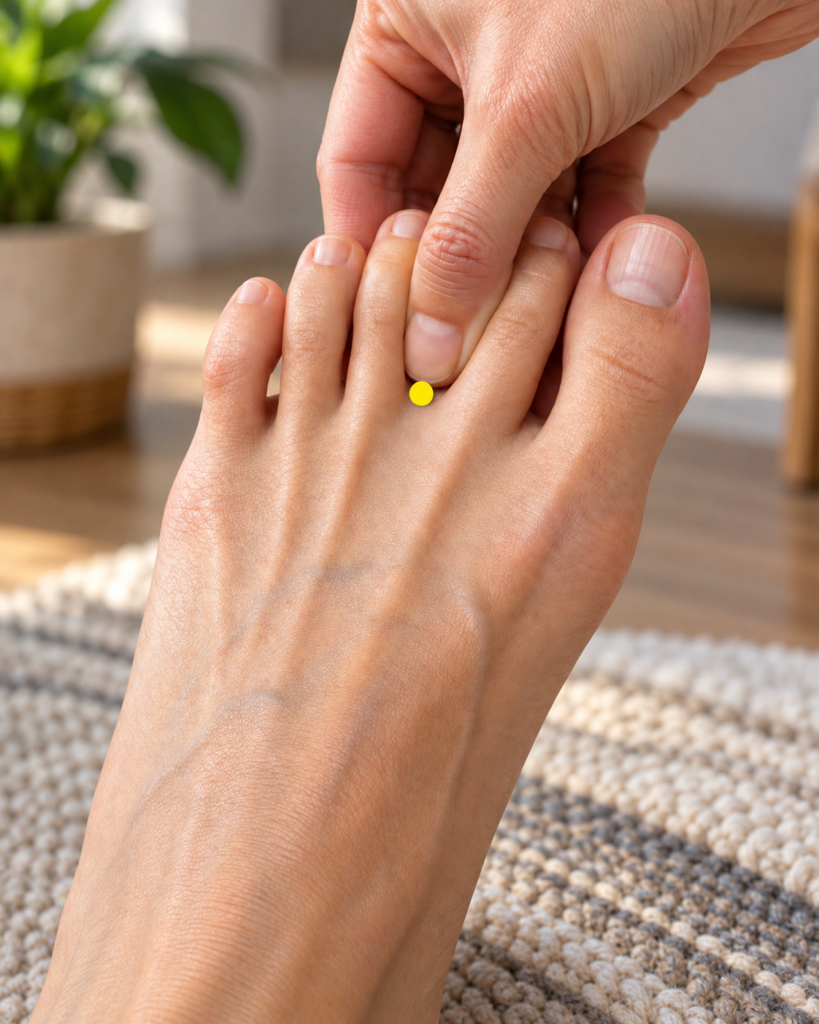
9. Press on ST44 on the top of the foot to clear Heat. ST44 sits on the top of the foot, at the end of the web between the second and third toes. Press firmly with your thumb for one to two minutes on each foot. ST44 is called “Neiting,” the “Inner Courtyard.”
In Traditional Chinese Medicine, ST44 is an important point for clearing Heat from the Stomach. It can help with heavy, sticky sweating that worsens after spicy food, alcohol, or large meals, while cooling the body from within.
Why These Acupressure Points Work
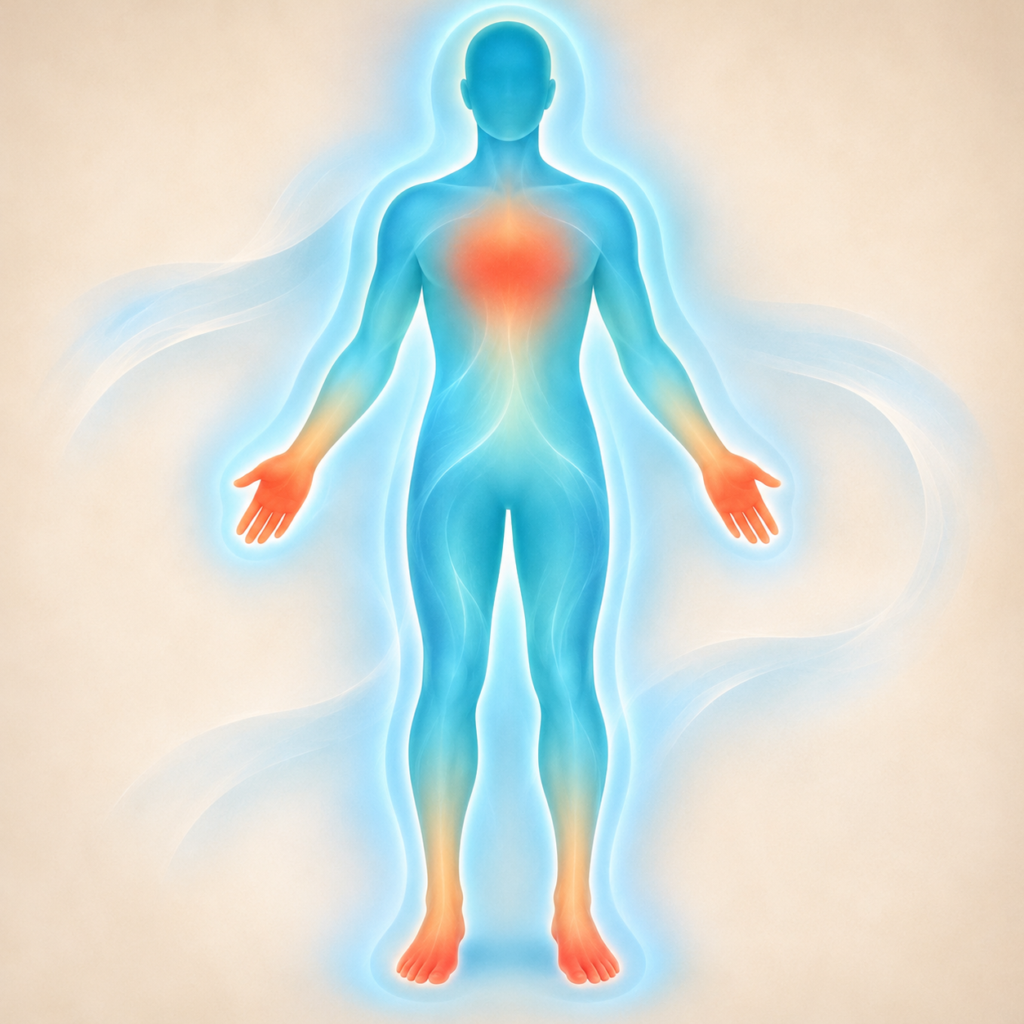
In Traditional Chinese Medicine, excessive sweating means the body isn’t regulating its pores and fluids properly. Weak protective Qi allows sweat to escape, low Yin fails to contain heat, and Heat caused by stress or diet drives fluids out. The goal is to manage the sweating, calm the Heart, strengthen protective Qi, nourish Yin, and clear Heat so the pores function as they should.
The nine points work together to regulate sweating and address its root cause:
- The regulating pair (KI7, LI4) balances the opening and closing of the pores.
- The Heart points (HT6, HT7, PC8) calm stress-related sweating and ease sweaty palms.
- The strengthening points (LU9, ST36) build the protective Qi that keeps the pores closed.
- The cooling and nourishing points (SP6, ST44) nourish Yin and clear the Heat that pushes sweat outward.
How to Properly Use These Acupressure Points
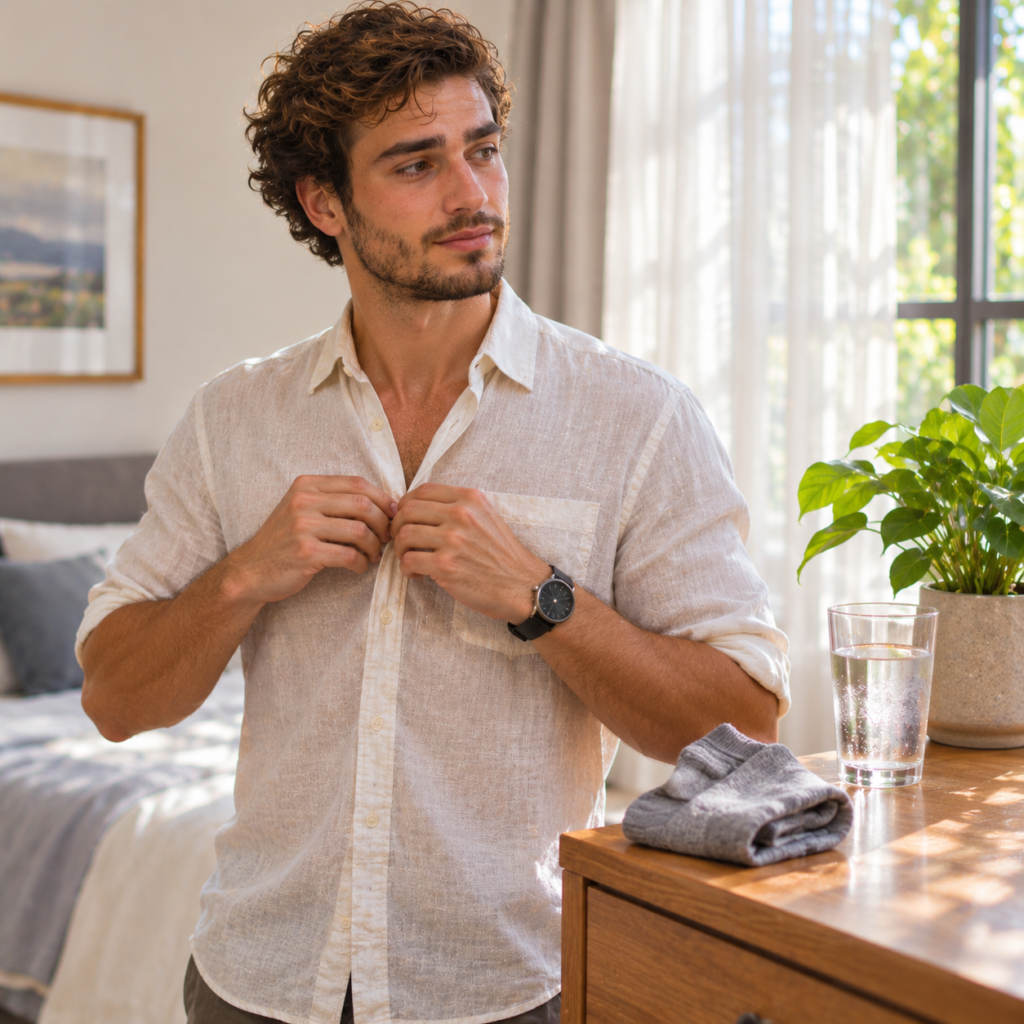
Acupressure for excessive sweating is most effective when practiced consistently as part of a daily routine, together with a brief calming sequence before situations that may trigger sweating.
- Work through all nine points once daily, holding each for one to two minutes. Start with KI7 and LI4.
- Before a meeting, handshake, or presentation, press HT7 and HT6 together on one wrist, then press PC8, while breathing slowly.
- Apply gentle pressure at the wrist crease, and use firmer pressure on the hands, legs, and feet.
- Keep going daily for at least four to six weeks, since sweating patterns tend to change gradually.
Daily habits can make a real difference in managing excessive sweating. Wear loose, breathable fabrics, such as cotton or moisture-wicking materials. Change your socks during the day, and rotate shoes so each pair has time to dry. Apply antiperspirant at bedtime, when sweat glands are less active. Try limiting caffeine, alcohol, and spicy foods, which can trigger sweating, and drink enough water to replace what you lose. Practice slow breathing or another calming habit each day, since stress is a strong trigger. Traditional Chinese Medicine recommends cooling, moist foods such as cucumber, mung beans, and pears, and avoiding heavy, greasy, or very rich meals.
You can also learn more about cortisol and why stress levels stay high.
When to Get Professional Help

See a doctor or dermatologist if sweating interferes with work, school, or daily activities. You should also get checked if it starts suddenly in adulthood, affects your whole body or only one side, or begins after starting a new medication. Conditions such as thyroid problems, low blood sugar, and infections can cause excessive sweating. Seek medical help right away if night sweats are accompanied by fever, unexplained weight loss, or swollen glands. Call 911 if sweating occurs with chest pain or pressure, difficulty breathing, lightheadedness, or pain that radiates to your arm, jaw, or back. If you have diabetes and sweating is accompanied by shakiness, confusion, or a racing heart, check your blood sugar and treat it immediately.
Acupressure can be a gentle and helpful way to manage excessive sweating, but it should be used along with, not instead of, medical care and diagnosis.
For related health concerns, acupressure for night sweats, acupressure for hot flashes, and acupressure for anxiety are companion articles. If sweaty palms make handshakes and meetings something to dread, learn about acupressure for social anxiety.
Above and Beyond Acupuncture offers acupuncture, cupping, and lifestyle coaching at the North Frank Lloyd Wright Boulevard location in Scottsdale.
Schedule an appointment online to start your healing journey.
The points above are only as effective as the technique used to apply them. Where to press, how firmly, and for how long all affect the result. For a full breakdown of how to perform acupressure properly at home, read Performing Acupressure in 3 Easy Steps.

About the Publisher
Paul Kerzner, L.Ac., is a licensed acupuncturist and board-certified herbalist, as well as the founder of Above and Beyond Acupuncture in Scottsdale. His own journey from chronic patient to practicing acupuncturist shapes his commitment to providing honest, clinically grounded information about acupuncture and Traditional Chinese Medicine. Learn more about Paul and his clinical approach on the About Us page.