Key Takeaways
- A fever is a rise in body temperature, usually to 100.4 degrees Fahrenheit or higher, and it is the body’s normal response to infections such as a cold, the flu, or COVID-19.
- In Traditional Chinese Medicine, most short-term fevers arise from an external pathogen attacking the body’s defensive Qi at the surface, whereas lingering low-grade fevers indicate depleted Yin.
- Nine acupressure points on the arms, hands, neck, and feet help release heat, ease chills and body aches, and calm the restlessness associated with a fever.
- Rest, fluids, and light food matter as much as the points because the body needs its resources to fight the infection.
- A fever above 103 degrees Fahrenheit, a fever lasting more than three days, or any fever in a baby under three months old requires medical care.

The body usually keeps its temperature within a narrow range, with a small brain region called the hypothalamus acting as its thermostat. When an infection takes hold, the immune system signals the thermostat to raise the set point. The body responds by shivering, narrowing the blood vessels in the skin, and drawing warmth inward until it reaches that new setting. This is why a fever often begins with chills and a desire for blankets, even as the temperature rises. Hours later, the set point drops, and the body releases excess heat through sweating and flushed skin.
According to the Cleveland Clinic, most providers define a fever as a temperature of 100.4 degrees Fahrenheit (38 degrees Celsius) or higher. Fever is a symptom of an infection or another illness. Common causes include viral infections such as the flu and COVID-19, as well as bacterial, digestive, urinary, and skin infections. In adults, fevers below 103 degrees Fahrenheit are generally not dangerous and usually go away when the infection clears. The increased temperature is part of the body’s fight against infection.
For that reason, home care focuses on comfort. Chills, aching muscles, headaches, and broken sleep make a fever miserable. Easing these symptoms helps the body rest, allowing the immune system to do its work.
In Traditional Chinese Medicine, a sudden fever is viewed as a battle at the body’s surface. The body’s defensive Qi, known as Wei Qi, protects the skin and pores from external threats such as Wind, Cold, and Heat. When something gets past this defense, the resulting struggle causes a fever. Wind-Cold brings strong chills, body aches, a stiff neck, and little sweating. Wind-Heat brings a higher fever, sore throat, thirst, and a red face. If the illness penetrates deeper, the heat can become intense, causing heavy sweating and strong thirst. A mild fever that lingers for weeks in the afternoon or evening, along with night sweats and hot hands and feet, indicates that the body’s cooling Yin is low.
The nine points below start on the arms and hands, move to the neck, and end on the feet.
What Acupressure Points to Press and Why
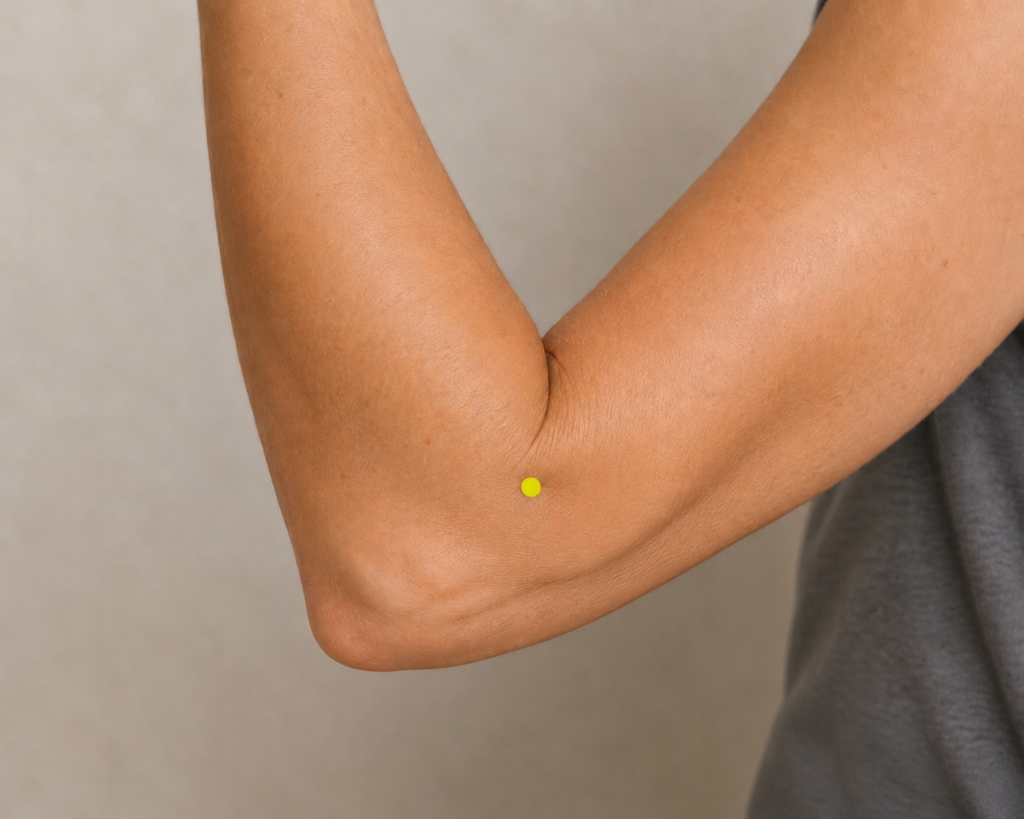
1. Press on LI11 at the elbow to clear heat. LI11 sits at the outer end of the elbow crease when the elbow is bent, in the hollow between the end of the crease and the bony bump on the outside of the elbow. Press firmly with the thumb of your other hand for one to two minutes on each arm. LI11 is called “Quchi,” the “Pool at the Bend.”
LI11 is the Large Intestine’s sea point and, in Traditional Chinese Medicine, the primary point for clearing heat from the body. It is used for any fever and works well alongside GV14 when the temperature is high.
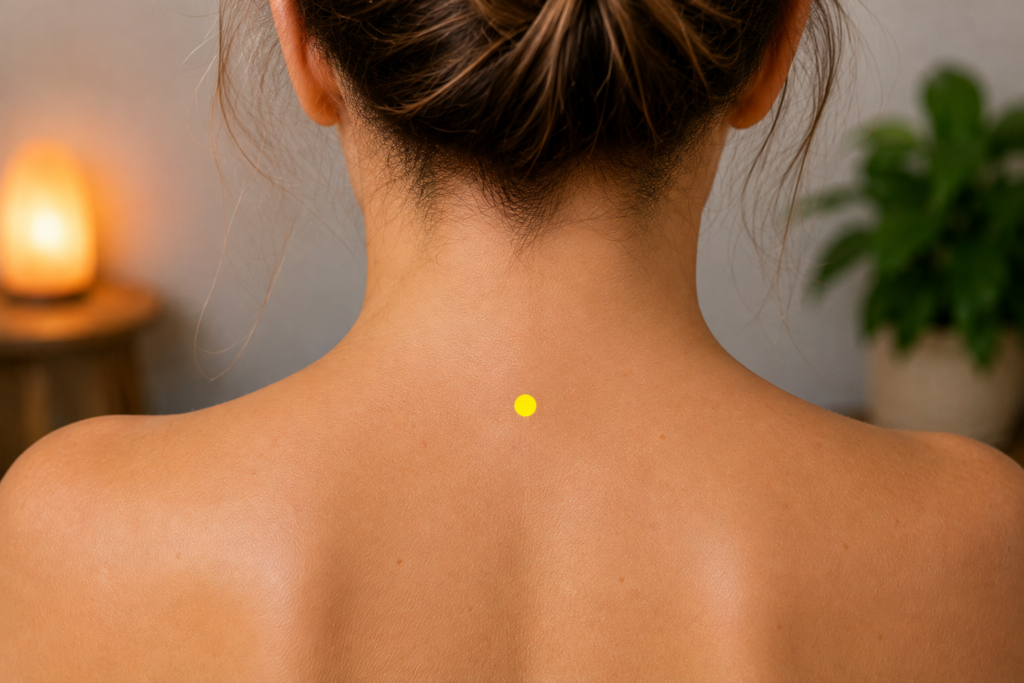
2. Press on GV14 at the base of the neck to release a fever. GV14 sits on the midline of the back, in the hollow just below the large bony bump at the base of the neck that stands out when the head bends forward. Press with two fingertips using moderate pressure for one to two minutes, or have someone else press it. GV14 is called “Dazhui,” the “Great Vertebra.”
GV14 is the meeting point of all the Yang channels. It contains a great deal of Yang and is the classic point for releasing fever, including fevers accompanied by chills and those that alternate between hot and cold.
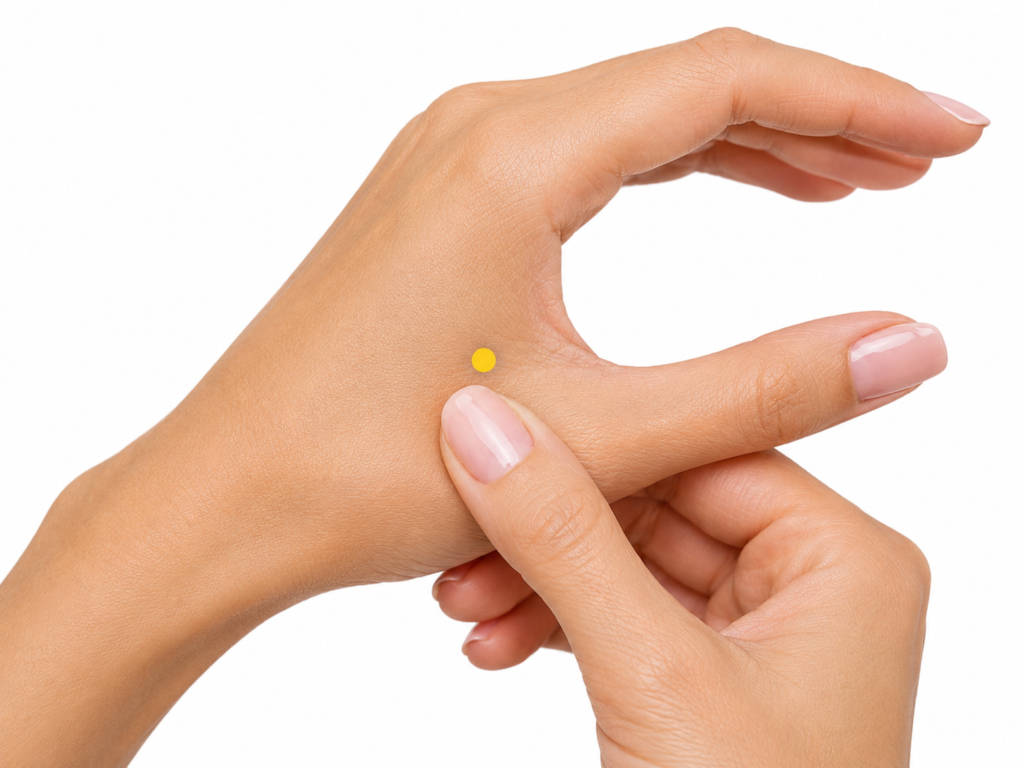
3. Press on LI4 on the back of the hand to release the surface. LI4 sits on the back of the hand, in the web between the thumb and index finger, on the highest point of the muscle when the thumb and index finger are pressed together. Press firmly with the thumb of your other hand for one to two minutes on each hand. LI4 is called “Hegu,” the “Joining Valley.” LI4 is avoided during pregnancy.
LI4 is the source point of the Large Intestine. It opens the pores and helps the body expel a pathogen still at the surface. It also relieves the headache and facial aching commonly associated with a fever.
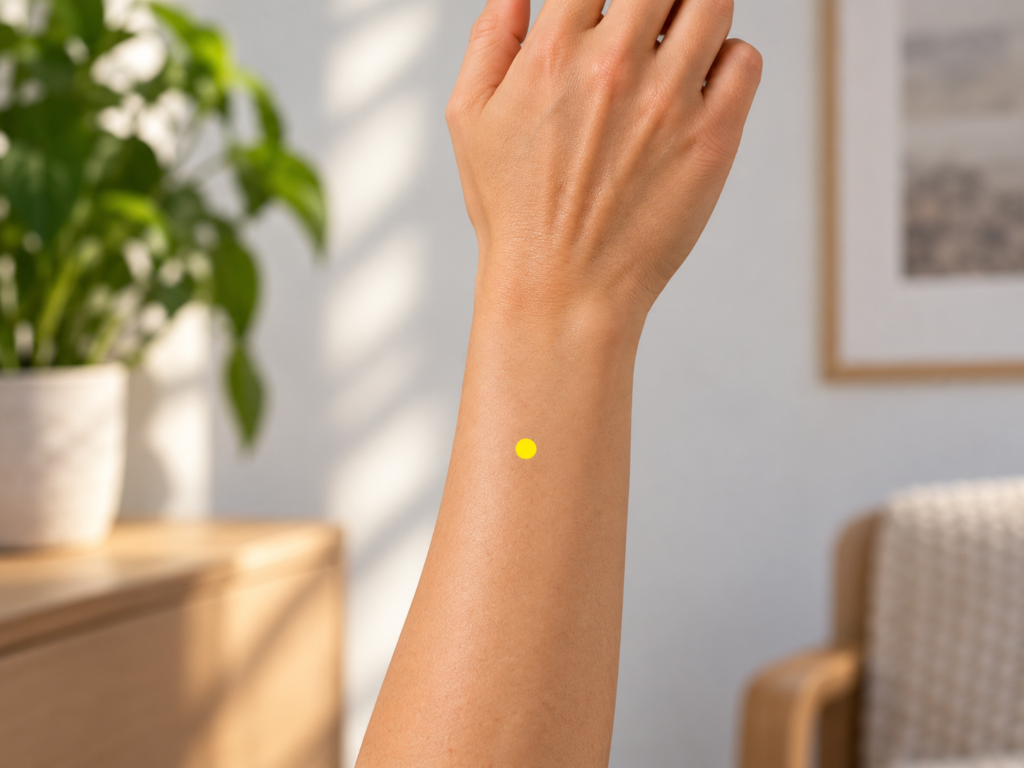
4. Press on TE5 on the back of the forearm to ease fever and chills. TE5 sits on the back of the forearm, three finger-widths above the wrist crease, between the two forearm bones. Press firmly with the thumb of your other hand for one to two minutes on each arm. TE5 is called “Waiguan,” the “Outer Pass.”
TE5 is the connecting point of the Triple Energizer and opens the Yang Linking Vessel, which governs the body’s outer layers. It’s used in the early stages of a fever when chills, a headache, and aching shoulders come on together.
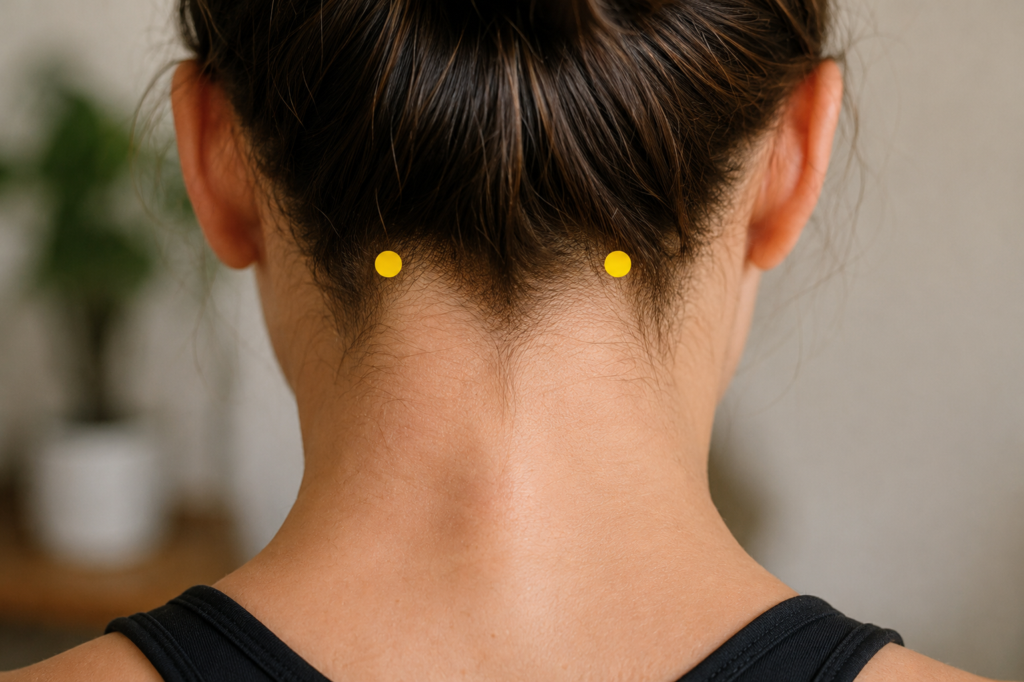
5. Press on GB20 at the base of the skull to relieve a feverish headache. GB20 sits on the back of the head, in the hollows at the base of the skull on either side of the two thick muscles that run down the neck. Press upward into both points at once with your thumbs for one to two minutes while letting the head rest back into your hands. GB20 is called “Fengchi,” the “Wind Pool.”
GB20 is one of Traditional Chinese Medicine’s key points for expelling Wind. It can relieve throbbing headaches, a stiff neck, a heavy head associated with fever, and hot, sore eyes.
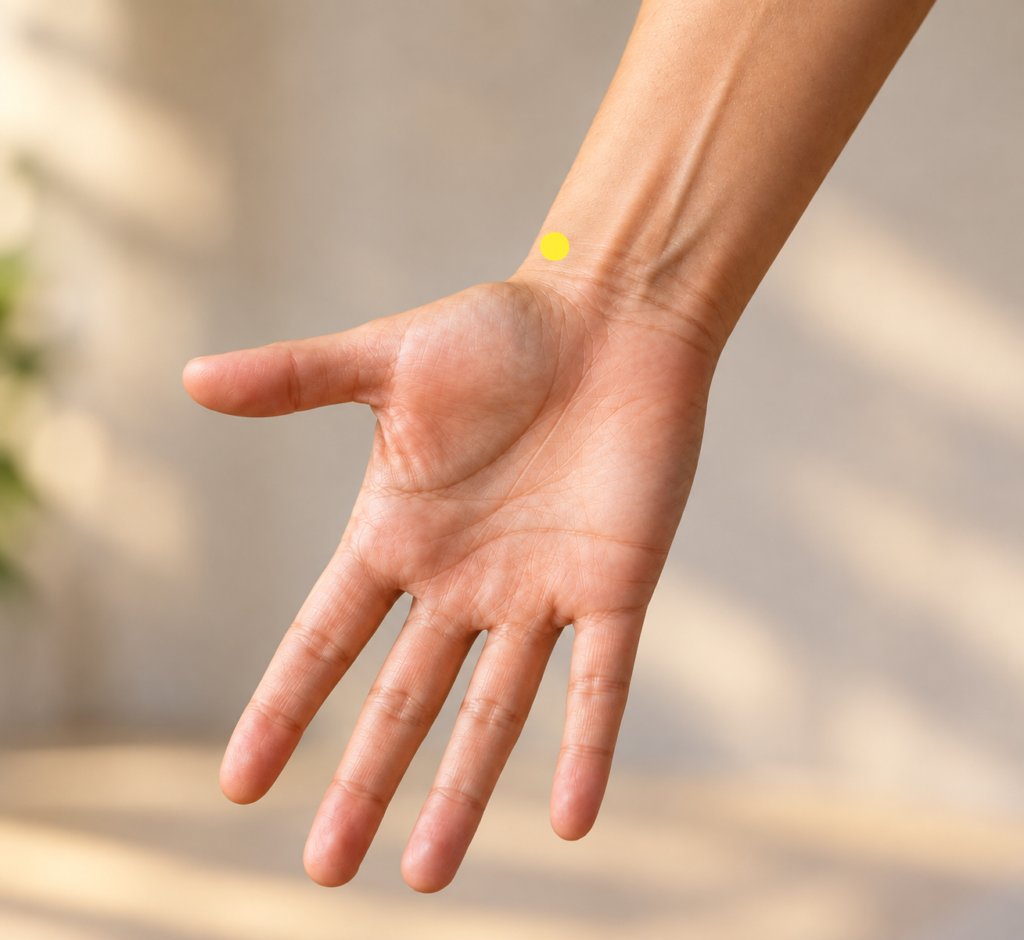
6. Press on LU7 above the wrist to release Wind. LU7 sits on the thumb side of the forearm, about two finger-widths above the wrist crease, in the small groove just above the bony bump at the wrist. Press with the tip of your index finger for one to two minutes on each arm. LU7 is called “Lieque,” the “Broken Sequence.”
LU7 is the Lung’s connecting point. In Traditional Chinese Medicine, the Lung governs the skin and pores and disperses defensive Qi, so LU7 can help clear pathogens from the body’s surface. It can also help with the stiff neck, cough, and runny nose that often accompany a fever.
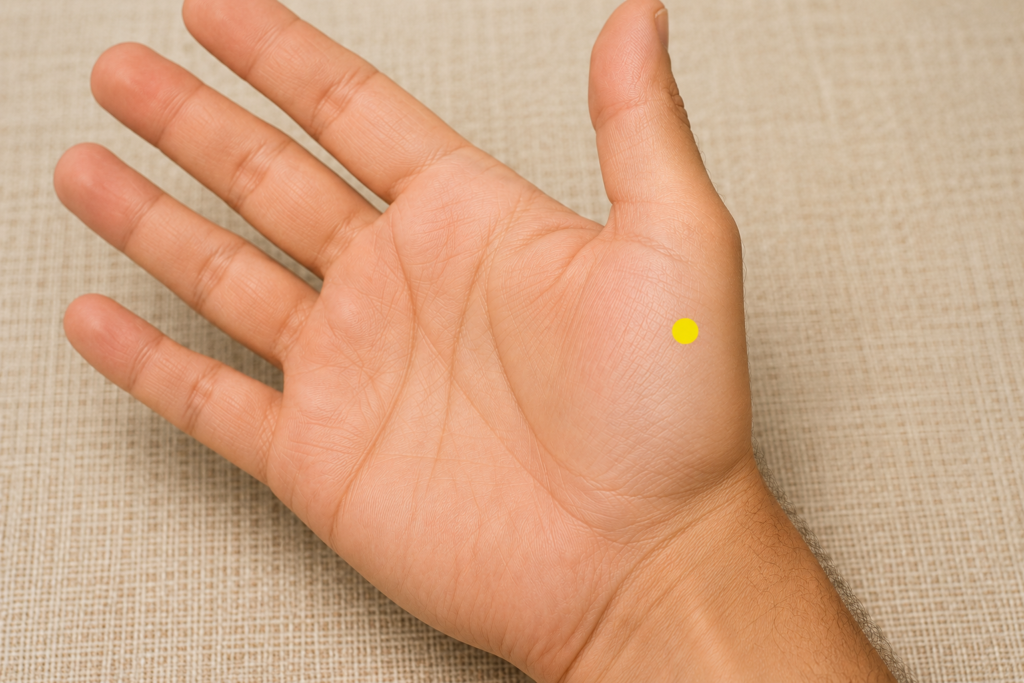
7. Press on LU10 at the base of the thumb to cool the throat. LU10 sits on the palm side of the hand, at the midpoint of the bone at the base of the thumb, where the skin of the palm meets the skin on the back of the hand. Press firmly with the thumb of your other hand for one to two minutes on each hand. LU10 is called “Yuji,” the “Fish Border.”
LU10 is the Lung’s spring point, a type of point used to clear heat. It is pressed to relieve a fever accompanied by a sore, scratchy throat, a dry cough, or a hoarse voice.
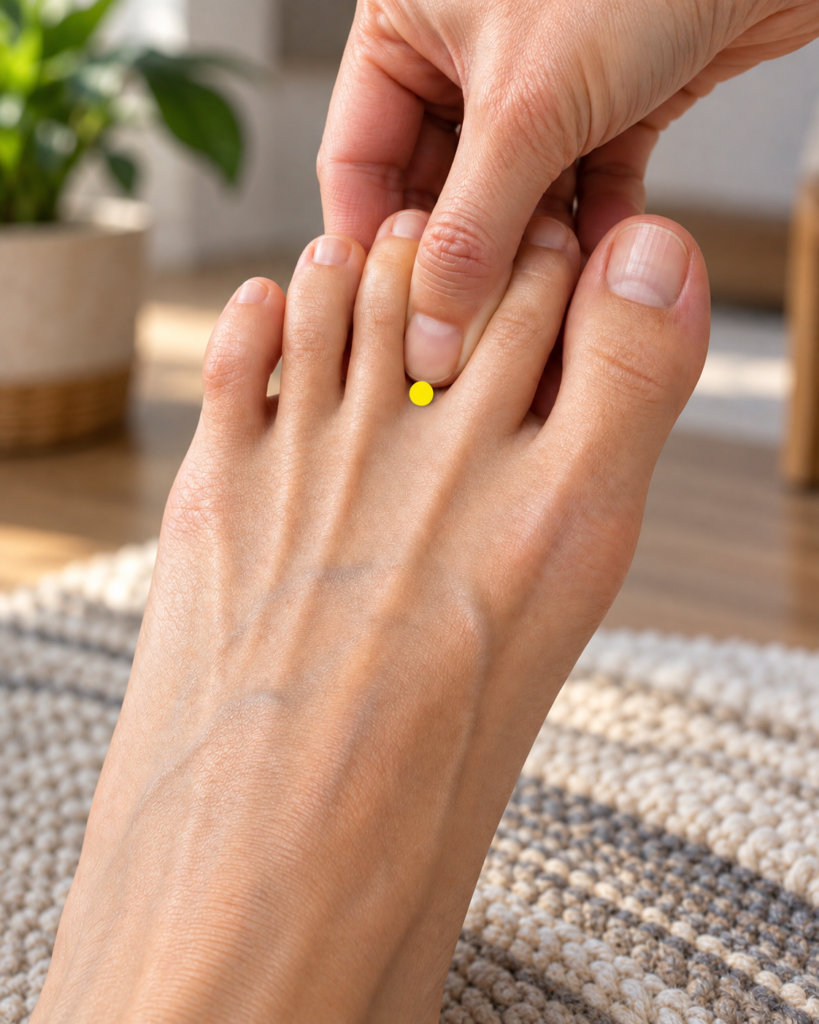
8. Press on ST44 between the toes to clear heat and thirst. ST44 sits on the top of the foot, at the end of the web between the second and third toes. Press firmly with your thumb or index finger for one to two minutes on each foot. ST44 is called “Neiting,” the “Inner Courtyard.”
ST44 is the Stomach’s spring point and clears heat that has penetrated deeper into the body. It is indicated for high fever with intense thirst, a red face, bad breath, toothache, and gum pain.
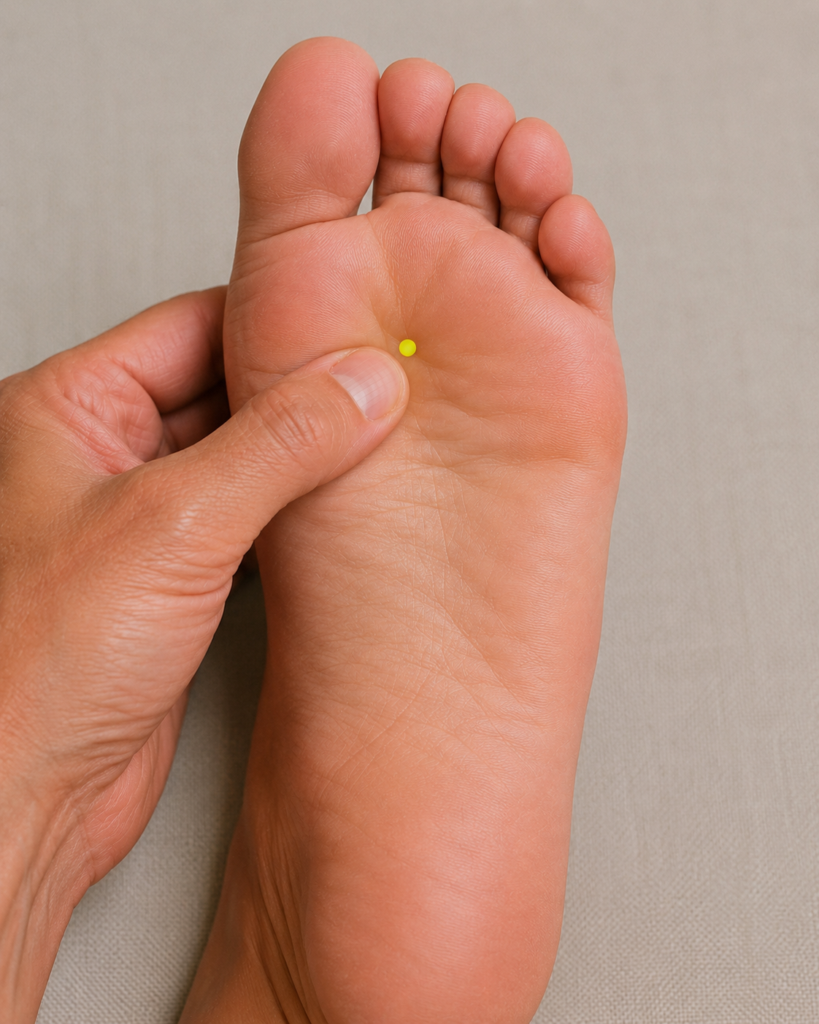
9. Press on KI1 on the sole of the foot to draw heat down and calm restlessness. KI1 sits on the sole of the foot, in the hollow that forms about one-third of the way from the base of the second toe to the back of the heel when the toes curl. Press firmly with your thumb for one to two minutes on each foot. KI1 is called “Yongquan,” the “Bubbling Spring.”
KI1 is the Kidney’s well point and the lowest point on the body. In Traditional Chinese Medicine, it is used to draw heat down from the head, ease the restlessness that keeps someone with a fever awake at night, and support the Yin that cools the body.
Why These Acupressure Points Work
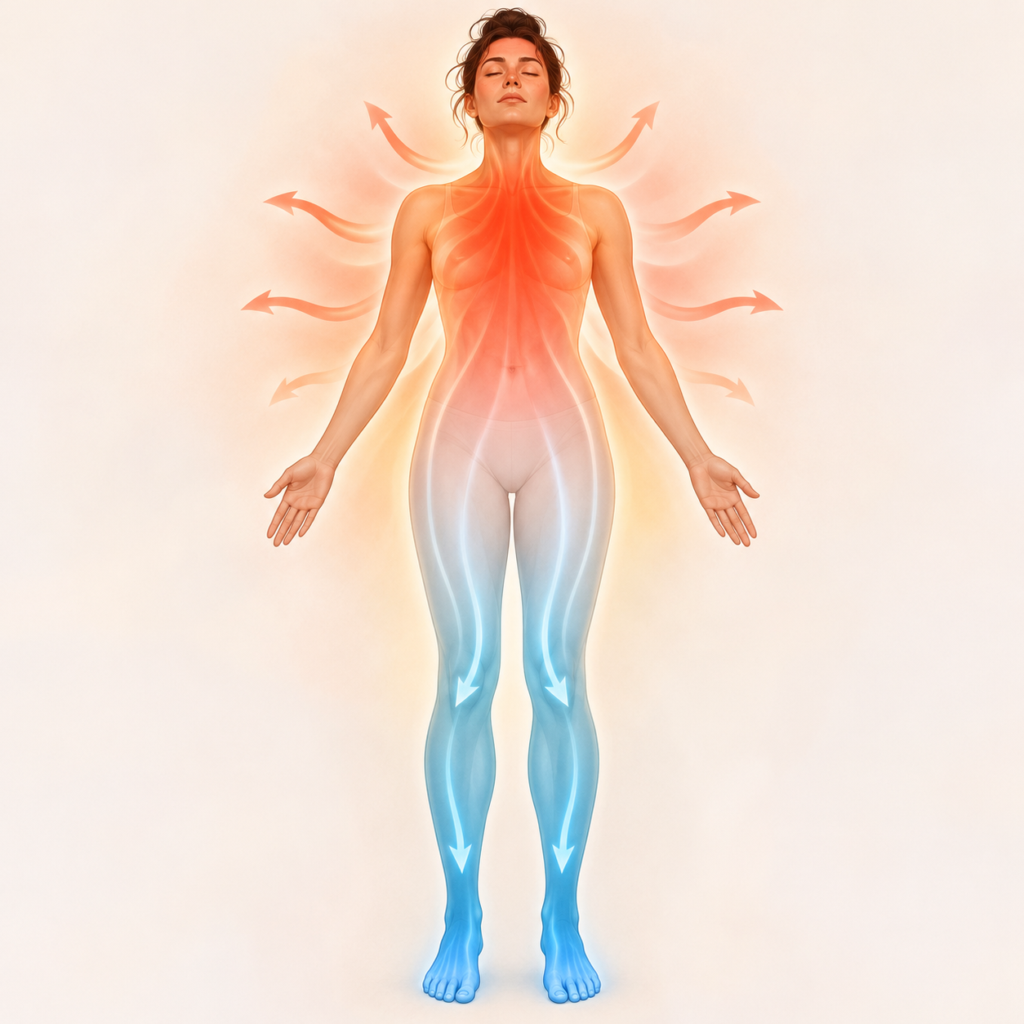
A fever shows that the body’s defenses are working hard. Traditional Chinese Medicine does not try to stop this response; instead, treatment supports it by helping it finish the job: opening the surface to help the pathogen leave, clearing built-up internal heat, and protecting the fluids and Yin the body uses to cool itself. Points on the Large Intestine and Lung channels work at the surface because these paired channels govern the skin and pores. Points on the head and neck ease the aching associated with Wind, while points on the feet draw excess heat downward and away from the head.
The nine points work together to support the body during a fever:
- LI11, GV14, and ST44 clear heat and lower a high fever.
- LI4, TE5, and LU7 open the surface and ease chills and body aches.
- GB20 relieves headache and a stiff neck.
- LU10 cools the throat, and KI1 draws heat down and settles restlessness.
How to Properly Use These Acupressure Points

Acupressure can help with comfort during a fever, alongside rest and fluids. Repeat it every few hours while the fever lasts.
- When a fever begins with chills and aches, apply pressure to LI4, TE5, LU7, and GB20, and keep warm under a light blanket.
- If the body feels hot and the person is thirsty and flushed, apply pressure to LI11, GV14, and ST44. If the throat is sore, also apply pressure to LU10.
- Press KI1 on both feet before going to bed to promote relaxation and support sleep.
- Apply firm pressure to the arms, hands, and feet, and gentler pressure to the neck and skull. Avoid applying pressure to LI4 during pregnancy.
Rest is the best course of action when you have a fever, as your immune system uses energy your body would otherwise use for work and exercise. Drink water, broth, or diluted juice throughout the day, as you may lose fluids quickly through sweating and a higher body temperature. Choose light, simple foods, such as soup, rice porridge, and steamed vegetables, and avoid heavy, greasy, or very sweet foods, which Traditional Chinese Medicine says can slow recovery. Wear light layers and adjust your clothing as you alternate between feeling cold and hot, rather than keeping many blankets on once you feel hot. A lukewarm cloth on your forehead or a lukewarm bath may provide relief, but ice baths and cold-water rubs can cause shivering and may, in fact, raise your temperature.
Learn more about acupressure to boost the immune system.
When to Get Professional Help

Contact a doctor if your temperature exceeds 103 degrees Fahrenheit, persists for more than three days, or repeatedly returns. Seek emergency care or call 911 if your fever is accompanied by a severe headache, a stiff neck, confusion, difficulty breathing, chest pain, a new rash, seizures, or signs of dehydration, such as markedly reduced urination or dizziness upon standing. If an infant younger than three months develops any fever, seek emergency care immediately. Children should be evaluated by a doctor if their temperature exceeds 104 degrees Fahrenheit, their fever lasts for more than five days, or they appear unusually drowsy or have difficulty breathing. Adults with a weakened immune system, a chronic illness, recent surgery, or recent international travel should contact a doctor as soon as they develop a fever. If you have a low-grade fever that persists for several weeks, seek medical evaluation, as it may indicate an infection or another condition requiring treatment.
Acupressure is a gentle, supportive practice for fever. It complements, and does not replace, diagnosis and medical care.
For related health concerns, acupressure for the flu, acupressure for the common cold, and acupressure for a sore throat are companion posts.
Above and Beyond Acupuncture offers acupuncture, cupping, and lifestyle coaching at the North Frank Lloyd Wright Boulevard location in Scottsdale.
Schedule an appointment online to start your healing journey.
The points above are only as effective as the technique used to apply them. Where to press, how firmly, and for how long all affect the result. For a full breakdown of how to perform acupressure properly at home, read Performing Acupressure in 3 Easy Steps.

About the Publisher
Paul Kerzner, L.Ac., is a licensed acupuncturist and board-certified herbalist, as well as the founder of Above and Beyond Acupuncture in Scottsdale. His own journey from chronic patient to practicing acupuncturist shapes his commitment to providing honest, clinically grounded information about acupuncture and Traditional Chinese Medicine. Learn more about Paul and his clinical approach on the About Us page.