
Key Takeaways
- “Crashing out” occurs when stress or frustration builds until it spills over into an outburst, a rash decision, or something said or done that’s later regretted.
- The pressure typically builds over several days or weeks before an outburst, while insufficient sleep and chronic stress reduce the threshold for one.
- In Traditional Chinese Medicine, a crash out is Liver Qi held back by stress that finally breaks loose as heat and rises to disturb the Heart, which houses the mind.
- Nine acupressure points on the head, wrists, hands, and feet help cool the rising heat and draw energy back down.
- Acupressure can be a quick intervention in the moment and a daily practice between episodes.

“Crash out” once referred to falling asleep from exhaustion. Social media has given the term a much more specific meaning. It now describes the point at which stress overwhelms a person, prompting actions such as sending a message in all caps, slamming a door so forcefully that it shakes the house, or writing a resignation letter at 11 pm. In the moment, none of it feels optional. The following morning, however, the situation can look very different.
According to the Cleveland Clinic, crashing out happens when stress or frustration builds to the point that the nervous system feels it can’t take any more, leading to outbursts, impulsive decisions, or behavior you later regret. Psychologist Chivonna Childs, PhD, notes that these feelings may build for days, weeks, or even months before the crash. During the crash itself, the consequences of your actions simply don’t register. Factors that can make crashing out more likely include chronic stress, poor sleep, anger learned in childhood, and conditions such as anxiety, depression, and trauma. Your body may offer the first warning signs: a racing heart, tightness in your neck and shoulders, a headache, or a wave of nausea. The advice at that point is simple: step away, breathe slowly with both feet on the floor, and give your nervous system time to settle before doing anything else.
There’s a brief window between the first flush of heat and the point of no return. A physical anchor can help keep it open. Pressing a spot on the wrist or top of the foot gives your hands something to do, slows your breathing, and can buy the few extra minutes needed for a clearer head to return.
Traditional Chinese Medicine offers a clear picture of this pattern. The Liver keeps Qi and emotions moving. When stress disrupts that movement over time, pressure builds until it breaks out as heat. This heat shows up as a red face, a pounding head, and words that come too quickly. The Heart is the home of the mind, and rising heat can throw it completely off balance just when you need to make a judgment.
The nine points below can help when emotions start to boil over, as well as on calmer days, when regular practice can keep stress from building up again.
What Acupressure Points to Press and Why
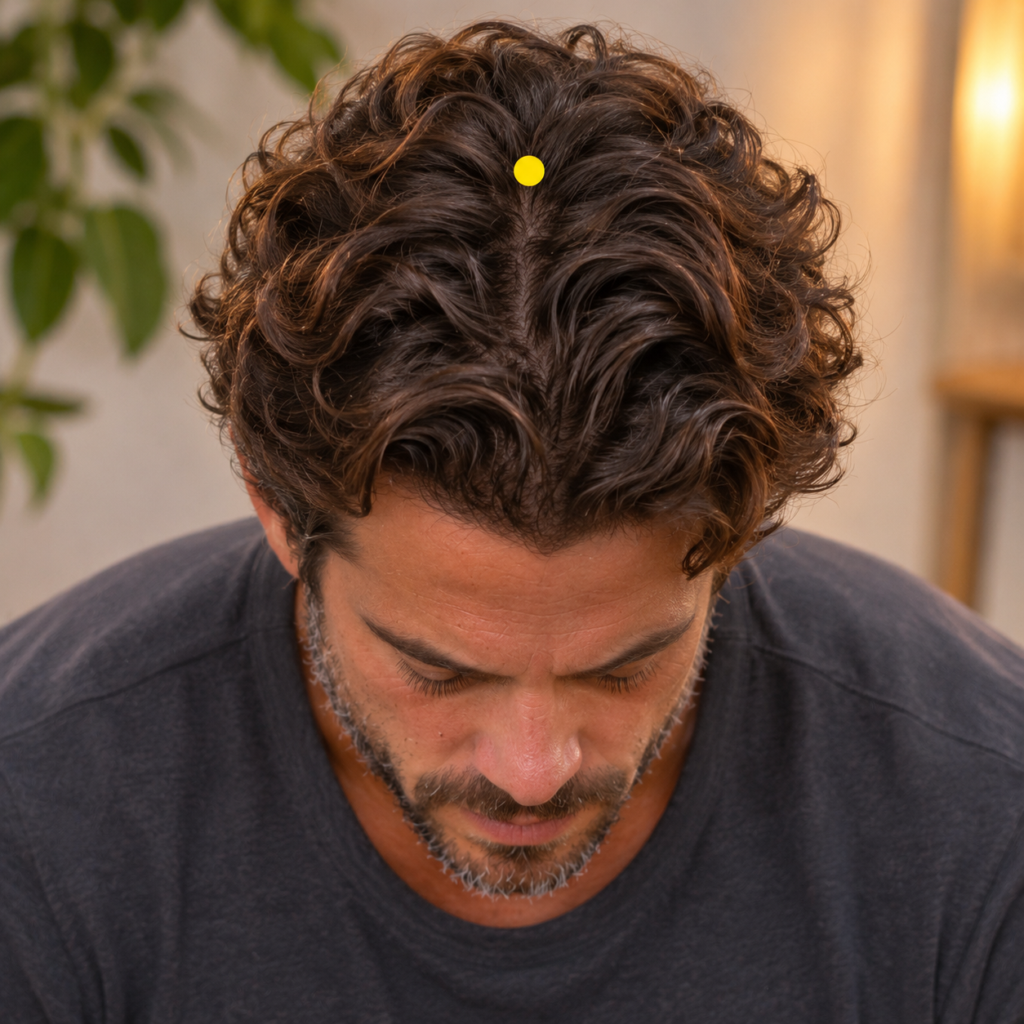
1. Press on GV20 at the top of the head to bring rising heat down. GV20 sits on the midline at the very top of the head, where a line drawn from the tip of one ear over the head to the tip of the other ear crosses the midline. Press gently with your fingertip for one to two minutes while breathing out slowly. GV20 is called “Baihui,” the “Hundred Meetings.”
GV20 is where the Yang channels meet at the crown. In Traditional Chinese Medicine, it’s used to calm Yang that has risen to the head, a pattern marked by a hot face, a pounding head, and a mind that won’t stop racing. Apply only light pressure here.
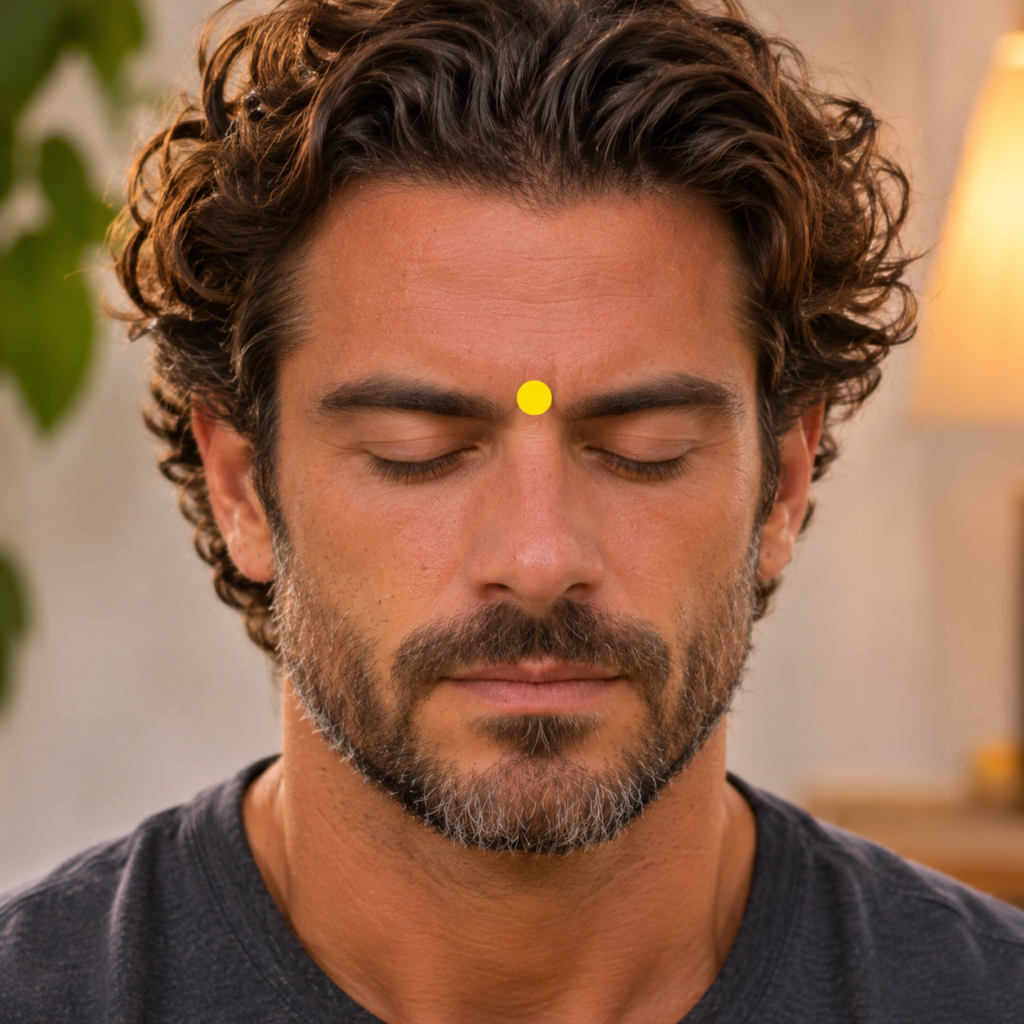
2. Press on Yintang between the eyebrows to create a pause. Yintang sits on the midline of the forehead, directly between the inner ends of the eyebrows. Press gently with your fingertip, or make slow, small circles, for one to two minutes with the eyes closed. Yintang is called the “Hall of Impression.”
Yintang is an extra point that helps calm the mind and quiet racing thoughts. Press it with your eyes closed to create a deliberate pause. Often, that pause is all that stands between a sharp feeling and a sharp reply.
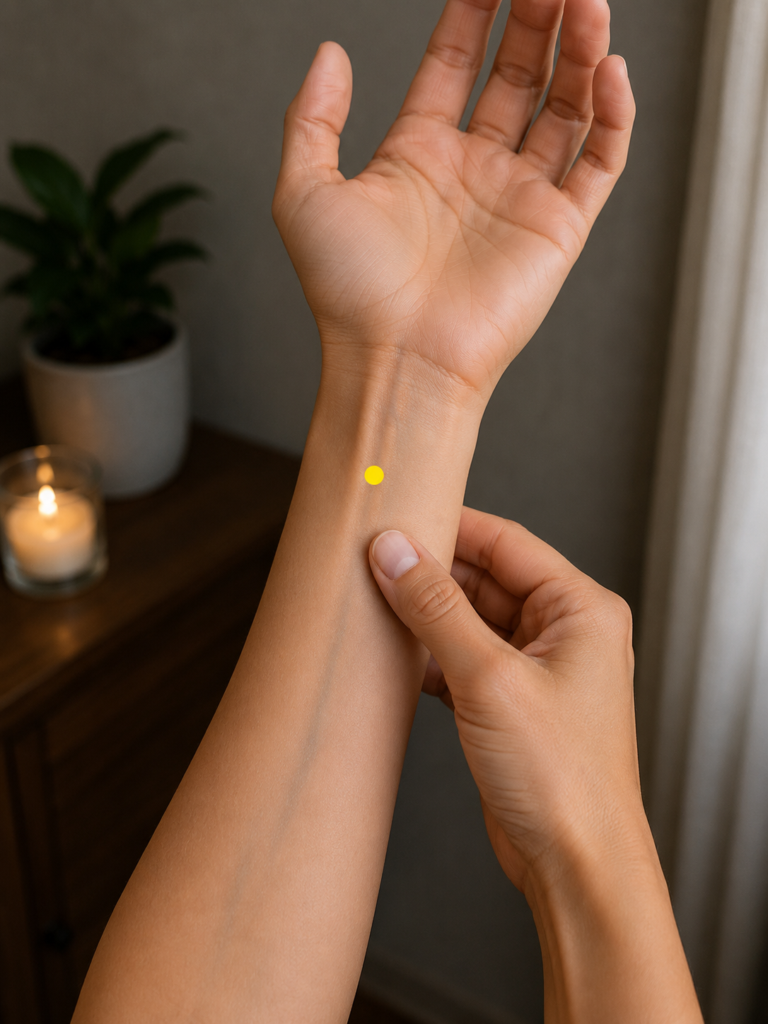
3. Press on PC6 on the inner forearm to slow a pounding heart. PC6 sits on the inner forearm, three finger-widths above the wrist crease, between the two tendons. Press firmly with the thumb of your other hand for one to two minutes on each arm while breathing out slowly. PC6 is called “Neiguan,” the “Inner Pass.”
PC6 is the connecting point of the Pericardium. In Traditional Chinese Medicine, the Pericardium protects the Heart from emotional shock. This point addresses the racing pulse, tight chest, and churning stomach that often arise just before an outburst. It is also very discreet. No one in a meeting, in a car, or in the middle of an argument is likely to notice your thumb on your forearm.
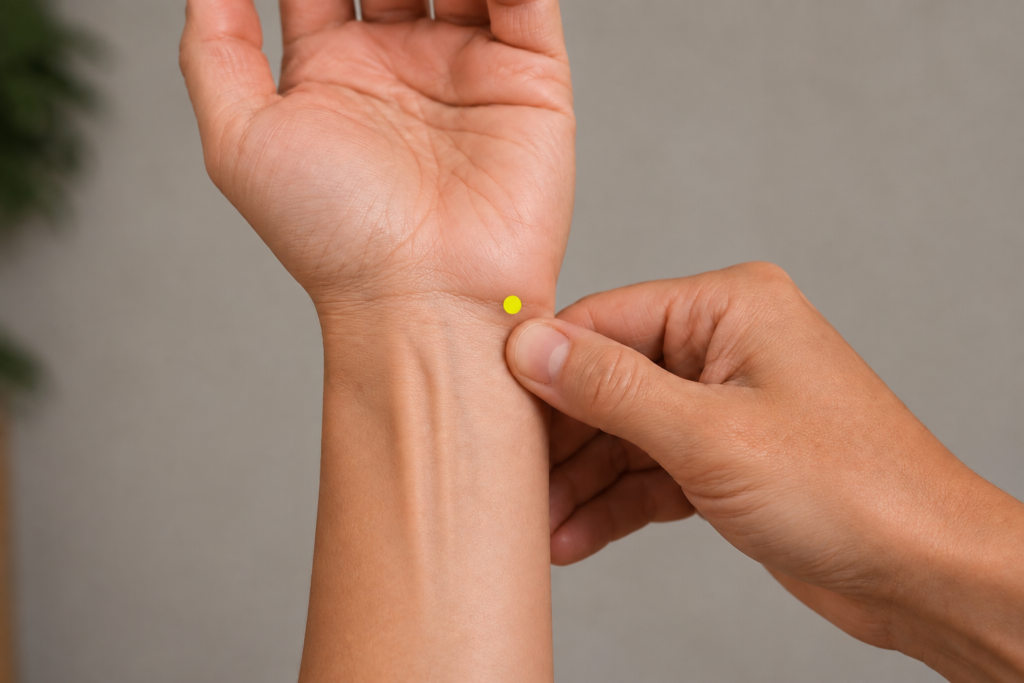
4. Press on HT7 on the wrist crease to steady the mind. HT7 sits on the inner wrist crease, on the pinky side, in the small hollow just to the thumb side of the tendon that runs along the edge of the wrist. Press gently with the thumb of your other hand for one to two minutes on each wrist. HT7 is called “Shenmen,” the “Spirit Gate.”
HT7 is the Heart’s source point, and the Heart houses the mind. Rising heat can disturb the mind; HT7 helps settle it so clear judgment can return. PC6 and HT7 are close together on the wrist, so you barely need to move from one to the other in a tense situation.
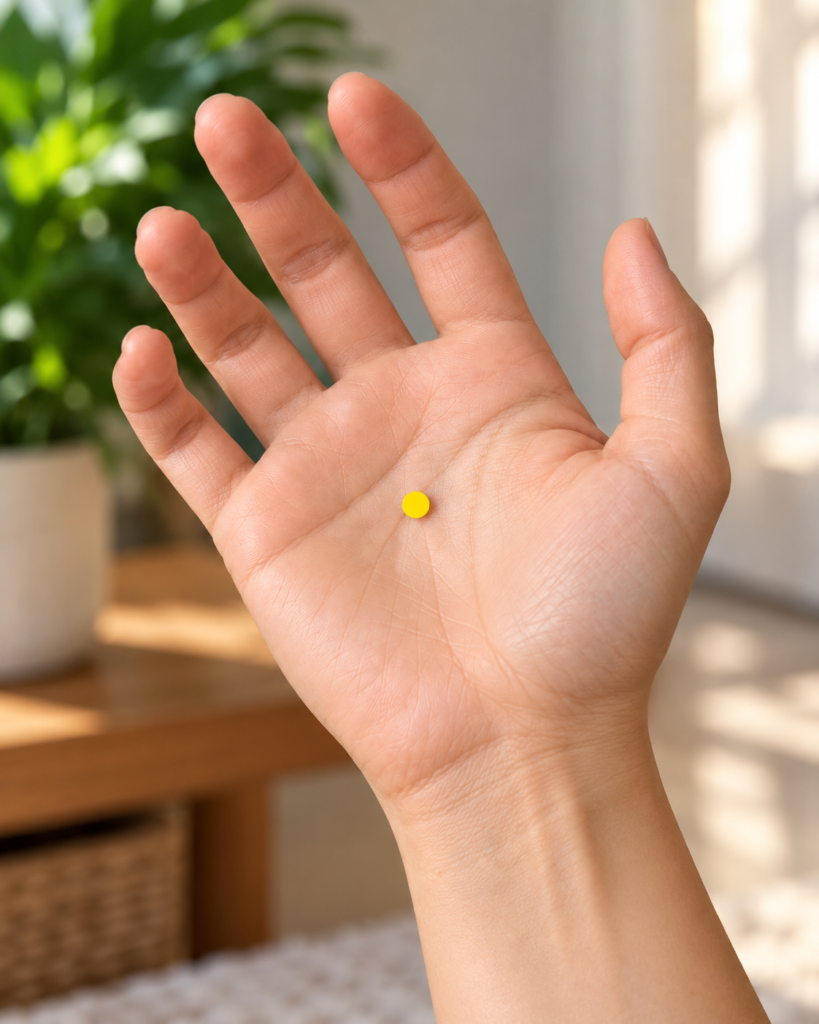
5. Press on PC8 in the center of the palm to clear heat from the Heart. PC8 sits in the center of the palm, between the second and third hand bones, where the tip of the middle finger lands when a loose fist is made. Press firmly with the thumb of your other hand for one to two minutes on each palm. PC8 is called “Laogong,” the “Palace of Labor.”
PC8 is the Pericardium’s spring point and is traditionally used to clear Heart heat associated with agitation and a hot temper. When anger builds, you may clench your hands; pressing into your palm gives that tension somewhere useful to go.
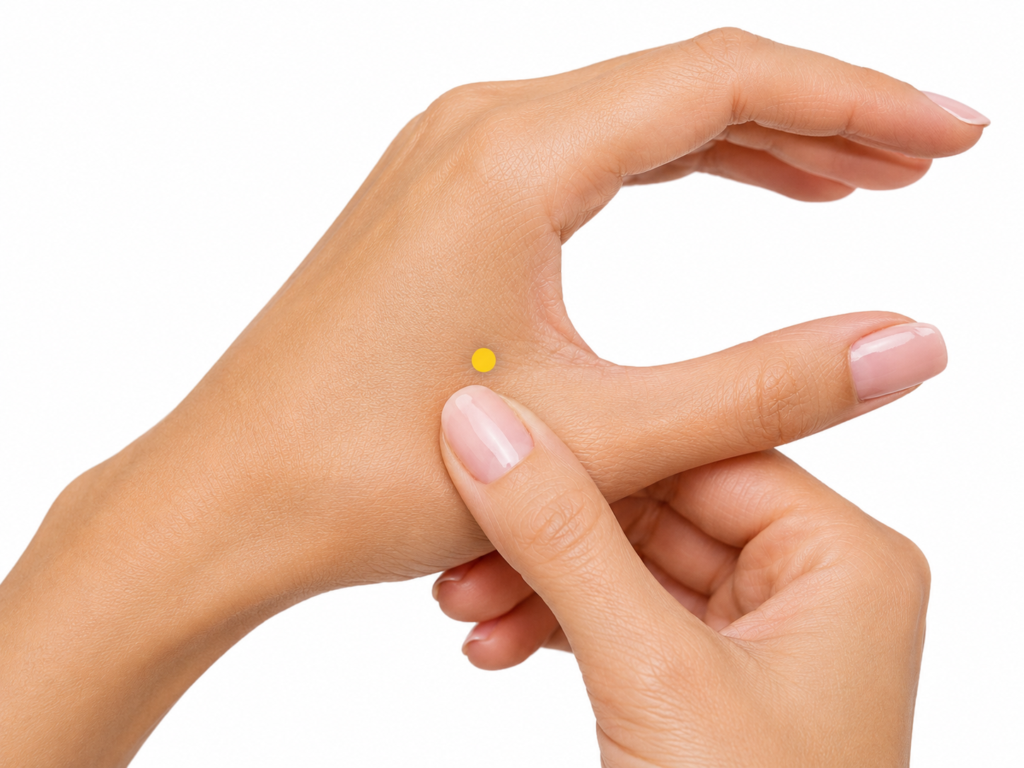
6. Press on LI4 on the back of the hand to release clenched tension. LI4 sits in the webbing between the thumb and index finger, at the highest point of the muscle when the two are pressed together. Press firmly with the thumb of your other hand for one to two minutes on each hand. LI4 is called “Hegu,” the “Joining Valley.” LI4 is avoided during pregnancy.
LI4 releases tension in the jaw and neck, where anger is often held. Combined with LR3, it forms the Four Gates, a classic formula for unblocking Qi and calming the whole body.
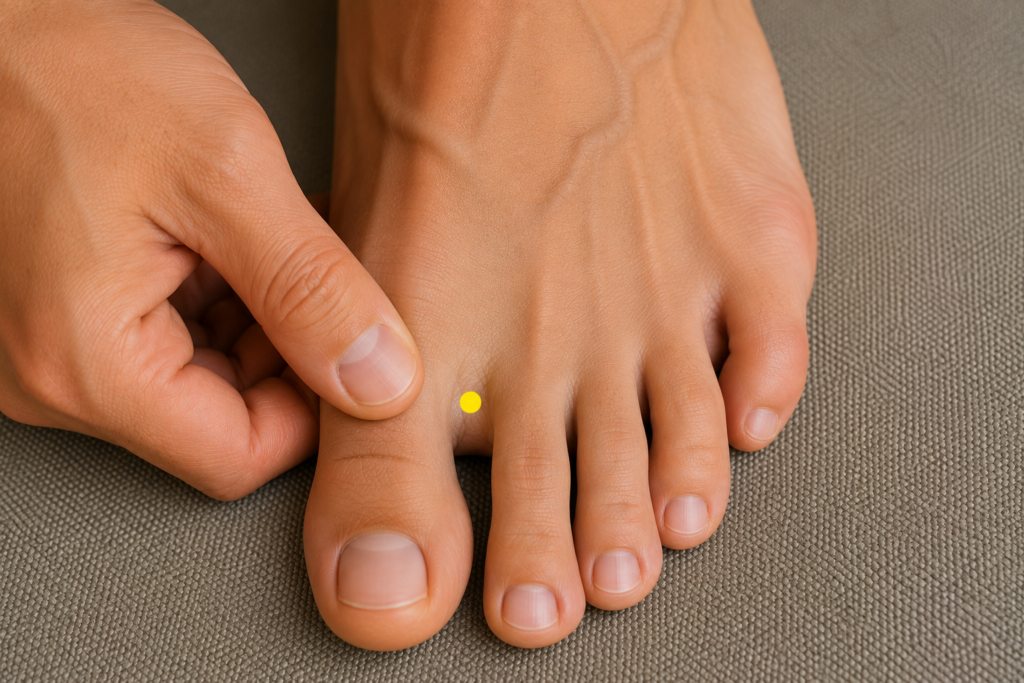
7. Press on LR2 at the web of the big toe to cool a hot temper. LR2 sits on the top of the foot, at the edge of the web between the big toe and the second toe. Press firmly with your thumb for one to two minutes on each foot. LR2 is called “Xingjian,” the “Moving Between.”
LR2 is the Liver’s spring point and a primary point for clearing Liver Fire. In Traditional Chinese Medicine, Liver Fire is characterized by sudden outbursts of rage, a hot face, red eyes, and a very short fuse. This point is often tender in people who run hot.
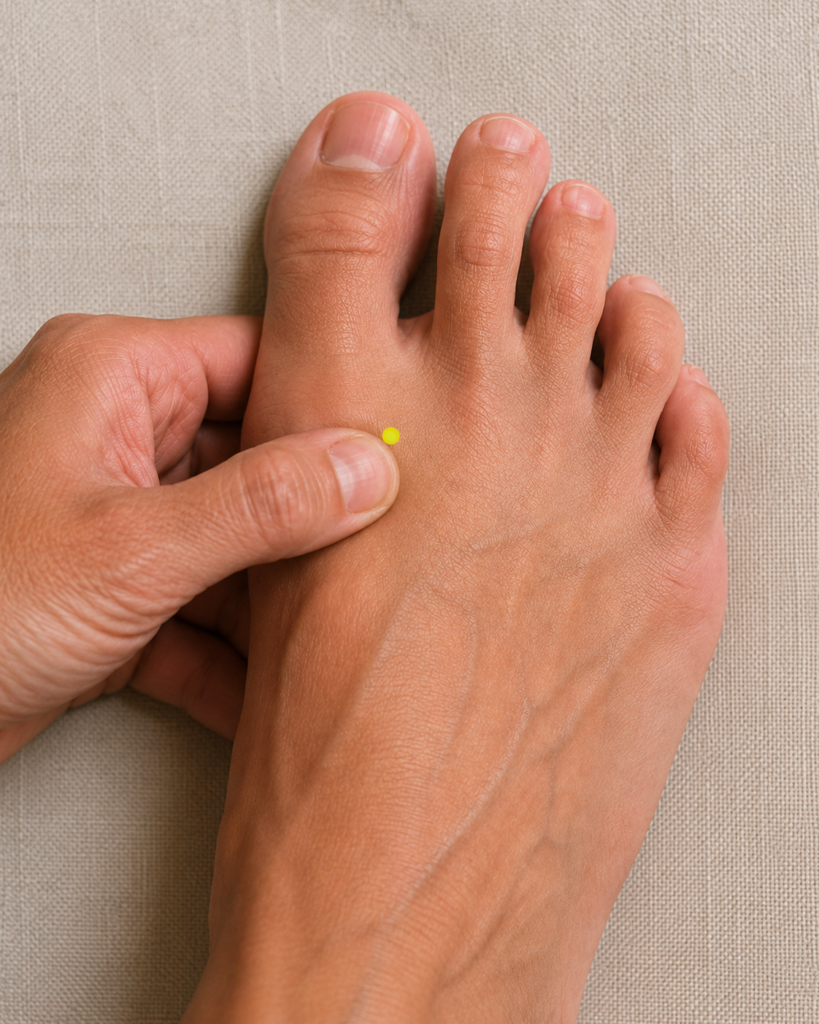
8. Press on LR3 on the top of the foot to release built-up pressure. LR3 sits on the top of the foot, in the hollow where the bones of the big toe and second toe meet, about two finger-widths above the web between the toes. Press firmly with your thumb for one to two minutes on each foot. LR3 is called “Taichong,” the “Great Surge.”
LR3 is the source point of the Liver. LR2 is all about heat, while LR3 is all about the pressure underneath it, the stress that’s been building up for weeks before the blowup. They’re a very short distance apart on the same foot.
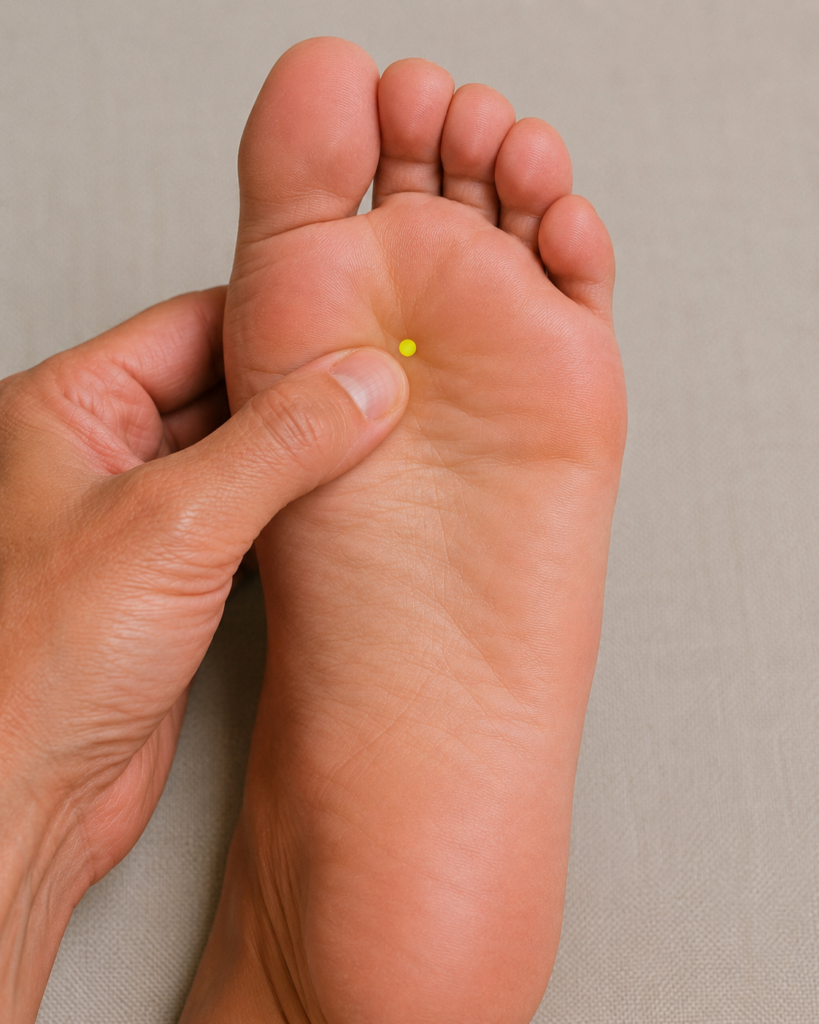
9. Press on KI1 on the sole of the foot to ground the body. KI1 sits on the sole of the foot, in the depression about one-third of the way from the base of the second toe to the back of the heel, where a small hollow forms when the toes curl. Press firmly with your thumb for one to two minutes on each foot, or press the soles firmly into the floor while seated. KI1 is called “Yongquan,” the “Bubbling Spring.”
KI1 is the body’s lowest point and the first point on the Kidney channel. It helps draw energy down from the head and chest when everything feels like it’s rushing upward. The Cleveland Clinic recommends planting both feet on the floor during a crash-out, which also presses on KI1.
Why These Acupressure Points Work
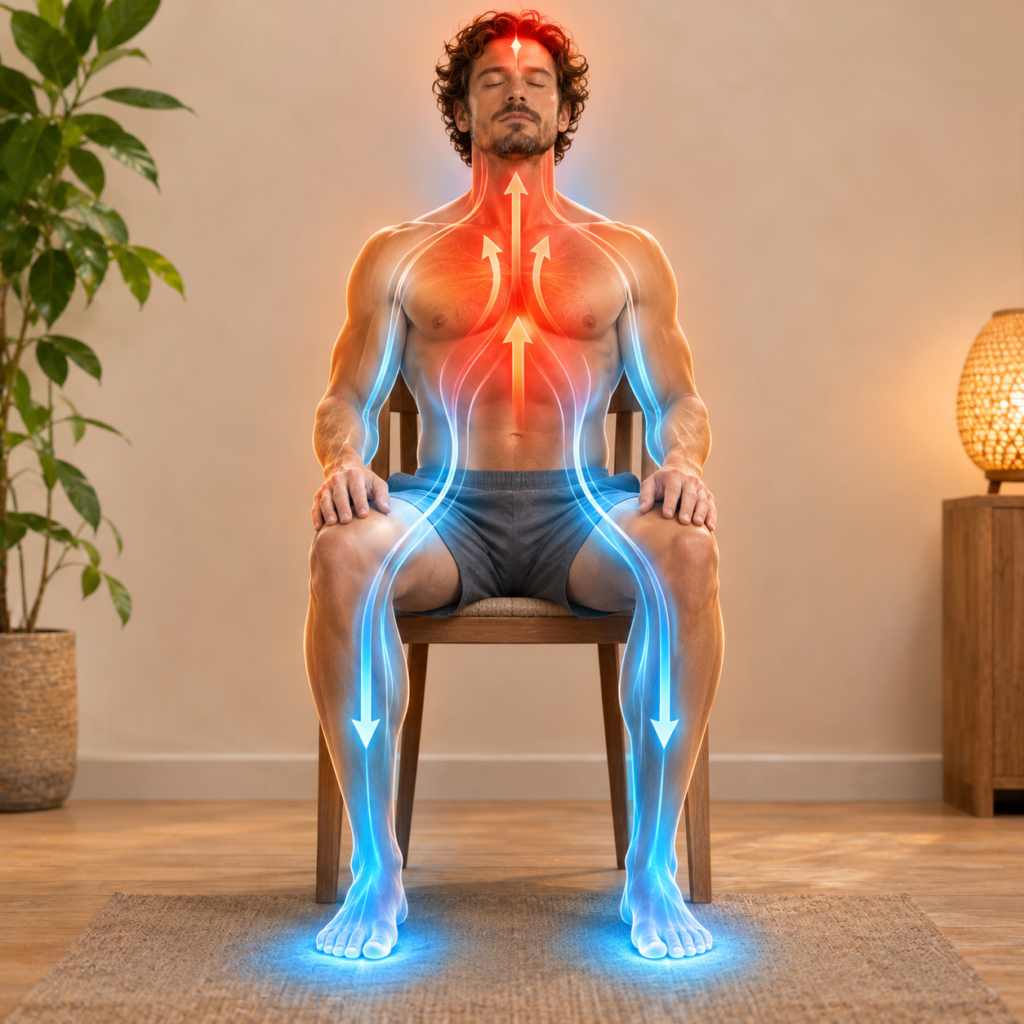
From a Traditional Chinese Medicine perspective, a crash out happens when heat and pressure move in the wrong direction. Stress blocks Liver Qi, allowing it to build until it bursts into fire and rises to the head and Heart, overwhelming the mind. Treatment reverses this: cool the fire, release pressure at its source, calm the mind, and draw the energy down to the feet.
The nine points work together to reverse that upward surge of emotion:
- GV20 and Yintang settle the head and make room for a pause before reacting.
- PC6, HT7, and PC8 calm the Heart and clear the heat disturbing the mind.
- LI4 and LR3, the Four Gates, release stuck pressure throughout the body.
- LR2 and KI1 cool Liver Fire and bring energy down into the feet.
How to Properly Use These Acupressure Points

Acupressure for crashing out has two purposes: interrupting the escalation as it develops and preventing pressure from accumulating between episodes.
- At the first sign of being overwhelmed emotionally, step away if you can, place both feet on the floor, and press PC6 as you breathe in for four counts and out for six.
- If time allows, move to HT7 on the same wrist, then press Yintang with your eyes closed before saying or sending anything.
- Practice each of the nine points once daily during a calm period, for one to two minutes per point, so that the routine is familiar when needed.
- Apply gentle pressure to the head, forehead, and wrist crease, and firmer pressure to the forearms, palms, hands, and feet. Continue this practice daily for at least four to six weeks.
Most crash-outs build up long before they happen. Make sleep a priority, since a tired brain can turn minor problems into major ones. Watch for early warning signs, such as a tight jaw, a clipped tone, or snapping at someone who has done nothing wrong. Take a break when these signs appear, rather than waiting an hour. Move every day to release stress before it builds up. Talk through problems as they arise, rather than after they have escalated. Cut back on alcohol and caffeine, as both can lower your threshold for an outburst. Traditional Chinese Medicine also recommends going easy on spicy, fried, and greasy foods, which can add heat to a system that is already running hot.
More on cortisol and why stress keeps it up.
When to Get Professional Help

If crash-outs happen often, harm your relationships, work, or school, or leave you with the same feelings of regret, consider speaking with a licensed therapist. Therapy can help you identify triggers and develop coping skills. Dialectical behavior therapy and cognitive behavioral therapy offer practical strategies for managing strong emotions. If your outbursts occur alongside depression, persistent anxiety, sleep problems, or substance use, or if they are new and unusual for you, see a doctor, as an underlying health issue may be involved. Always talk with your provider before stopping or changing any prescribed medication.
If you ever have thoughts of harming yourself or someone else after a crash out, call or text 988 to reach the Suicide and Crisis Lifeline right away. Call 911 if anyone is in immediate danger.
Acupressure is a gentle and supportive practice that can help with crashing out, but it should be used alongside, not instead of, diagnosis and medical care.
For related emotional concerns, acupressure for anger, acupressure for emotional dysregulation, and acupressure to calm down are companion posts.
Above and Beyond Acupuncture offers acupuncture, cupping, and lifestyle coaching at the North Frank Lloyd Wright Boulevard location in Scottsdale.
Schedule an appointment online to start your healing journey.
The points above are only as effective as the technique used to apply them. Where to press, how firmly, and for how long all affect the result. For a full breakdown of how to perform acupressure properly at home, read Performing Acupressure in 3 Easy Steps.

About the Publisher
Paul Kerzner, L.Ac., is a licensed acupuncturist and board-certified herbalist, as well as the founder of Above and Beyond Acupuncture in Scottsdale. His own journey from chronic patient to practicing acupuncturist shapes his commitment to providing honest, clinically grounded information about acupuncture and Traditional Chinese Medicine. Learn more about Paul and his clinical approach on the About Us page.