Key Takeaways
- Quitting smoking can lead to cravings and withdrawal symptoms, including irritability, restlessness, difficulty concentrating, poor sleep, and increased appetite.
- More than half of U.S. adults who have smoked have quit. Counseling combined with medication, including nicotine replacement therapy, offers the best chance of quitting permanently.
- In Traditional Chinese Medicine, tobacco is hot and drying. It injures the Lung, leaving behind Heat and phlegm, and stress and a restless mind drive the urge to light up.
- Nine acupressure points on the wrists, hands, forehead, and legs help ease cravings, calm irritability and restlessness, support the Lung as it clears, and steady appetite.
- Acupressure to quit smoking works best alongside a quit plan, a quitline, and medical support. Chest pain, coughing up blood, or a cough lasting more than three weeks requires medical care.

For most people who smoke, cigarettes have their own schedule. There is the first with morning coffee, one in the car, one after lunch, one on every break, and one to close out a hard day. Quitting means facing each of those moments without the familiar ritual, often with an edgy, restless feeling that seems to last forever.
According to the Centers for Disease Control and Prevention, more than half of U.S. adults who have smoked have already quit. Counseling, whether in person, in a group, through a quitline, or via free texting and online programs, helps people plan for triggers and cravings. Nicotine replacement options, including patches, gum, and lozenges, and prescription medications such as varenicline and bupropion ease withdrawal. Using counseling and medication together offers the best chance of quitting for good.
The first weeks include withdrawal symptoms: irritability, anxiety, restlessness, trouble concentrating, poor sleep, and a bigger appetite. Cravings come in waves, building quickly and then fading if not acted on. They are often triggered by stress, alcohol, other smokers, or times of day that used to include a cigarette. Many people need more than one try before quitting for good, and each attempt builds skills for the next.
Traditional Chinese Medicine classifies tobacco as hot and drying. Over time, it scorches the Lung and depletes its Yin, leaving Heat and sticky phlegm behind. This is why a cough may worsen for a few weeks as the Lung begins to clear. The urge to smoke is strongest when stress constrains the Liver Qi or the mind feels restless: a cigarette briefly eases that tension and gives the hands and breath something to do.
The following nine points can help alleviate cravings, reduce irritability and restlessness, support the lungs’ recovery, and regulate appetite during the first few weeks after quitting smoking.
What Acupressure Points to Press and Why
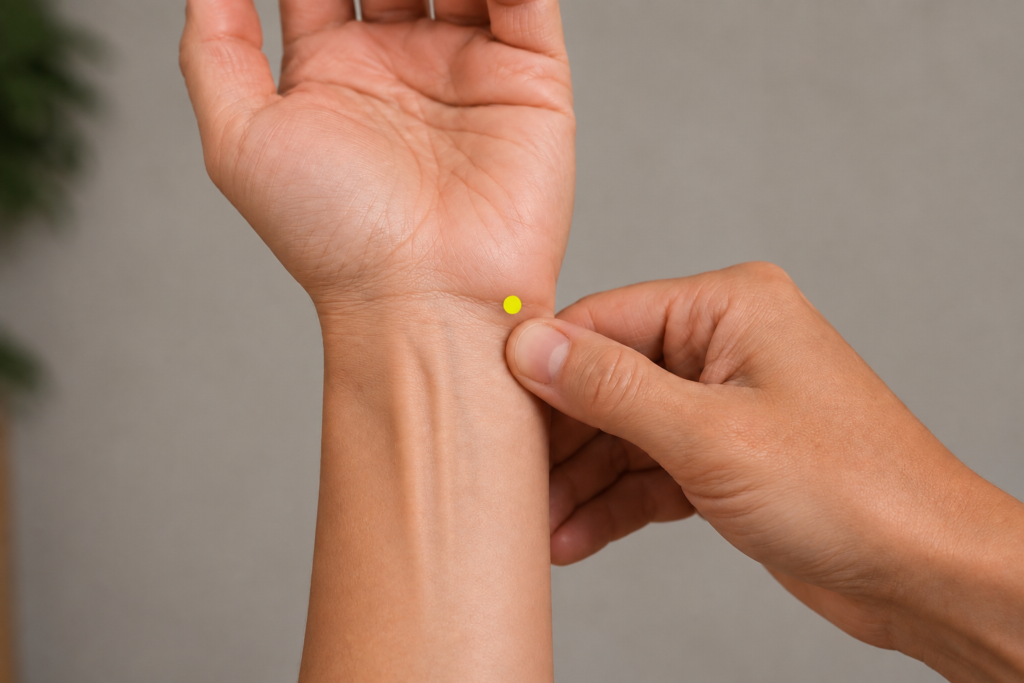
1. Press on Tianmei on the wrist to ease a craving. Tianmei sits on the thumb side of the wrist, in the soft spot about one finger-width above the wrist crease, halfway between LU7 and the hollow at the base of the thumb. Press firmly with the thumb of your other hand for one to two minutes on each wrist when a craving hits. Tianmei is also known as “Tim Mee.”
Tianmei is an extra point specifically used to help people stop smoking. Located in the Lung region of the wrist, it’s easy to press when a craving starts and can be activated anytime without anyone noticing.

2. Press on LU7 above the wrist to support the Lung. LU7 sits on the thumb side of the forearm, about two finger-widths above the wrist crease. To find it, interlace the thumbs and index fingers of both hands, and the tip of the top index finger will rest in a small groove on the edge of the forearm, just above the bony bump of the wrist. Press gently with your fingertip for one to two minutes on each arm. LU7 is called “Lieque,” the “Broken Sequence.”
LU7 is the Lung channel’s point of connection and is traditionally used for cough, chest tightness, and a congested head. After quitting, as the Lung begins to clear, LU7 helps Lung Qi descend and eases the cough commonly experienced during this phase.
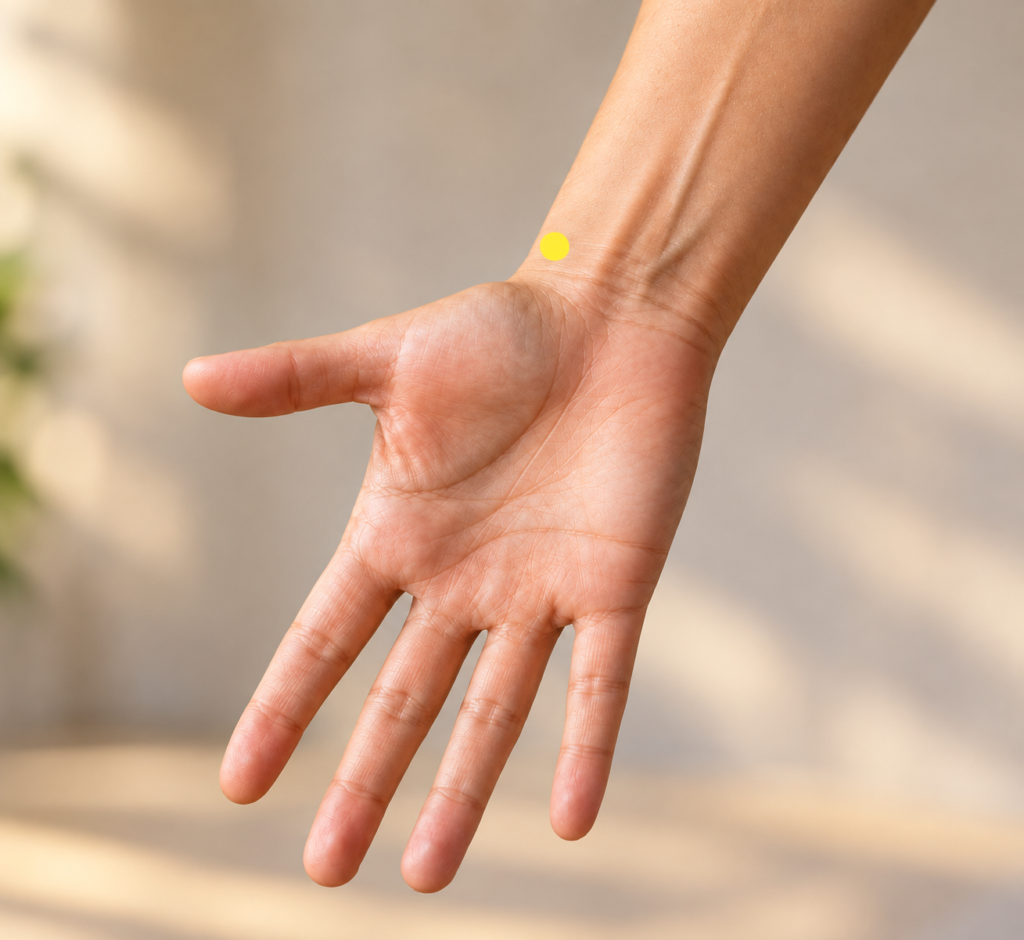
3. Press on LU9 at the wrist crease to strengthen the Lung. LU9 sits on the inner wrist crease, on the thumb side, in the hollow just beside the pulse. Press gently with the thumb of your other hand for one to two minutes on each wrist. LU9 is called “Taiyuan,” the “Great Abyss.”
LU9 is the source point of the Lung and, as such, one of the most important points in Traditional Chinese Medicine for strengthening the Lung and restoring its Yin. Years of smoking leave the Lung dry and depleted, and LU9 is the point that supports the deeper healing that takes place long after the last cigarette.
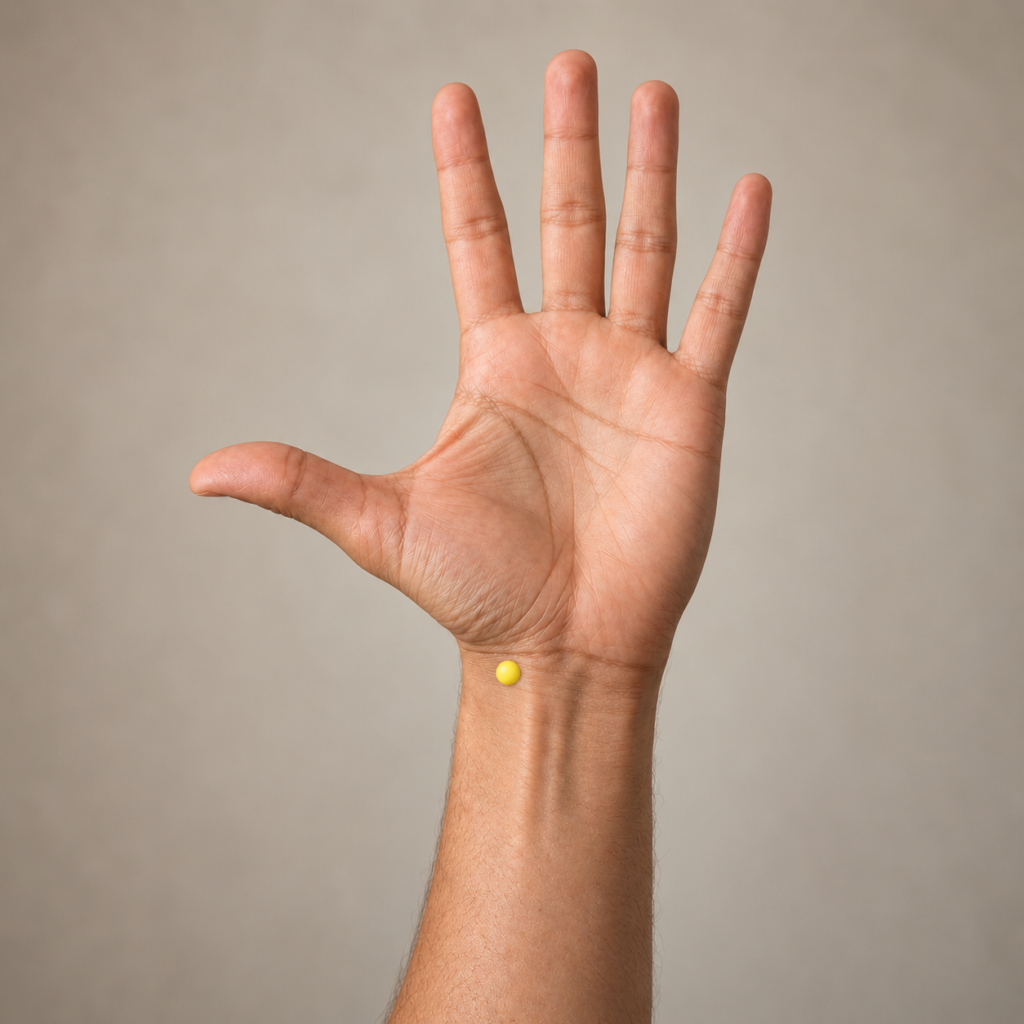
4. Press on PC6 on the inner forearm to calm anxiety and restlessness. PC6 sits on the inner forearm, three finger-widths above the wrist crease, between the two tendons. Press firmly with the thumb of your other hand for one to two minutes on each arm while breathing slowly. PC6 is called “Neiguan,” the “Inner Pass.”
In Traditional Chinese Medicine, PC6 is one of the most commonly used points for calming the mind and opening the chest. It can help ease anxiety, jittery restlessness, and a queasy stomach that often come with nicotine withdrawal.
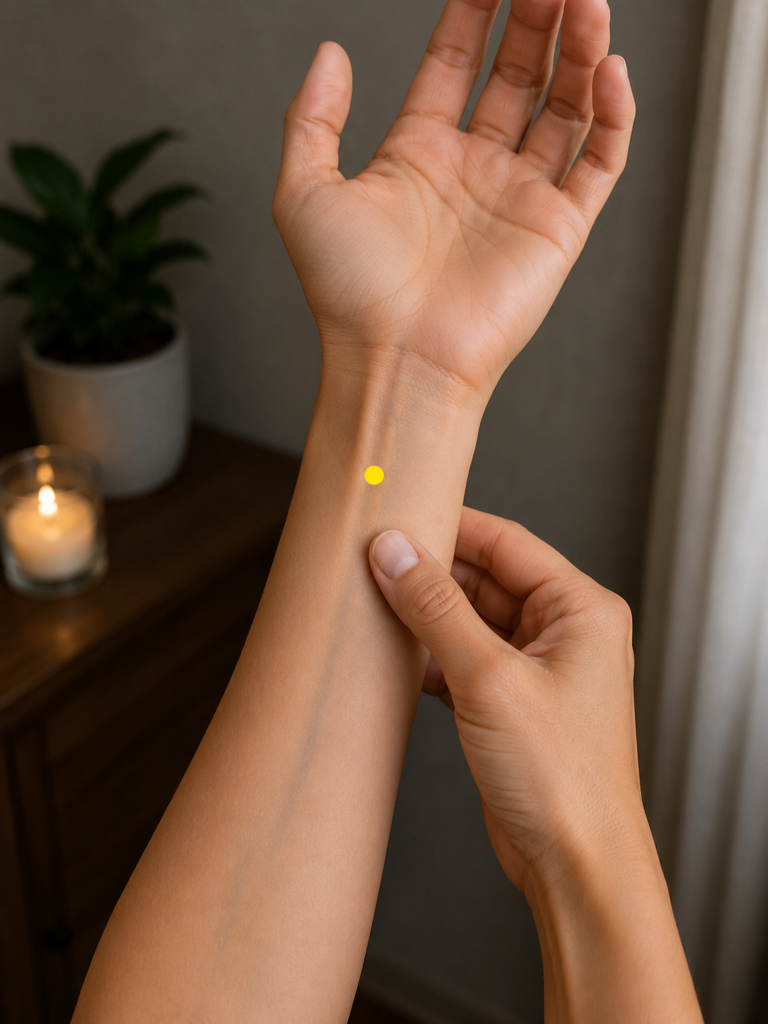
5. Press on HT7 on the wrist crease to settle the mind and support sleep. HT7 sits on the inner wrist crease, on the pinky side, in the small hollow just to the thumb side of the tendon that runs along the edge of the wrist. Press gently with the thumb of your other hand for one to two minutes on each wrist. HT7 is called “Shenmen,” the “Spirit Gate.”
HT7 is the source point of the Heart, which houses the mind in Traditional Chinese Medicine. It is traditionally indicated for anxiety, irritability, and poor sleep, all of which tend to flare in the first few weeks after quitting.
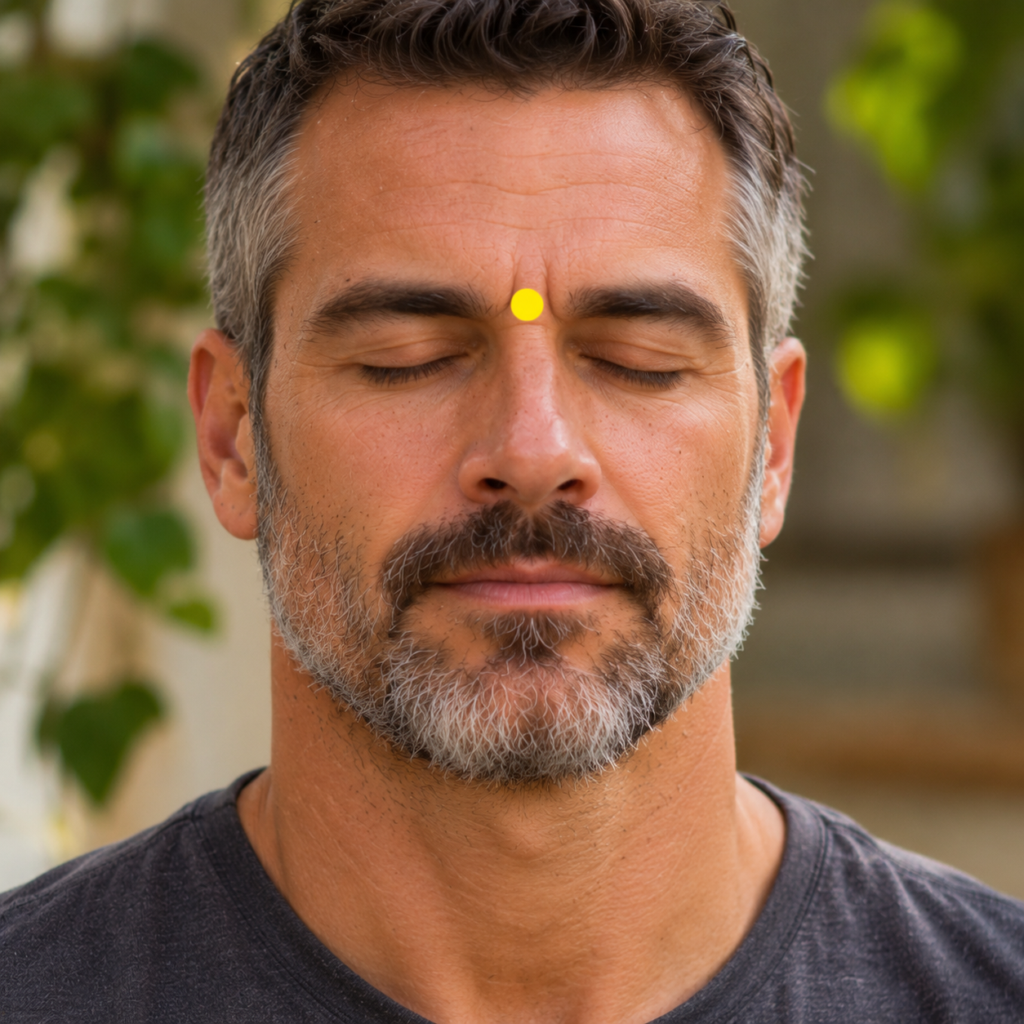
6. Press on Yintang between the eyebrows to calm the urges. Yintang sits on the midline of the forehead, directly between the inner ends of the eyebrows. Press gently with your fingertip, or make slow, small circles, for one to two minutes while breathing slowly. Yintang is called the “Hall of Impression.”
Yintang is an extra point traditionally used to calm the mind and ease anxiety. Press it while taking a few slow, deep breaths. It can give the breath the same pause a cigarette once did, without the smoke.
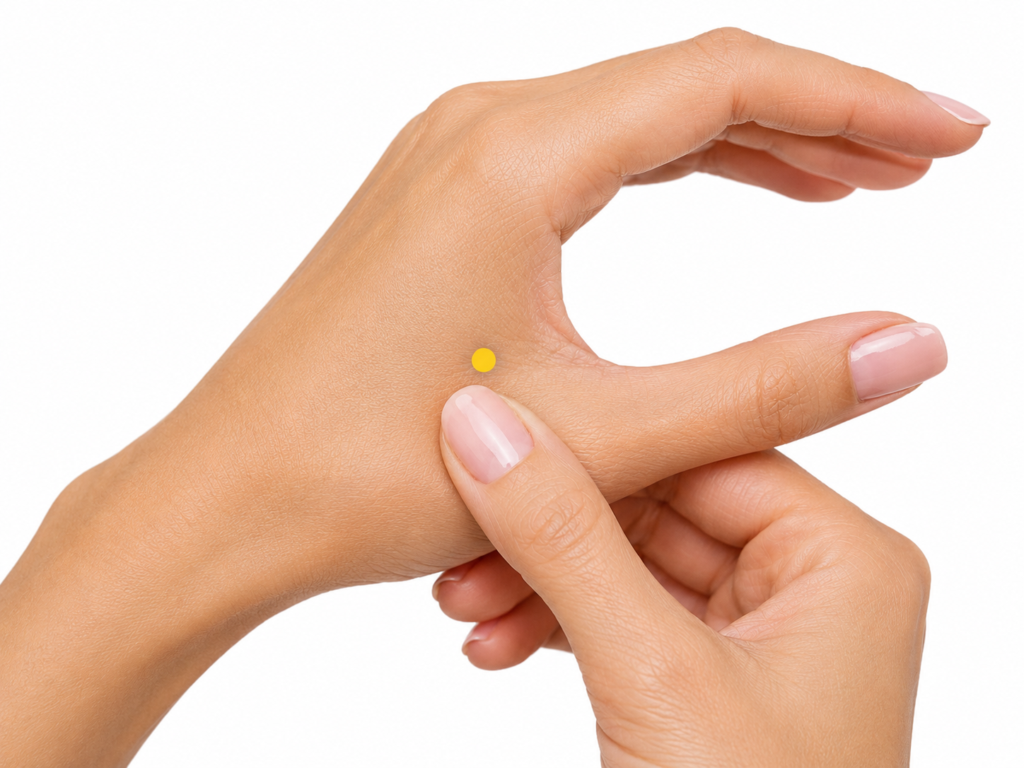
7. Press on LI4 on the back of the hand to ease irritability and tension. LI4 sits in the webbing between the thumb and index finger, at the highest point of the muscle when the two are pressed together. Press firmly with the thumb of your other hand for one to two minutes on each hand. LI4 is called “Hegu,” the “Joining Valley.” LI4 is avoided during pregnancy.
LI4 is one of the key points for easing tension, headaches, and irritability. It is the source point of the Large Intestine channel, which is paired with the Lung channel. Together with LR3, it forms the Four Gates, a classic combination for calming the whole body.
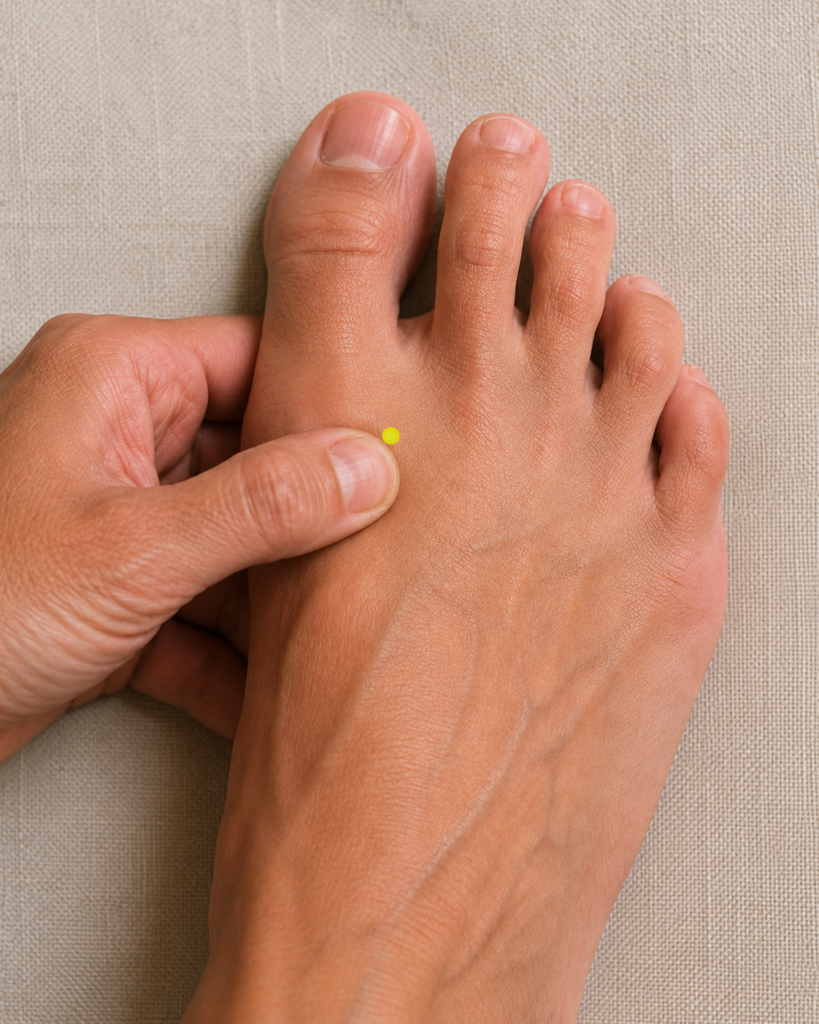
8. Press on LR3 on the top of the foot to release stress. LR3 sits on the top of the foot, in the hollow where the bones of the big toe and second toe meet, about two finger-widths above the web between the toes. Press firmly with your thumb for one to two minutes on each foot. LR3 is called “Taichong,” the “Great Surge.”
LR3 is the source point of the Liver, helping keep Liver Qi flowing smoothly throughout the body. Stress and frustration can constrict Liver Qi, and the resulting tension is a major trigger for reaching for a cigarette. LR3 helps release that tension, especially when you’re feeling irritable.
9. Press on ST36 below the knee to steady energy and appetite. ST36 sits four finger-widths below the bottom of the kneecap, about one finger-width to the outside of the shinbone. Press firmly with your thumb for one to two minutes on each leg. ST36 is called “Zusanli,” the “Leg Three Miles.”
ST36 is a primary point in Traditional Chinese Medicine for strengthening the Spleen and Stomach and restoring energy. It can help steady appetite and ease the low energy many people experience after quitting, making it easier to avoid replacing cigarettes with snacks.

Why These Acupressure Points Work

In Traditional Chinese Medicine, quitting smoking means giving a dried, overheated Lung time to heal while managing the stress, restlessness, and habits that fuel the urge to smoke. The approach is to ease each craving as it arises, calm the mind and Liver Qi, support the Lung as it clears, and keep energy and appetite steady during the first few weeks.
The nine points work together to alleviate cravings and support the body during recovery:
- The craving point (Tianmei) gives an immediate, discreet response to the urge to smoke.
- The Lung points (LU7, LU9) support the Lung by clearing and restoring its moisture.
- The calming points (PC6, HT7, Yintang) ease anxiety, restlessness, and poor sleep.
- The stress and steadying points (LI4, LR3, ST36) release irritability and keep energy and appetite even.
How to Properly Use These Acupressure Points

Acupressure is most effective for quitting smoking when used both to manage cravings as they arise and as part of a daily routine during the first several weeks.
- When a craving hits, press Tianmei on one wrist and take slow, deep breaths. Then switch wrists, and add Yintang if the urge persists.
- Work through all nine points once or twice daily, holding each for one to two minutes. Schedule one session for the time of day when you were most likely to smoke.
- Apply gentle pressure to LU9, Yintang, and the wrist crease, and firmer pressure to the forearms, hands, legs, and feet.
- Continue daily for at least four to six weeks after your quit date, as cravings and withdrawal symptoms gradually subside.
Daily habits make quitting easier to stick with. Set a quit date, remove cigarettes, lighters, and ashtrays from your home and car, and tell friends and family so they can support you. Change the routines tied to smoking, such as taking a short walk after meals or switching from coffee to tea for a while. Keep your hands and mouth busy with water, crunchy vegetables, or sugar-free gum, and limit alcohol, which can make cravings harder to resist. Exercise every day, since even a brisk walk can ease a craving. Traditional Chinese Medicine favors moistening foods such as pears, white fungus soup, and honey in warm water to help soothe a dry, irritated Lung.
Learn more about using acupuncture to quit smoking.
When to Get Professional Help

Talk to your doctor or pharmacist about nicotine replacement and prescription medications, and call 1-800-QUIT-NOW (1-800-784-8669) for free coaching and a personalized quit plan. Counseling and medication together give you the best chance of quitting for good. If you’re pregnant, discuss the safest way to quit with your doctor. See your doctor if you have a cough that lasts more than three weeks, cough up blood, experience worsening shortness of breath, unexplained weight loss, or chest pain. Call 911 for chest pain that spreads to your arm, jaw, or back. If you experience low mood, anxiety, or thoughts of self-harm while quitting or taking quit-smoking medication, contact your provider right away, or call or text 988 to reach the Suicide and Crisis Lifeline.
Acupressure is a gentle, supportive practice for quitting smoking. It complements, and does not replace, diagnosis and medical care.
For related concerns, acupressure for stress and acupressure for anxiety are companion pieces.
Above and Beyond Acupuncture offers acupuncture, cupping, and lifestyle coaching at the North Frank Lloyd Wright Boulevard location in Scottsdale.
Schedule an appointment online to start your healing journey.
The points above are only as effective as the technique used to apply them. Where to press, how firmly, and for how long all affect the result. For a full breakdown of how to perform acupressure properly at home, read Performing Acupressure in 3 Easy Steps.

About the Publisher
Paul Kerzner, L.Ac., is a licensed acupuncturist and board-certified herbalist, as well as the founder of Above and Beyond Acupuncture in Scottsdale. His own journey from chronic patient to practicing acupuncturist shapes his commitment to providing honest, clinically grounded information about acupuncture and Traditional Chinese Medicine. Learn more about Paul and his clinical approach on the About Us page.