Key Takeaways
- Lower back pain is one of the most common health complaints, and most acute episodes result from a sudden strain of the muscles and ligaments that support the back.
- Most people improve within about a week and recover within four to six weeks. Staying gently active helps more than bed rest.
- In Traditional Chinese Medicine, the lower back is considered the residence of the Kidney. Lower back pain is attributed to stagnant Qi and Blood after a strain, the accumulation of Cold and Damp in the back, or the gradual depletion of the Kidney over time.
- Nine acupressure points on the lower back, legs, ankles, and hands help release tight muscles, move Qi and Blood through the back, and strengthen the Kidneys.
- Acupressure for lower back pain works best alongside gentle movement. Loss of bladder or bowel control, leg weakness or numbness, fever, or pain after a fall needs medical care right away.

According to MedlinePlus, low back pain is the second most common reason Americans visit a health care provider. Almost everyone experiences it at least once. Acute low back pain usually lasts a few days to a few weeks and is most often caused by a sudden injury to the muscles and ligaments that support the back. Common triggers include heavy lifting, a quick twist, sitting for long periods, or an awkward fall. Sometimes, the pain is caused by a herniated disc, sciatica, or another spinal issue.
Most people improve within about a week, and the pain usually resolves over the next four to six weeks. Bed rest is no longer recommended; staying as active as possible helps prevent muscle weakness and supports a faster recovery. Care focuses on limiting activity for a day or two, avoiding heavy lifting and twisting while the back heals, and gradually returning to normal movement.
Lower back pain that stays in the back differs from sciatica, which travels from the buttock down the back of the leg, and hip pain, which is felt lower and to the side. Knowing where the pain is can help guide the right approach. Pain that radiates, causes numbness, or comes with weakness warrants a closer look.
In Traditional Chinese Medicine, the low back is known as the residence of the Kidney. A sudden strain blocks Qi and Blood in the Bladder channel, which runs along both sides of the spine, leading to sharp, fixed pain and stiffness. Cold and Damp may settle in the back, causing a heavy, achy pain that worsens in cold or damp weather and improves with warmth. A dull, persistent ache that worsens with fatigue and is accompanied by weak knees suggests the Kidney has been depleted by overwork, poor sleep, or age.
The nine points below help relax the lower-back muscles, move Qi and Blood along the Bladder channel, and strengthen the Kidney to support recovery.
What Acupressure Points to Press and Why
1. Press on BL23 on the lower back to strengthen the Kidney. BL23 sits on the lower back, about two finger-widths to each side of the spine, roughly level with the waist. Place a tennis ball between your back and a wall, lean into it gently, and hold for one to two minutes on each side, or rub both points briskly with your knuckles until the area feels warm. BL23 is called “Shenshu,” the “Kidney Transport Point.”
BL23 is the Kidney’s back transport point and one of the most important points in Traditional Chinese Medicine for lower back pain. It helps strengthen the Kidney, warm the low back, and ease the dull, tired ache that can result from sitting, standing, or overworking for long periods.
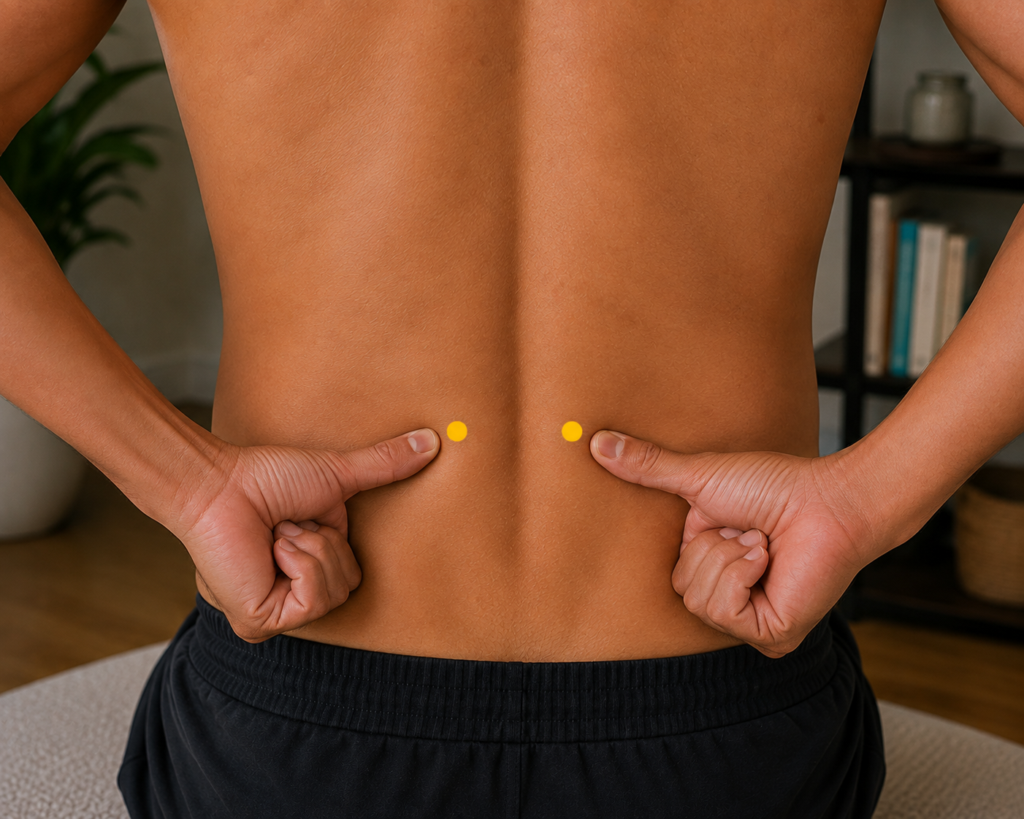
2. Press on BL52 beside BL23 to support a weak, achy back. BL52 sits on the lower back, about four finger-widths to each side of the spine, level with BL23. Use the same tennis ball method, leaning into it gently for one to two minutes on each side. BL52 is called “Zhishi,” the “Will Chamber.”
BL52 lies on the outer line of the Bladder channel and works alongside BL23 to strengthen the Kidney and lower back. It’s often used for chronic lower back pain and stiffness, targeting the thick muscles along the outer low back that tend to tighten after a strain.
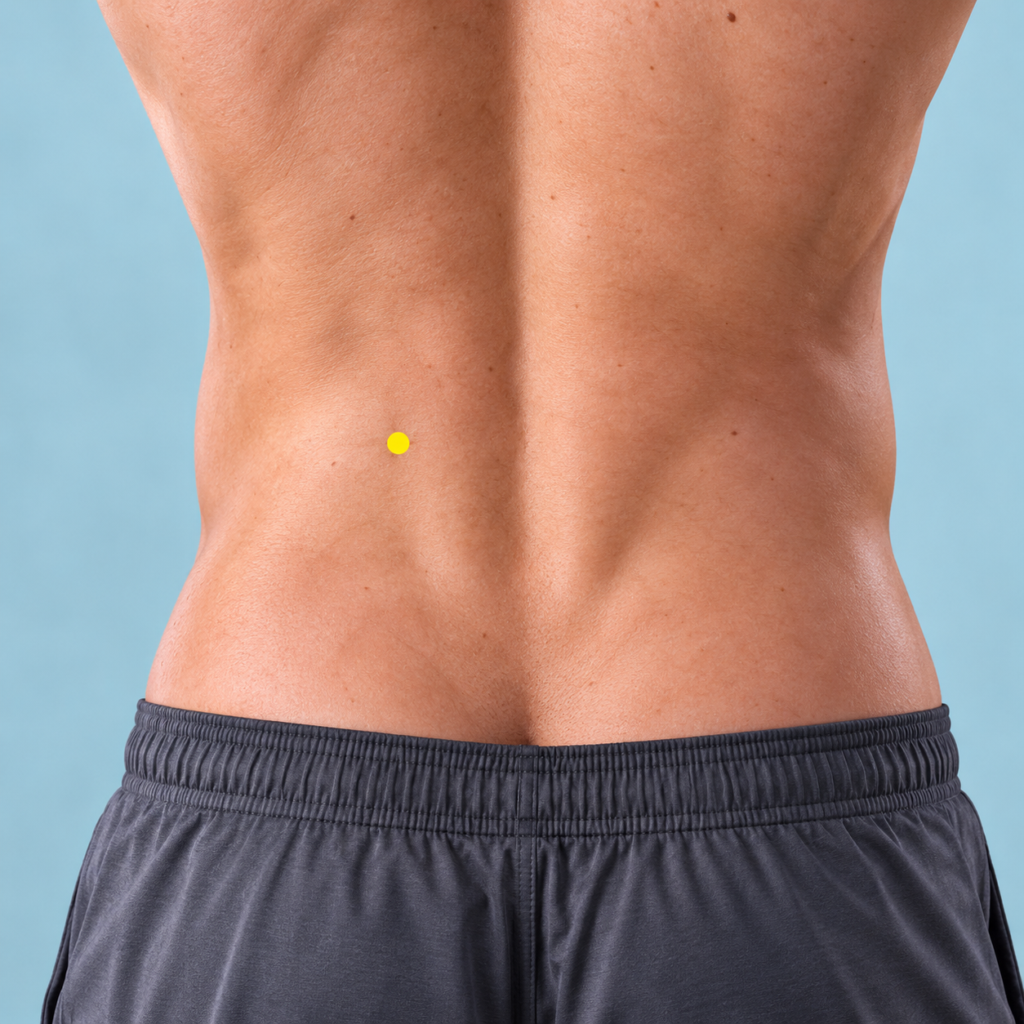
3. Press on BL25 on the lower back to release pain and stiffness. BL25 sits on the lower back, about two finger-widths to each side of the spine, roughly level with the tops of the hip bones. Place the tennis ball between your back and a wall, lean into it gently, and hold for one to two minutes on each side. BL25 is called “Dachangshu,” the “Large Intestine Transport Point.”
BL25 is located in the area where lower back pain is commonly felt. In Traditional Chinese Medicine, it’s one of the most frequently used points for lower back pain and stiffness. It helps relax the muscles along the lower spine and encourages Qi and Blood to flow through the area after a strain.
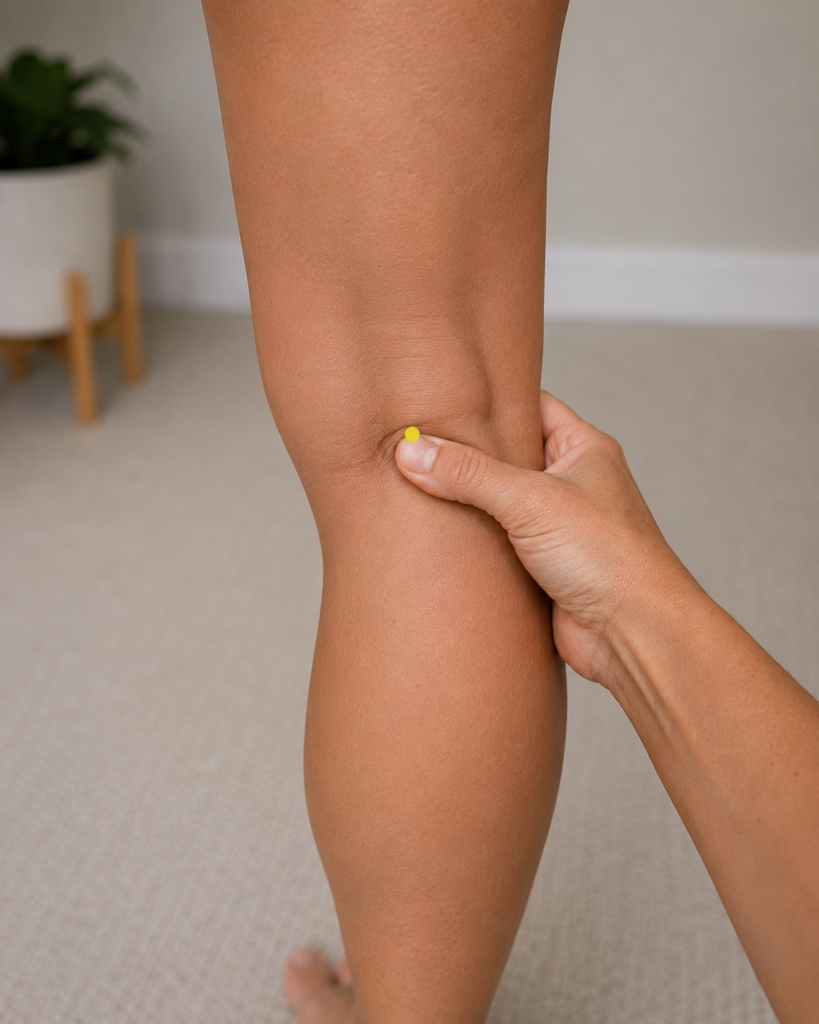
4. Press on BL40 at the back of the knee to relieve back pain. BL40 sits in the center of the crease at the back of the knee, between the two tendons. Press gently with your thumb or fingertips for about a minute on each leg. BL40 is called “Weizhong,” the “Middle of the Crook.”
BL40 is one of the four command points in Traditional Chinese Medicine. A classic saying advises looking to Weizhong for back pain. As a key point on the Bladder channel, which runs from the back down the legs, it is used to clear stagnation and relieve both sudden and persistent lower back pain. Apply gentle pressure, and avoid this point if you have swollen veins.
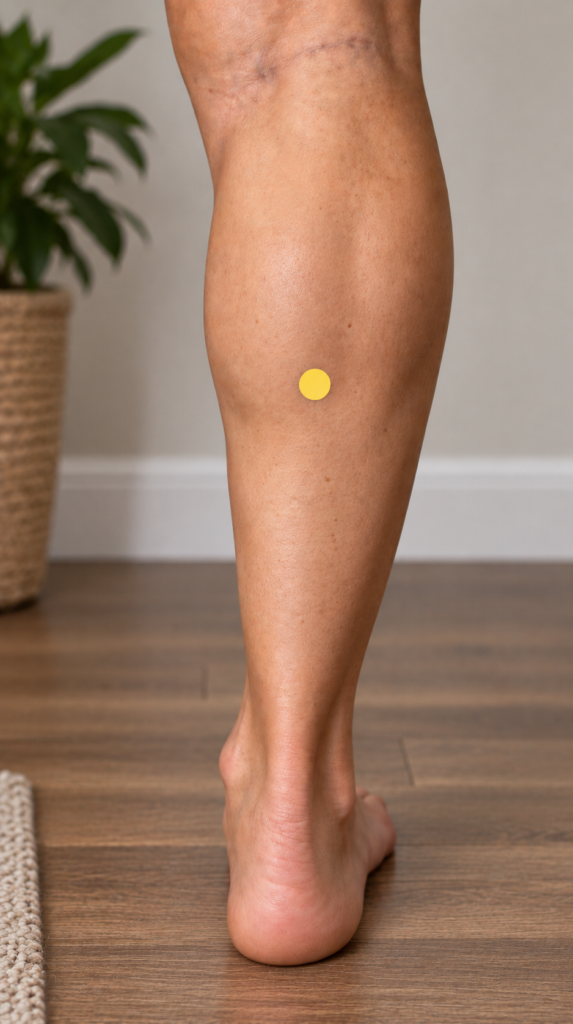
5. Press on BL57 on the calf to release the back of the body. BL57 sits on the back of the lower leg, midway between the back of the knee and the heel, in the hollow where the two bellies of the calf muscle meet the tendon. When you rise onto your toes, a small upside-down V forms at this spot. Press firmly with your thumb for one to two minutes on each leg. BL57 is called “Chengshan,” the “Supporting Mountain.”
BL57 is on the Bladder channel and is often used for lower back pain, especially when tightness affects both your back and the backs of your legs. Releasing tension in your calves and the backs of your legs can reduce strain on your low back, which often tightens at the same time.
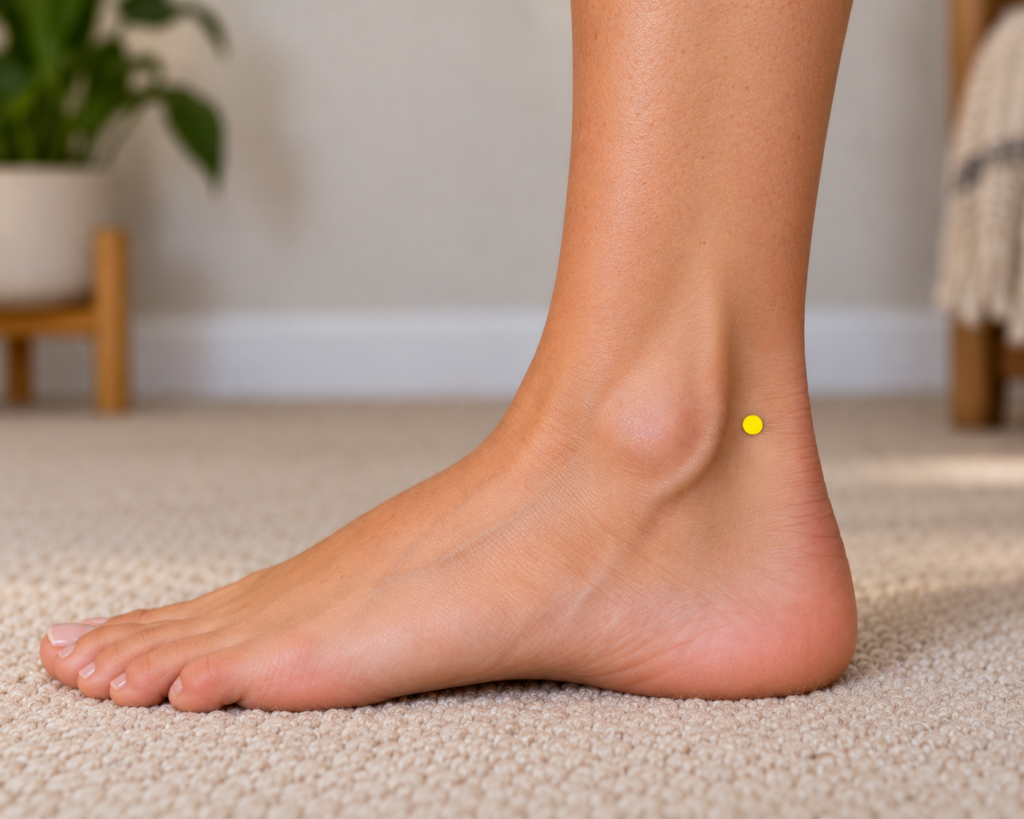
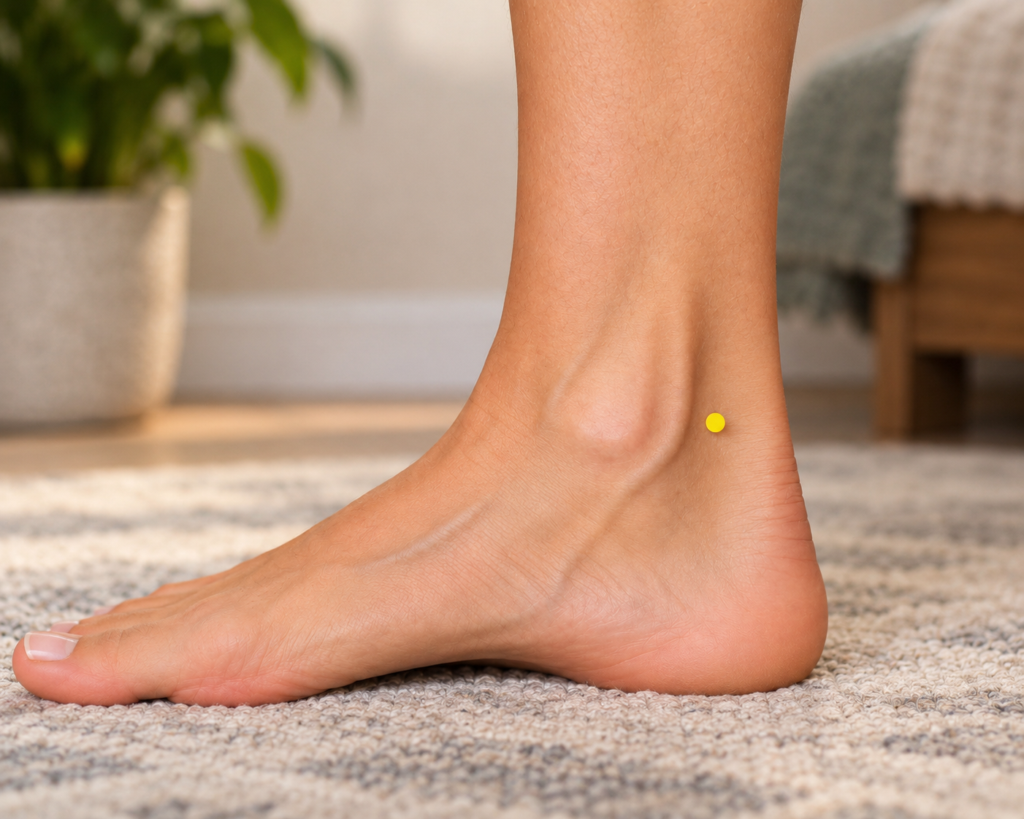
6. Press on BL60 behind the outer ankle to ease back pain and stiffness. BL60 sits in the hollow between the outer ankle bone and the Achilles tendon, level with the tip of the ankle bone. Press firmly with your thumb for one to two minutes on each ankle. BL60 is called “Kunlun,” named after the Kunlun Mountains. BL60 is avoided during pregnancy.
In Traditional Chinese Medicine, BL60 is a key distal point for pain along the Bladder channel, from the head and neck down the back. It’s often used to relieve lower back pain and stiffness, especially when the whole spine feels tight.
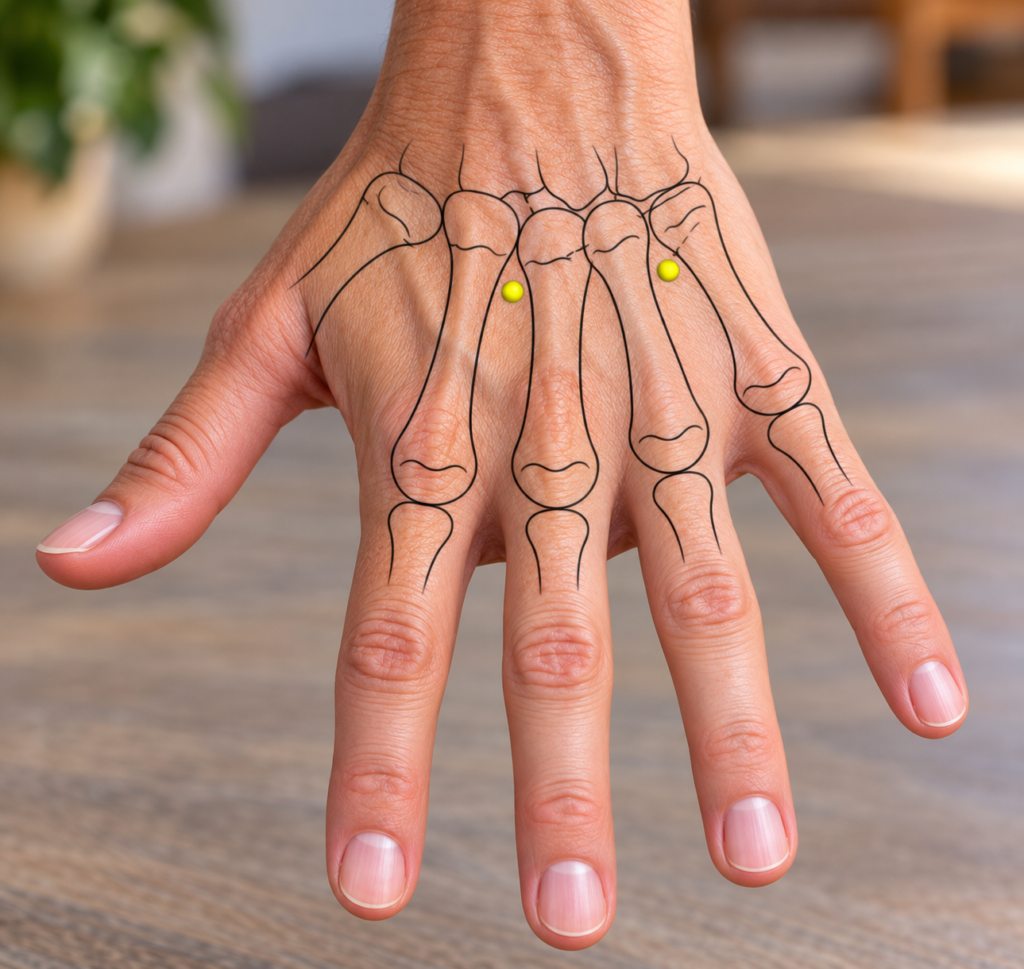
7. Press on Yaotongxue on the back of the hand to ease low back pain from a distance. Yaotongxue is a pair of extra points on the back of each hand: one between the second and third hand bones and one between the fourth and fifth hand bones, each about halfway between the wrist crease and the knuckles. Press each point firmly with the thumb of the other hand for about a minute on each hand while gently moving the lower back. Yaotongxue means “Low Back Pain Points.”
Yaotongxue is a pair of extra points used specifically for lower back pain, particularly after a sudden strain or sprain. Because they’re located on your hands, you can press them while sitting, standing, or gently moving your back. This makes them especially practical when your back is too sore to touch.
8. Press on SI3 on the edge of the hand to free a stiff spine. SI3 sits on the outer edge of the hand, on the little finger side. Make a loose fist; the point sits at the end of the crease just below the little finger knuckle. Press firmly with the thumb of your other hand for one to two minutes on each hand. SI3 is called “Houxi,” the “Back Stream.”
SI3 opens the Governing Vessel, which runs along the center of your spine. In Traditional Chinese Medicine, this point is used to address spinal stiffness and pain, including sudden lower-back strain. It may work especially well when pressed while you gently bend and turn your back.
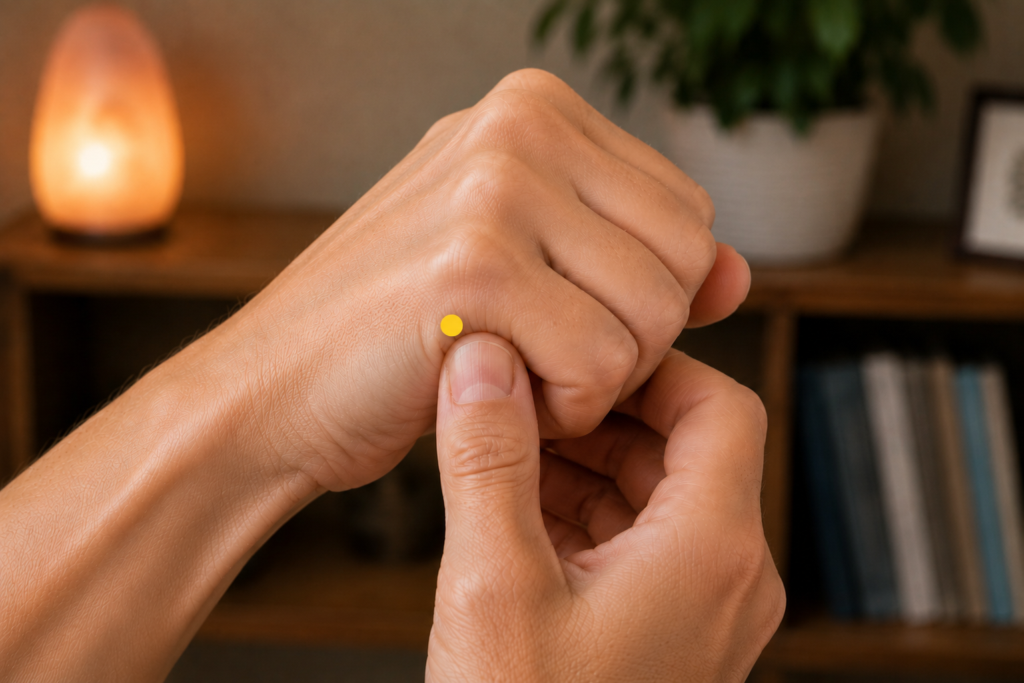
9. Press on KI3 behind the inner ankle to strengthen the back from within. KI3 sits in the hollow between the inner ankle bone and the Achilles tendon, level with the tip of the ankle bone. Press firmly with your thumb for one to two minutes on each ankle. KI3 is called “Taixi,” the “Great Stream.”
KI3 is the Kidney’s source point. It nourishes the Kidney, which Traditional Chinese Medicine associates with strength in the lower back and knees. This point may be especially helpful for dull, persistent lower back pain that worsens with fatigue and eases with rest.
Why These Acupressure Points Work
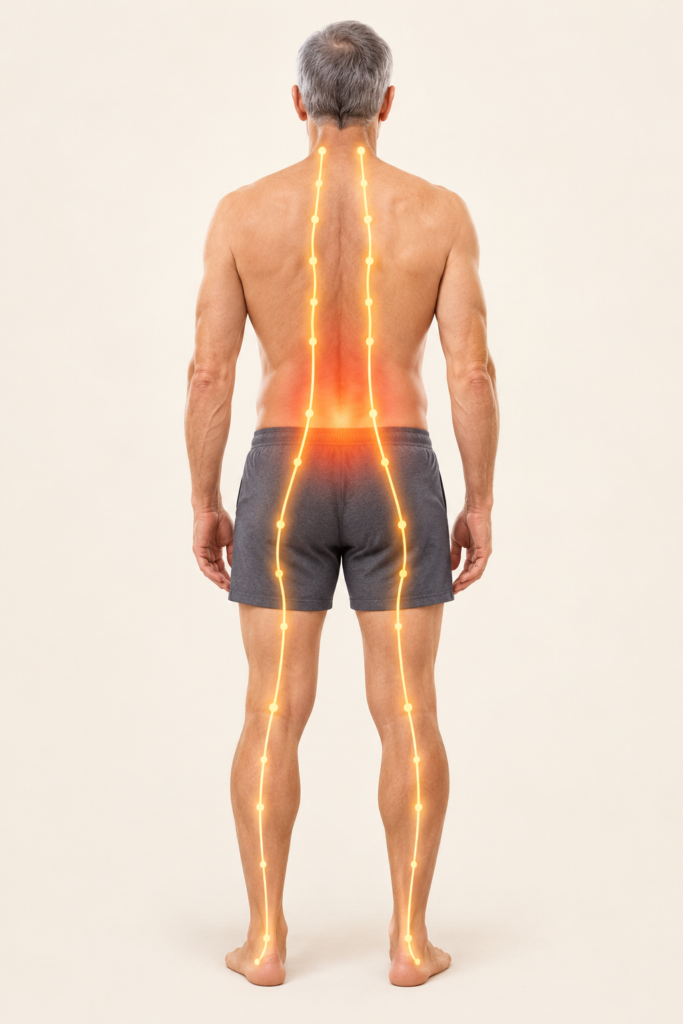
In Traditional Chinese Medicine, lower back pain occurs when Qi and Blood become blocked in the low back. This may result from a sudden strain, Cold and Damp accumulating in the muscles, or a Kidney that is too weak to support the back. The goal is to relax the low back muscles, encourage Qi and Blood to flow along the Bladder channel and spine, and strengthen the Kidney to help your back recover and stay strong.
The nine points work together to relieve pain and support the lower back.
- The local back points (BL23, BL52, BL25) release the muscles of the lower spine and warm and strengthen the low back.
- The leg and ankle points (BL40, BL57, BL60) move the Qi and Blood along the Bladder channel and relieve pain from a distance.
- The hand points (Yaotongxue, SI3) ease acute pain and stiffness and can be pressed while gently moving the back.
- The Kidney point (KI3) strengthens the back from within.
How to Properly Use These Acupressure Points

Acupressure for lower back pain is most effective when combined with gentle movement.
- Work through all nine points once or twice daily, holding each for one to two minutes.
- During a flare-up or just after a strain, begin with Yaotongxue and SI3 on the hands as you slowly shift, bend, or walk. Then move to BL40 and BL60.
- Apply firm but comfortable pressure to the legs, ankles, and hands. Use gentle pressure at BL40, and a tennis ball or a partner’s thumbs on the lower back. Stop if any point makes the pain sharper.
- For persistent or recurring pain, press BL23, BL52, and KI3 daily for several weeks to support the lower back.
Daily habits can support your back’s recovery and help prevent pain from returning. Stay as active as you can by taking short, gentle walks and changing positions often rather than staying in bed. Avoid heavy lifting and twisting as your back heals. When lifting, bend at your hips and knees and hold the load close to your body. Applying warmth, such as with a heating pad or warm bath, can help relax tight muscles. Traditional Chinese Medicine also recommends keeping your lower back covered and avoiding cold drafts or air conditioning. After your pain improves, gently strengthen your core and hips to help protect your back over time.
You can also learn more about preventing back pain with healthy posture.
When to Get Professional Help
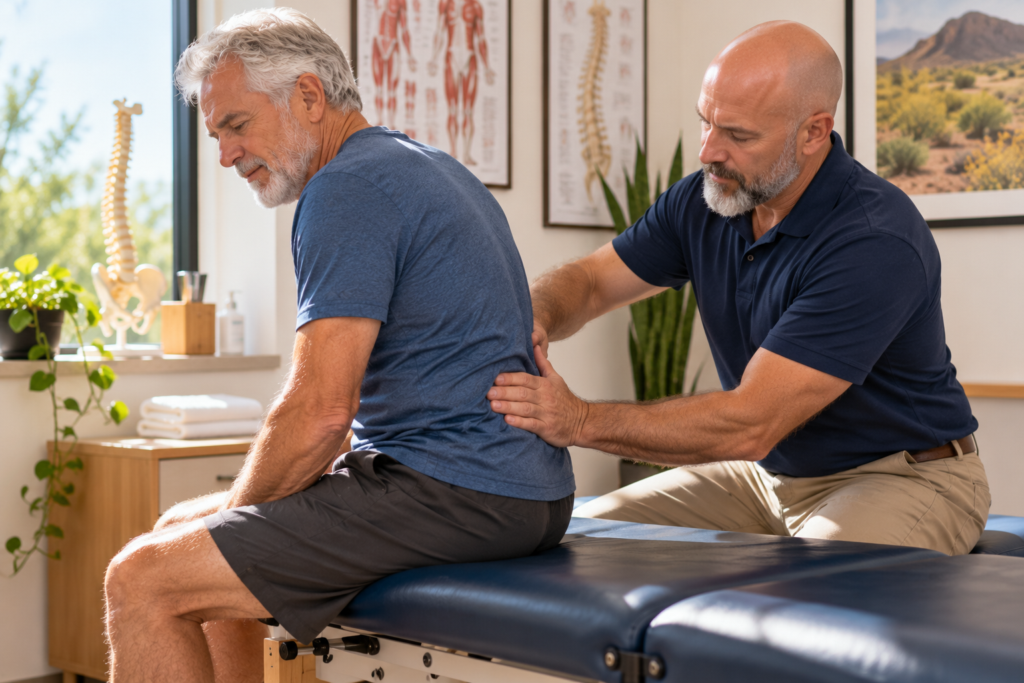
See your health care provider if your lower back pain lasts longer than four weeks, wakes you at night, worsens when you lie down, follows a hard fall or injury, or occurs with an unexplained fever. You should also get checked if you have a history of cancer, have lost weight without trying, or have pain that spreads down your leg with numbness, tingling, or weakness. Seek emergency care right away if you lose control of your bladder or bowels, or experience weakness or numbness in your legs, buttocks, groin, or pelvis. These symptoms could indicate serious pressure on the nerves at the base of your spine.
Acupressure is a gentle, supportive practice for lower back pain. It can complement, but does not replace, diagnosis and medical care.
For related health concerns, how to relieve low back and hip pain with acupressure, how to relieve sciatica with acupressure, and acupressure for spinal stenosis are companion articles. If the pain is located higher, between or around the shoulder blades, learn about acupressure for upper back pain.
Above and Beyond Acupuncture offers acupuncture, cupping, and lifestyle coaching at the North Frank Lloyd Wright Boulevard location in Scottsdale.
Schedule an appointment online to start your healing journey.
The points above are only as effective as the technique used to apply them. Where to press, how firmly, and for how long all affect the result. For a full breakdown of how to perform acupressure properly at home, read Performing Acupressure in 3 Easy Steps.

About the Publisher
Paul Kerzner, L.Ac., is a licensed acupuncturist and board-certified herbalist, as well as the founder of Above and Beyond Acupuncture in Scottsdale. His own journey from chronic patient to practicing acupuncturist shapes his commitment to providing honest, clinically grounded information about acupuncture and Traditional Chinese Medicine. Learn more about Paul and his clinical approach on the About Us page.