Key Takeaways
- Kidney stone pain is typically felt on one side of the lower back or flank. It often comes in waves and may move toward the lower belly or groin as the stone travels.
- Fever or chills with kidney stone pain, vomiting that keeps fluids from staying down, or trouble urinating needs emergency care, since a blocked and infected kidney can become dangerous quickly.
- In Traditional Chinese Medicine, stones are understood as Damp-Heat condensed in the Kidney and Bladder, while the severe pain reflects Qi and Blood obstructed along the stone’s path.
- Nine acupressure points on the hands, arms, back, sides, legs, and feet can help ease cramping and settle nausea while a stone passes or treatment is arranged.
- Drinking enough water, limiting salt and animal protein, and including calcium-rich foods in your diet can help reduce the risk of another stone.
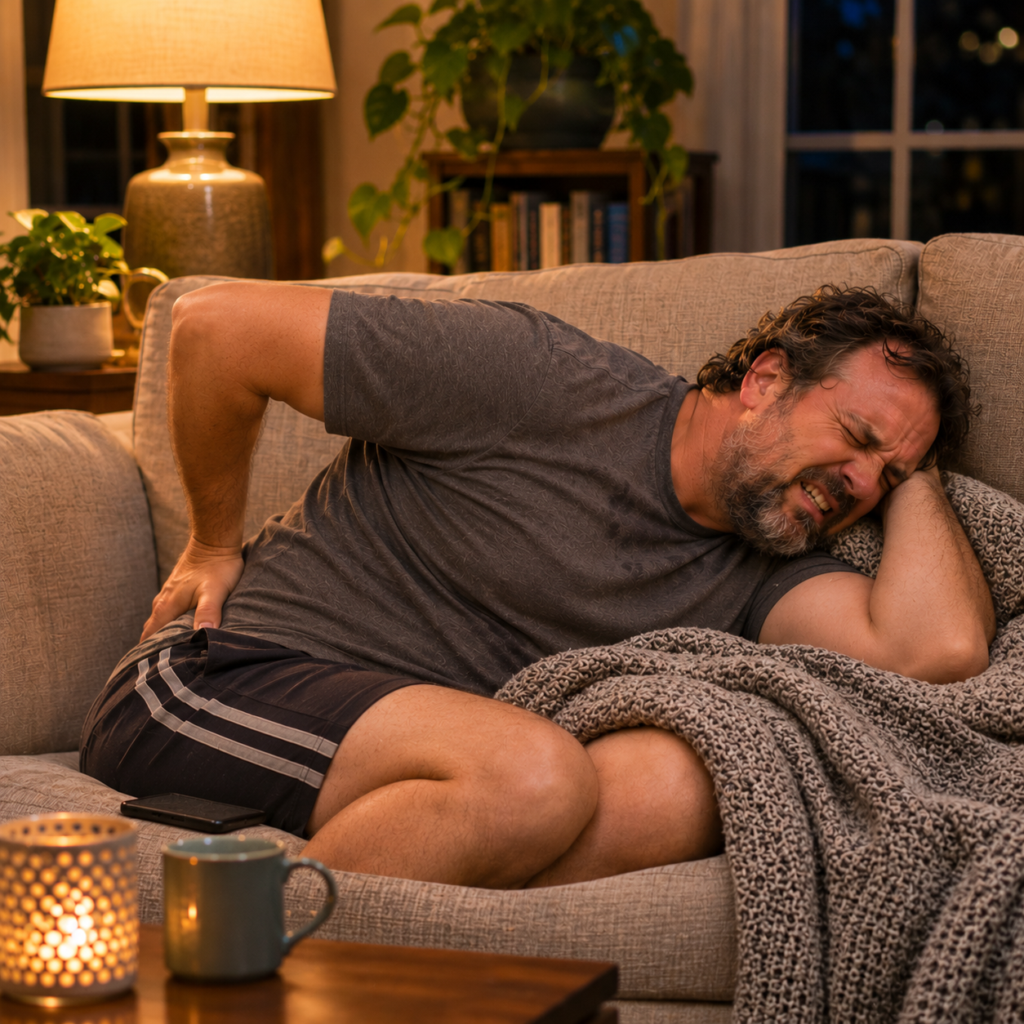
A kidney stone may remain in the kidney for months without causing problems. Pain begins when it moves into the tube that carries urine to the bladder and blocks the flow. It often starts on one side of the back, just below the ribs, and quickly worsens. Many people can’t get comfortable and may pace, curl up, or rock. The pain often comes in waves, and nausea is common.
The National Kidney Foundation reports that about one in ten people will develop a kidney stone at some point, and more than half a million people visit the emergency room for kidney stones each year. The pain is often severe and felt on either side of the lower back. It may also be accompanied by blood in the urine, nausea or vomiting, fever and chills, or cloudy, foul-smelling urine. According to the NKF, diets high in salt, added sugar, and animal protein, and low in water, calcium, fruits, and vegetables, can contribute to stones in people prone to them. Small stones may pass on their own with pain relief, while larger or stuck stones may require a procedure. Once a stone has formed, there is usually nothing that can dissolve it.
Much of the pain comes from pressure When urine backs up behind a stone, the kidney swells, stretching its outer capsule. The ureter also spasms as it tries to move the stone. This explains why the pain comes and goes and often shifts lower as the stone moves closer to the bladder.
Traditional Chinese Medicine calls this condition “stone strangury.” Damp-Heat accumulates in the lower body from eating heavy, rich, salty foods, drinking too little water, and overwork or chronic stress. Over time, this heat transforms fluids into sand and stones. When a stone becomes lodged, Qi and Blood can’t flow past it, causing sharp, fixed pain. The Liver tightens in response, adding cramping and irritability. Points that move Qi and Blood, ease cramping, clear Damp-Heat, and support the Kidney are used together to help the stone pass.
The points begin on the hand and forearm, continue to the back and side of the waist, and end on the legs and feet.
What Acupressure Points to Press and Why
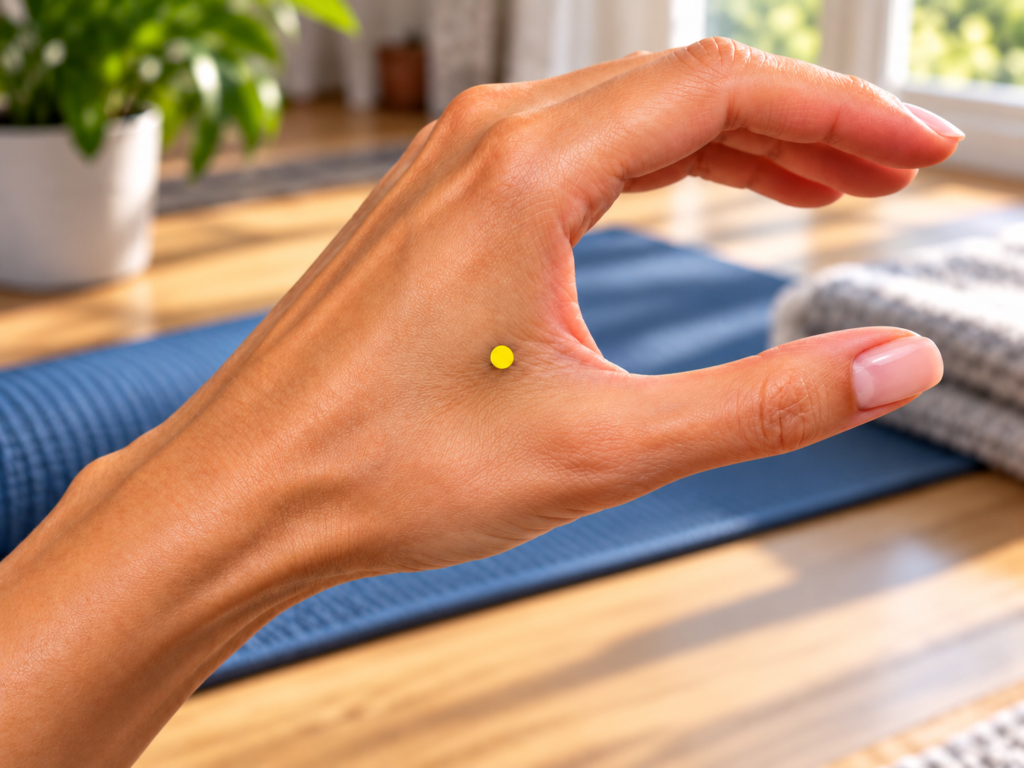
1. Press on LI4 on the back of the hand to dull pain. LI4 sits on the back of the hand, in the web between the thumb and index finger, at the highest point of the muscle when the thumb is pressed against the index finger. Press firmly with the thumb of your other hand for one to two minutes on each hand, angling the pressure toward the bone of the index finger. LI4 is called “Hegu,” the “Joining Valley.”
LI4 is the Large Intestine’s source point and a classic point for pain anywhere in the body. It strongly moves Qi and helps ease a wave of pain while other points work on the back and lower body. LI4 is avoided during pregnancy.
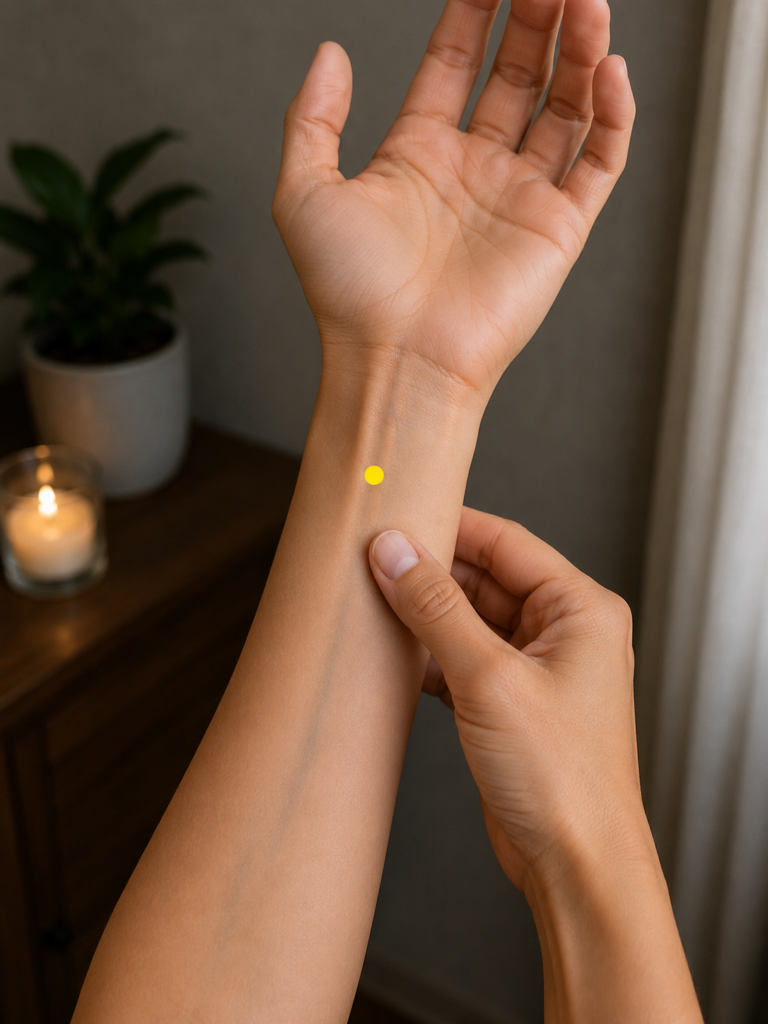
2. Press on PC6 on the inner forearm to settle nausea. PC6 sits on the inner forearm, three finger-widths above the wrist crease, between the two tendons. Press firmly with the thumb of your other hand for one to two minutes on each arm while breathing slowly. PC6 is called “Neiguan,” the “Inner Pass.”
PC6 is the Pericardium’s connecting point. It is a traditional point for nausea and vomiting, and it can help ease the restless, panicky feeling that intense pain may cause.
3. Hold GB25 at the tip of the lowest rib to ease flank pain. GB25 sits on the side of the waist, just below the free tip of the lowest rib, which you can feel by tracing the bottom of the rib cage back toward the spine. Rest two fingertips on the point with light pressure for one to two minutes on the painful side. GB25 is called “Jingmen,” the “Capital Gate.”
GB25 is the Kidney’s alarm point, where its Qi gathers along the side of the body. It is traditionally used for flank and lower back pain, as well as difficult urination. Apply gentle pressure, as this area is often tender during an attack.

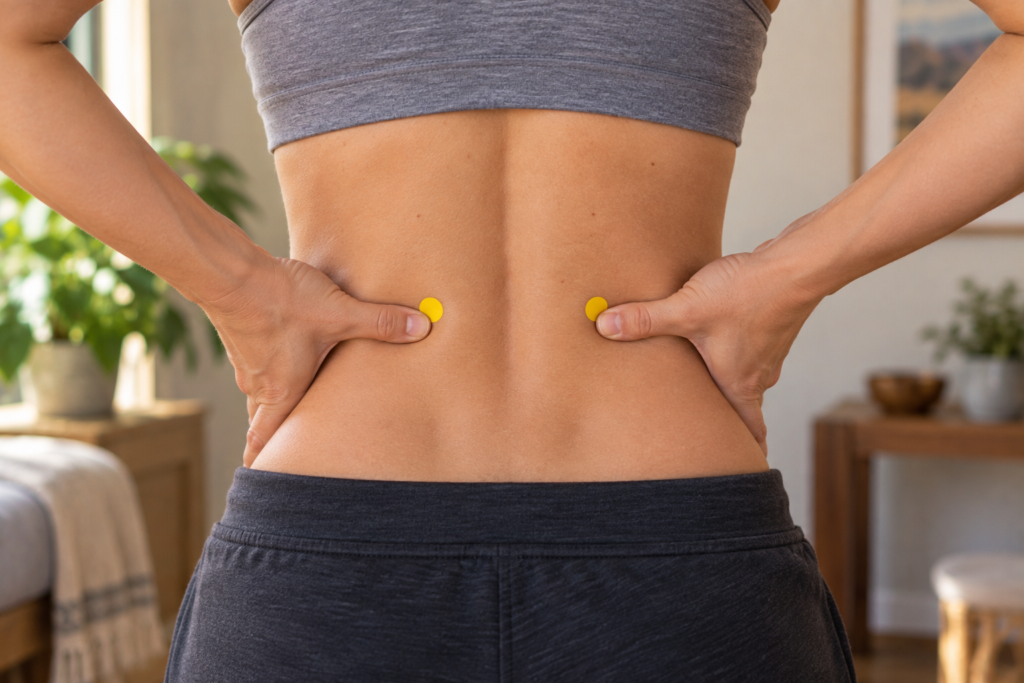
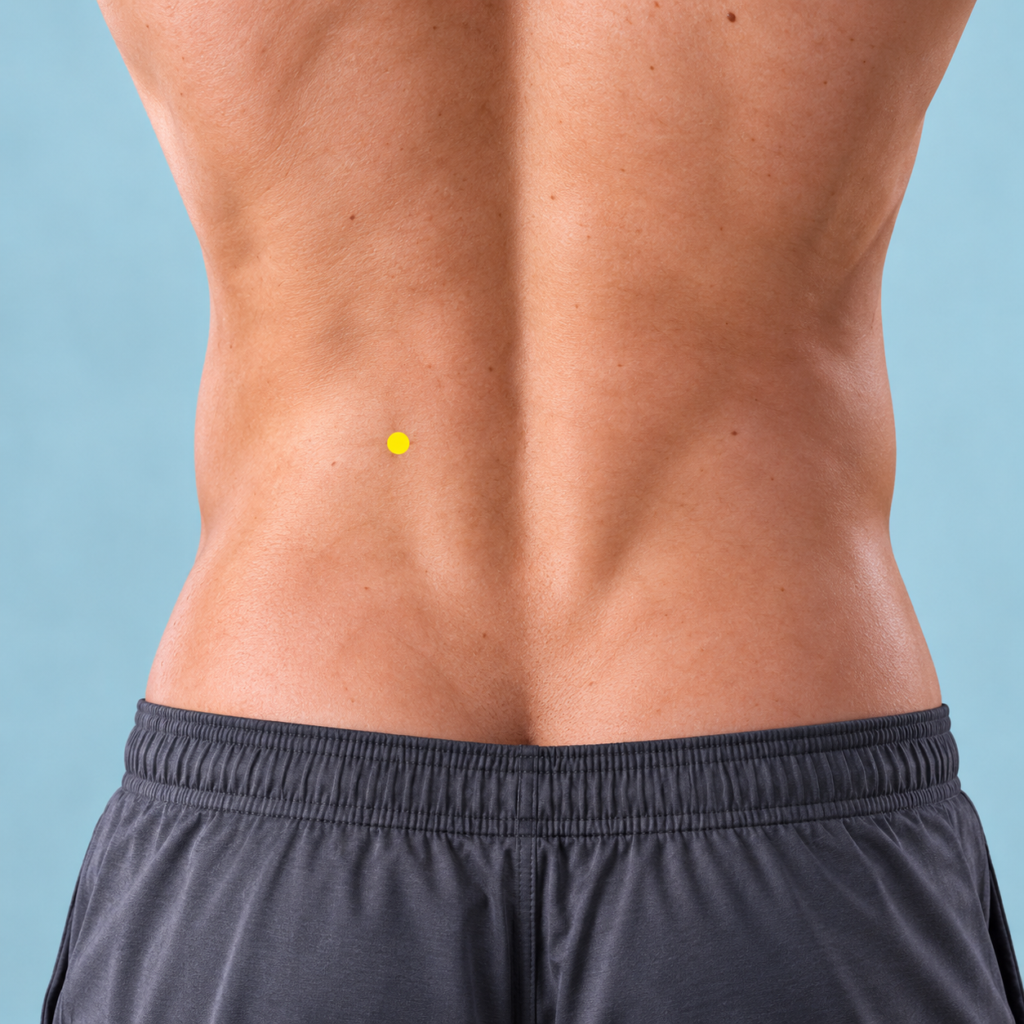
4. Press on BL23 on the low back to support the Kidney. BL23 sits on the low back, two finger-widths out from the spine on each side, level with the bottom of the rib cage at the waist. Lie on your back with a tennis ball under the point, or lean against a wall with the ball in place, and press into it for one to two minutes on each side. BL23 is called “Shenshu,” the “Kidney Shu.”
BL23 is the Kidney’s back transport point and one of the most important points in Traditional Chinese Medicine for low back and flank pain associated with the Kidney. It strengthens the Kidney and eases the deep ache that settles in the back during and after a stone.
5. Press on BL52 beside BL23 to relax the flank. BL52 sits on the low back, four finger-widths out from the spine on each side, level with BL23. Use the tennis ball against the floor or a wall and press into the point for one to two minutes on each side, using lighter pressure if it feels sore. BL52 is called “Zhishi,” the “Will Chamber.”
BL52 is located on the outer branch of the Bladder channel, directly over the area where kidney stone pain is often most intense. It supports the Kidney and relieves tightness in the muscles along the flank and waist.
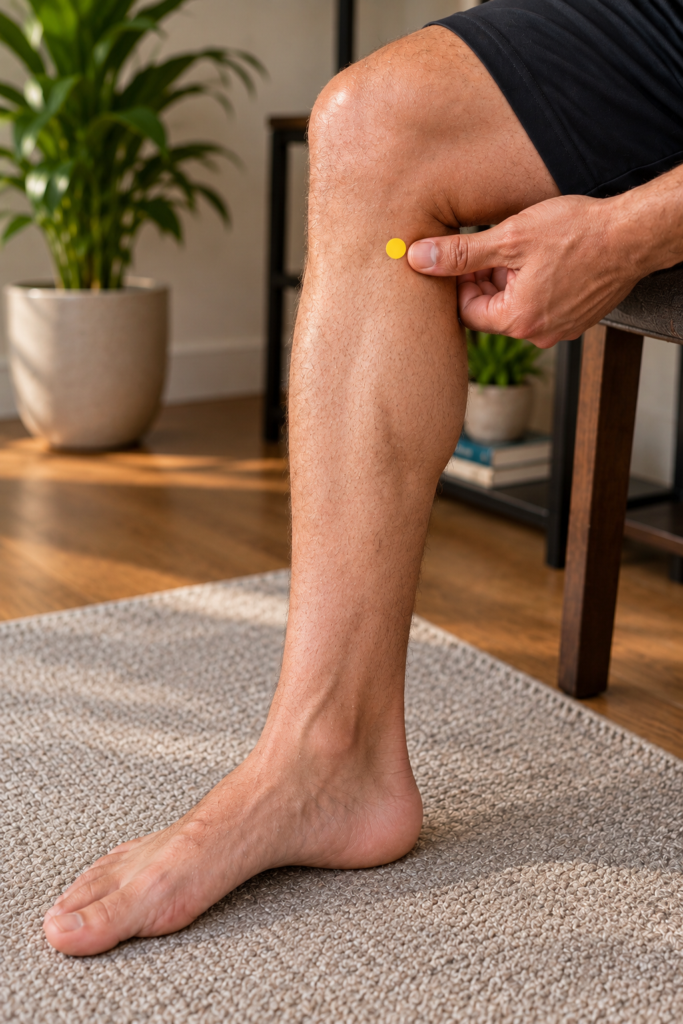
6. Press on SP9 below the inner knee to drain Dampness. SP9 sits on the inner side of the lower leg, in the hollow just below the rounded bulge at the top of the shinbone. Press firmly with your thumb for one to two minutes on each leg. SP9 is called “Yinlingquan,” the “Yin Mound Spring.”
SP9 is the Spleen’s sea point. It drains Damp-Heat from the lower body and is traditionally used for painful, difficult urination, often when a stone has moved down toward the bladder.
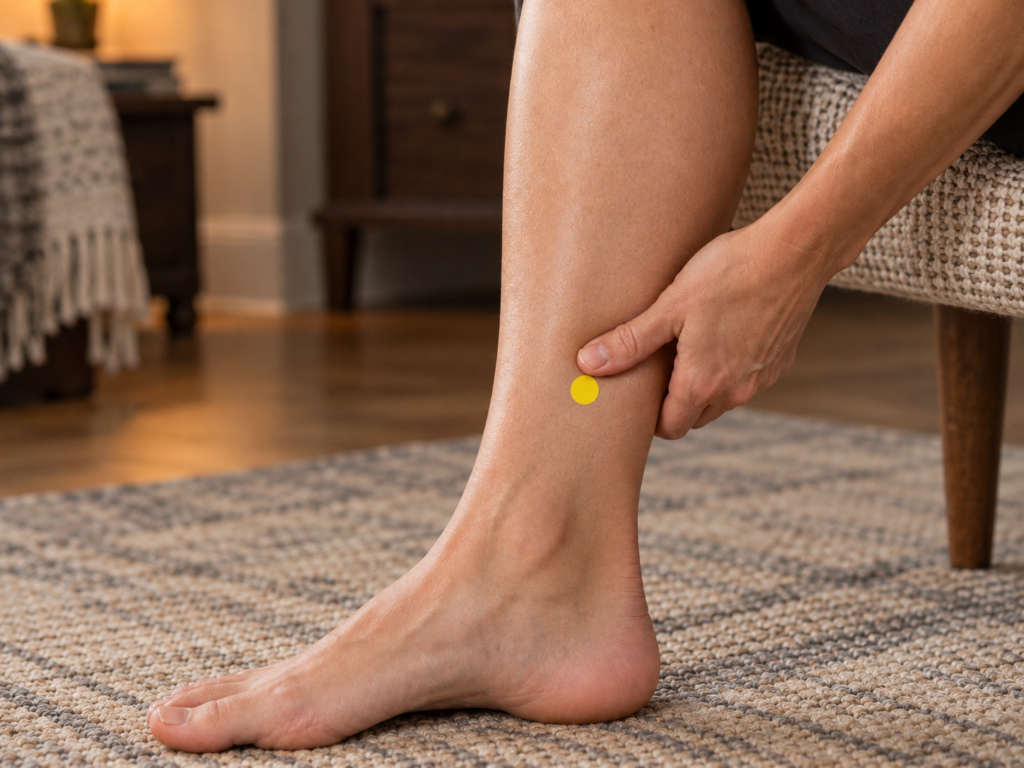
7. Press on SP6 above the inner ankle to ease cramping. SP6 sits on the inner side of the lower leg, four finger-widths above the tip of the inner ankle bone, just behind the edge of the shinbone. Press firmly with your thumb for one to two minutes on each leg. SP6 is called “Sanyinjiao,” the “Three Yin Intersection.”
SP6 is where the Spleen, Liver, and Kidney channels of the leg meet. It moves Qi and Blood through the lower abdomen and helps ease cramping as the stone travels lower. SP6 is avoided during pregnancy.
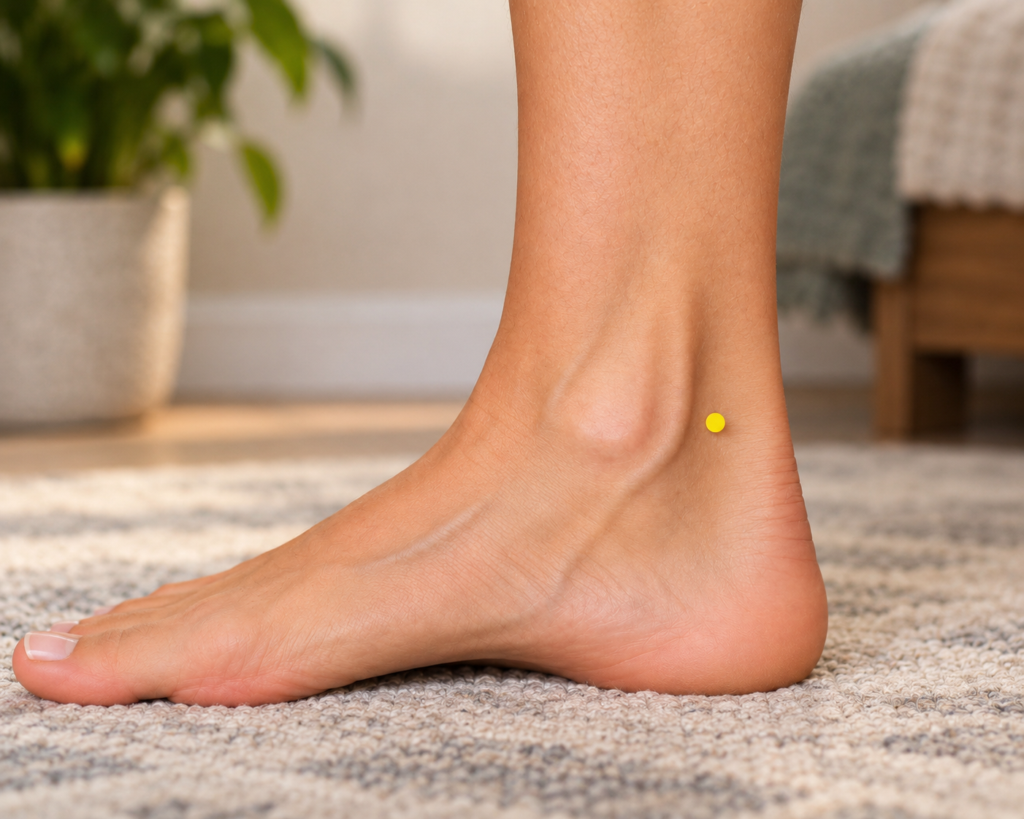
8. Press on KI3 behind the inner ankle to strengthen the Kidney. KI3 sits in the hollow between the inner ankle bone and the Achilles tendon. Press with moderate pressure for one to two minutes on each foot. KI3 is called “Taixi,” the “Great Ravine.”
KI3 is the Kidney’s source point. It builds Kidney Qi and is a reliable point to use after a stone has passed, when the low back feels weak and achy.
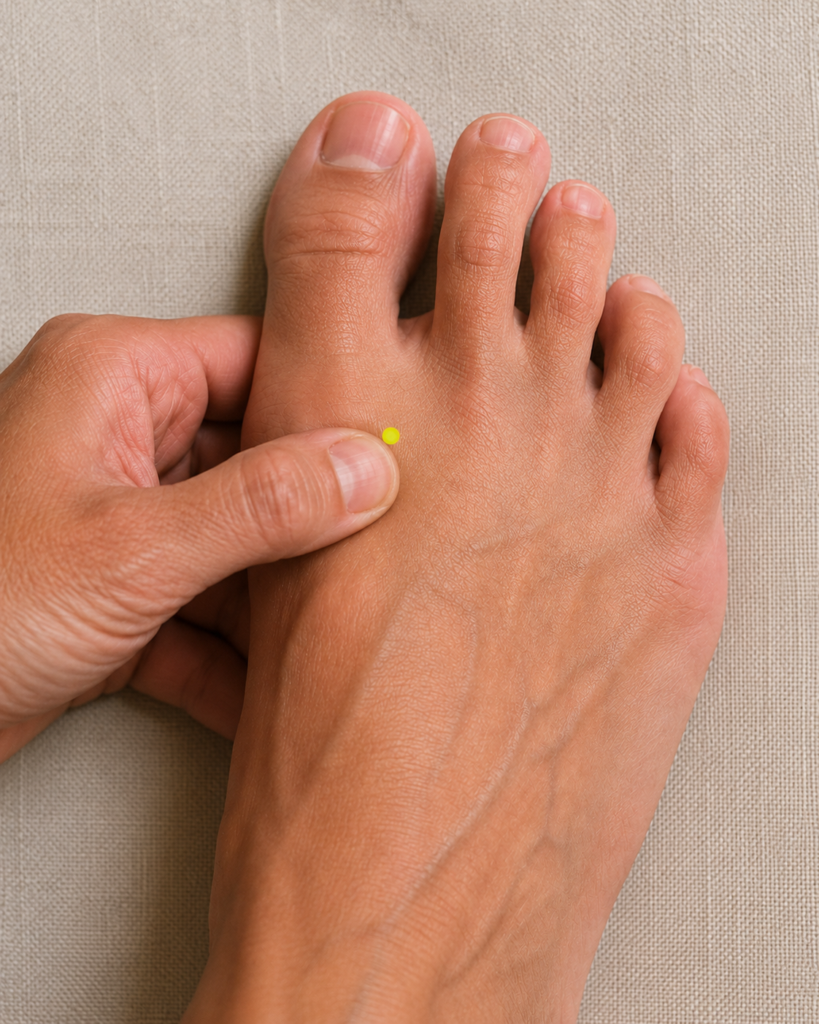
9. Press on LV3 on the top of the foot to release cramping. LV3 sits on the top of the foot, in the hollow where the bones of the big toe and second toe meet, about two finger-widths back from the web between the toes. Press firmly with your thumb for one to two minutes on each foot. LV3 is called “Taichong,” the “Great Rushing.”
LV3 is the source point of the Liver. It releases spasm, calms the tension and irritability that build with each wave of pain, and pairs with LI4 to move Qi through the whole body.
Why These Acupressure Points Work
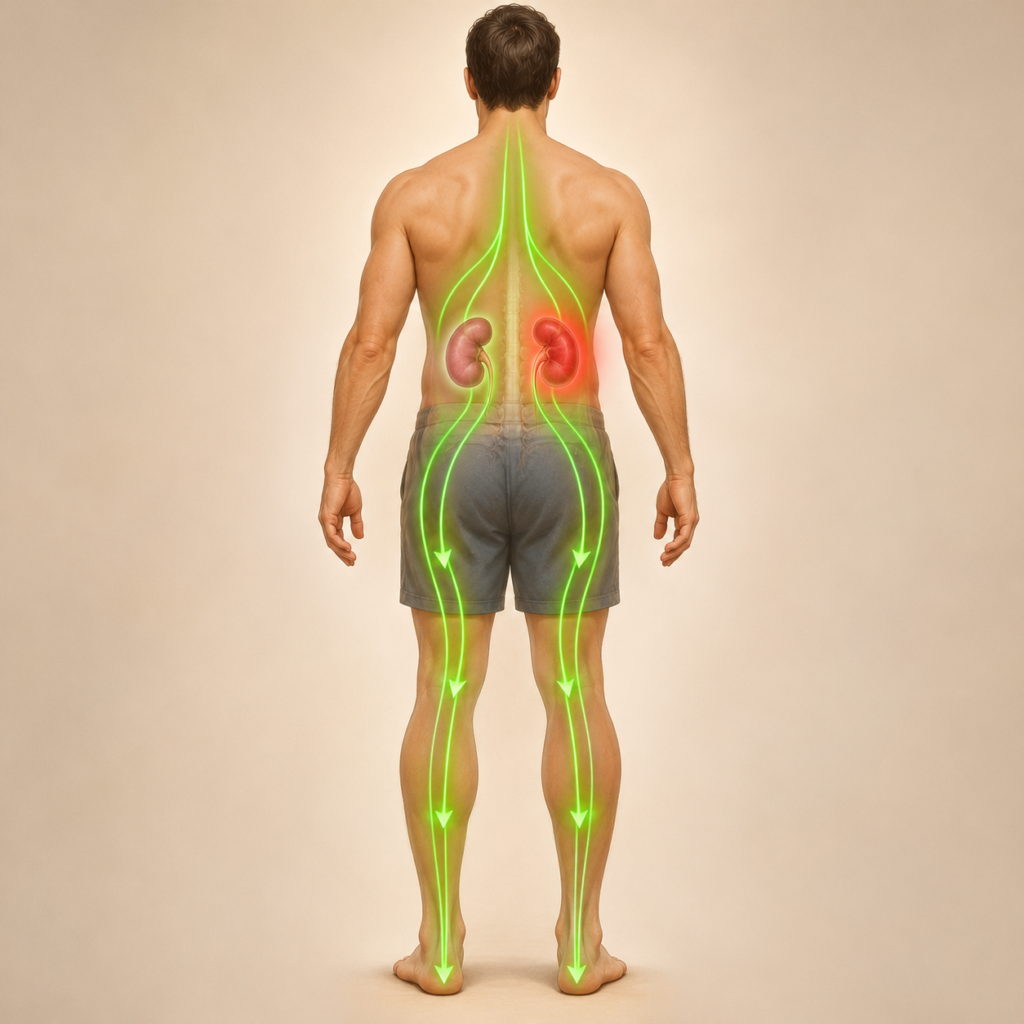
From a Traditional Chinese Medicine perspective, a stuck stone obstructs the flow of Qi and Blood, causing pain. Points on the hands and feet move Qi throughout the body and ease spasms. Points on the back and side work directly on the Kidney, near the site of the ache. Leg points clear the Damp-Heat associated with stone formation and relax the lower abdomen as the stone moves toward the bladder.
These nine points can work together to help relieve kidney stone pain:
- LI4 and LV3 move Qi and dull the waves of pain.
- PC6 settles nausea and calms the body.
- GB25, BL23, and BL52 ease flank and low back pain at the Kidney.
- SP9, SP6, and KI3 clear Dampness, relax cramping, and support the Kidney.
How to Properly Use These Acupressure Points
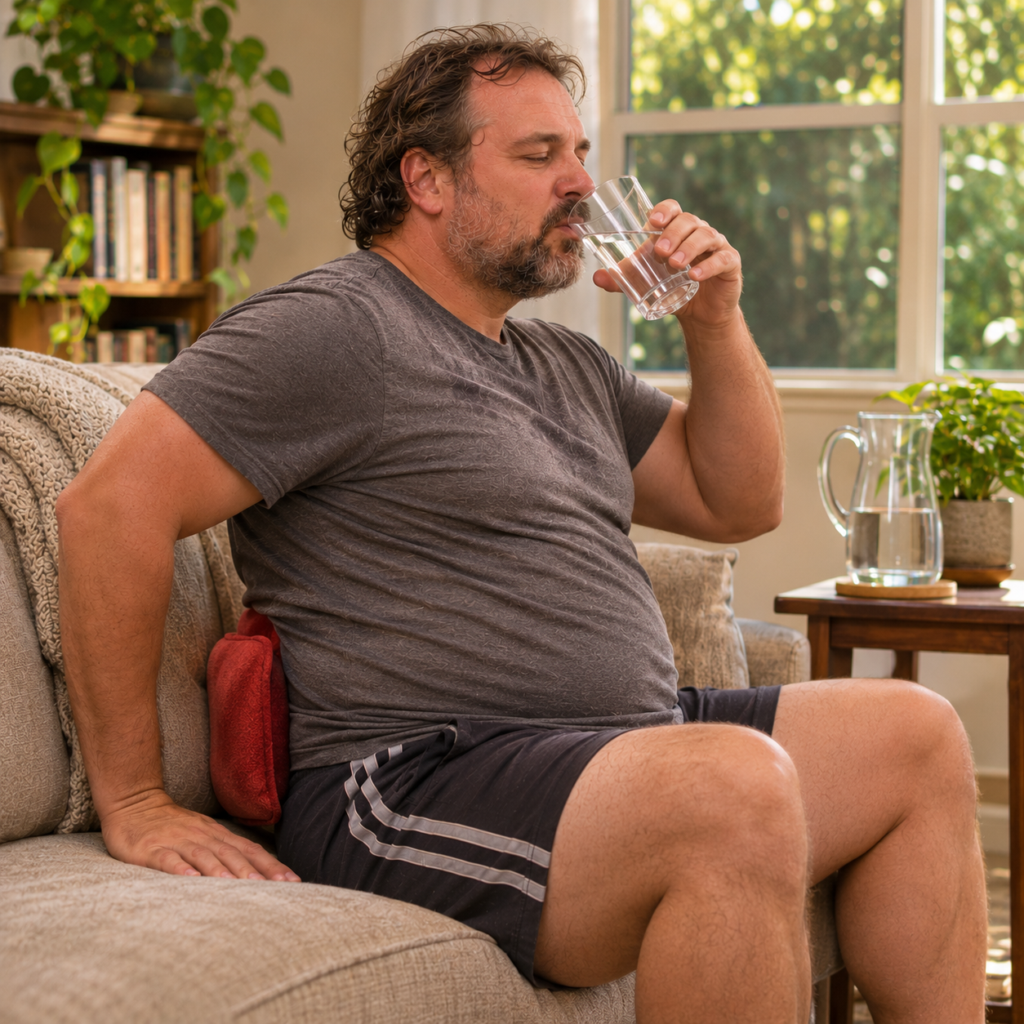
Acupressure may provide comfort for kidney stone pain when a doctor has diagnosed the stone and expects it to pass. It should be used alongside the pain relief and fluids the doctor recommends.
- During an episode of pain, apply pressure to LI4 and LV3 on both sides. If nausea occurs as well, apply pressure to PC6.
- Between waves, use the tennis ball on BL23 and BL52 while breathing slowly into the lower back, and rest your fingertips lightly on GB25 on the affected side.
- As the pain moves lower toward the groin, apply pressure to SP9 and SP6 on both legs.
- After the stone has passed, apply pressure to BL23, KI3, and SP6 once daily for one to two weeks to support lower-back recovery.
- Apply firm pressure to the hands, arms, legs, and feet; moderate pressure to the back; and light contact to the side of the waist. LI4 and SP6 are avoided during pregnancy.
Prevention matters because the National Kidney Foundation estimates that the chance of having another stone after the first is about one in two or higher. The NKF recommends drinking enough fluids to produce about two and a half liters of urine a day; limiting salt and added sugar; getting enough calcium from foods rather than cutting it out; eating less meat and seafood protein; and eating more fruits and vegetables. It also advises avoiding herbal or nutritional supplements unless a doctor approves them. Traditional Chinese Medicine also recommends cutting back on greasy, rich, and very salty meals and alcohol, which contribute to Damp-Heat, and keeping the low back warm. A warm compress on the low back may also ease the ache as a small stone passes.
Learn more about how much water to drink each day.
When to Get Professional Help

If you have kidney stone pain along with a fever or chills, go to the emergency room right away. A blocked kidney with an infection can become life-threatening quickly. Seek emergency care if pain relievers do not ease your pain, if you are vomiting and cannot keep fluids down, if you have very little or no urine, or if you see a lot of blood or clots in your urine. If you have only one working kidney, a kidney transplant, or reduced kidney function, seek care as soon as you notice signs of a stone. If you have severe pain on one side of your back or flank for the first time, get a medical evaluation, since other serious problems, such as aortic issues in older adults, can cause similar pain. See a doctor or urologist if a stone has not passed after a few weeks, and after passing any stone, to discuss testing and prevention. Women who develop severe flank or back pain during pregnancy should contact their obstetric provider promptly. Acupressure can relieve discomfort, but it does not dissolve or pass a kidney stone.
Acupressure is a gentle, supportive practice for kidney stone pain. It complements, and does not replace, diagnosis and medical care.
For related health concerns, acupressure for UTI pain, acupressure for lower back pain, and acupressure for vomiting are companion articles.
Above and Beyond Acupuncture offers acupuncture, cupping, and lifestyle coaching at the North Frank Lloyd Wright Boulevard location in Scottsdale.
Schedule an appointment online to start your healing journey.
The points above are only as effective as the technique used to apply them. Where to press, how firmly, and for how long all affect the result. For a full breakdown of how to perform acupressure properly at home, read Performing Acupressure in 3 Easy Steps.

About the Publisher
Paul Kerzner, L.Ac., is a licensed acupuncturist and board-certified herbalist, as well as the founder of Above and Beyond Acupuncture in Scottsdale. His own journey from chronic patient to practicing acupuncturist shapes his commitment to providing honest, clinically grounded information about acupuncture and Traditional Chinese Medicine. Learn more about Paul and his clinical approach on the About Us page.