Key Takeaways
- A urinary tract infection usually affects the bladder, causing burning or stinging when you urinate, frequent urges to go, and pressure or cramping in the lower belly.
- A healthcare provider needs to diagnose a UTI and, in most cases, prescribe antibiotics. Fever, chills, or pain in your side or back may signal a kidney infection and require same-day care.
- In Traditional Chinese Medicine, burning and urgency from a bladder infection are seen as signs of Damp-Heat in the Bladder. This often follows eating too much spicy food, drinking alcohol, experiencing stress, or becoming run down.
- Nine acupressure points on the arms, lower abdomen, lower back, legs, and feet may ease pelvic pressure and the urge to keep going while the treatment takes effect.
- Drinking plenty of fluids, urinating after intercourse, and eating a lighter diet during an infection can help the body clear it and reduce the chance of it returning.
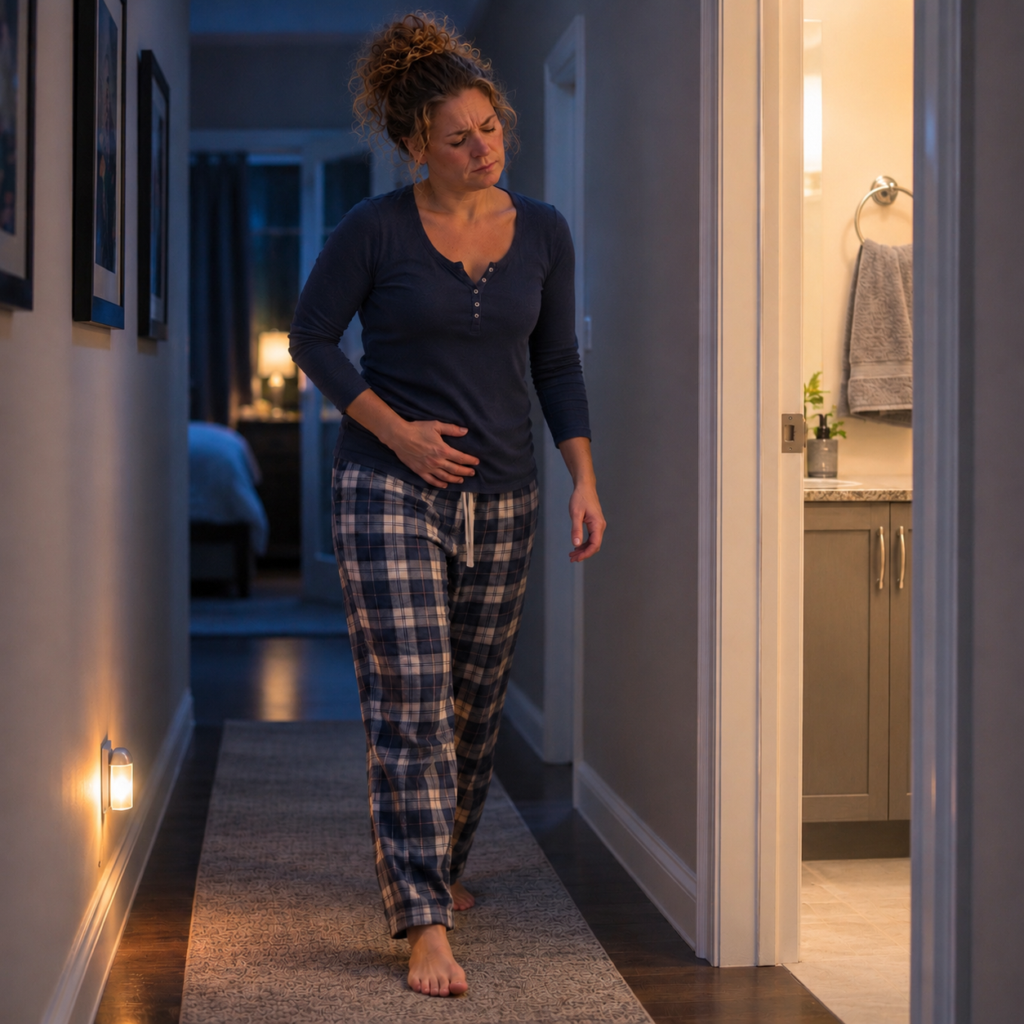
The first sign is usually subtle: a slight sting at the end of urination, followed by another trip to the bathroom twenty minutes later with little result. By evening, you may feel the urge to go every few minutes, a heaviness and soreness in your lower belly, and a full night’s sleep can seem unlikely. Many women recognize this pattern, which can return several times a year.
The Centers for Disease Control and Prevention describes a bladder infection as the most common type of UTI. Symptoms may include discomfort or stinging when urinating, frequent urination, feeling the urge to go again right after emptying the bladder, blood in the urine, and pressure or cramping in the groin or lower belly. A kidney infection is less common but more serious, and may cause fever and chills, pain in the lower back or along one side, and nausea or vomiting. The CDC lists being female, recent sexual activity, pregnancy, older age, an enlarged prostate, and a previous UTI as risk factors. It also notes that a healthcare provider treats a UTI with antibiotics.
Bacteria usually enter the bladder through the urethra. Because the female urethra is short and near the rectum, bacteria have less distance to travel, which helps explain why women get these infections much more often than men. When the bladder lining is irritated, even a small amount of urine can cause a strong urge to go. The burning occurs when urine passes over inflamed tissue as it leaves the body.
In Traditional Chinese Medicine, this pattern is known as Damp-Heat in the Bladder. Spicy or greasy foods, alcohol, insufficient water, and prolonged sitting can cause Dampness and Heat to accumulate in the lower body. When they settle in the Bladder, urination may become hot, scanty, urgent, and painful. Ongoing stress that keeps the Liver tense can add to the Heat, while recurring infections may indicate weak Kidney Qi and a reduced ability of the lower body to defend itself.
The points start at the elbow, move down to the lower abdomen and low back, then finish at the legs and feet.
What Acupressure Points to Press and Why
1. Press on LI11 at the outer elbow to clear Heat. LI11 sits at the outer end of the elbow crease when the elbow is bent, in the hollow between the end of the crease and the bony point of the elbow. Press firmly with the thumb of your other hand for one to two minutes on each arm. LI11 is called “Quchi,” the “Pool at the Crook.”
LI11 is the Large Intestine’s sea point and a classic point for clearing Heat from the body. It can help cool the hot, burning sensation during urination and may be useful when the infection is accompanied by a mild fever or a flushed, overheated feeling.
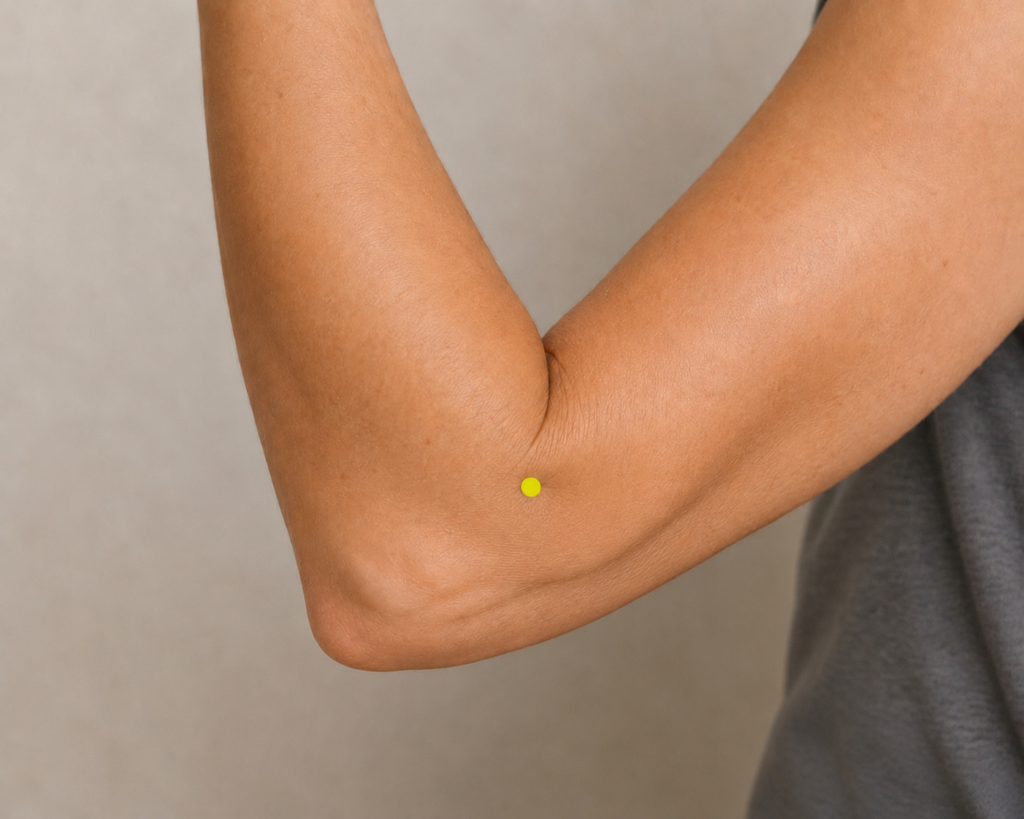
2. Hold CV3 above the pubic bone to calm the Bladder. CV3 sits on the midline of the lower abdomen, about one thumb-width above the top edge of the pubic bone. Rest two fingertips on the point with light pressure for one to two minutes while breathing slowly into the belly. CV3 is called “Zhongji,” the “Middle Pole.”
CV3 is the Bladder’s alarm point, where its Qi gathers at the front of the body. It is traditionally used to address painful, urgent, or frequent urination, as well as heavy, aching pressure just above the pubic bone.
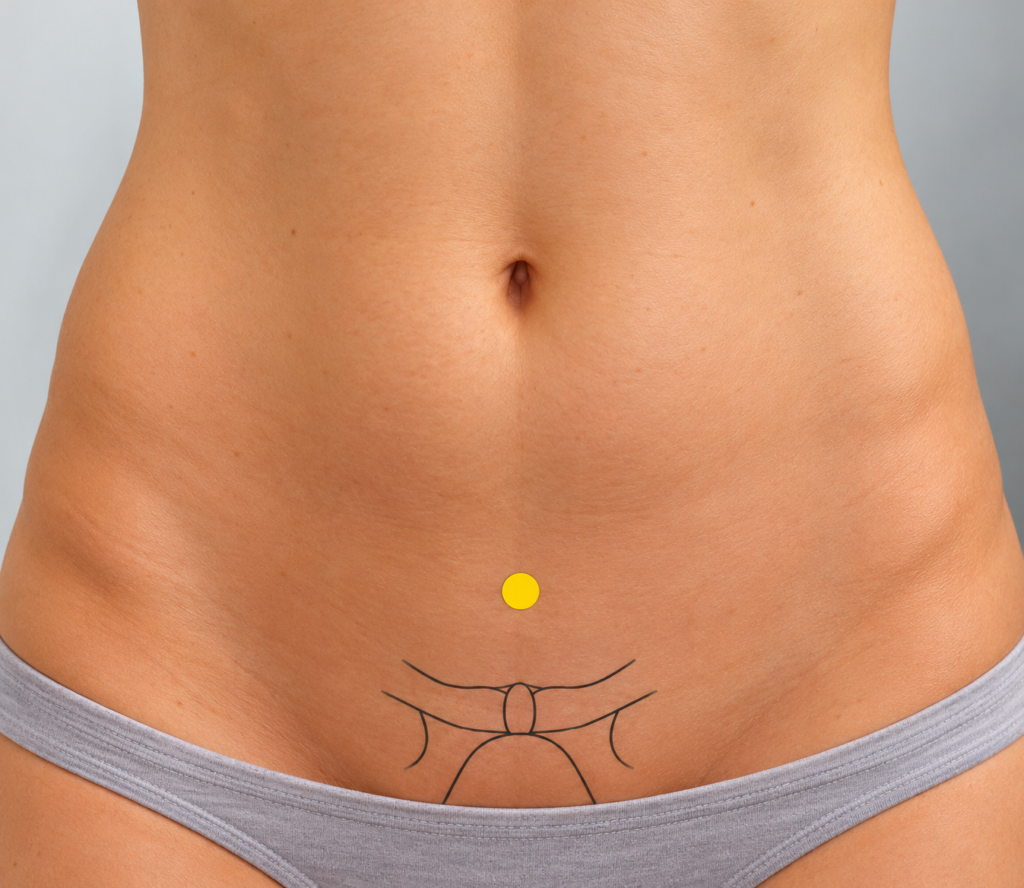
3. Hold ST28 on the lower abdomen to help urine flow. ST28 sits on the lower abdomen, three finger-widths out from the midline on each side, about four finger-widths below the navel. Rest two fingertips on each point with light pressure for one to two minutes. ST28 is called “Shuidao,” the “Water Passage.”
ST28 is traditionally used to open the water passages in the lower body. It may help when urination feels blocked, occurs in small amounts, or leaves the feeling that the bladder hasn’t fully emptied.
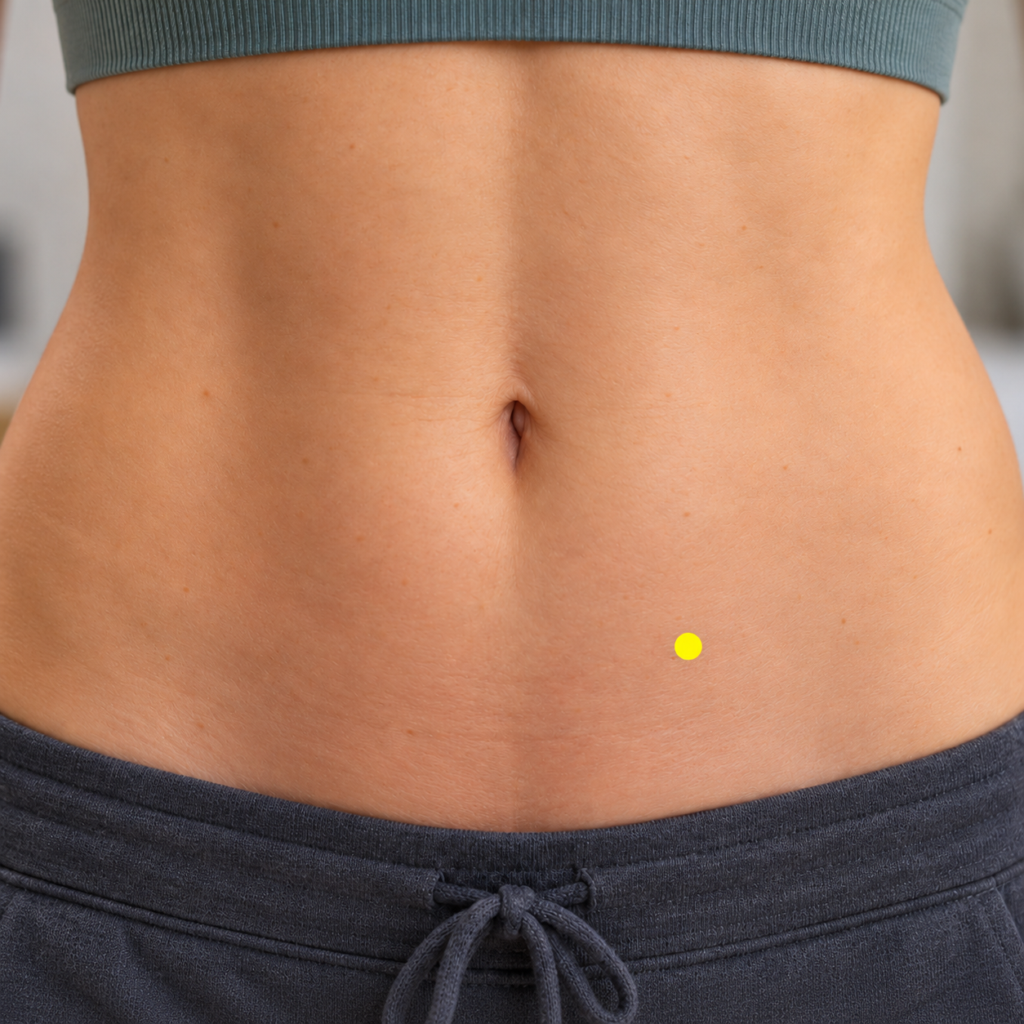
4. Press on BL23 on the low back to support the Kidney. BL23 sits on the low back, two finger-widths out from the spine on each side, level with the bottom of the rib cage at the waist. Lie on your back with a tennis ball under the point, or lean against a wall with the ball in place, and press into it for one to two minutes on each side. BL23 is called “Shenshu,” the “Kidney Shu.”
BL23 is the Kidney’s back transport point. It strengthens the Kidney and eases a dull ache across the lower back. It may be especially helpful for women whose infections keep returning after periods of stress, overwork, or poor sleep.
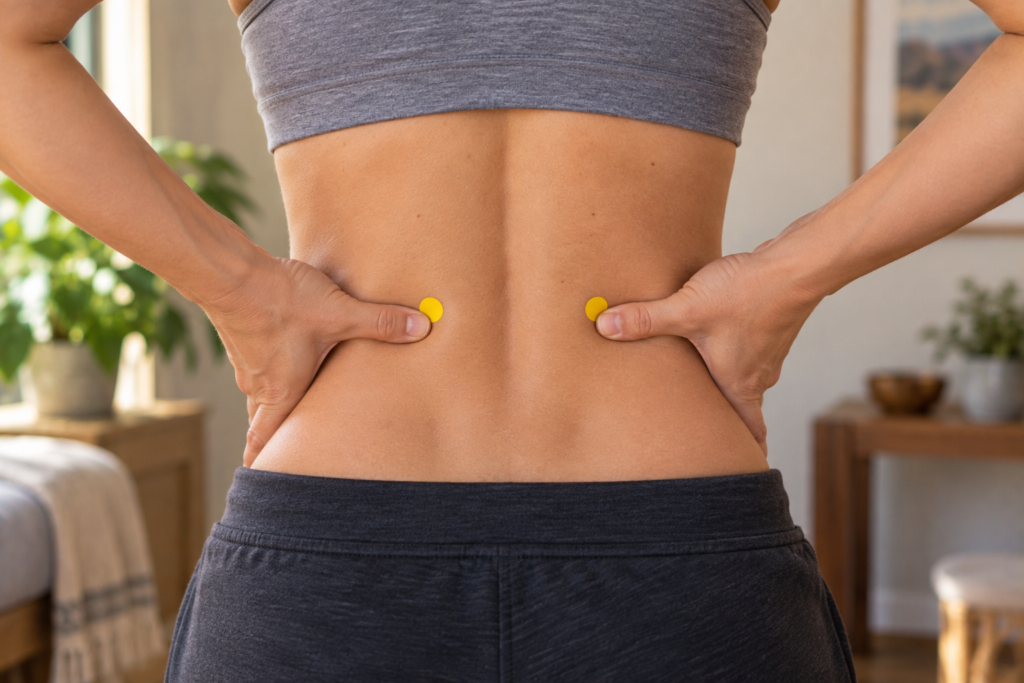
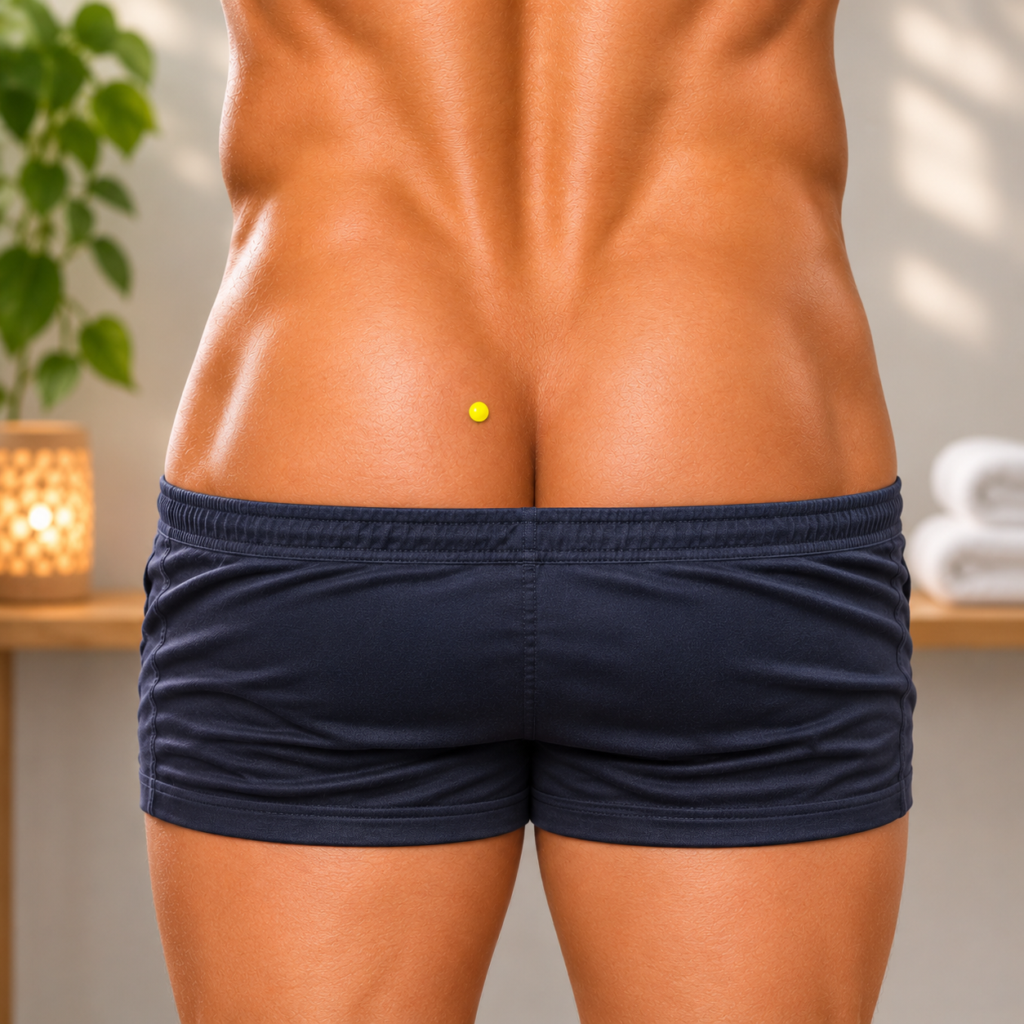
5. Press on BL28 on the sacrum to clear the Bladder. BL28 sits on the flat, triangular bone at the base of the spine, two finger-widths out from the midline on each side, roughly level with the two dimples of the low back. Press with the tennis ball or with your fingertips for one to two minutes on each side. BL28 is called “Pangguangshu,” the “Bladder Shu.”
BL28 is the Bladder’s back transport point. It clears Damp-Heat from the Bladder and works from the back to ease the burning, urgency, and pelvic heaviness associated with a bladder infection.
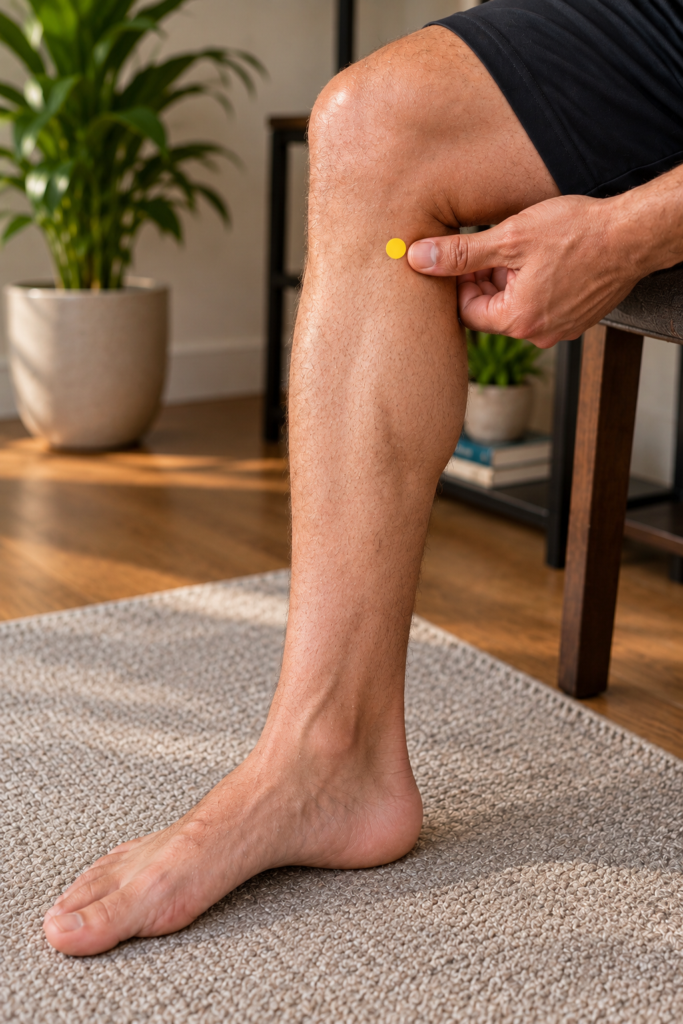
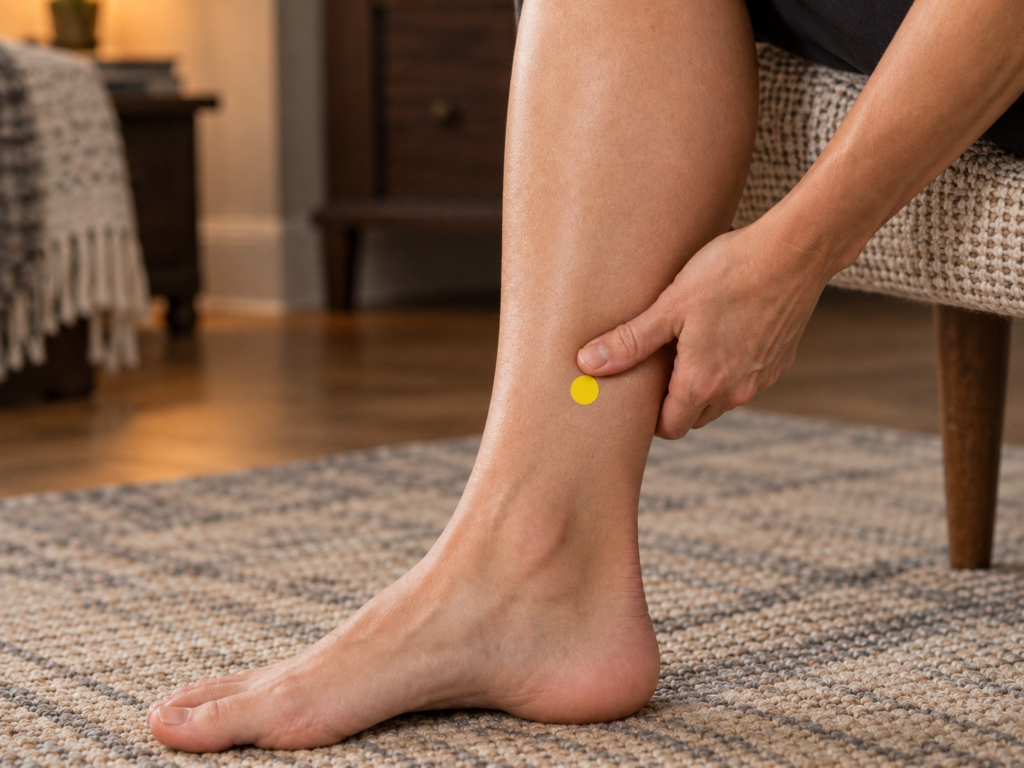
6. Press on SP9 below the inner knee to drain Dampness. SP9 sits on the inner side of the lower leg, in the hollow just below the rounded bulge at the top of the shinbone. Press firmly with your thumb for one to two minutes on each leg. SP9 is called “Yinlingquan,” the “Yin Mound Spring.”
SP9 is the Spleen’s sea point and a key point in Traditional Chinese Medicine for draining Dampness from the lower body. It’s commonly used for painful, difficult, or scanty urination.
7. Press on SP6 above the inner ankle to support the lower body. SP6 sits on the inner side of the lower leg, four finger-widths above the tip of the inner ankle bone, just behind the edge of the shinbone. Press firmly with your thumb for one to two minutes on each leg. SP6 is called “Sanyinjiao,” the “Three Yin Intersection.”
SP6 is where the Spleen, Liver, and Kidney channels of the leg meet, and all three pass through the lower abdomen. It helps resolve Dampness, relieve pelvic discomfort, and support urination. SP6 is avoided during pregnancy.
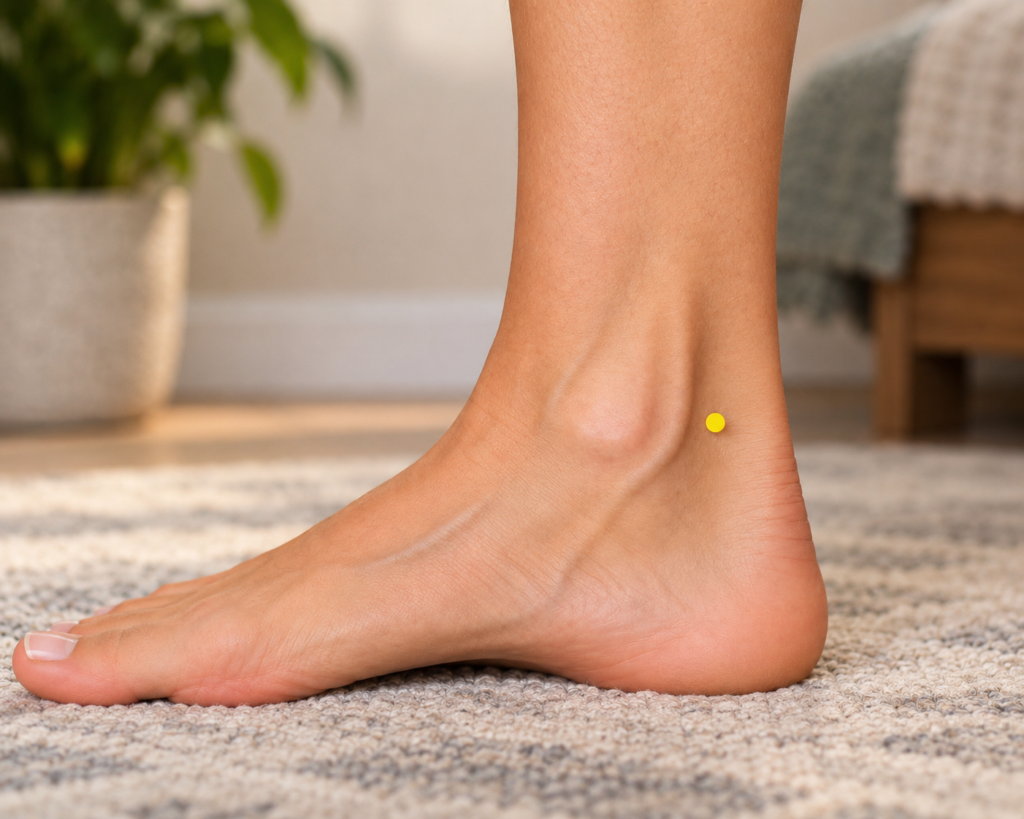
8. Press on KI3 behind the inner ankle to strengthen the Kidney. KI3 sits in the hollow between the inner ankle bone and the Achilles tendon. Press with moderate pressure for one to two minutes on each foot. KI3 is called “Taixi,” the “Great Ravine.”
KI3 is the Kidney’s source point. It builds Kidney Qi, which Traditional Chinese Medicine considers the foundation of a healthy Bladder, and is a steady point to use between infections.
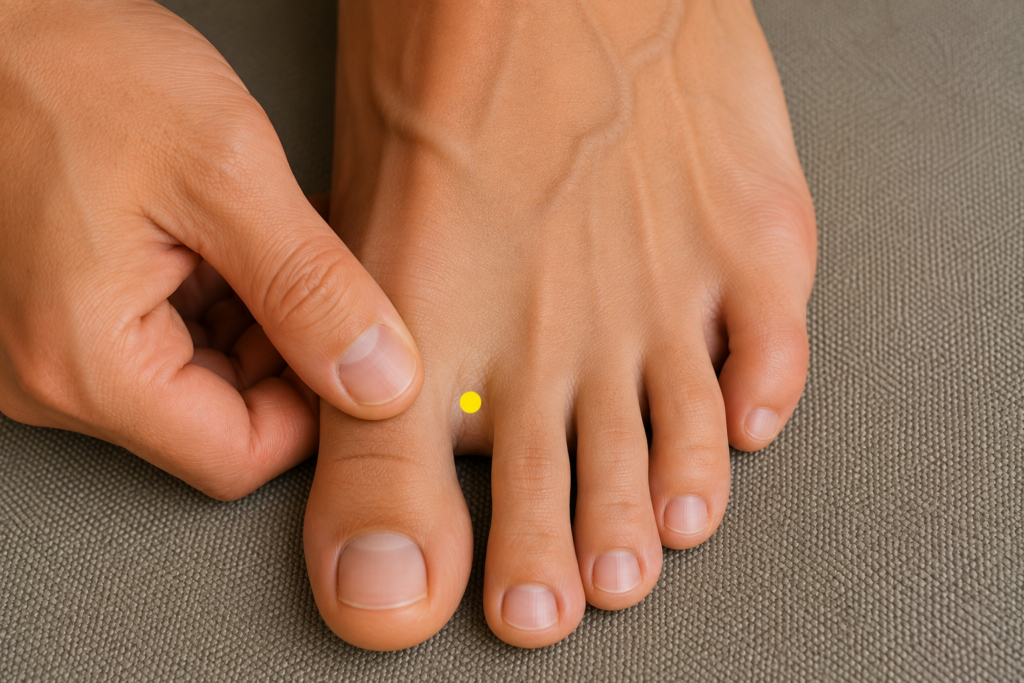
9. Press on LV2 between the first two toes to cool the lower body. LV2 sits on the top of the foot, just behind the web between the big toe and second toe. Press firmly with your thumb for one to two minutes on each foot. LV2 is called “Xingjian,” the “Moving Between.”
LV2 is the Liver’s fire point. The Liver channel circles the genitals and lower abdomen, and LV2 clears Heat traveling down this channel, helping relieve burning urination and the irritability that often accompanies a stubborn infection.
Why These Acupressure Points Work
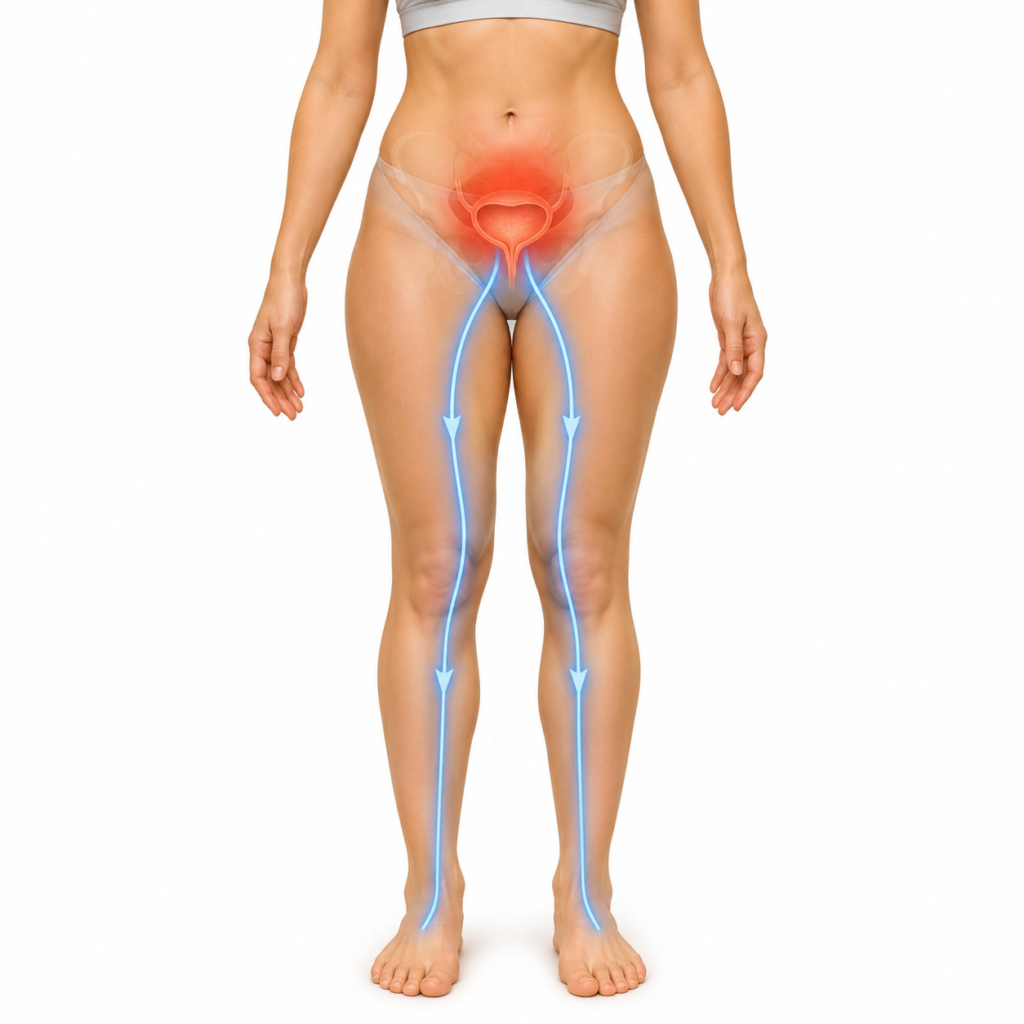
Traditional Chinese Medicine views a bladder infection as Heat and Dampness trapped where the Bladder should move fluid freely. Some points work directly on the Bladder: CV3 and ST28 from the front, and BL28 from behind. Others drain Dampness through the Spleen channel, clear Heat through the Large Intestine and Liver, or strengthen the Kidney so the lower body can better defend itself next time.
These nine points work together to alleviate pain associated with urinary tract infections (UTIs):
- LI11 and LV2 clear the Heat behind the burning.
- CV3, ST28, and BL28 calm the Bladder and ease pelvic pressure.
- SP9 and SP6 drain Dampness from the lower body.
- BL23 and KI3 strengthen the Kidney between infections.
How to Properly Use These Acupressure Points
Acupressure may help ease UTI pain alongside treatment prescribed by a healthcare provider. You can use it during the first few days while antibiotics take effect and as part of your routine between infections.
- During an active infection, apply pressure to SP9, SP6, and LV2 on both legs twice daily, followed by LI11 on both arms.
- For pressure or cramping above the pubic bone, gently place your fingertips on CV3 and ST28 while breathing slowly into your lower abdomen.
- For lower back discomfort, apply the tennis ball to BL23 and BL28. Discontinue use and contact a healthcare provider if the pain is confined to one side or is accompanied by a fever.
- Between infections, apply pressure to BL23, KI3, and SP6 once daily to support the health of the kidneys and bladder.
- Apply firm pressure to the arms, legs, and feet; light contact to the lower abdomen; and moderate pressure to the back. SP6, CV3, and ST28 are avoided during pregnancy.
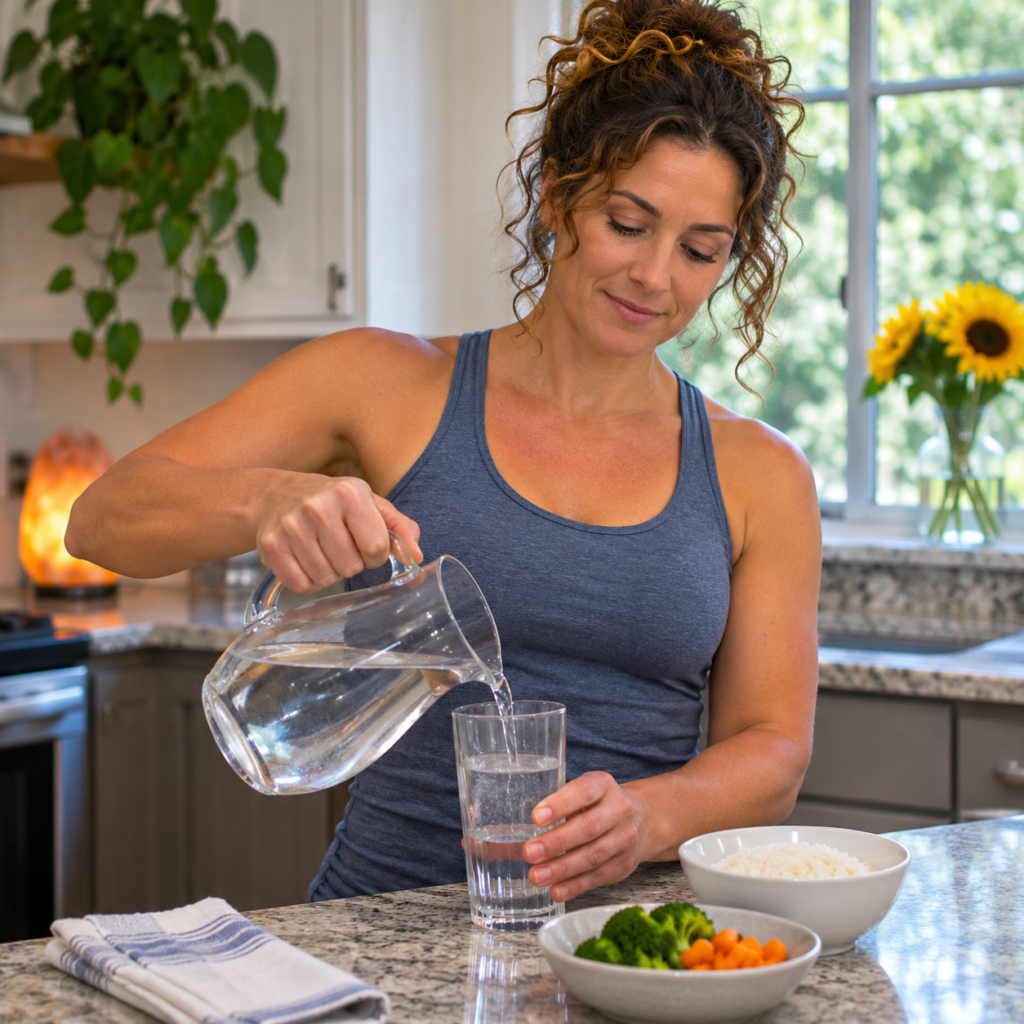
Daily habits can make a real difference. The CDC recommends drinking plenty of fluids, urinating after intercourse, showering rather than bathing, and avoiding douches, sprays, and powders in the genital area. Avoid holding urine for long periods, and change out of wet swimsuits or sweaty workout clothes soon after wearing them. During an infection, Traditional Chinese Medicine recommends avoiding spicy foods, alcohol, coffee, and greasy meals, which are thought to add Heat and Dampness, and choosing plain, mild foods such as rice, steamed vegetables, and clear soups.
Learn more about how much water to drink each day.
When to Get Professional Help

If you have symptoms of a urinary tract infection, contact a healthcare provider. Most UTIs require antibiotics, and an untreated bladder infection can spread to the kidneys. Seek medical care the same day if you have a fever, chills, pain in your side or back, nausea, vomiting, or blood in your urine, as these could indicate a kidney infection. Go to the emergency room for a high fever, confusion, or vomiting that keeps you from keeping fluids down. Men with UTI symptoms should always be evaluated by a doctor. You should also be evaluated if your symptoms don’t improve within two or three days of starting antibiotics or return soon after you finish them. If an infant or young child has a fever without an obvious cause, seek medical care right away. Babies under three months old with a temperature of 100.4°F or higher need immediate care. Pregnant women who develop UTI symptoms should contact their obstetric provider as soon as possible. Acupressure can ease discomfort, but it does not cure an infection or take the place of antibiotics.
Acupressure is a gentle, supportive practice for UTI pain. It complements, and does not replace, diagnosis and medical care.
For related concerns, acupressure for urinary incontinence, acupressure for chronic pelvic pain, and acupressure to boost the immune system are companion pieces.
Above and Beyond Acupuncture offers acupuncture, cupping, and lifestyle coaching at the North Frank Lloyd Wright Boulevard location in Scottsdale.
Schedule an appointment online to start your healing journey.
The points above are only as effective as the technique used to apply them. Where to press, how firmly, and for how long all affect the result. For a full breakdown of how to perform acupressure properly at home, read Performing Acupressure in 3 Easy Steps.
About the Publisher
Paul Kerzner, L.Ac., is a licensed acupuncturist and board-certified herbalist, as well as the founder of Above and Beyond Acupuncture in Scottsdale. His own journey from chronic patient to practicing acupuncturist shapes his commitment to providing honest, clinically grounded information about acupuncture and Traditional Chinese Medicine. Learn more about Paul and his clinical approach on the About Us page.