Key Takeaways
- Nightmares can disrupt sleep and often stem from stress, anxiety, or trauma.
- Acupressure for nightmares utilizes specific points to calm the mind and promote restful sleep.
- Key points include Yintang for quieting the mind, HT7 and PC7 for settling fear, SP6 for nourishing the Blood, and LR3 for anchoring the Hun.
- Establish a nightly acupressure routine and maintain healthy sleep habits to reduce nightmares.
- Seek professional help for frequent nightmares or if they cause distress or anxiety during the day.
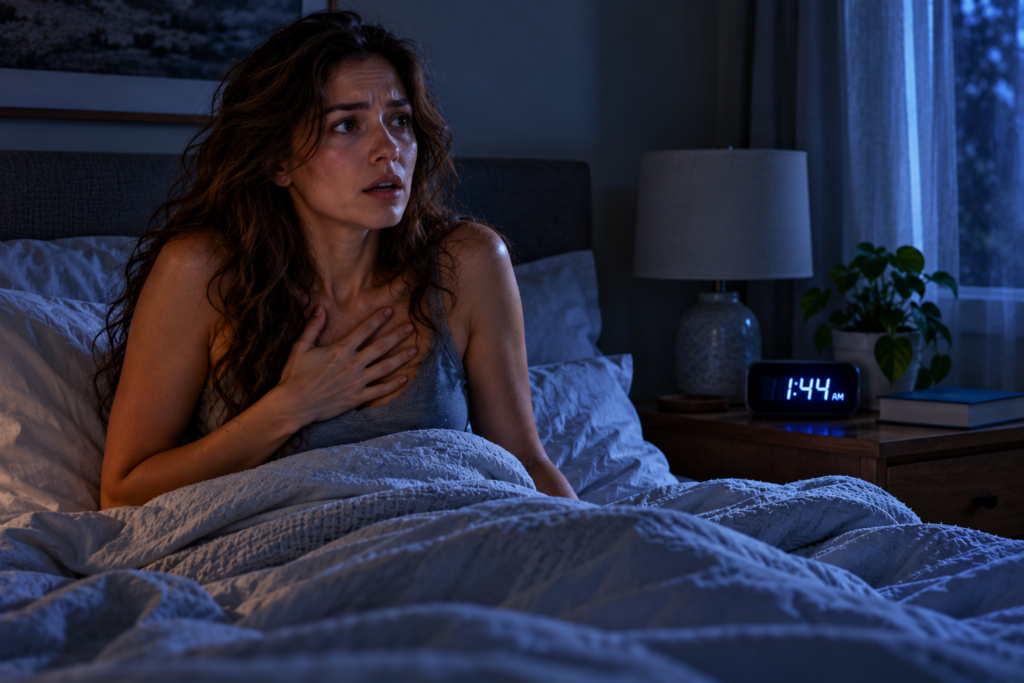
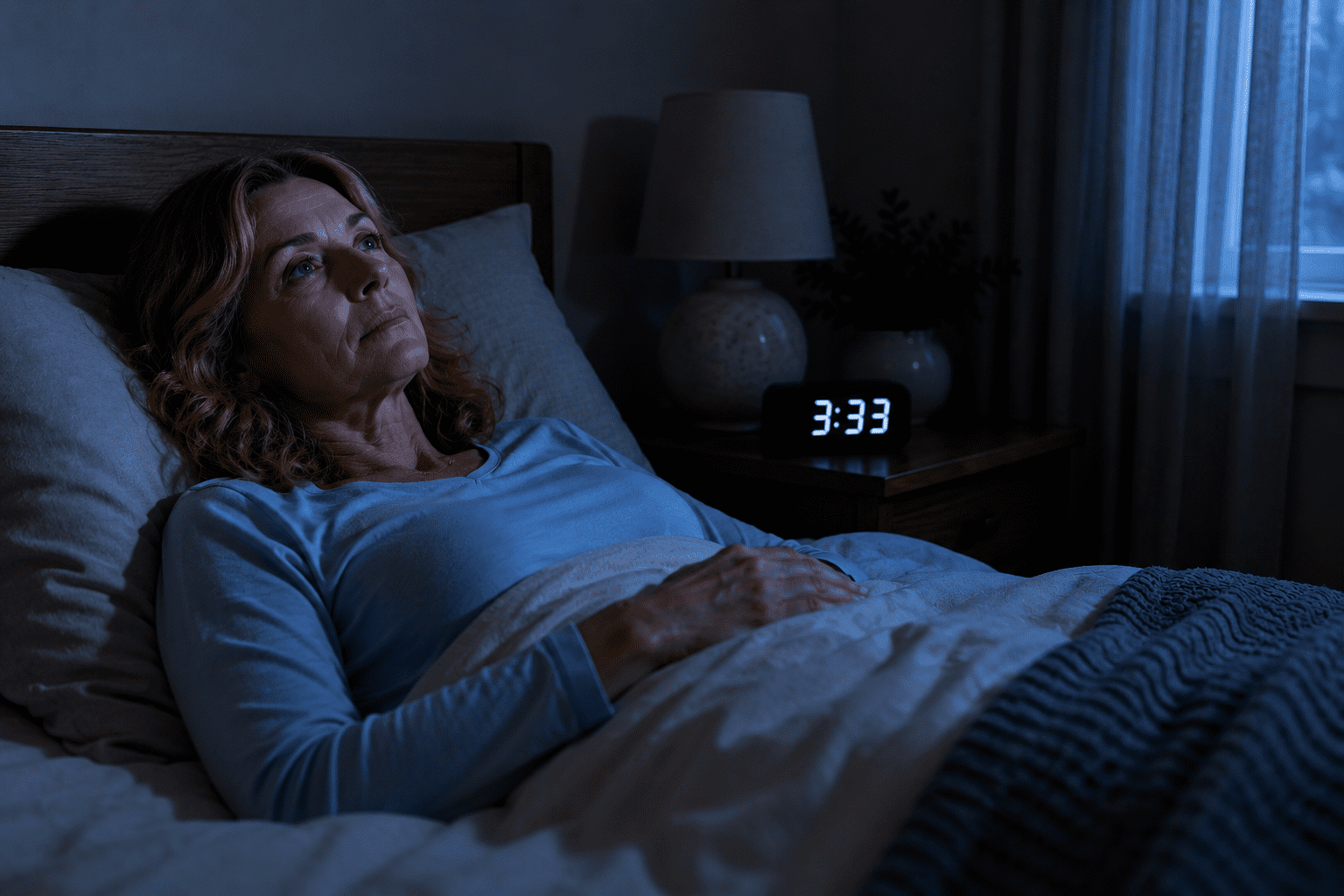
Do you wake in the middle of the night with your heart pounding, the details of a frightening dream still vivid? Do you lie awake afterward, afraid to close your eyes in case the dream continues? Maybe the same dream keeps returning, or you’ve started to dread going to bed altogether. Nightmares can turn the time meant for rest into something to fear.
Nightmares are intense, unsettling dreams that usually occur during REM sleep, the stage when most dreaming happens. REM sleep lasts longer later in the night, so nightmares often happen in the early morning. Unlike ordinary bad dreams that fade by morning, nightmares often wake you, and feelings such as fear, sadness, or anger can linger well into the next day.
Most people have nightmares occasionally, but frequent nightmares usually have a cause. Stress and anxiety are the most common triggers, while trauma can lead to repeated nightmares about the event. Other factors that may make nightmares more likely include insufficient sleep, an irregular sleep schedule, alcohol use, eating late, fever, and taking certain medications or starting or stopping them.
According to Traditional Chinese Medicine, the Heart is where the Shen, or spirit, resides, while the Liver is home to the Hun, the ethereal soul believed to wander during sleep and create dreams. When Heart Blood and Yin are strong, the Shen rests peacefully at night; when Liver Blood is full, the Hun remains grounded. Stress, shock, grief, or prolonged overwork can weaken these foundations, leaving the Shen restless and the Hun adrift, leading to vivid, frequent nightmares.
These nine acupressure points can help calm the Shen, anchor the Hun, nourish the Blood, and draw restless energy downward for deeper sleep.
What Acupressure Points to Press and Why
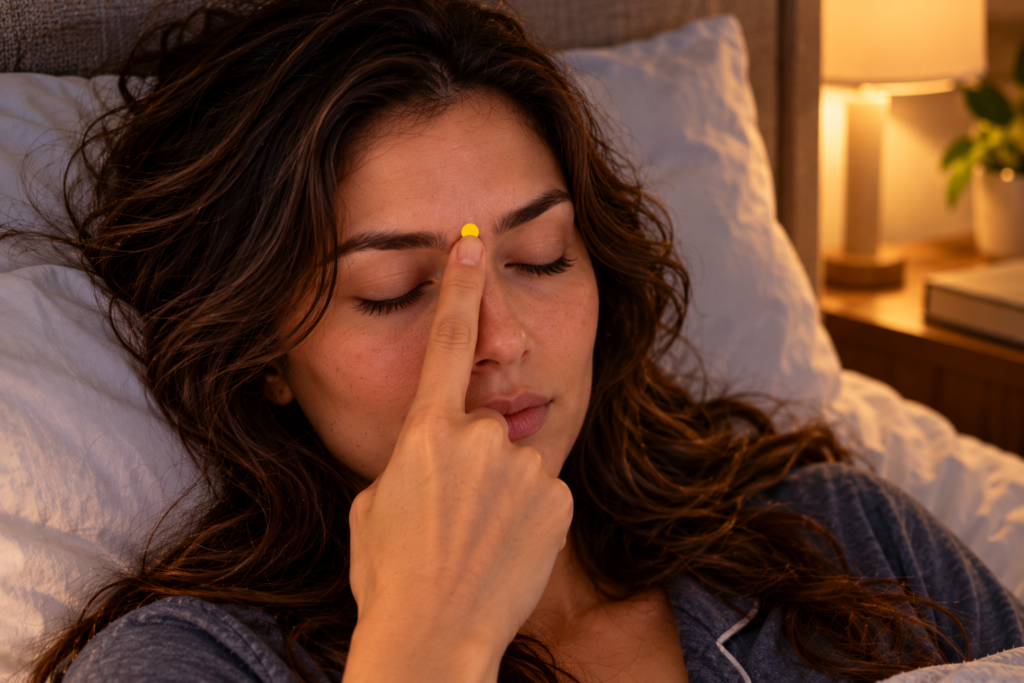
1. Press on Yintang between the eyebrows to quiet the mind before sleep. Yintang sits in the small hollow directly between the eyebrows. Press gently with your middle fingertip, or make slow circles for one to two minutes with your eyes closed. Yintang is called the “Hall of Impression.”
Yintang is one of the body’s most soothing points. It quiets busy, recurring thoughts that keep the mind active at night and helps the whole body ease into rest. It’s a gentle point to use every evening.
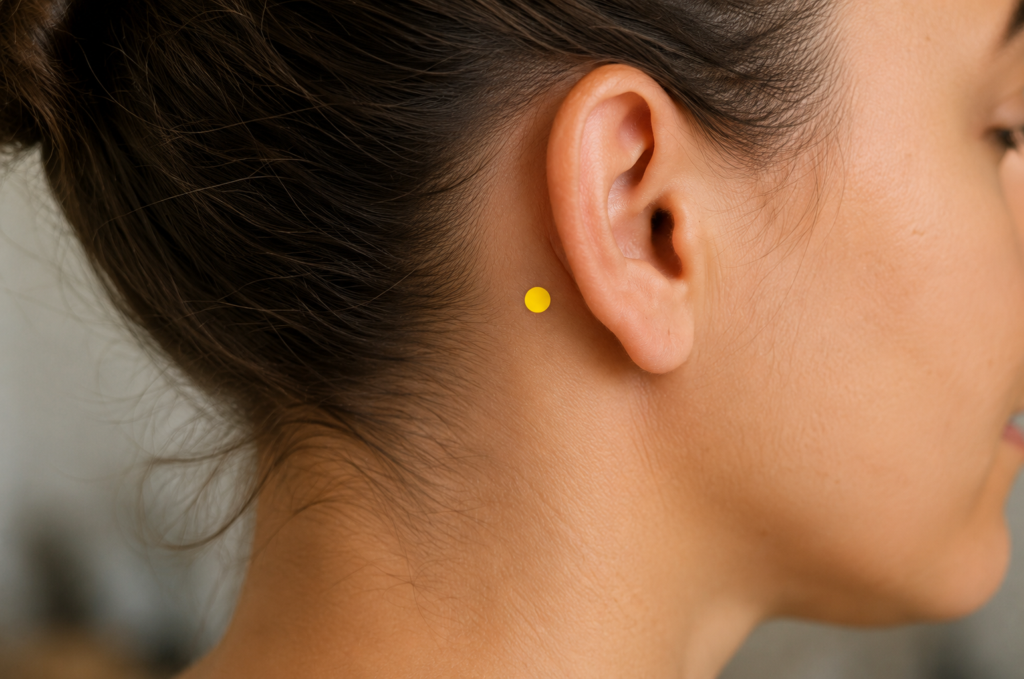
2. Press on Anmian behind the ear to promote peaceful sleep. Anmian sits behind each ear, in the small hollow halfway between the bony bump just behind the earlobe and the hollow at the base of the skull. Press gently with your fingertips for one to two minutes on both sides at once. Anmian means “Peaceful Sleep.”
Anmian is used exclusively for sleep disorders, including restless or dream-disturbed sleep. It calms the mind and eases tension in the head and neck that may linger into the night after a stressful day.
3. Press on HT7 on the wrist to settle the spirit. HT7 sits on the inner wrist crease, on the pinky side, in the small hollow just inside the tendon. Press gently with the thumb of your other hand for one to two minutes on each wrist. HT7 is called “Shenmen,” the “Spirit Gate.”
HT7 is the Heart’s source point and one of the most important points for calming the Shen. It relieves anxiety, settles a racing heart after a nightmare, and helps the spirit rest peacefully throughout the night.
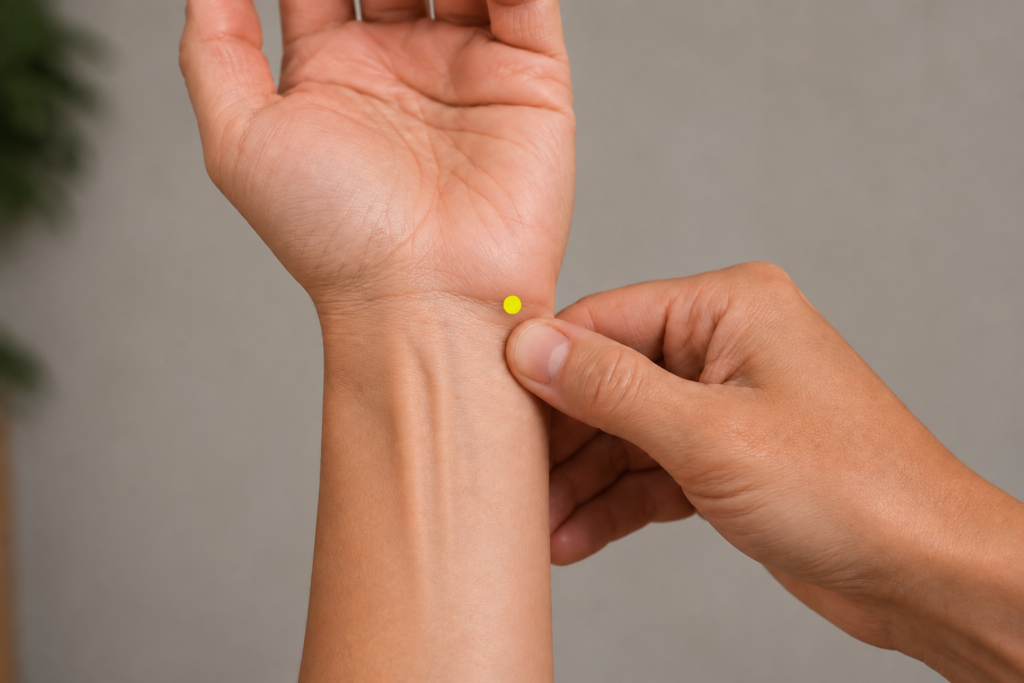
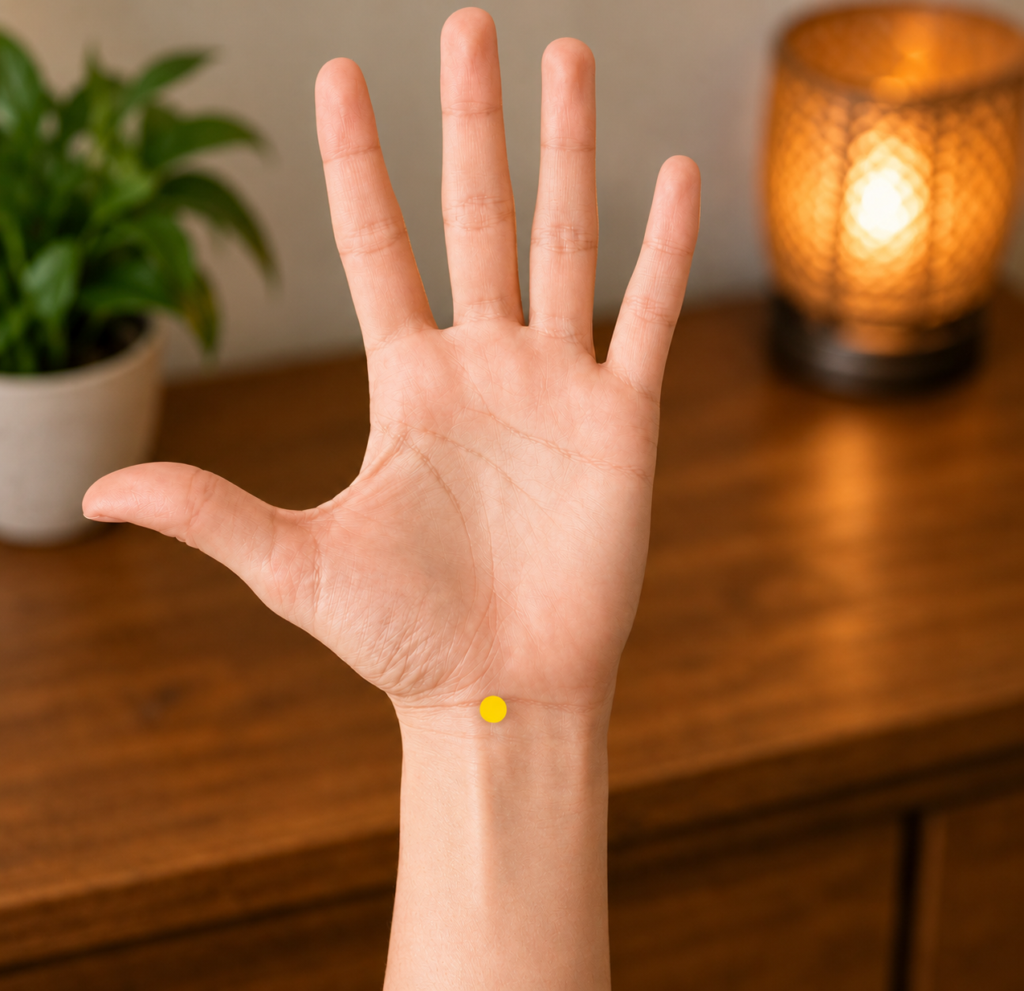
4. Press on PC7 in the center of the wrist to calm fear. PC7 sits in the center of the inner wrist crease, between the two tendons. Press gently with the thumb of your other hand for one to two minutes on each wrist. PC7 is called “Daling,” the “Great Mound.”
PC7 is one of the thirteen ghost points identified by the physician Sun Simiao over a thousand years ago. These points are used when a spirit has become deeply disturbed. PC7 calms fear and agitation, clears heat from the Heart, and is traditionally used for frightening dreams. Because it lies directly beside HT7, the two points can be pressed together.
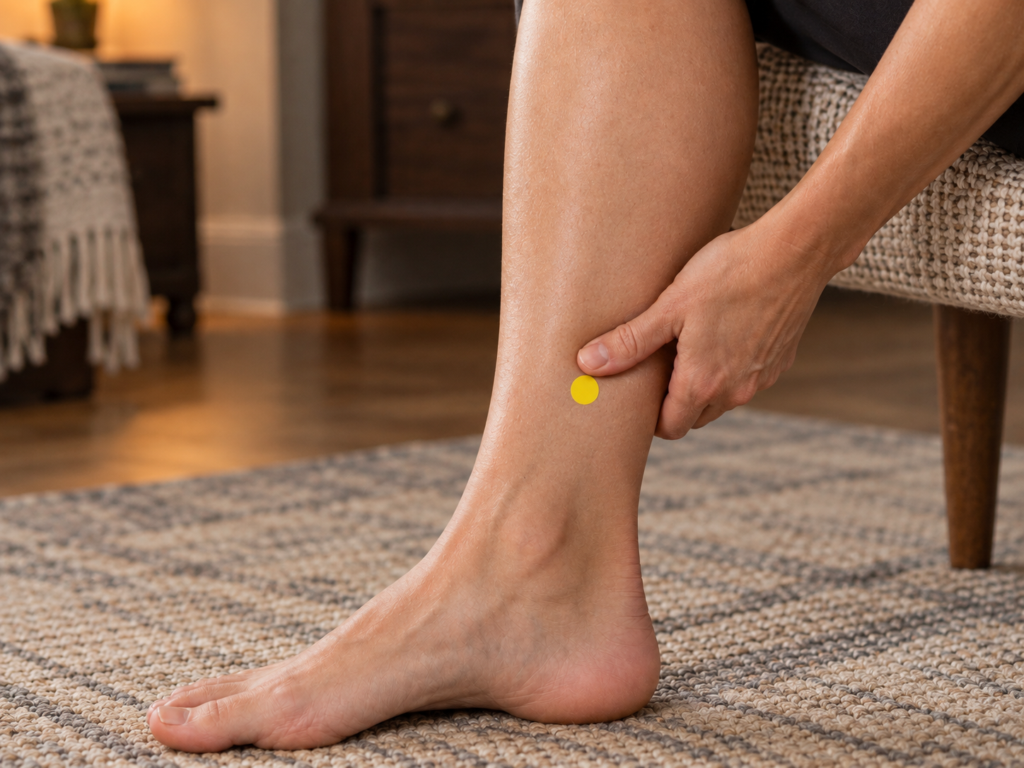
5. Press on SP6 above the inner ankle to nourish the Blood. SP6 sits four finger-widths up from the tip of the inner ankle bone, just behind the back edge of the shinbone. Press firmly with your thumb for one to two minutes on each leg. SP6 is called “Sanyinjiao,” the “Three Yin Intersection.” SP6 is avoided during pregnancy.
SP6 is where the Spleen, Liver, and Kidney channels meet. It helps nourish the Blood and Yin that hold both the Shen and the Hun, making it particularly useful for nightmares associated with exhaustion, several weeks of poor sleep, or heavy periods.
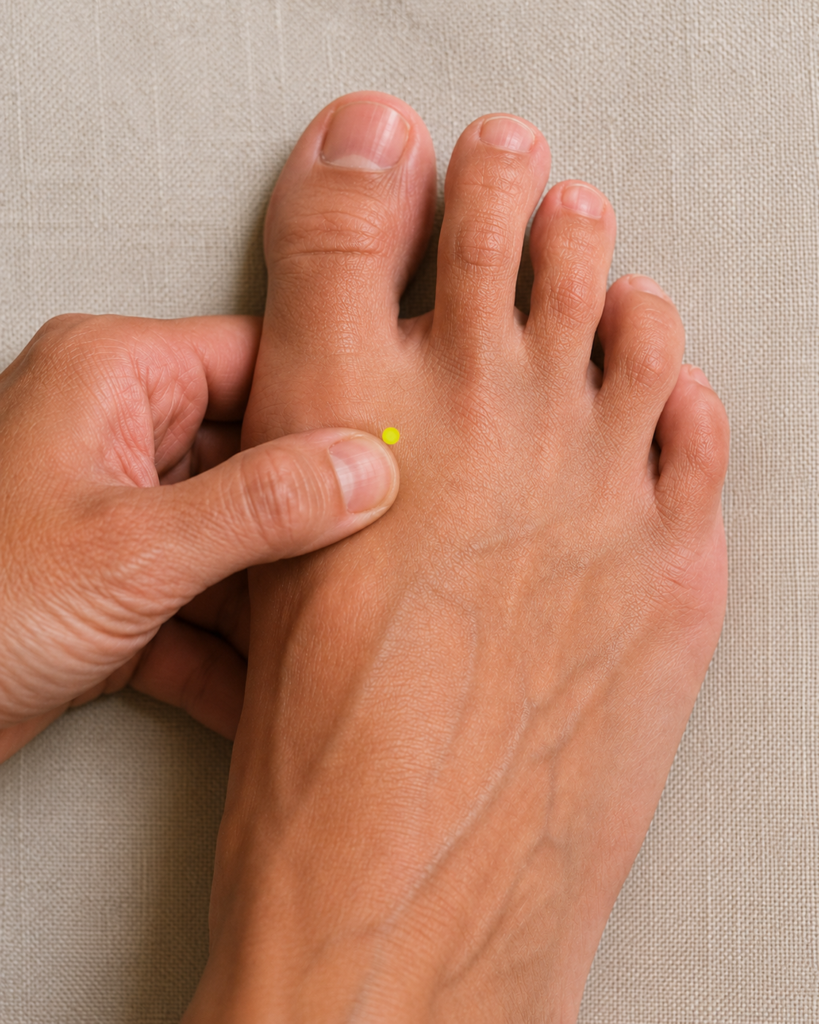
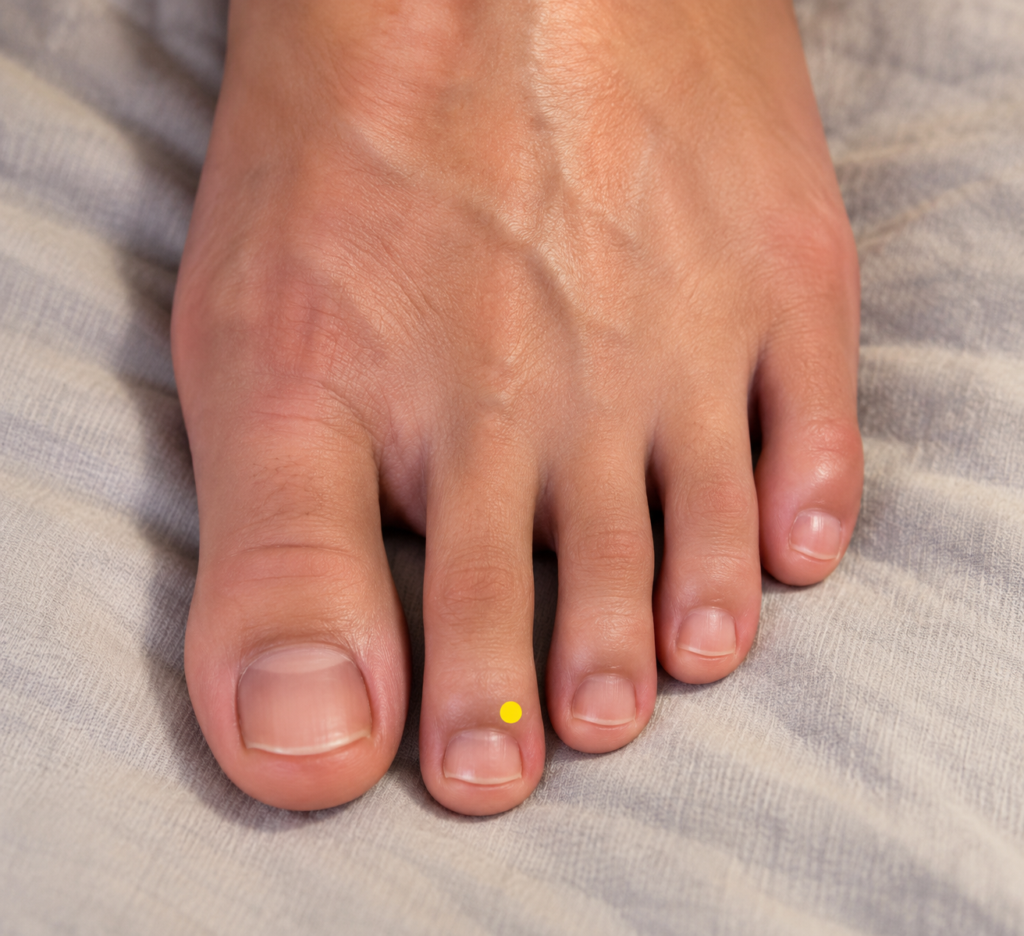
6. Press on LR3 on the top of the foot to anchor the Hun. LR3 sits in the webbing between the big toe and second toe, about two finger-widths back from the webbing, in the hollow just before the two bones meet. Press firmly with your thumb for one to two minutes on each foot. LR3 is called “Taichong,” the “Great Surge.”
The LR3 point is where the Hun is located in relation to the Liver. It helps the Liver release the day’s accumulated stress and tension, reduces irritability, and settles the Hun so it doesn’t wander restlessly at night.
7. Press on SP1 on the big toe to reduce excessive dreaming. SP1 sits on the inner corner of the big toe, just behind the corner of the toenail. Press firmly with your fingertip or the edge of your thumbnail for thirty seconds to one minute on each foot. SP1 is called “Yinbai,” the “Hidden White.”
SP1 is also one of Sun Simiao’s ghost points and a classic acupuncture point in Traditional Chinese Medicine for vivid, excessive dreaming. It is traditionally combined with ST45 on the next toe to calm a restless, overactive mind during sleep.
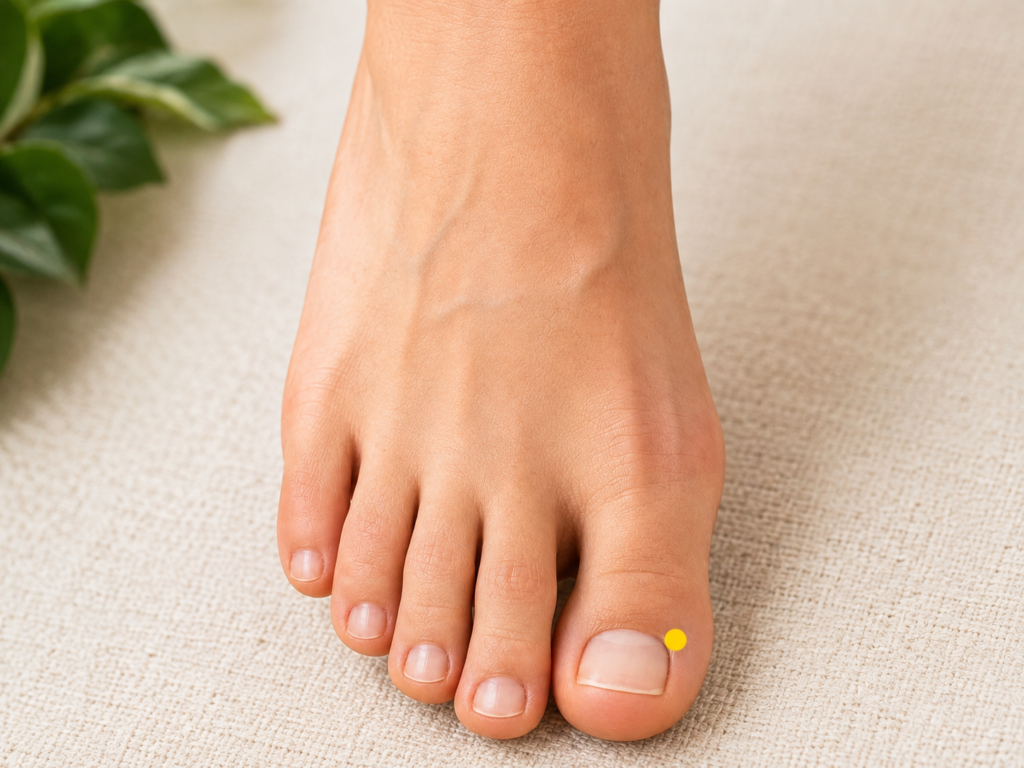
8. Press on ST45 on the second toe to calm disturbed sleep. ST45 sits on the second toe, just behind the outer corner of the toenail, on the side closest to the third toe. Press firmly with your fingertip or the edge of your thumbnail for thirty seconds to one minute on each foot. ST45 is called “Lidui,” the “Strict Exchange.”
ST45 is paired with SP1 and is a traditional acupressure point used for nightmares and disturbed sleep. In Traditional Chinese Medicine, an unsettled Stomach can lead to restless sleep. ST45 clears the heat that rises from the Stomach and disturbs the mind, particularly after a heavy or late meal.
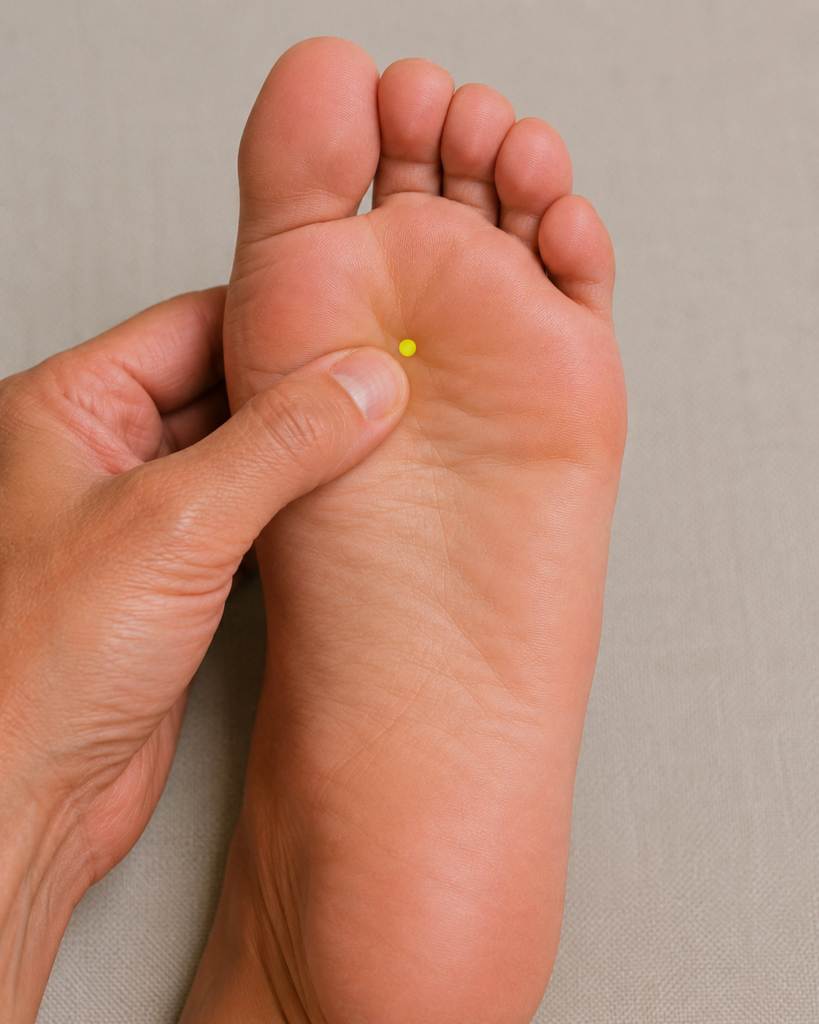
9. Press on KI1 on the sole of the foot to ground the body. KI1 sits on the sole of the foot, in the hollow that forms near the front of the foot when you curl the toes, about one-third of the way from the base of the second toe to the back of the heel. Press firmly with your thumb for one to two minutes on each foot, or roll the sole over a tennis ball. KI1 is called “Yongquan,” the “Bubbling Spring.”
KI1 is the body’s lowest point and one of its most grounding. It draws restless energy down from the head, steadies the body after a frightening dream, and supports the Kidney in balancing the Heart and calming the mind for rest.
Why These Acupressure Points Work
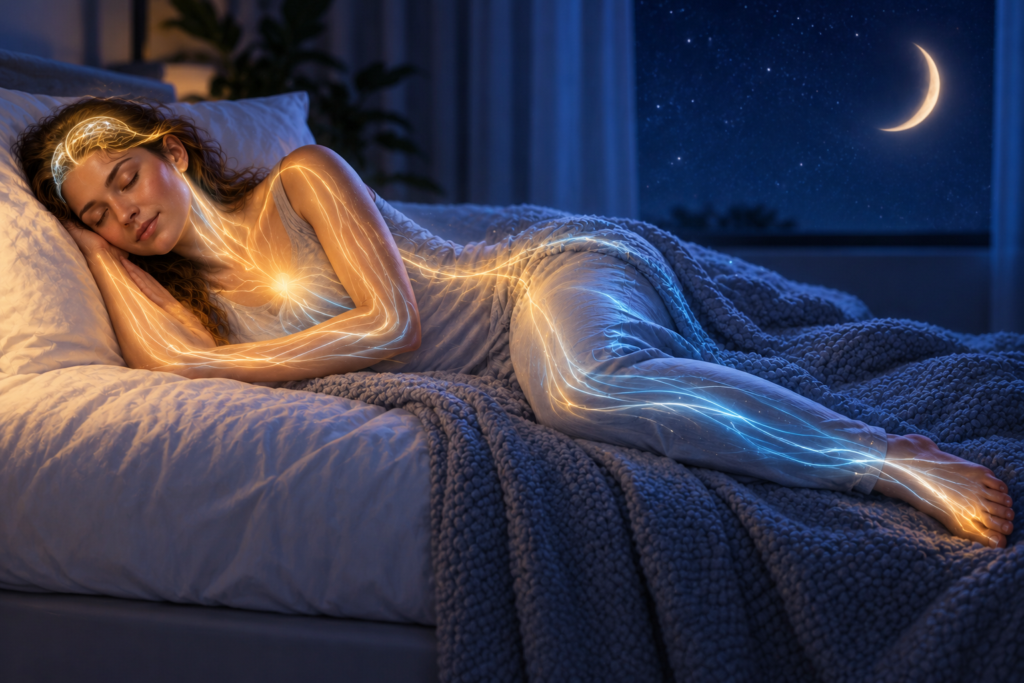
In Traditional Chinese Medicine, peaceful sleep occurs when the Shen is calm in the Heart, the Hun is anchored by Liver blood, and the body is sufficiently at rest for energy to settle downward at night. Stress, shock, or exhaustion can disrupt this balance, leaving the mind active through the night and causing vivid, frightening dreams.
The nine points work on each part of that pattern:
- The head points (Yintang, Anmian) quiet the mind and prepare the body for sleep.
- The wrist points (HT7, PC7) settle the spirit, calm fear, and slow a racing heart.
- The Blood and Liver points (SP6, LR3) nourish the Blood and anchor the Hun.
- The foot points (SP1, ST45, KI1) reduce excessive dreaming and draw restless energy down.
How to Properly Use These Acupressure Points
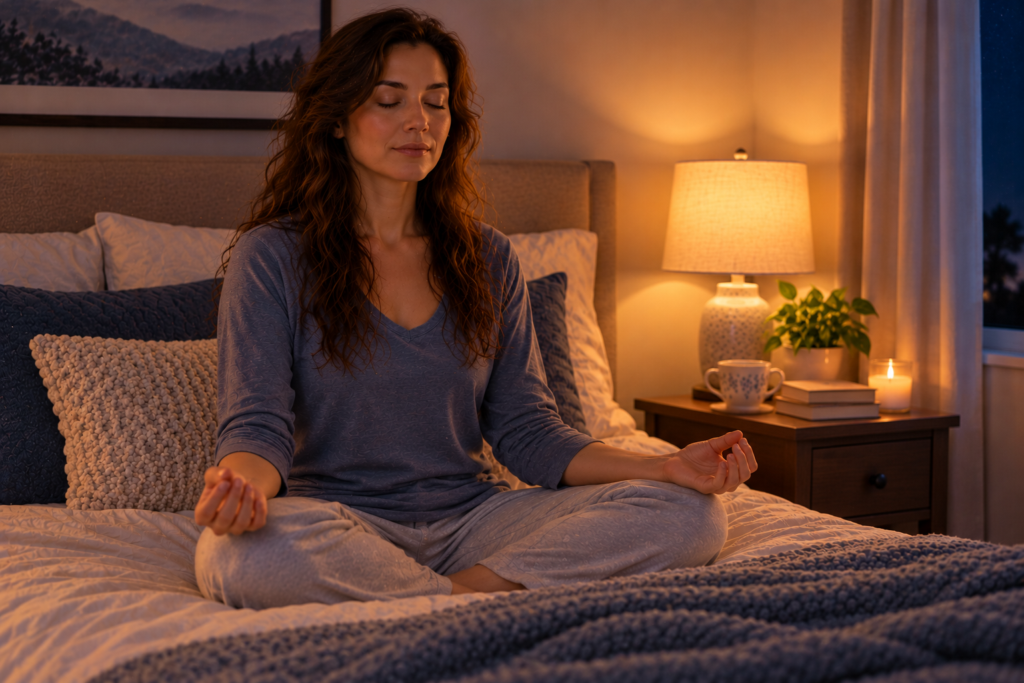
Acupressure works best for nightmares when practiced nightly as a ritual that reassures the body it’s safe to rest.
- Complete the full routine 30 to 60 minutes before bedtime, holding most points for one to two minutes and the toe points for 30 seconds to one minute.
- If you wake from a nightmare, sit up and breathe slowly as you press HT7 and PC7 together. Then press KI1 before settling back down.
- Apply light pressure to the head and wrists, and firm pressure to the legs and feet.
- Practice each night for a few weeks, as sleep patterns and recurring dreams take time to change.
What you do in the hours before bed matters just as much as your score. Eat a light dinner at least two or three hours before bedtime, avoid alcohol because it can disrupt the second half of the night, and keep a regular bedtime and wake-up time. During the last hour of the evening, stop using screens and avoid the news and scary programmes. If a nightmare keeps recurring, try writing it down during the day and giving it a more peaceful ending; many people find this helps the dream lose its power.
If nightmares cause you to stay awake in the early morning hours, find out how to get back to sleep when you wake up at 3am.
When to Get Professional Help

If nightmares happen several times a week, make you afraid to go to sleep, leave you feeling tired or anxious during the day, or begin after a traumatic event, talk to your doctor or a mental health professional. These may be signs of nightmare disorder or post-traumatic stress, both of which can be effectively treated. Consult your doctor if your nightmares began after you started, changed, or stopped taking a medication, but do not stop taking it on your own. Seek medical help as soon as possible if you physically act out your dreams by kicking, punching, or jumping out of bed, or if your bed partner notices loud snoring, gasping, or pauses in breathing. These symptoms may indicate a sleep disorder that needs assessment.
If you have thoughts of harming yourself, call or text 988 to reach the Suicide and Crisis Lifeline immediately.
Acupressure offers a natural, supportive approach to nightmares, but it doesn’t replace diagnosis or medical care.
For related health concerns, acupressure for trouble staying asleep, acupressure for trouble falling asleep, and acupressure for trauma are companion posts.
Above and Beyond Acupuncture offers acupuncture, cupping, and lifestyle coaching at the North Frank Lloyd Wright Boulevard location in Scottsdale.
Schedule an appointment online to start your healing journey.
The points above are only as effective as the technique used to apply them. Where to press, how firmly, and for how long all affect the result. For a full breakdown of how to perform acupressure properly at home, read Performing Acupressure in 3 Easy Steps.

About the Publisher
Paul Kerzner, L.Ac., is a licensed acupuncturist and board-certified herbalist, as well as the founder of Above and Beyond Acupuncture in Scottsdale. His own journey from chronic patient to practicing acupuncturist shapes his commitment to providing honest, clinically grounded information about acupuncture and Traditional Chinese Medicine. Learn more about Paul and his clinical approach on the About Us page.