Key Takeaways
- Phlegm in the throat usually results from thick mucus draining from the nose and sinuses or collecting in the throat. Common triggers include colds, allergies, acid reflux, and dry indoor air during winter.
- Coughing up blood, shortness of breath, chest pain, a high fever, or trouble swallowing require prompt medical attention. Phlegm that lasts for weeks should also be checked.
- In Traditional Chinese Medicine, phlegm forms when a tired Spleen cannot process fluids and the Lung cannot send them down. Heat, Cold, or stress can make it thicker and harder to clear.
- Nine acupressure points across the arms, throat, chest, legs, and feet help loosen and move phlegm, open the chest, and soothe the throat.
- Drinking more fluids, rinsing with saline, managing reflux, and limiting dairy, sweets, and greasy foods can help prevent phlegm buildup.

Many people don’t realize how often they clear their throat until someone points it out. You may feel something thick and sticky at the back of your throat that doesn’t go away when you swallow, along with a small cough that brings up a little mucus and a rough voice in the morning. These symptoms often worsen after a cold, during allergy season, or in a dry, heated home in winter.
According to ENT Health, the patient website of the American Academy of Otolaryngology, the glands in the nose and throat produce one to two quarts of mucus each day. This keeps the lining moist, traps particles, and helps fight infection, and most mucus is swallowed without notice. It becomes noticeable when it thickens, often due to dry air in heated buildings during winter; colds, flu, and other infections; allergies; or certain medications. Acid reflux can also bring stomach contents up into the throat, leaving it feeling coated. ENT Health recommends drinking more fluids, reducing caffeine, using saline nasal sprays or rinses to loosen thick mucus, and managing reflux by raising the head of the bed and avoiding food for about three hours before bedtime.
When mucus is thick, the tiny hairs lining your nose and throat have a harder time moving it along, causing it to collect at the back of your throat. Your body responds by making you clear your throat or cough, which can irritate your throat further and make your voice hoarse. If reflux is involved, your throat may produce extra mucus to protect itself from acid.
In Traditional Chinese Medicine, the Spleen is thought to produce phlegm, while the Lung stores it. When the Spleen is weakened by factors such as overwork, irregular meals, or too much dairy, sugar, greasy food, or cold and raw food, it can’t process fluids properly, allowing them to accumulate as Phlegm-Damp. The Lung normally moves fluids downward, but a cold, allergies, or dry air can disrupt this movement, causing phlegm to rise and settle in your throat. Heat makes phlegm yellow and sticky; cold makes it clear and watery; and dryness makes it scant and difficult to cough up. Stress affecting the Liver can also create the sensation of a lump stuck in your throat.
The points below begin with the arms, proceed to the throat and chest, and conclude with the legs and feet.
What Acupressure Points to Press and Why
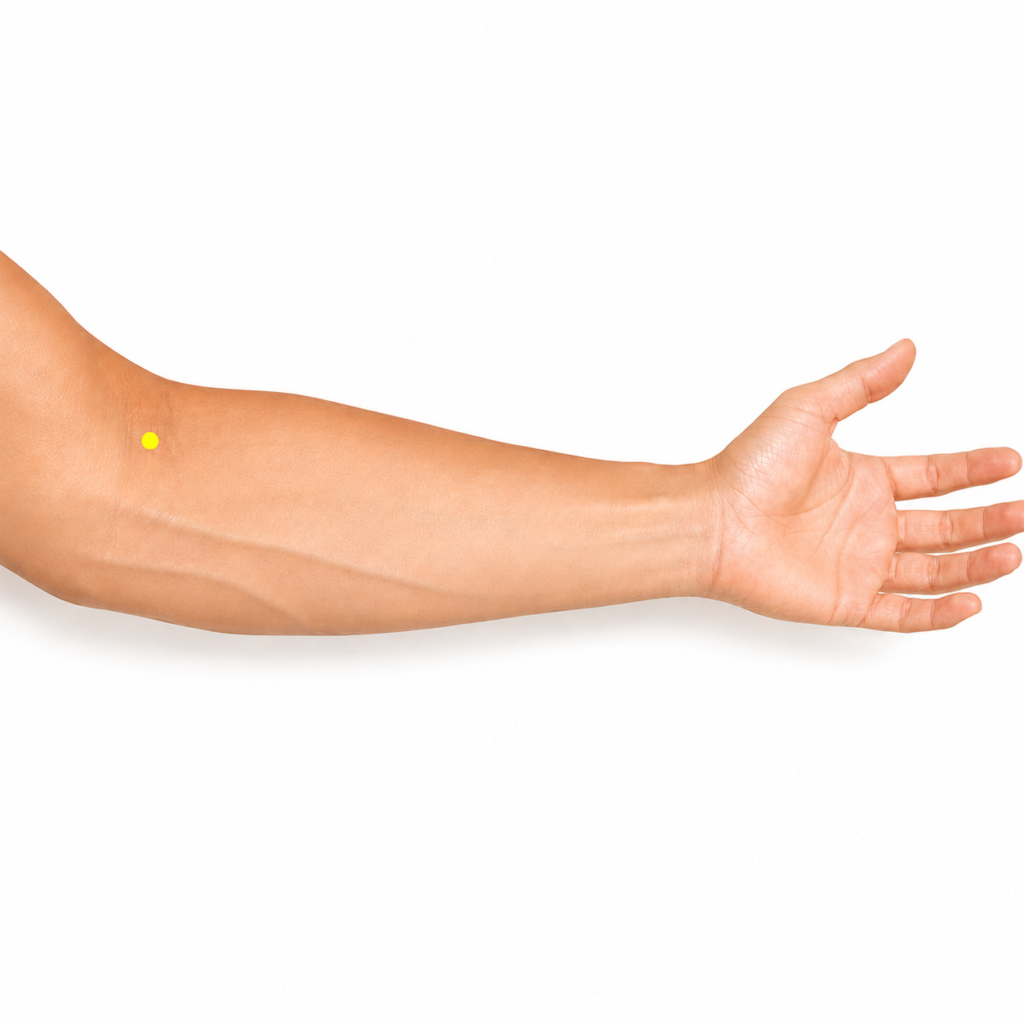
1. Press on LU5 at the elbow crease to clear phlegm from the Lung. LU5 sits in the elbow crease, on the thumb side of the large tendon in the middle of the crease, with the elbow slightly bent. Press firmly with the thumb of your other hand for one to two minutes on each arm. LU5 is called “Chize,” the “Cubit Marsh.”
LU5 is the Lung’s sea point. It clears Heat and phlegm from the Lung and can help with thick, yellow, sticky phlegm after a cold.
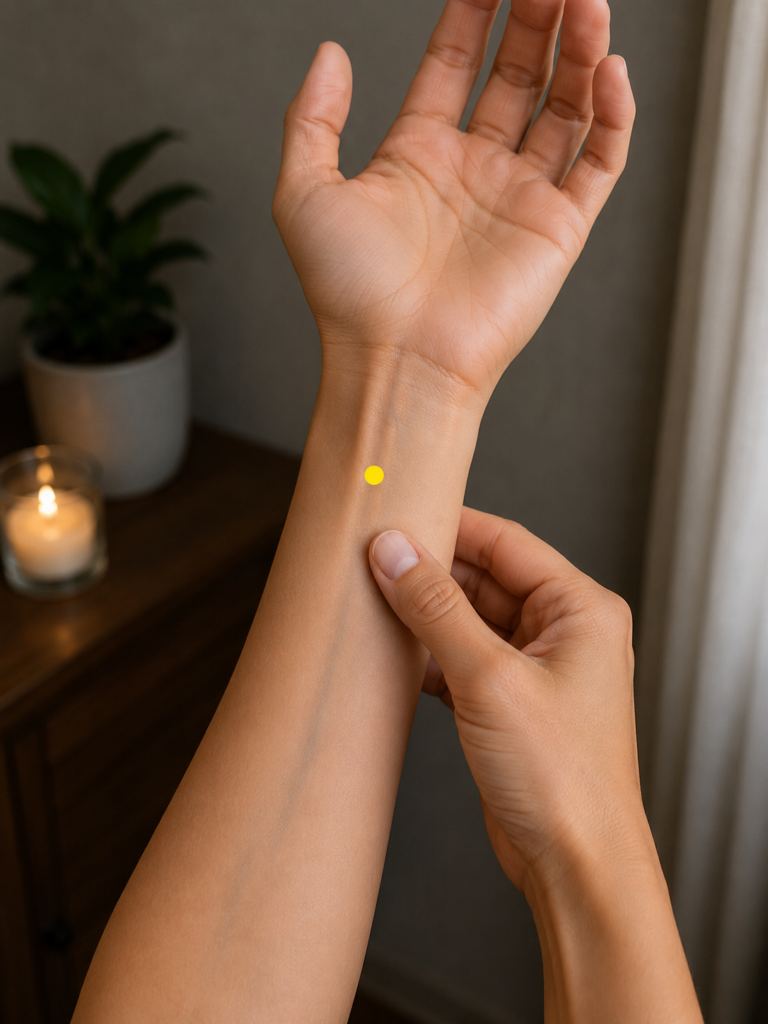
2. Press on PC6 on the inner forearm to open the chest. PC6 sits on the inner forearm, three finger-widths above the wrist crease, between the two tendons. Press firmly with the thumb of your other hand for one to two minutes on each arm while breathing slowly. PC6 is called “Neiguan,” the “Inner Pass.”
PC6 is the connecting point of the Pericardium. It opens the chest, eases the urge to gag or cough when phlegm is in the throat, and relieves the stress-related feeling of a lump in the throat.
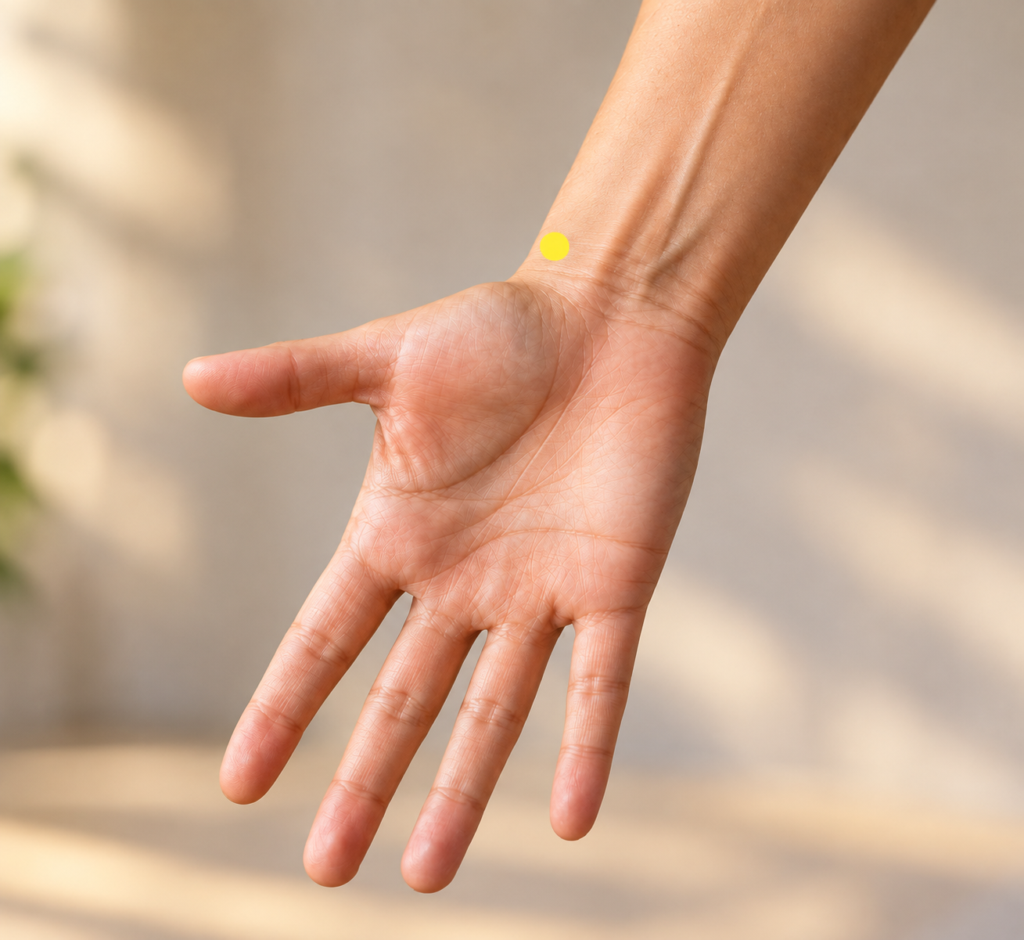
3. Press on LU7 above the wrist to open the throat. LU7 sits on the thumb side of the forearm, about two finger-widths above the wrist crease, in a small groove just above the bony bump on the thumb side of the wrist. Press with moderate pressure using the thumb of your other hand for one to two minutes on each arm. LU7 is called “Lieque,” the “Broken Sequence.”
LU7 is the connecting point of the Lungs. It helps the Lungs send fluids downward. It’s a classic point for the throat, neck, and head, especially when phlegm accompanies a cold or allergies.
4. Hold CV22 at the base of the throat to loosen phlegm. CV22 sits in the soft hollow at the base of the throat, just above the top of the breastbone and between the inner ends of the collarbones. Rest one fingertip lightly in the hollow and press gently downward toward the breastbone, not back into the throat, for 30 seconds to one minute while swallowing slowly. CV22 is called “Tiantu,” the “Heaven Chimney.”
CV22 is a classic local point for throat phlegm, throat clearing, and a tickly cough. It helps phlegm move downward rather than linger at the back of the throat. Use light pressure, as this area is sensitive.

5. Press on CV17 at the center of the chest to open the breath. CV17 sits on the center of the breastbone, level with the nipples. Press gently with two or three fingertips for one to two minutes while breathing slowly and deeply. CV17 is called “Shanzhong,” the “Chest Center.”
CV17 is the influential point of Qi. It opens the chest, helps the Lung move phlegm downward, and relieves the tight, congested feeling often associated with phlegm.

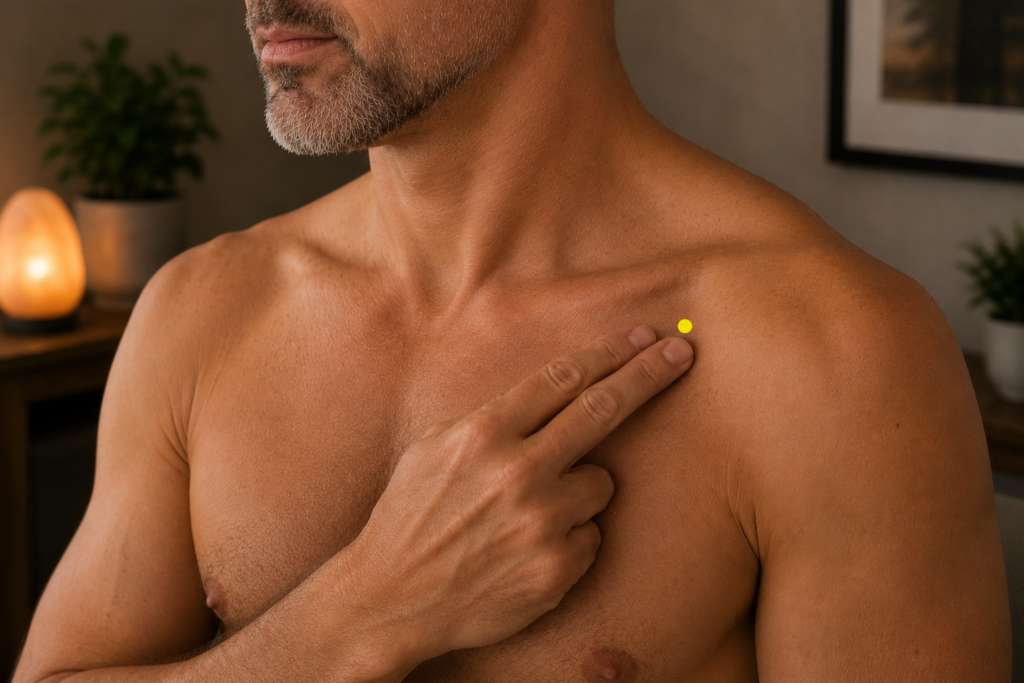
6. Press on LU1 on the upper chest to clear the Lung. LU1 sits on the upper outer chest, about one thumb-width below the hollow under the outer end of the collarbone. Press with moderate pressure using the fingers of the opposite hand for one to two minutes on each side. LU1 is called “Zhongfu,” the “Central Treasury.”
LU1 is the Lung’s alarm point, where its Qi gathers at the front of the body. It relieves chest fullness and helps the Lung clear phlegm and circulate air freely.
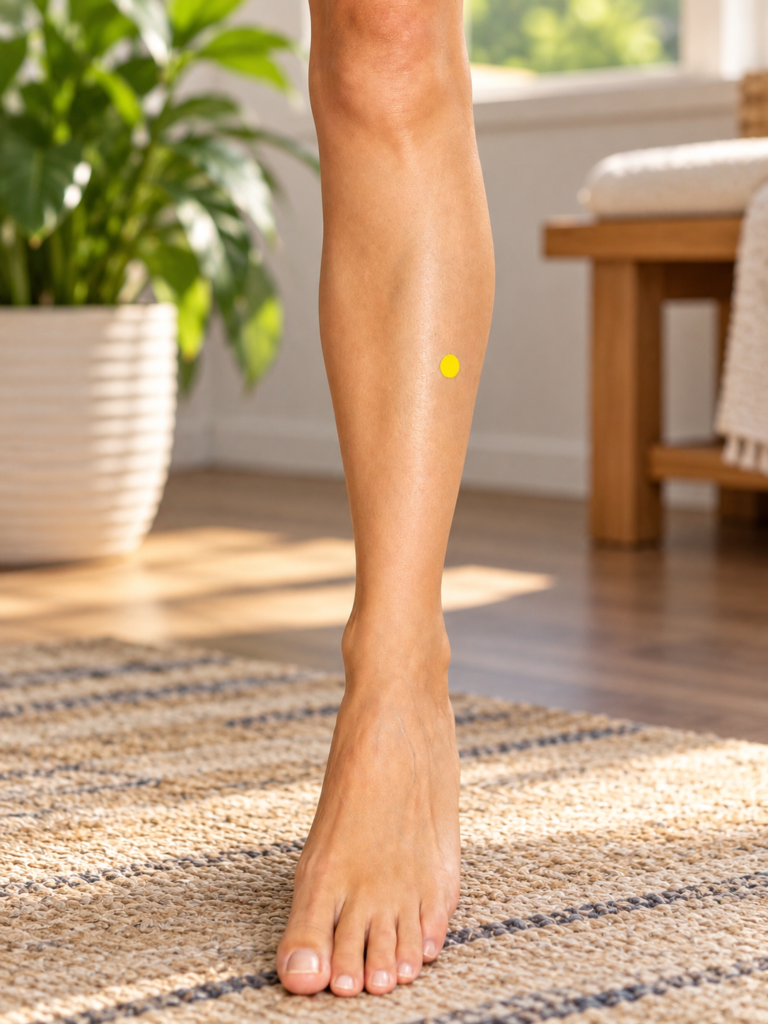
7. Press on ST40 on the outer lower leg to transform phlegm. ST40 sits on the front of the lower leg, halfway between the bottom of the kneecap and the crease at the front of the ankle, about two finger-widths out from the edge of the shinbone. Press firmly with your thumb for one to two minutes on each leg. ST40 is called “Fenglong,” the “Abundant Bulge.”
SST40 is the connecting point of the Stomach and one of the most important points in Traditional Chinese Medicine for addressing phlegm anywhere in the body. It helps the body break down and clear phlegm from the throat and chest.
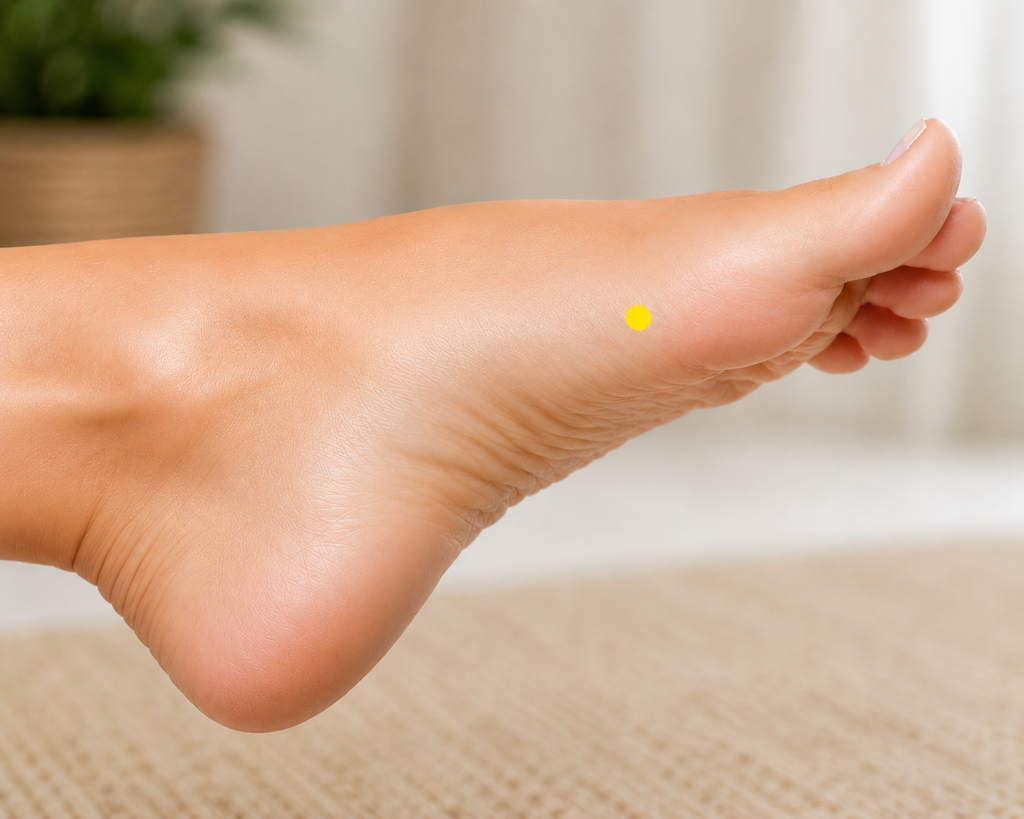
8. Press on SP3 on the inner edge of the foot to strengthen the Spleen. SP3 sits on the inner edge of the foot, in the hollow just behind the large bump at the base of the big toe, where the skin of the top of the foot meets the skin of the sole. Press firmly with your thumb for one to two minutes on each foot. SP3 is called “Taibai,” the “Supreme White.”
SP3 is the Spleen’s source point. It strengthens the organ responsible for processing fluids, helping prevent phlegm from forming, especially when it keeps returning.
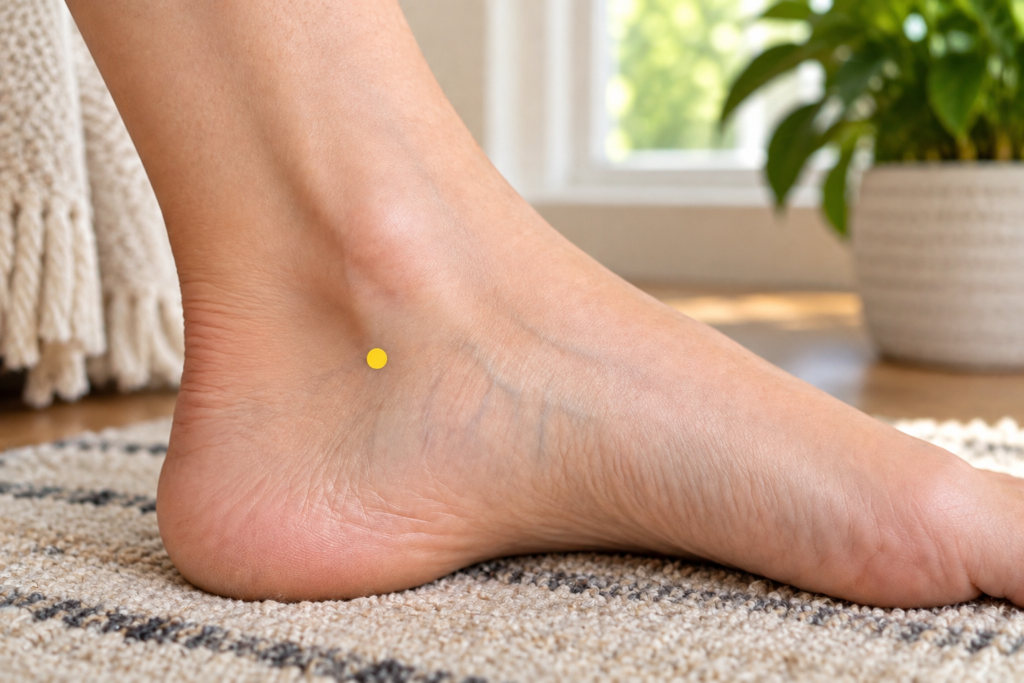
9. Press on KI6 below the inner ankle to moisten the throat. KI6 sits in the small hollow directly below the tip of the inner ankle bone. Press with moderate pressure for one to two minutes on each foot. KI6 is called “Zhaohai,” the “Shining Sea.”
KI6 is a classic point for a dry, irritated throat. It helps moisten the throat and can ease scant, sticky phlegm that’s difficult to cough up, especially in dry winter air or at night.
Why These Acupressure Points Work
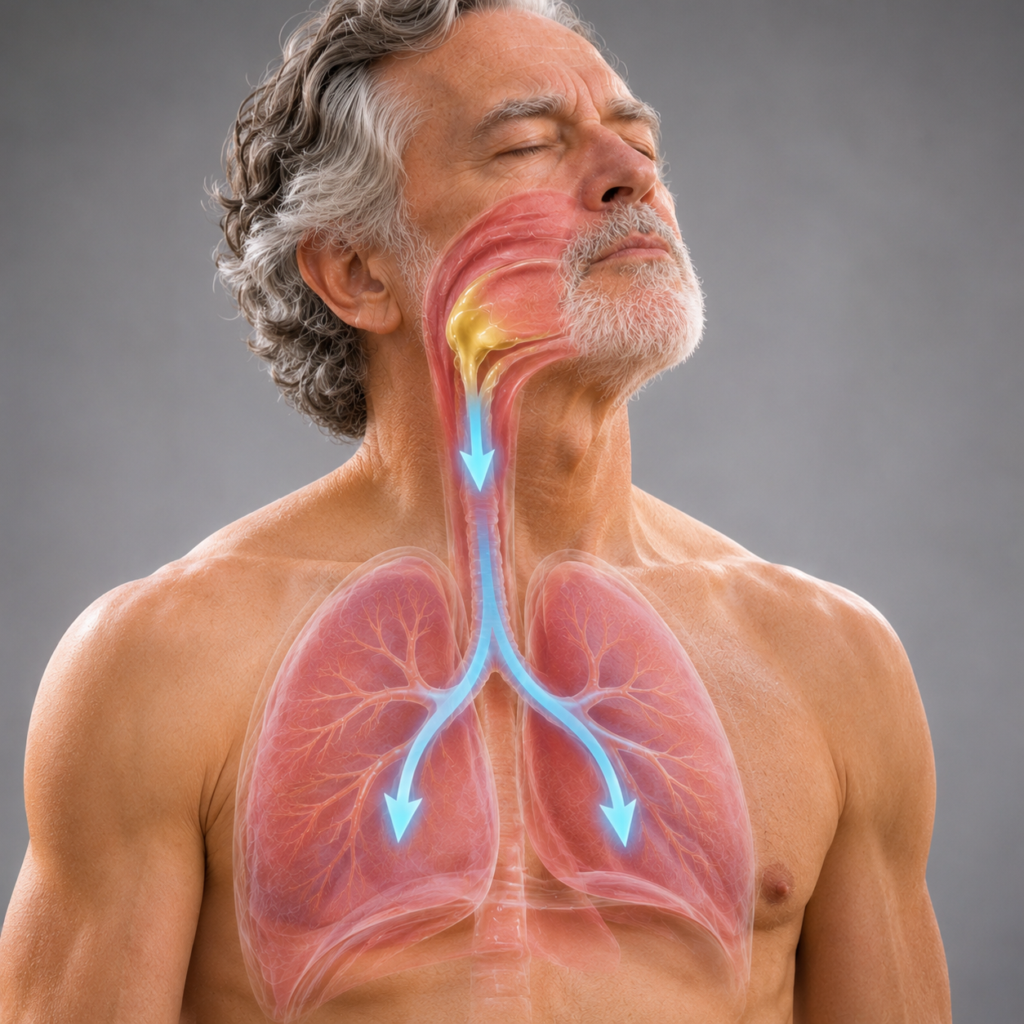
From a Traditional Chinese Medicine perspective, phlegm in the throat is fluid that hasn’t been processed or moved downward. The arm points clear the Lung and open the throat; the throat and chest points help move phlegm down and ease breathing; and the leg and foot points strengthen the Spleen and Kidney, helping reduce phlegm formation and keep the throat moist.
The nine points work together to alleviate phlegm in the throat:
- LU5, LU7, and LU1 clear the Lung and help it send phlegm down.
- PC6, CV22, and CV17 open the chest and throat.
- ST40 and SP3 transform phlegm and strengthen the Spleen.
- KI6 moistens a dry, irritated throat.
How to Properly Use These Acupressure Points

Acupressure for throat phlegm works well in the morning, when it tends to collect, and again in the evening.
- When phlegm is present in the throat, apply gentle pressure to LU7 and PC6 on both arms, then lightly hold CV22 while swallowing slowly.
- For thick, yellow phlegm after a cold, add LU5 on both arms and CV17 on the chest.
- For phlegm that keeps coming back, press ST40 and SP3 on both legs and feet once a day.
- For a dry throat with sticky phlegm, especially at night, press KI6 on both feet before bed.
- Apply firm pressure to the arms, legs, and feet; moderate pressure to the upper chest; and light pressure only at the base of the throat.
Your daily habits can make a real difference. Drink plenty of water and warm fluids throughout the day, and try to limit caffeine and alcohol, which can dry out your throat. Saline nasal sprays or rinses can loosen thick mucus before it drips down, while a humidifier can help in a dry, heated bedroom. If reflux is an issue, ENT Health suggests raising the head of your bed and avoiding food for about three hours before bedtime. Traditional Chinese Medicine suggests limiting dairy, sweets, greasy foods, and iced drinks, which add Phlegm-Damp, and choosing warm, cooked meals instead. Ginger tea may help with clear, watery phlegm, while lightly cooked pears may be good for dry, sticky phlegm.
Learn more about the dairy dilemma.
When to Get Professional Help

Get medical help right away if you cough up blood or have shortness of breath, wheezing, chest pain, or a high fever with phlegm, as these may signal pneumonia or another serious lung problem. See a doctor if you have thick yellow or green mucus along with facial pain or pressure that lasts more than about ten days, or worsens after initially improving, as this could indicate a bacterial sinus infection. If phlegm in your throat lasts more than three weeks, or is accompanied by trouble swallowing, persistent hoarseness, unexplained weight loss, or a history of smoking, see a doctor or an ear, nose, and throat specialist. Also see a doctor if reflux symptoms don’t improve with lifestyle changes, or if a child has thick, foul-smelling discharge from one nostril, which could indicate something is stuck inside.
Acupressure is a gentle, supportive practice for phlegm in the throat. It complements, and does not replace, diagnosis and medical care.
For related health concerns, acupressure for postnasal drip, acupressure for cough with phlegm, and acupressure for acid reflux are companion articles.
Above and Beyond Acupuncture offers acupuncture, cupping, and lifestyle coaching at the North Frank Lloyd Wright Boulevard location in Scottsdale.
Schedule an appointment online to start your healing journey.
The points above are only as effective as the technique used to apply them. Where to press, how firmly, and for how long all affect the result. For a full breakdown of how to perform acupressure properly at home, read Performing Acupressure in 3 Easy Steps.

About the Publisher
Paul Kerzner, L.Ac., is a licensed acupuncturist and board-certified herbalist, as well as the founder of Above and Beyond Acupuncture in Scottsdale. His own journey from chronic patient to practicing acupuncturist shapes his commitment to providing honest, clinically grounded information about acupuncture and Traditional Chinese Medicine. Learn more about Paul and his clinical approach on the About Us page.