
Key Takeaways
- A cough with phlegm, often called a wet or productive cough, usually follows a cold or chest cold as mucus builds up in the airways and the body works to clear it.
- Most chest colds are caused by viruses and resolve within three weeks. The color of the phlegm alone does not mean antibiotics are needed.
- In Traditional Chinese Medicine, the Spleen produces phlegm and the Lung stores it, so clearing a phlegmy cough requires both loosening the phlegm in the chest and strengthening the digestion that produces it.
- Nine acupressure points on the chest, back, arms, abdomen, and legs help loosen phlegm, open the chest, calm the cough, and support the Spleen so phlegm does not keep returning.
- Acupressure works best alongside rest, plenty of warm fluids, steam, and medical care for high fever, difficulty breathing, bloody mucus, or a cough that lasts longer than three weeks.

A cold often begins with a sore throat and runny nose, which usually clear up within a few days. The cough, however, may linger, grow heavier, and bring up thick mucus in the morning. This can make the chest feel tight and congested, as though something needs to clear but won’t.
This type of cough is common and usually indicates the body is recovering. According to the Centers for Disease Control and Prevention, a chest cold (acute bronchitis) causes coughing with or without mucus, fatigue, congestion, and mild body aches, typically lasting less than three weeks. Most chest colds are viral, so antibiotics are not effective. Rest, fluids, steam, and time are the main treatments.
Phlegm can linger after allergies or postnasal drip, and is also common in smokers. It often increases when the airways are irritated or dry. Mucus color may offer clues, but it can’t confirm a diagnosis. Clear or white mucus is common with colds and allergies, while yellow or green mucus often appears as the immune system responds to an infection.
Traditional Chinese Medicine describes the Spleen as the source of phlegm and the Lung as its storehouse. When illness, fatigue, or heavy, cold, or greasy foods weaken digestion, the Spleen cannot transform fluids efficiently. Dampness then develops and thickens into phlegm, which rises to the Lung, obstructs the downward flow of Lung Qi, and causes cough. White, watery phlegm suggests Phlegm-Damp, often accompanied by cold, while thick yellow or green phlegm indicates Phlegm-Heat.
These nine points help loosen phlegm, open the chest, soothe coughs, and strengthen the Spleen to keep phlegm from returning.
What Acupressure Points to Press and Why
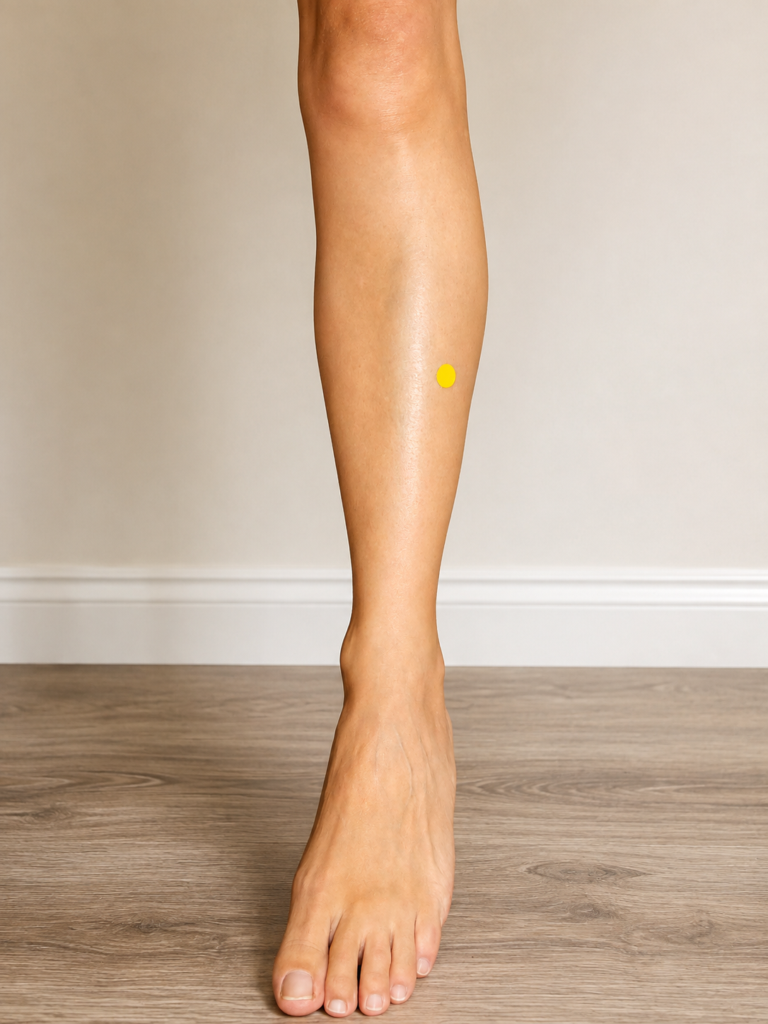
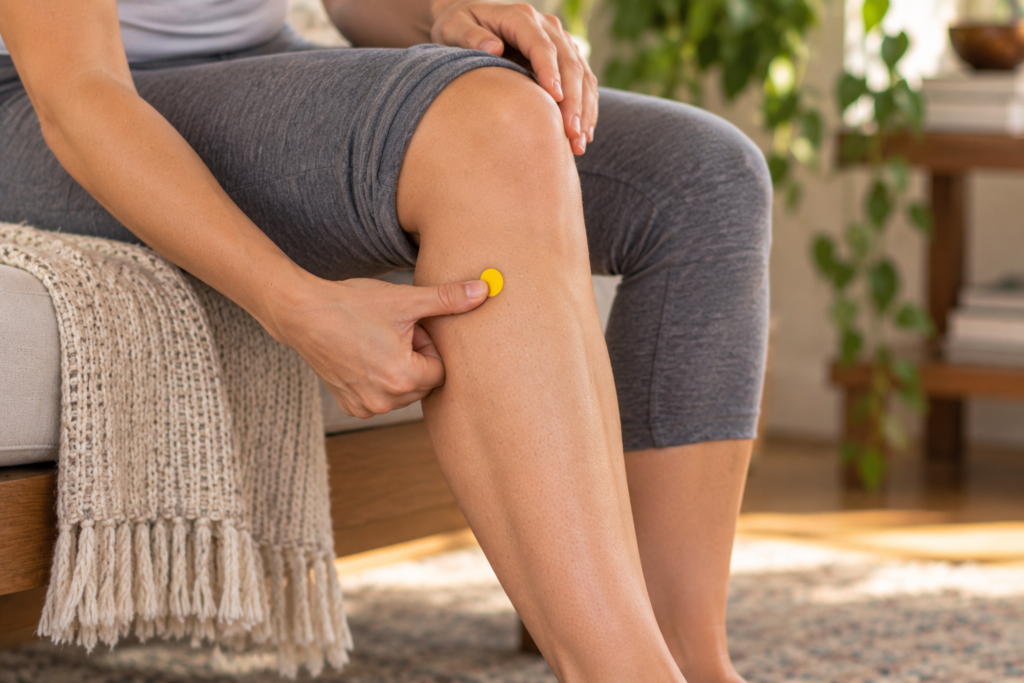
1. Press on ST40 on the lower leg to resolve phlegm. ST40 sits on the outer lower leg, midway between the knee and the outer ankle bone, about two finger-widths to the outside of the shinbone. Press firmly with your thumb for one to two minutes on each leg. ST40 is called “Fenglong,” the “Abundant Bulge.”
In Traditional Chinese Medicine, ST40 is the primary point for resolving phlegm throughout the body. As the connecting point of the Stomach channel, it links to the Spleen and addresses phlegm in both the chest and digestive system. It is effective for both white and yellow phlegm.
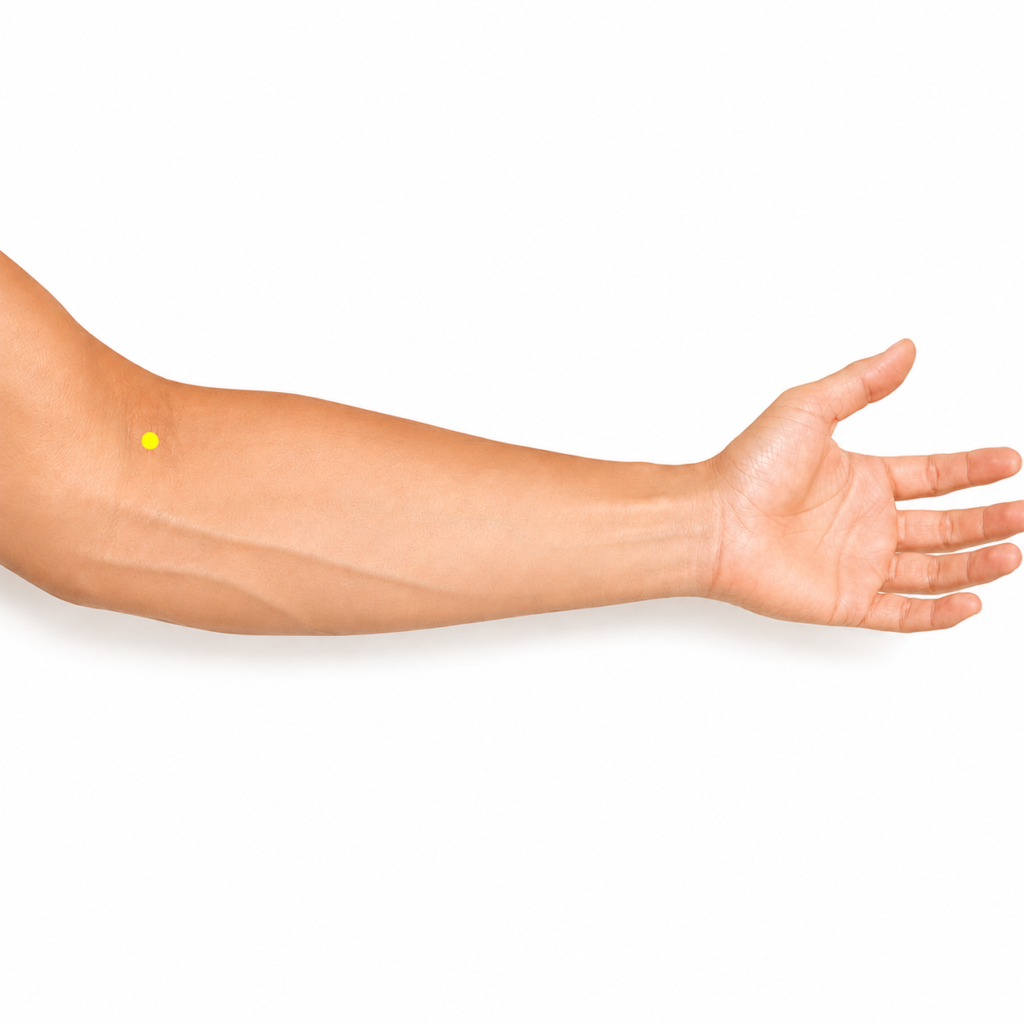
2. Press on LU5 at the inner elbow to clear phlegm from the chest. LU5 sits on the inner elbow crease, on the thumb side of the large tendon that stands out when you bend the elbow slightly. Press firmly with the thumb of your other hand for one to two minutes on each arm. LU5 is called “Chize,” the “Cubit Marsh.”
LU5 is the Lung channel’s water point, essential for clearing phlegm and heat from the Lung. It helps restore the Lung Qi’s downward flow and is especially useful for thick, yellow, or green phlegm and a hot, harsh cough.
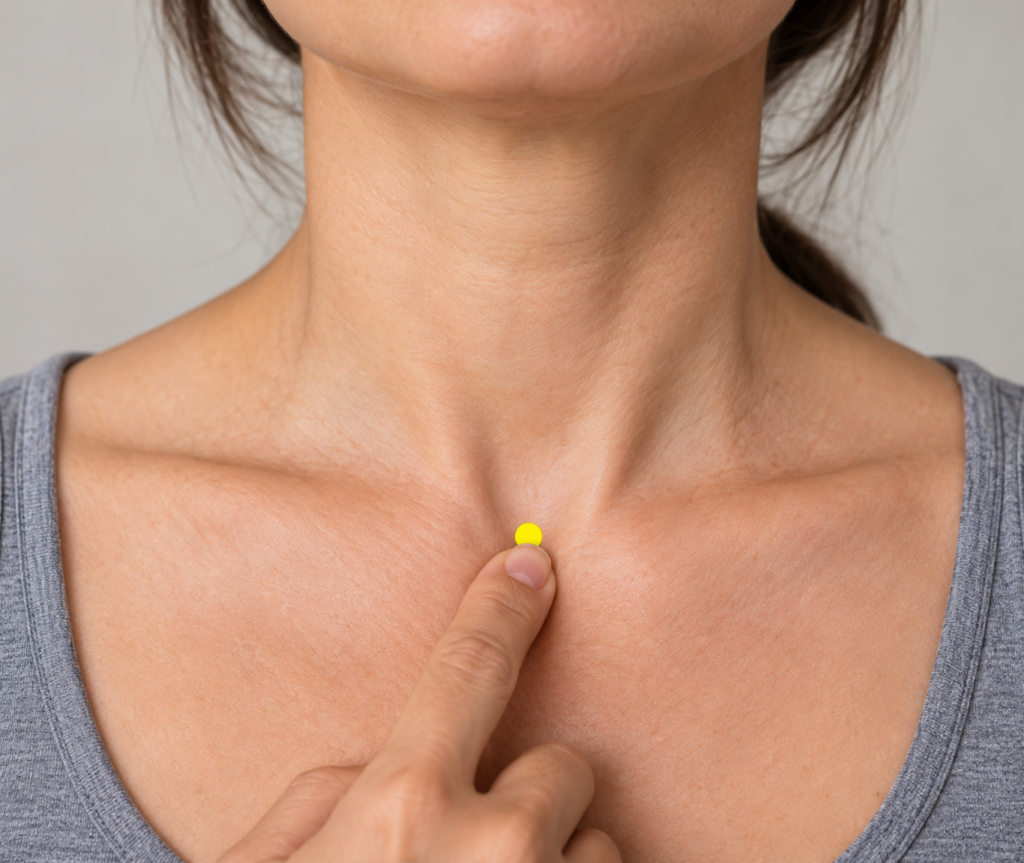
3. Press on CV22 at the base of the throat to loosen phlegm and calm the cough. CV22 sits in the small hollow at the base of the throat, just above the top of the breastbone. Rest your fingertip in the hollow and press gently downward, toward the top of the breastbone rather than straight into the throat, for one minute. CV22 is called “Tiantu,” the “Heaven’s Chimney.”
In Traditional Chinese Medicine, CV22 is an important point for cough and is traditionally used to help clear phlegm from the throat and chest. Apply light pressure, and stop if you feel discomfort or if symptoms worsen.
4. Press on CV17 at the center of the chest to open a tight chest. CV17 sits on the midline of the breastbone, level with the space between the fourth and fifth ribs, about even with the nipples. Rest your fingertips on the point and press gently, or make slow circles, for one to two minutes while breathing slowly and deeply. CV17 is called “Danzhong,” the “Chest Center.”
CV17 is the influential point of Qi and the main point for opening the chest. It relieves the tight, heavy feeling of a chest full of phlegm and helps the breath flow more freely, making it easier to bring up the phlegm.

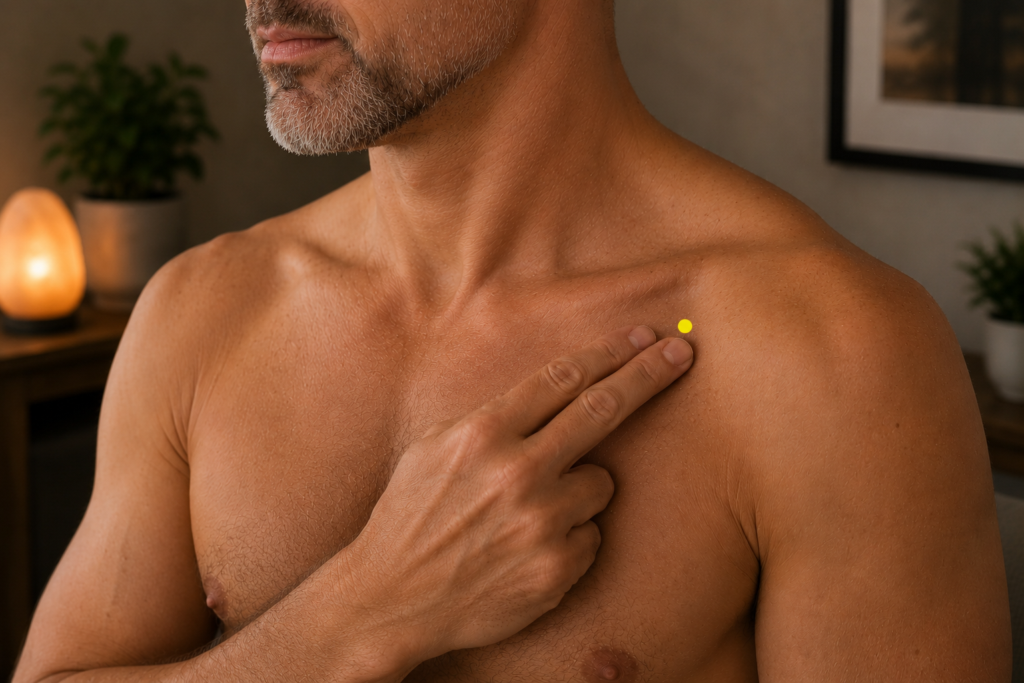
5. Press on LU1 on the upper chest to relieve chest congestion. LU1 sits high on the chest, about one thumb-width below the hollow under the outer end of the collarbone. Press firmly with your fingertips for one to two minutes on each side. LU1 is called “Zhongfu,” the “Central Treasury.”
LU1 is the Lung’s front collecting point, where Lung Qi gathers in the chest. It is traditionally used for cough with phlegm, chest fullness, and wheezing. Together with CV17, it helps open the chest from the center and sides.
6. Press on BL13 on the upper back to strengthen the Lung. BL13 sits on the upper back, about two finger-widths to each side of the spine, about three vertebrae below the large bump at the base of the neck. Place a tennis ball between your back and a wall, lean into it gently, and hold for one to two minutes on each side, or ask someone to press the points with their thumbs. BL13 is called “Feishu,” the “Lung Transport Point.”
BL13 is the Lung’s back transport point and connects directly to the Lung. It strengthens the Lung, helps Qi descend, and is a classic point for a lingering cough after a cold. Pairing it with LU1 treats the Lung from both the front and the back.
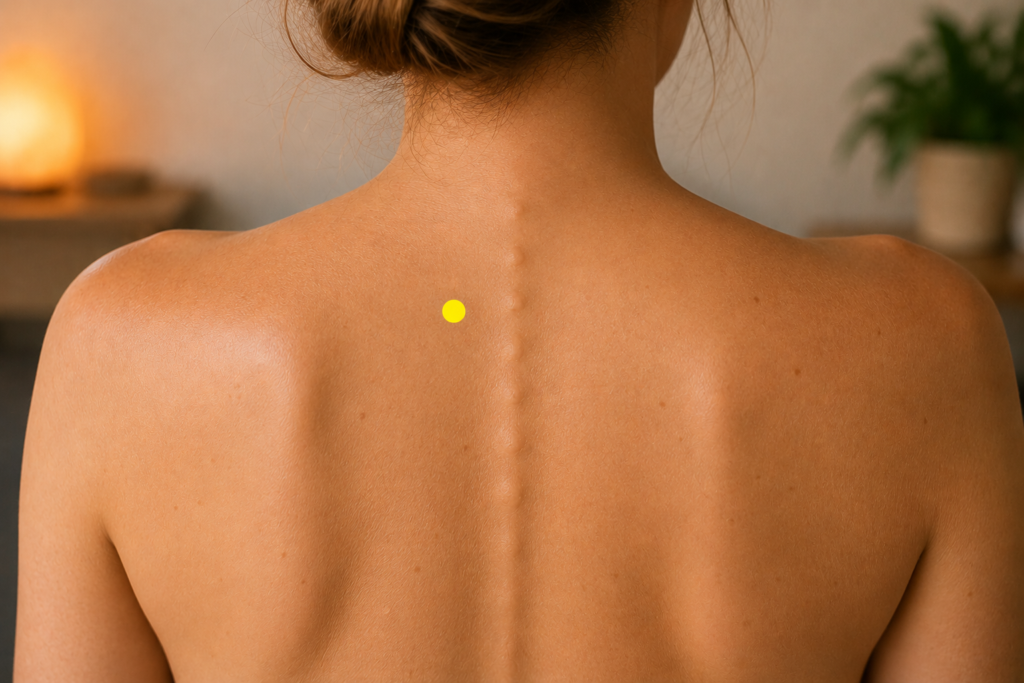
7. Press on CV12 on the upper abdomen to stop phlegm at its source. CV12 sits on the midline of the upper abdomen, halfway between the navel and the bottom of the breastbone. Rest your fingertips on the point and press gently, or make slow circles, for one to two minutes. Avoid this point right after a large meal. CV12 is called “Zhongwan,” the “Middle Cavity.”
CV12 is the Stomach’s front collecting point and the influential point of the hollow digestive organs. It strengthens the Spleen and Stomach, helping them transform food and fluids effectively and reduce Dampness that can thicken into phlegm. It is especially helpful when a cough is accompanied by poor appetite, bloating, or a heavy, tired feeling.

8. Press on ST36 below the knee to strengthen digestion and recovery. ST36 sits four finger-widths below the bottom of the kneecap, about one finger-width to the outside of the shinbone. Press firmly with your thumb for one to two minutes on each leg. ST36 is called “Zusanli,” the “Leg Three Miles.”
In Traditional Chinese Medicine, ST36 is a key point for strengthening the Spleen and Stomach and restoring energy after illness. If a cough persists and causes fatigue, ST36 supports recovery and helps prevent new phlegm from forming.
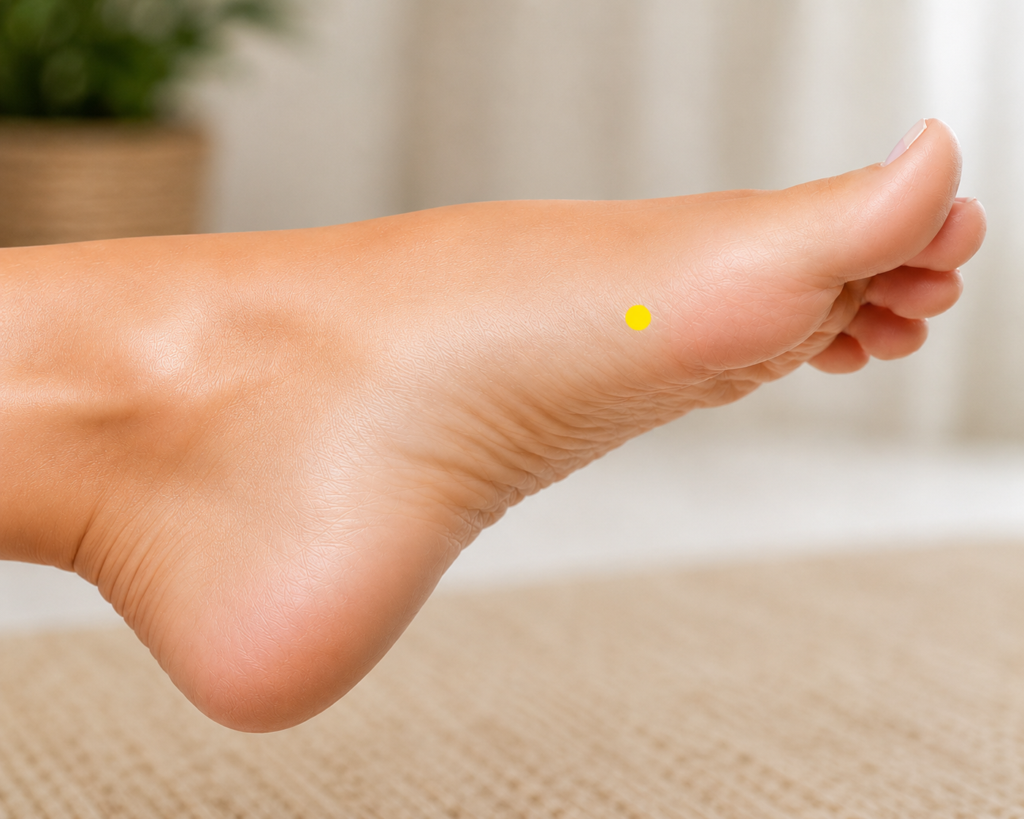
9. Press on SP3 on the inner foot to drain Dampness. SP3 sits on the inner edge of the foot, just behind the large joint at the base of the big toe, where the skin of the sole meets the skin of the top of the foot. Press firmly with your thumb for one to two minutes on each foot. SP3 is called “Taibai,” the “Supreme White.”
SP3 is the Spleen’s source point. It supports the Spleen’s ability to transform Dampness and is traditionally used for recurring phlegm, particularly white, watery phlegm accompanied by fatigue, loose stools, or a feeling of heaviness.
Why These Acupressure Points Work
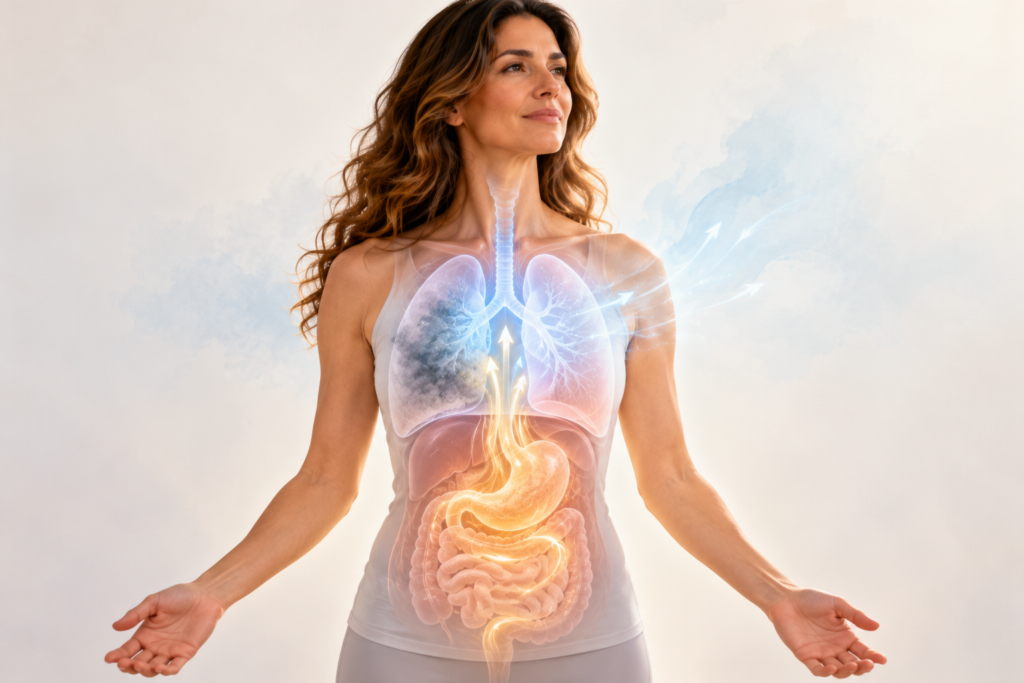
In Traditional Chinese Medicine, a phlegmy cough has two contributing factors: phlegm lodged in the Lung, obstructing the downward flow of Qi, and a weakened Spleen that continues to produce phlegm. The approach is to loosen and clear the phlegm, open the chest to help remove it, and strengthen digestion to prevent further phlegm from forming.
The nine points work together to clear the chest and stop phlegm at its source:
- The phlegm-clearing points (ST40, LU5) resolve phlegm and clear heat from the Lung.
- The chest points (CV22, CV17, LU1) open the throat and chest and help bring phlegm up.
- The Lung back point (BL13) strengthens the Lung and helps its Qi descend.
- The Spleen and Stomach points (CV12, ST36, SP3) strengthen digestion so phlegm does not keep returning.
How to Properly Use These Acupressure Points

Acupressure for a cough with phlegm works best during the cough itself and for a short time after it clears.
- While the cough is active, work all nine points two or three times a day, holding each for one to two minutes.
- To loosen phlegm, take a hot shower or breathe steam for a few minutes, then press CV17 and LU1 while breathing slowly and deeply, followed by ST40.
- Use light pressure at CV22 and gentle pressure on the chest and abdomen, and firmer pressure on the arms, legs, feet, and back.
- Keep pressing CV12, ST36, and SP3 once a day for one to two weeks after the cough clears to help keep the phlegm from coming back.
Daily habits can help the body clear phlegm and recover. Rest, drink warm fluids, use a clean humidifier, and inhale steam from hot water or a shower to thin mucus. A spoonful of honey may soothe a cough in adults and children over one year old. Avoid smoke and other airway irritants. Traditional Chinese Medicine recommends warm, simple, cooked foods such as soups and congee, while limiting dairy, sugar, greasy or fried foods, and iced drinks, which are thought to increase Dampness and thicken phlegm. Fresh ginger tea is recommended for white, watery phlegm, while warm water with lemon or steamed pear may suit thick, yellow phlegm.
Learn more about acupressure to boost the immune system.
When to Get Professional Help

Consult a doctor if a cough lasts longer than three weeks; if you have a fever of 104°F or higher, or one that lasts more than five days; if you cough up bloody mucus; or if you have recurrent chest colds. Seek emergency care for difficulty breathing, shortness of breath at rest, chest pain, bluish lips or fingertips, confusion, or a high fever with shaking chills, as these could indicate pneumonia or another serious condition. Seek medical advice sooner if you have asthma, COPD, heart disease, a weakened immune system, are a long-term smoker, or your symptoms worsen after initially improving. For infants under three months with a fever of 100.4°F or higher, contact a provider immediately.
Acupressure is a gentle, supportive practice for cough with phlegm and should complement, not replace, medical diagnosis and care.
For related health concerns, acupressure for a cough, acupressure for the common cold, and acupressure for postnasal drip are companion posts. If congestion has also settled in the sinuses, learn about acupressure for sinus congestion and pressure.
Above and Beyond Acupuncture offers acupuncture, cupping, and lifestyle coaching at the North Frank Lloyd Wright Boulevard location in Scottsdale.
Schedule an appointment online to start your healing journey.
The points above are only as effective as the technique used to apply them. Where to press, how firmly, and for how long all affect the result. For a full breakdown of how to perform acupressure properly at home, read Performing Acupressure in 3 Easy Steps.

About the Publisher
Paul Kerzner, L.Ac., is a licensed acupuncturist and board-certified herbalist, as well as the founder of Above and Beyond Acupuncture in Scottsdale. His own journey from chronic patient to practicing acupuncturist shapes his commitment to providing honest, clinically grounded information about acupuncture and Traditional Chinese Medicine. Learn more about Paul and his clinical approach on the About Us page.