
Key Takeaways
- Regret can haunt us, often tied to unpursued hopes and dreams, creating a cycle of self-blame and emotional distress.
- Acupressure for regret uses nine specific points to help individuals release grief, ease remorse, and focus on moving forward.
- Pressing points such as GB15 and LU6 allows for emotional release, while others, such as BL47 and KI22, direct attention toward new possibilities and healing.
- Using these acupressure points daily can turn regret into valuable lessons and support emotional well-being.
- Consult a mental health professional if feelings of regret disrupt daily life, as they may indicate deeper issues such as depression.

If only. These two words can linger for years. Maybe you wish you had accepted a job offer, given a relationship another try, held back harsh words, or returned a call before it was too late. Sometimes, a decision made in minutes is replayed for decades, each time imagining a different ending that will never come.
Not all regrets feel the same. Research from Cornell University found that the regrets that last the longest are often about the hopes, goals, and dreams we never tried to reach. In fact, 76 percent of people said this was their biggest regret. Regrets about unfinished duties usually fade faster, partly because people can often fix them. But the paths we never took stay in our minds, which is why they keep returning.
Looking back can be helpful: it shows us what matters and helps us make better choices in the future. But we can get stuck in a cycle of self-blame, replaying the same moment and imagining different outcomes, unable to move forward. This cycle can leave us with a heaviness in the chest, a knot in the stomach, frequent sighs, restless nights, and a quiet sense that we’re missing out on part of life.
In Traditional Chinese Medicine, the Lung is said to hold the Po, or corporeal soul, connecting us to our bodies, the present, and our ability to let go. When the Lung cannot release, we remain attached to the past. The Heart, which holds the Shen, carries the pain of remorse, while the Spleen, which manages thought, keeps us circling back to what might have been. The Liver holds the Hun, which gives us vision and direction. When frustration turns inward, Liver Qi becomes stuck, making it harder to see the way forward.
The nine points below can help you let go of what cannot be changed, ease the pain of remorse, quiet your mind, and focus on moving forward.
What Acupressure Points to Press and Why
1. Press on GB15 at the front hairline to release held tears. GB15 sits on the front of the head, directly above the pupil when looking straight ahead, about half a thumb-width inside the front hairline. Press both points at once with your fingertips, or make slow circles, for one to two minutes. GB15 is called “Toulinqi,” the “Head Governor of Tears.”
GB15 is traditionally used to clear the head and eyes, and its name reflects its connection to tears. Regret is a form of grief that hasn’t been fully expressed. GB15 can help clear a heavy, congested head and begin to soften that held emotion.

2. Press on KI22 on the chest to take a step forward. KI22 sits on the chest, in the fifth space between the ribs, about three finger-widths to each side of the center of the breastbone, just below the level of the nipples. Press both points gently with your fingertips, or make slow circles, for one to two minutes while breathing slowly. KI22 is called “Bulang,” the “Corridor Walk.”
KI22 is the lowest Kidney point on the chest and is traditionally used to open the chest and ease tightness and shortness of breath. Known as the Corridor Walk, it suggests moving forward along a path. When regret tightens the chest and holds the breath in, KI22 opens the chest and supports the Kidney’s will to carry on.

3. Press on SP16 below the rib cage to settle the stomach. SP16 sits on the upper abdomen, just below the nipple and below the lower edge of the rib cage, about four finger-widths above the level of the navel. Press both points gently with your fingertips, or make slow circles, for one to two minutes while breathing into the belly. SP16 is called “Fu’ai,” the “Abdominal Sorrow.”
SP16 is traditionally used to ease upper abdominal pain and discomfort and support digestion. Known as Abdominal Sorrow, it is the acupressure point where sorrow and regret often manifest as a knot in the stomach or loss of appetite. It supports the Spleen, which governs thought, and helps relieve the heaviness of repeatedly going over the same events.

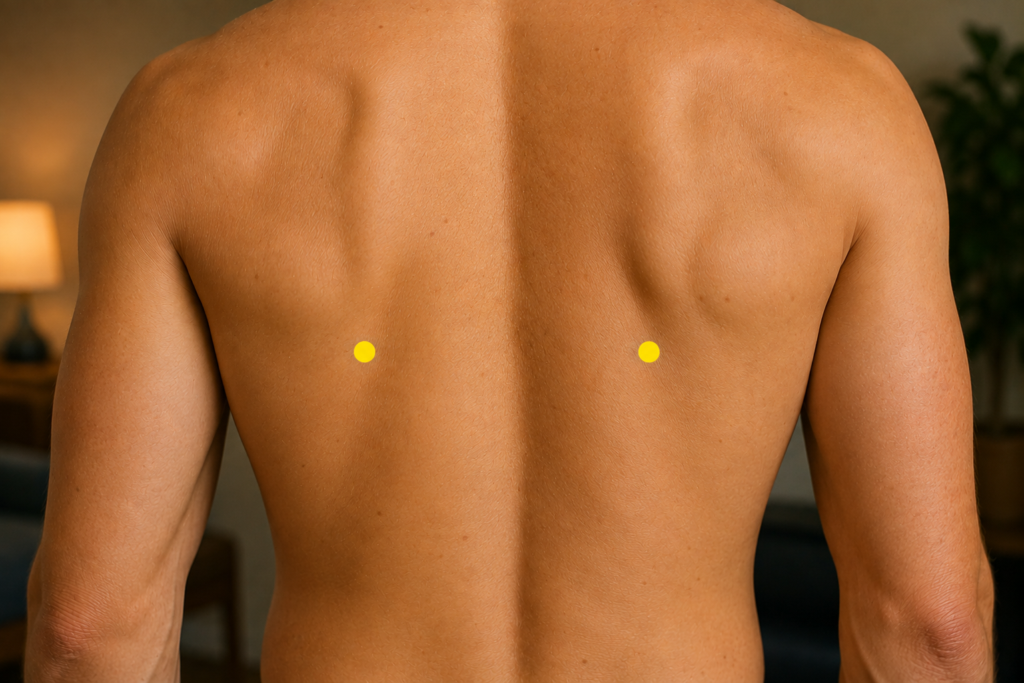
4. Press on BL15 on the upper back to ease remorse. BL15 sits on the upper back, about two finger-widths to each side of the spine, roughly halfway down the shoulder blades. Place a tennis ball between your upper back and a wall, lean into it gently, and hold for one to two minutes on each side. BL15 is called “Xinshu,” the “Heart Transport Point.”
BL15 is the Heart’s back transport point, where Heart Qi reaches the surface of the back. In Traditional Chinese Medicine, it’s used to calm the Shen and ease palpitations, anxiety, and restless sleep. When remorse weighs heavily in the chest, BL15 can support the Heart and help the ache begin to settle.

5. Press on BL47 on the middle back to see the road ahead. BL47 sits on the middle back, about four finger-widths to each side of the spine, a little below the level of the bottom tips of the shoulder blades. Use the same tennis ball method, leaning into it gently for one to two minutes on each side. BL47 is called “Hunmen,” the “Gate of the Ethereal Soul.”
BL47 is located next to the Liver’s back transport point and is named for the Hun (the part of the spirit that gives you vision, purpose, plans, and a sense of direction). Regret keeps the gaze fixed on the past. BL47 supports the Hun, helping turn the gaze toward what is still possible.
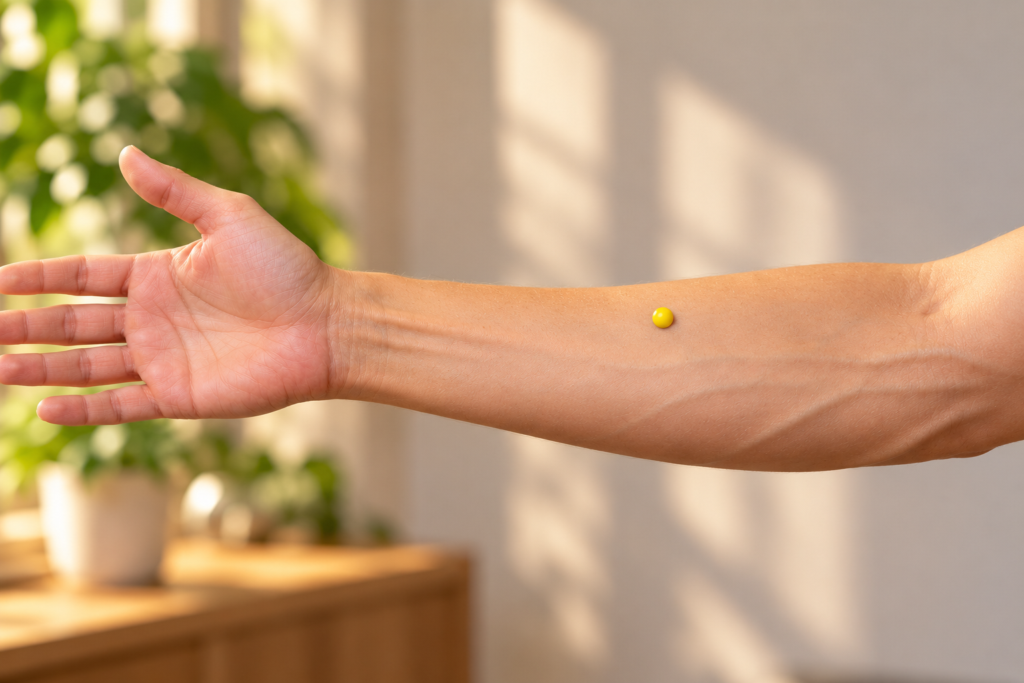
6. Press on LU6 on the forearm to let go. LU6 sits on the thumb side of the inner forearm, a little above the midpoint between the wrist crease and the elbow crease. Press firmly with the thumb of your other hand for one to two minutes on each arm. LU6 is called “Kongzui,” the “Maximum Opening.”
LU6 is the Lung’s Cleft point. Cleft points are traditionally used for acute, intense symptoms. The Lung governs grief and the ability to let go. LU6 may help loosen the grip of a moment you can’t undo and allow the breath to move more freely.
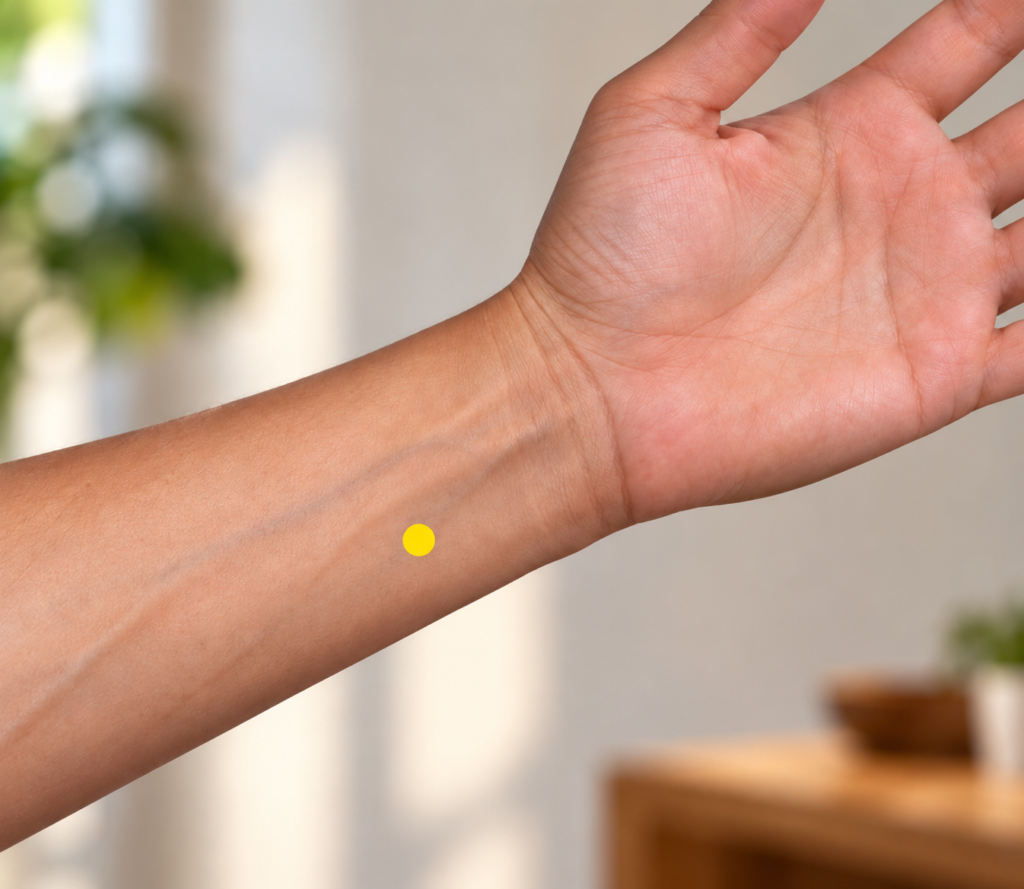
7. Press on HT4 on the inner wrist to soften self-blame. HT4 sits on the inner forearm, on the pinky side, just inside the tendon, about two finger-widths above the wrist crease. Press gently with the thumb of your other hand for one to two minutes on each arm. HT4 is called “Lingdao,” the “Spirit Path.”
HT4 is a Heart channel point traditionally used for heart pain, sadness, and fear. It’s really the Spirit Path, the path of the Shen. When regret becomes self-judgment, HT4 can help calm the Heart and encourage a gentler view of the past.
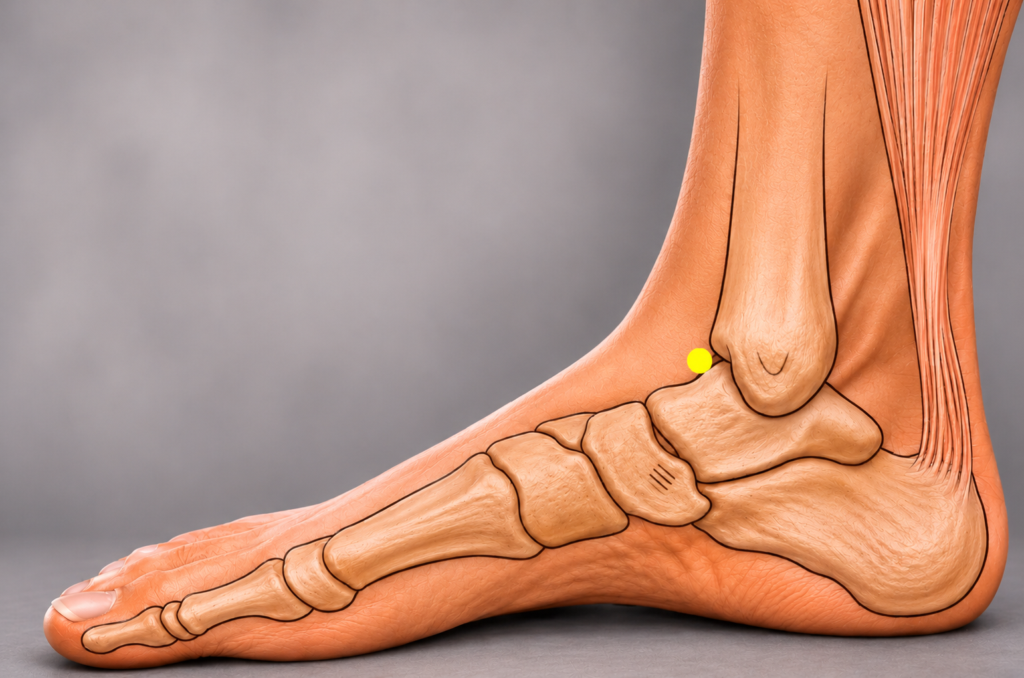
8. Press on LR4 in front of the inner ankle to release frustration. LR4 sits on the front of the ankle, in the hollow just in front of the inner ankle bone, on the inner side of the large tendon that stands out when you lift your toes toward your shin. Press firmly with your thumb for one to two minutes on each foot. LR4 is called “Zhongfeng,” the “Middle Seal.”
LR4 is the metal point on the Liver channel, traditionally used to move constrained Liver Qi. Regret often carries anger turned inward, a constant replay of what should have been done differently. LR4 helps that frustration move instead of settling into tension and self-criticism.
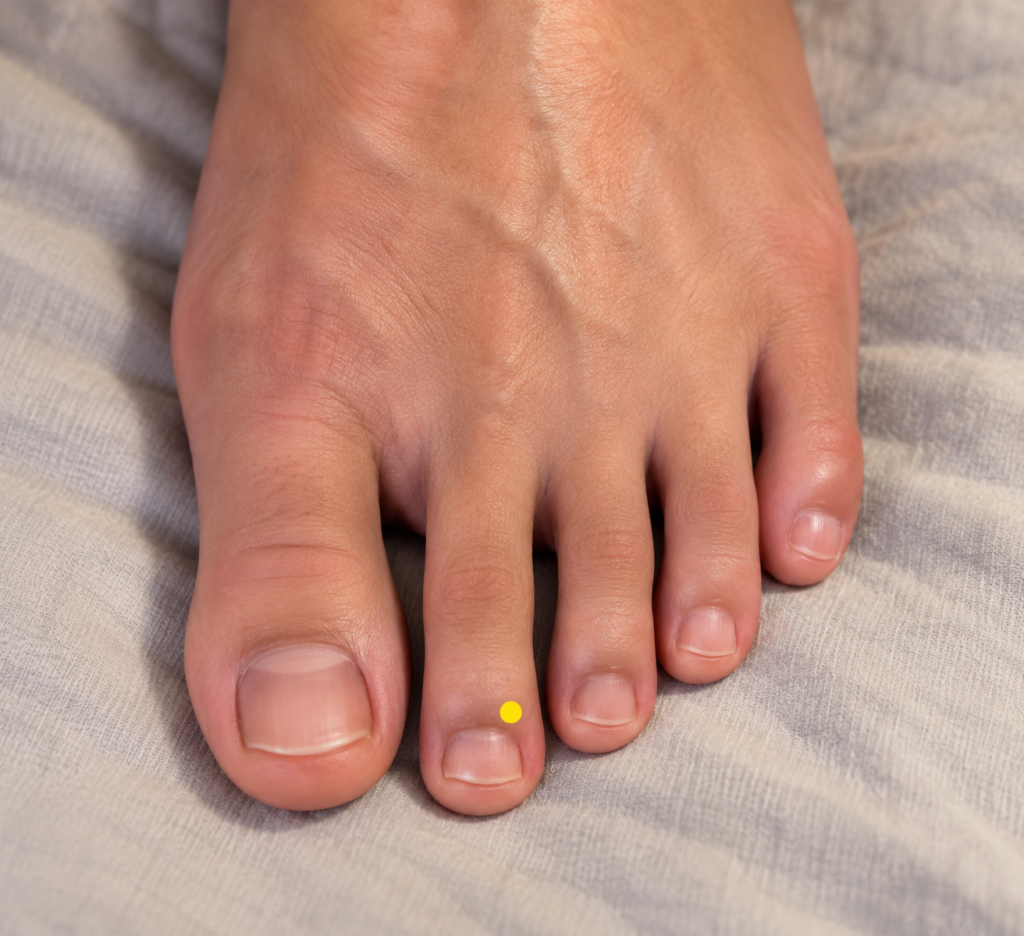
9. Press on ST45 on the second toe to quiet the replay at night. ST45 sits on the second toe, just behind the outer corner of the toenail, on the side closest to the third toe. Press firmly with your fingertip or the edge of your thumbnail for thirty seconds to one minute on each foot. ST45 is called “Lidui,” the “Strict Exchange.”
ST45 is a classic for restless sleep disturbed by dreams. Regret can feel especially loud at night, when there’s nothing else to occupy your mind. ST45 helps calm the mind so the same images don’t keep returning as you try to fall asleep.
Why These Acupressure Points Work

In Traditional Chinese Medicine, making peace with the past depends on a Lung that can let go, a Heart that can ease remorse, a Spleen that stops dwelling on what might have been, and a Liver whose Hun can look ahead. When these fall out of balance, regret becomes a lasting weight, keeping the mind in the past as the present slips by.
The nine points work together to help loosen the hold of the past:
- The release points (GB15, LU6) help let go of what cannot be changed and soften the grief held behind it.
- The Heart points (BL15, HT4) ease remorse and calm harsh self-judgment.
- The forward points (BL47, KI22) turn attention toward what is still possible and support the will to keep going.
- The settling points (SP16, LR4, ST45) ease the knot in the stomach, move frustration turned inward, and quiet the replay at night.
How to Properly Use These Acupressure Points

Acupressure for regret works best as a calm daily practice, ideally followed by a few minutes of honest reflection.
- Perform the complete routine once daily, holding each point for one to two minutes, or for 30 seconds to one minute at ST45.
- When you experience a wave of regret, apply pressure to LU6 on both arms, followed by HT4, while taking five slow breaths.
- Apply gentle pressure to the head, chest, abdomen, and wrists, and firmer pressure to the back, forearms, and feet.
- Practice consistently over several weeks, as loosening the hold of the past typically occurs gradually.
Daily habits can help you turn regret into a lesson rather than a life sentence. Write down what happened, what you know now that you didn’t know then, and what you’d do differently. Then set the page aside. If your regret involves someone else, consider whether you can still apologize or have an honest conversation. If not, writing a letter you never send may help. Ask yourself whether some version of the path you missed is still open, even in a small way, by taking a class, going on a trip, or reaching out to an old friend. Talk to yourself as kindly as you would to a friend in the same situation. Move your body every day, get enough sleep, and eat warm, regular meals; tiredness can make memories feel heavier.
Learn more about how to stop being so hard on yourself.
When to Get Professional Help

Talk to a mental health professional if regret keeps you from sleeping, working, or enjoying life. Also seek help if you feel down most of the day for two weeks or more, lose interest in things you used to enjoy, or blame yourself all the time. These can be signs of depression, which can be treated. Get support if your regret is linked to a major loss, like a death, divorce, estrangement, or a life decision that cannot be changed, or if you are using alcohol or other substances to cope. A therapist can help you see what was in your control and what was not, and help you find peace with the past.
If you feel hopeless or think about harming yourself, call or text 988 to reach the Suicide and Crisis Lifeline right away.
Acupressure is a gentle, supportive practice for regret. It complements, and does not replace, diagnosis and medical care.
For related emotional concerns, acupressure for guilt, acupressure for disappointment, and acupressure for rumination are companion articles. If regret has impacted how you perceive yourself, learn about acupressure for self-esteem.
Above and Beyond Acupuncture offers acupuncture, cupping, and lifestyle coaching at the North Frank Lloyd Wright Boulevard location in Scottsdale.
Schedule an appointment online to start your healing journey.
The points above are only as effective as the technique used to apply them. Where to press, how firmly, and for how long all affect the result. For a full breakdown of how to perform acupressure properly at home, read Performing Acupressure in 3 Easy Steps.

About the Publisher
Paul Kerzner, L.Ac., is a licensed acupuncturist and board-certified herbalist, as well as the founder of Above and Beyond Acupuncture in Scottsdale. His own journey from chronic patient to practicing acupuncturist shapes his commitment to providing honest, clinically grounded information about acupuncture and Traditional Chinese Medicine. Learn more about Paul and his clinical approach on the About Us page.