Key Takeaways
- Rumination involves revisiting past events repeatedly without resolution, which causes stress and is linked to depression and anxiety.
- Nine acupressure points can help alleviate rumination by calming the mind, settling the spirit, and promoting Qi flow.
- Using acupressure daily can help disrupt rumination loops and foster clearer thinking and emotional balance.
- Establish regular habits, such as setting aside dedicated time for reflection and engaging in physical activity.
- Seek professional help if rumination interferes with daily life, sleep, or leads to persistent anxiety or depression.
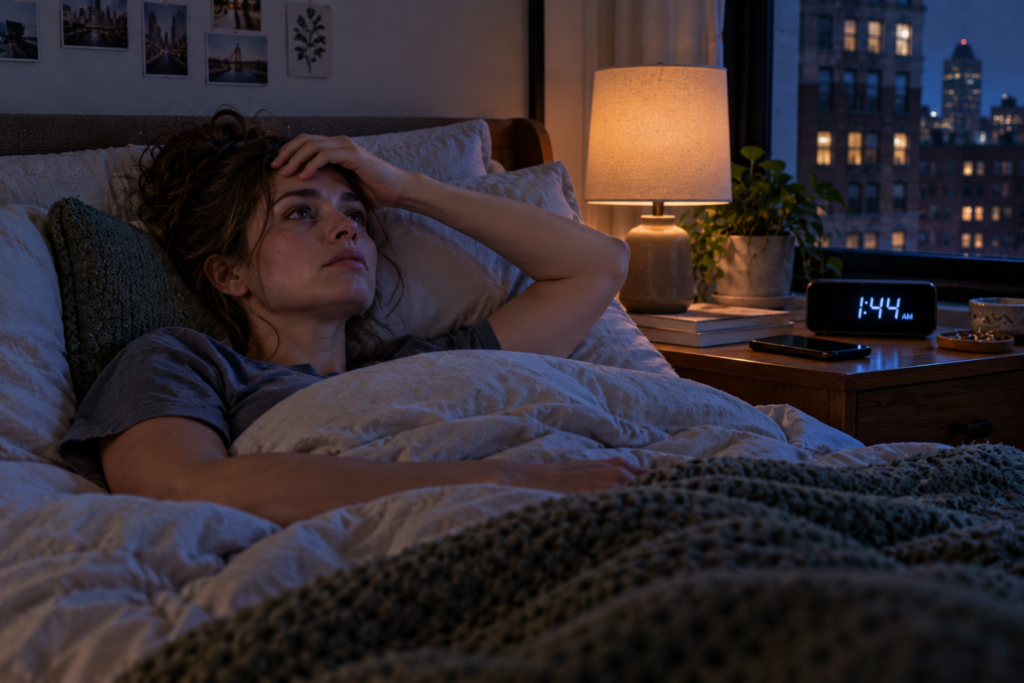
The word rumination comes from how cows digest their food: they chew and swallow it, bring it back up, and chew it again. Mental rumination works much the same way. The mind revisits the same conversation, mistake, or loss, going over it again and again in search of an answer that never seems to come.
Rumination isn’t problem solving. Problem solving leads to a decision or action; rumination goes in circles. It replays what was said, wonders why something happened, imagines different outcomes, and then starts over. Worry is different, too: it looks ahead at what might go wrong, while rumination looks back at what already happened.
Most people ruminate now and then, especially after an argument, a rejection, or a difficult day. But when rumination becomes a habit, it keeps the body under constant stress. It is closely linked to depression and anxiety, and can also show up physically as trouble falling asleep, chest tightness, frequent sighing, tension in the neck and shoulders, poor appetite, and a heavy, tired feeling that rest does not ease.
In Traditional Chinese Medicine, the Spleen governs both digestion and thought. Classical texts say that overthinking constrains Qi. Just as food that sits too long becomes difficult to digest, thoughts endlessly revisited can weigh down the Spleen. Over time, a weakened Spleen allows Dampness and Phlegm to accumulate, clouding the mind and making it harder to think. The Heart, which houses the Shen, or spirit, becomes restless, while stagnant Liver Qi leaves a person feeling trapped in the same loop.
The nine points below help quiet the mind, calm the spirit, untangle knotted Spleen Qi, and ease the heaviness that keeps thoughts stuck. They also help Qi flow freely again, allowing the mind to let go.
What Acupressure Points to Press and Why
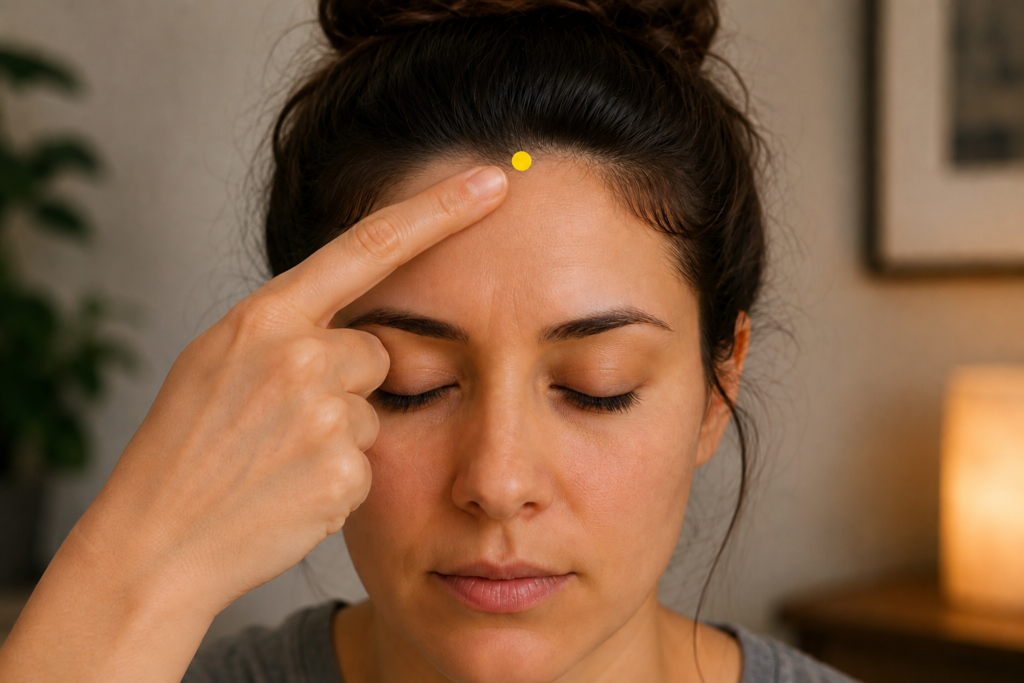
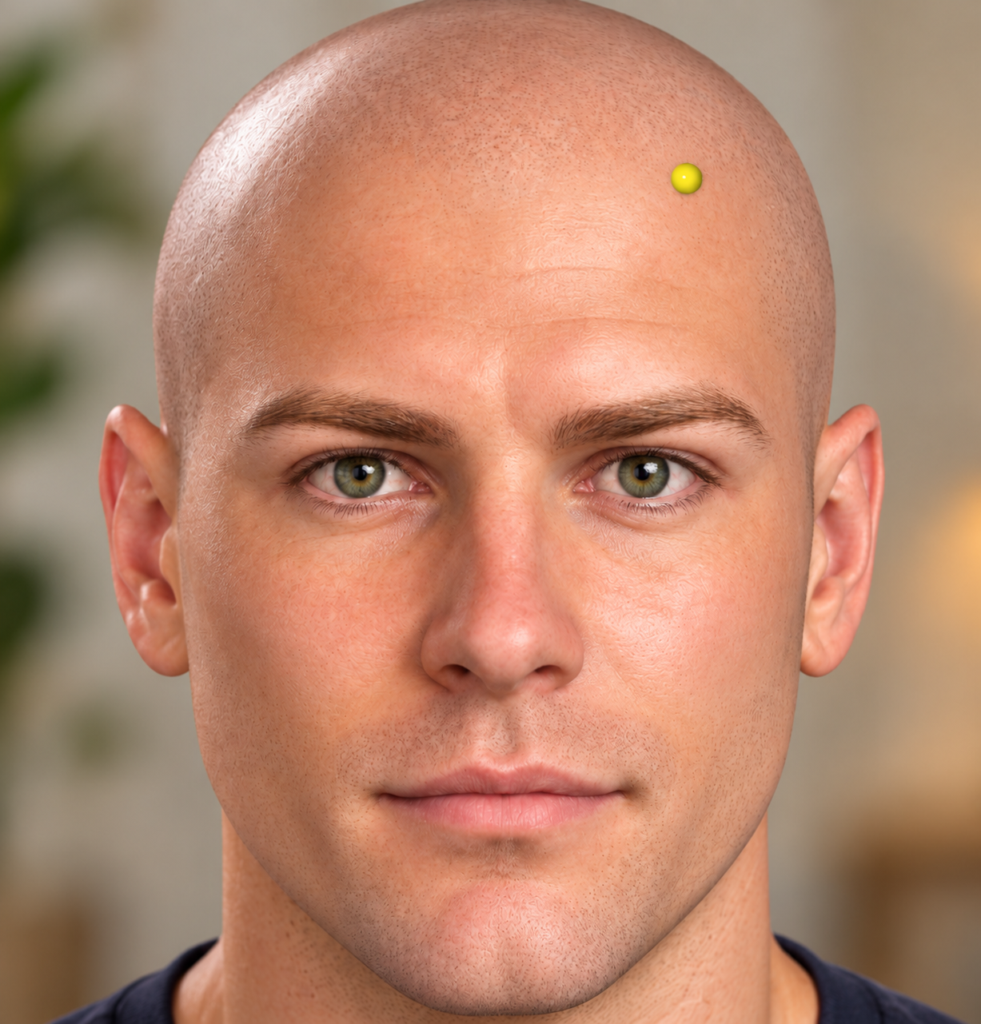
1. Press on GV24 at the front hairline to quiet a busy mind. GV24 sits on the midline of the head, about half a finger-width behind the front hairline. If the hairline has receded, it sits about four and a half finger-widths above the point between the eyebrows. Press gently with your middle fingertip, or make slow circles, for one to two minutes while breathing slowly. GV24 is called “Shenting,” the “Spirit Courtyard.”
GV24 is where the Governing Vessel, the channel that runs up the spine and over the head, reaches the forehead. Traditional Chinese Medicine has long used this point to calm the Shen and clear the head. It eases pressure and tension in the forehead when thoughts keep circling, helping the mind settle enough to rest.
2. Press on GB13 above the outer corner of the eye to loosen fixed thoughts. GB13 sits about half a finger-width inside the front hairline, directly above the outer corner of the eye. Press both points at once with your fingertips, or make slow circles, for one to two minutes. GB13 is called “Benshen,” the “Root of the Spirit.”
GB13 is a classic point for thoughts that feel stuck in a loop. Traditional Chinese Medicine texts recommend it for persistent worry, jealousy, and thoughts the mind can’t let go of. It’s often paired with GV24; pressing all three points along the hairline creates a calming band across the front of the head.
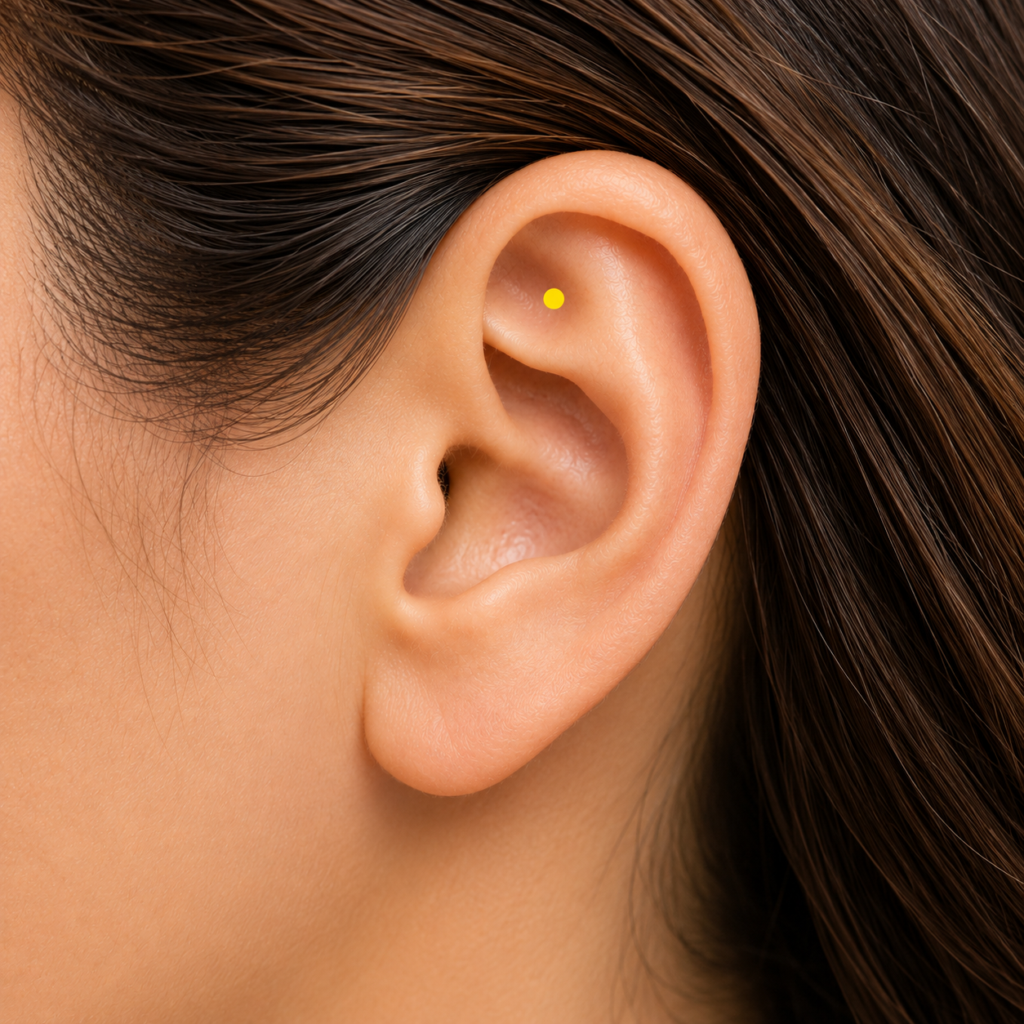
3. Press on Ear Shenmen in the upper ear to calm the nervous system. Ear Shenmen sits in the small triangular hollow near the top of the outer ear, just inside the curved rim. It lies near the upper tip of that triangle, where two ridges of cartilage branch apart. Press gently with a fingertip, or gently squeeze the area between your thumb and index finger, for one to two minutes on each ear. Ear Shenmen means “Spirit Gate,” the same name as a well-known point on the wrist.
Ear Shenmen is one of the most commonly used points in auricular therapy, which aims to treat the whole body through points on the ear. It’s traditionally used to calm the mind, ease anxiety and tension, and support sleep. Because the ear is easy to reach, this point offers a discreet option when rumination flares up at work, in the car, or in bed at night.
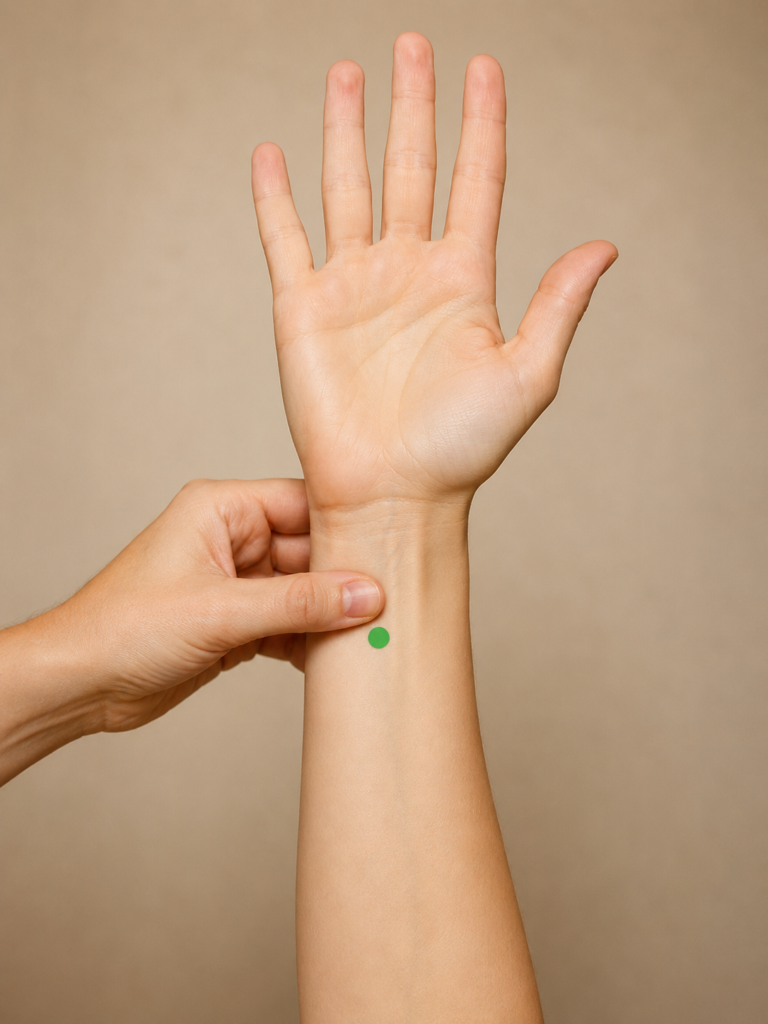
4. Press on PC5 on the inner forearm to clear a clouded mind. PC5 sits on the inner forearm, four finger-widths above the wrist crease, between the two tendons. Press firmly with the thumb of your other hand for one to two minutes on each arm. PC5 is called “Jianshi,” the “Intermediary Messenger.”
The Pericardium protects the Heart, and PC5 is one of its key points for the mind. In Traditional Chinese Medicine, it is used when Phlegm clouds the Heart, causing heavy, foggy thinking, poor concentration, and recurring thoughts. PC5 calms the Shen, relieves chest tightness, and helps the mind feel clearer and lighter.
5. Press on CV14 below the breastbone to settle the heart. CV14 sits on the midline of the upper abdomen, about three finger-widths below the spot where the lower ribs meet at the bottom of the breastbone. Rest your fingertips on the point and press gently, or make slow circles, for one to two minutes while breathing into the belly. CV14 is called “Juque,” the “Great Gateway.”
CV14 is the Heart’s front collecting point, where its Qi gathers at the front of the body. It calms the Shen, eases anxiety and a racing heart, and releases the tightness that often settles below the breastbone when the mind won’t stop.

6. Press on LR14 on the rib cage to release stuck emotions. LR14 sits directly below the nipple, two rib spaces down, in the gap between the sixth and seventh ribs. Press gently with your fingertips, or make slow circles, for one to two minutes on each side. LR14 is called “Qimen,” the “Cycle Gate.”
LR14 is the Liver’s front collecting point. It helps Qi flow smoothly through the body and supports emotional balance. When Liver Qi becomes stuck, people may feel trapped, sigh frequently, and experience tightness along the ribs. LR14 helps release this tension and encourages Qi and the mind to move forward again.

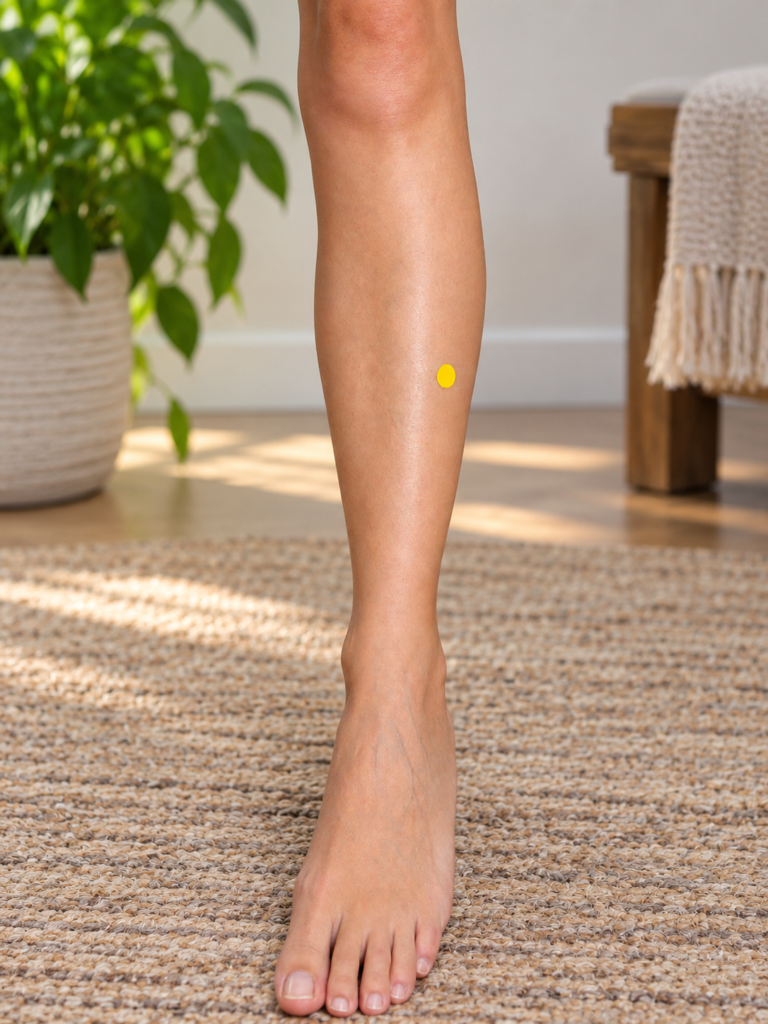
7. Press on ST40 on the outer lower leg to clear heaviness from the mind. ST40 sits on the outer side of the lower leg, halfway between the knee crease and the outer ankle bone, about two finger-widths to the outside of the front edge of the shinbone. Press firmly with your thumb for one to two minutes on each leg. ST40 is called “Fenglong,” the “Abundant Bulge.”
ST40 is the primary point in Traditional Chinese Medicine for resolving Phlegm. Prolonged overthinking can weaken digestion, allowing Dampness and Phlegm to accumulate, clouding the mind and making thoughts feel slow, heavy, and stuck. ST40 helps clear this heaviness, support digestion, and restore mental clarity.
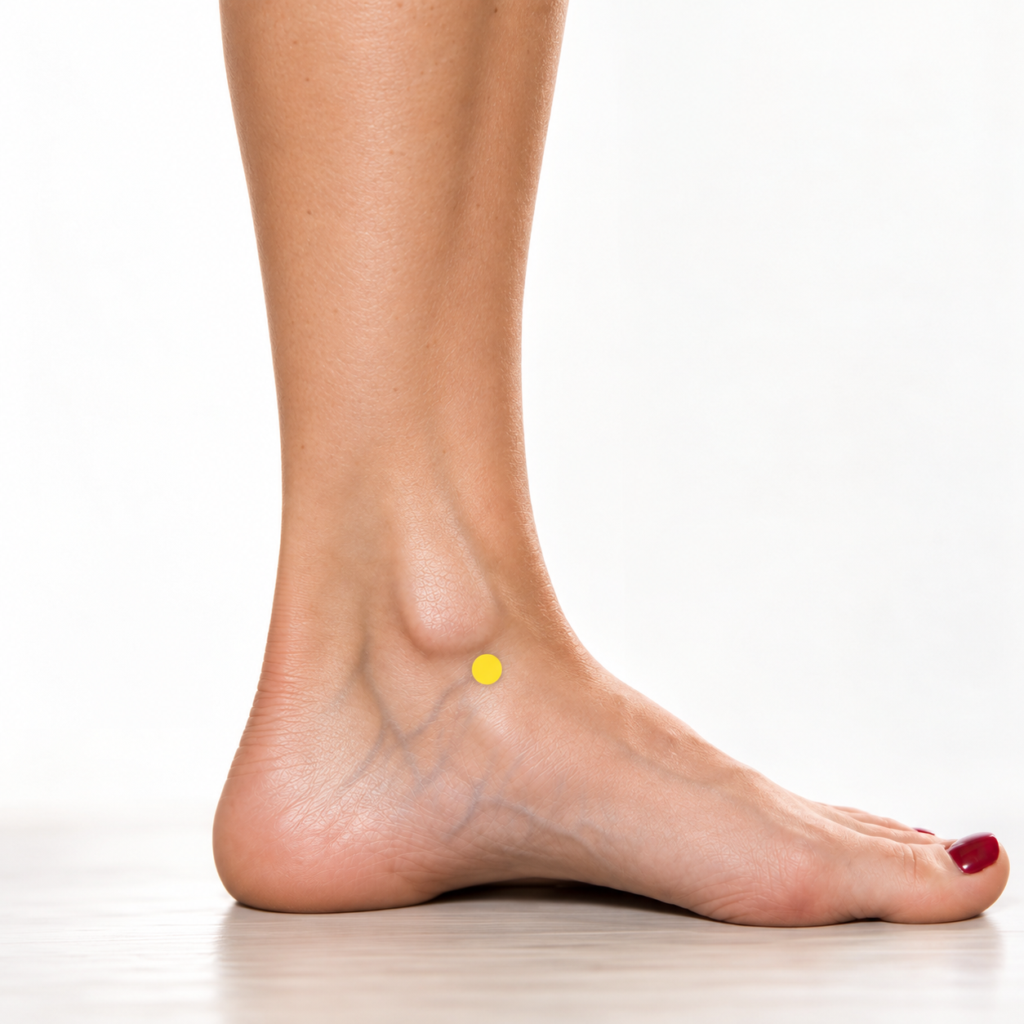
8. Press on SP5 near the inner ankle to untie overthinking. SP5 sits in the hollow just in front of and below the inner ankle bone. Press firmly with your thumb for one to two minutes on each foot. SP5 is called “Shangqiu,” the “Shang Mound.”
In Traditional Chinese Medicine, the Spleen governs thought, and overthinking can tie up Spleen Qi. SP5 strengthens the Spleen and drains Dampness. It has long been used to address excessive thinking and the heavy, sluggish feeling that can come with it. It may be especially helpful when rumination is accompanied by bloating, poor appetite, or loose stools.
9. Press on GB34 below the outer knee to help the mind move on. GB34 sits on the outer side of the lower leg, in the hollow just in front of and below the head of the fibula, the small bony knob on the outer leg just below the knee. Press firmly with your thumb for one to two minutes on each leg. GB34 is called “Yanglingquan,” the “Yang Mound Spring.”
In Traditional Chinese Medicine, the Gallbladder governs decisiveness, the ability to make decisions and act. Rumination is the opposite: the mind returns to the same question without reaching a decision. GB34 spreads Liver Qi, releases tension in the muscles and sides of the body, and supports the clarity needed to close the loop and move on.

Why These Acupressure Points Work

In Traditional Chinese Medicine, a clear and settled mind depends on a strong Spleen that can digest both food and experience, a calm Shen, a head free of Phlegm and heaviness, and Qi that flows freely rather than circling in place. Rumination ties up Spleen Qi, unsettles the Heart, lets Phlegm cloud the mind, and constrains the Liver, so the same thoughts keep returning.
The nine points work together to break the loop:
- The head and ear points (GV24, GB13, Ear Shenmen) quiet a busy mind and loosen fixed thoughts.
- The Heart points (PC5, CV14) settle the Shen and clear the fog from the mind.
- The Spleen and Stomach points (SP5, ST40) untie overthinking and resolve the Dampness and Phlegm it creates.
- The Liver and Gallbladder points (LR14, GB34) release stuck Qi and help the mind reach a decision and move on.
How to Properly Use These Acupressure Points

Acupressure can help with rumination when practiced daily and used as soon as the loop starts.
- Complete the full routine once daily, holding each point for one to two minutes. Ideally, perform it in the early evening, before thoughts begin to accumulate at bedtime.
- When you notice yourself repeating the same thought, apply pressure to the Ear Shenmen points on both ears, followed by GB13, while taking five slow breaths.
- Apply gentle pressure to the head, ears, chest, and abdomen, and firmer pressure to the arms and legs.
- Practice consistently over several weeks, as a habitual thought pattern developed over years requires time to change.
Daily habits matter just as much as using the points. Set aside fifteen minutes each day to reflect on what’s on your mind. If a thought comes up outside that time, write it down and return to it later. Writing down the thought and identifying one small action you can take can turn rumination into problem-solving. Physical activity, such as a brisk walk outdoors, can interrupt the loop and keep Qi moving. Eat regular, warm meals, and avoid eating while working or scrolling; in Traditional Chinese Medicine, the Spleen digests both food and thought. Try to limit late-night news and screen time, which give the mind more to process before sleep. Bringing your attention back to the present moment is one of the most reliable ways to step out of the loop.
Learn more about the importance of having a mindfulness practice.
When to Get Professional Help

Talk to a mental health professional if rumination takes up hours of your day, interferes with sleep, work, or time with others, or persists for weeks after a loss or stressful event. Persistent rumination is closely linked to depression, anxiety, obsessive-compulsive disorder, and post-traumatic stress. Cognitive behavioral therapy and mindfulness-based therapy can help break the cycle. See your doctor if rumination comes with lasting changes in sleep, appetite, or energy, as these may signal depression or another medical issue that needs attention.
If you have thoughts of harming yourself, call or text 988 to reach the Suicide and Crisis Lifeline right away.
Acupressure is a gentle, supportive practice for rumination, but it complements rather than replaces diagnosis and medical care.
For related emotional health concerns, acupressure for worry, acupressure for depression, and acupressure for OCD are companion articles. If replaying the past keeps you awake at night, learn about acupressure for trouble falling asleep.
Above and Beyond Acupuncture offers acupuncture, cupping, and lifestyle coaching at the North Frank Lloyd Wright Boulevard location in Scottsdale.
Schedule an appointment online to start your healing journey.
The points above are only as effective as the technique used to apply them. Where to press, how firmly, and for how long all affect the result. For a full breakdown of how to perform acupressure properly at home, read Performing Acupressure in 3 Easy Steps.

About the Publisher
Paul Kerzner, L.Ac., is a licensed acupuncturist and board-certified herbalist, as well as the founder of Above and Beyond Acupuncture in Scottsdale. His own journey from chronic patient to practicing acupuncturist shapes his commitment to providing honest, clinically grounded information about acupuncture and Traditional Chinese Medicine. Learn more about Paul and his clinical approach on the About Us page.