
Key Takeaways
- Rejection can feel like physical pain, often showing up in the throat, chest, and stomach.
- Acupressure for rejection uses specific points to help soothe emotional and physical discomfort.
- Nine acupressure points target areas affected by rejection, helping heal and restore courage to connect with others.
- Daily practice of these acupressure techniques aids in coping with rejection and promotes emotional healing.
- Seek professional assistance if the pain of rejection interferes with daily life or causes significant emotional distress.

Rejection hurts, and not just in a metaphorical way. A well-known UCLA study showed that being left out of a simple computer game activates the same brain region as physical pain. The body treats being pushed away as a real threat, which is why a breakup, a closed door, or an unanswered message can feel like a punch to the gut.
Rejection can take many forms: a partner ending things, a friend stopping their calls, a family member withholding approval, a job offer going to someone else, or a group making plans without you. Even small moments, like being ignored in a conversation or left on read, can hurt more than you might expect. Some people react especially strongly. The term rejection sensitive dysphoria is often used to describe this, particularly among people with attention deficit hyperactivity disorder, though it isn’t a formal diagnosis.
Physically, the reaction comes before the mind can make sense of it. The chest aches or tightens, a lump rises in the throat, the stomach drops, and the face may flush with heat. Many people want to hide or withdraw, or replay every detail of what happened to figure out what they did wrong. Over time, fear of being hurt again can lead people to avoid new relationships, opportunities, and risks altogether.
In Traditional Chinese Medicine, the Heart is believed to house the Shen, or spirit, which enables people to connect with one another. The Pericardium surrounds and protects the Heart and, when a person is injured, can close off to shield the Heart from further pain. Paired with the Heart, the Small Intestine helps determine what is useful and what is not, including which messages to take to heart. The Kidney is associated with fear; if a person is repeatedly hurt, it prepares for the next blow.
The nine points below open the throat and chest, soothe the Heart and its protector, help distinguish truth from what merely causes pain, and restore the courage to reach out once more.
What Acupressure Points to Press and Why
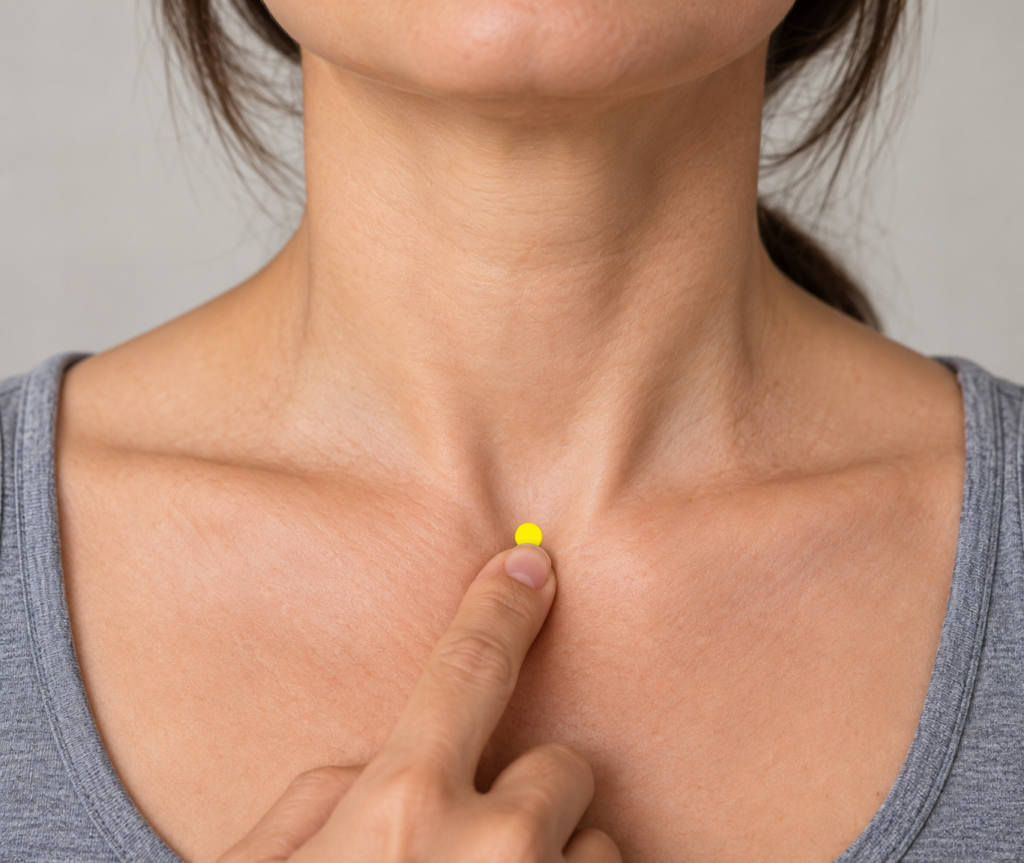
1. Press on CV22 at the base of the throat to ease the lump in the throat. CV22 sits in the hollow at the base of the throat, just above the top of the breastbone, between the inner ends of the collarbones. Rest a fingertip in the hollow and press gently downward toward the breastbone, never inward toward the windpipe, for thirty seconds to one minute. CV22 is called “Tiantu,” the “Heaven’s Chimney.”
CV22 is typically used when emotions feel blocked in the throat, creating the tight, constricted sensation often associated with hurt. It helps Qi descend, eases tightness in the throat and upper chest, and supports the voice when it’s difficult to express what you’re feeling.
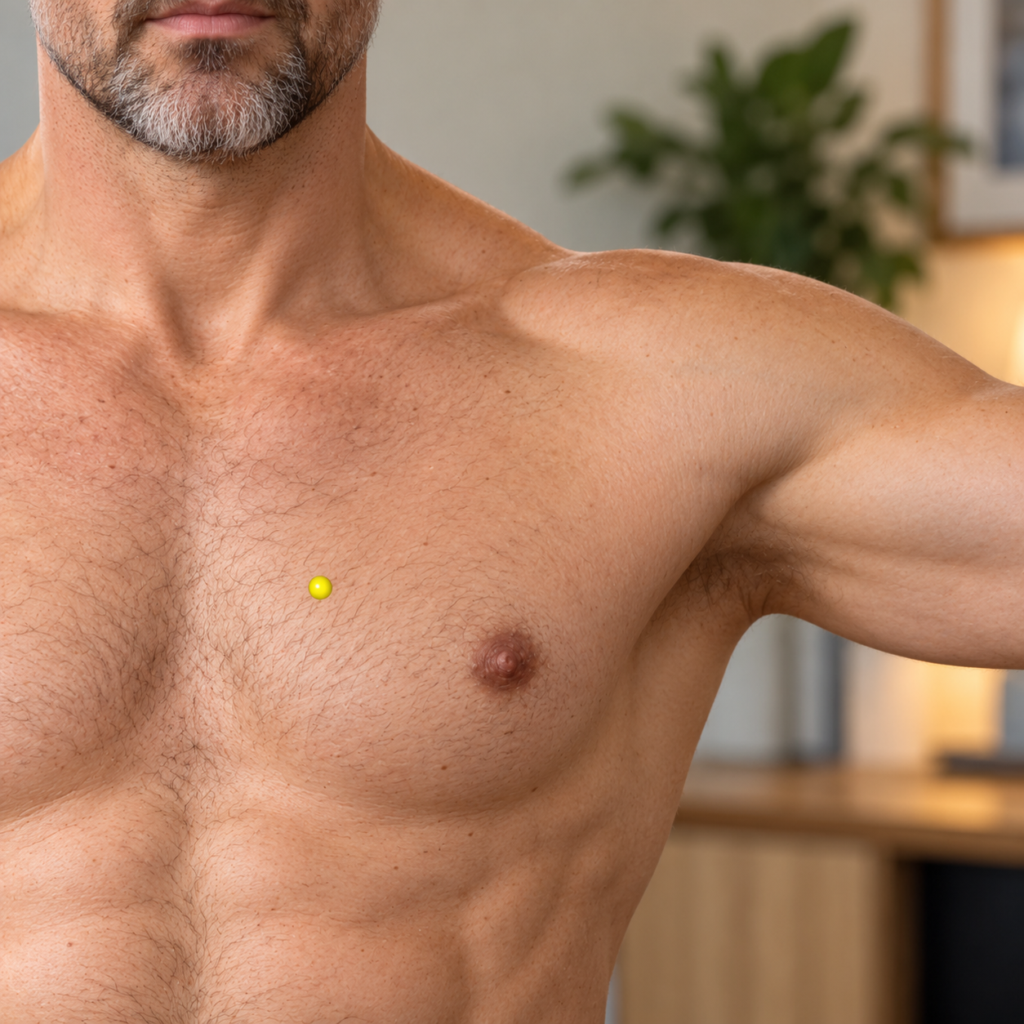
2. Press on KI24 on the upper chest to soothe a wounded spirit. KI24 sits on the upper chest, in the third space between the ribs, about three finger-widths to each side of the center of the breastbone. To find it, start just below the collarbone and move down three rib spaces. Press both points gently with your fingertips, or make slow circles, for one to two minutes while breathing slowly. KI24 is called “Lingxu,” the “Spirit Ruins.”
KI24 belongs to a group of points on the chest traditionally used for a disturbed spirit; its name suggests a spirit that has been brought down. It opens the chest, eases pain behind the breastbone, and helps restore the breath’s free movement after a painful shock.
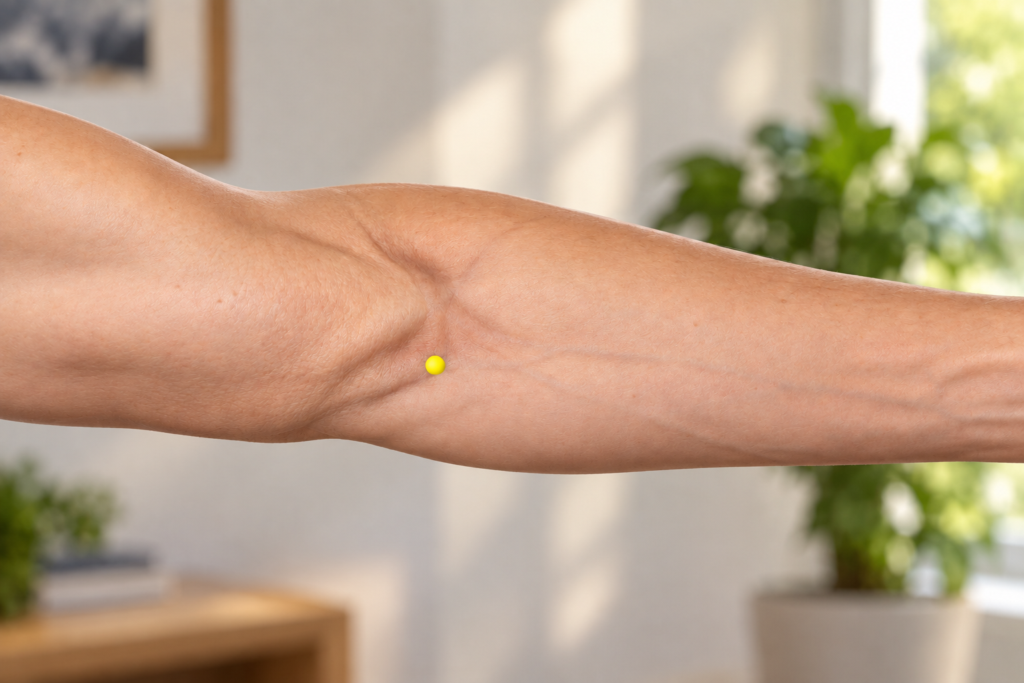
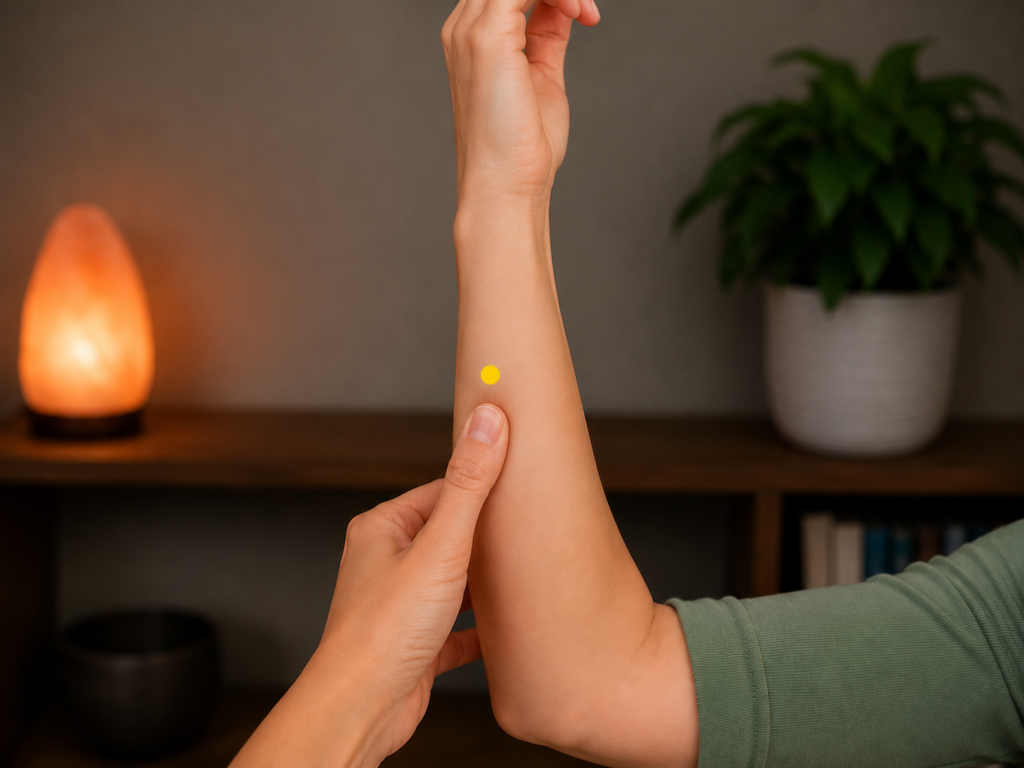
3. Press on PC3 at the inner elbow to soothe the Heart’s protector. Bend the elbow slightly and find the strong tendon of the biceps at the center of the inner elbow crease. PC3 sits on the crease, just on the pinky side of that tendon. Press firmly with the thumb of your other hand for one to two minutes on each arm. PC3 is called “Quze,” the “Marsh at the Bend.”
The Pericardium protects the heart from emotional injury. After rejection, it may shut down, leaving a person guarded and unable to let others get close. PC3, the Pericardium’s water point, is commonly used to calm agitation, relieve palpitations, and settle the heart after a shock.
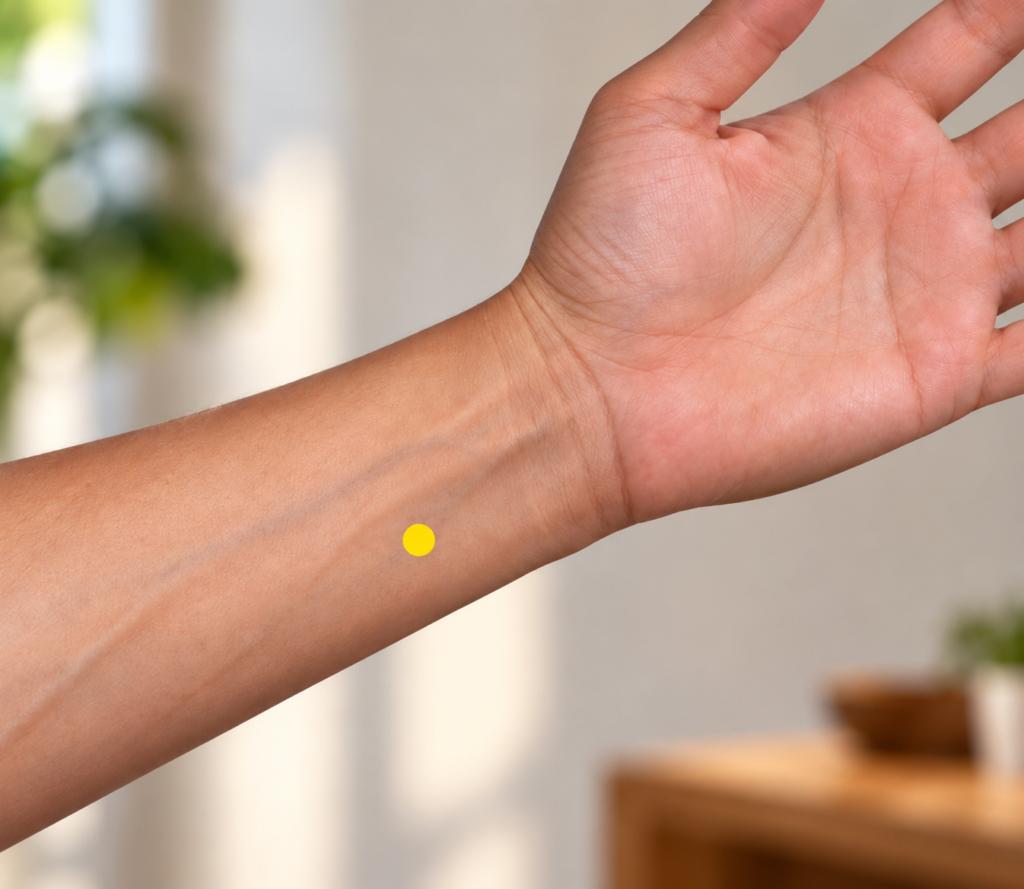
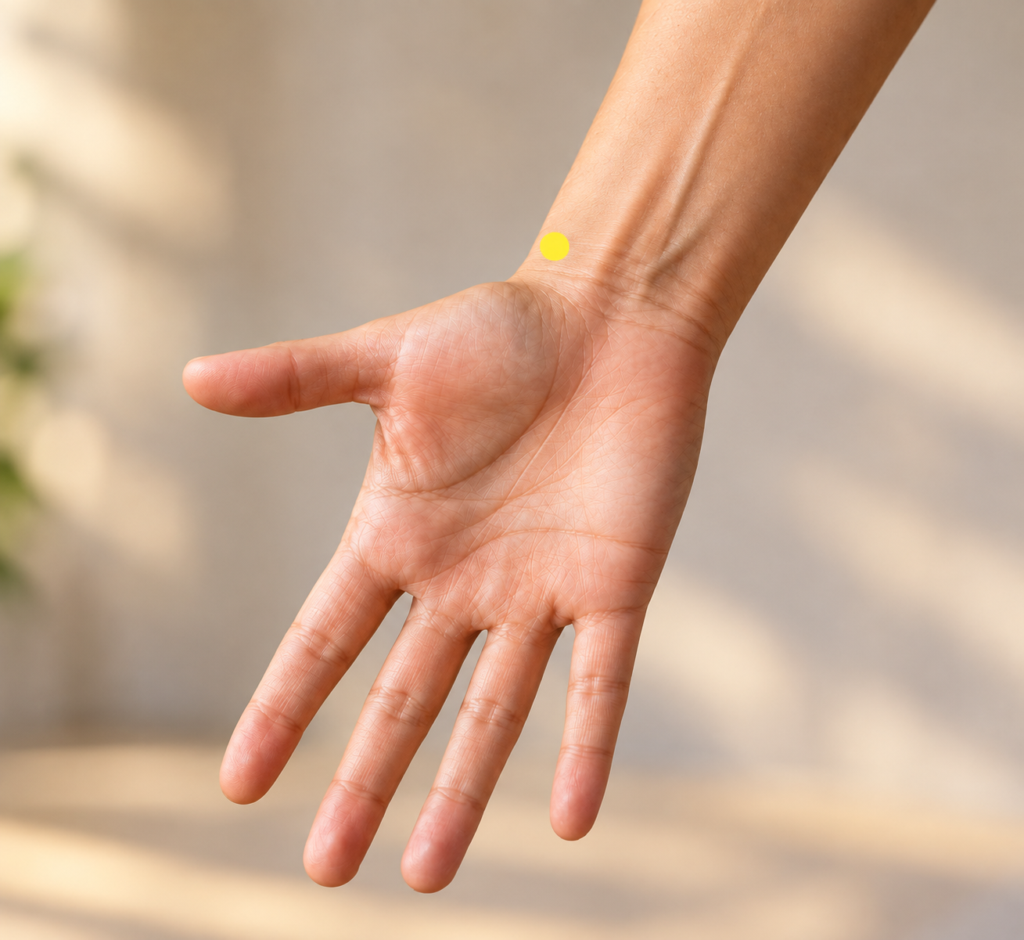
4. Press on HT4 on the inner wrist to find your voice again. HT4 sits on the inner wrist, on the pinky side, just inside the tendon, about one and a half thumb-widths above the wrist crease. Press gently with the thumb of your other hand for one to two minutes on each wrist. HT4 is called “Lingdao,” the “Spirit Path.”
HT4 is commonly used for sadness, fear, and a sudden loss of speech, which may follow painful rejection. It calms the Shen and strengthens the connection between the Heart and the voice, making it easier to say what needs to be said instead of remaining silent.
5. Press on SI7 on the forearm to sort what is true from what hurts. SI7 sits on the pinky side of the forearm, about seven finger-widths above the wrist crease, along the palm-side edge of the forearm bone. Press firmly with the thumb of your other hand for one to two minutes on each arm. SI7 is called “Zhizheng,” the “Branch to the Correct.”
SI7 is where the Small Intestine connects with the Heart. In Traditional Chinese Medicine, the Small Intestine distinguishes the pure from the impure. Emotionally, it helps a person discern whether feedback is helpful or whether it is a harmful narrative about their worth. SI7 is usually associated with fear, sadness, and anxiety.
6. Press on LU7 on the forearm to support self-nurturing. LU7 sits on the thumb side of the forearm, about two finger-widths above the wrist crease. To find it, interlace the thumbs and index fingers of both hands, and the tip of the top index finger will rest in a small groove on the edge of the forearm, just above the bony bump of the wrist. Press gently with your fingertip for one to two minutes on each arm. LU7 is called “Lieque,” the “Broken Sequence.”
LU7 opens the Conception Vessel, also called the Sea of Yin, a channel linked to nurturing, bonding, and feeling cared for. Paired with KI6, it creates a traditional combination for nourishing Yin. After experiencing rejection, this pairing may help someone care for themselves while healing from the hurt.
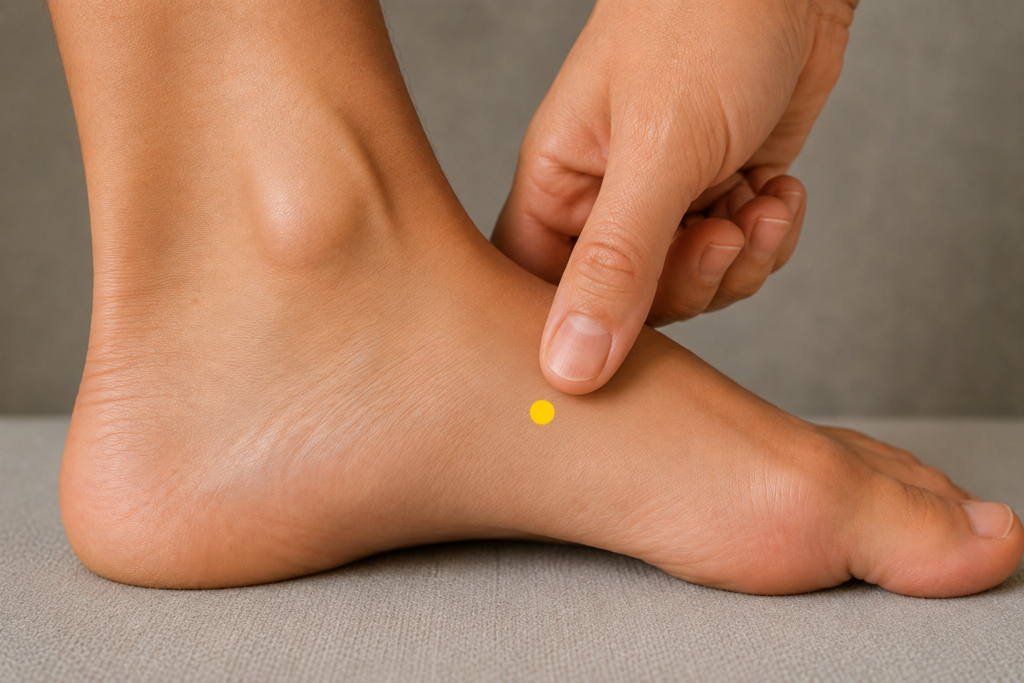
7. Press on SP4 on the inner edge of the foot to feel grounded in yourself. SP4 sits on the inner edge of the foot, in the hollow just in front of the base of the long bone that leads to the big toe, where the smooth skin of the sole meets the top of the foot. Press firmly with your thumb for one to two minutes on each foot. SP4 is called “Gongsun,” the “Grandfather Grandson.”
The Spleen governs the center and the sense of being at home within oneself. SP4 supports the Spleen, opens the Penetrating Vessel, which is connected to a person’s roots, and eases the sinking sensation in the stomach that often follows rejection. Because the point’s name refers to a relationship spanning generations, it is particularly appropriate when rejection comes from family.
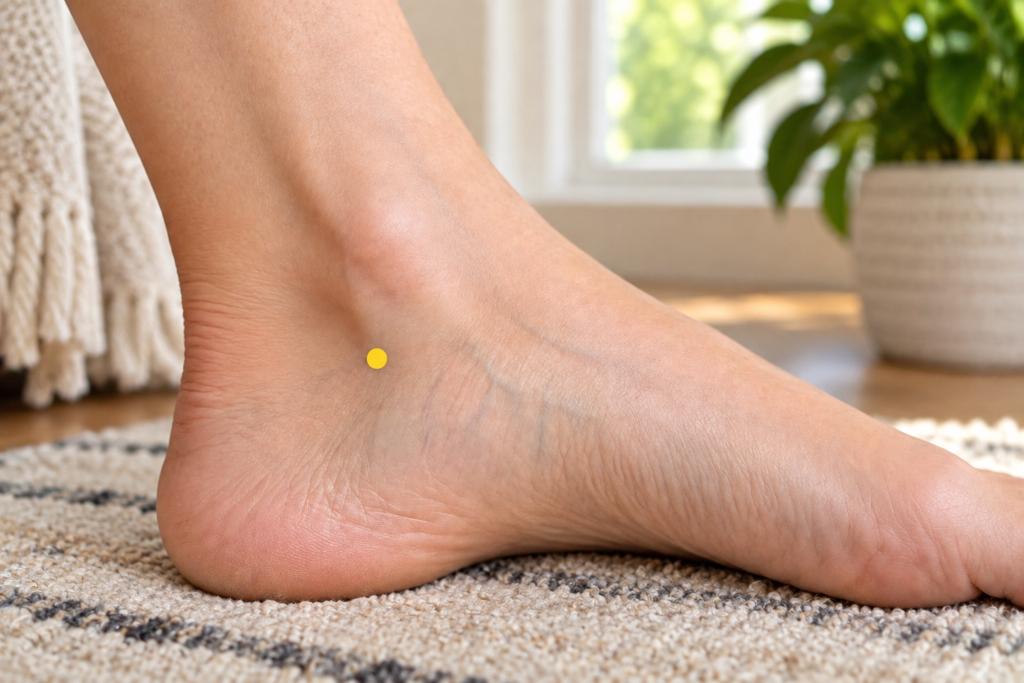
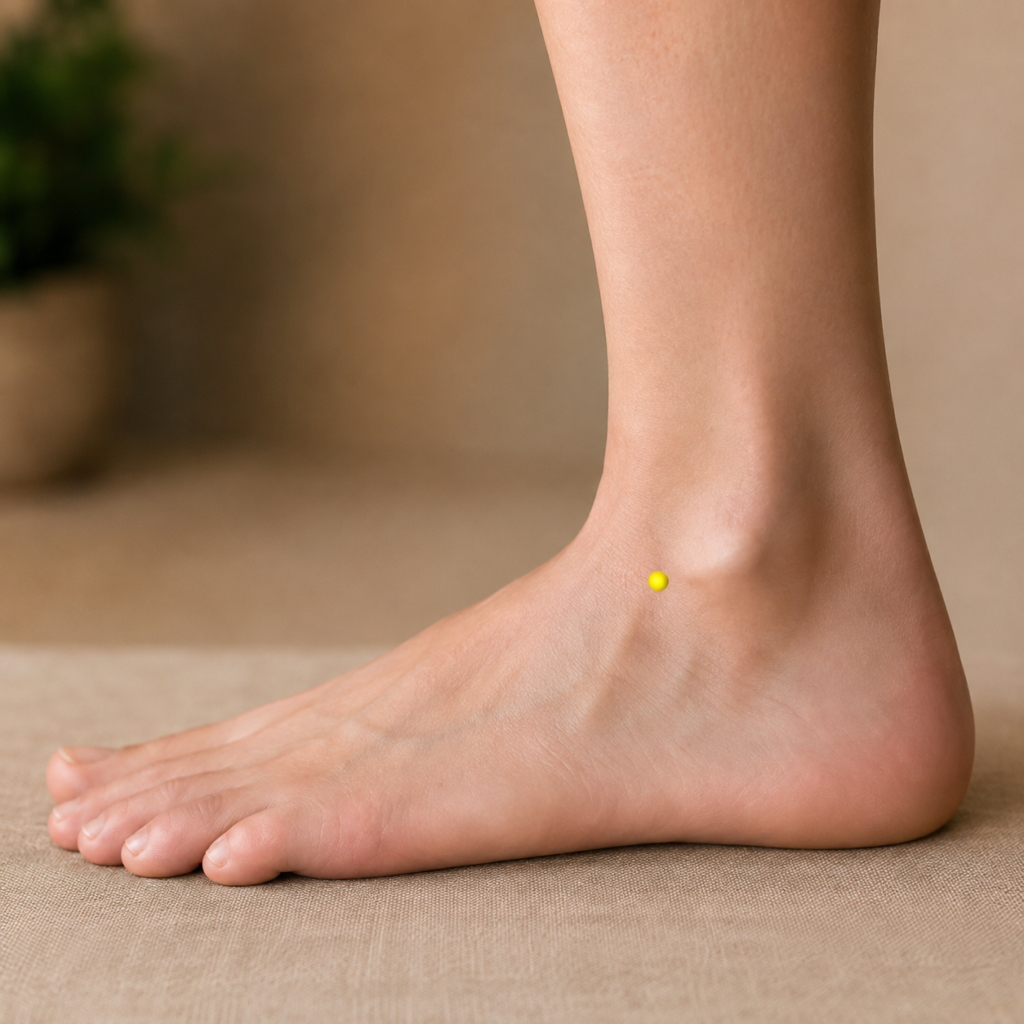
8. Press on KI6 below the inner ankle to calm the fear of being hurt again. KI6 sits in the small hollow about one thumb-width below the tip of the inner ankle bone. Press gently with your thumb for one to two minutes on each foot. KI6 is called “Zhaohai,” the “Shining Sea.”
KI6 replenishes Kidney Yin, completing its pairing with LU7. Because the Kidney governs fear, constant rejection can leave it braced for the next injury. KI6 helps calm the mind and supports restful sleep when the injury resurfaces at night, helping the body feel safe enough to soften.
9. Press on GB40 near the outer ankle to restore the courage to reconnect. GB40 sits in the hollow just in front of and below the outer ankle bone. Press firmly with your thumb for one to two minutes on each foot. GB40 is called “Qiuxu,” the “Mound of Ruins.”
In Traditional Chinese Medicine, GB40 is the Gallbladder’s source point, associated with courage and decisiveness. After being rejected, it may feel safer to stop trying. GB40 helps strengthen the courage to reach out, try again, or open up to someone new.
Why These Acupressure Points Work
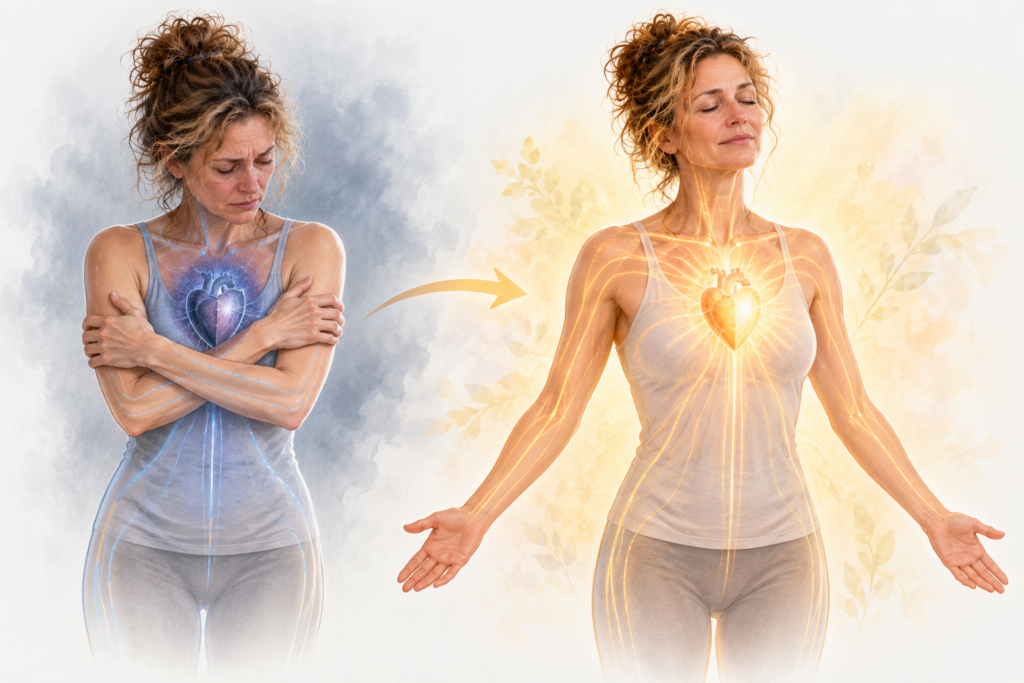
In Traditional Chinese Medicine, health depends on the Heart’s ability to open, the Pericardium’s ability to protect without closing down, and a clear sense of what to take to heart. It also requires sufficient nourishment to heal and the courage to try again. Because rejection affects all of these aspects, it can show up in the chest, throat, and stomach, and it can weaken a person’s willingness to reach out.
The nine points work together to support the healing process for those who have been hurt.
- The throat and chest points (CV22, KI24) ease the lump in the throat and the ache behind the breastbone.
- The Heart and Pericardium points (PC3, HT4, SI7) soothe the Heart, help it open again, and sort what is true from what hurts.
- The nurturing points (LU7, KI6, SP4) nourish the Yin, calm the fear of being hurt again, and ground a person in themselves.
- The courage point (GB40) restores the willingness to reconnect and try again.
How to Properly Use These Acupressure Points

Acupressure for rejection works best as a gentle daily practice during the days and weeks after a painful experience.
- Complete the full routine once daily, holding each point for one to two minutes, or for 30 seconds to one minute for CV22.
- When the discomfort returns, apply pressure to KI24 on both sides of the chest, followed by HT4, while taking five slow breaths.
- Apply gentle pressure to the throat, chest, and wrists, and firmer pressure to the forearms and feet.
- Practice consistently for several weeks, especially if you’ve faced rejection more than once and your body has learned to brace for it.
Daily habits can help you heal. Let yourself feel the emotions rather than pushing them away, and remember that one person’s choice doesn’t define your worth. Talk to a trusted friend and spend time with people who already accept you. Treat yourself as kindly as you would someone you care about, and notice when your inner voice becomes harsh. Try not to check the social media of the person who rejected you; doing so can keep the wound open. Move your body, maintain a regular sleep schedule, and eat warm, nourishing meals. Over time, keep showing up in small ways. Avoiding every possibility of rejection also means missing out on connection.
When to Get Professional Help

If the pain caused by rejection lasts for weeks, keeps you from forming relationships, going to work, or pursuing new opportunities, or is accompanied by depression, anxiety, or persistent self-criticism, consider seeing a mental health professional. You should also seek an evaluation if intense reactions to rejection or criticism have been a long-standing pattern. These reactions can be associated with attention deficit hyperactivity disorder, social anxiety, or past trauma, all of which can be treated. It’s also important to seek support if you’re experiencing ongoing bullying, exclusion at school or work, or cruelty or abuse from a family member.
If you feel hopeless or have thoughts of harming yourself, call or text 988 to reach the Suicide and Crisis Lifeline immediately.
Acupressure can offer mild support when coping with rejection, but it does not replace a diagnosis or medical treatment.
For related emotional health concerns, acupressure for heartbreak, acupressure for loneliness, and acupressure for self-esteem are companion posts. If the fear of rejection makes social situations difficult, learn about acupressure for social anxiety.
Above and Beyond Acupuncture offers acupuncture, cupping, and lifestyle coaching at the North Frank Lloyd Wright Boulevard location in Scottsdale.
Schedule an appointment online to start your healing journey.
The points above are only as effective as the technique used to apply them. Where to press, how firmly, and for how long all affect the result. For a full breakdown of how to perform acupressure properly at home, read Performing Acupressure in 3 Easy Steps.

About the Publisher
Paul Kerzner, L.Ac., is a licensed acupuncturist and board-certified herbalist, as well as the founder of Above and Beyond Acupuncture in Scottsdale. His own journey from chronic patient to practicing acupuncturist shapes his commitment to providing honest, clinically grounded information about acupuncture and Traditional Chinese Medicine. Learn more about Paul and his clinical approach on the About Us page.