Key Takeaways
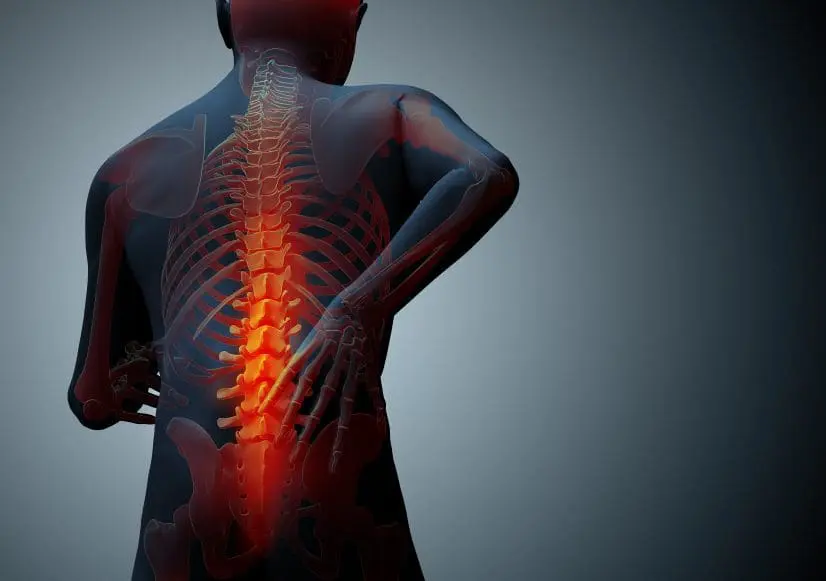
- Rib pain most often results from a pulled or spasming muscle between the ribs, a bruised or broken rib, or inflamed cartilage. Less commonly, it may be caused by reflux, anxiety, or another condition.
- Rib or chest pain may also indicate a heart attack. New or unexplained pain, particularly when accompanied by shortness of breath, sweating, or nausea, requires emergency medical attention.
- In Traditional Chinese Medicine, the Liver and Gallbladder channels run along the ribs’ sides. Rib pain is thought to reflect Qi stagnation there due to stress, or Blood stagnation following an injury or strain.
- Nine acupressure points on the arms, sides, back, legs, and feet help relax the muscles between the ribs, circulate Qi and Blood, and ease pain triggered by each breath.
- Gentle breathing, avoiding heavy lifting and twisting, applying cold initially followed by warmth, and managing stress regularly can help alleviate rib pain.
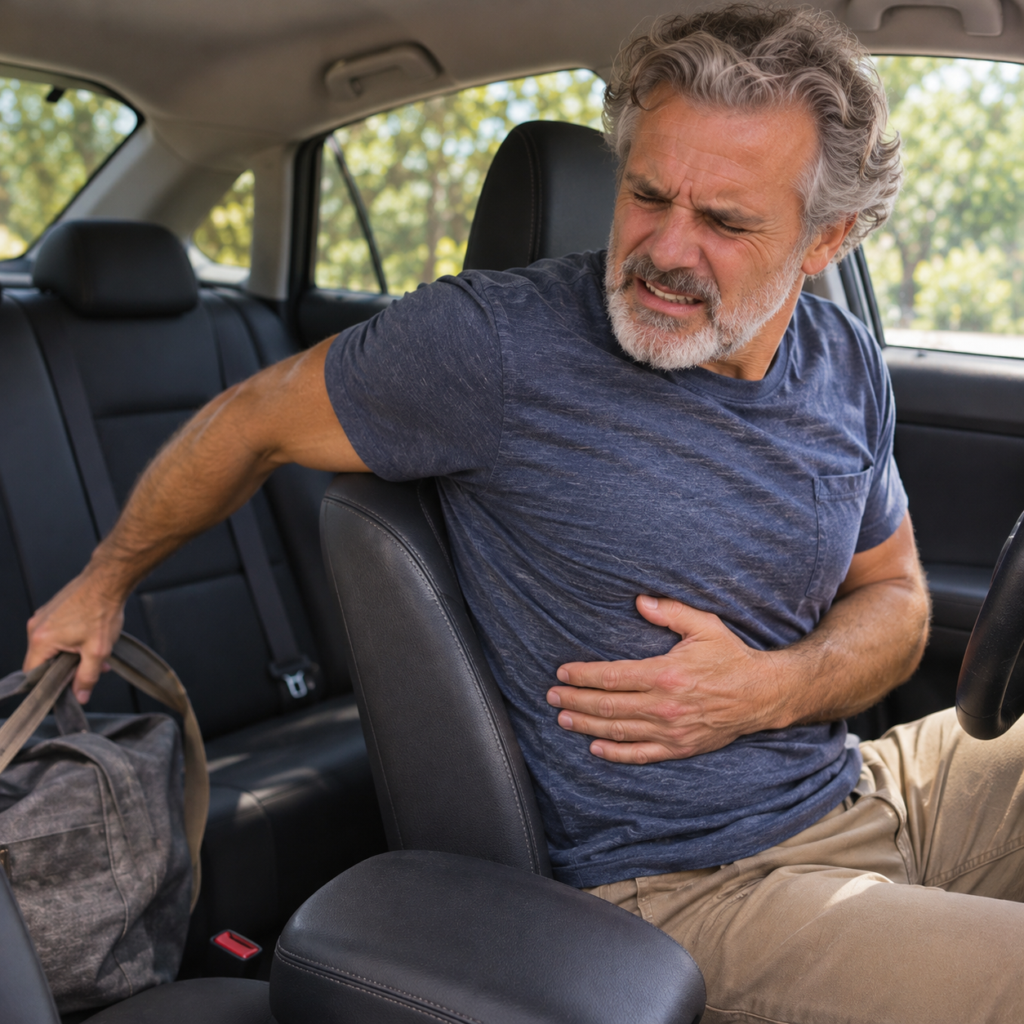
The ribs move with every breath, cough, and twist. When the surrounding tissues are strained or inflamed, it can be difficult to rest the affected area. A deep breath may catch halfway, a sneeze may send a jolt through the side, and rolling over in bed may require careful planning. Rib pain may be sharp and localized, a dull band that wraps around one side, or intermittent and associated with stress.
According to Aurora Health Care, rib pain may result from a pulled or spasming muscle, a broken or bruised rib, a sports injury, an accident or fall, inflamed cartilage, acid reflux or other esophageal problems, anxiety, and, rarely, cancer. It can make it difficult to take a deep breath, twist, or put pressure on the chest. Aurora emphasizes that rib or chest pain may also signal a heart attack and that emergency help is important because it can be difficult to determine the cause on your own. For pulled muscles and bruised ribs, Aurora recommends rest, cold compresses, and anti-inflammatory medicine. It notes that broken ribs may take six weeks to six months to heal and lists acupuncture and massage among the treatment options.
Between each pair of ribs is a thin layer of muscle that raises and lowers the rib cage with every breath, along with a nerve and blood vessels. A forceful cough, sudden twist, heavy lifting, or prolonged hunching over a desk can strain these muscles and cause them to spasm. The cartilage where the ribs connect to the breastbone can also become inflamed and tender. Since the entire rib cage moves together, pain in one area can worsen with breathing, laughing, and nearly any upper-body movement.
Traditional Chinese Medicine links the sides of the rib cage to the Liver and Gallbladder channels. Ongoing stress, frustration, or unexpressed emotions can cause Liver Qi to stagnate along these channels, leading to a distending, shifting pain that worsens with tension or sighing. A fall, blow, or strain can instead trap Blood in place, making the pain sharp, fixed, and stabbing. A prolonged, forceful cough can also strain the area, leaving the muscles between the ribs tight and sore.
The points start on the forearm, continue along the sides of the rib cage and the back, and end on the legs and feet.
What Acupressure Points to Press and Why
1. Press on TE6 on the back of the forearm to ease pain along the ribs. TE6 sits on the back of the forearm, four finger-widths above the wrist crease, between the two forearm bones. Press firmly with the thumb of your other hand for one to two minutes on each arm while breathing slowly. TE6 is called “Zhigou,” the “Branch Ditch.”
In Traditional Chinese Medicine, TE6 is one of the key points for pain along the sides of the ribs. It moves Qi through the channels surrounding the rib cage and helps release the tight band that catches with every breath.
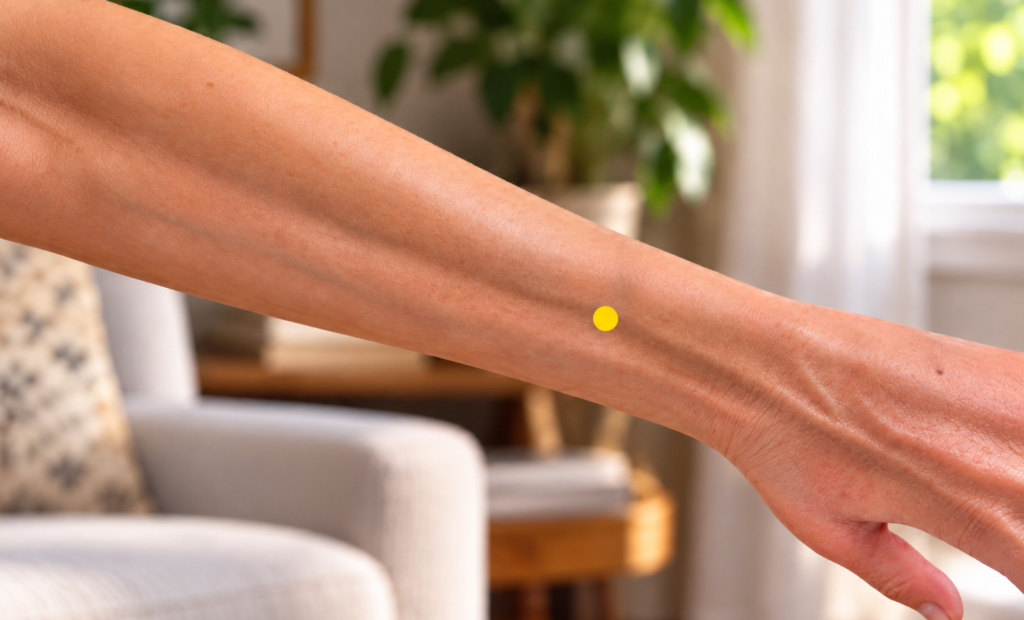
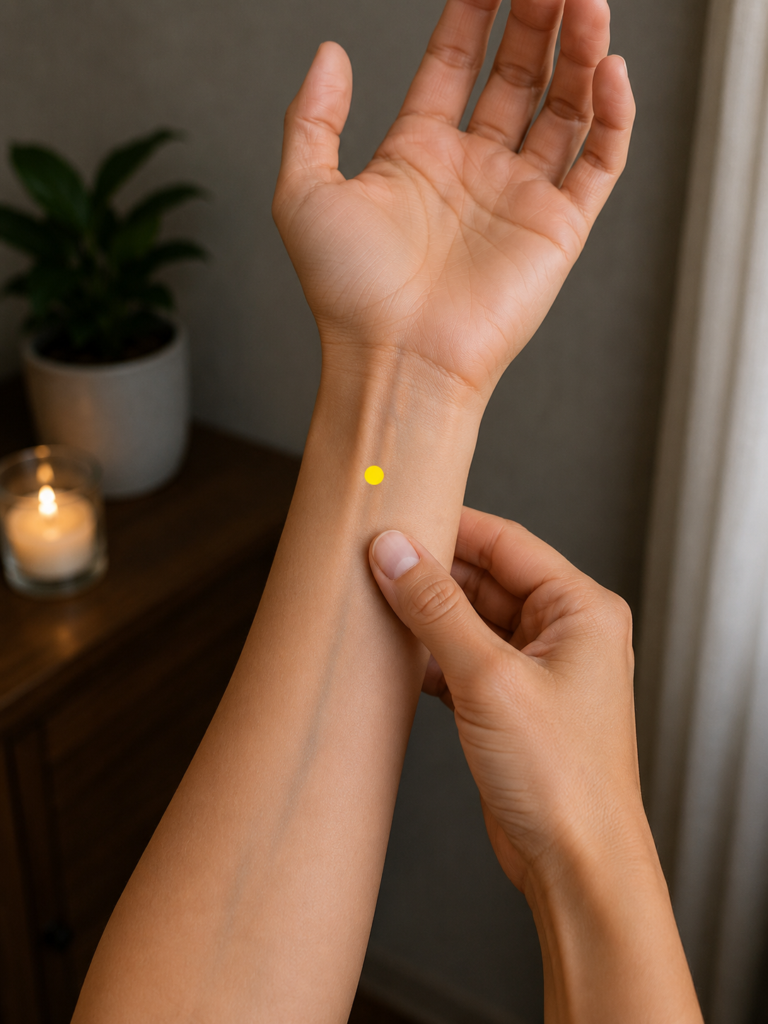
2. Press on PC6 on the inner forearm to open the chest. PC6 sits on the inner forearm, three finger-widths above the wrist crease, between the two tendons. Press firmly with the thumb of your other hand for one to two minutes on each arm. PC6 is called “Neiguan,” the “Inner Pass.”
PC6 is the Pericardium’s connecting point. It opens the chest, relieves tightness and pressure across the front of the ribs, and calms the anxiety that can make rib pain feel worse.
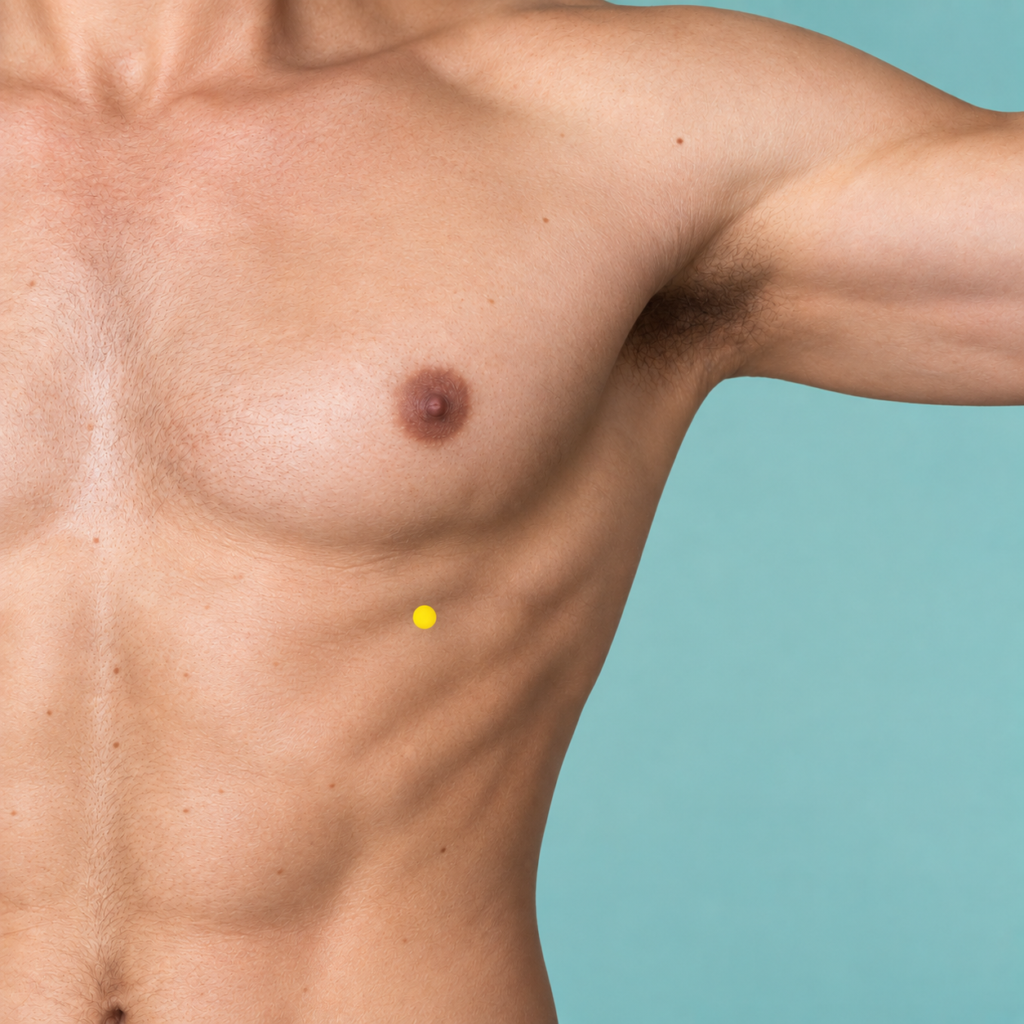
3. Hold LV14 below the nipple to release the front of the ribs. LV14 sits on the front of the rib cage, directly below the nipple, two rib spaces down, in the space between the sixth and seventh ribs. Rest two fingertips on the point with light pressure for one to two minutes on each side, and skip the side that is injured or very tender. LV14 is called “Qimen,” the “Cycle Gate.”
LV14 is the alarm point of the Liver. It helps move stagnant Liver Qi and relieve stress-related fullness and aching along the front and sides of the ribs.
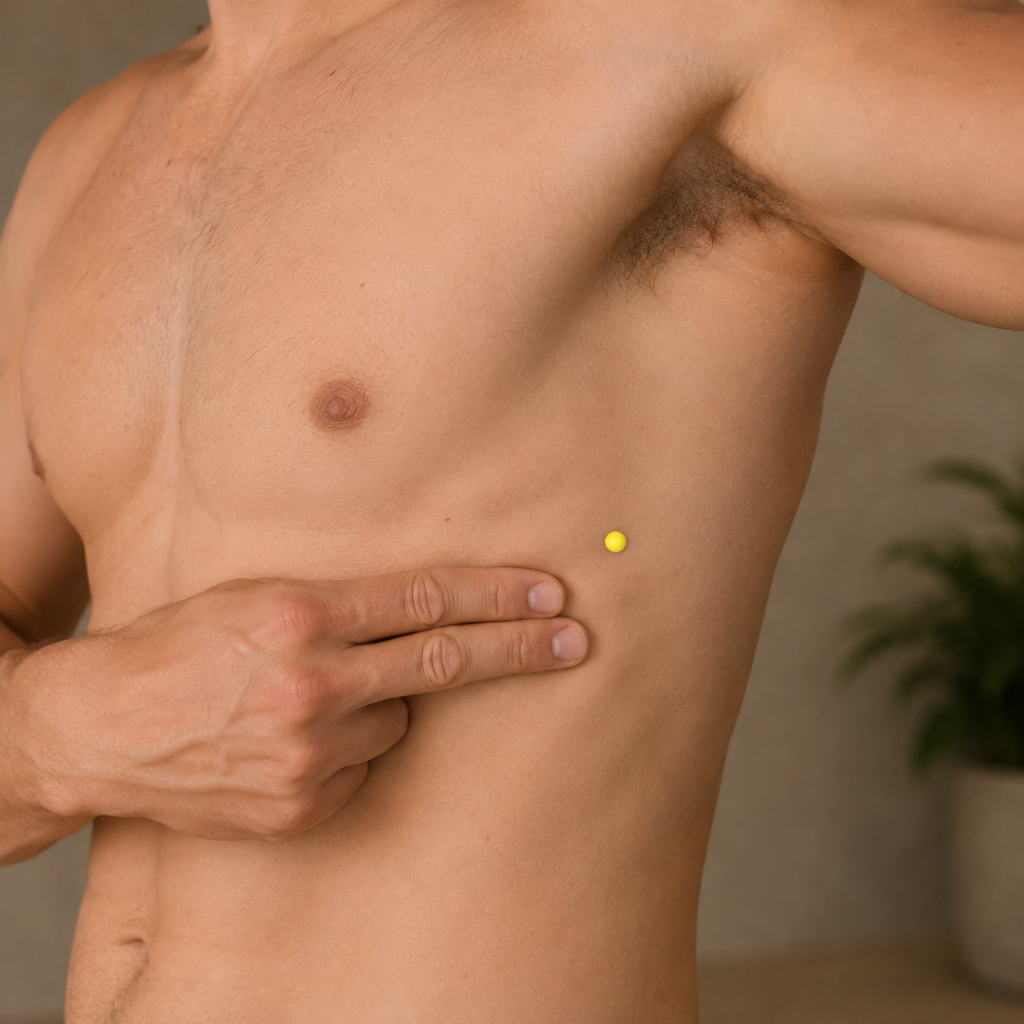
4. Press on SP21 on the side of the chest to ease aching along the ribs. SP21 sits on the side of the rib cage, in line with the center of the armpit, about a hand-width below the armpit, in the space between two ribs. Press with light to moderate pressure using the fingers of the opposite hand for one to two minutes on each side. SP21 is called “Dabao,” the “Great Embrace.”
SP21 is the great connecting point of the Spleen. Located directly over the muscles along the side of the rib cage, it has traditionally been used to address pain and aching across the chest and sides of the body.
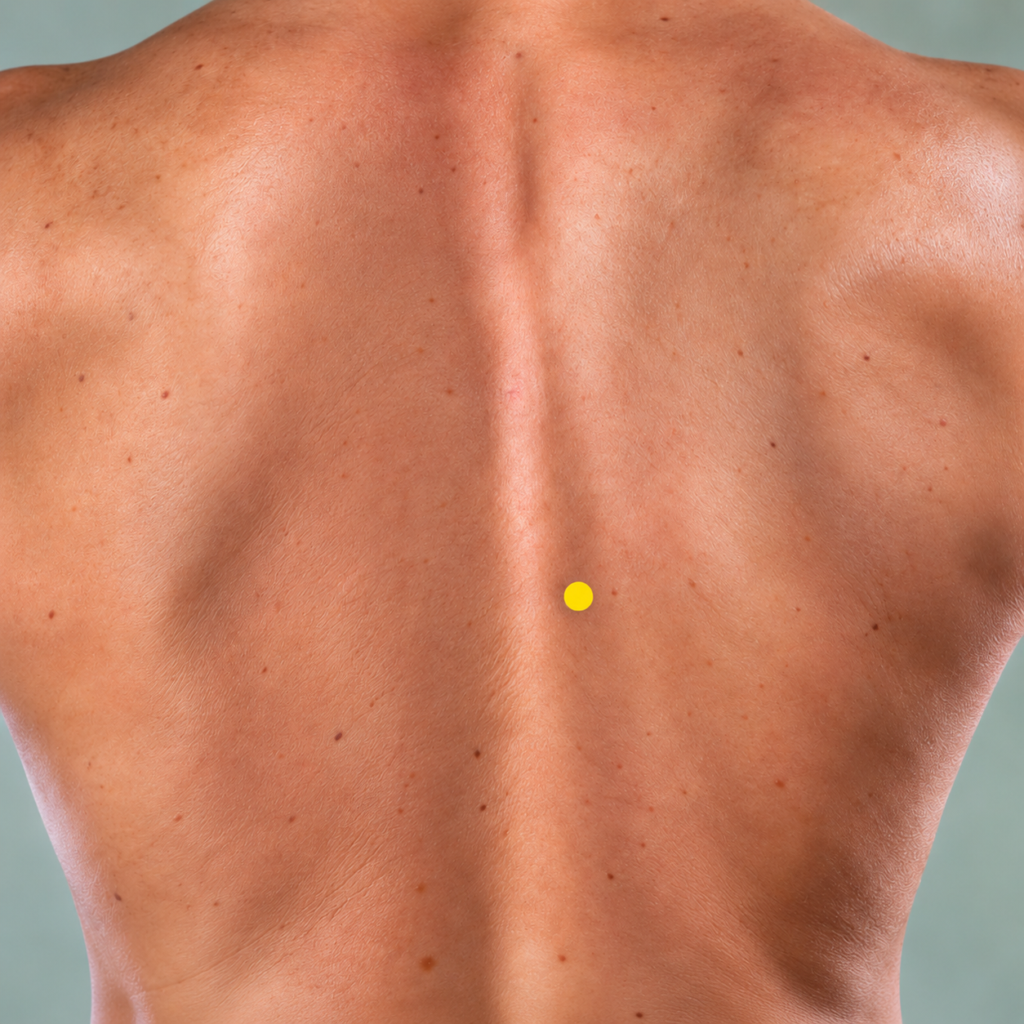
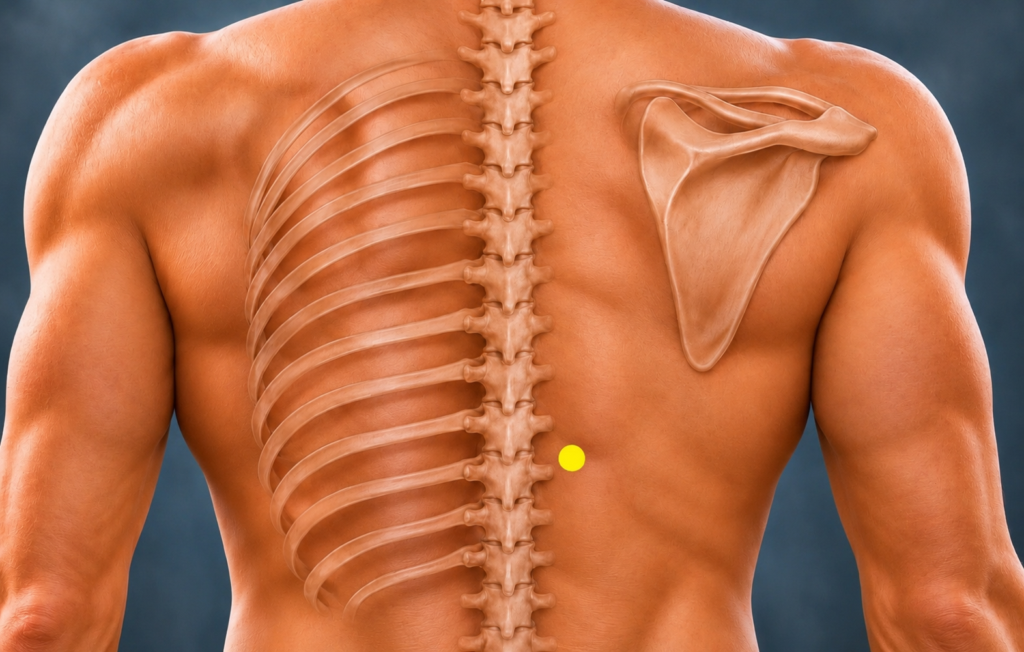
5. Press on BL17 on the back to move stuck Blood. BL17 sits on the back, two finger-widths out from the spine on each side, level with the bottom tips of the shoulder blades. Lie on your back with a tennis ball under the point, or lean against a wall with the ball in place, and press into it for one to two minutes on each side. BL17 is called “Geshu,” the “Diaphragm Shu.”
BL17 is the influential point of Blood. It moves Blood that has pooled after a strain or minor injury and eases sharp, fixed pain that radiates from the back around the ribs.
6. Press on BL18 on the middle back to release the Liver. BL18 sits two finger-widths out from the spine on each side, two vertebrae below BL17. Use the tennis ball against the floor or a wall and press into the point for one to two minutes on each side. BL18 is called “Ganshu,” the “Liver Shu.”
BL18 is the Liver’s back transport point. It helps release tension that stress builds along the ribs and back, and may help with rib pain accompanied by irritability or a tight chest.
7. Press on GB34 below the outer knee to relax the sides of the body. GB34 sits on the outer side of the lower leg, in the hollow just in front of and below the small bony bump below the outside of the knee. Press firmly with your thumb for one to two minutes on each leg. GB34 is called “Yanglingquan,” the “Yang Mound Spring.”
GB34 is the influential point of the tendons. The Gallbladder channel runs along the sides of the ribs, and GB34 relaxes the muscles in that area and relieves flank pain.

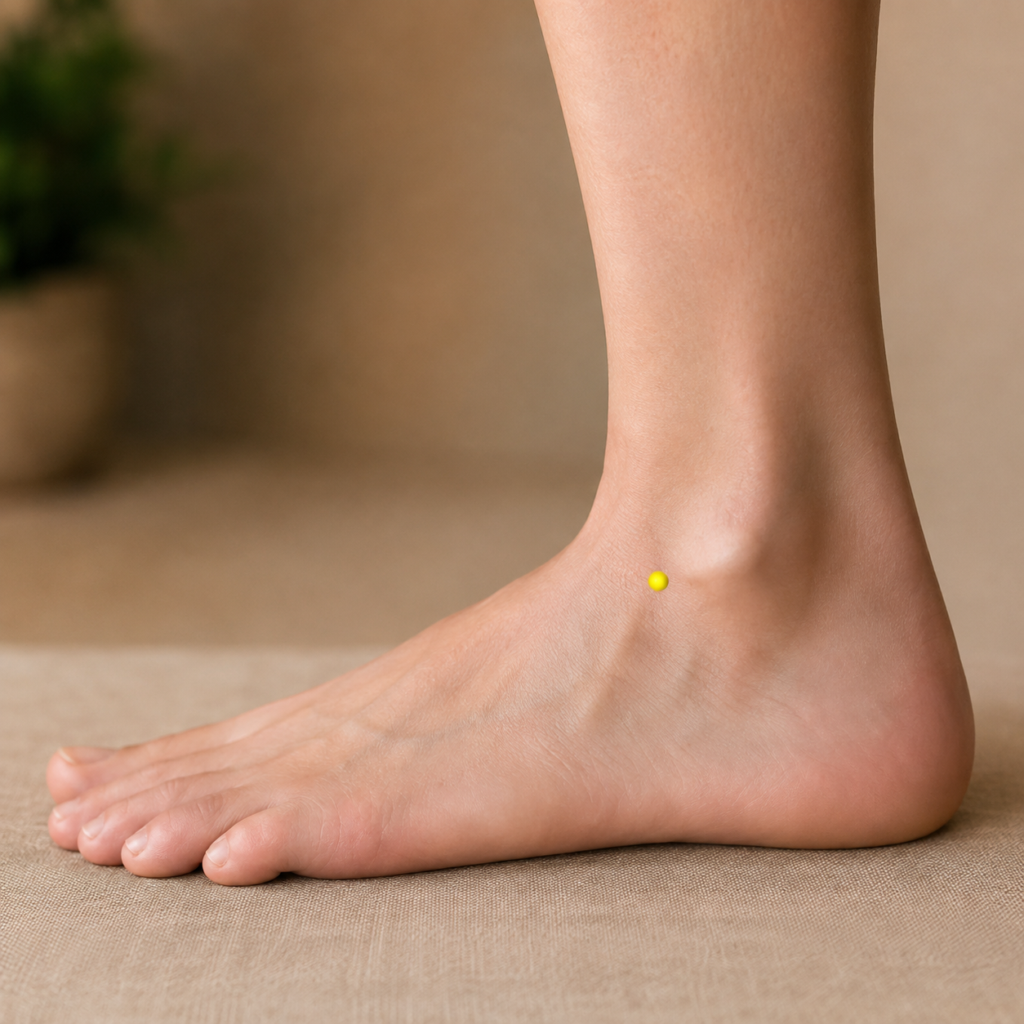
8. Press on GB40 in front of the outer ankle to keep Qi moving along the ribs. GB40 sits in the hollow just in front of and below the outer ankle bone. Press with moderate pressure for one to two minutes on each foot. GB40 is called “Qiuxu,” the “Mound of Ruins.”
GB40 is the source point of the Gallbladder. It moves Qi along the entire length of the Gallbladder channel and eases pain and fullness along the sides of the rib cage.
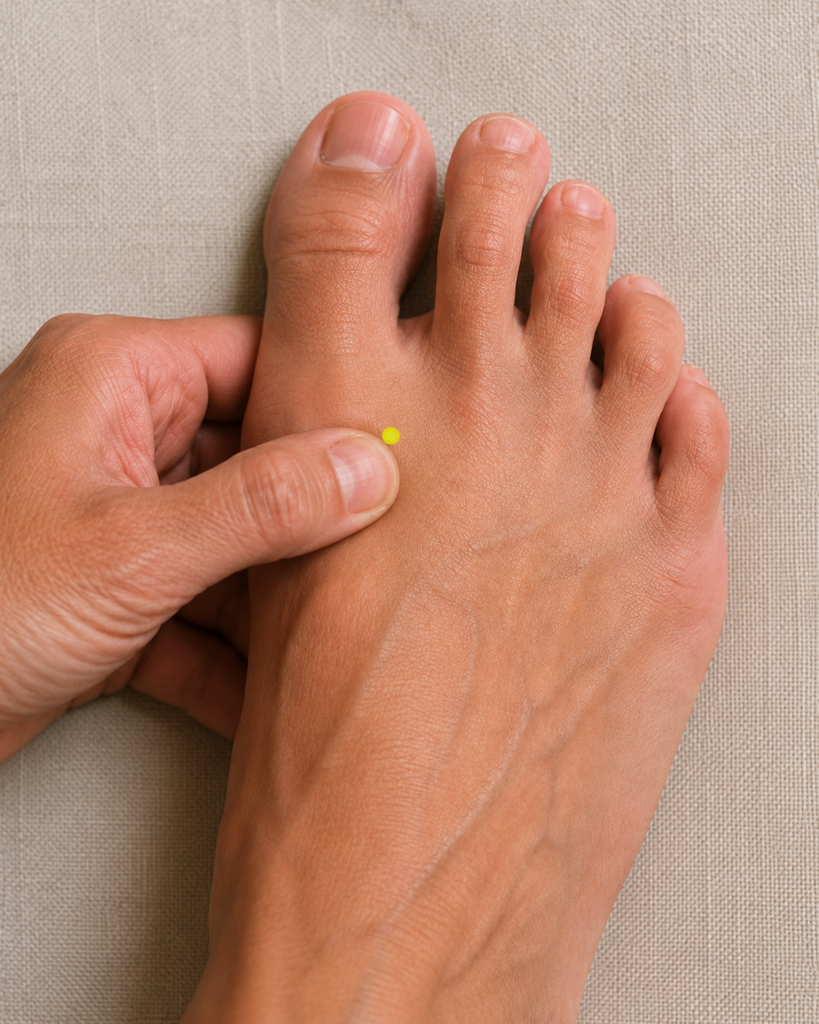
9. Press on LV3 on the top of the foot to release stress. LV3 sits on the top of the foot, in the hollow where the bones of the big toe and second toe meet, about two finger-widths back from the web between the toes. Press firmly with your thumb for one to two minutes on each foot. LV3 is called “Taichong,” the “Great Rushing.”
LV3 is the source point of the Liver. It moves stagnant Liver Qi, calms tension and irritability, and works with TE6 to alleviate rib pain.
Why These Acupressure Points Work
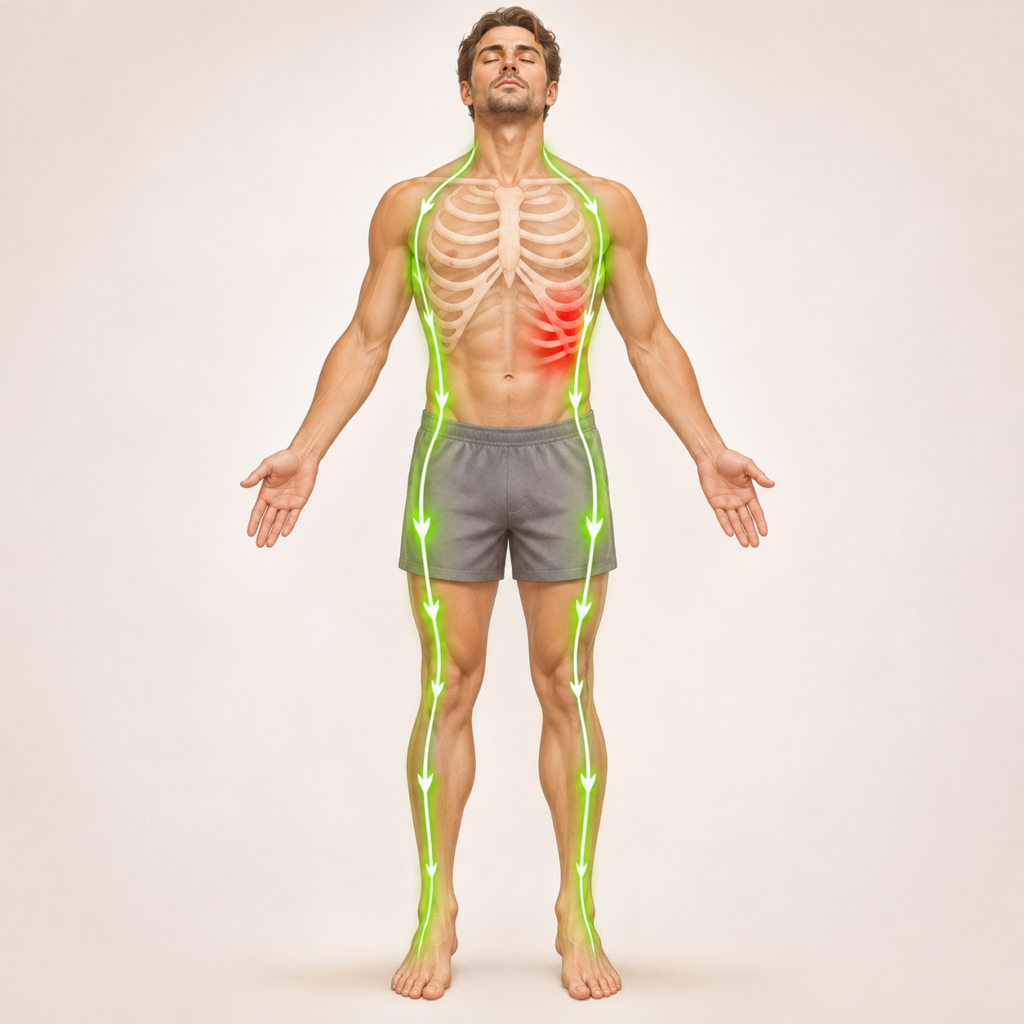
From a Traditional Chinese Medicine perspective, rib pain signals that Qi or Blood is stuck in the channels around the rib cage. Forearm points help open the chest and move Qi along the sides of the body; points on the ribs and back address the area directly, while leg and foot points clear the Liver and Gallbladder channels from a distance.
The nine points work together to alleviate rib pain:
- TE6 and PC6 move Qi through the sides of the body and open the chest.
- LV14 and SP21 release the muscles along the front and sides of the ribs.
- BL17 and BL18 move stuck Blood and release the back of the rib cage.
- GB34, GB40, and LV3 clear the Liver and Gallbladder channels.
How to Properly Use These Acupressure Points
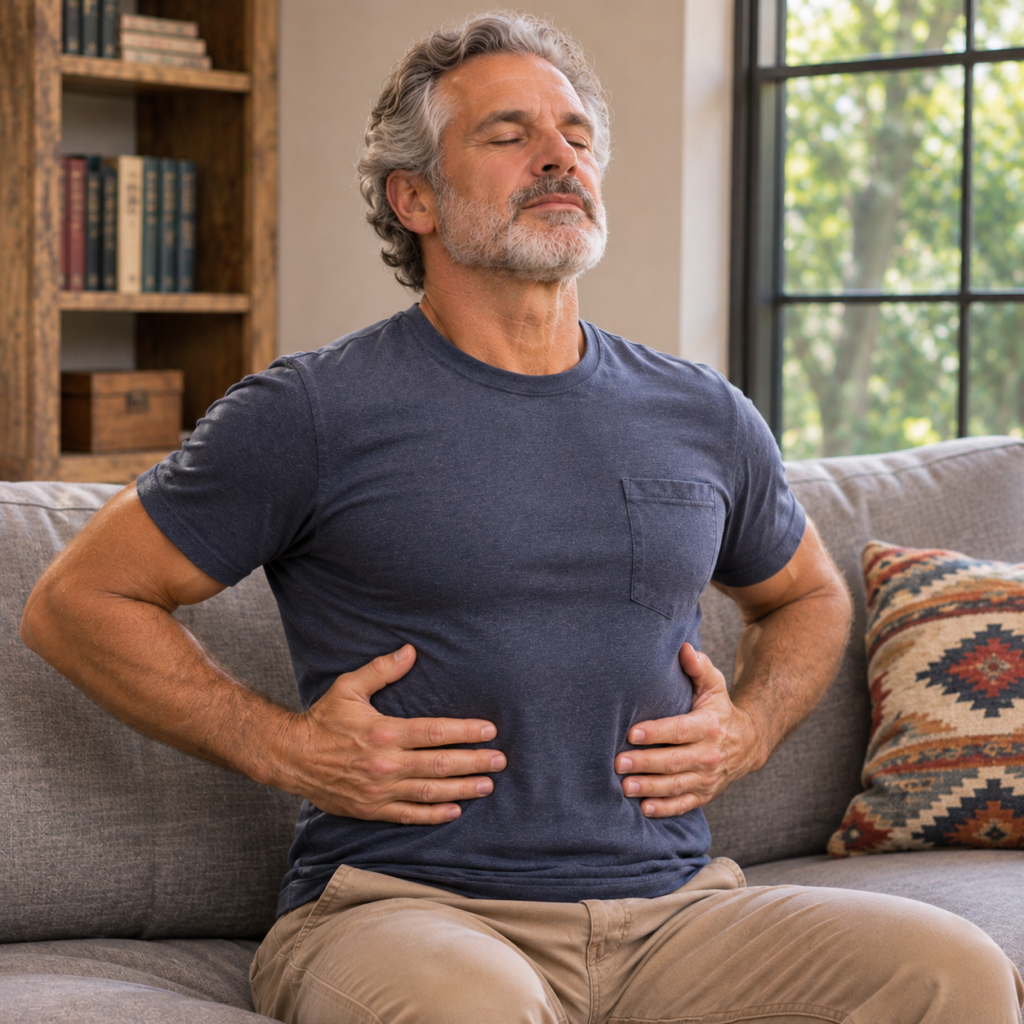
Acupressure may be most effective for rib pain caused by muscle strain or stress-related tension, after a physician has ruled out a cardiac condition, fracture, or other serious cause.
- If your breathing becomes restricted, apply pressure to TE6 and PC6 on both arms while breathing slowly into the sides of your rib cage.
- For a tight band along one side, apply pressure to GB34, GB40, and LV3 on both legs and feet, then gently hold LV14 and SP21 on the uninjured side.
- For pain that radiates from the back, apply a tennis ball to the BL17 and BL18 points.
- When stress causes a sensation of tightness in the ribs, apply pressure to LV3 and PC6 on both sides before going to bed.
- Apply firm pressure to the arms, legs, and feet; moderate pressure to the back; and light pressure to the ribs. Do not apply pressure over any rib that may be bruised or fractured.
A few daily habits can support rib healing. Aurora recommends rest and cold compresses for a strained muscle or bruised rib. Traditional Chinese Medicine also recommends cold at first, followed by warmth once the swelling subsides to keep Qi and Blood moving. As general guidance, take a few slow, full breaths every hour, even if it feels uncomfortable; shallow breathing after a rib injury can allow mucus to collect in the lungs. Hold a pillow against the sore side when coughing or sneezing, avoid heavy lifting and twisting until the pain eases, and sit upright rather than hunching. Make time for a regular stress-relieving activity, such as walking, stretching, or slow breathing, since tension can tighten the muscles between the ribs.
Learn more about whether stress can cause physical pain.
When to Get Professional Help
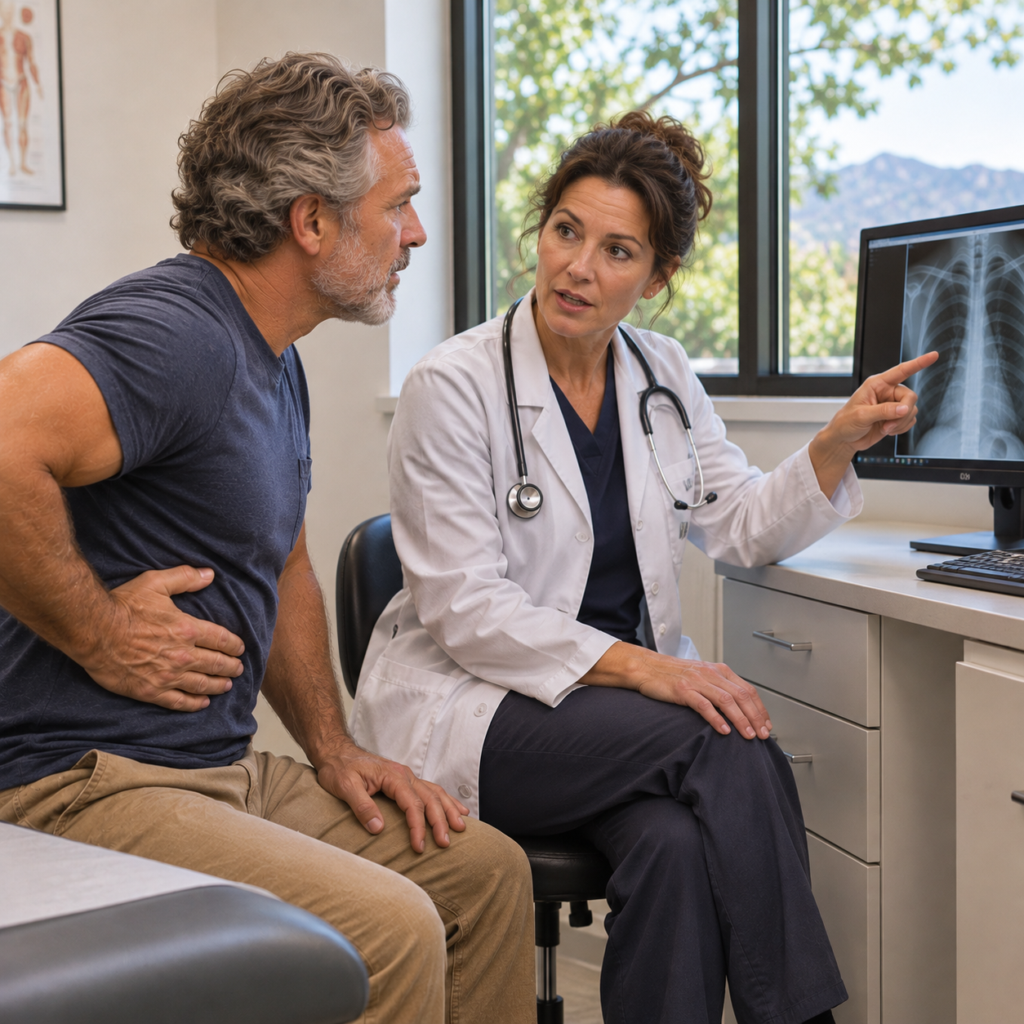
Call 911 if rib or chest pain comes with pressure or squeezing, shortness of breath, sweating, nausea, lightheadedness, or pain that spreads to the arm, jaw, neck, or back. These may be signs of a heart attack. After a fall, accident, or blow to the chest, seek emergency care if breathing is difficult or painful, you cough up blood, or the pain is severe. These may be signs of a broken rib, collapsed lung, or another internal injury. See a doctor for rib pain with a fever and cough, a painful band of rash along one side of the ribs, pain under the right ribs after fatty meals, or pain that lasts more than a week or two, keeps returning, or comes with unexplained weight loss or night sweats. These symptoms may signal pneumonia, shingles, a gallbladder problem, or another concern.
Acupressure is a gentle, supportive practice for rib pain. It complements, and does not replace, diagnosis and medical care.
For related health concerns, acupressure for middle back pain, acupressure for gallbladder pain, and acupressure for postherpetic neuralgia are companion pieces.
Above and Beyond Acupuncture offers acupuncture, cupping, and lifestyle coaching at the North Frank Lloyd Wright Boulevard location in Scottsdale.
Schedule an appointment online to start your healing journey.
The points above are only as effective as the technique used to apply them. Where to press, how firmly, and for how long all affect the result. For a full breakdown of how to perform acupressure properly at home, read Performing Acupressure in 3 Easy Steps.

About the Publisher
Paul Kerzner, L.Ac., is a licensed acupuncturist and board-certified herbalist, as well as the founder of Above and Beyond Acupuncture in Scottsdale. His own journey from chronic patient to practicing acupuncturist shapes his commitment to providing honest, clinically grounded information about acupuncture and Traditional Chinese Medicine. Learn more about Paul and his clinical approach on the About Us page.